Project 1_Comparative study of different storey buildings for Seismic forces
1.
Compare the fundamental natural periods of buildings E and F as well as G and H to see how stiffness affects T. Why are the fundamental natural periods slightly or significantly different?
The stiffness and mass of buildings both rise as column size increases. Buildings are considered to have shorter natural periods with increased column size when the percentage increase in stiffness due to increased column size is greater than the percentage increase in mass.
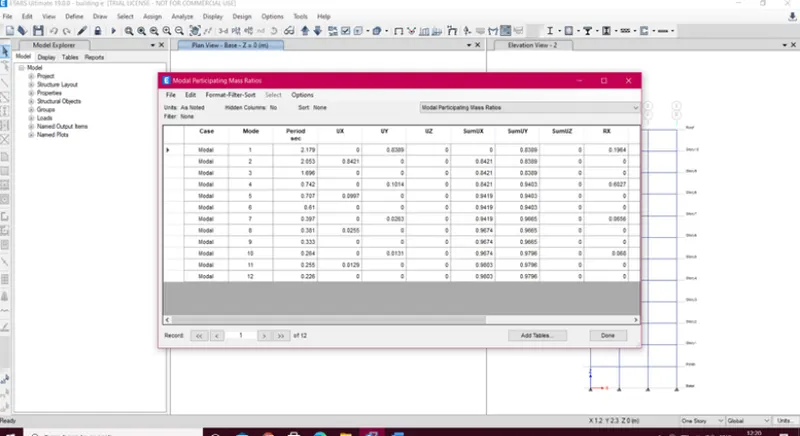
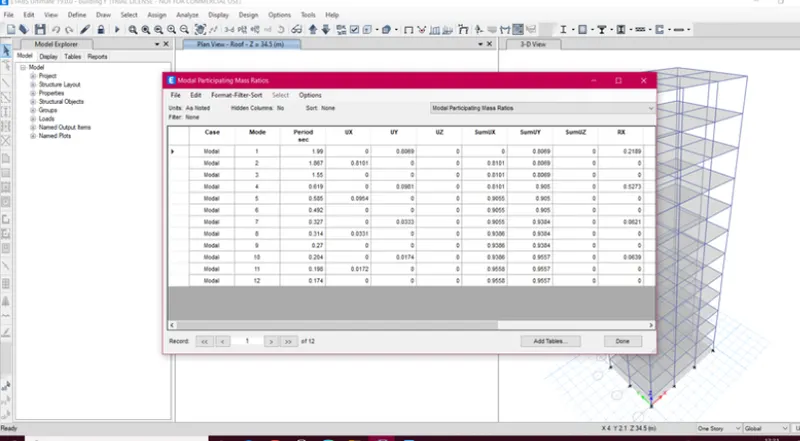
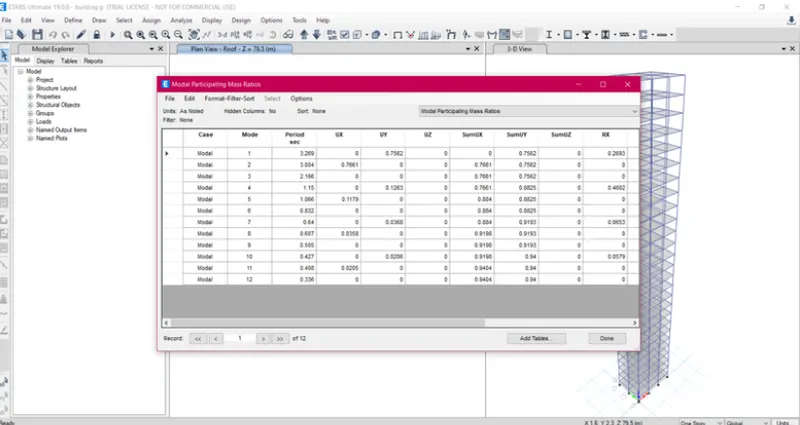
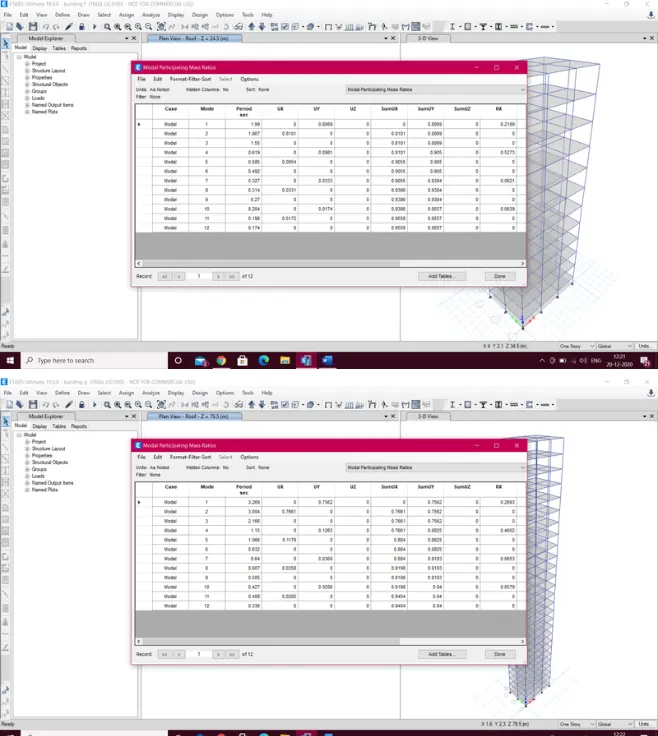
Building E has a reduced column size (400400) at the top five storeys, while Building F has a larger column size (600600) throughout its height. structures E and F are two 10-story structures. As a result, building F (600600) is somewhat stiffer than building E, and its basic period (1.99 s) is only slightly shorter than that of building E (2.17 s).
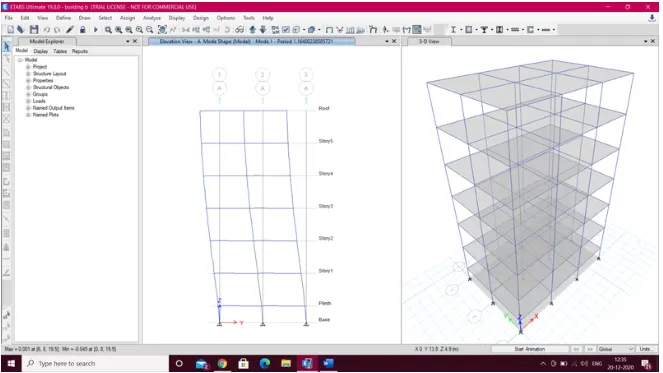
Due to shear-type lateral deformation in the building, where the columns' sizes are constant, the influence on the building's overall natural period is unaffected, as seen by the deformed shape of the structure, which shows that the majority of the deformation is only occurring in the lower levels.
Buildings G and H are separated by a significantly stiffer occurring. But as stiffness increases, bulk obviously does as well. The mass and stiffness compete to decide whether the natural period will lengthen or shorten when both are adjusted.
2.
Compare the fundamental natural periods of the structures H, J, and K to see how mass affects T. Because of the difference in mass, have the buildings become more flexible or stiff?
The seismic mass of a building is the mass that contributes to lateral oscillation during earthquake shaking. It consists of its seismic masses at various floor levels added together. The complete dead load plus the appropriate percentage of live load equals the seismic mass at each floor level. The intensity of the live load and its connection to the floor slab determine the live load fraction. Each country's or region's seismic design codes include live load fractions that must be taken into account when designing buildings for that nation's or location.
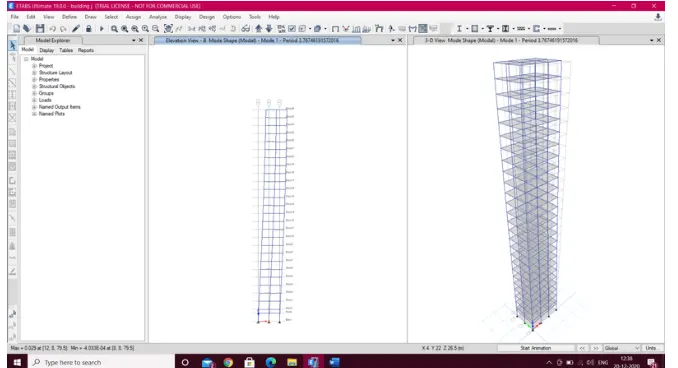
A building's natural period lengthens as its bulk grows. The 25-story buildings H, J, and K have varied floor masses despite having the same plan size, elevation, and column sizes. Building H has an imposed floor mass that is 10% bigger than that of buildings J and K. Buildings K (3.43 s) and J (3.29 s), which are heavier, have fundamental translational natural periods that are longer than building H (3.14 s).
3. Building Height and T: How does a change in building height affect the fundamental natural periods of Buildings A, B, F, and H?
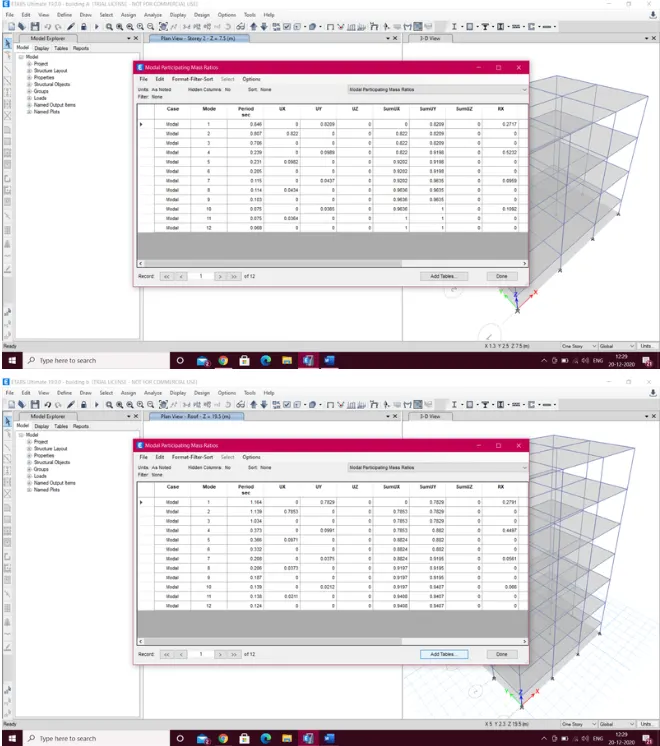
A building's mass grows as its height does, yet its overall stiffness decreases. As a result, as a building gets taller, its natural lifespan lengthens. The plan sizes of Buildings A, B, F, and H are identical, although they varied in height. Compared to lower buildings, taller buildings have a longer natural period. the 25-story building H, the 10-story building F, the 5-story building B, and the 2-story structure A, respectively, have fundamental translational natural periods of 0.84 seconds, 1.16 seconds, 1.99 seconds, and 3.2 seconds.
Compare the fundamental mode form of Building B in two scenarios: one in which the flexural stiffness of the beams compared to that of the adjacent columns is relatively small and one in which it is significant.
The flexural stiffness of the beams in relation to the adjacent columns determines the morphologies of the lateral translational modes. Buildings' basic mode shape shifts from flexural-type to shear-type as beams flexural stiffness increases in relation to column stiffness.
when the flexural stiffness of the beams is lower than the adjacent columns Building flexure-type deformation is caused mostly by single curvature bending during deformation.