Planetary Gear
AIM : To perform motion analysis on planetarty gear system.
Introduction to planetary gears :
Planetary Gear System or an epicyclic gear train is used to set different gear ratios by using three sets of the gears sun gear, planet gear, and ring gear.
All the planet gears are mounted to a single rotating member, called a cage, arm, or carrier where the output is obtained.
A planetary gear set is comprised of an outer gear ring that's called the ring gear. As they rotate inside of the ring gear, the planetary gears create pitch circles
that can be formed into a gear train that, in turn, is hooked up to input and output shafts.
Planetary gears are often used when space and weight are an issue, but a large amount of speed reduction and torque are needed. This requirement applies to a
variety of industries, including tractors and construction equipment where a large amount of torque is needed to drive the wheels. Other places you will nd
planetary gear sets include turbine engines, automatic transmissions, and even electric screwdrivers.
Planetary gear systems are able to produce a lot of torque because the load is shared among multiple planet gears. This arrangement also creates more contact
surfaces and a larger contact area between the gears than a traditional parallel axis gear system. Because of this, the load is more evenly distributed, and
therefore the gears are more resistant to damage.
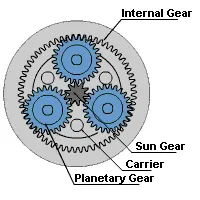
(gif source : Google Images)
Theory and calculation :
By principle, module of all gears should be equal, i.e, 2.5.
PCD = Pitch circle diameter
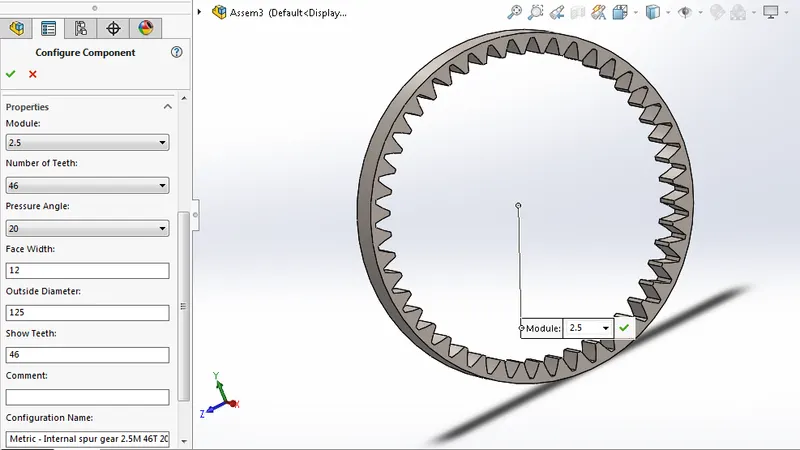
Ring Gear
Module = 2.5
Number of teeth = 46
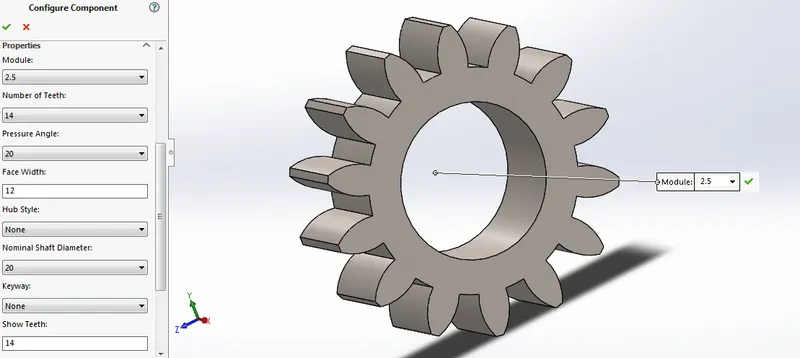
Sun Gear
Number of teeth = 14
Input Speed of the Gear = 200 rpm.
Number of planet gears = 4
Module =
For Ring gear PCD = 46*2.5 = 115
For Sun Gear PCD = 14*2.5 = 35
Now (PCD of Sun Gear)/2 + PCD of Planetary Gear = (PCD of Ring Gear)/2 which gives
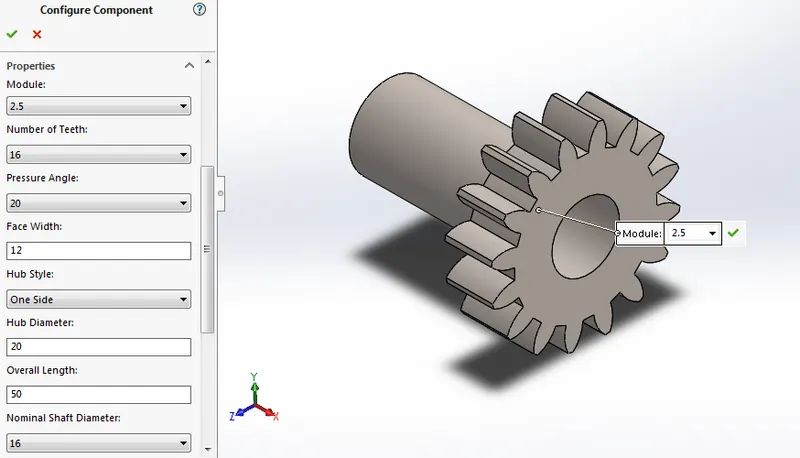
PCD of Planetary Gear = 40
Number of teeth in Planetary Gear = 40/2.5 = 16
3D Model Images :
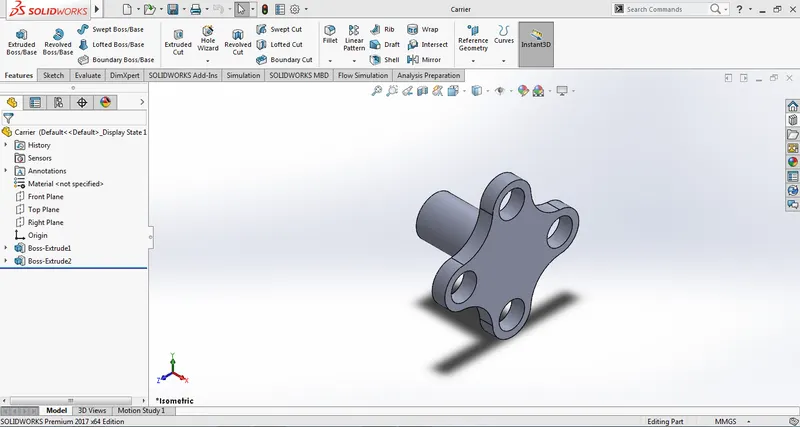
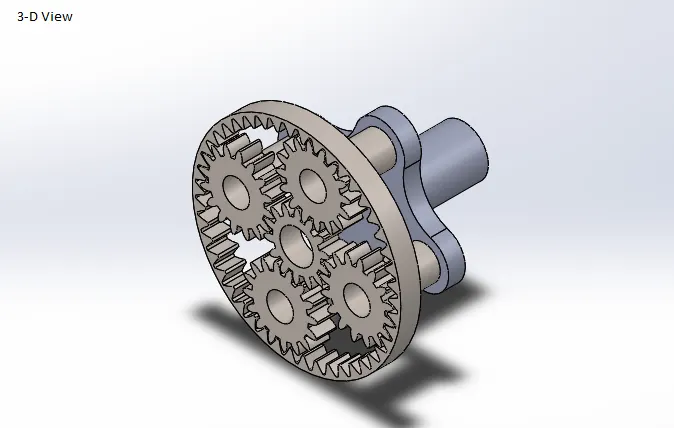
Results :
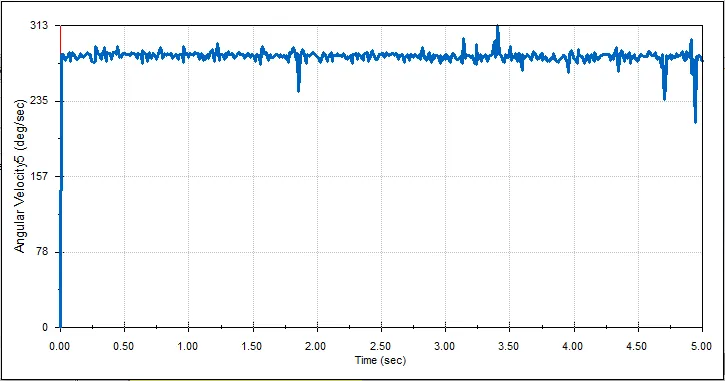
CASE I - Ring gear fixed, input sun gear and output on carrier
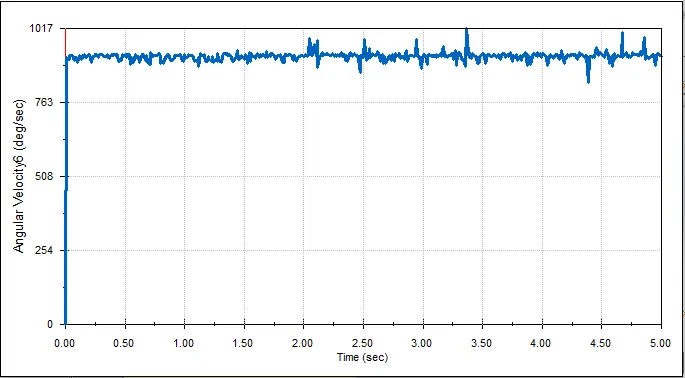
CASE II - Fix sun gear, input ring gear and output on carrier
CASE III - Fix carrier, input sun gear and output ring gear
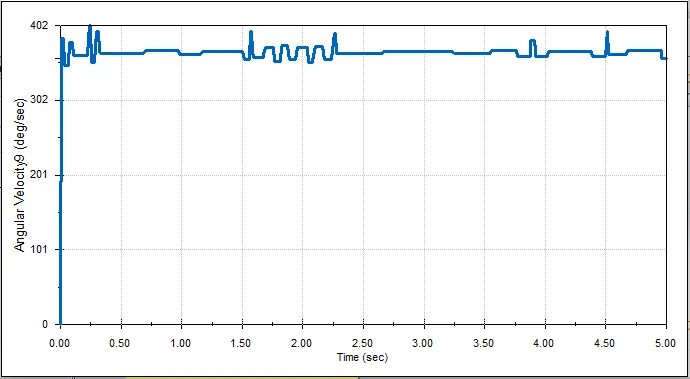
Conclusion : Motion Analysis was performed succesfully.
NOTE : I tried saving avi file for adding videos in assignment but solidworks on my laptop did not allow.