Photo Realistic Rendering
AMERICAN CHOPPER
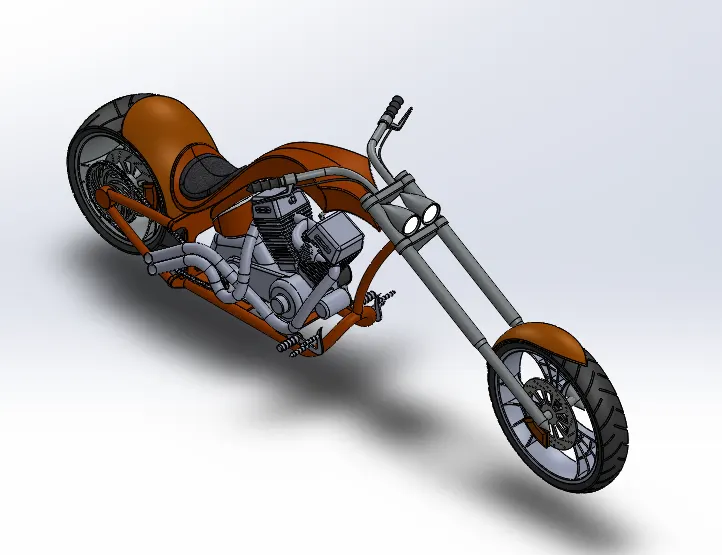
A chopper is a type of custom motorcycle which emerged in the US state of California in the late 1950s. A chopper employs modified steering angles and lengthened forks for a stretched-out appearance. They can be built from an original motorcycle which is modified ("chopped") or built from scratch. Some of the characteristic features of choppers are long front ends with extended forks often coupled with an increased rake angle, hardtail frames (frames without rear suspension), very tall "ape hanger" or very short "drag" handlebars, lengthened or stretched frames, and larger than stock front wheel. To be considered a chopper a motorcycle frame must be cut and welded at some point. I.e. the name chopper.The "sissy bar", a set of tubes that connect the rear fender with the frame, and which are often extended several feet high, is a signature feature on many choppers. Two famous examples of the chopper are customised Harley-Davidson, the "Captain America" and "Billy Bike", seen in the 1969 film Easy Rider.
OBJECTIVES
It is to design and assemble the components of American Chopper using SOLIDWORKS.Also, the rendering of the American Chopper using SOLIDWORK Photoview 360.
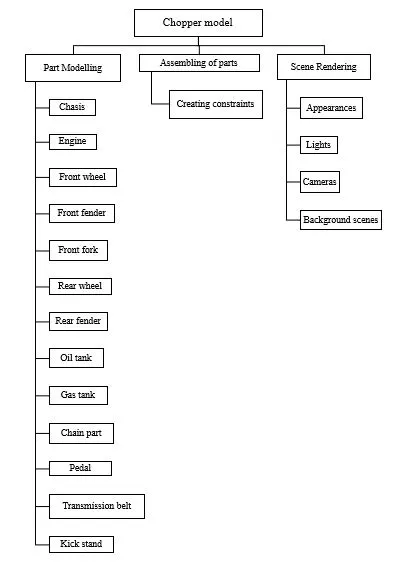
DESIGN METHOLOGY
TRANSMISSION BELT
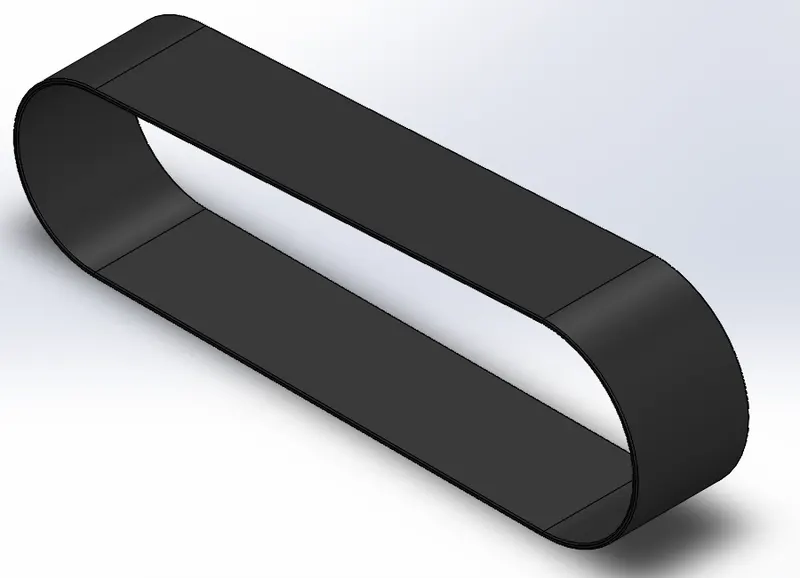
Driving belts are power transmission devices that are able to transfer power between elements such as shafts, pulleys or sheaves. Basic materials in the manufacture of power transmission belts are natural rubber or a blend of synthetic rubbers.
STAND
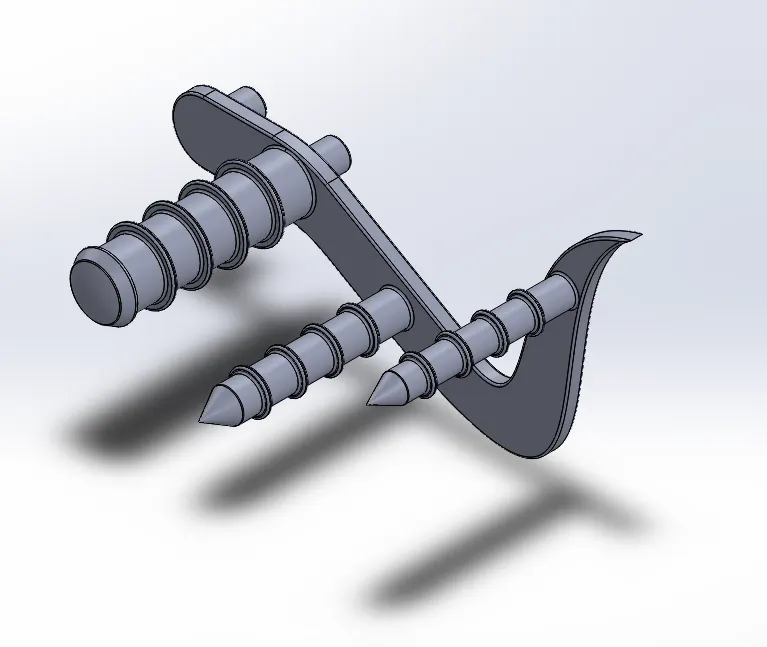
It is used to keep the foot on it while riding. Also, it is used to change the gears wile riding this American Chopper.It is placed next to the bottom of this chopper.
KICKSTAND
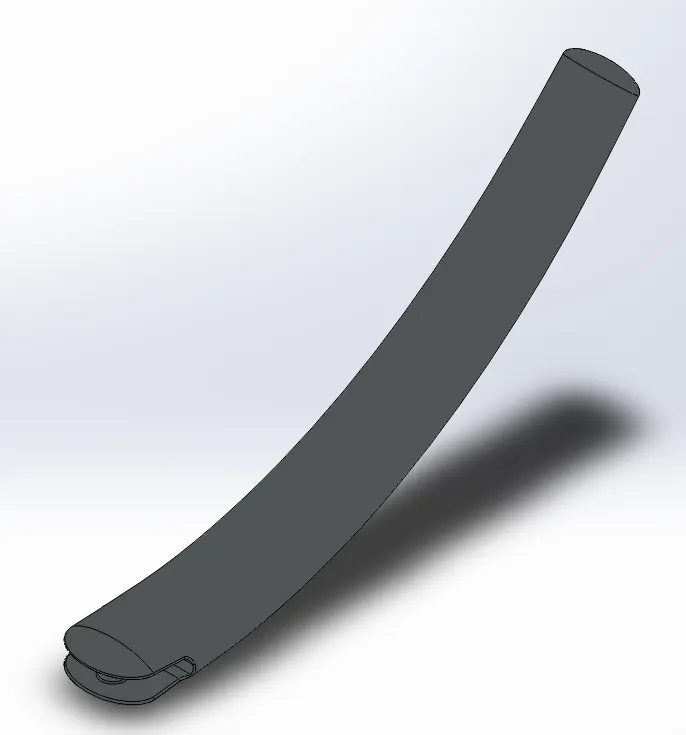
A kickstand is a device on a bicycle or motorcycle that allows the bike to be kept upright without leaning against another object or the aid of a person. A kickstand is usually a piece of metal that flips down from the frame and makes contact with the ground. It is generally located in the middle of the bike or towards the rear. Some touring bicycle have two: one at the rear, and a second in the front.
FRONT FENDER
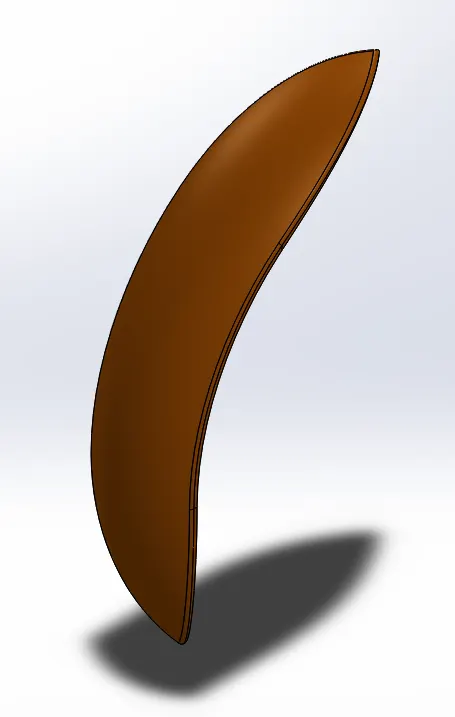
Fender is the American English term for the part of an automobile, motorcycle or other vehicle body that frames a wheel well (the fender underside). Its primary purpose is to prevent sand, mud, rocks, liquids, and other road spray from being thrown into the air by the rotating tire. Fenders are typically rigid and can be damaged by contact with the road surface. Sticky materials, such as mud, may adhere to the smooth outer tire surface, while smooth loose objects, such as stones, can become temporarily embedded in the tread grooves as the tire rolls over the ground. These materials can be ejected from the surface of the tire at high velocity as the tire imparts kinetic energy to the attached objects. For a vehicle moving forward, the top of the tire is rotating upward and forward, and can throw objects into the air at other vehicles or pedestrians in front of the vehicle.In British English, the fender is called the wing. (This may refer to either the front or rear fenders. However, in modern unibody vehicles, rear fenders may also be called quater panels.) The equivalent component of a bicycle or motorcycle, or the "cycle wing" style of wing fitted to vintage cars, or over tires on lorries which is not integral with the bodywork, is called a mudguard in Britain, as it guards other road users – and in the case of a bicycle or motorcycle, the rider as well – from mud, and spray, thrown up by the wheels.In modern Indian and Sri Lankan English usage, the wing is called a mudguard. However, the term mudguard appears to have been in use in the U.S. at one point. The American author E.B. White, in his October 1940 Harper's essay "Motor Cars", refers to "...mudguards, or 'fenders' as the younger generation calls them."In the United States, a minor car accident is often called a "fender bender".
REAR FENDER
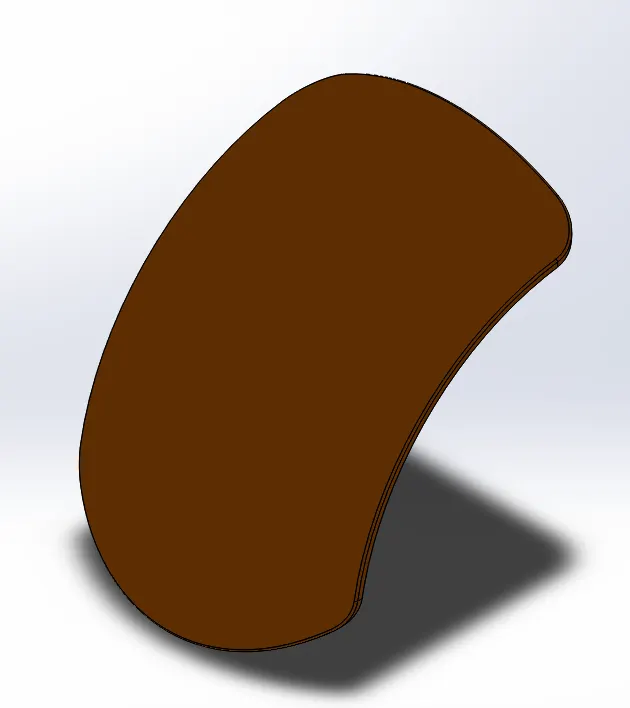
Fender is the American English term for the part of an automobile, motorcycle or other vehicle body that frames a wheel well (the fender underside). Its primary purpose is to prevent sand, mud, rocks, liquids, and other road spray from being thrown into the air by the rotating tire. Fenders are typically rigid and can be damaged by contact with the road surface. Sticky materials, such as mud, may adhere to the smooth outer tire surface, while smooth loose objects, such as stones, can become temporarily embedded in the tread grooves as the tire rolls over the ground. These materials can be ejected from the surface of the tire at high velocity as the tire imparts kinetic energy to the attached objects. For a vehicle moving forward, the top of the tire is rotating upward and forward, and can throw objects into the air at other vehicles or pedestrians in front of the vehicle.In British English, the fender is called the wing. (This may refer to either the front or rear fenders. However, in modern unibody vehicles, rear fenders may also be called quater panels.) The equivalent component of a bicycle or motorcycle, or the "cycle wing" style of wing fitted to vintage cars, or over tires on lorries which is not integral with the bodywork, is called a mudguard in Britain, as it guards other road users – and in the case of a bicycle or motorcycle, the rider as well – from mud, and spray, thrown up by the wheels.In modern Indian and Sri Lankan English usage, the wing is called a mudguard. However, the term mudguard appears to have been in use in the U.S. at one point. The American author E.B. White, in his October 1940 Harper's essay "Motor Cars", refers to "...mudguards, or 'fenders' as the younger generation calls them."In the United States, a minor car accident is often called a "fender bender".
CHAIN
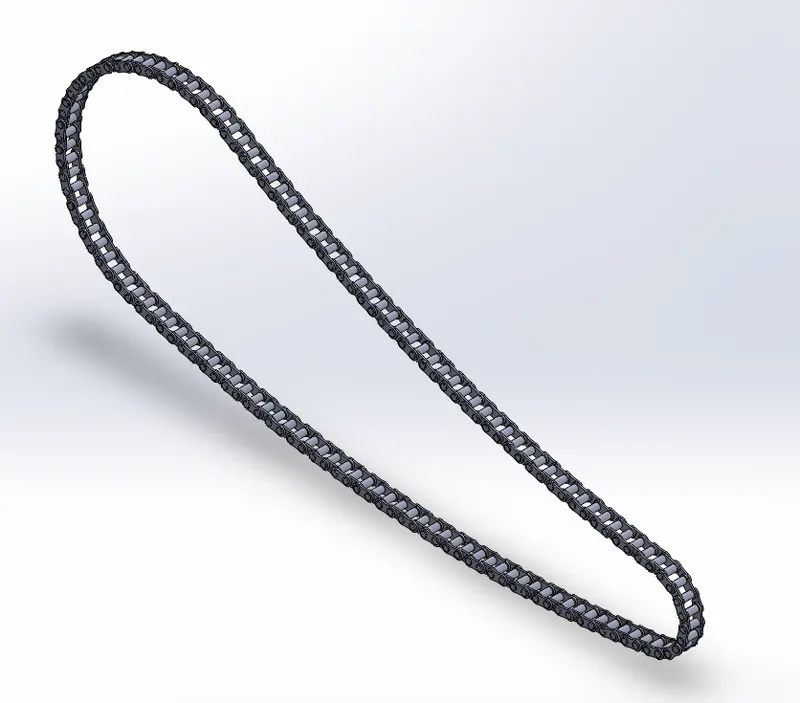
The chain transmits mechanical power to the bike via the turning of a sprocket gear, the teeth of which mesh with the links in the chain to pull it into action. This is in contrast to the belt drive and the shaft drive, both of which require less maintenance but are much costlier to produce than the chain drive.
FRONT WHEEL
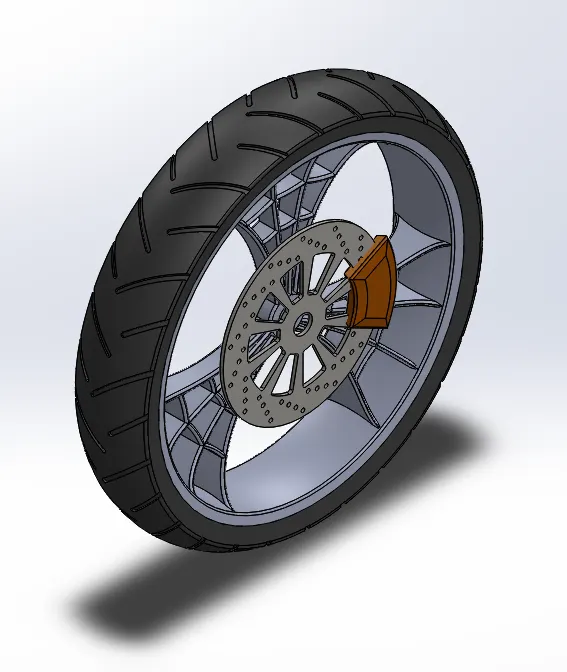
It is located to the front side of this chopper. It is attached with front fork which can turn any directions while riding. Most motorcycles have larger front wheels, meaning they're bigger in diameter and skinnier, to help with movement and steering.
REAR FENDER
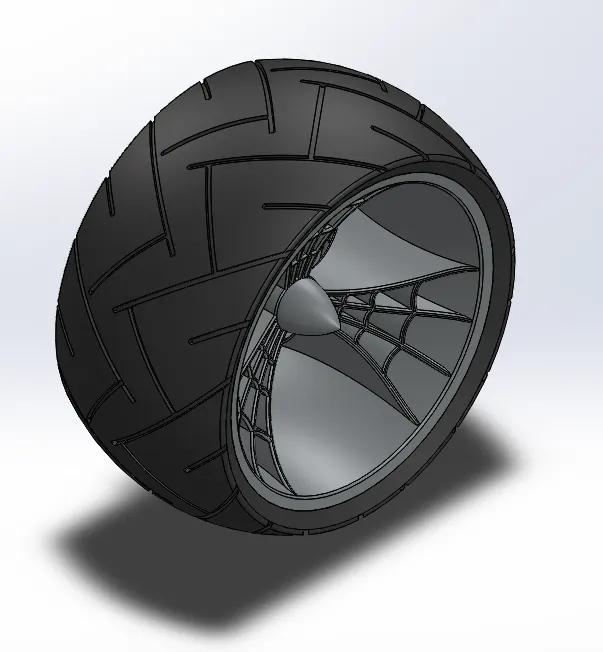
It is located to the back side of this chopper. It is larger than the front wheel. The back wheels are shorter in diameter and wider to help with traction and control of the motorcycle since that is where the power is coming from.
CHASIS
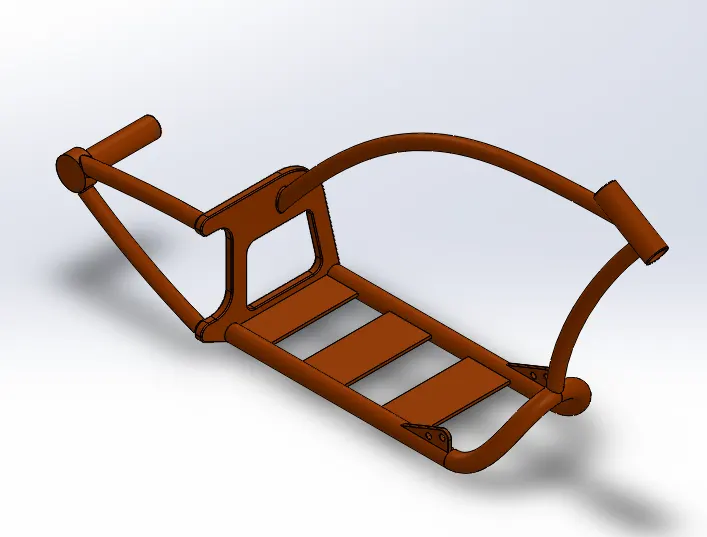
A motorcycle's chassis or frame forms its skeleton. All the components of a motorcycle, like the suspension, wheels, fuel tank, seats, handlebars etc, are attached to this base structure which lends a motorcycle its strength and ability to handle well.
ENGINE
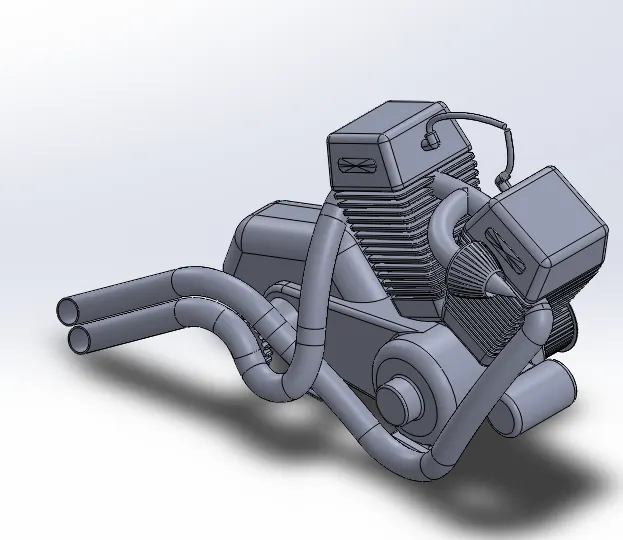
A motorcycle engine is an engine that powers a motorcycle. Motorcycle engines are typically two-stroke or four-stroke combustion engine, but other engine types, such as Wankels and electric motor, have been used. Although some mopeds, such as the Velosolex, had friction drive to the front tire, a motorcycle engine normally drives the rear wheel, power being sent to the driven wheel by belt, chain or shaft. Historically, some 2,000 units of the Megola were produced between 1921 and 1925 with front wheel drive, and the modern Rokon, an all terrain motorcycle with both wheels driven, has been produced since 1960.Most engines have a gearbox with up to six or even 7 ratios. Reverse gear is occasionally found on heavy tourer, for example the Honda GL1600, and sidecar motorcycles, such as the Ural. The rider changes gears on most motorcycles using a foot-pedal and manual clutch, but early models had hand-levers. More recently, some have automatic or semi-automatic gearboxes, and some using CVT transmission. Outside the United States, engine capacities typically ranged from about 50 cc to 650 cc; but in Europe since 1968 motorcycles with larger capacities have become common, ranging as high as the Triumph Rocket 3's 2,300 cubic centimetres (140 cu in) engine. In the United States, V-thin engined motorcycles with capacities of 850 cc or more have been the norm since the 1920s.
FRONT FORK
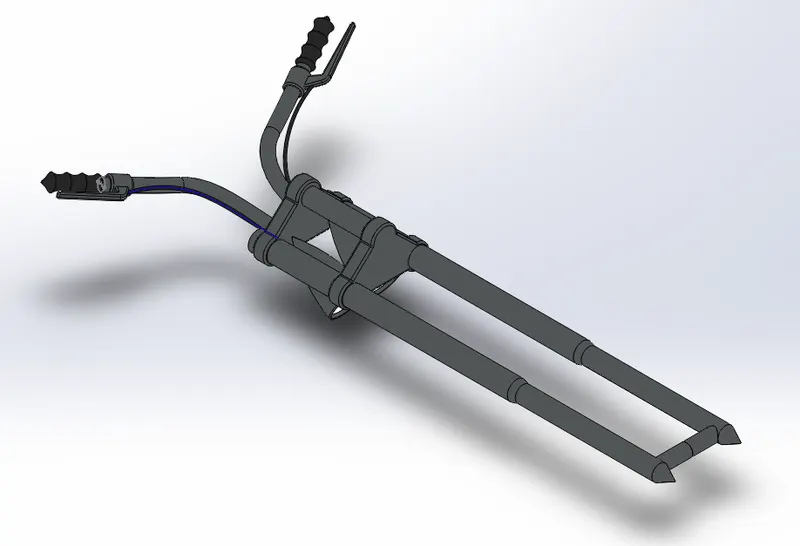
A motorcycle fork connects a motorcycle's front wheel and axle to its frame, typically via a yoke, also known as a triple clamp, which consists of an upper yoke joined to a lower yoke via a steering stem, a shaft that runs through the steering head, creating the steering axis. Most forks incorporate the front suspension and front brake, and allow the front wheel to rotate about the steering axis so that the bike may be steered. Most handlebars attach to the top clamp in various ways, while clip-on handlebars clamp to the fork tubes, either just above or just below the upper triple clamp. The fork and its attachment points on the frame establish the critical geometric parameters of rake and trail, which play a major role in defining how a motorcycle handles and dives during braking.While the standard telescopic fork arrangement is found with few major differences among mainstream street motorcycles since the 1970s, historically there have been many variations, including trailing or leading link, springer, Earles, girder, and others, as well as non-fork steering such as hub-centre steering.
ASSEMBLY OF AMERICAN CHOPPER
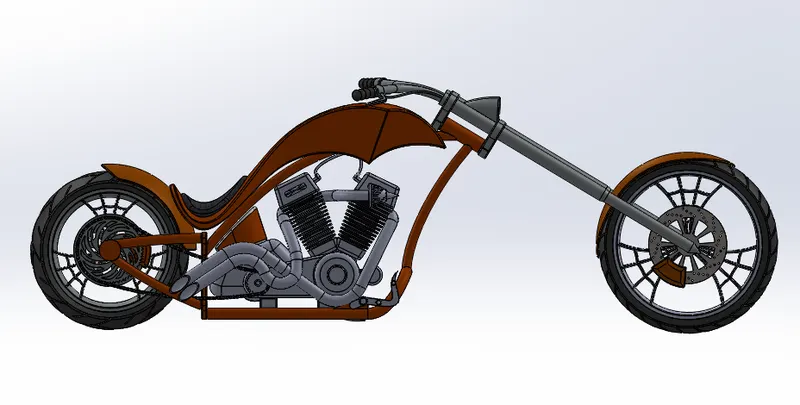
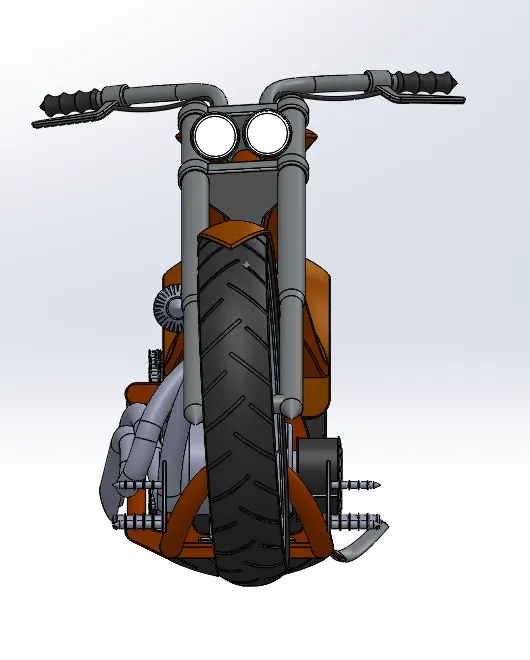
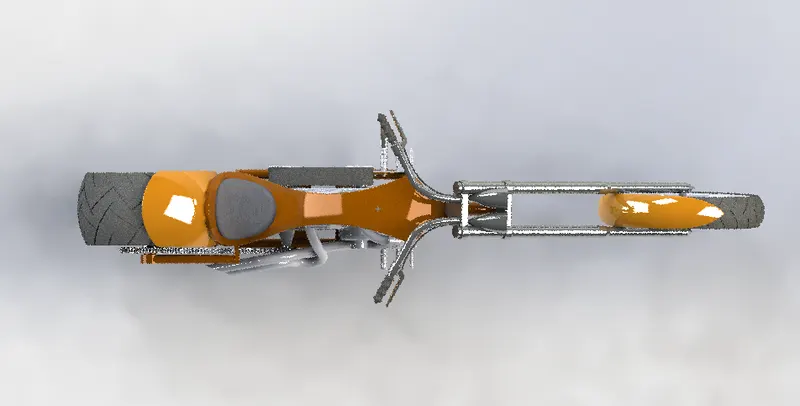
The assembly of the American Chopper is done by importing many components in assembly page. These are assembled accordingly by using mates command. Mates are done by giving relations with midplanes. The chasis is to be fixed during assembly process.
RENDERING
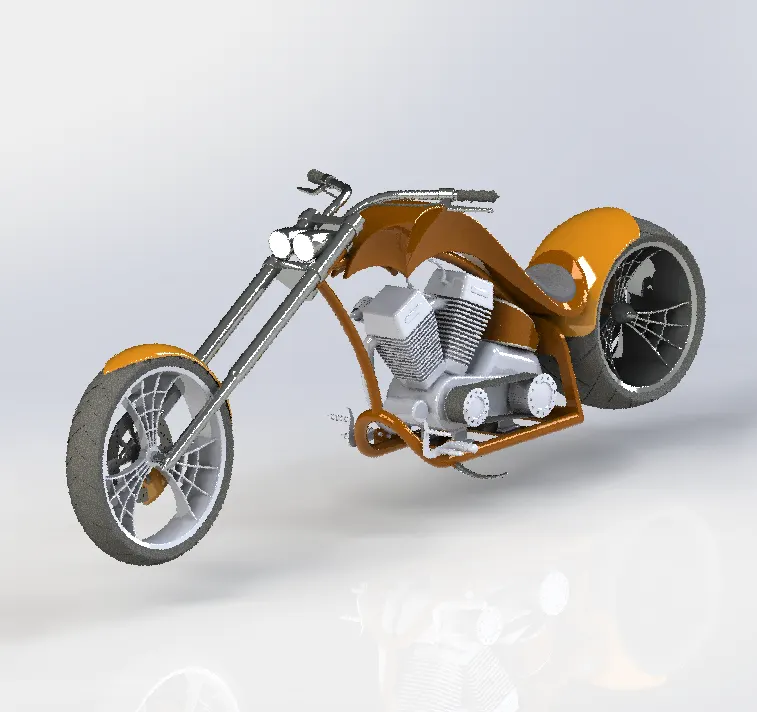
LIGHTA AND CAMERA
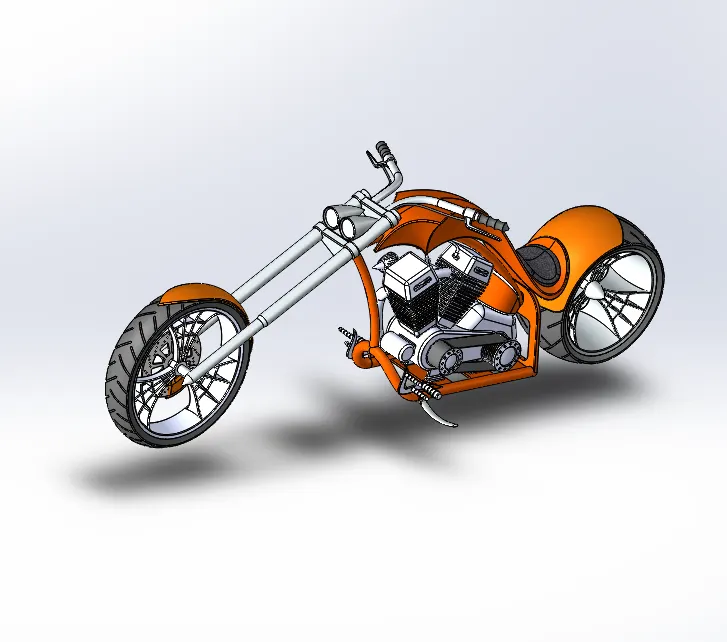
Rendering of the American Chopper is done by using SOLIDWORKS Photoview 360. It is done to make a realistic view of the American Chopper. The Integraded Preview is used to render the American Chopper.
CONCLUSION
Hence, the designing and assembling of the American Chopper is completed using SOLIDWORKS. The rendering of the American Chpper is done using SOLIDWORKS Photoview 360.