Mixing efficiency
AIM : To simulate the flow through a short and long T- joint and to observe the mixing efficiency and the standard deviation in temperature for different momentum ratio.
SIMULATION-SETUP : ANSYS FLUENT
- MODEL DESIGN : ANSYS SPACE - CLAIM
- Case setup : ANSYS - FLUENT
- Post-processor : CFD - POST
THEORY :
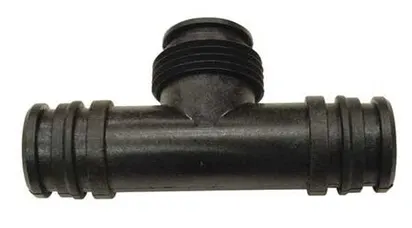
T-joints or geometry are important flow control devices which has many applications in industries and even we can find it in our home, like to mix the hot water (inlet) and cold water (inlet) to provide a warm water (outlet) for daily activities .
A mixing 'T' is a device used in many chemical diffusion/mixing processes and in applications such as air conditioners for mixing of fresh and return air. Steady state simulations were performed for a mixing tee of short and long length for three cases with different momentum ratio and mixing effectiveness was observed.
Mixing Tees are a simple method of installing an injection point in an existing piping system.In many cases, the mixing tee can be installed with little or no piping modification.
GEOMETRY :
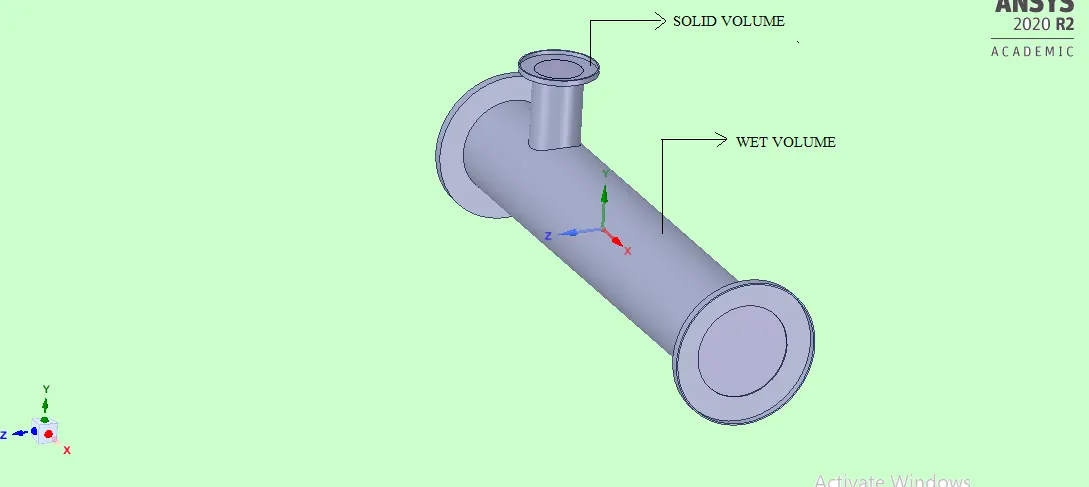
Tee – geometry is as shown above. Wet volume is the volume of the fluid ie,, the volume of geometry where the fluid flows. Whereas the solid volume is the volume of the solid. Since we are doing a CFD simulation we are not interested in a solid model ie,,, the thickness as we are capturing the physics of the flow hence the third dimension doesn’t matter. Hence the solid volume will be deleted for this CFD analysis.
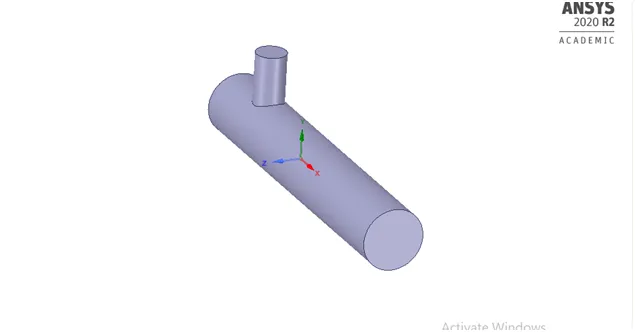
MESHING :
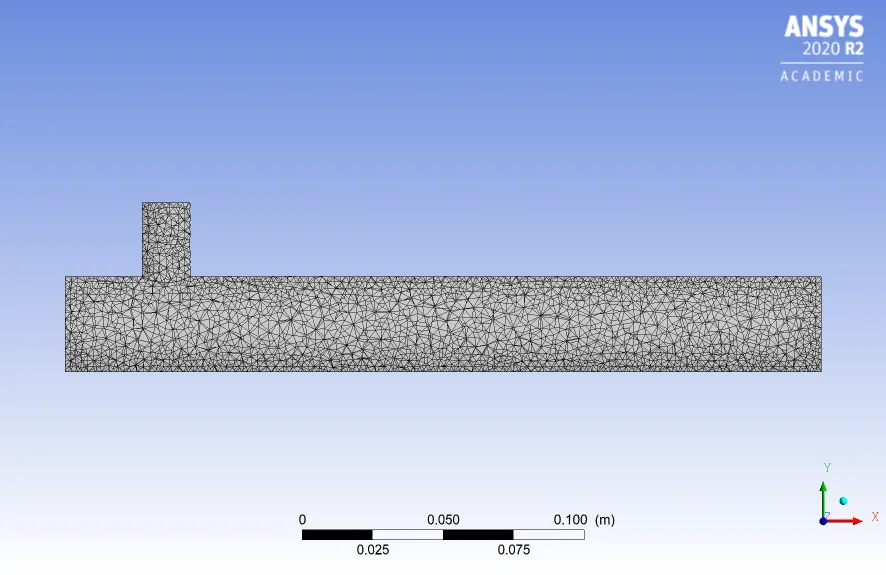
Ansys mesher was made used to create a mesh for the geometry. Meshing is a process of discretization of the given geometry into finite number of elements so that the user can have a better and accurate results over any regions in the geometry.
CASE 1 : SHORT-TEE :
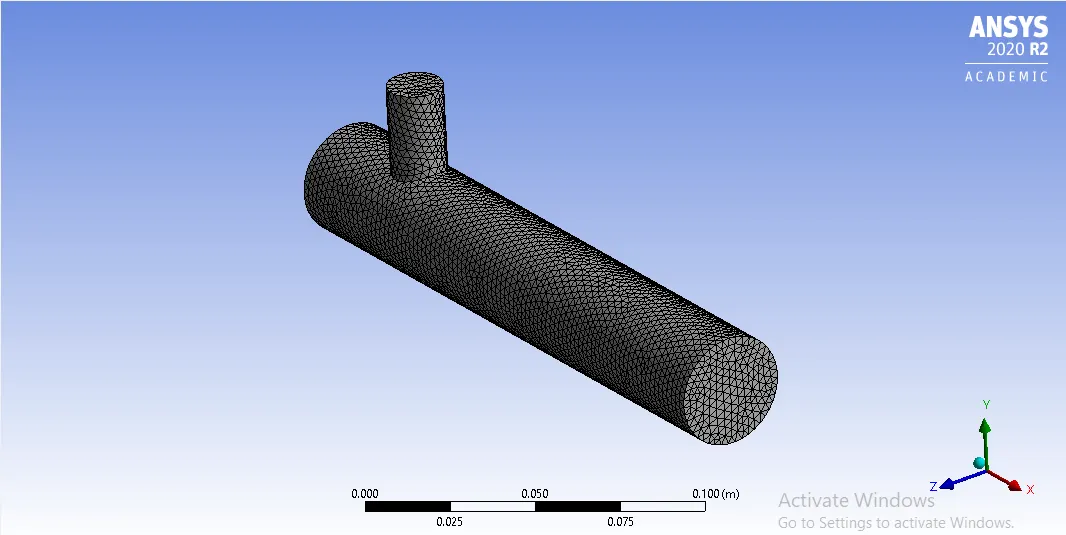
A base grid of 2.5e-3 m or 2.5 mm was selected for the mesh, as a much more smaller size of the cell would interrupt in licensing error in Ansys student version.
For above selected base mesh around 61206 tets (tetrahedral) cells were created in the geometry, which was quite a finer mesh.
CASE 2 : LONG-TEE :
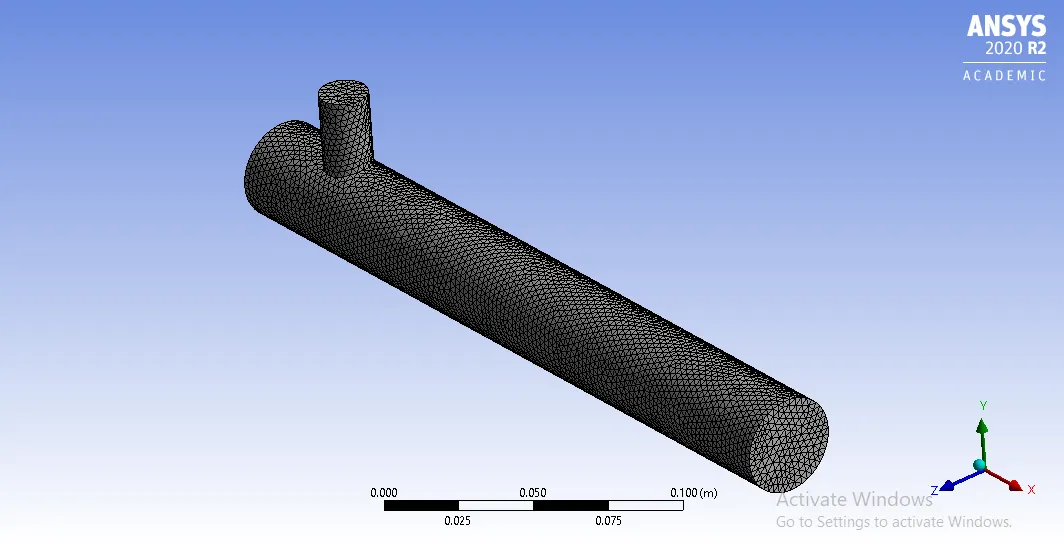
A base grid of 2.5e-3 m or 2.5 mm was selected for the mesh, as a much more smaller size of the cell would interrupt in licensing error in Ansys student version.
Since the geometry is long in this case, it is clear that for the same base grid size, around 86726 tets (tetrahedral) cells were created in the geometry, which was quite a finer mesh.
CASE-SETUP :
The entire simulation was ran for two diffrent T-joints and for varying momentum ratio.
1) Short T-joint
2) Long T-joint
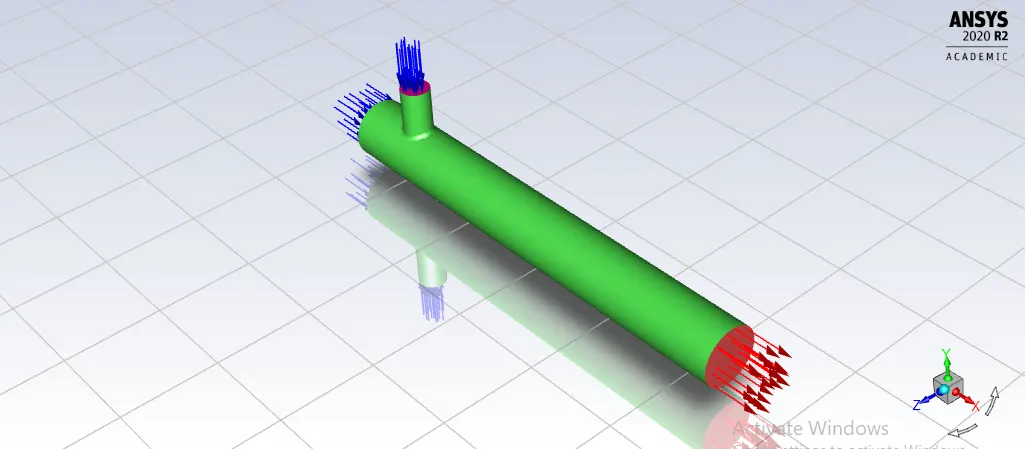
The entire case setup was done in Ansys fluent. The following were the boundary condition and physics that were set-up in the simulation
Since the geometry has two inlet , the inlet of the geometry in y-axis was given a inlet velocity of 3 m/s (cold fluid) in first case and 12 m/s (cold fluid) in second case (ie,,, momentum ratio of 2 and 4).
Similarly the inlet in the x-axis was assigned an constant inlet velocity of 3m/s.
BOUNDARY CONDITIONS :
Inlet-y : In-flow boundary with a velocity of cold air being 3m/s and 12m/s and temperature of 19ºC ( 293K )
Inlet-x : In-flow boundary with a velocity of hot air being 3m/s and temperature of 36ºC ( 310K )
Outlet : Outflow boundary with gauge pressure being zero ie,, the atmospheric pressure same as absolute pressure.
WALLS : The other regions of the geometry were assigned to wall-type boundary conditions.
TURBULENCE – MODELLING :
Two different turbulence model were made used in the simulation.
- k-epsilon realizable model which solves the 2 equation ie,,, the Navier stokes and the Energy equation.
- k-omega SST model which solves the 2 equation ie,,, the Navier stokes and the Energy equation.
RESULTS :
CASE 1 : SHORT- T AND MOMENTUM RATIO OF 2
TURBULENCE MODEL : k-epsilon realizable model
Momentum ratio is given by
Momentum ratio = velocity of cold air/velocity of hot air.
Given that the velocity of hot air is 3m/s and momentum ratio of 2, hence
2 = velocity of cold air / 3
Velocity cold air = 2*3 = 6m/s
Temperature :
Hot air temperature of 36ºC at the inlet.
Cold air temperature of 19ºC at the inlet.
TEMPERATURE CONTOUR AND PLOTS :
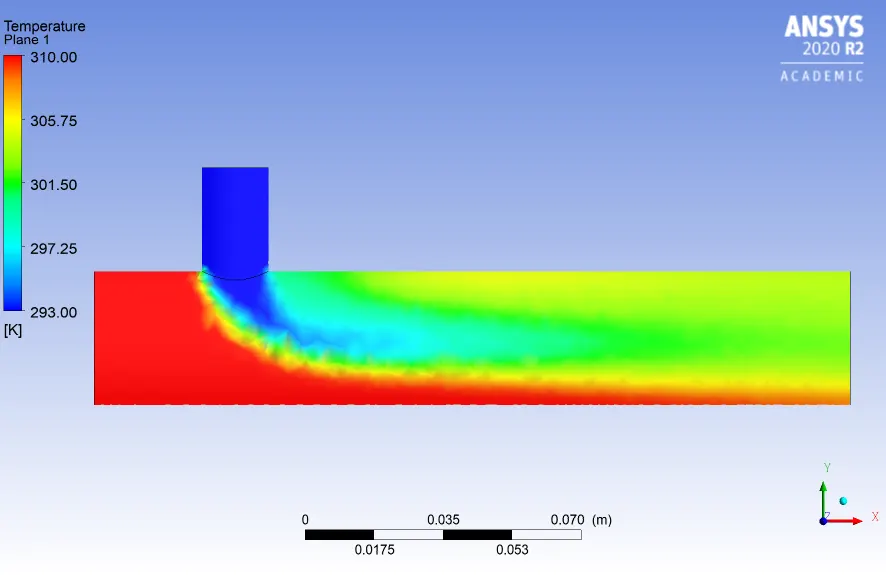
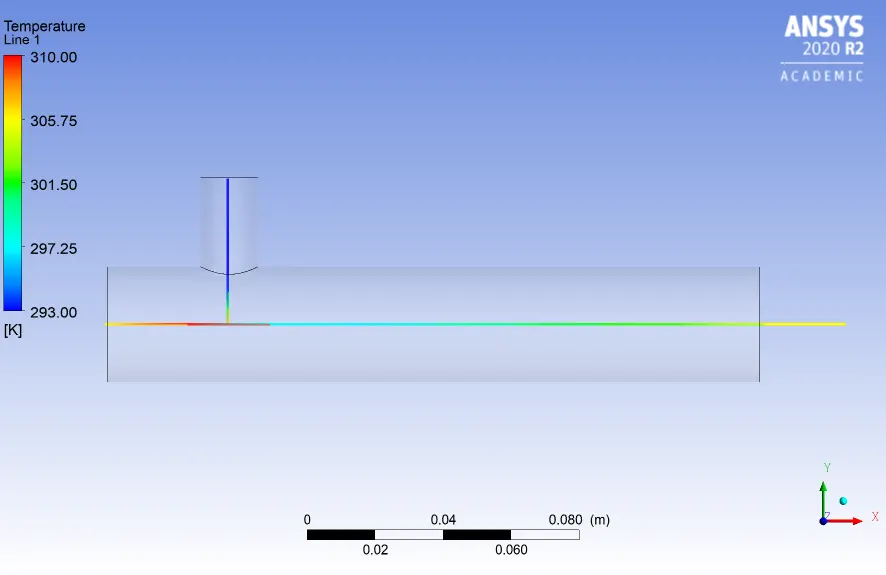
Above plot shows the variation of temperature when a cold air at 6m/s mixes with an incoming hot air of 3m/s. The mixing occurs quite uniformly and the solution converges to an average outlet temperature of around 304 K or 31ºC. The most part of mixing is due to the momentum of the incoming air. Higher the momentum ratio higher is the mixing efficiency (the length of the pipe matters for efficiency as well ) of the flow.
Also one can see there is a slight mixing due to diffusion that is taking place, although it is not a dominant one that accounts for a mixing efficiency.
CUT PLANE TEMPERATURE CONTOURS
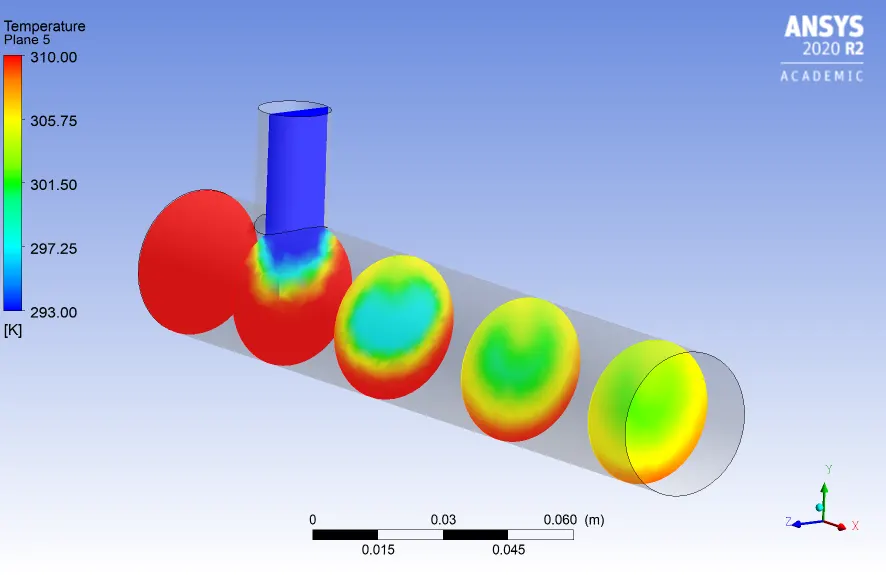
Initially the temperature at the inlet in y-axis is 293K and in x-axis is 310K as per the boundary condition. Once the flow coming in x-axis inlet (hot air) meets the flow coming through y-axis inlet (cold air) process of mixing occurs.
Above contour depicts the temperature variation of the flow, just at the moment where the flow meets.
LINE PLOT OF TEMPERATURE
AVERAGE OUTLET TEMPERATURE :
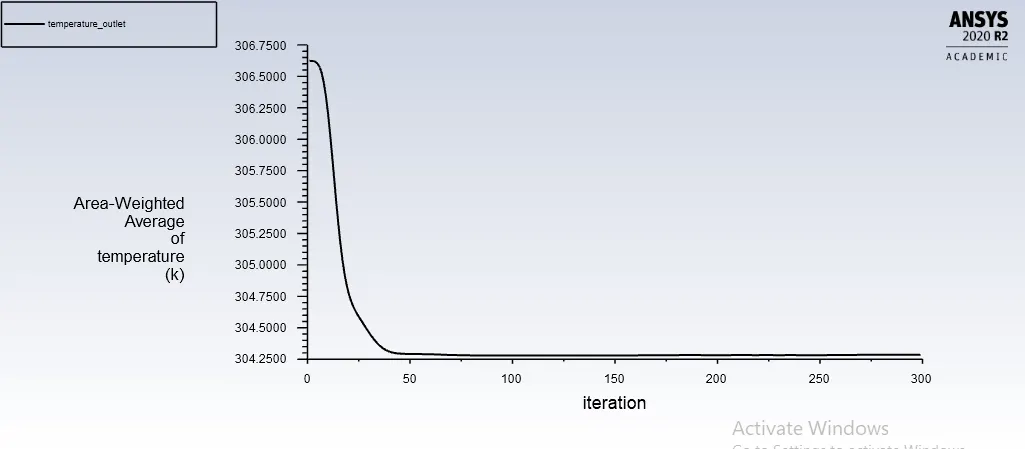
The average outlet temperature converges to a value of 31ºC (304K).
STANDARD DEVIATION OF THE TEMPERATURE :
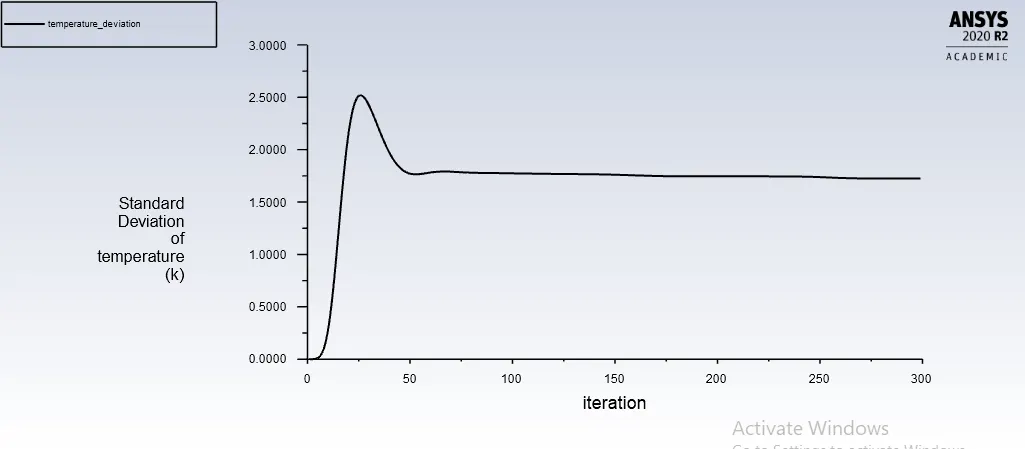
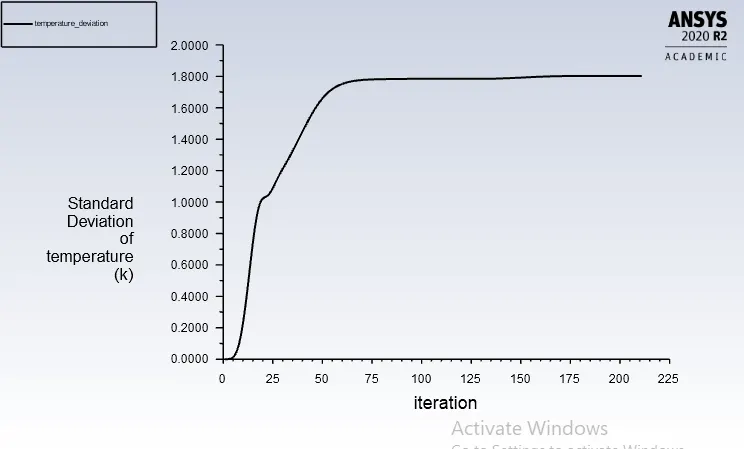
Standard deviation of temperature is the measure of effectiveness of the mixing.
Higher the standard deviation of temperature – bad mixing efficiency.
Lower the standard deviation of temperature – good mixing efficiency.
In our simulation the standard deviation of the temperature is around 1.75, which is quite a good indication of the mixing of two flows.
VELOCITY - CONTOUR :
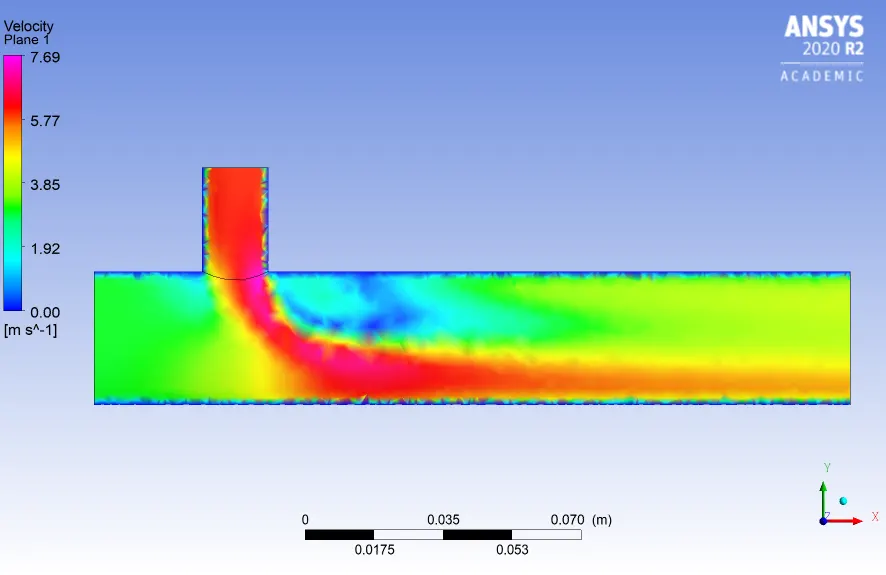
Above plot shows the velocity contour in a T-geometry. When both the flows with different velocity meeting at a point and is travelling in the same direction the velocity of the combined flow increases as it’s momentum increases and so is the velocity. The maximum velocity achieved is 7.89 m/s at a location just in front where the two flow meets and as the flow move towards the outlet it’s velocity decreases and reaches a steafy state value of around 4 m/s.
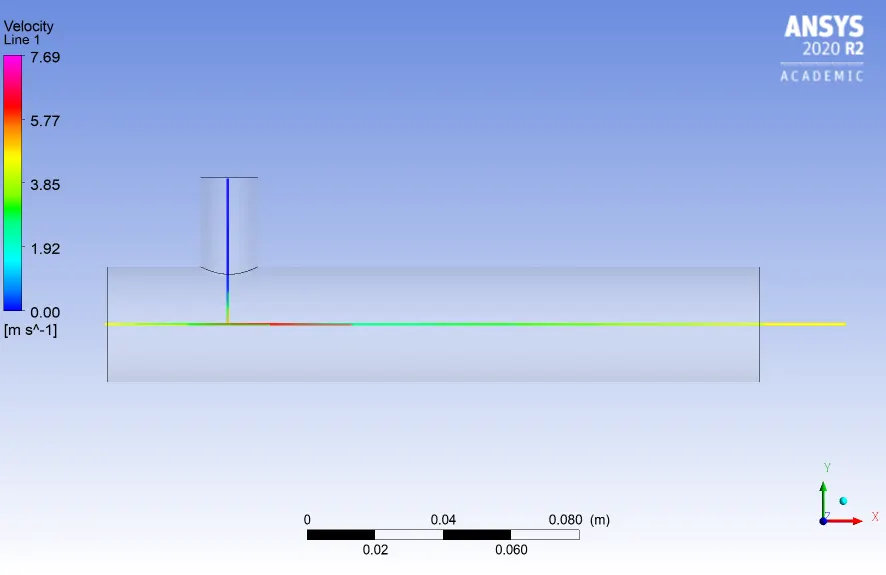
LINE PLOT OF VELOCITY :
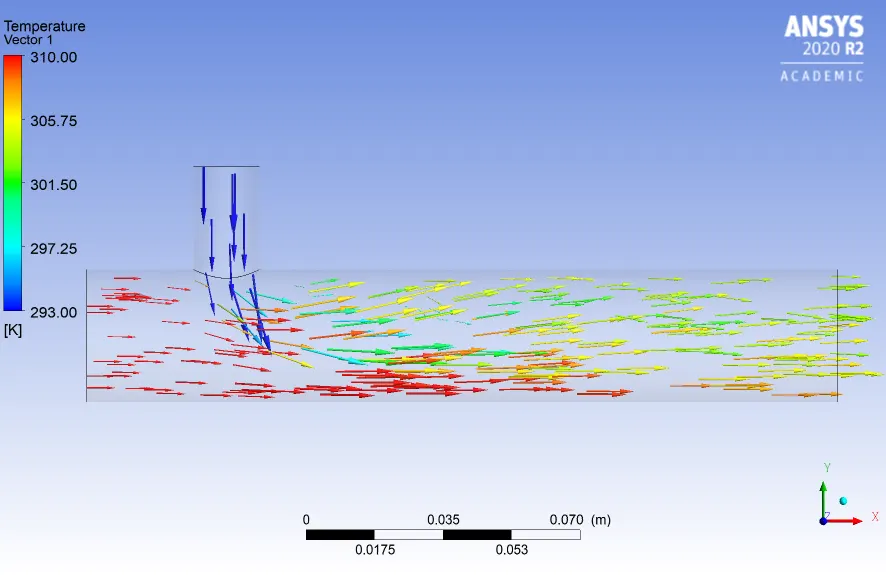
VECTOR-PLOT TO DEPICT THE FLOW BEHAVIOUR :
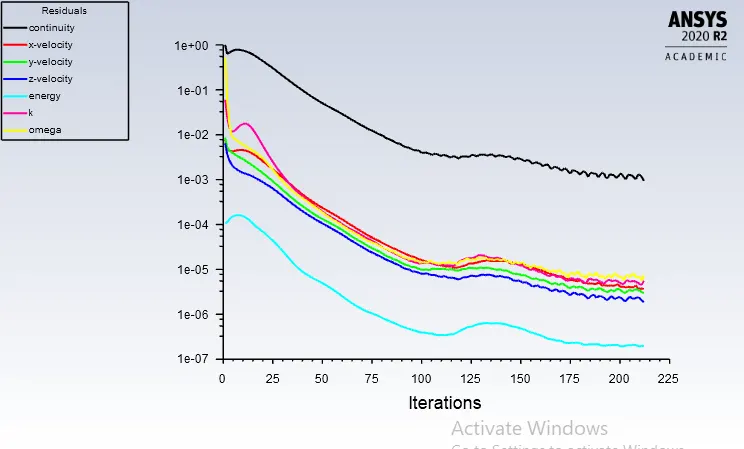
RESIDUALS :
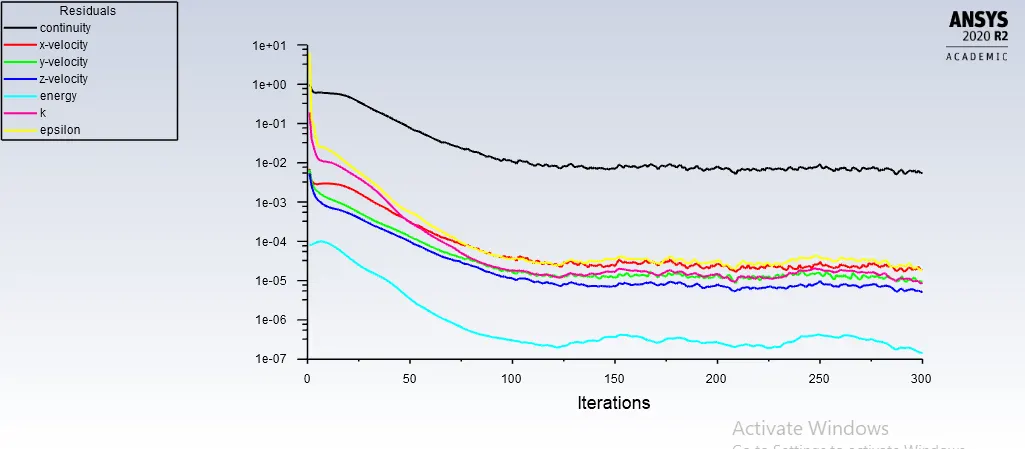
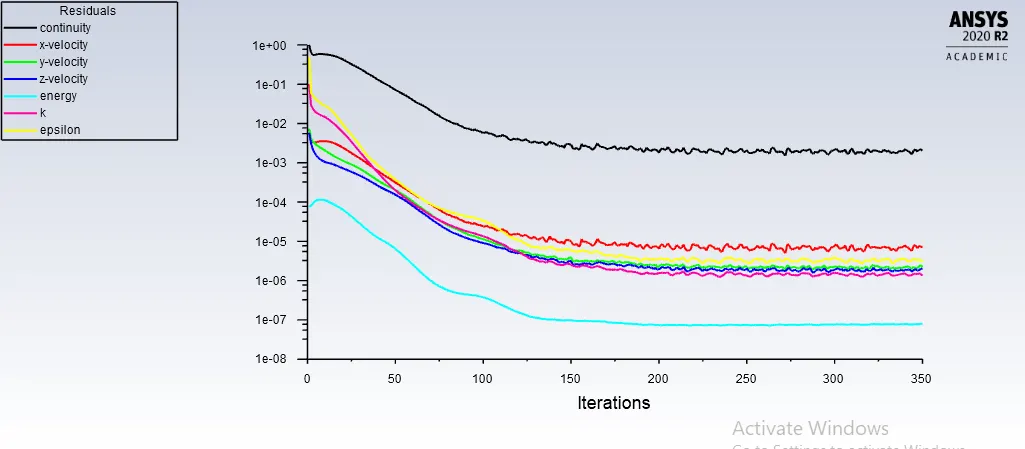
Residuals are the set of equation assigned in a simulation. Above plot shows the convergence of different parameters like continuity, energy, velocity and so on.
The solution is almost approaching convergence at the end of the iterations.
CASE 2 : SHORT- T AND MOMENTUM RATIO OF 4
TURBULENCE MODEL : k-omega SST model
Momentum ratio is given by
Momentum ratio = velocity of cold air/velocity of hot air.
Given that the velocity of hot air is 3m/s and momentum ratio of 4, hence
4= velocity of cold air / 3
Velocity cold air = 4*3 = 12m/s
Temperature :
Hot air temperature of 36ºC at the inlet.
Cold air temperature of 19ºC at the inlet.
TEMPERATURE CONTOUR AND PLOTS :
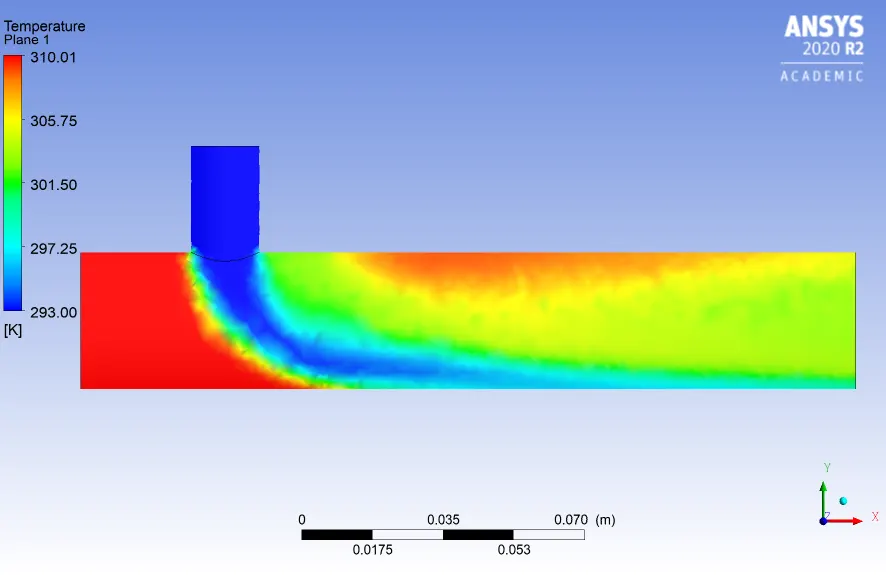
Above plot shows the variation of temperature when a cold air at 12m/s mixes with an incoming hot air of 3m/s. The mixing occurs quite uniformly and the solution converges to an average outlet temperature of around 301 K or 28ºC. The most part of mixing is due to the momentum of the incoming air. Higher the momentum ratio higher is the mixing efficiency (the length of the pipe matters for efficiency as well ) of the flow.
Also one can see there is a slight mixing due to diffusion that is taking place, although it is not a dominant one that accounts for a mixing efficiency.
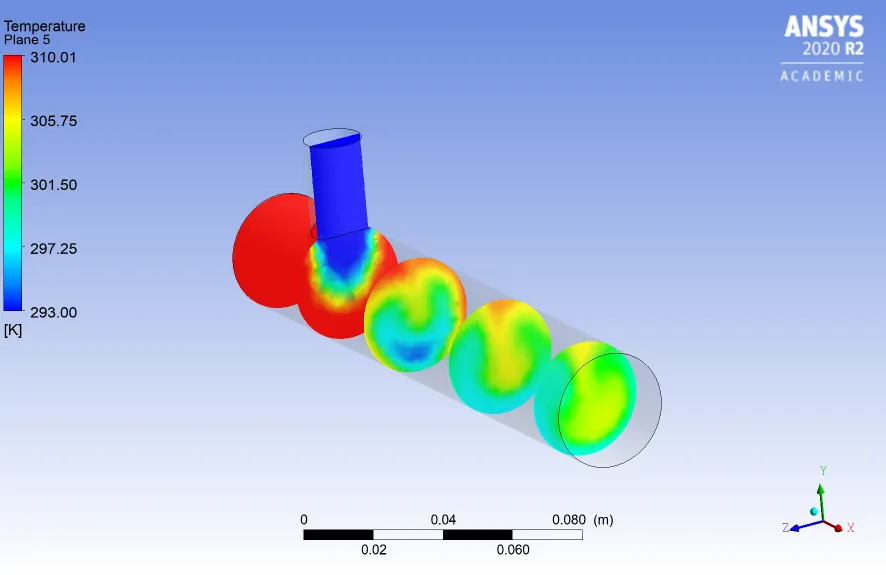
CUT PLANE TEMPERATURE CONTOURS
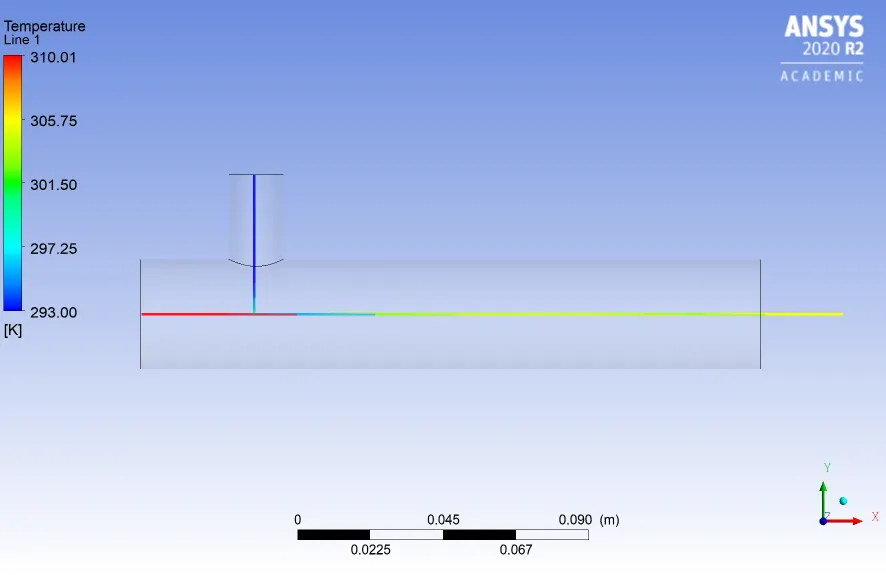
LINE PLOT OF TEMPERATURE
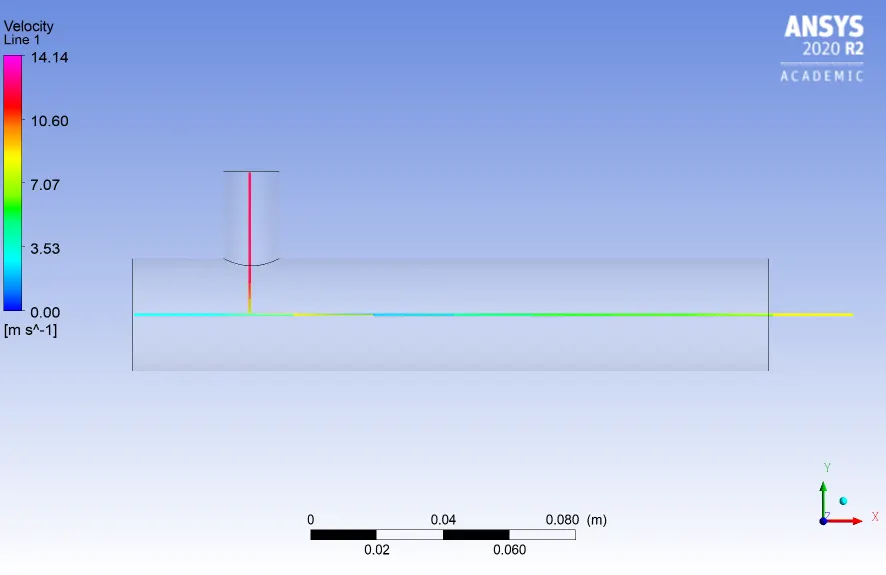
CONTOUR PLOT OF VELOCITY
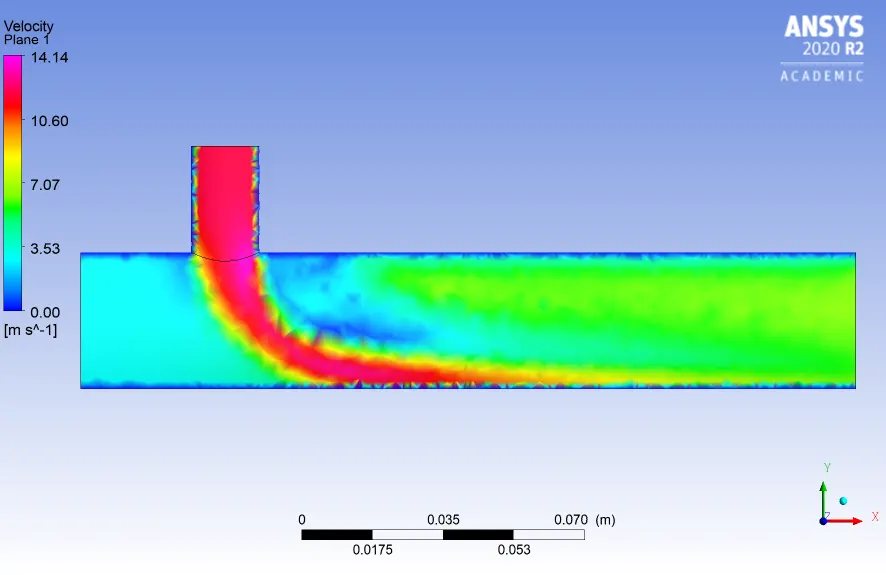
The maximum velocity in this case is around 14.14 m/s.
LINE PLOT OF VELOCITY
AVERAGE OUTLET TEMPERATURE :
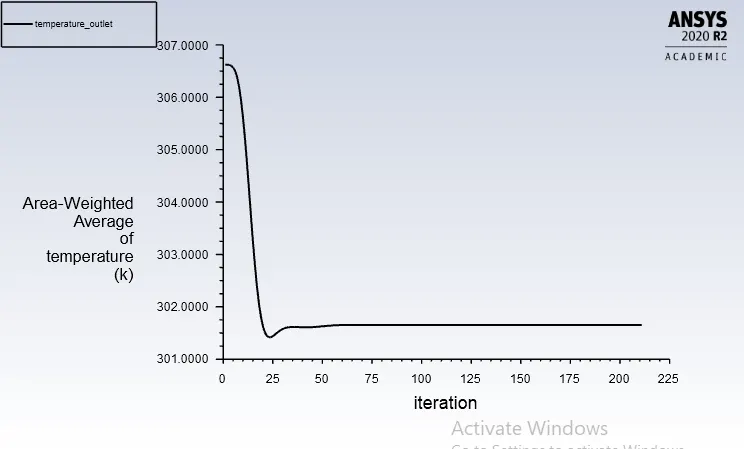
The average outlet temperature is 301.5K or 29ºC.
STANDARD DEVIATION OF TEMPERATURE :
RESIDUALS :
CASE 3 : LONG- T AND MOMENTUM RATIO OF 2
TURBULENCE MODEL : k-epsilon realizable model
Momentum ratio is given by
Momentum ratio = velocity of cold air/velocity of hot air.
Given that the velocity of hot air is 3m/s and momentum ratio of 2, hence
2= velocity of cold air / 3
Velocity cold air = 2*3 = 6m/s
Temperature :
Hot air temperature of 36ºC at the inlet.
Cold air temperature of 19ºC at the inlet.
TEMPERATURE CONTOUR AND PLOTS :
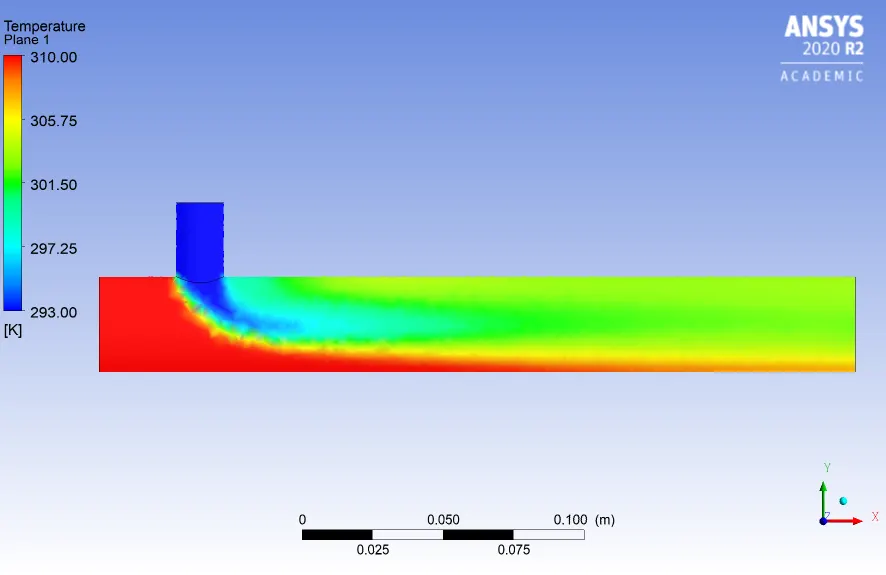
Above plot shows the variation of temperature for a longer T-joint than the previous two cases, when a cold air at 6m/s mixes with an incoming hot air of 3m/s. The mixing occurs quite uniformly and the solution converges to an average outlet temperature of around 302 K or 29ºC. The most part of mixing is due to the momentum of the incoming air. Higher the momentum ratio higher is the mixing efficiency (the length of the pipe matters for efficiency as well ) of the flow.
Also one can see there is a slight mixing due to diffusion that is taking place, although it is not a dominant one that accounts for a mixing efficiency.
CUT PLANE TEMPERATURE CONTOURS
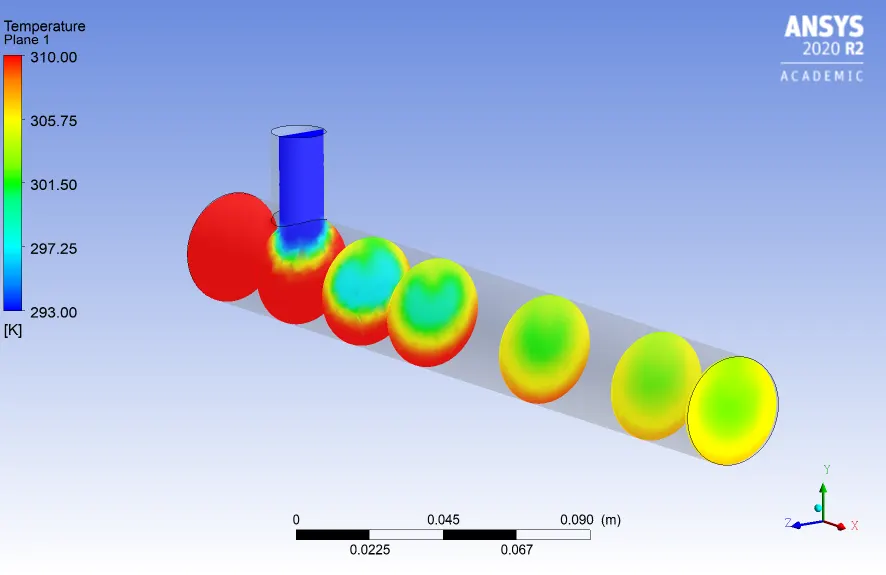
Initially the temperature at the inlet in y-axis is 293K and in x-axis is 310K as per the boundary condition. Once the flow coming in x-axis inlet (hot air) meets the flow coming through y-axis inlet (cold air) process of mixing occurs.
Above contour depicts the temperature variation of the flow, just at the moment where the flow meets.
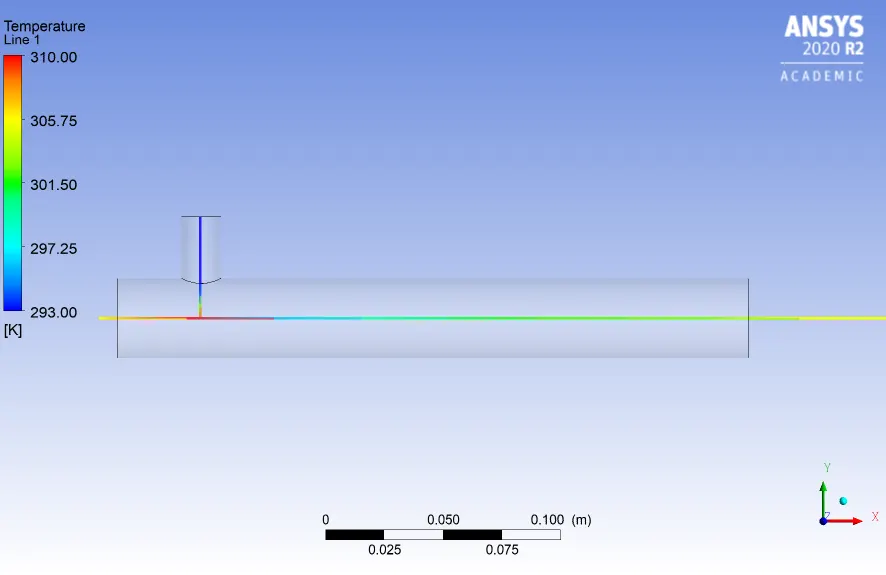
LINE PLOT OF TEMPERATURE
CONTOUR PLOT OF VELOCITY
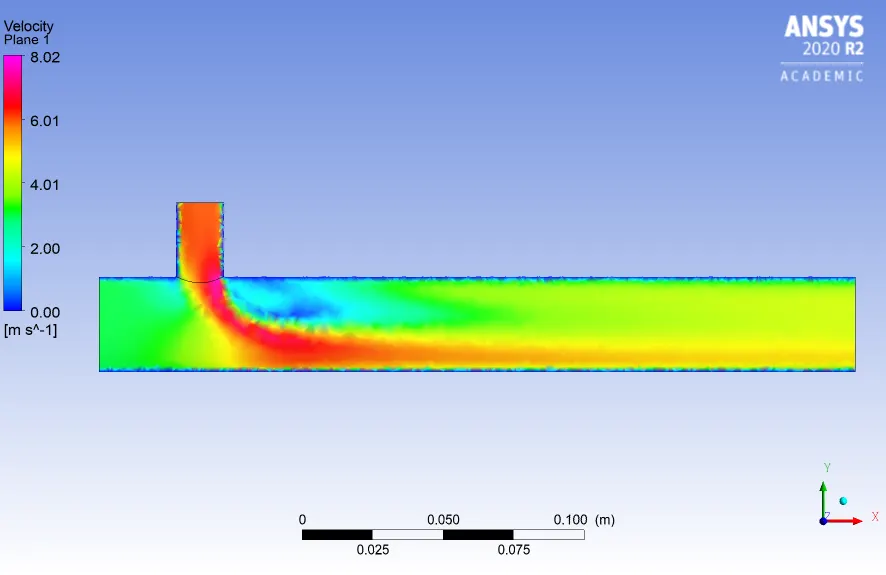
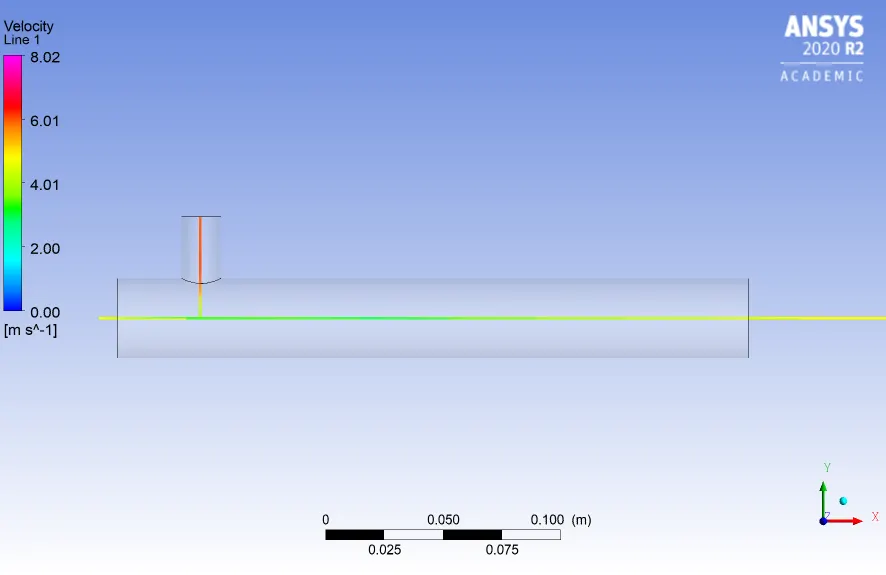
Above plot shows the velocity contour in a long T-geometry. When both the flows with different velocity meeting at a point and is travelling in the same direction the velocity of the combined flow increases as it’s momentum increases and so is the velocity. The maximum velocity achieved is 8.02 m/s at a location just in front where the two flow meets and as the flow move towards the outlet it’s velocity decreases and reaches a steafy state value of around 4.5 m/s.
OBSERVATION :
The vellocity of the flow increases in the longer T-joint when compare to the flow in the shorter T-joint, this is because flow has the longer space to expand and hence it's kinetic energy
increases and so is the velocity increases, whereas in shorter T-joint the flow had lesser space to expand and hence velocity was quite low.
LINE PLOT OF VELOCITY
AVERAGE OUTLET TEMPERATURE :
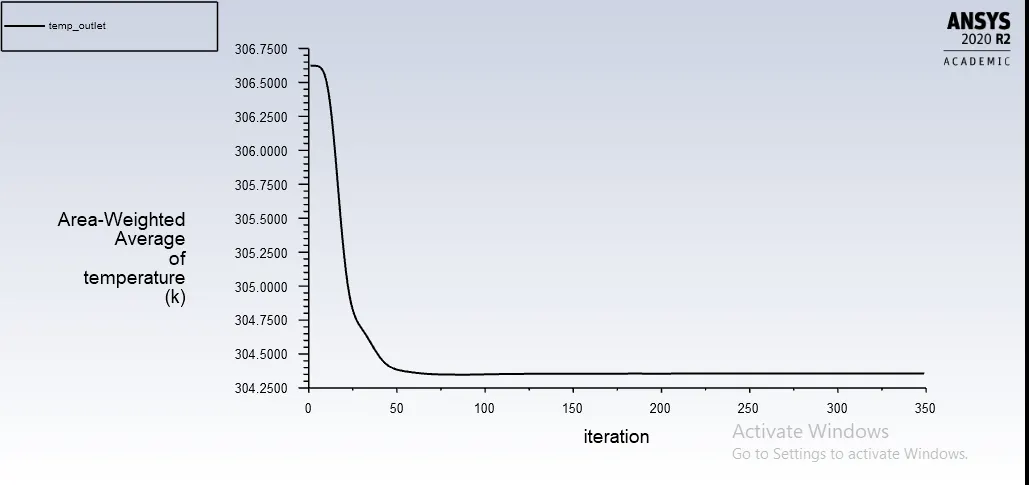
The average outlet temperature is 304.5K or 32ºC.
STANDARD DEVIATION OF TEMPERATURE :
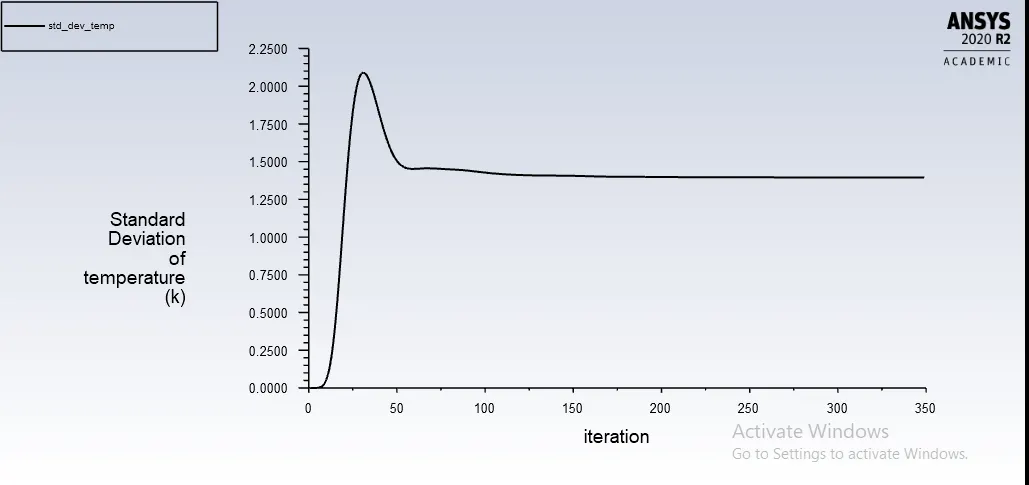
tandard deviation of temperature is the measure of effectiveness of the mixing.
Higher the standard deviation of temperature – bad mixing efficiency.
Lower the standard deviation of temperature – good mixing efficiency.
In our simulation the standard deviation of the temperature is around 1.5, which is quite a good indication of the mixing of two flows.
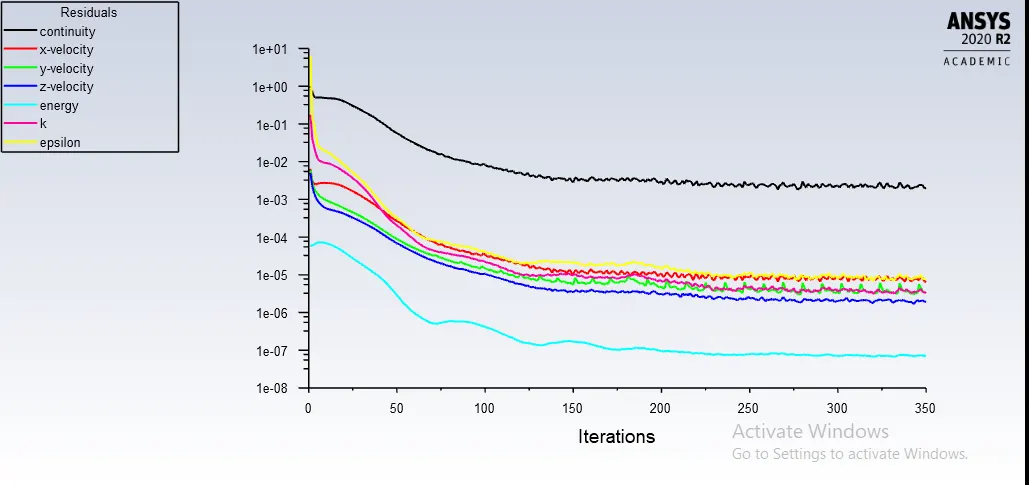
RESIDUALS :
CASE 4 : LONG- T AND MOMENTUM RATIO OF 4
TURBULENCE MODEL : k-epsilon realizable model
Momentum ratio is given by
Momentum ratio = velocity of cold air/velocity of hot air.
Given that the velocity of hot air is 3m/s and momentum ratio of 2, hence
4 = velocity of cold air / 3
Velocity cold air = 4*3 = 12m/s
Temperature :
Hot air temperature of 36ºC at the inlet.
Cold air temperature of 19ºC at the inlet.
TEMPERATURE CONTOUR AND PLOTS :
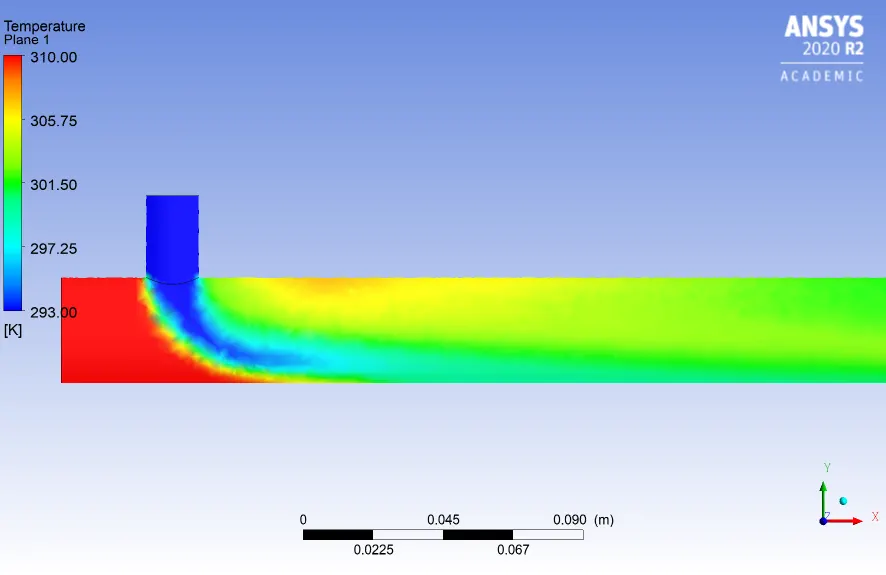
CUT PLANE TEMPERATURE CONTOURS
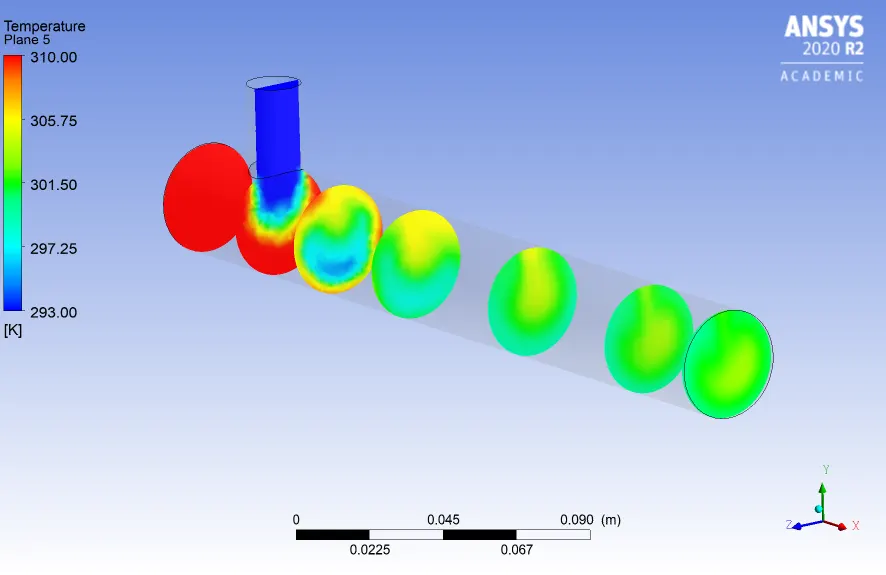
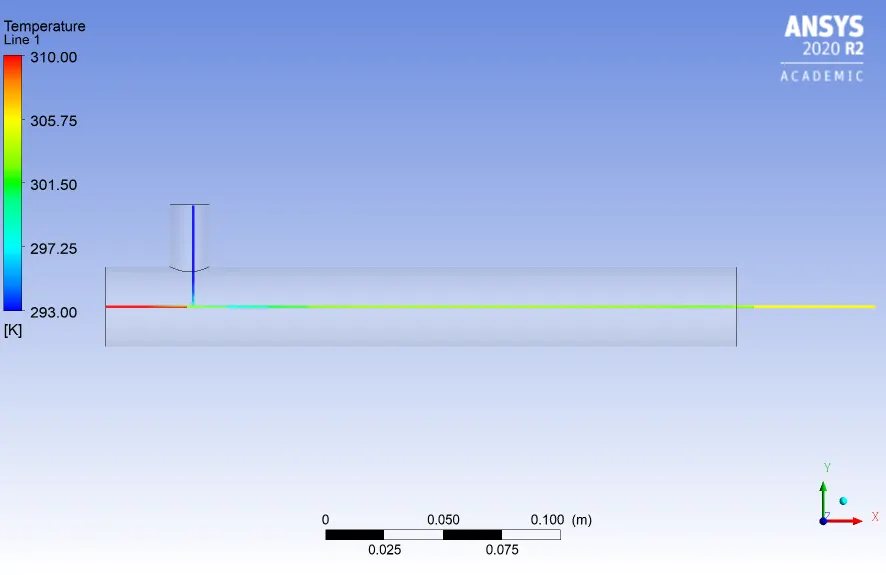
LINE PLOT OF TEMPERATURE
CONTOUR PLOT OF VELOCITY
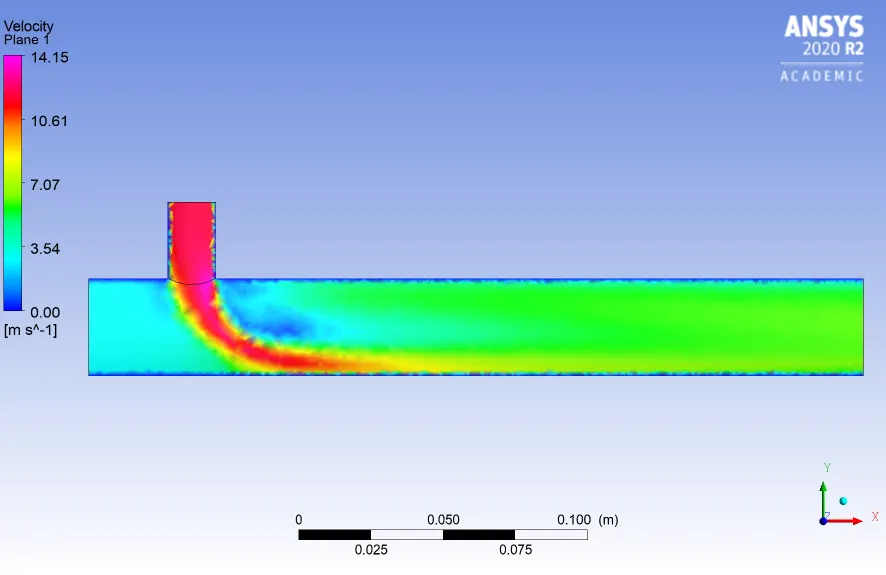
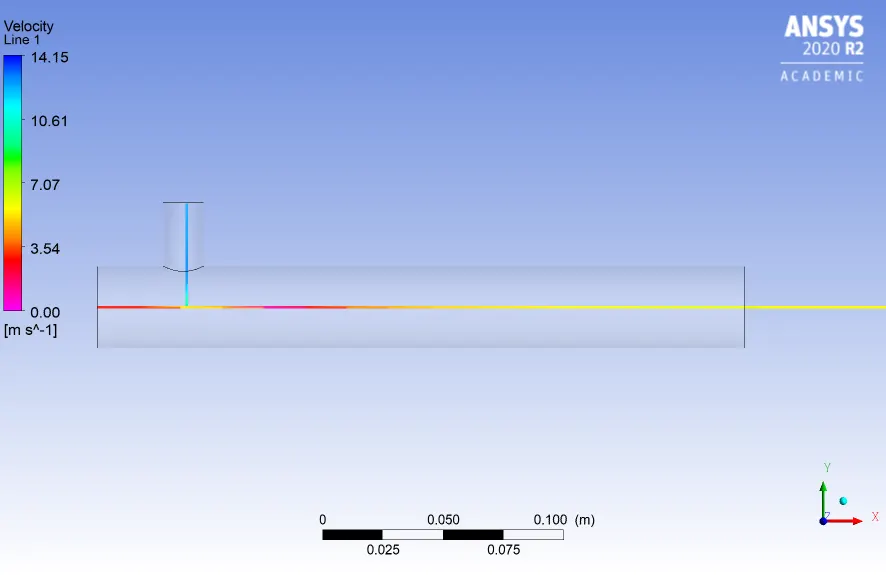
Maximum velocity achieved is 14.15 m/s.
LINE PLOT OF VELOCITY
AVERAGE OUTLET TEMPERATURE :
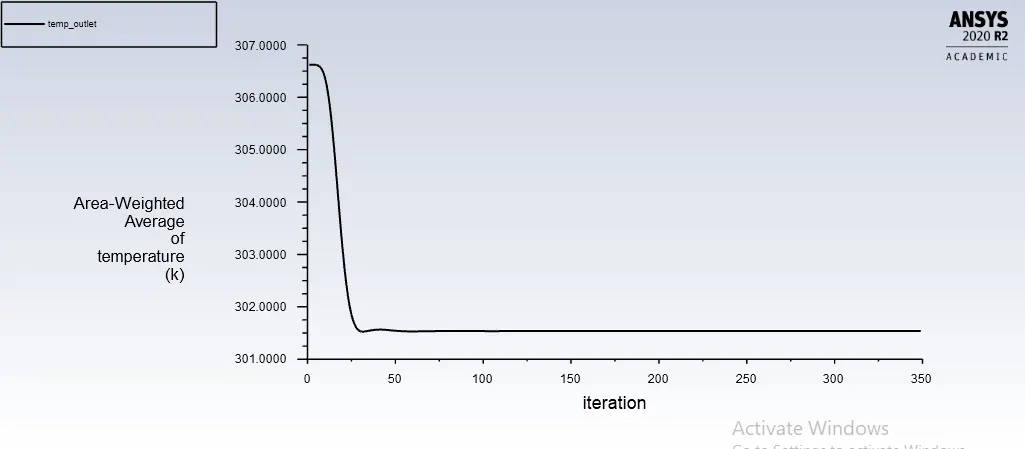
The average outlet temperatue is around 301.5K or 30ºC.
STANDARD DEVIATION OF TEMPERATURE :
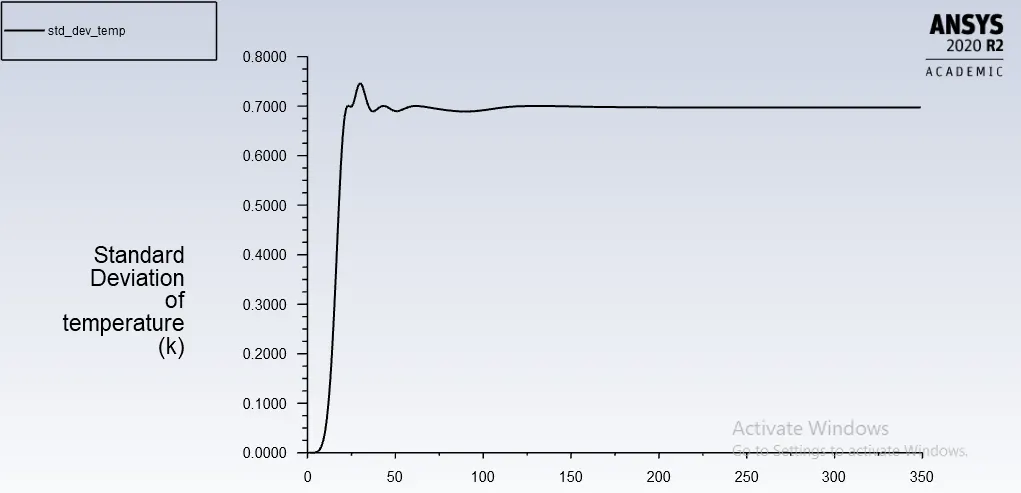
The deviation of temperature in this case is much more lower and is around 0.7K, which is a good indication of mixing of two flows.
RESIDUALS :
CONCLUSION :
T-joints are imporatnt flow control devices, a mixing 'T' is a device used in many chemical diffusion/mixing processes and in applications such as air conditioners for mixing of fresh and return air. Steady state simulations were performed for a mixing tee of short and long length for three cases with different momentum ratio and mixing effectiveness was observed.
In the first case ie,, short T-joint and momentum ratio of 2 : The avergae outlet temperature is 31ºC.
similarly, for short T-joint and momentum ratio of 4 : The avergae outlet temperature is 29ºC.
In the second case ie,,long T-joint and momentum ratio of 2 : The avergae outlet temperature is 32ºC.
similarly, for long T-joint and momentum ratio of 4 : The avergae outlet temperature is 30ºC.
Hence, the shorter T-joint has the acceptable outlet temperature when compared to a T-joint with almost similar outlet temperature but longer in terms of length and most of the mixing
process occurs mainly because of momentum of incoming air and diffusion doesn't play much significsnt role in mixing here.