Mixing effectiveness in T-juntion
- Case 1
- Short mixing tee with a hot inlet velocity of 3m/s.
- Momentum ratio of 2, 4.
- Length = 212.85mm
- Case 2
- Long mixing tee with a hot inlet velocity of 3m/s.
- Momentum ratio of 2, 4.
- Length = 216mm
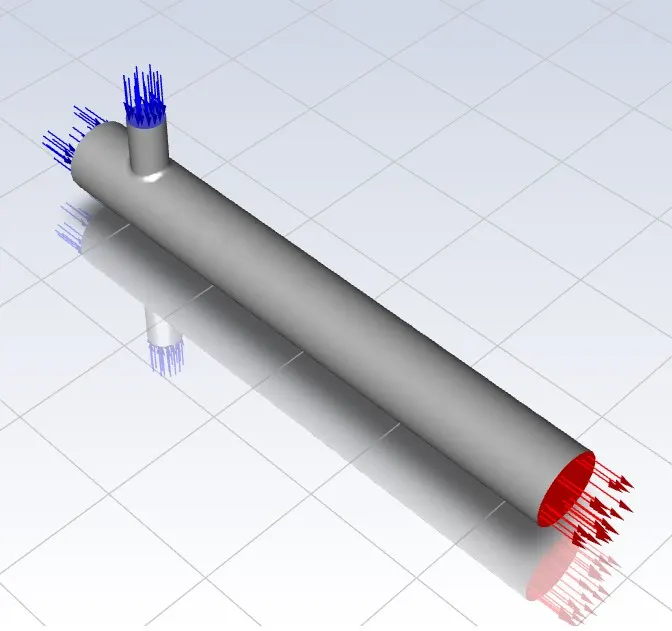
Hot air temperature is 36 degree Celsius
Cold air temperature is 19 degree Celsius
V1 = 3m/s,
V2 = 6m/s for Momentum ratio = 2
V2 = 12m/s for Momentum ratio = 4
Objectives:
- To simulate T junction for mixing of hot and cold air in Ansys Fluent.
- To determine how velocity ratio affects the effectiveness of the mixing of the fluid.
- Comparing Computation result with Analytical result.
Theory:
Solver - since it is turbulence modeling so K epsilon and K omega solvers are used.
a)Comparision of courser mesh to fine mesh:
Solver - Turbulence model – K omega
For fine mesh
No of cell = 4,10,462
Type - Tetra hedra
No of iteration to converge = 266
Average outlet temp = 34.55 ˚C
! 124 solution is converged
124 9.7590e-04 1.7721e-06 5.1687e-07 4.9367e-07 1.3144e-08 1.9898e-06 5.2591e-06 0:37:25 377
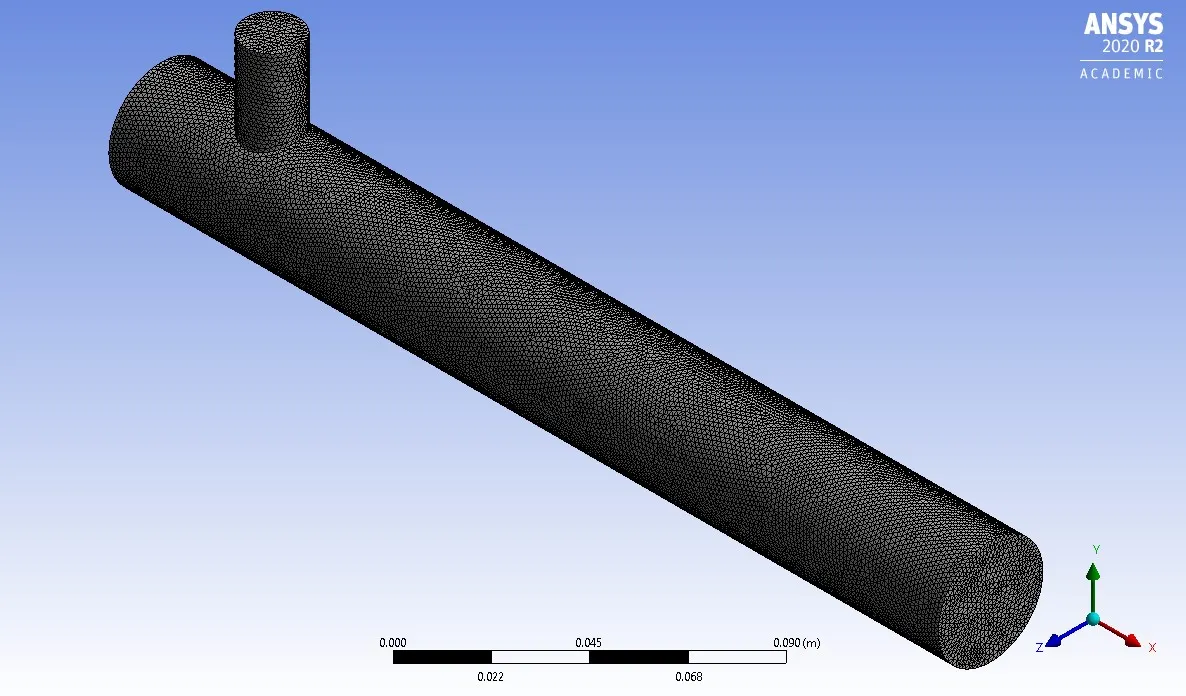
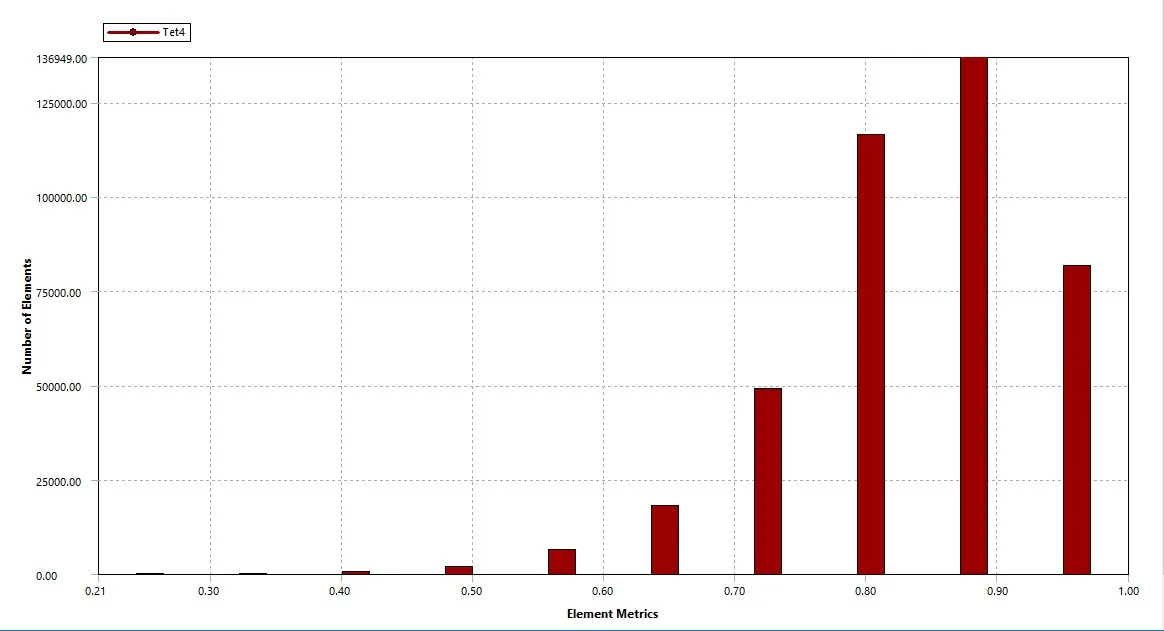
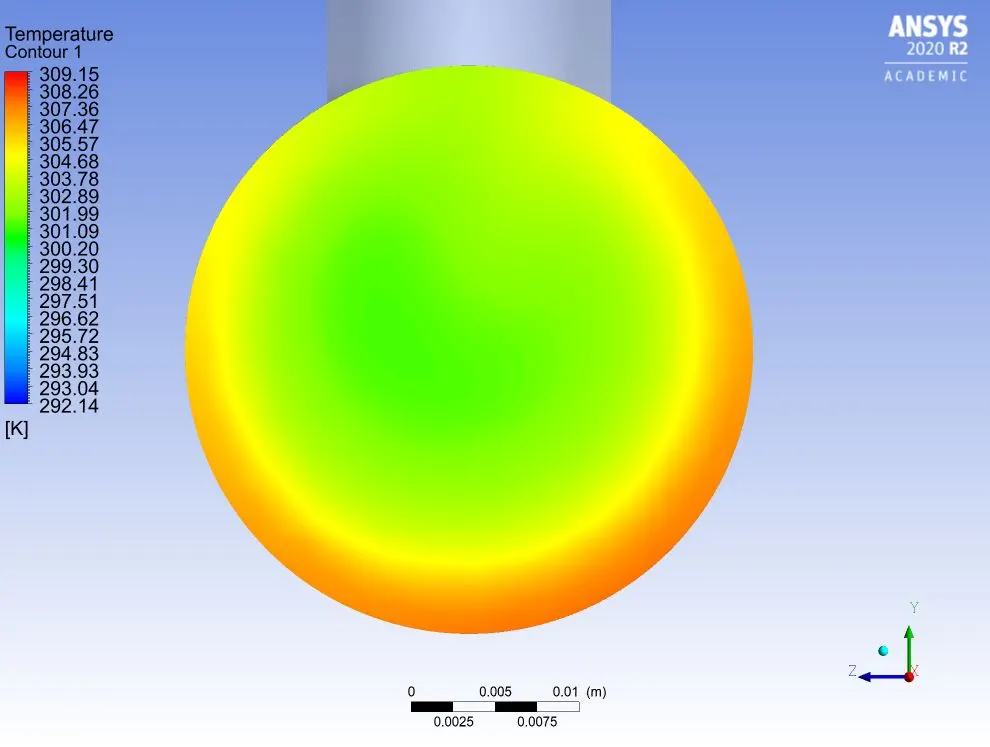
For coarse mesh
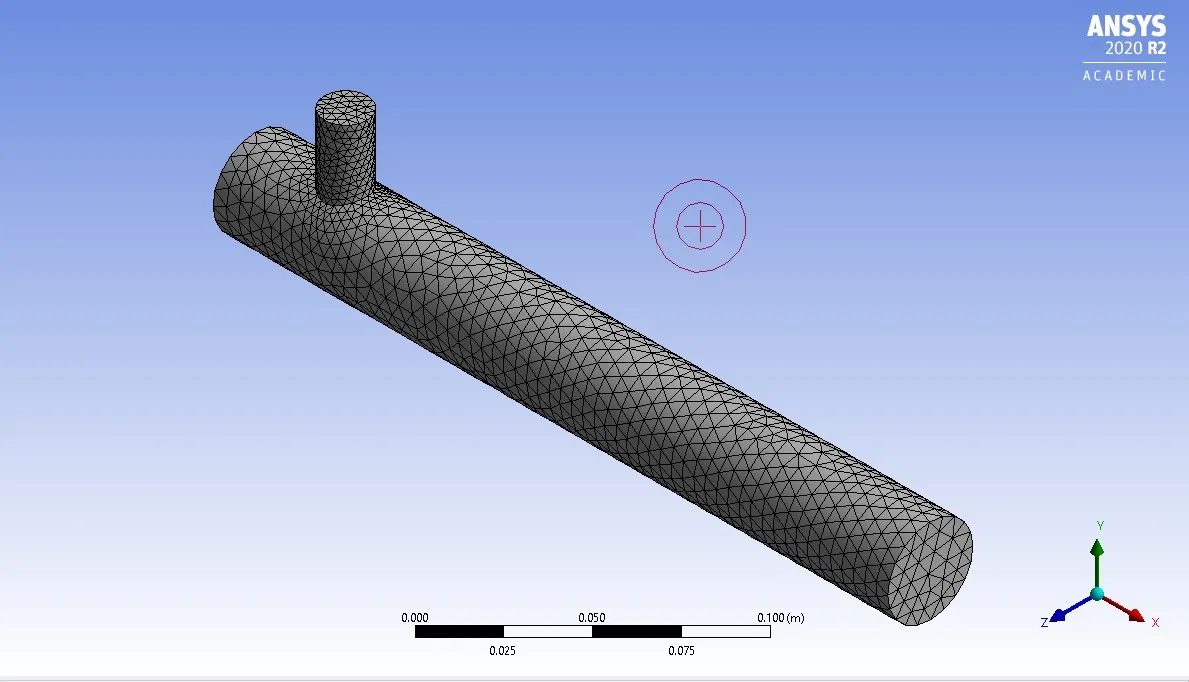
No of cell = 15,610
Type - Tetra hedra
No of iteration to converge = 302
Average outlet temp = 34.55 ˚C
! 299 solution is converged
299 9.7582e-04 5.1922e-06 1.5996e-06 1.6176e-06 1.0249e-07 7.0088e-06 4.1940e-06 0:01:14 202
Since the number of cells is more in fine mesh so it will take more time in each iteration.
Thus, it will increase the overall time.
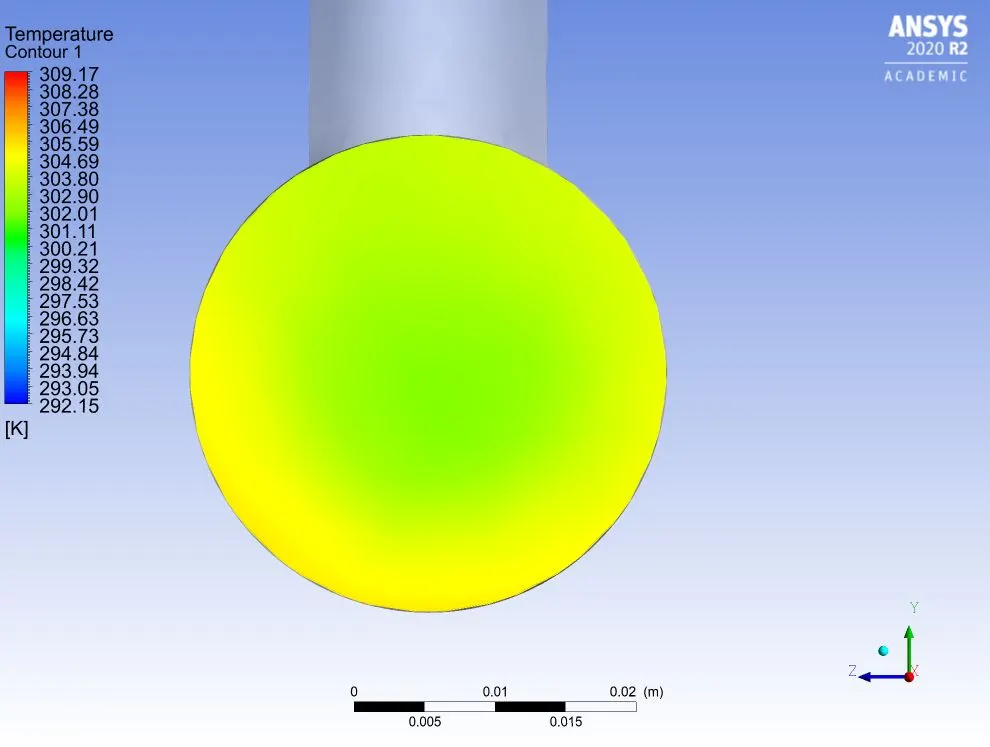
A)Preprocessing:
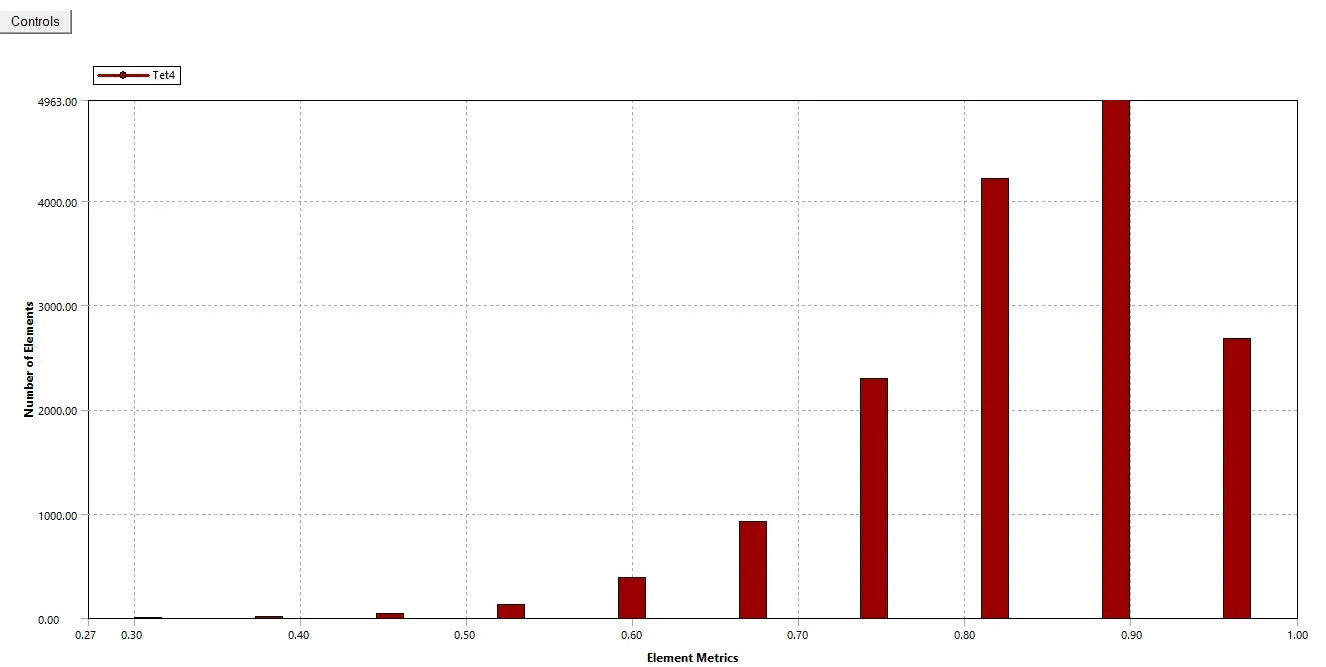
Mesh detail: No of cell = 15610, Type - Tetra hedra
Comparison of Komega and Kepsilon SST turbulence model:
Analytical outlet mean temperature:
Area_Inlet 2 = 225.9823 mm2
Area_Inlet 1 = 901.3138 mm2
Area_outlet = 901.3138 mm2
Thus = 303.322381706528 for momentum ratio of 2,
Thus = 300.487685369781 for momentum ratio of 4,
Enthalpy = m.Cp. = 1.2314 for momentum ratio of 2,
Enthalpy = 1.6274 for momentum ratio of 4,
MATLAB code for calculating analytical value
%Calculation for Analytical temperature and enthalpy

clear all
close all
clc

v_hot= 3;  %velocity
mr= [2 4]; %momentum ratio
Cp= 1;     %specific heat capacity
for i=1:2
    v_cold = mr(i).*v_hot; %velocity
    a1 =901.3138e-6;%m2
    a2 = 225.9823e-6; %m2
    m_cold = a2.*v_cold; %mass flow rate
    m_hot = a1.*v_hot;
    T_hot = 36+273; %kelvin
    T_cold = 19+273; %kelvin
    t_mix(i) = ((m_hot.*T_hot)+(m_cold.*T_cold))/(m_hot+m_cold); %Average tempearature at outlet
    h(i) = Cp*t_mix(i)*(m_hot+m_cold); %Enthalpy
    fprintf('for momentum ratio %s temp at outlet is %s',(2*i),t_mix(i))
end
B)Solving:
For momentum ratio = 4
Analytical area-weighted average of temp at the outlet is 300.4876853697812K
i.Turbulence model – K epsilon
No of iteration to converge = 170
Area weighted average of temp at the outlet for k epsilon is 300.6391076876616K
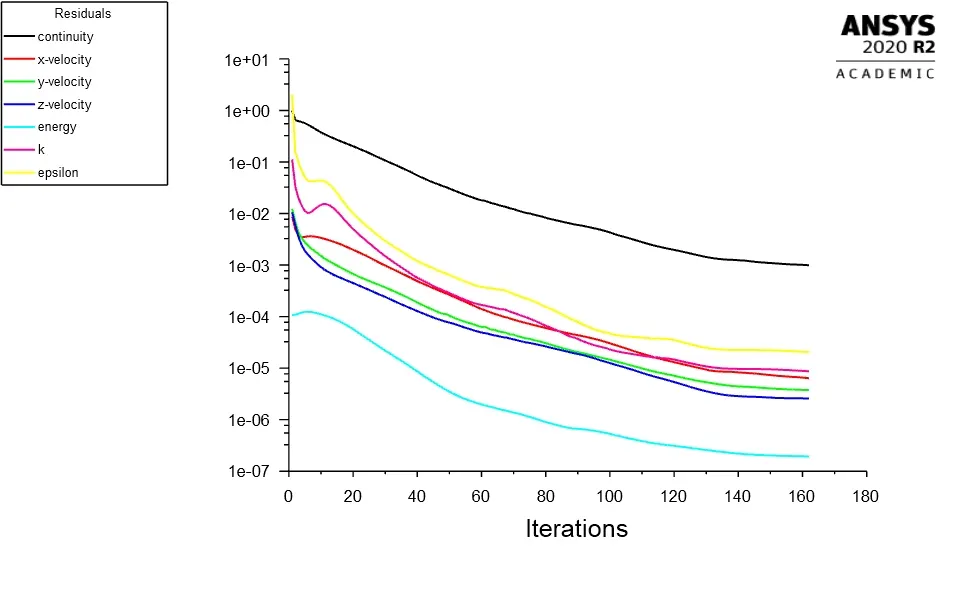
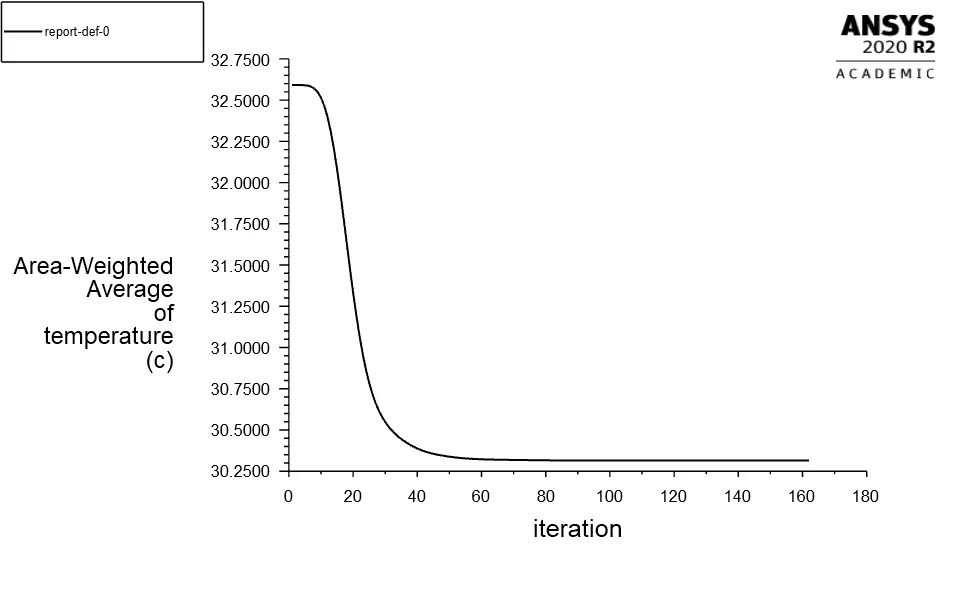
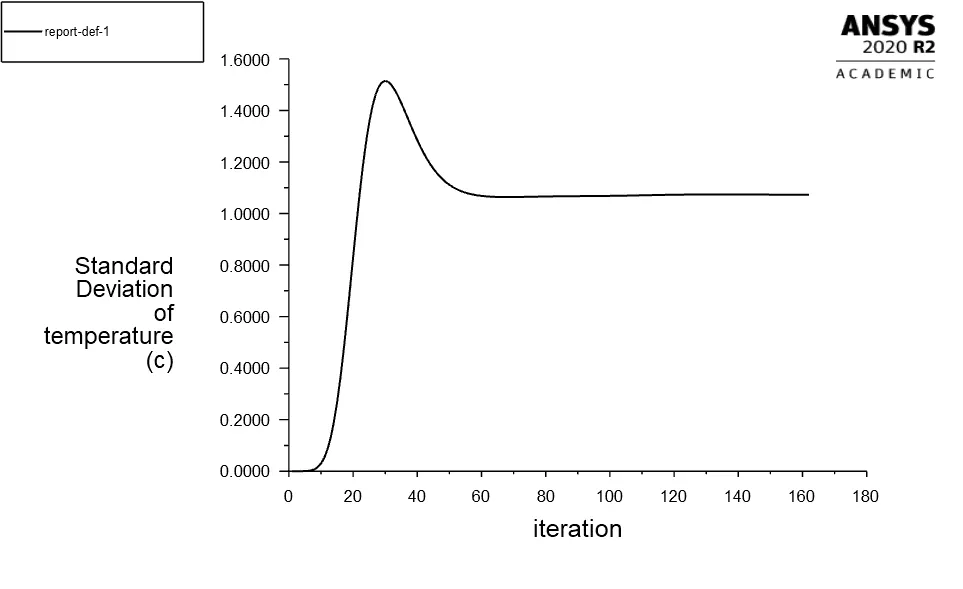
ii.Turbulence model – K omega at mr = 2
No of iteration to converge = 232
Area weighted average of temp at the outlet for k epsilon is 300.6368553256182K
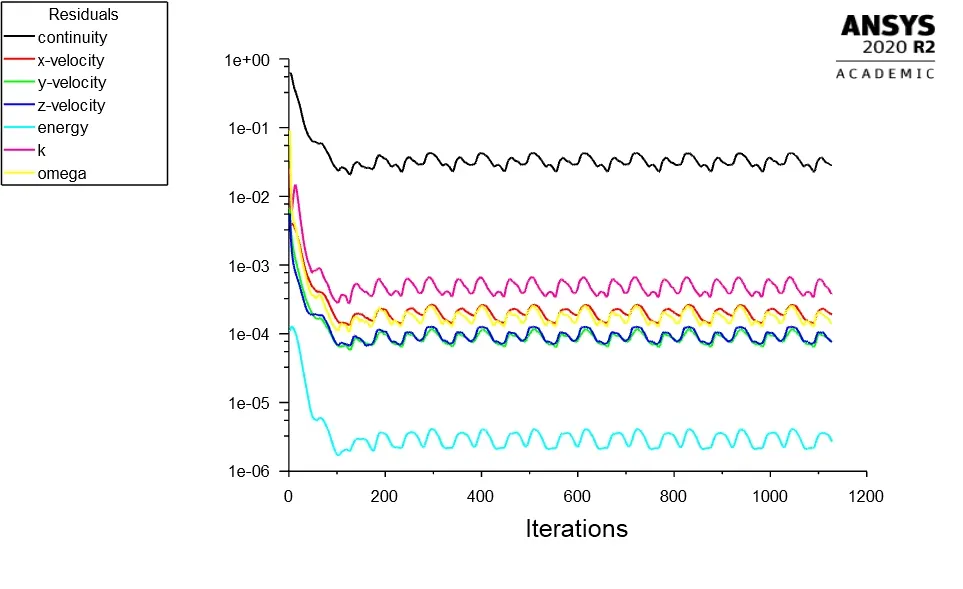
Thus K-epsilon convergence is faster comparing to K-omega. since the accuracy of the area-weighted average temperature of K omega and Kepsilon is not significant.
so, I am using the K-epsilon turbulence model for the upcoming cases.
Mesh detail: No of cell = 12760, Type - Tetra hedra
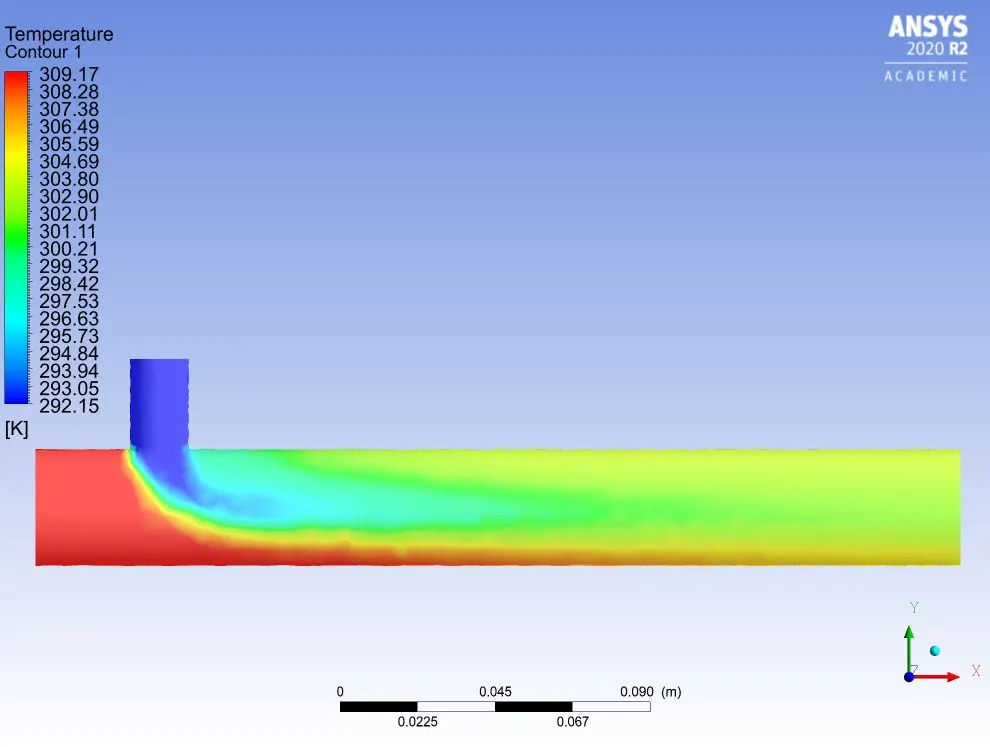
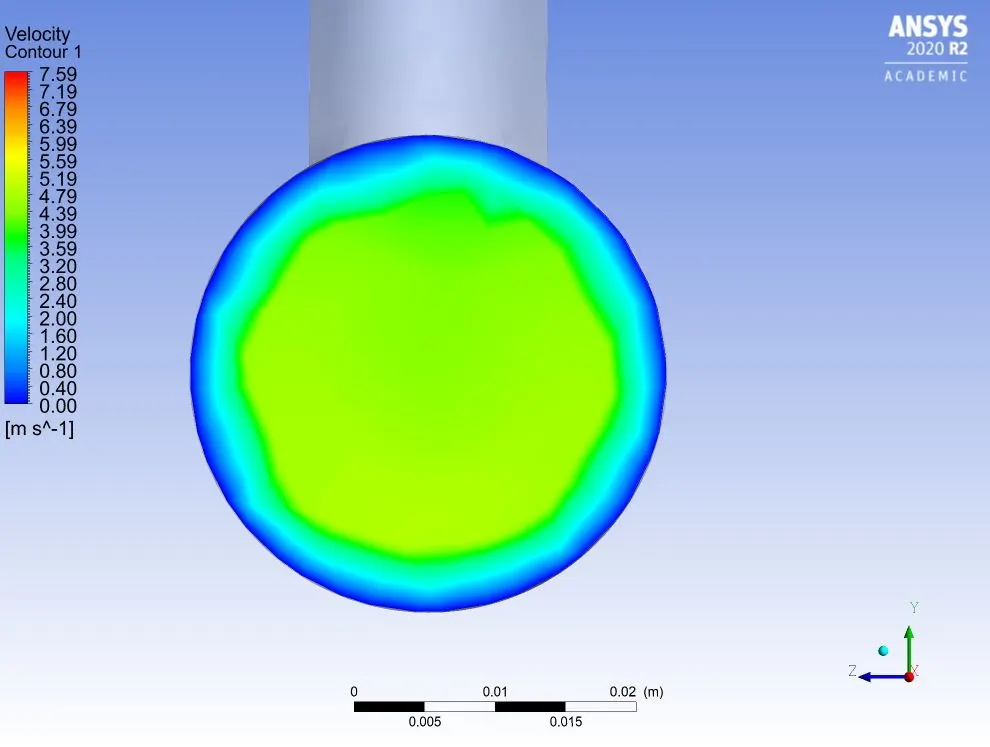
- Case 1 Momentum ratio = 2
No of iteration to converge = 162
Average outlet temp = 34.55 ˚C
! 162 solution is converged
162 9.9053e-04 6.3686e-06 3.7601e-06 2.5795e-06 1.9295e-07 8.6937e-06 2.0448e-05 0:01:39 339
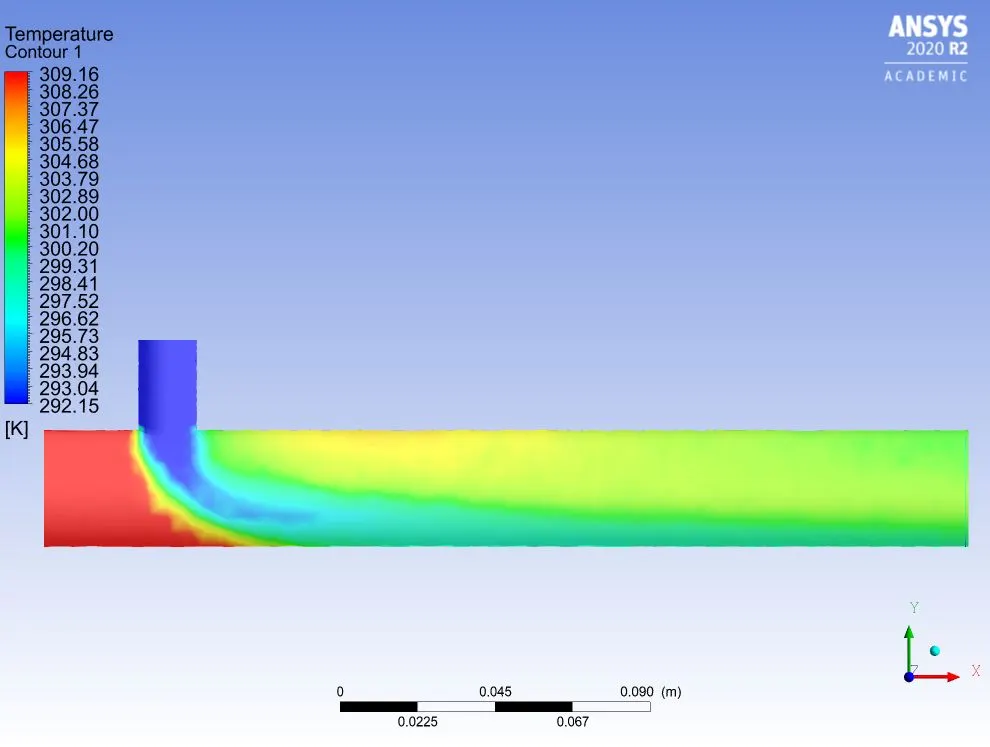
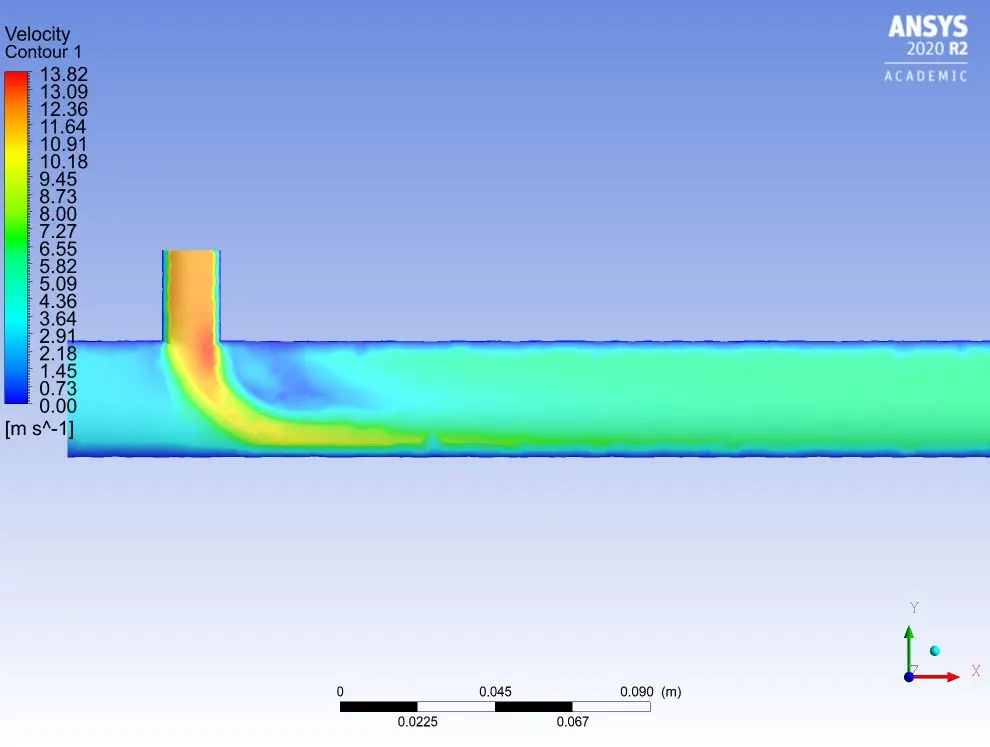
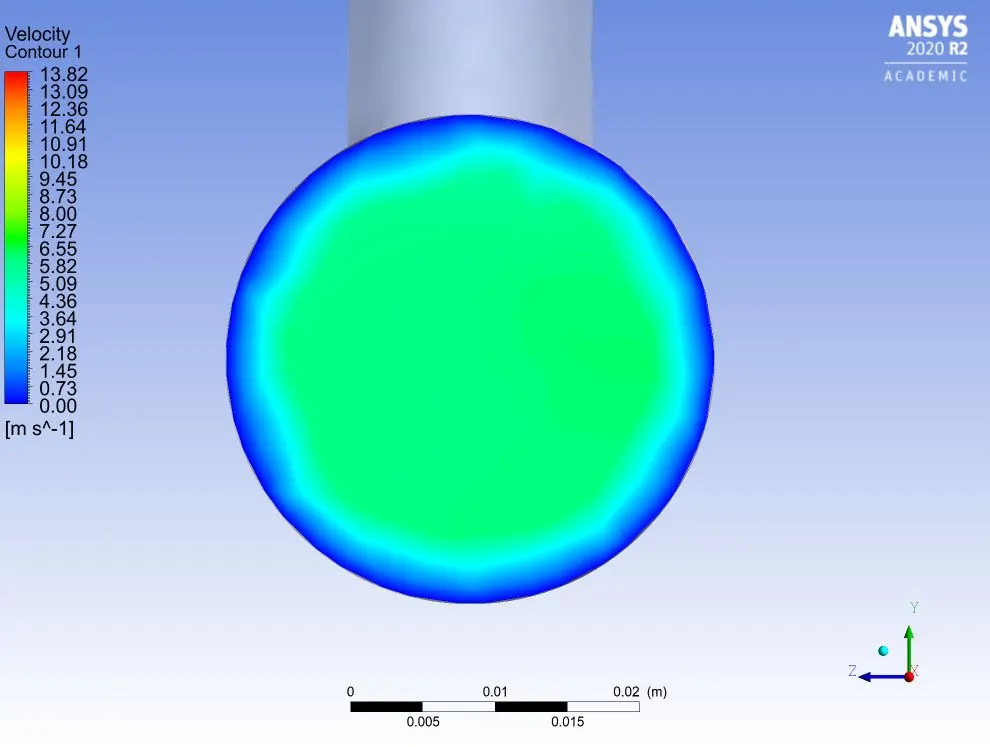
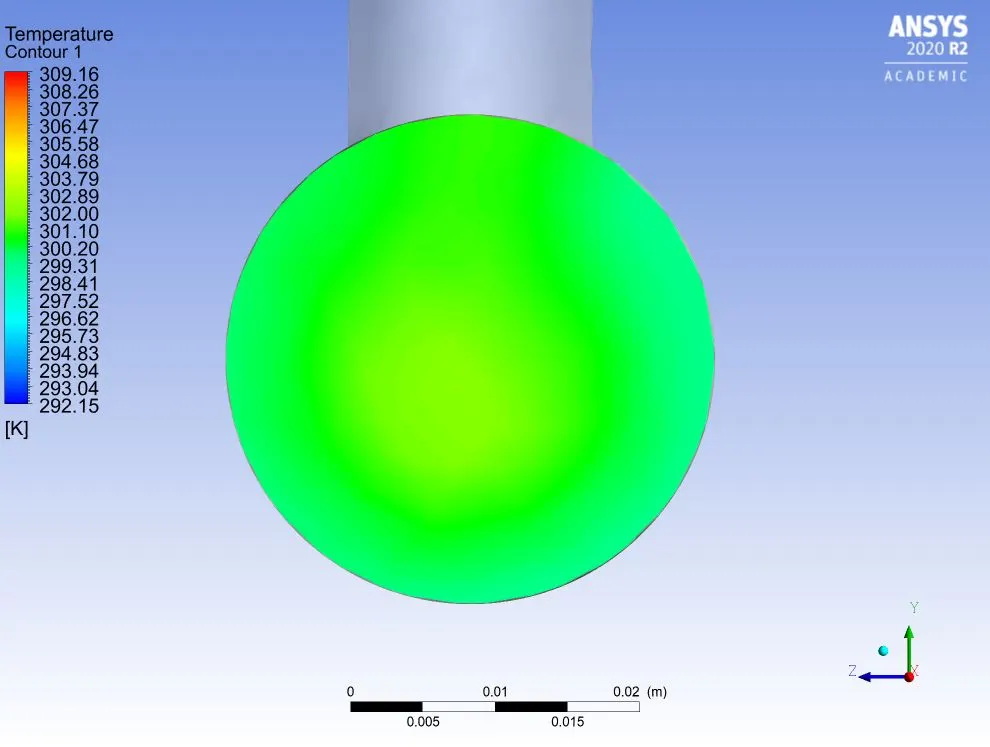
2. Case 1 Momentum ratio = 4
No of iteration to converge = 170
Average outlet temp = 34.55 ˚C
! 170 solution is converged
- 7976e-04 5.7645e-06 3.0186e-06 2.3846e-06 2.9271e-07 4.8981e-06 1.4684e-05 0:05:35 831
3. Case 2 Momentum ratio = 2
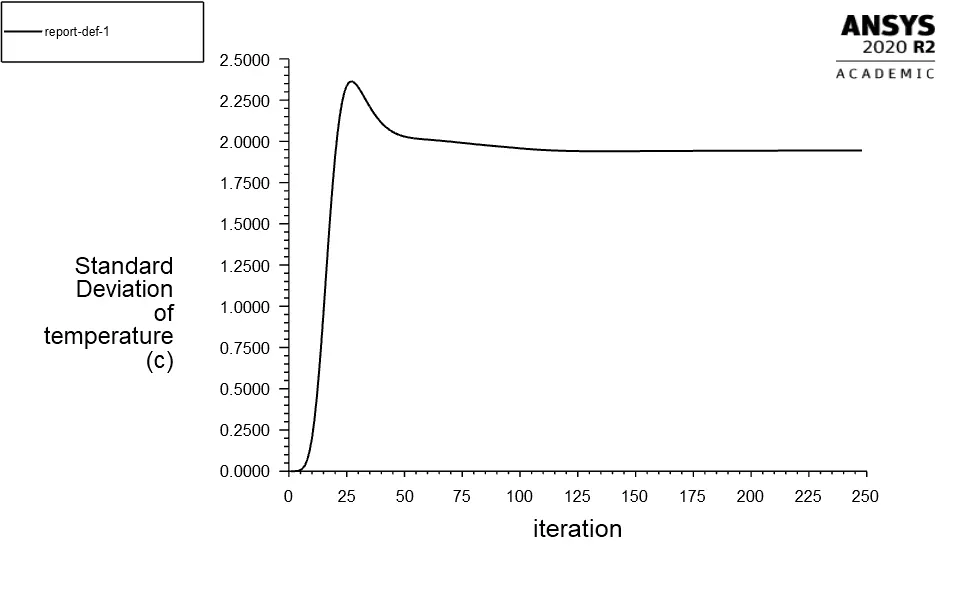
! 248 solution is converged
248 9.2305e-04 6.9913e-06 4.1702e-06 2.7769e-06 3.0994e-07 1.1852e-05 4.0290e-05 0:04:26 752
No of iteration to converge = 248
Average outlet temp = 34.55 ˚C
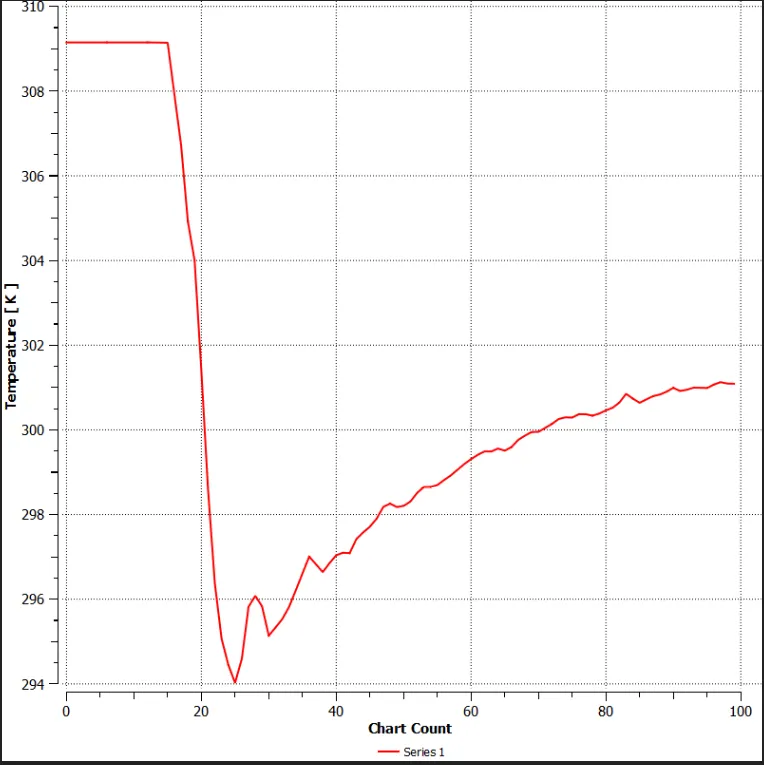
temp along length:
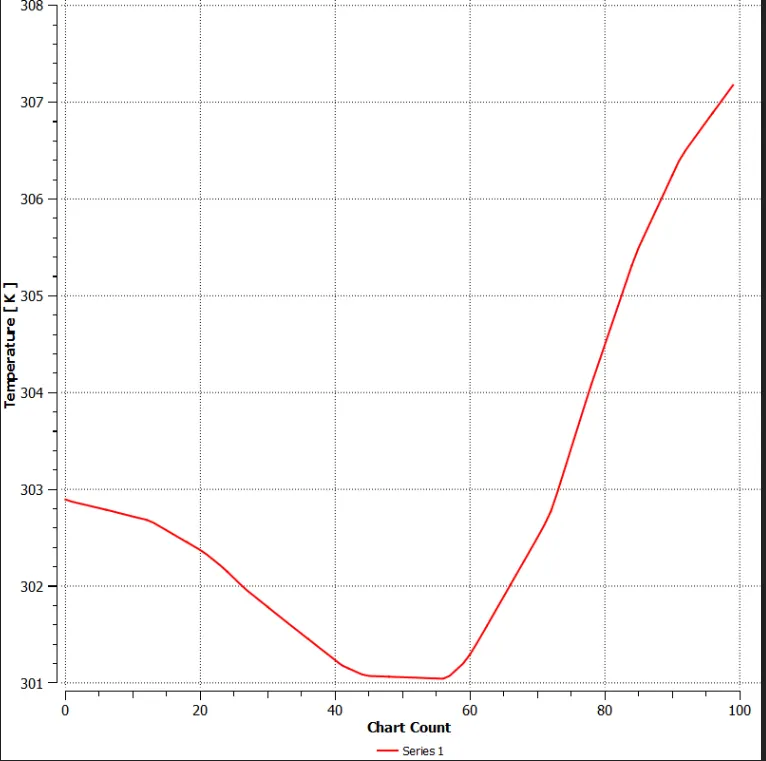
temperature along radial at outlet:
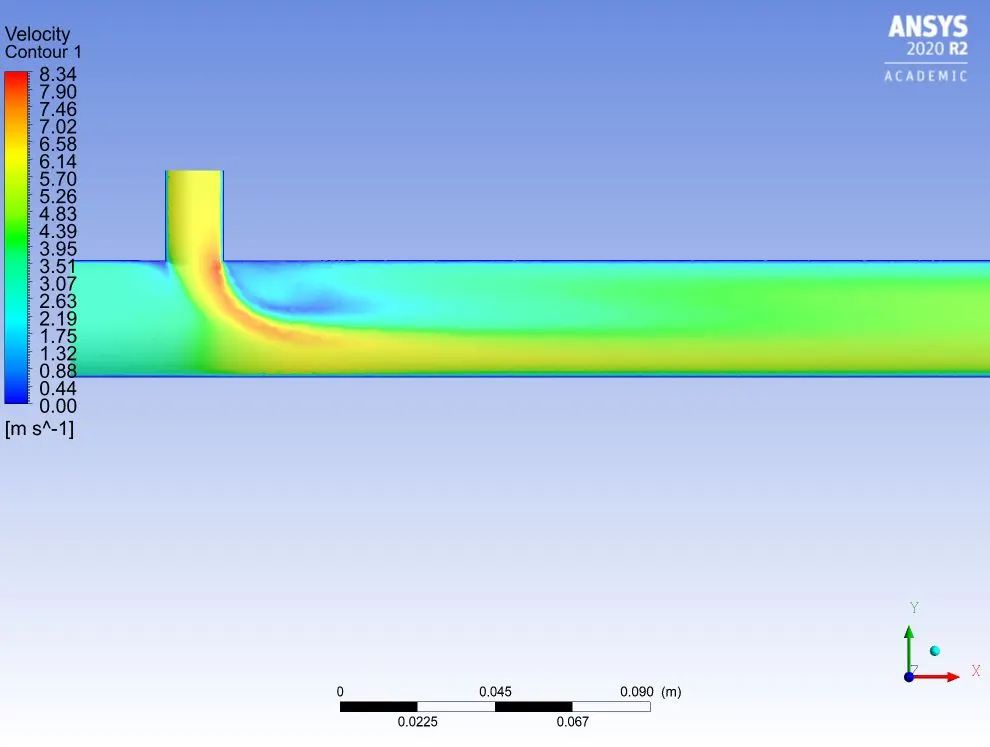
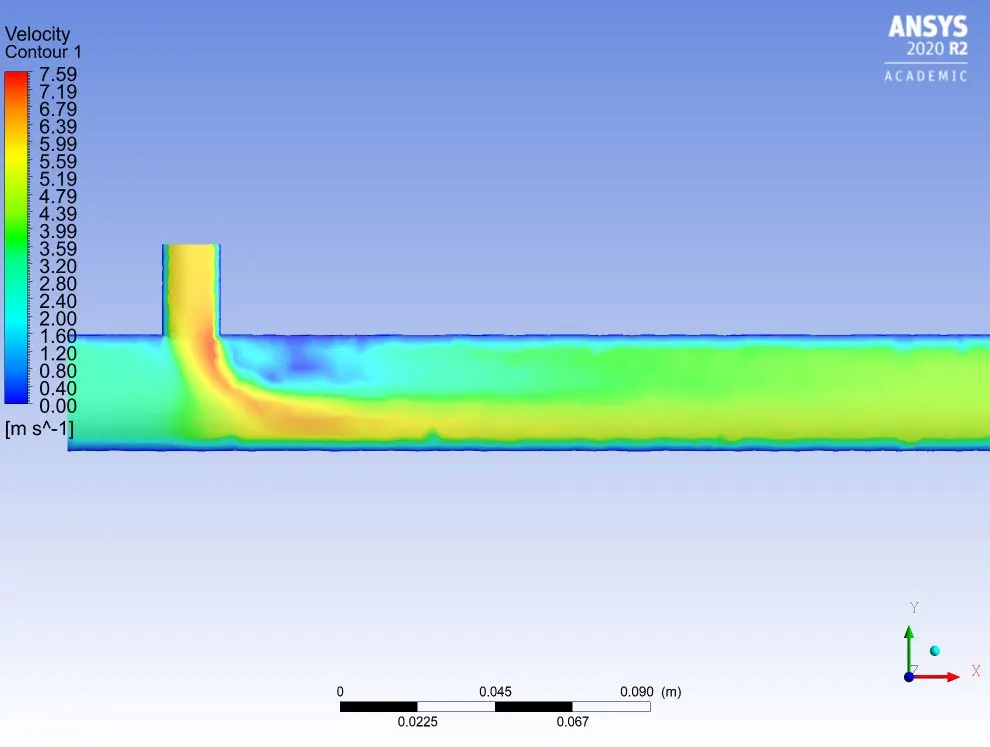
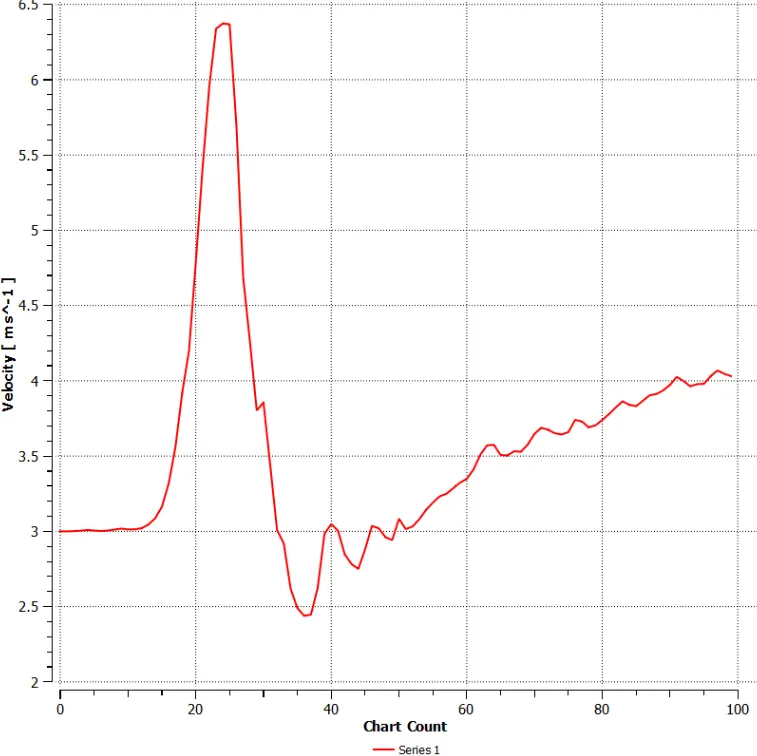
velocity along length:
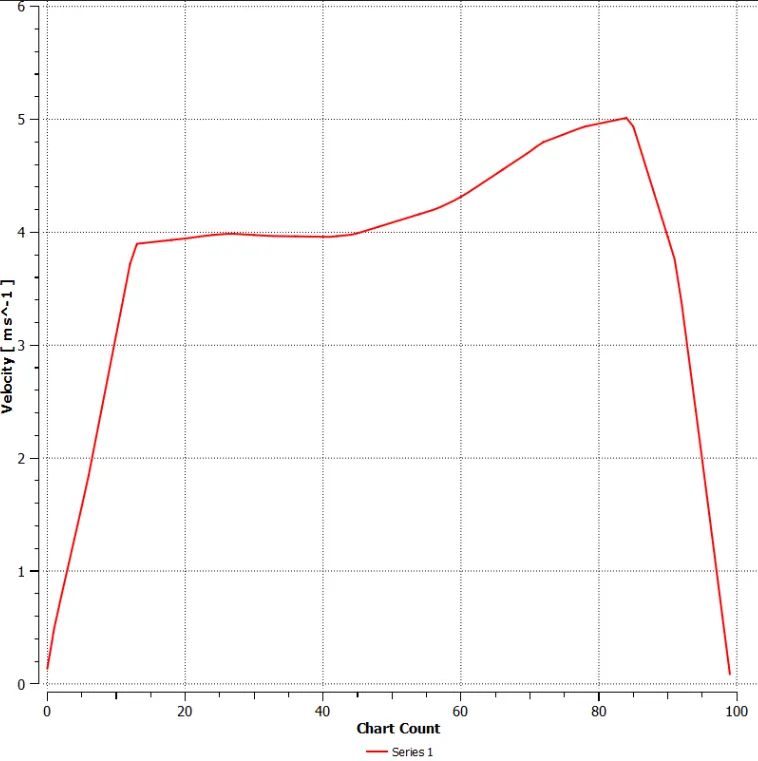
Velocity along radial at outlet:
4. Case 2 Momentum ratio = 4
! 169 solution is converged
169 9.9238e-04 6.9117e-06 5.2295e-06 4.2681e-06 5.5500e-07 8.7887e-06 2.1147e-05 0:03:04 831
No of iteration to converge = 248
Average outlet temp = 34.55 ˚C
Conclusion:
- Thus the simulation ran successfully, There is no significant improvement in increasing the length of the outlet.
- For fine mesh, the result resolution increases but it increased the time of every iteration exponentially compare to coarser mesh.
- Solver K epsilon and K omega SST there is no significant difference in the result but the time-taken for K omega SST more than K epsilon solver.