Mixing efficiency calculation of mixing tee for various lengths
Mixing efficiency calculation of mixing tee for various lengths
Aim:
To set up steady-state simulations to compare the mixing effectiveness when hot inlet temperature is 360C & the Cold inlet is at 190C.
Use the k-epsilon and k-omega SST model for the first case and based on your judgment use the more suitable model for further cases. Giving the reason for choosing a suitable model is compulsory.
Procedure:
1.The given two models are inputed into ansys workbench
2.Meshing is done with element size = 3mm
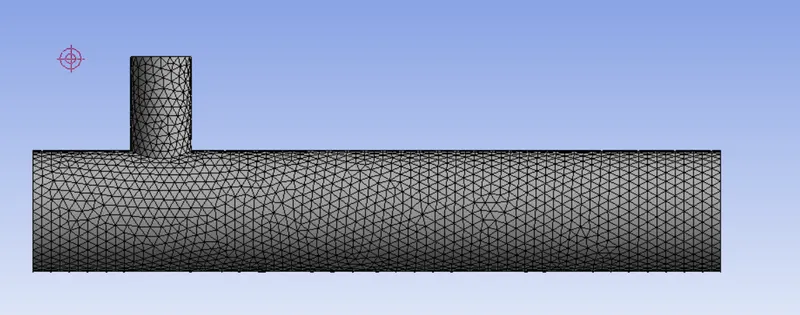
3. The boundaries are defined and desiredd velocities are defined at two inlets and 0 gauge pressure given at outlet
4. The solution is run for 200 iterations
5. The results obtained are plotted as per requirment
Results:
Case 1:
- Short mixing tee with a hot inlet velocity of 3m/s.
- Momentum ratio of 2.
- nodes = 8350
- elements = 39817
- k-epsilon model is used
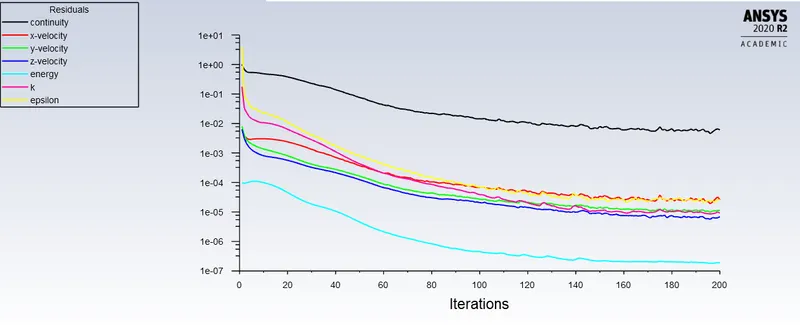
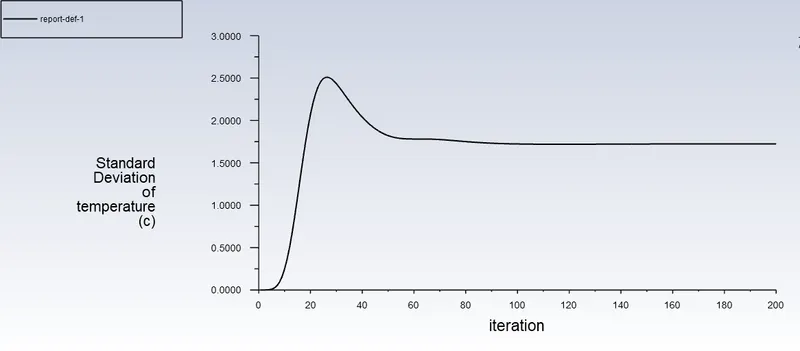
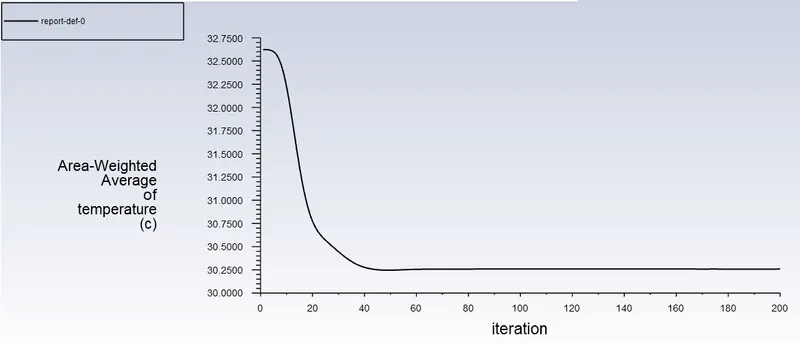
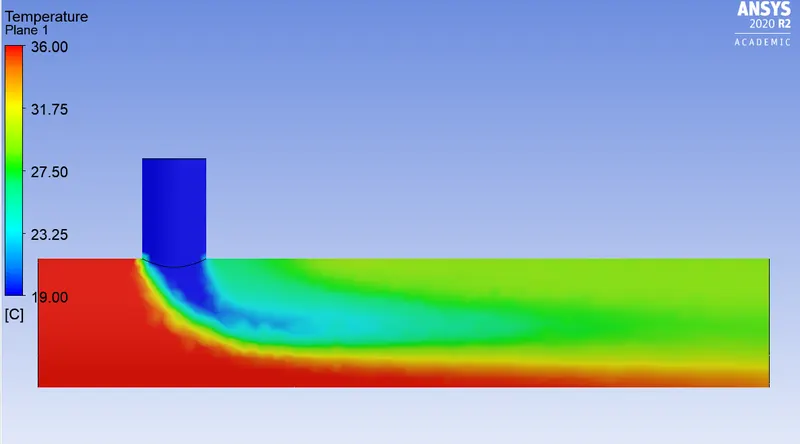
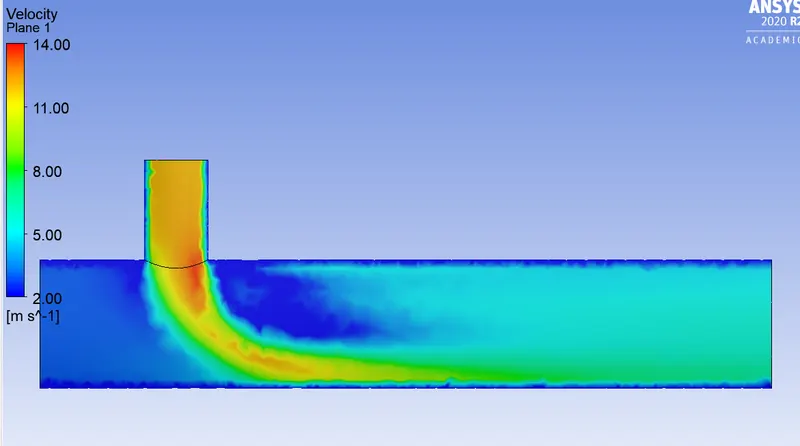
Since cold inlet velocity is only 6 m/s the proper mixing is not happening within the tee as seen above.
The outlet temperature is 30.3 C.
Case 2:
- Short mixing tee with a hot inlet velocity of 3m/s.
- Momentum ratio of 4.
- nodes = 8350
- elements = 39817
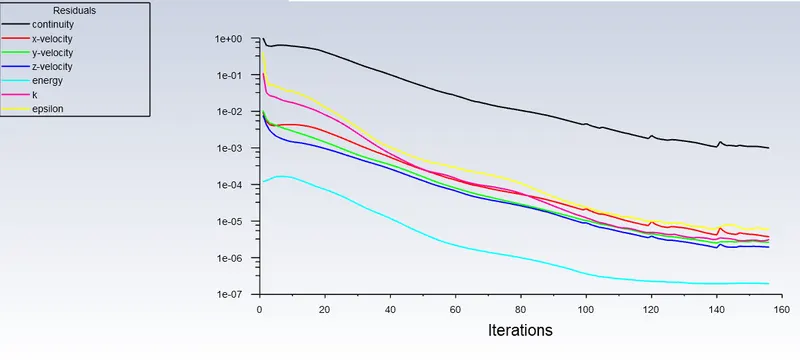
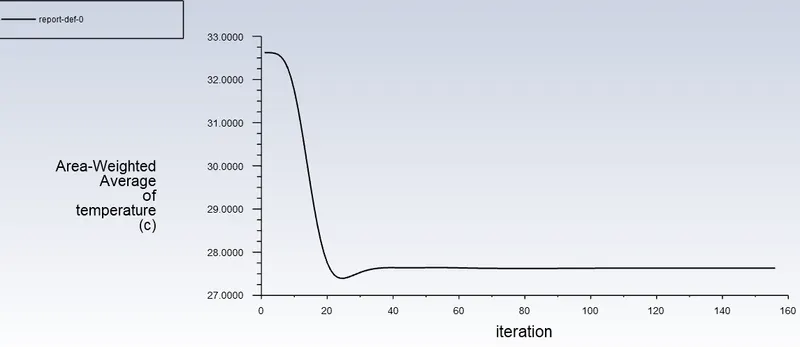
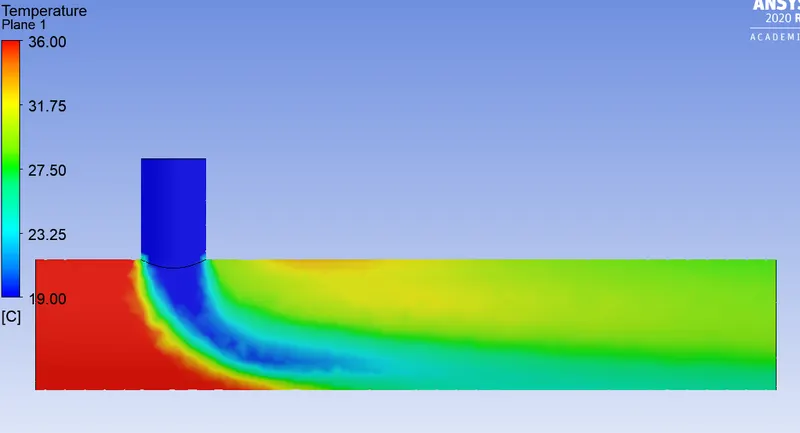
Since cold inlet velocity is 12 ms the mixing happens properly and the outlet temperature further drops to 27.5 C.
Case 3:
- Long mixing tee with a hot inlet velocity of 3m/s.
- Momentum ratio of 2.
- nodes = 1171
- elements = 56556
- k-omega sst model is used.
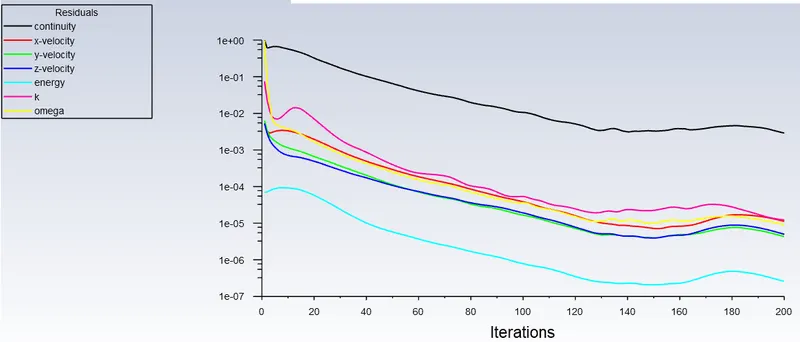
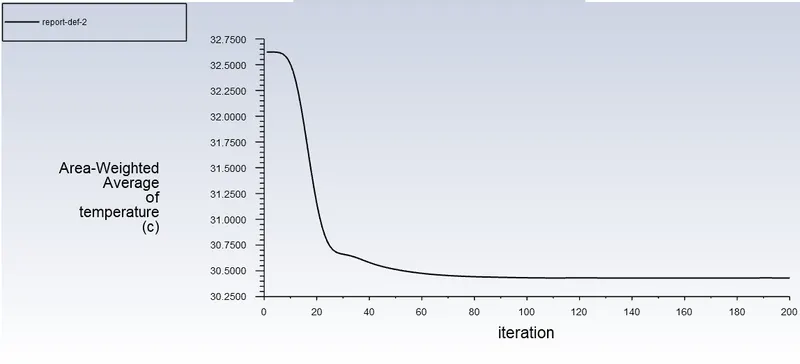
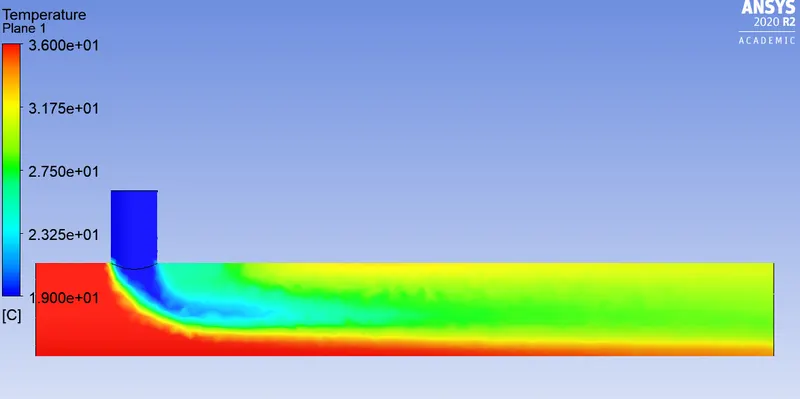
There is not a big change in outlet temperature in increasing the tee length. The temperature still hovers around 30.5 C.
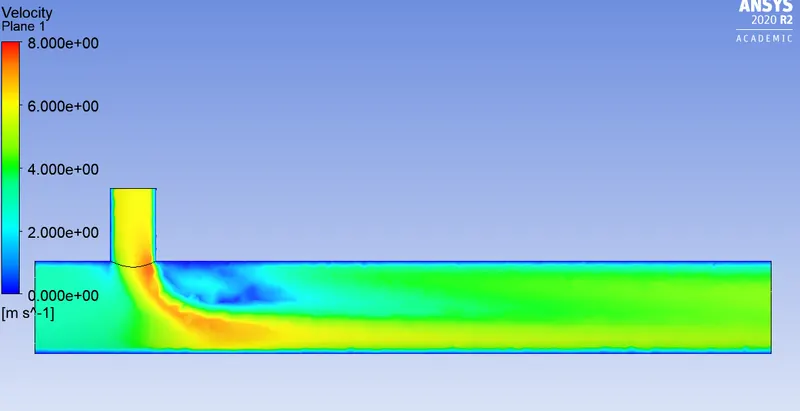
Case 4:
- Long mixing tee with a hot inlet velocity of 3m/s.
- Momentum ratio of 4.
- nodes = 1171
- elements = 56556
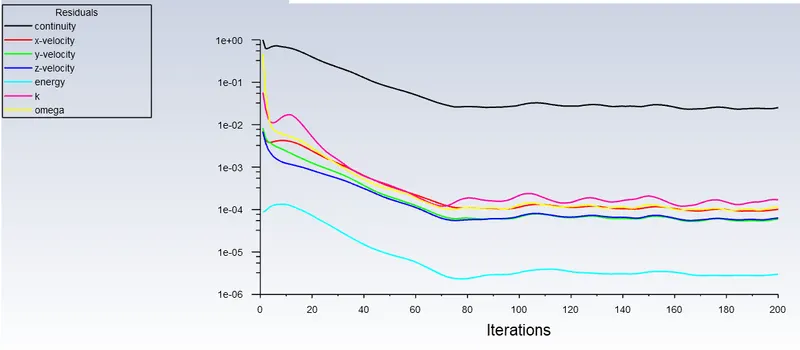
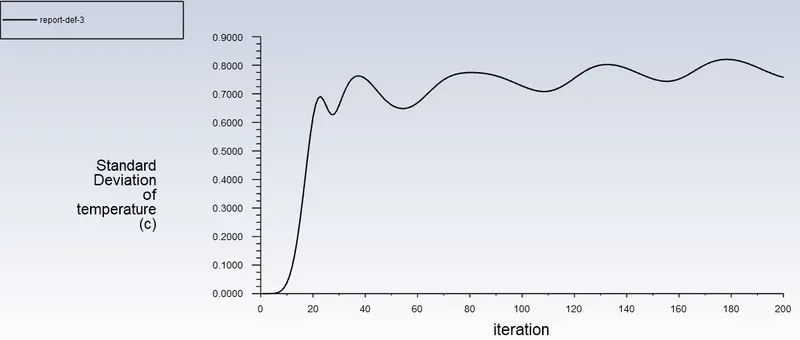
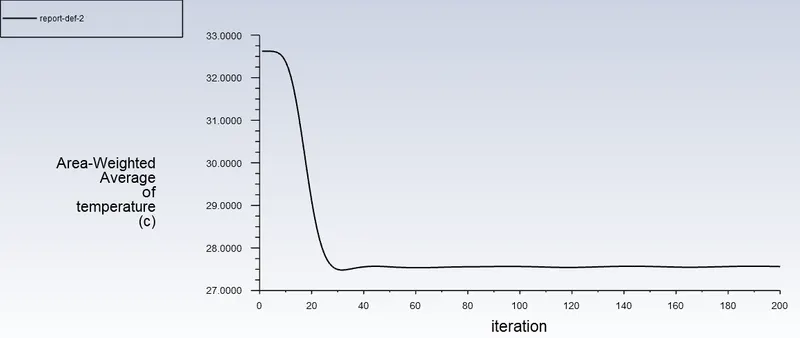
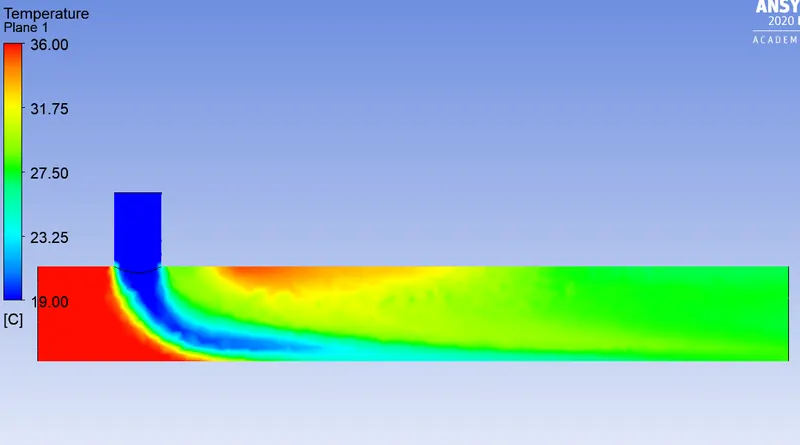
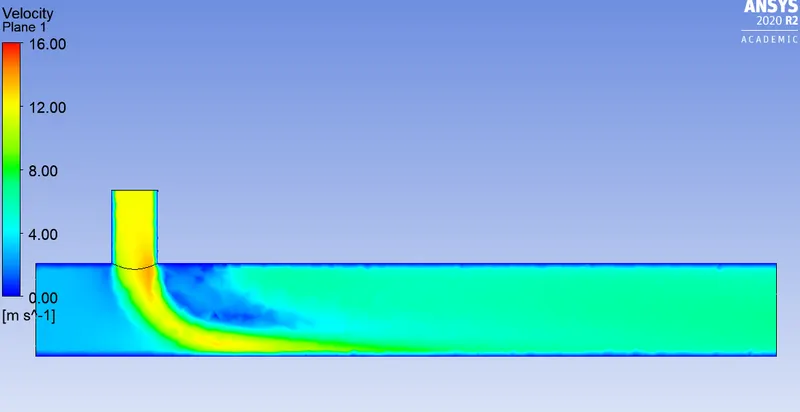
Increasing cold inlet velocity has similar result as that of short tee.
Conclusion:
Cell dependency does not have much effect for element size of 3mm and 1mm as the outlet temperature and velocity changes by only a small decimal.
The length of the tee has no effect on the average outlet temperature proving ineffectiveness in increasing the tee length.
The increase in cold inlet velocity has a drastic change in the outlet temperature as the temperature drops by 4 C when momentum ratio is increased from 2 to 4.
k-epsilon and k-omega models did not give much change in the output values but computation time for k-omega sst model seems to be taking more time to converge compared to k-omega model.