MBD Simulation on IC Engine Valve Train
AIM:
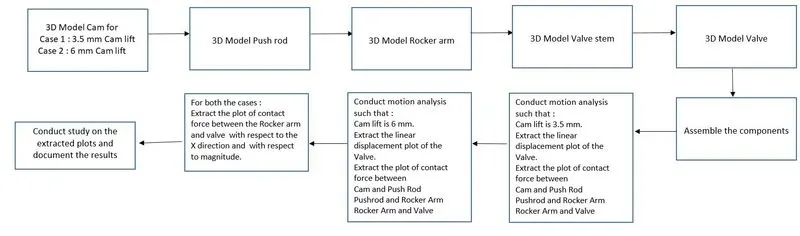
- To generate the 3D model of the Cam,Push rod,Rocker arm,Valve stem,valve.
- To perform motion analysis and simulation on the following cases,
| Sl.No | CAM Lift (mm) | Speed (RPM) | Material |
| 1 | 3.5 | 1500 | Cast Carbon Steel |
| 2 | 6 | 1500 |
Cast Carbon Steel |
- To obtain the valve lift.
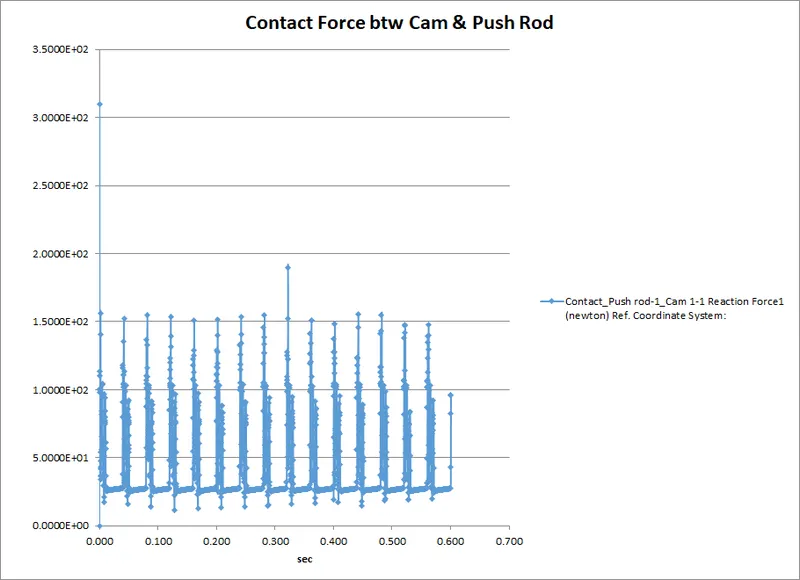
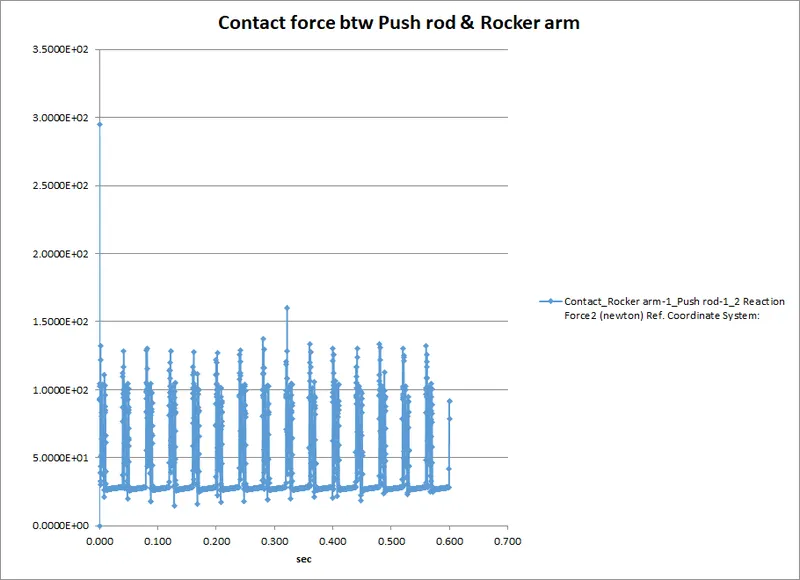
- To arrive the contact force between
1.Cam and Push Rod 2.Pushrod and Rocker Arm 3.Rocker Arm and Valve
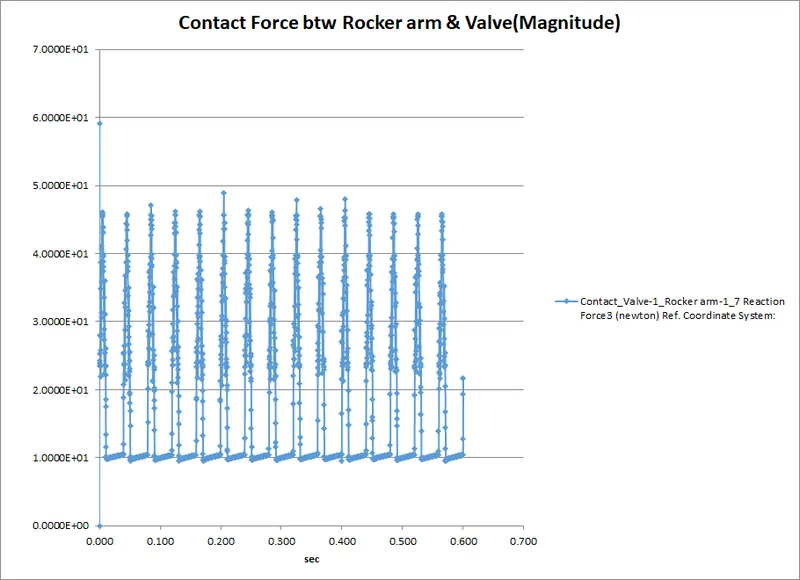
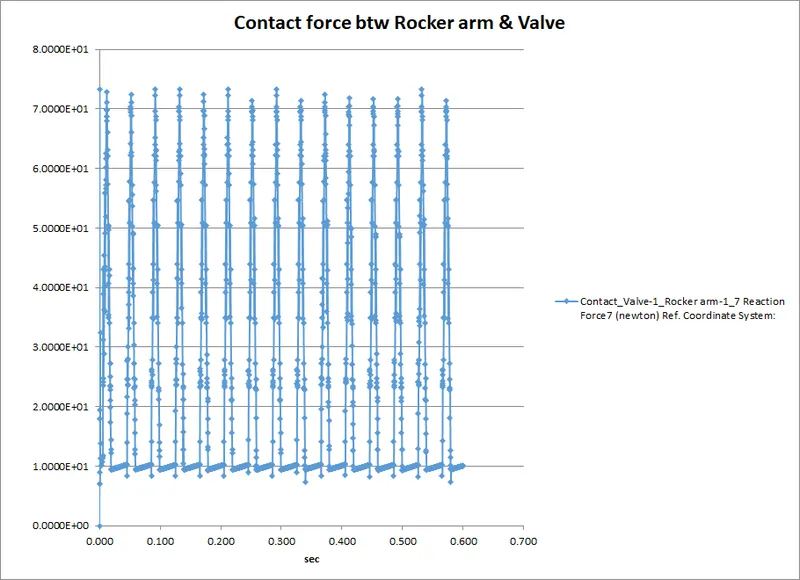
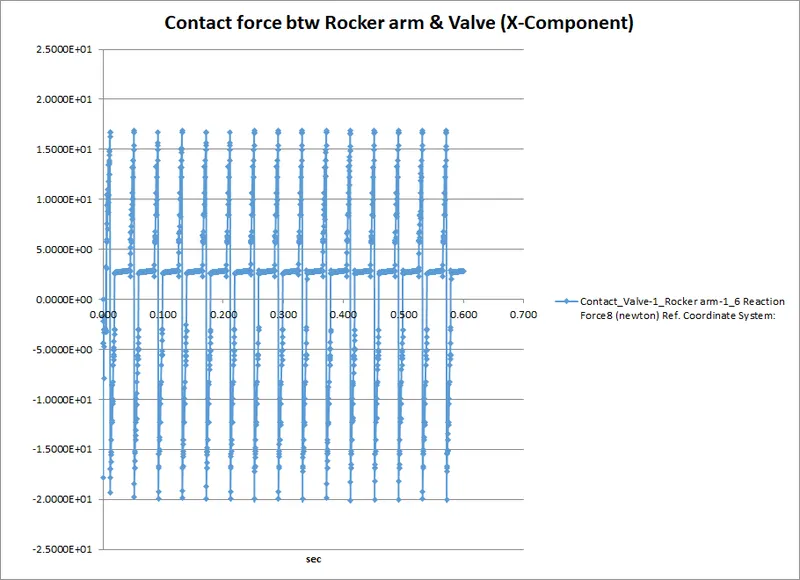
- To explain why the contact force between the Rocker arm and valve varies while measuring with respect to the X direction and measuring with respect to magnitude.
IC ENGINE VALVE TRAIN :
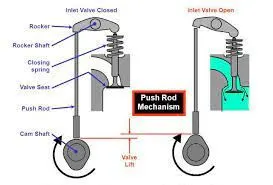
A valvetrain or valve train is a mechanical system that controls the operation of the intake and exhaust valves in an IC engine. The intake valves control the flow of air/fuel mixture (or air alone for direct-injected engines) into the combustion chamber, while the exhaust valves control the flow of spent exhaust gasses out of the combusion chamber once combustion is completed.
The valvetrain consists of all the components responsible for transferring the rotational movement of the camshaft into the opening and closing of the intake and exhaust valves. Typical components are listed below in order from the crankshaft to the valves.
Camshaft:
The timing and lift profile of the valve opening events are controlled by the camshaft, through use of a carefully shaped lobe on a rotating shaft. The camshaft is driven by the crankshaft and— in the case of a four-stroke engine— rotates at half the speed of the crankshaft.
Motion is transferred from the crankshaft to the camshaft most commonly by a rubber timing belt, a metallic timing chain or a set of gears.
Pushrod:
Pushrods are long, slender metal rods that are used in overhead valve engines to transfer motion from the camshaft (located in the engine block) to the valves (located in the cylinder head). The bottom end of a pushrod is fitted with a lifter, upon which the camshaft makes contact. The camshaft lobe moves the lifter upwards, which moves the pushrod. The top end of the lifter pushes on the rocker arm, which opens the valve.
Rocker arm / bucket tappet:
Depending on the design used, the valves are actuated by a rocker arm, finger or bucket tappet. Overhead camshaft engines use fingers or bucket tappets, upon which the cam lobes contact.Overhead valve engines use rocker arms, which are actuated by a pushrod and pivot on a shaft or individual ball studs in order to actuate the valves.
Valves:
Most modern engines use poppet valve type, although sleeve , slide and rotary valves have also been used at times. Poppet valves are typically opened by the camshaft lobe or rocker arm, and closed by a coiled spring called a valve spring.
Valve float occurs when the valve spring is unable to control the inertia of the valvetrain at high engine speeds (RPM).
METHODOLOGY :
Design of Cam :
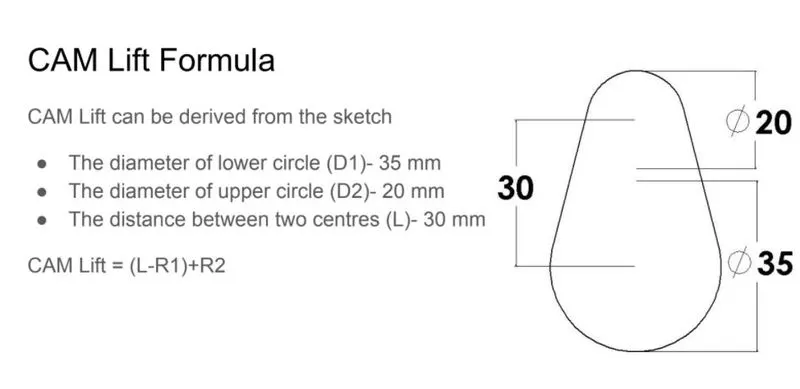
Formula :
Case 1 :
Cam lift = 3.5 mm
Distance between the centres = L
Cam lift = (L-R1)+R2
3.5 = (L-17.5)+10
3.5 = L-7.5
L = 11 mm
Cam 1 data :
Diameter of lower circle (D1) = 35mm.
Diameter of upper circle (D2) = 20mm.
Distance between the centres (L) = 11mm
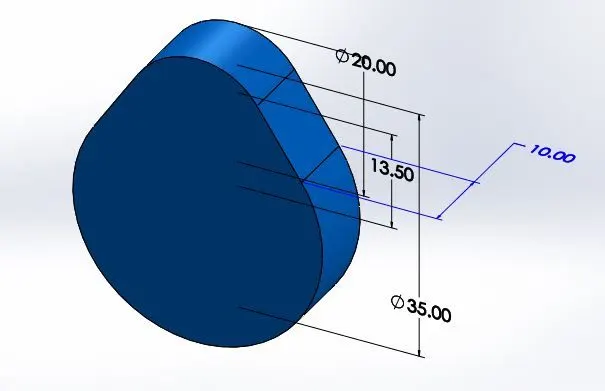
Case 2 :
Cam lift = 6 mm
Distance between the centres = L
Cam lift = (L-R1)+R2
6 = (L-17.5)+10
6 = L-7.5
L = 13.5 mm
Cam 2 data :
Diameter of lower circle (D1) = 35mm.
Diameter of upper circle (D2) = 20mm.
Distance between the centres (L) = 13.5mm
3D Modelling :
**Material : Cast carbon steel is applied to all the components**
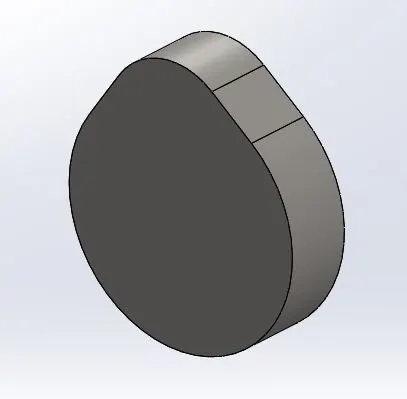
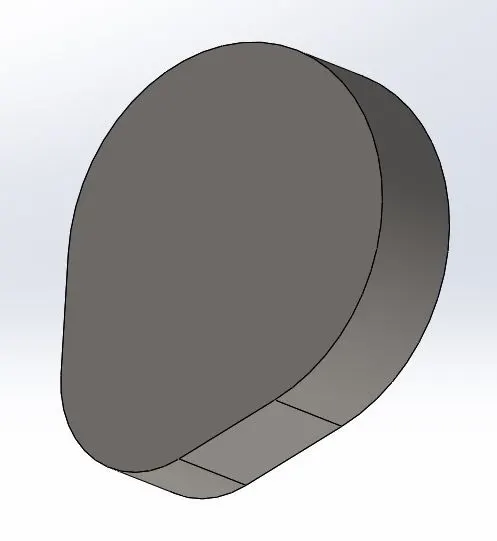
CAM :
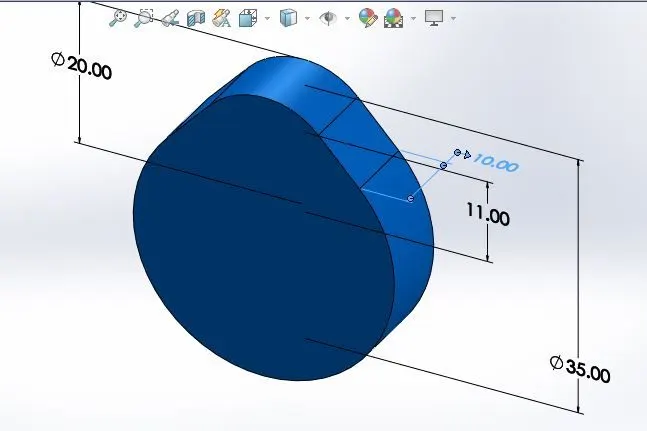
Sketch :Circle,Line
Constraints :Tangent
Features : Boss extrude
Case 1 :
Case 2 :
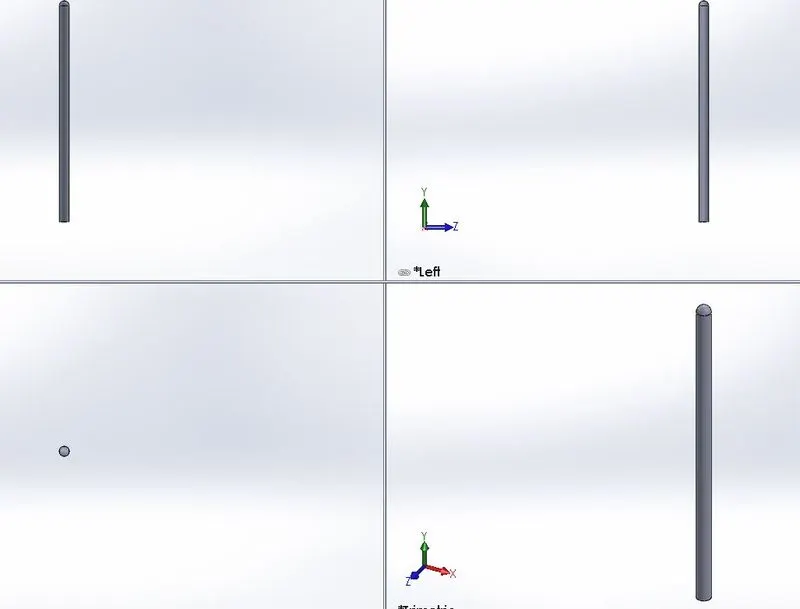
Push Rod :
Sketch : Arc,Line
Features : Boss revolve
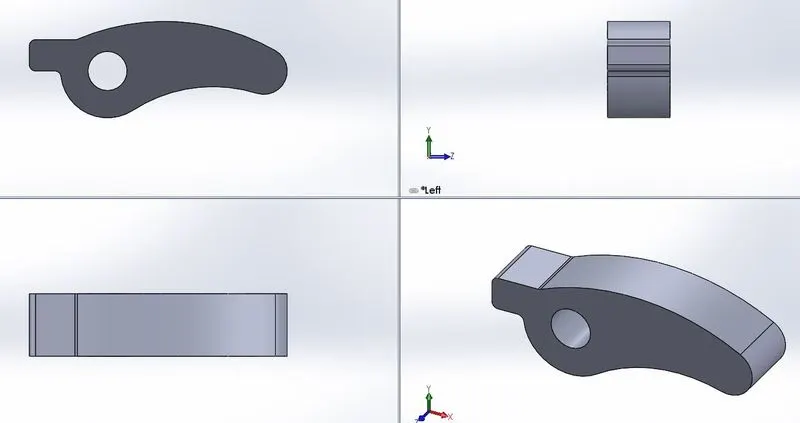
Rocker arm :
Sketch : Arc,Line,fillet,circle
Features : Boss extrude
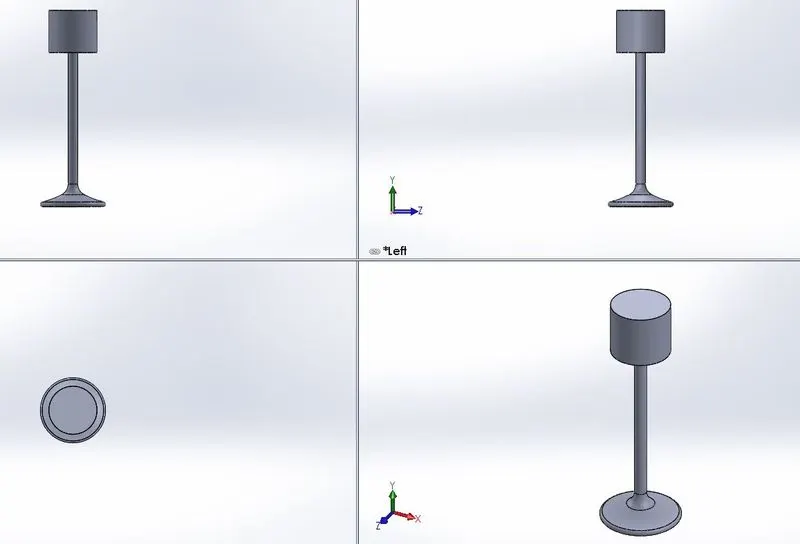
Valve :
Sketch : Arc,Line,circle
Features : Boss revolve
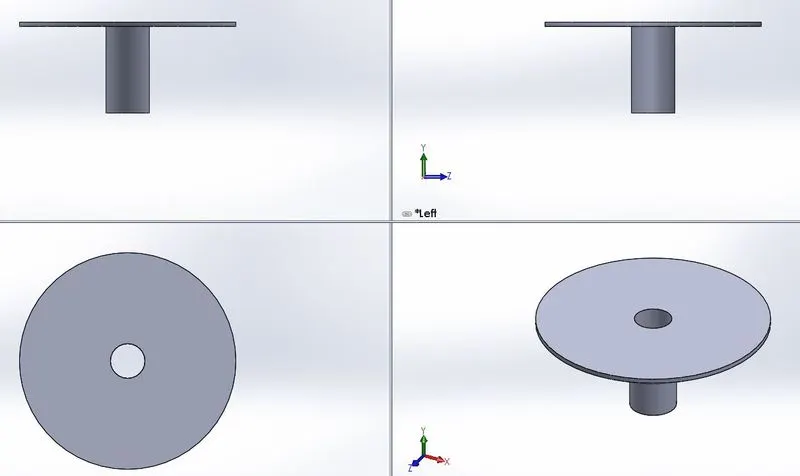
Valve stem :
Sketch : Line
Features : Boss revolve
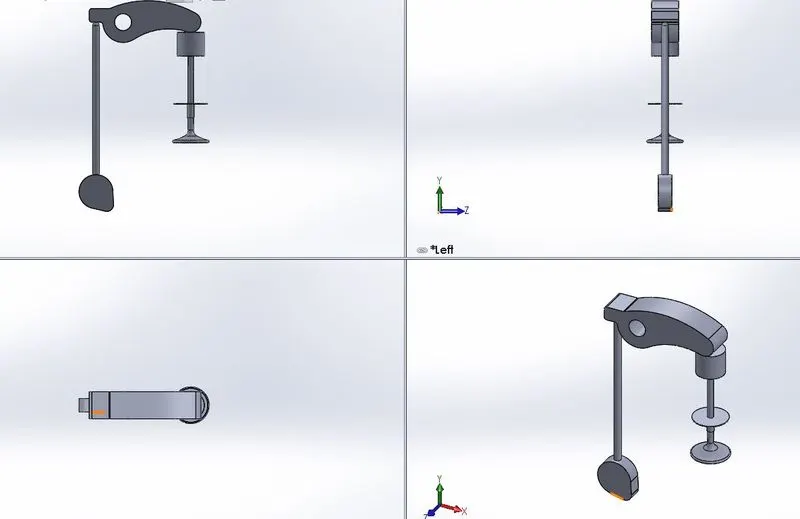
ASSEMBLY :
The components are assembled in such a way that motion is transfered from cam through push rod,rocker arm to the valve .
MOTION ANALYSIS :
Case 1 : IC Engine valve train assembly with Cam 1
1.Motor is assigned to cam , RPM : 1500 rpm
2.Contact is assigned between all the components and material dry steel is given.
3.Apply spring between the face of the Valve stem and bottom face of Valve head and assign the following values :
Spring constant : 5 N/mm
Free Length : 25 mm
4.In motion analysis settings , select precise contact option & 1800 frames per second.
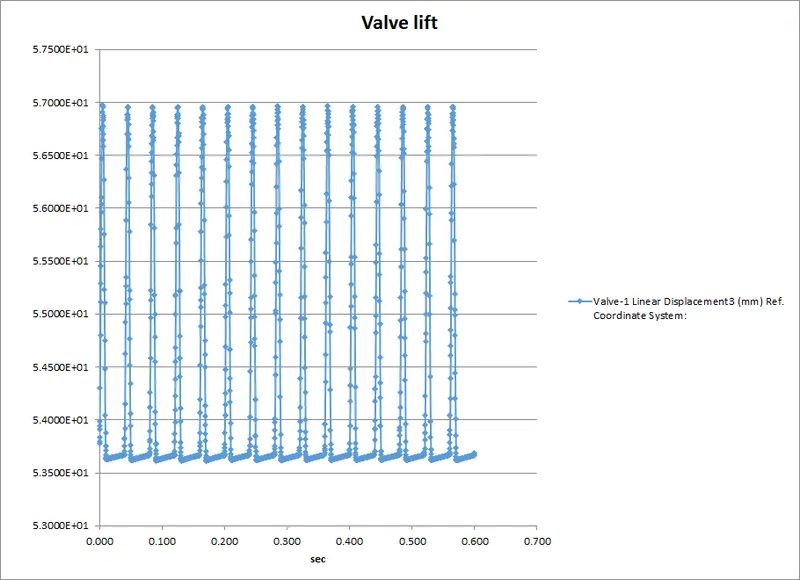
VALVE LIFT :
CONTACT FORCE Between CAM & Push rod:
CONTACT FORCE Between Push rod & Rocker arm:
CONTACT FORCE Between Rocker arm & Valve(Magnitude):
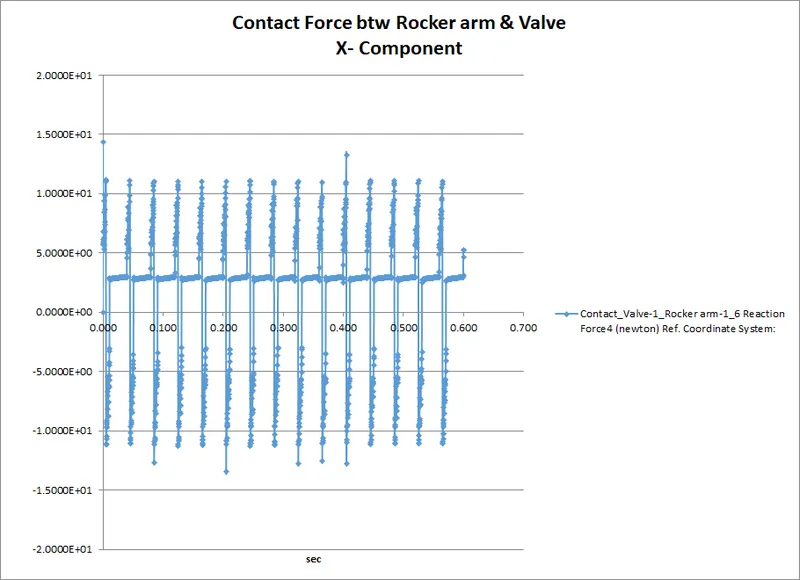
CONTACT FORCE Between Rocker arm & Valve(X-Component):
Case 2 : IC Engine valve train assembly with Cam 2
1.Motor is assigned to cam , RPM : 1500 rpm
2.Contact is assigned between all the components and material dry steel is given.
3.Apply spring between the face of the Valve stem and bottom face of Valve head and assign the following values :
Spring constant : 5 N/mm
Free Length : 25 mm
4.In motion analysis settings , select precise contact option & 1800 frames per second.
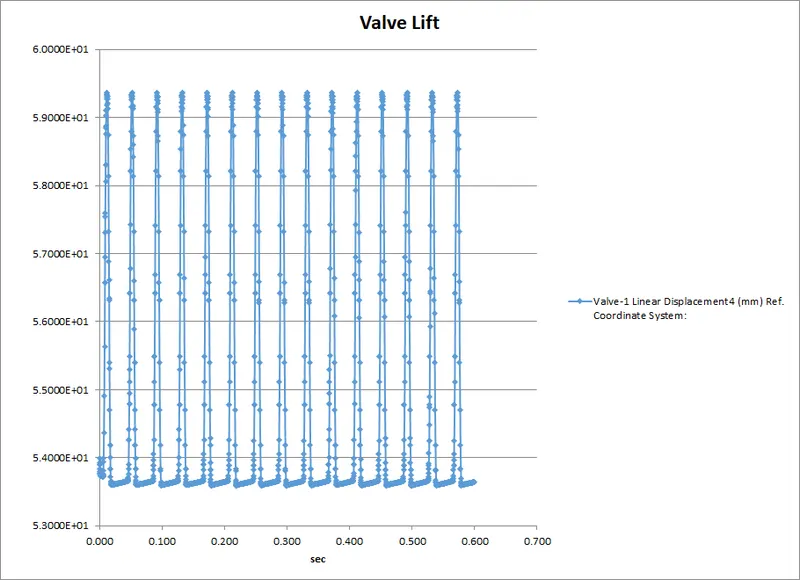
VALVE LIFT :
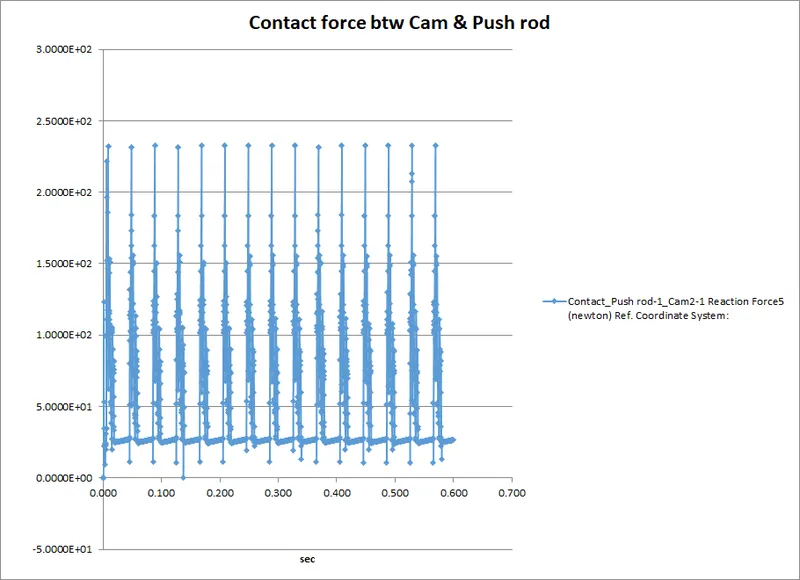
CONTACT FORCE Between CAM & Push rod:
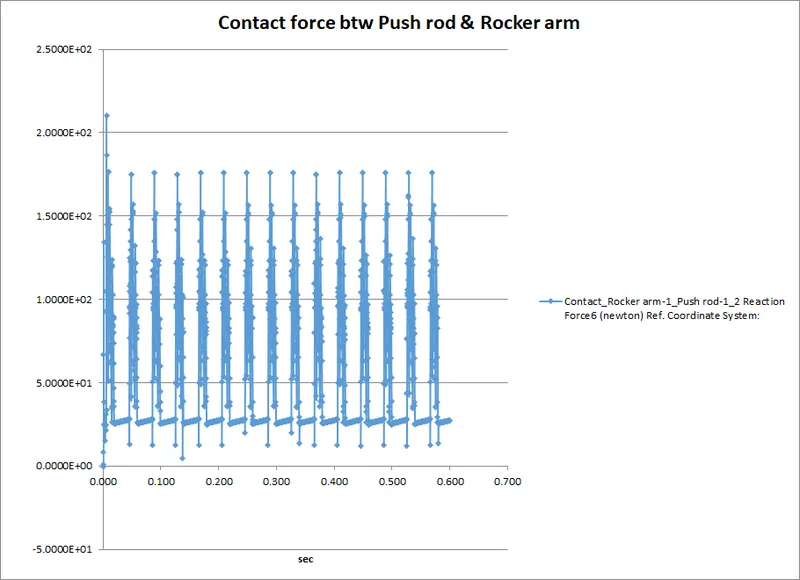
CONTACT FORCE Between Push rod & Rocker arm:
CONTACT FORCE Between Rocker arm & Valve(Magnitude):
CONTACT FORCE Between Rocker arm & Valve(X-Component):
Animations & Data : https://drive.google.com/drive/folders/19ka5b2QDa7pSd5kSrVzniMwae1jg_F-7
RESULTS & OBSERVATIONS :
- From the valve lift plot , we can observe that as cam lift increases ,the valve lift also increases.
- By comparing the contact force between the Rocker arm and valve measuring with respect to the X direction and measuring with respect to magnitude, the X-component is lesser than magnitude in both the cases. This is because the magnitude valve is the consolidated valve which takes all the forces(to and fro movement ) acting into account while the X- component considers only the frictional force.