MBD Simulation on IC Engine Valve Train
Aim:
To simulate the Multi Body Dynamics of the Internal Combustion Valve train and find the Contact forces between components for given conditions.
Introduction:
IC valve train is used for opening and closing of Inlet and Outlet valve during Combustion cycle.
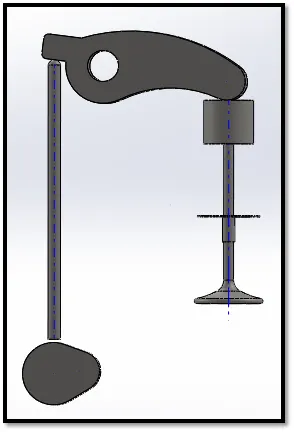
Valves are timely opened by Cam - Push Rod - Rocker mechanism.
COMPONENT:
- CAM
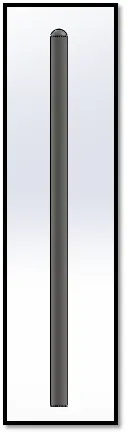
- PUSH ROD
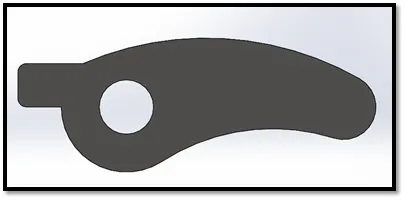
- ROCKER ARM
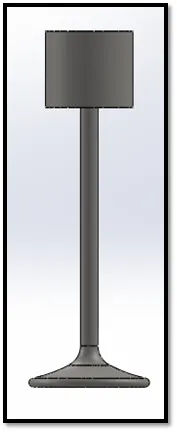
- VALVE
- VALVE STEM
CAM:
Cam is combination of two spheres which are combined to give eccentric overall contour. This eccentric nature mechanically pushes the Rod during its rotation. Rotation is given by Motor/ Flywheel.
PUSH ROD:
Force from CAM displaces the Rod to some distance which displaces the Rocker component.
ROCKER ARM:
Rocker Arm performs Rocker motion ( to and fro ) which moves the Valve) up and down.
VALVE:
Valve used to Open & closes the Inlet and Outlet ports during combustion cycles.
CAM LIFT Formula:
Lift = C – R1 + R2
C = Centre distance between Circles
R1 = Radius of Circle 1
R2 = Radius of Circle 2
INPUT CONDITIONS:
- Motor speed ( N ) = 1500 rpm , Cam lift = 3.5 mm
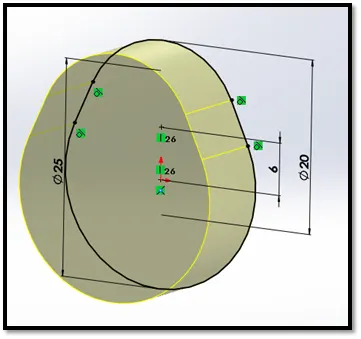
Centre distance = Lift + R1 - R2 ; C = 3.5+12.5-10 = 6 mm
- Motor speed ( N ) = 1500 rpm , Cam lift = 6 mm
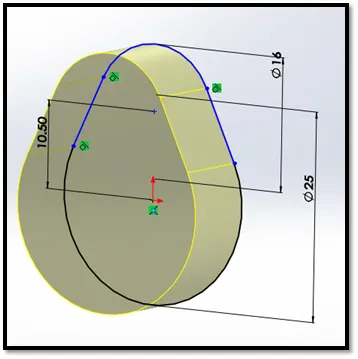 Centre distance = Lift + R1 - R2 ; C = 6+12.5-8 = 10.5 mm
- Material : Cast Carbon Steel
CASE 1 RESULTS:
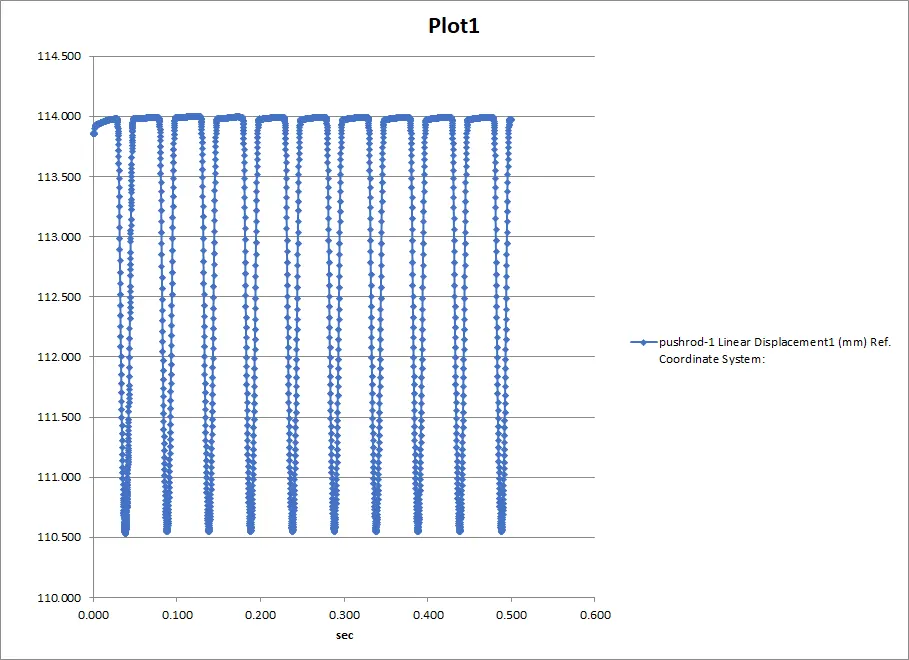
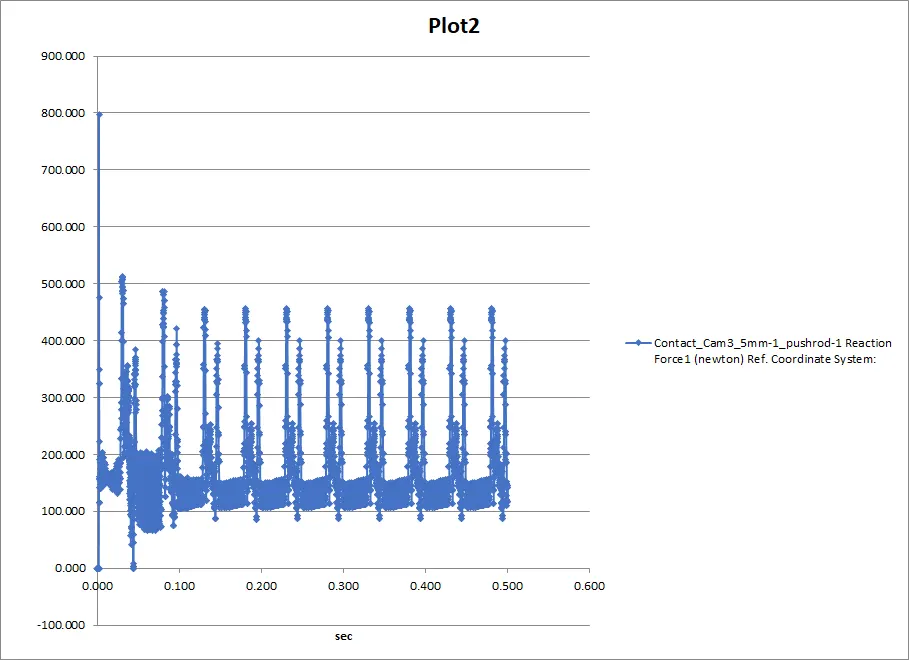
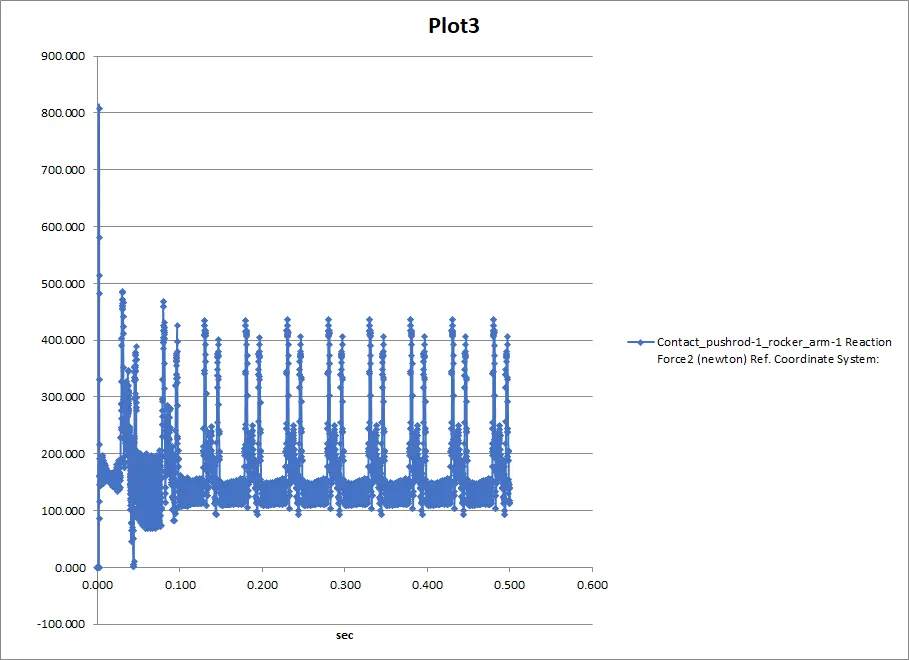
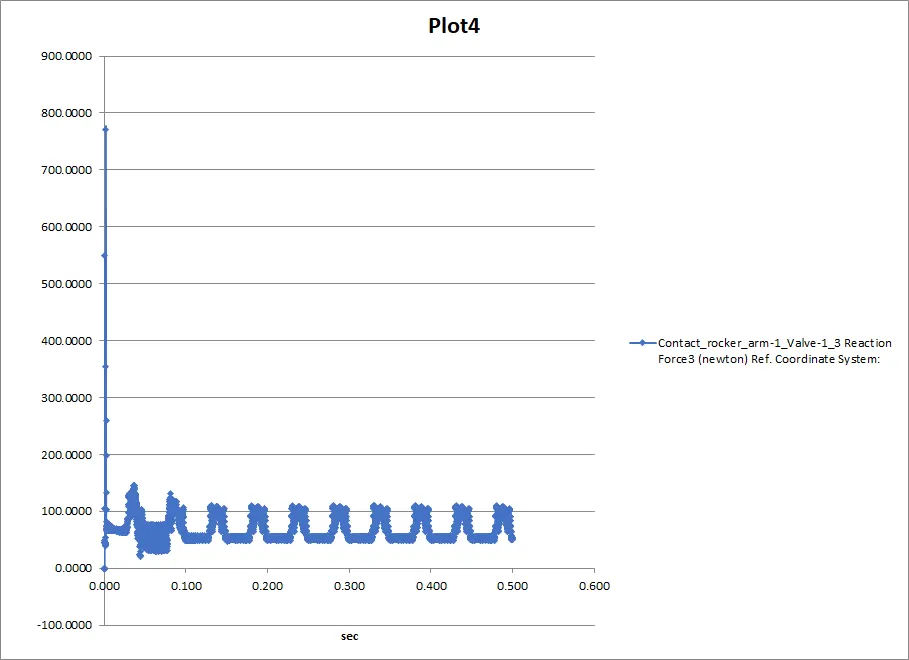
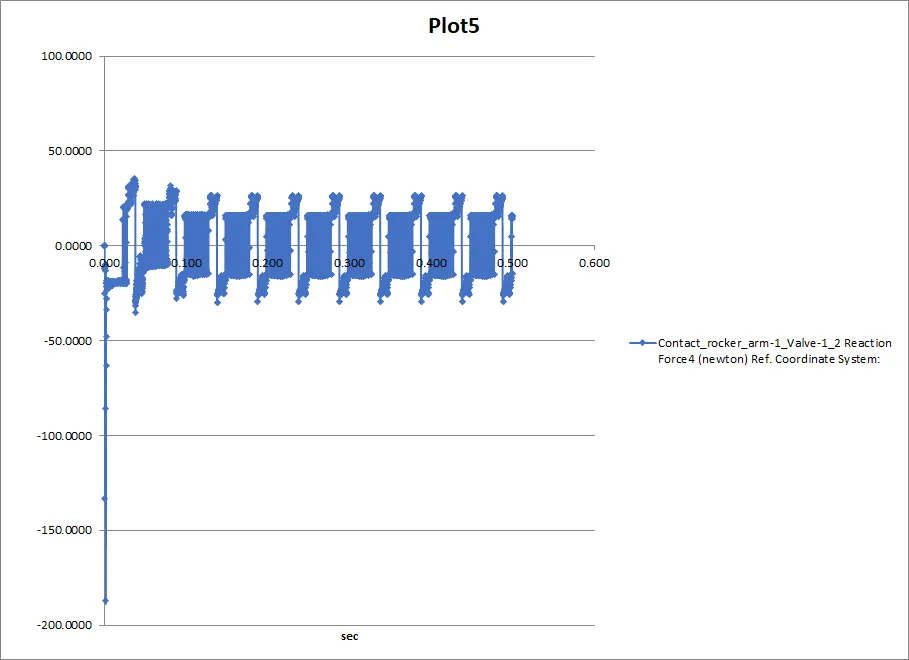
CASE 2 RESULTS:
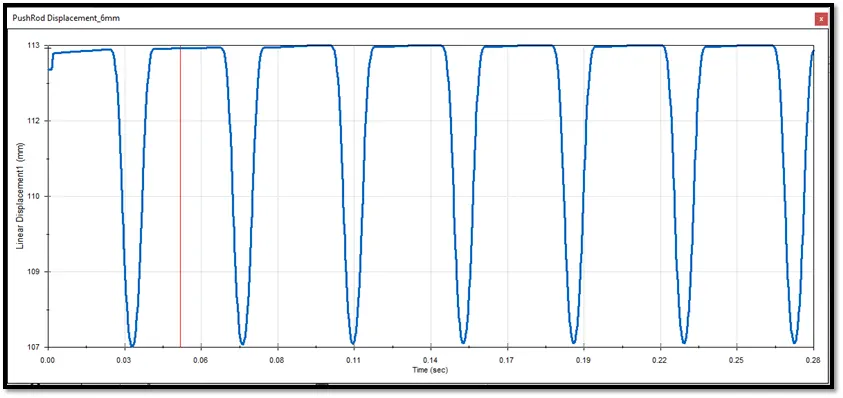
CONCLUSION:
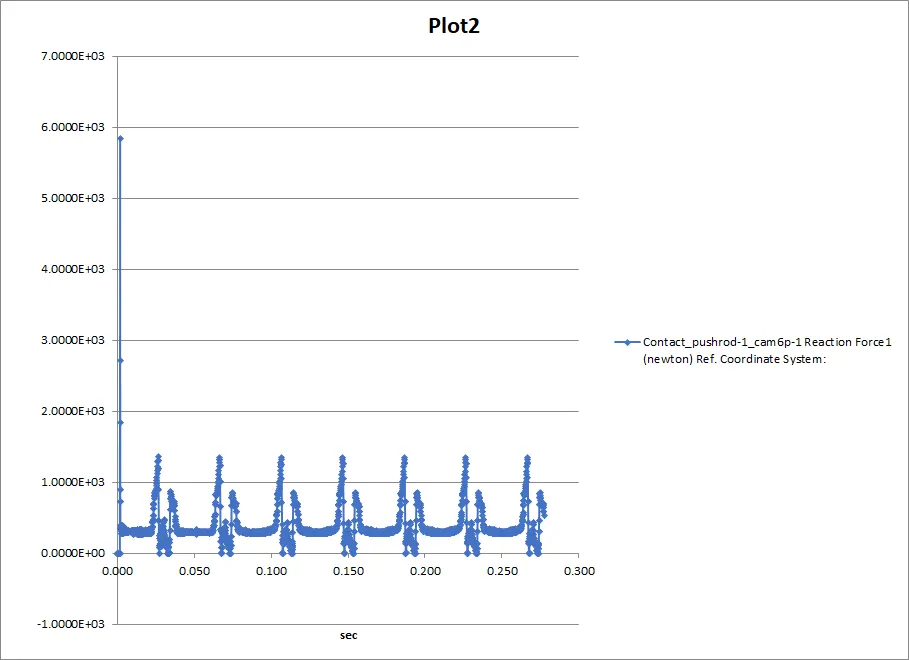
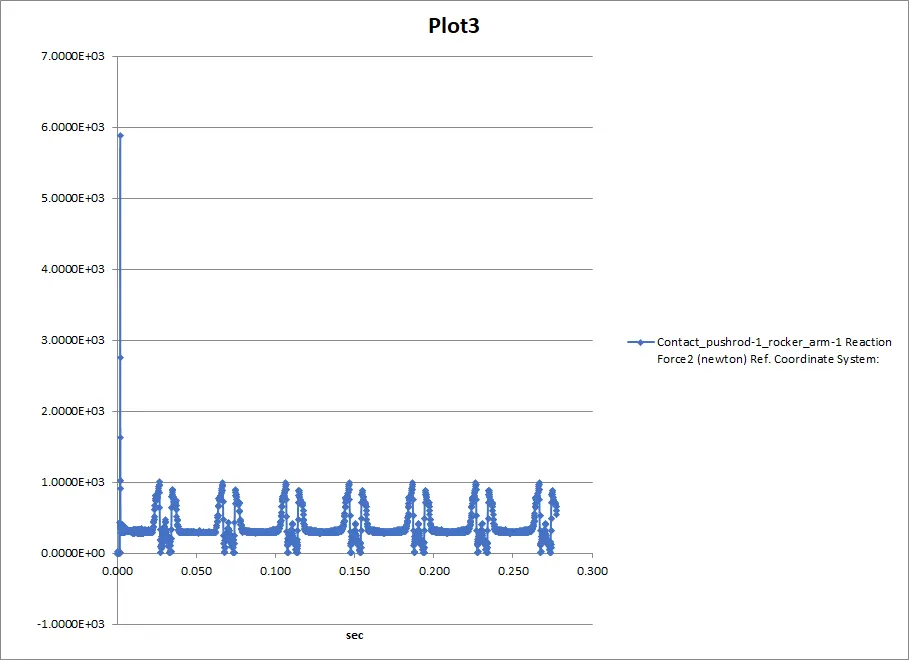
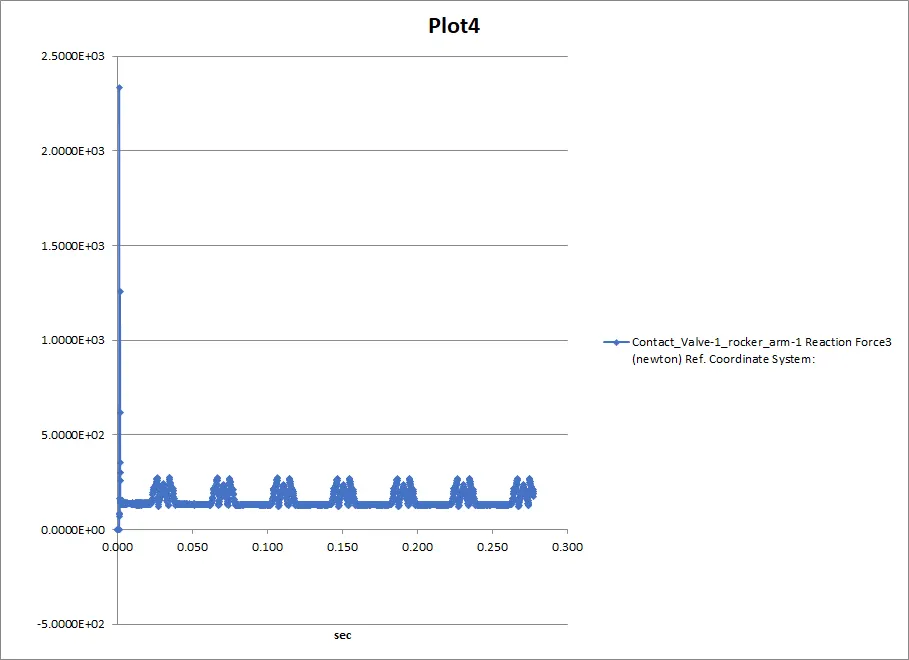
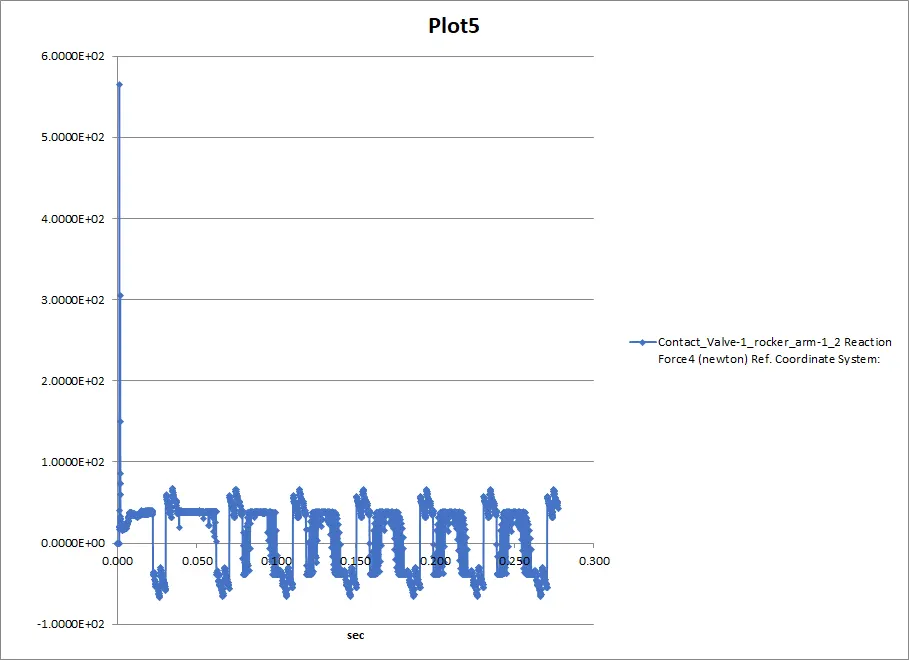
As the Valve lift increases , Contact forces between the Components also increases. There is momentary increase in contact force when component contacts each others initially. As the rocker arm rockers pushes the Valve up and down, Contact between arm-valve varies. This is because Rocker Arm slides over the Valve top surface. This sliding take place in X-direction. When Cam slides forward , due to friction, forces becomes negative and during backward motion , forces becomes positive in X-direction. This is the reason behind Contact forces in X-direction is higher than magnitude of contact forces between Rocker arm and Valve.
Video Link: