Induction Motor characteristics
Objective:
1.TO understand operation of induction motor and its simillarity with clutch.
2.To calculate the starting time of drive for the given motor and load torque.
3.To stability of drive for the given motor and load torque.
Theory:
1.How induction motor operation is similar to the clutch?
Ans:
Operation of Clutch:
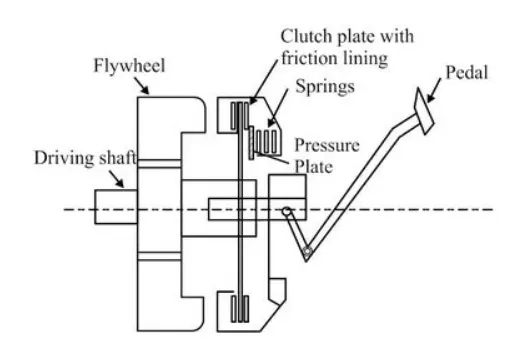
The flywheel is mounted on engine crankshaft and rotates with it. The pressure plate is bolted to the flywheel through clutch springs, and is free to slide on the clutch shaft when the clutch pedal is operated.
When the clutch is engaged the clutch plate is gripped between the flywheel and pressure plate. The friction linings are on both the sides of the clutch plate. Due to the friction between the flywheel, clutch plate and the pressure plate the clutch plate revolves the flywheel. As the clutch plate revolves the clutch shaft also revolves. Clutch shaft is connected to the transmission gear box. Thus, the engine power is transmitted to the crankshaft and then to the clutch shaft.
When the clutch pedal is pressed, the pressure plate moves back against the force of the springs, and the clutch plate becomes free between the flywheel and the pressure plate. Thus, the flywheel remains rotating as long as the engine is running and the clutch shaft speed reduces slowly and finally it stops rotating.
Operation of Induction motor:
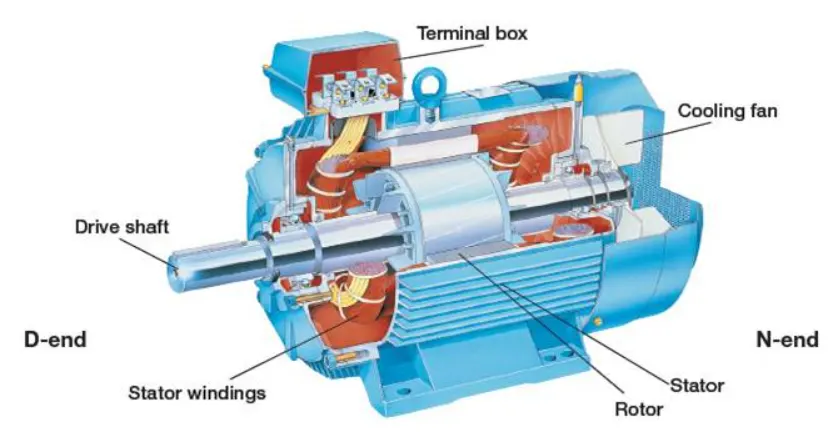
In induction motor, the AC power supplied to the motor's stator creates a magnetic field that rotates in synchronism with the AC oscillations. Whereas a synchronous motor's rotor turns at the same rate as the stator field, an induction motor's rotor rotates at a somewhat slower speed than the stator field. The induction motor stator's magnetic field is therefore changing or rotating relative to the rotor. This induces an opposing current in the induction motor's rotor, in effect the motor's secondary winding, when the latter is short-circuited or closed through an external impedance.[The rotating magnetic flux induces currents in the windings of the rotor.
The induced currents in the rotor windings in turn create magnetic fields in the rotor that react against the stator field. The direction of the magnetic field created will be such as to oppose the change in current through the rotor windings.
The cause of induced current in the rotor windings is the rotating stator magnetic field, so to oppose the change in rotor-winding currents the rotor will start to rotate in the direction of the rotating stator magnetic field. The rotor accelerates until the magnitude of induced rotor current and torque balances the applied mechanical load on the rotation of the rotor. Since rotation at synchronous speed would result in no induced rotor current, an induction motor always operates slightly slower than synchronous speed.
Analogy between clutch and Induction motor Operation:
Engagement of clutch:
When the clutch is actuated, current flows through the electromagnet producing a magnetic field. The rotor portion of the clutch becomes magnetized and sets up a magnetic loop that attracts the armature. The armature is pulled against the rotor and a frictional force is generated at contact. Within a relatively short time, the load is accelerated to match the speed of the rotor, thereby engaging the armature and the output hub of the clutch. In most instances, the rotor is constantly rotating with the input all the time.
Disengagement:
When current is removed from the clutch, the armature is free to turn with the shaft.
2.Calculate the starting time of a drive with the following parameters:
J=10 kg-m2,
T = 15 + 0.5wm
Tl=5+0.6ωm
Ans:
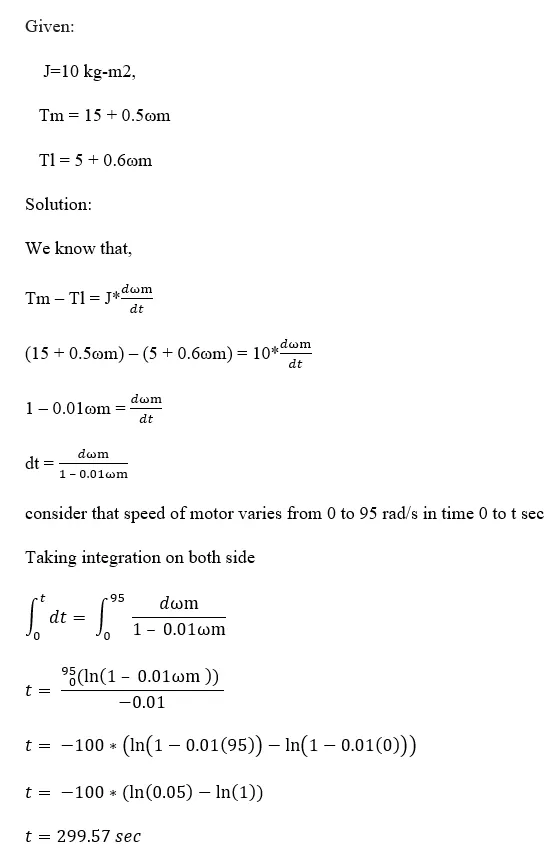
Starting time of drive is 299.57 sec.
3.A drive has following equations for motor and load torques:
Tm=(1+2ωm)
Tl= 3 √ωm
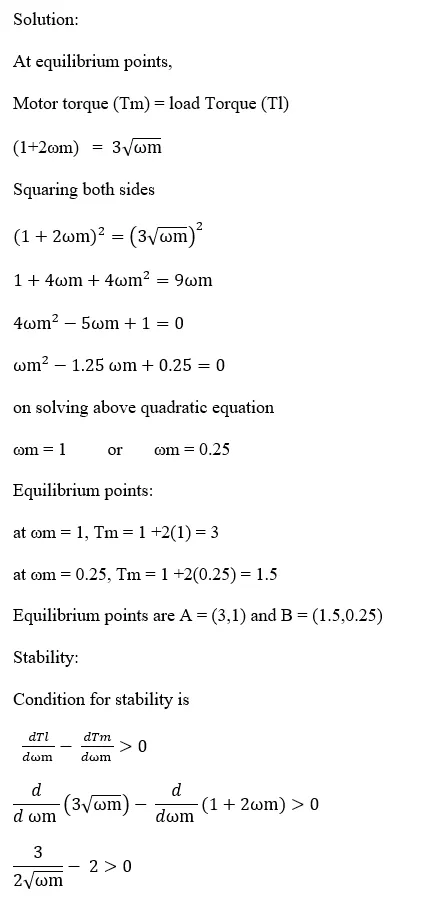
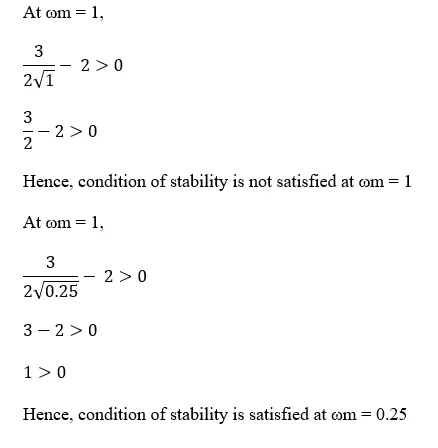
Obtain the equillibrium points and determine the stability
Ans:
Given:
Tm = (1+2ωm)
Tl = 3 √ωm