Identification of Cracks
a)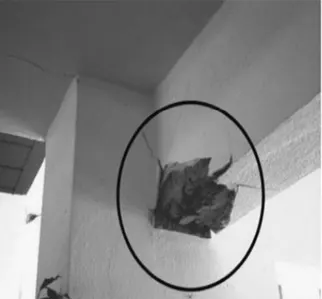
Answer:
* Its from of Flexural failure due to reversal of stress during earthquake.
* During stress reversal, Support top experince compression and bottom experience tension.
* Top compression is managed by slap advantage. Bottom tesion was not satisfied by the provided reinforcement.
* Since the reinforcement got yirlded, It can not be repaired.
b) 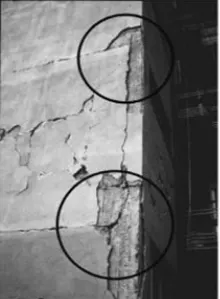
Answer:
* Its beam full out failure due to insufficient development length of reinforcement in joints.
* During earthquake, The horizondal movemdnt of structure make this condition worse and deteched the beam member from coloumn.
* Providing anchorage length between two existing concrete is very difficult. So not repairable.
c) 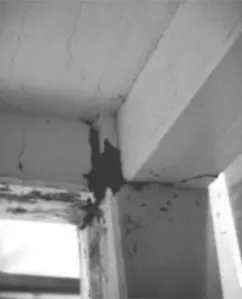
Answer:
* Its a plastic hinge failure
* The damage occurred only in the joint zone first of all.
* Cyclic lateral loading & stress reversal at the joints led to the damage.
* The joint can be strengthened.
Question 2:
a) 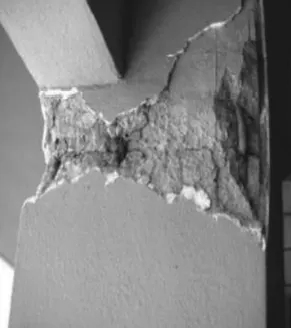
Answer:
* Its a softy story failure, Technically plastic hinge formation.
* Due to absence of infill walls at the ground floor, The plastic hinge form at the top of ground storey coloumn during lateral movement.
* Based on the development of crush of concrete, it can either be repairable and non repairable.
b) 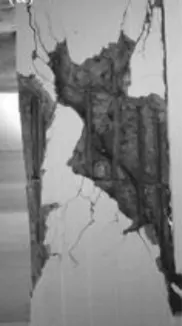
Aanswer:
* Its a pure shear failure
* Indequate shear reinforcement compels concrete takes all the shear stresses
c) 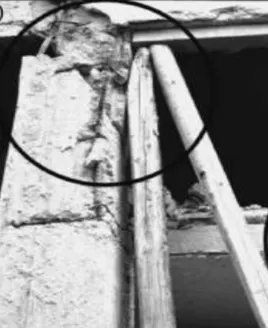
Answer:
* Its a short coloumn failure
* An addditional slap or beam connected to a coloumn in mid height loads to this effect
* This leads to failure especially if the connection is uninternational and not accounted in design.
* The failure given in the picture is not at all repairable.