Identification of Cracks
Question 1: What is the mode of failure or damage of the beams in the figure above? Are the damages repairable? Elaborate.
a)
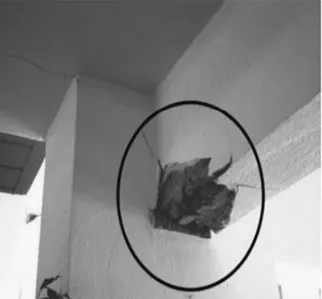
Ans: It is flexural failure due to stress reversal during earthquake.During stress reversal,support top experiences compression and bottom experiences tension.Top compression was satisfied by slab advantage,bottom tension was not satisfied by the provided reinforcement.
Since the reinforcement got yield,it cannot be repaired.
b)
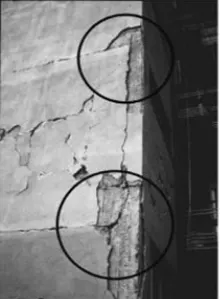
Ans: It is beam pull-out failure due to insufficient development length of reinforcement in the joints.During earthquake,the horizontal movement of the earth makes this condition even worse and detaches the beam member from the column.
It cannot be repaired as providing anchorage length in the existing concrete is not possible.
c)
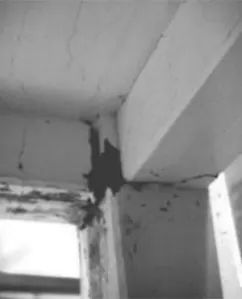
Ans: Damage occured due to plastic hinge failure.Damage occured at the joint zone due to cyclic lateral loading and stress reversal.
The joined can be strengthened.
Question 2:
a)
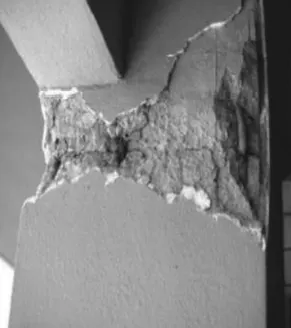
Ans: The damage is soft storey failure,technically plastic hinge formation.Due to the absence of infill walls at the ground floor,plastic hinge is formed at the top of ground storey column during lateral movement.
Based on the development of crush of concrete it can be said whether it is repairable or not repairable.
b)
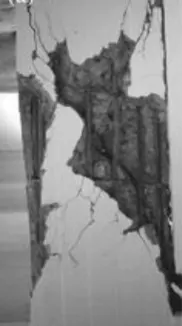
Ans: It is a pure shear failure. Inadequate shear reinforcement compels the concrete to take all the shear stresses.
It cannot be repaired.
c)
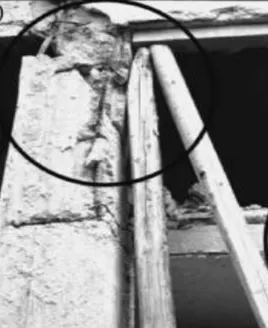
Ans: It is a short column failure. An additional slab connected to the column in mid-height leads to this effect.This is because,in this way the short columns are subjected to heavy shear.This leads to failure if the connection is unintentional and not accounted in design.
The failure is not at all repairable.