Identification of Cracks
Question 1
What is the mode of failure or damage of the beams in the figure above? Are the damages repairable? Elaborate
a)
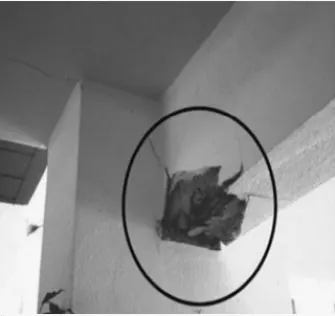
- The mode of failure is flexural cracks developed at the bottom flange of the beam
- Here we can see that, the beam is only component which is fail and column is the component which is not disturbed. So this is the case of Strong column and weak beam
- Here the moment capacity of column is greater than the moment capacity of the beam so the beam is failed or yield prior to the column
- In strong column and weak beam case local failure will happen and it will shows sign of failures
- In this case partial collapse will happen
- This is non repairable
b)
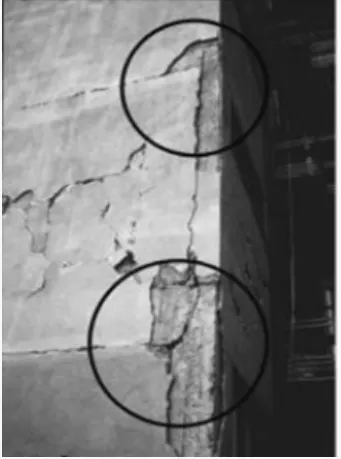
- This column shows in above picture fails due to improper construction of column
- To get smooth surface to the column, proper compaction should needs to be done properly.
- In the above picture, curing is not done properly
- While constructing the column, compaction is not done properly
- This is repairable damage
- We can repair this damage by the process of grouting.
c)
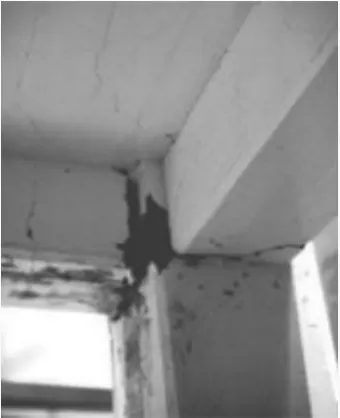
- The picture shows the beam column connection failure.
- It occurs due to the formation of plastic hinge at undesirable location
- This is unrepairable damage
Question 2
What is the mode of failure or damage of the beams in the figure above? Are the damages repairable? Elaborate
a)
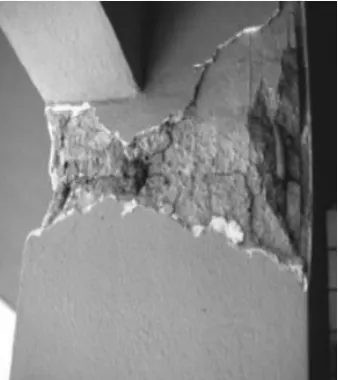
- The mode of failure is the compression failure
- When columns are axially loaded, the concrete and steel will experience some stresses. When the loads are in greater amount as compared to the cross section of the column, the concrete and steel will reach the yield stress and failure will be starting without any later deformation.
- To avoid this column should be constructed with the sufficient cross sectional area compared to the allowable stresses.
b)
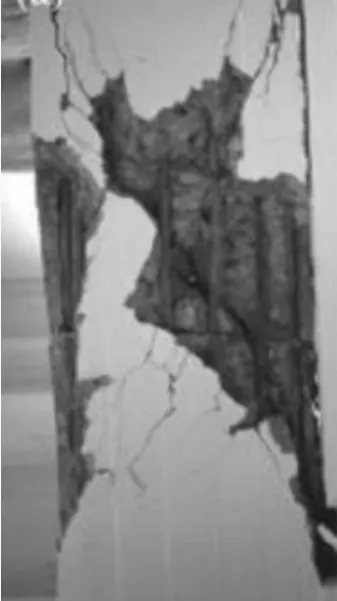
- The mode of failure is shear failure of columns.
- Lateral force or lateral loads coming from the earthquake load are carrying by the vertical components of the building such as columns and shear walls.
- When there are no shear walls, column carries all the lateral load.
- To avoid this failure, structural engineer have to increase the size of the column in the direction of shear to increase the shear capacity.
c)
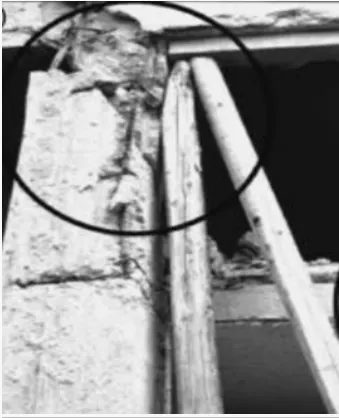
- The mode of failure is Short column failure
- The short column is more stiffer than long column which will results in failure of short column prior to the long column.
- The short column is subjected to the compressive stresses and hence it fails by crushing.
- To avoid the failure of short column during seismic load, the column should be designed by considering seismic factors also.
- The failure of short columns also avoided by using retrofitting techniques.