Identification of Cracks
1) What is the mode of failure or damage of the beams in the figure above? Would you characterize the case as damage or as a failure? Are the damages repairable? Elaborate.
A)
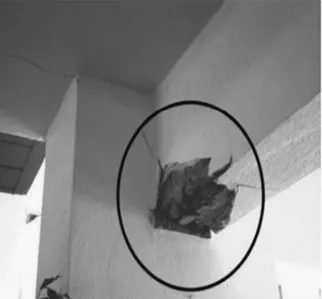
- This crack will be formed due to the flexural failure of a beam.
- The flexural strength, known as modulus of rupture, bend strength, or fracture strength, is a material property, defined as the stress in a material just before it yields in a flexure test.
- It represents the highest stress experienced within the material at its moment of rupture. It is measured in terms of stress.
- To overcome this type of failure, main steel is provided at the bottom/top of the beam. Damage is caused due to insufficient of reinforcement or concrete.
- No, the damage cannot be repaired as the reinforcement has yeilded.
B).
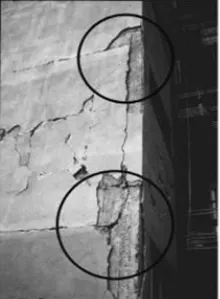
- This cracks are formed due to the mistakes done in concreting and honeycombing in concreting.
- Its a Beam pull out failure due to insufficient developmen length of reinforcement in joints
- During earthquake, the horizontal movement of structure makes this condition worse and detached the beam member from column.
- Providing anchorage length between two existing concrete is very difficult.
- To avoid cracks in concrete, avoid using high slump concrete.
- So this failure is not repairable.
C).
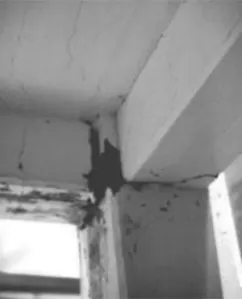
- This cracks are formed due to the beam-column joint failure.
- In the Strong Column-Weak Beam design, beams are expected to form plastic hinges at their end and develop flexural overstrength beyond design strength.
- Cracks in the beam developed through its entire width.
- The damage occurd only in joint zone first.
- The bond performances of the bars anchored in a joint effect the shear resisting mechanism to a significant extent
- The joint can be strengthed therefore repairable.
Question 2:
What is the mode of failure or damage of the beams in the figure above? Are the damages repairable? Elaborate.
A).
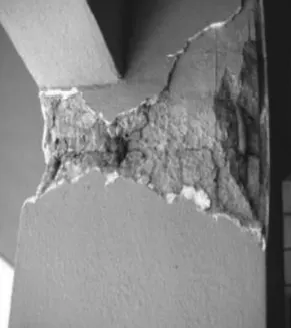
- This cracks are formed due to flexural failure of a beam.
- Colmuns have the most important role in the structure.
- In this failure, Concrete damaged all around the column face.
- Beams are looking safe.
- Its a soft story failure, Technically plastic hinge formation.
- Based on the development of crush of concrete it can be either repairable or non repairable.
B).
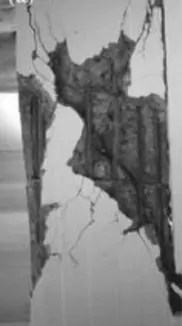
- This crack will be formed due to the shear failure of a column.
- Lateral loads in a structure are carrying by verticl elements such as columns and shear walls.
- When there are no shear walls, columns carry these lateral loads.
- Lateral loads are generated by winds, earthquake loads, from reataining structures, etc.
- Inadequate shear reinforcement compels concrete takes all shear stresses.
C).
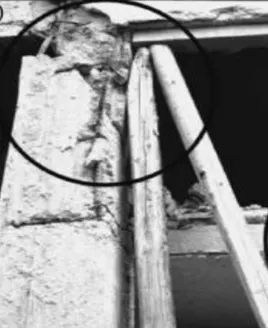
- This cracks are formed due to short column failure.
- Short column is classified base upon slenderness Ratio.
- Failure of Column usually occurs due to anyone of the following stresses developed in the column.
- This leads to failure especially if the connection is unintentional and not accounted in designs.
- The failure shown in the picture is not at all repairable.