Hood design-Week 2
- To design a Hood outer panel, inner panel and the necessary reinforcements by the given Master section and design parameters.
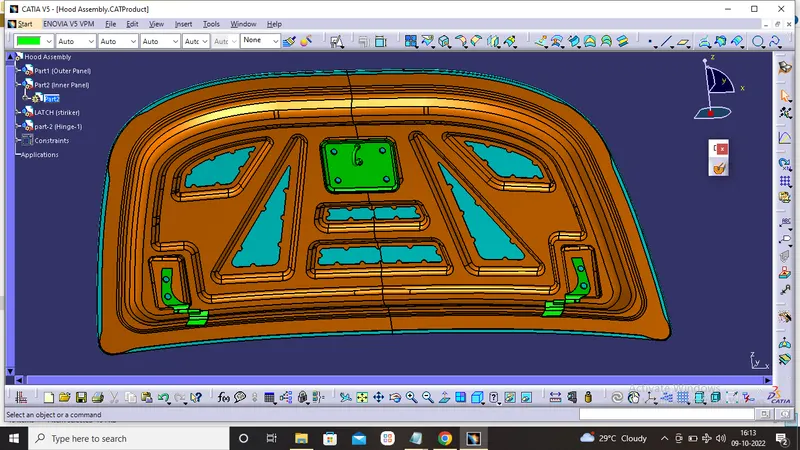
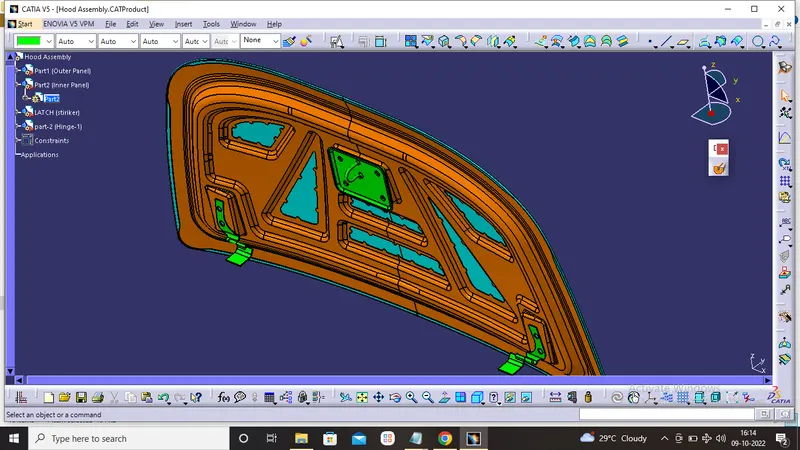
- Hood is a main component of front portion of a car. It is an opening body panel that covers the engine in front engine vehicle. It consist of an outer panel and inner panel. The inner panel provides the strength while the outer panel functions as the metal cover.
Hood design considerations :-
Following parts are using in hood assembly for this report.
1. Hood outer panel
2. Hood inner panel
3. Hinge assembly
4. Striker assembly
Hood thickness
Outer panel thickness=0.75 mm
Inner panel thickness=0.75 mm
Reinforcement thickness=1.5 mm
-
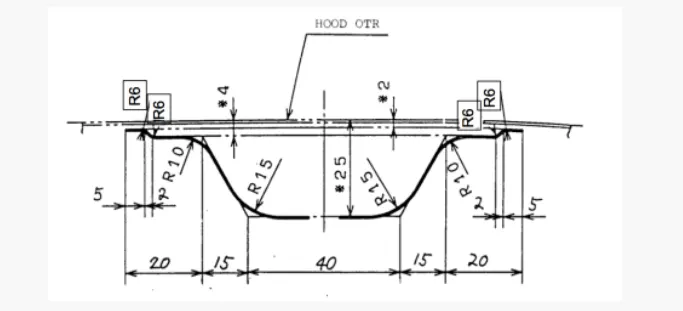
MASTER SKETCH :
-
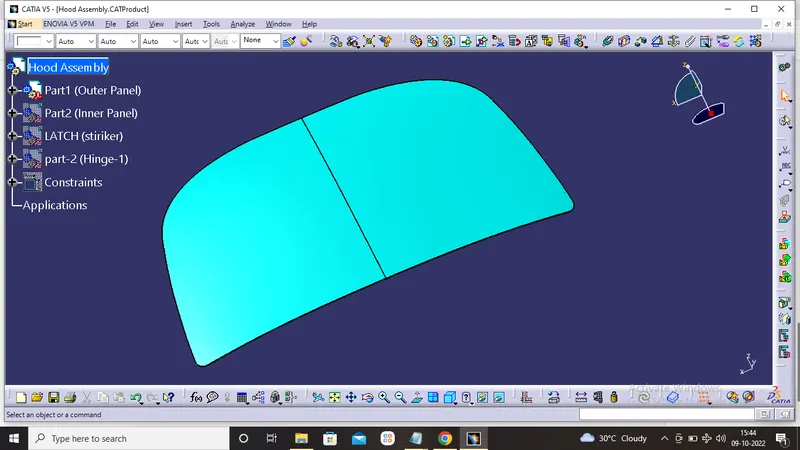
OUTER PANNEL
we also call it is a cover of inner pannel which give luxirious look for hood.
-
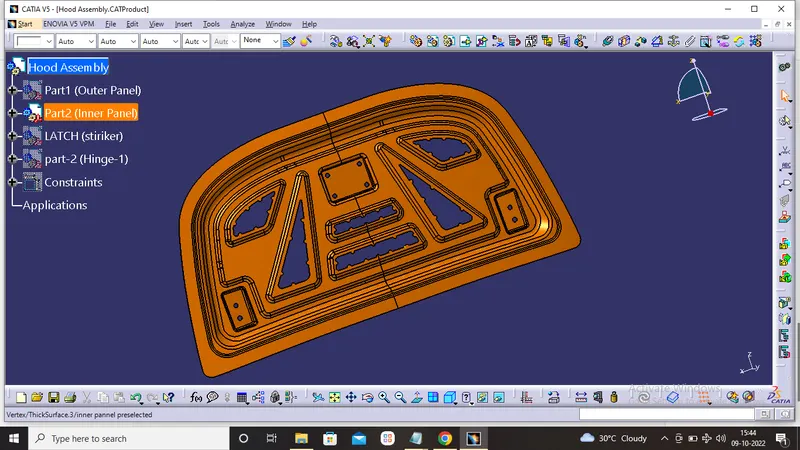
INNER PANNEL
inner pannel only we can research as the safty of driver and passanger. we have to create inner pannel insuring a sufficient energy absorbstion capicity.
-
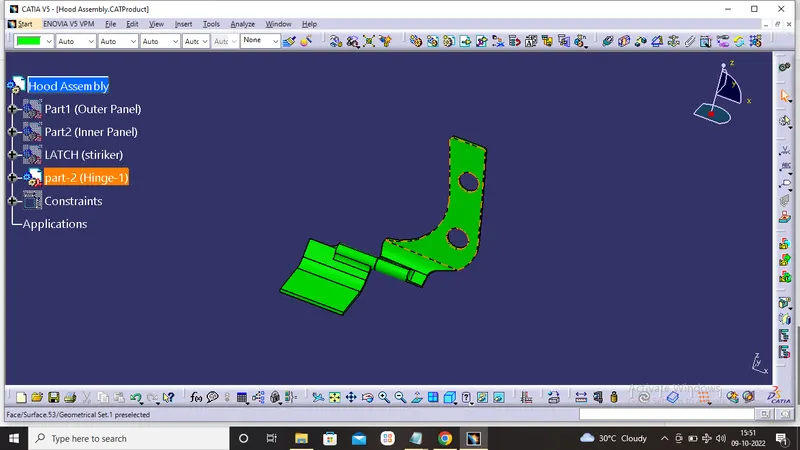
HINDGE ASSEMBLY
hindge is component that fix the hood to the fender of the car . latch must be fixed with the perpendicular to axis. sothat hood open and close properly.
-
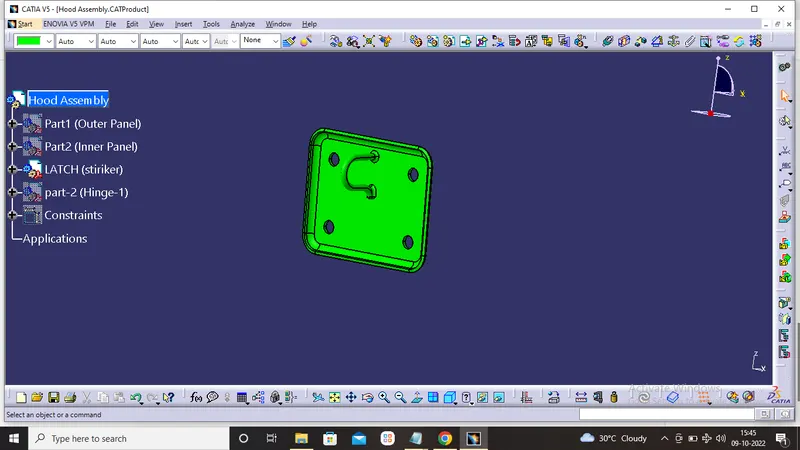
STRIKER
it is used to docking the hood with the car.
-
Hemming-
• Hemming isasheet metal forming process in which sheets are joined by bending it usually to 180 degree. Automotive body panels&parts such as deck-lids,trunk-lids,doors,hoods&tailgates are formed by hemming processes.
• Roll hemming is carried out incrementally withahemming roller.An industrial robot guides the hemming roller &forms the flange.Roll hemming operation can also be divided into several pre-hemming&final hemming process steps.
• Coventional die hemming is suitable for mass production.In die hemming,the flange is folded over the entire length withahemming tool.Normally the actual hemming isaresult ofaforming operation in which the flange is formed withahemming tool after the drawing&trimming operations have been completed.
Parameters:-
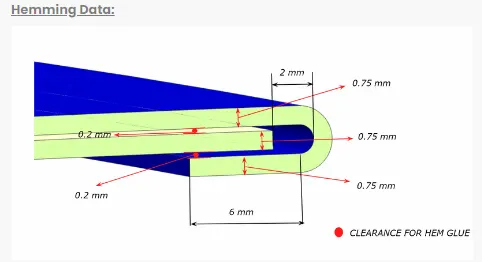
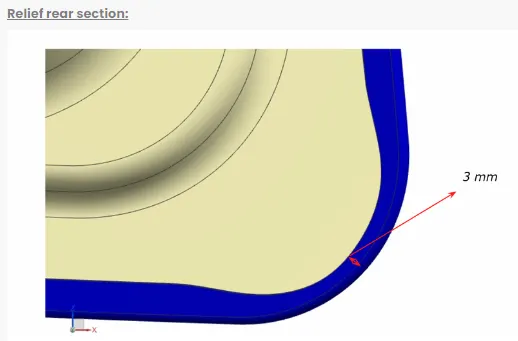
Relief Rear section
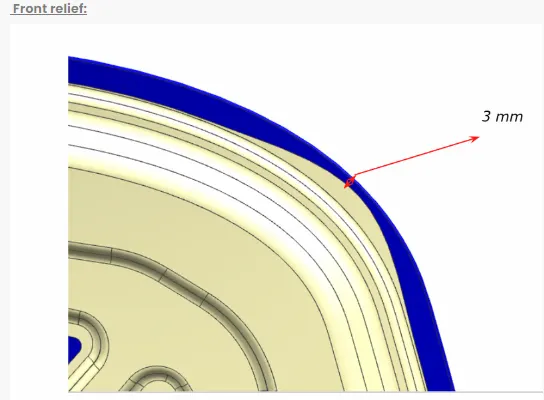
Front relief section
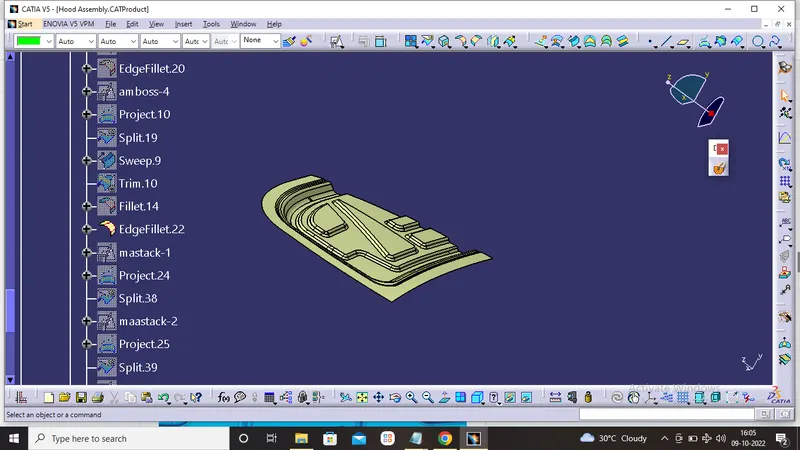
- Emboss definitions :-
Embosses are provided to increase the strength of inner panel. Shape of embosses also determines the direction of collision force distribution. the shape of the embosses should be designed in such a way that, the collision forces should be directed towards outward side of the car (towards hinge side).
-
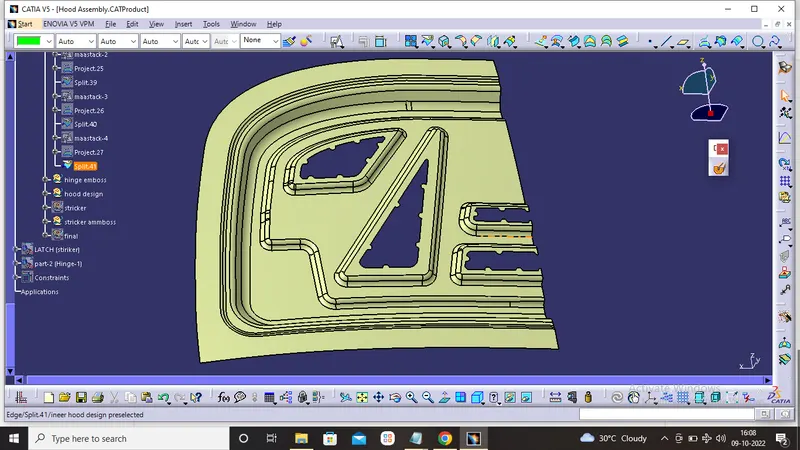
Mastic Data Design:
The main purpose of the outer panel is for the aesthetic looks. Thus we cannot use bolts or welding. This has to be done with the help of the hemming and mastic sealants. Mastic sealants are elastic compound that behaves like the rubber. It is placed between the outer and inner panels. Initially is it in paste form, but after the hot furnace bath, it gets hardened thus joining the outer and inner panel. Mastic sealant has the tendency to increase the strength of the panel and has the influence of 80mm diameter.
- Latch trajectory -
While opening or closing the hood,the latch must be perfectly aligned to the fixing or striker point.For that, the latches trajectory must be perpendicular to the hinge axis.
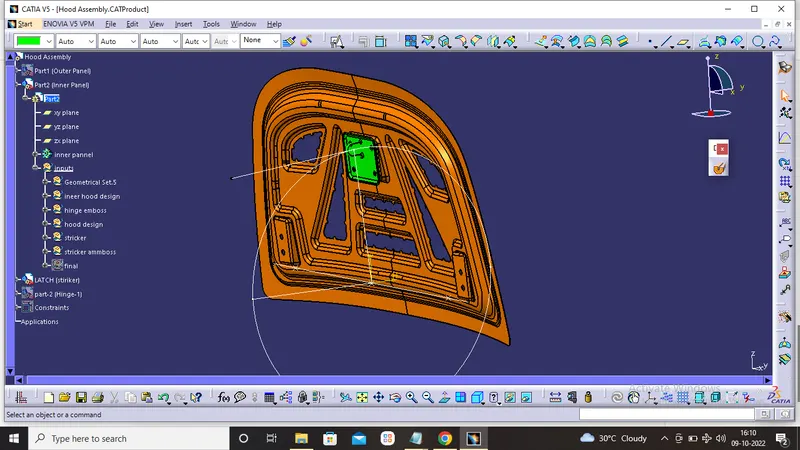
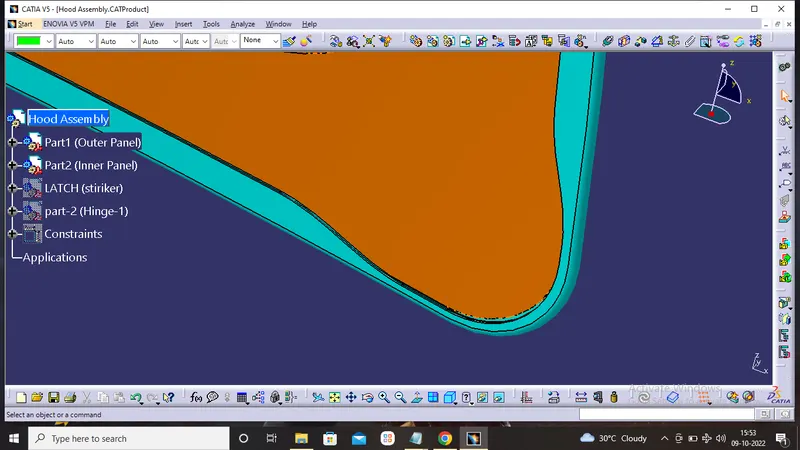
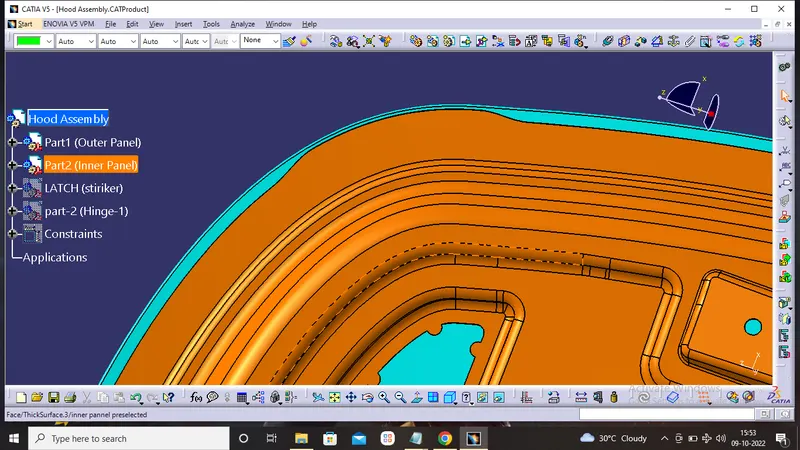
Hood Assembly Output:-