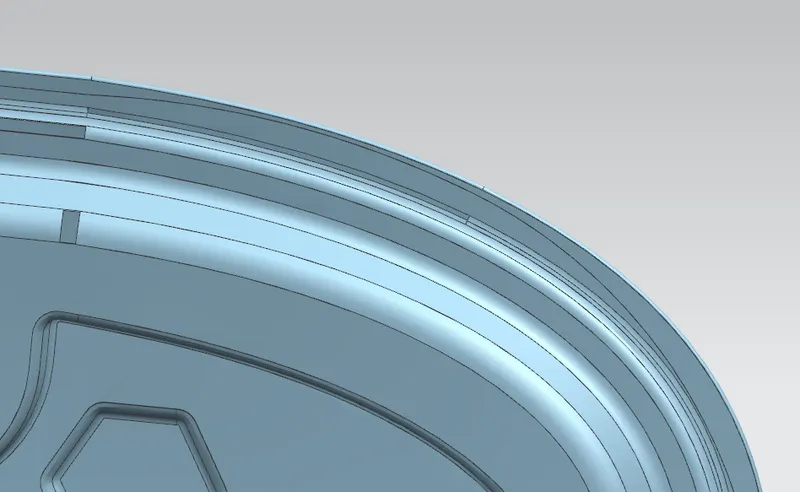
Hood design-Week 2
HOOD DESIGN IN NX
- OBJECTIVE
Design hood outer panel, inner panél and reinforcements with the given outer hood skin, master section and design parameters.
- Introduction
The hood or bonnet is the hinged cover over the engine of motor vehicles. Haods con open to allow access to the engine compartment (or trunk on rear-engine and some micl-engine vehicles) for maintenance ance repair. In design perspective hood should meet some specific conditions like pedestrian safety, hood head zone for the lock striker, force distribution when subjected to frontal collision {occupant safety], manufacturobility etc.
A typicsed hood assembly consist of hood outer panel, inner panet, latch and striker, hinge, hood stay. Hood stay is on apparatus for supporting the engine hood of a moto vehicle in its open position. The purpose of opening the engine hoocl is for inspecting engine room, replenishing cooling water and engine oil, changing ports and making repairs etc. Common types of hoocl stays ore Support Rod and Gas Stay. Support rocls ore manually operated and they ore cost effective and simple to design whereas gas stays require no mon power but they ore costly.
- DESIGN PARAMETERS
Hood Thickness Information
Outer Panel Thickness = 0.75mm
Inner Panel Thickness = 0.75mm
Reinforcement Thickness = 1.5mm
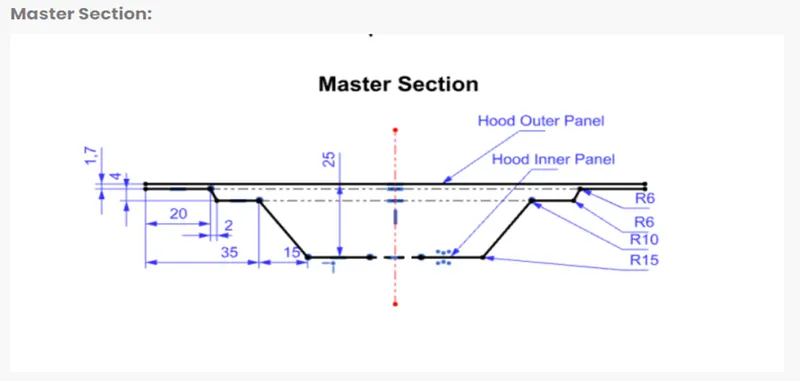
- Master section
- COMPONENTS
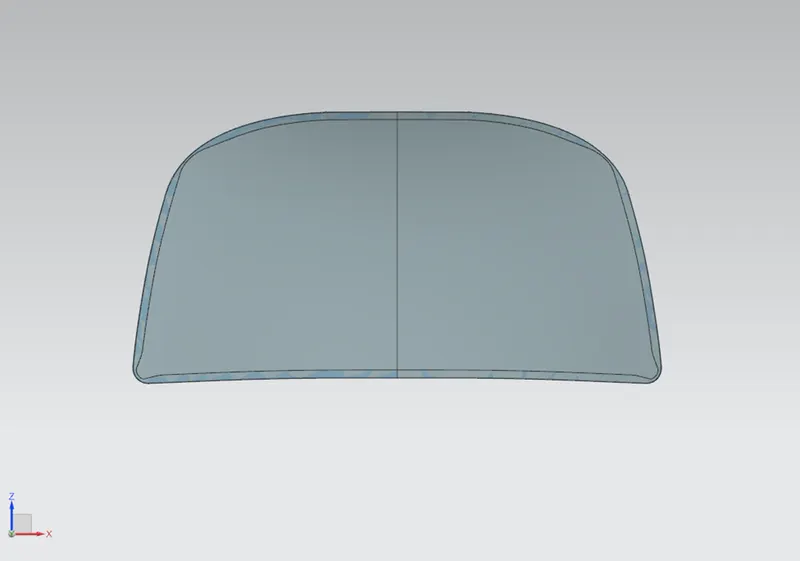
- Hood outer panel
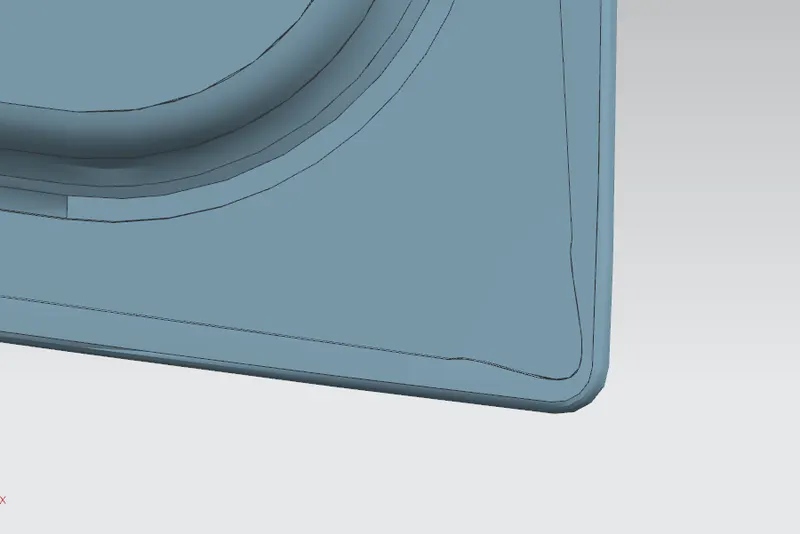
Outer panels are the aesthetic elements of a car. It is the styling team who provides the skin for the outer panel. The shape, position and size of the hoocl should satisfy the safety norms. So while designing the food we should give more importance to pedestrian safety. The outer panel is attached to the inner panel by lemming. So, it is necessary to provide required lemming flange and reliefs for the hemming operation. We also provide mastic sealants between outer panel and inner panel to reduce vibration.
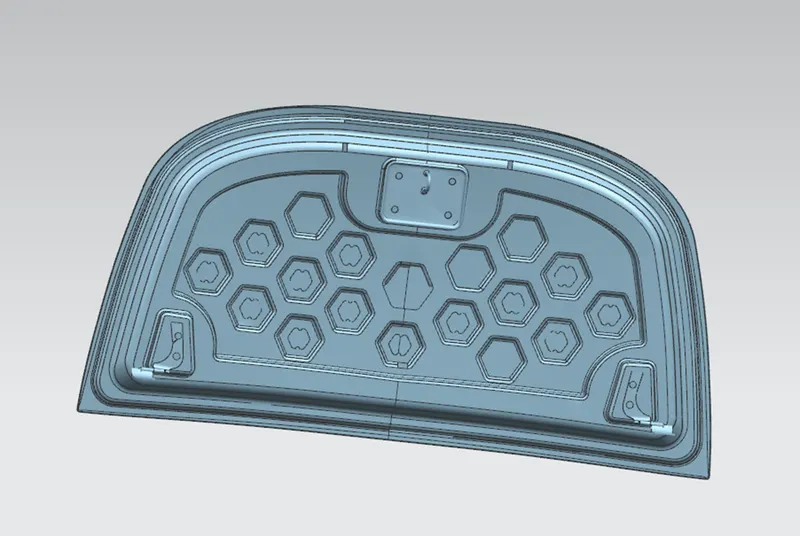
- HOOD INNER PANNEL
Inner panel is the part that gives strength and rigidity to the outer panel. The master section represents the initial emboss shape and size. Then we provide the emboss for the latch and hinge elements after fixing the location.
3.Reinforcement
Reinforcements are provided according to the design requirements. Mainly it is provided at the hinge oncl latch regions to improve the strength locally. Usually thickness of reinforcements will be higher than that of the inner panels and the value varies according to cost and requirement.
RELIEF REAR SECTION:
FRONT RELIEF