Hood design-Week 2
Hood Design
OBJECTIVE
Design Hood outer panel, inner panel and the necessary reinforcements by following the Master section mentioned with the design parameter explained in the videos. Submit an assembly of Hood inner panel, outer panel, latch, hinge and the reinforcements
A detailed report about the Hood Design which includes a detailed explanation about hood and its components, Latch trajectory, Mastic data, Emboss definitions, manufacturing process like deep drawing and hemming, and all the parameters followed in the design.
The report should be well-formatted and should have a good flow of content. Add all the relevant images
Data to be used:
Hood Thickness Information
- Outer Panel Thickness = 0.75mm
- Inner Panel Thickness = 0.75mm
- Reinforcement Thickness = 1.5mm
INTRODUCTION
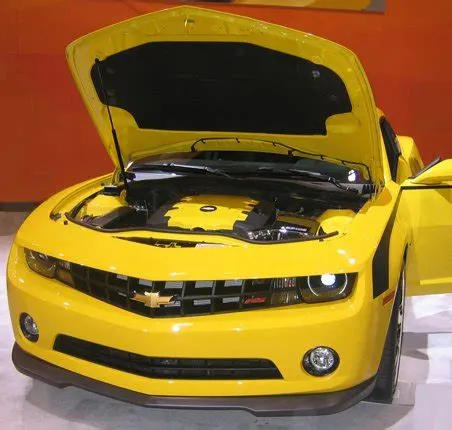
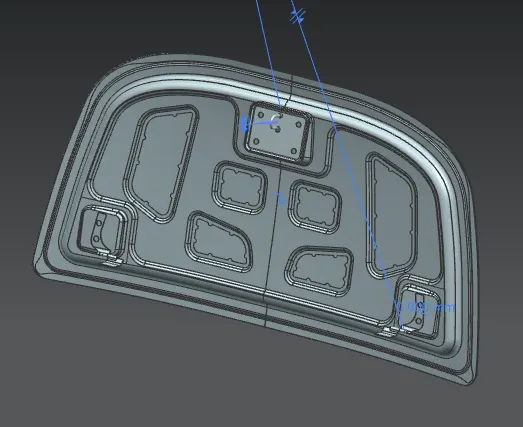
The hood is an opening body panel that covers the engine in a front-engine vehicle. The hood is also considered as another type of door in a vehicle as it consists of an outer panel and inner panel. The inner panel provides strength while the outer panel functions as the metal cover.
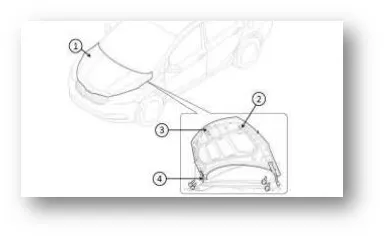
HOOD ASSEMBLY PARTS
Hood outer panel
Hood inner panel
Hinge assembly
- Hinge engine compartment
- Hinge hood part
Striker
EXPLANATIONS
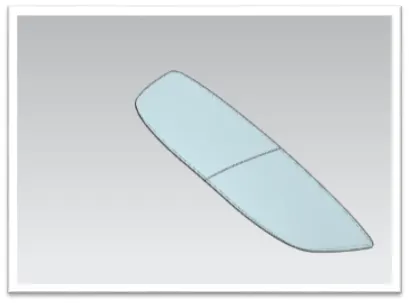
The outer panel skin surface from style department with proper aesthetic look, gap and falseness, as shown in Fig. Outer hood panel follow the aerodynamic criteria.
Hood inner is main functional part in hood design. It’s most complicated and weight consuming part in hood assembly.
In the vehicle development, the hood inner was designed to meet the standard load cases
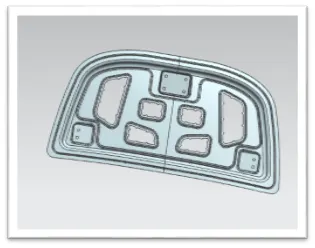
The hood latch system is vital to all cars, trucks or other vehicles. This system is the attachment of hood assembly and vehicle body.
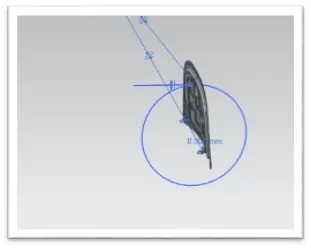
The hinges also guide and hold the hood when open & close. Their kinematics analysis had done to ensure that the hood does not contact other components
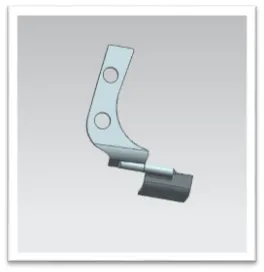
Hood Stay is an apparatus for an engine room of a car, which can safely keep an engine hood in an open state even if an external force is abruptly generated due to vibration, wind and can facilitate an opening/closing operation of the engine hood.
There are two types of hood stay
Support rod
Gas stay
Hood Design Consideration
The following aspect considered during primary hood assembly design. - Head Clearance - Hood opening angle and Location of stay rod -
Latch Operation Full opening angle is mainly depending on the head clearance criteria, geometry of hood assembly and hinge assembly.
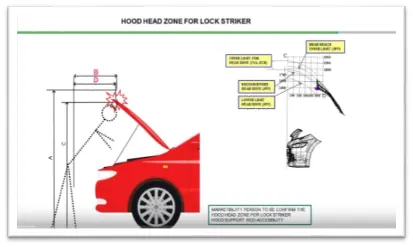
The hood head zone should be considered while designing the hood. Because in open mode the person should not be hit in the hood. The Average heights should be considered according to the region and designed.
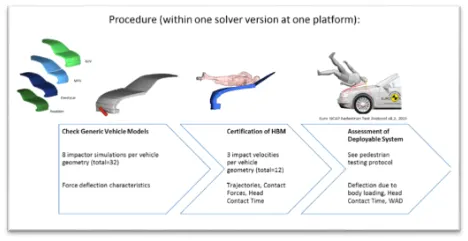
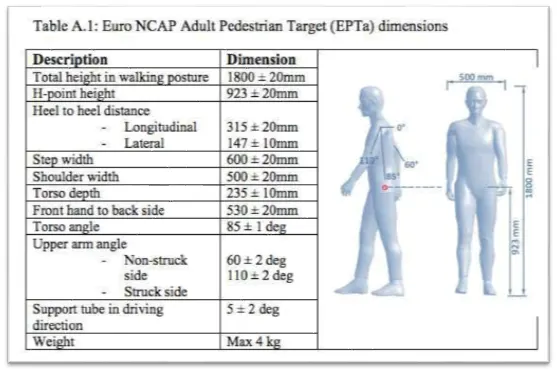
The main focus of manufacturing aspect is to manufacture hood assembly with minimum operation sequence and process time. Following aspect are considered for the primary design of hood assembly.
- Tooling Considerations
- Welding Consideration
-Hemming Considerations.
- Assembly Considerations.
Every automotive part must be check on three tests, 1) Durability tests, 2) NVH tests and 3) Crash tests. In durability test, stress and strain are checked with all related parameters of component. NVH tests conducting for check the natural frequency of component. To ensure the frequency of other component is not match with the engine frequency zone. Crash tests are on the vehicle level tests are on the basis of vehicles safety regulation. Two durability tests are considered for work
NVH -Noise, vibration, and harshness (NVH), also known as noise and vibration (N&V), is the study and modification of the noise and vibration characteristics of vehicles, particularly cars and trucks. While noise and vibration can be readily measured, harshness is a subjective quality, and is measured either via jury evaluations, or with analytical tools that can provide results reflecting human subjective impressions.
Mastic sealant must be between the outer panel and inner panel. It gives aesthetic look for the panel. It also avoids noise.
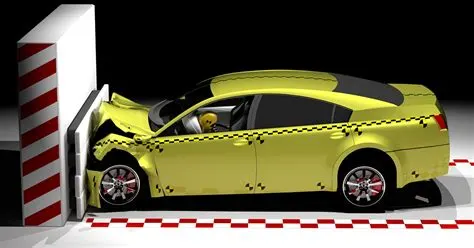
Why is Euro NCAP important to car manufacturers?
Euro NCAP rewards and recognizes car manufacturers that make available new safety technologies which demonstrate a scientifically proven safety benefit for consumers and society. By rewarding technologies, Euro NCAP provides an incentive to manufacturers to accelerate the standard fitment of important safety equipment across their model ranges.
When a car is crashed the crash is dissipated outside the car that is in the hood part, the passenger is avoided from heavy crashing. The hood should be designed in a way that the crash doesn’t happen inside the car.
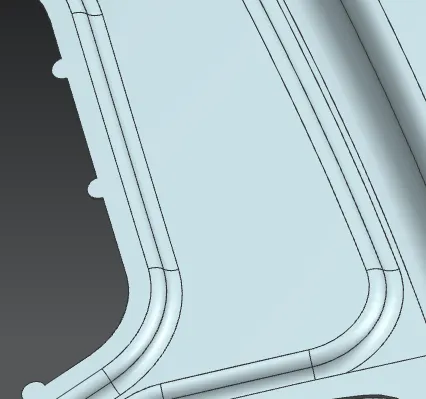
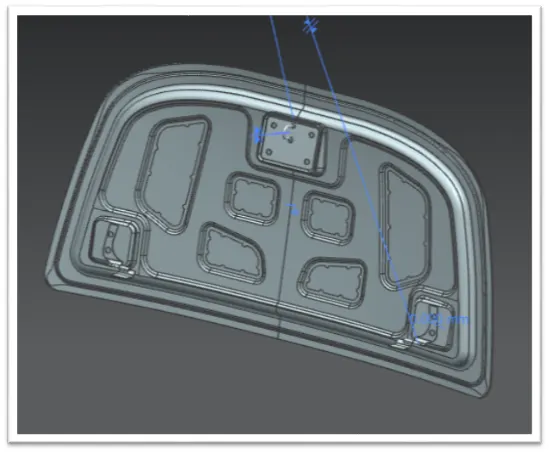
The inner panel provide strength to the outer panel. The inner panel is designed from the given master section. Emboss is created to increase the strength and durability of the inner panel.
Reinforcement is done to give strength to the hinge area.

Emboss – It is a carve, mold or a stamp design on a surface so that it stands out in relief.
MANUFACTURING PROCESS
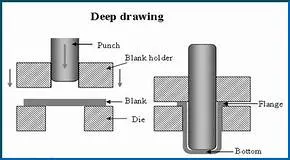
Deep drawing -Deep drawing is a sheet metal forming process in which a sheet metal blank is radially drawn into a forming die by the mechanical action of a punch.
It is thus a shape transformation process with material retention. The process is considered "deep" drawing when the depth of the drawn part exceeds its diameter. This is achieved by redrawing the part through a series of dies. The flange region (sheet metal in the die shoulder area) experiences a radial drawing stress and a tangential compressive stress due to the material retention property.
These compressive stresses (hoop stresses) result in flange wrinkles (wrinkles of the first order). Wrinkles can be prevented by using a blank holder, the function of which is to facilitate controlled material flow into the die radius.
Hemming
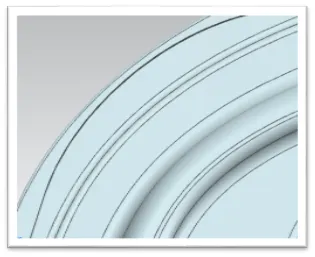
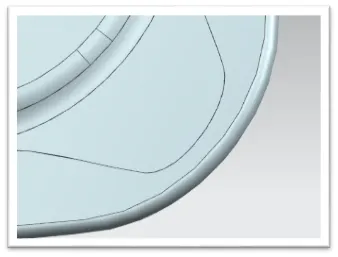
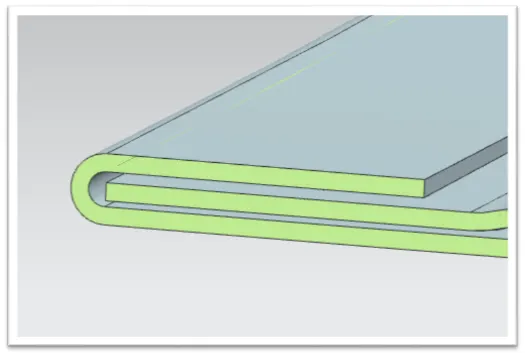
Hemming is a forming operation in which the edges of the sheet are folded or folded over another part in order to achieve a tight fit. Normally hemming operations are used to connect parts together, to improve the appearance of a part and to reinforce part edges.
In car part production, hemming is used in assembly as a secondary operation after deep drawing, trimming and flanging operations to join two sheet metal parts (outer and inner) together. Typical parts for this type of assembly are hoods, doors, trunk lids and fenders.
The accuracy of the hemming operation is very important since it affects the appearance of the surface and surface quality. Material deformations, which occur during the hemming process, can lead to dimensional variations and other defects in parts. Typical hemming defects are splits or wrinkles in the flange, material overlaps in the corner areas or material roll-in. This is why it is important to use simulation tools in order to, on the one hand, better understand the hemming process and, on the other hand, significantly reduce the number of “trial and error” loops during tryout und production.
There are various types of hemming operations:
- Conventional die hemming
- Roll hemming
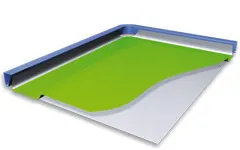 In conventional die hemming, the flange is folded over the entire length with a hemming tool.
 In roll hemming, the hemming roller is guided by an industrial robot to form the flange.
COMMENTS USED
Trim sheet
Offset curve on face
Law extension
Through curves
Project curve
Emboss
Trim and extend
Curve on surface
Wave link geometry
Face blend
Edge blend
Mirror geometry
Sew
Thicken
Hood design
Clearance
Hemming
CONCLUSION
The hood has been designed according to the rules and safety needed.The Assembly ofouter panel, inner panel,hinge and striker is done.