Hood design-Week 2
Aim: To Design Hood outer panel, inner panel and the necessary reinforcements by following the Master section with the design parameter.
Introduction: Hood is the main component of a car at the front portion. It is used to decorate the car and add a luxurious look. The shape of the Hood is made aerodynamic in order to minimize the air effect. Hood is generally used to access the parts easily such as radiator, engine and many other parts. A car hood, also referred to as a bonnet in some other countries, is the hinged cover that rests over the engine of a front-engine vehicle. Its purpose is to provide access to the engine for repair and maintenance. A concealed latch is typically used to hold down the hood. On vehicles with an aftermarket hood and on race cars, hood pins may be used to hold down the car hood. Hoods sometimes also contain a hood scoop, wiper jets, power bulge, and/or hood ornament. Car hoods are typically constructed from steel and sometimes from aluminum. Aftermarket car hoods may be constructed from various other materials, including carbon fiber, fiberglass, or dry carbon. The hood design may vary from one make and model to another.
while access for repairs and maintenance Hood can fix by two methods :
1. Support Rod.
2. Gas Stay.
Hood and its components:
- HOOD OUTER PANEL.
- HOOD INNER PANEL.
- STRIKER.
- HINGE ASSEMBLY.
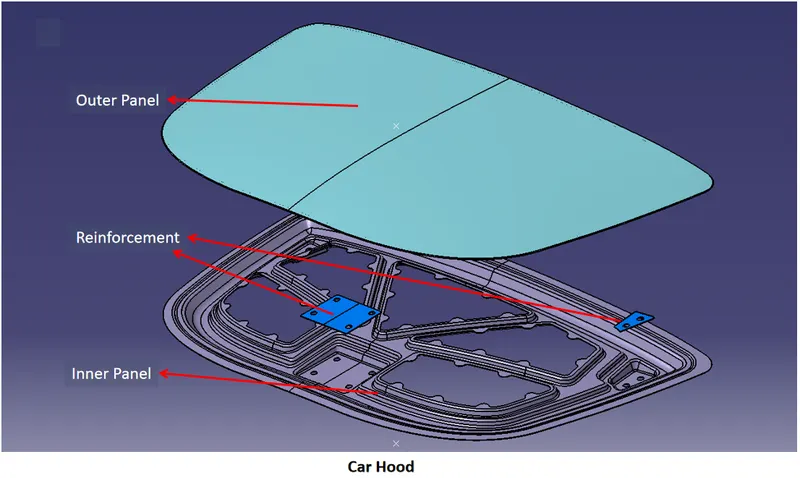
Design requirements for Car Hood:
1. Hood Head zone for lock striker:
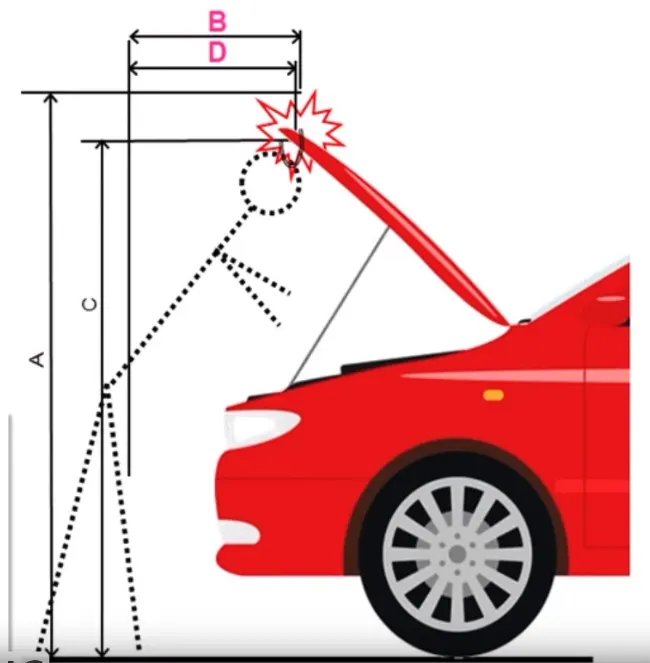
from the Fig. The opening angle of hood will give A, C, B And D with respect to the ground. those A, B, C & D are decided in the head zone. Opening angle varies from region to region depending on average human weight. Depending on the standards we are deciding the angle. So from the angle data, Support rod or Gas stay is designed.
2. Adding latches and stiffener pad:
Latches are added where and all the weight is added. On the inner panel we have Hinges and striker, which are attached to the inner panel so due to this attachment the strength of the inner panel is going weak. In order to strengthen the inner panel Latches will play a very important role. Stiffener pad is the sponge-like material place b/w Inner and outer panel to reduce vibrations.
3. Mastic Seals:
Mastic Seals place b/w Inner and outer panel to reduce Noise, vibration, and harshness. Every Mastic will have an effect of 80mm Dia locally. Inner and outer panel gap is 2 to 5mm.
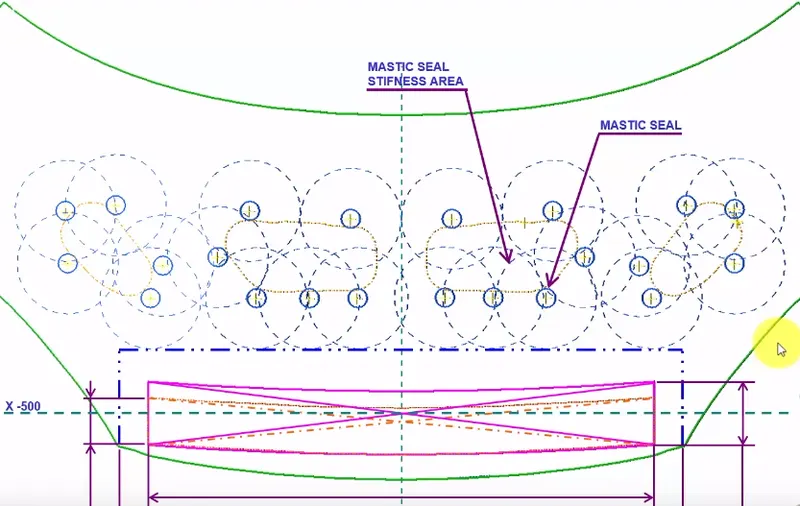
4. Emboss definition:
Emboss are provided in the inner panel of the hood assembly. This helps in weight reduction of the hood and also to dissipate the force during collision.
- deep drawing.
- hemming.
1.DEEP DRAWING:
Deep drawing is a sheet metal forming process in which a sheet metal blank is radially drawn into a forming die by the mechanical action of a punch. It is thus a shape transformation process with material retention. The process is considered "deep" drawing when the depth of the drawn part exceeds its diameter.
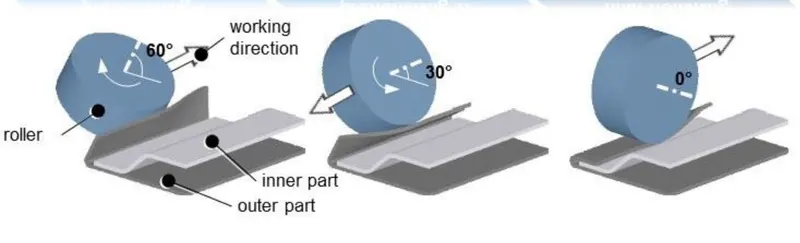
2.HEMMING:
Hemming is a forming operation in which the edges of the sheet are folded or folded over another part in order to achieve a tight fit. Normally hemming operations are used to connect parts together, to improve the appearance of a part and to reinforce part edges.
Design Procedure( report details)
1. Import the file: File > open > browse file and select the given file in NX CAD.
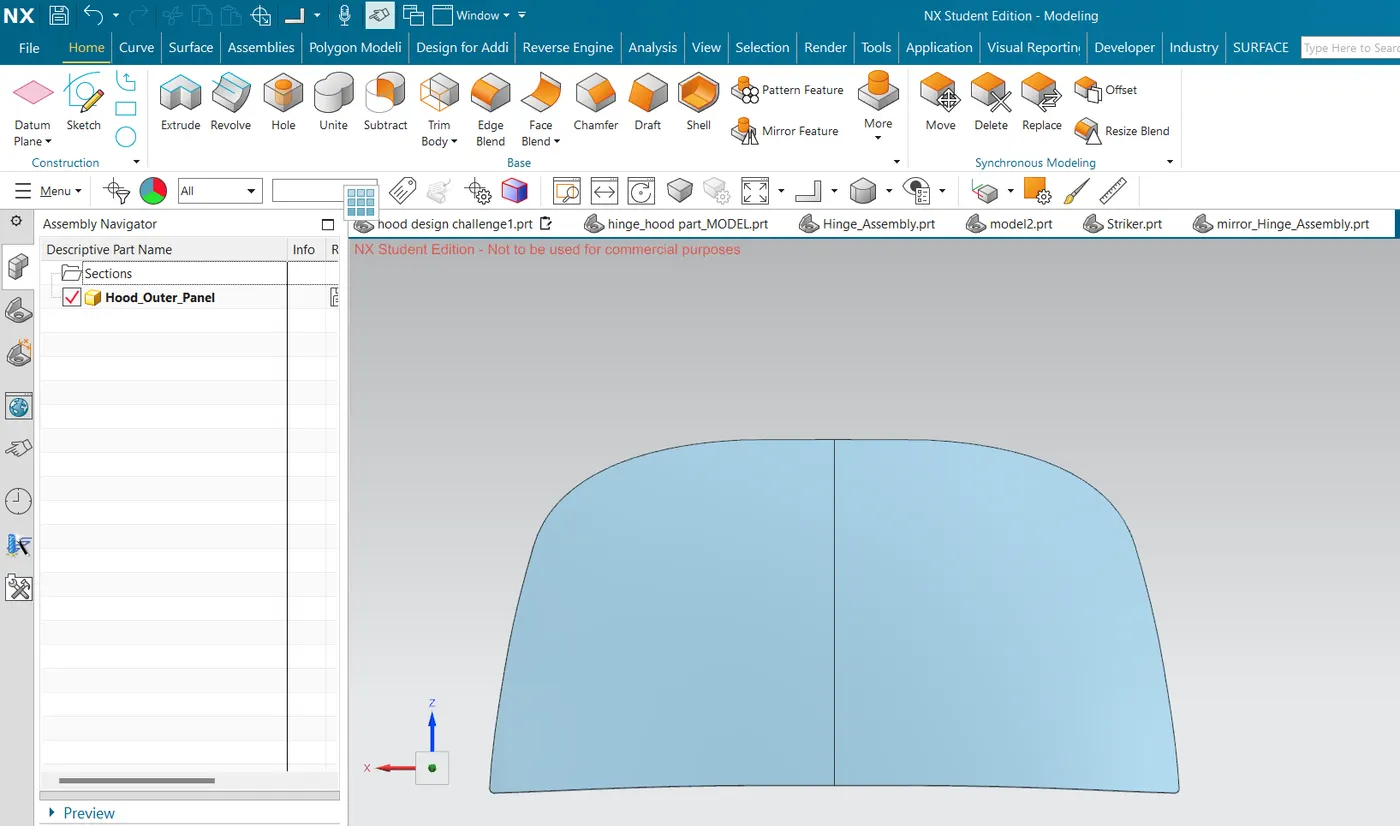
Inner Panel Design:
-
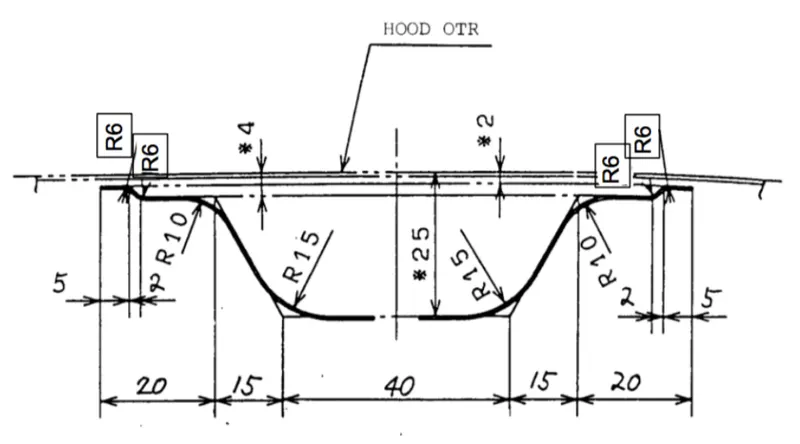 (*the given date might change as per master section)
creation of inner panel:
- offset the outer panel 1.7 and set up the wave geomentary linker then unlink it.
- create the offset curve in face of 20 mm& 22 mm.
- using trim sheet option to split the surface and using through curve option to join the two surface.as same operation to create 35mm & 50 mm offset curve in face of 4 mm offset surface and join it. at last all of the edges are blend by edge blend as per master section data.
Embossing in sheet metals
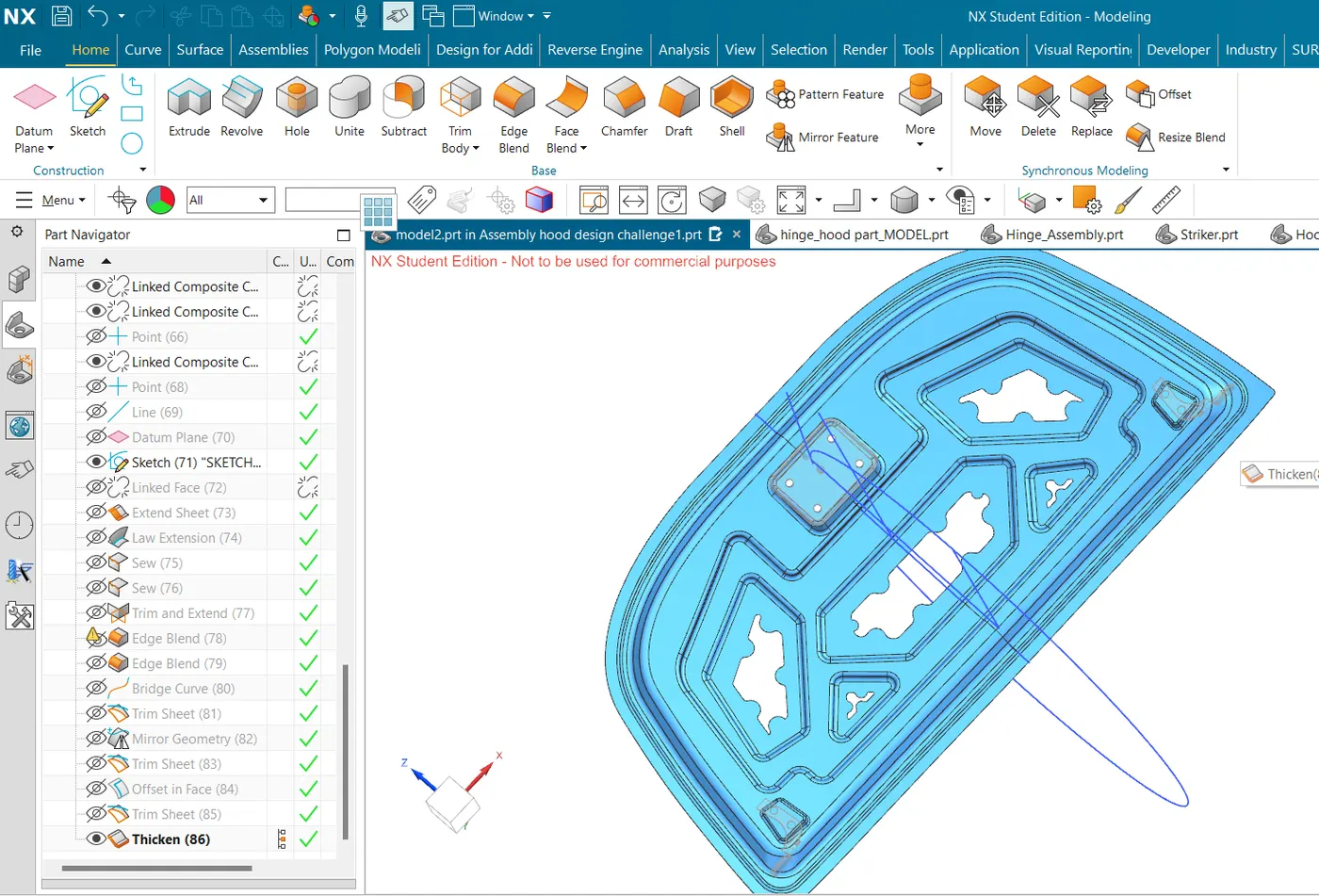
- The metal sheet embossing operation is commonly accomplished with a combination of heat and pressure on the sheet metal, depending on what type of embossing is required. Theoretically, with any of these procedures, the metal thickness is changed in its composition.
- A metal sheet is drawn through the male and female roller dies, producing a pattern or design on the metal sheet. Depending on the roller dies used, different patterns can be produced on the metal sheet. The pressure and a combination of heat actually "irons" while raising the level of the image higher than the substrate to make it smooth. The term "impressing" refers to an image lowered into the surface of a material, in distinction to an image raised out of the surface of a material.
Hemming in sheet metals (outer panel):
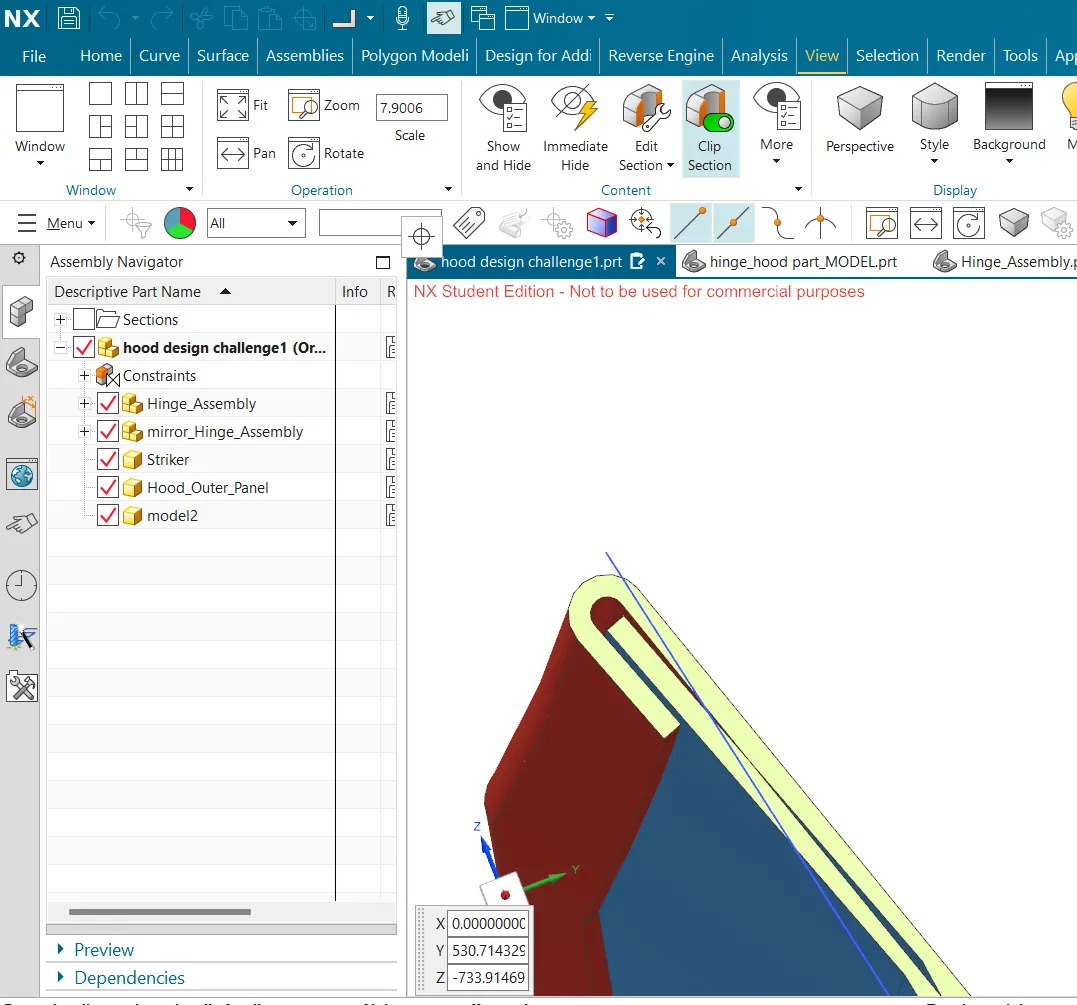
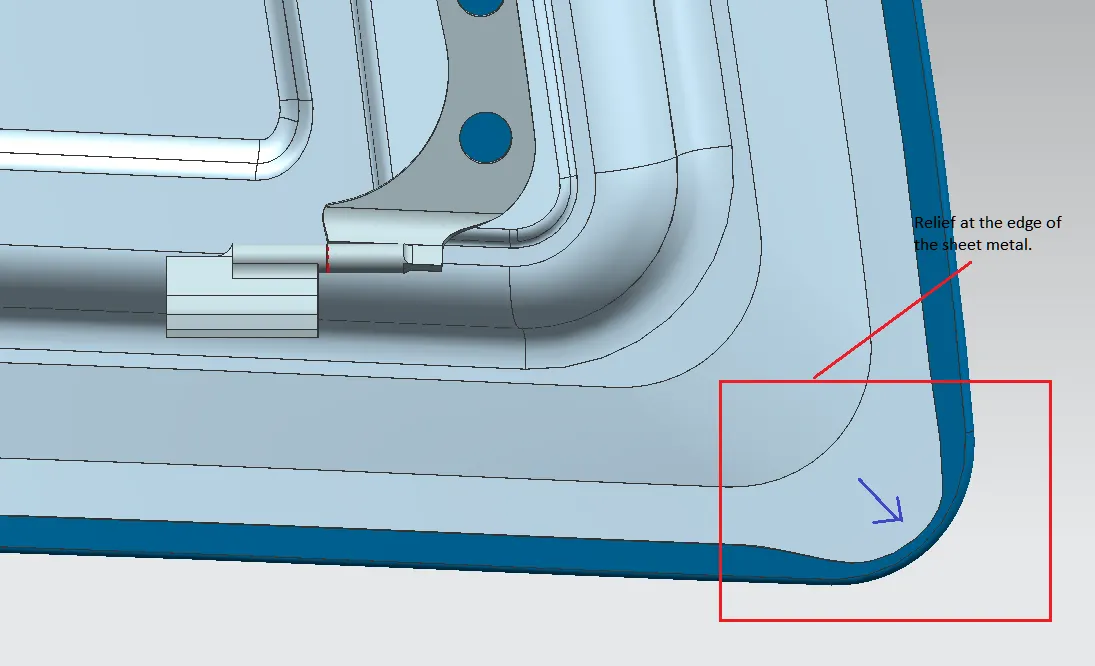
While doing the hemming process, A relief angle is formed as a product of hem when attaining at the corner of the sheet metals.
Latch trajectory motion:
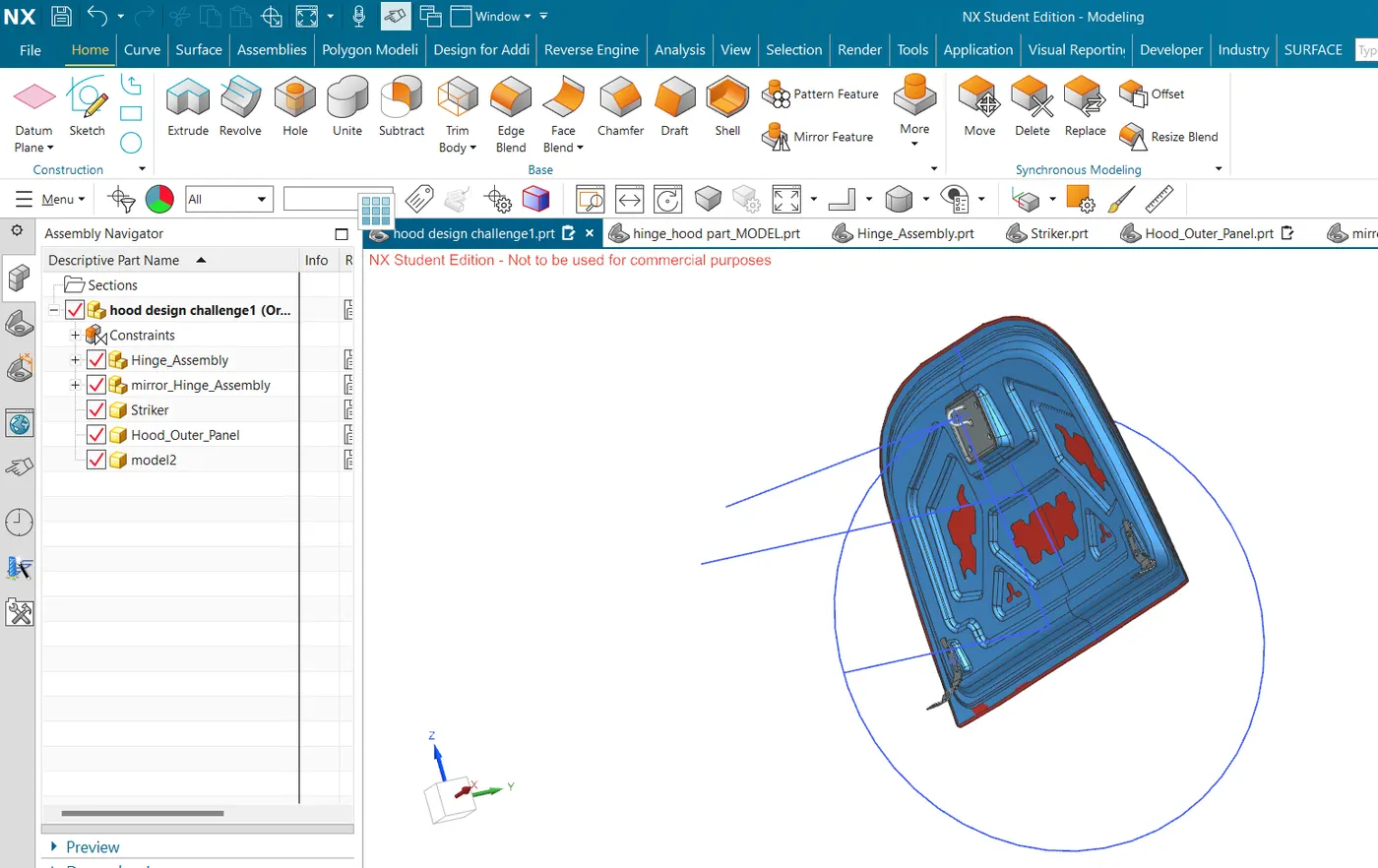
while opening or closing the hood, the latch must be perfectly aligned to the fixing or striker point. For that, the latches trajectory must be perpendicular to the hinge axis.
Draft Analysis:
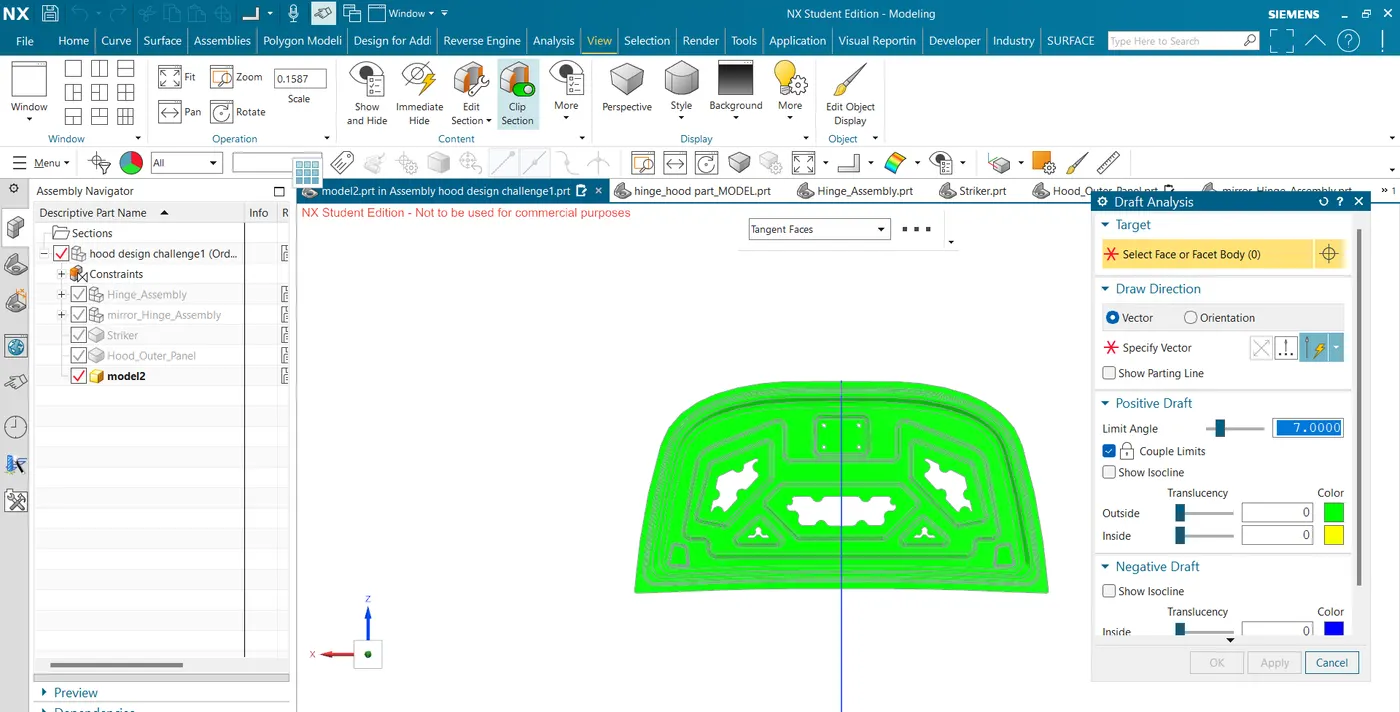
- 7 degrees of draft analysis is made to the inner panel to find any negative draft. this process is done because we need to develop and submit a positive design to the manufacturers.we can see that there are no negative drafts by the inner panel, hence the design is positive and ready to manufactured.
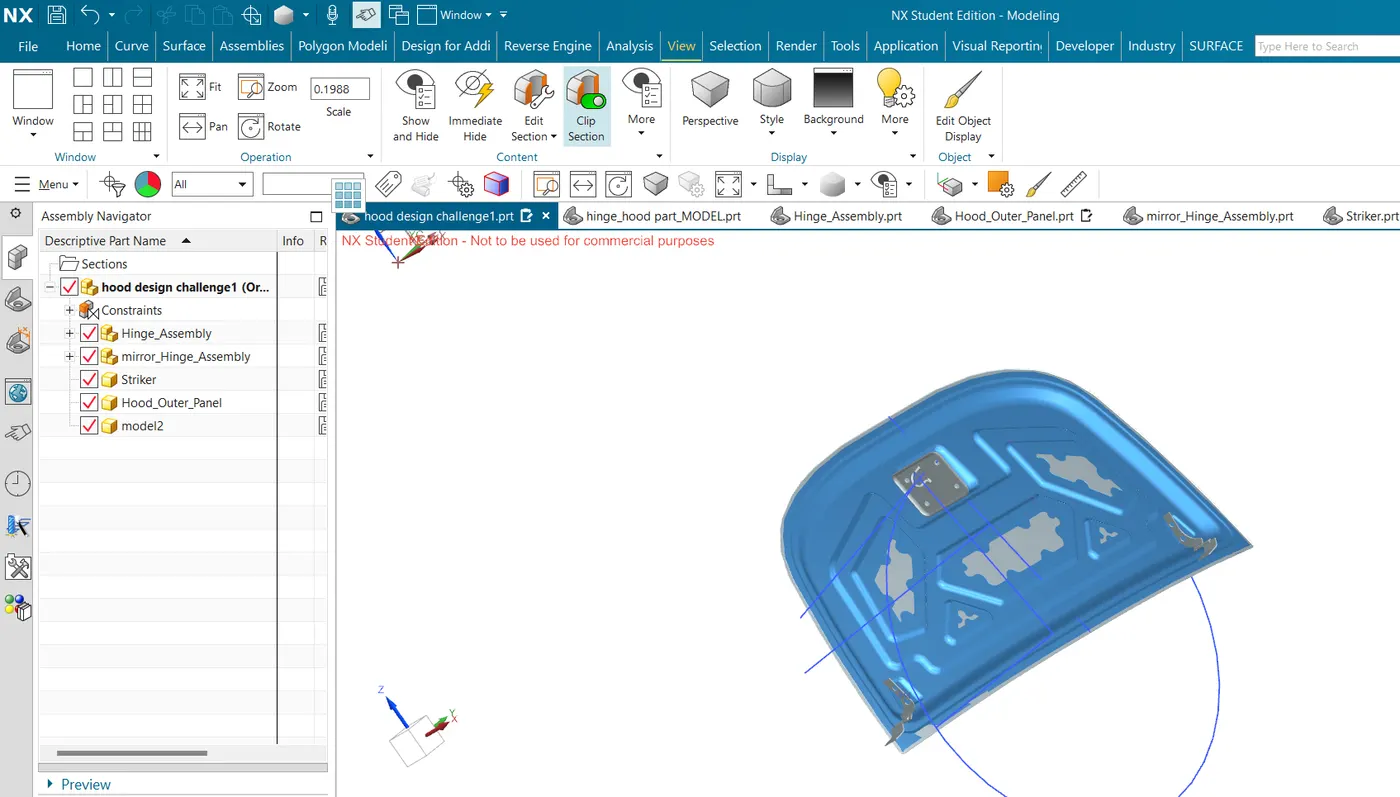
- final output:
-
conclusion:
Therefore, we have designed a hood that falls under the rules and regulations of the manufacturer's standards.