Hood design-Week 2
HOOD DESIGN
OBJECTIVE
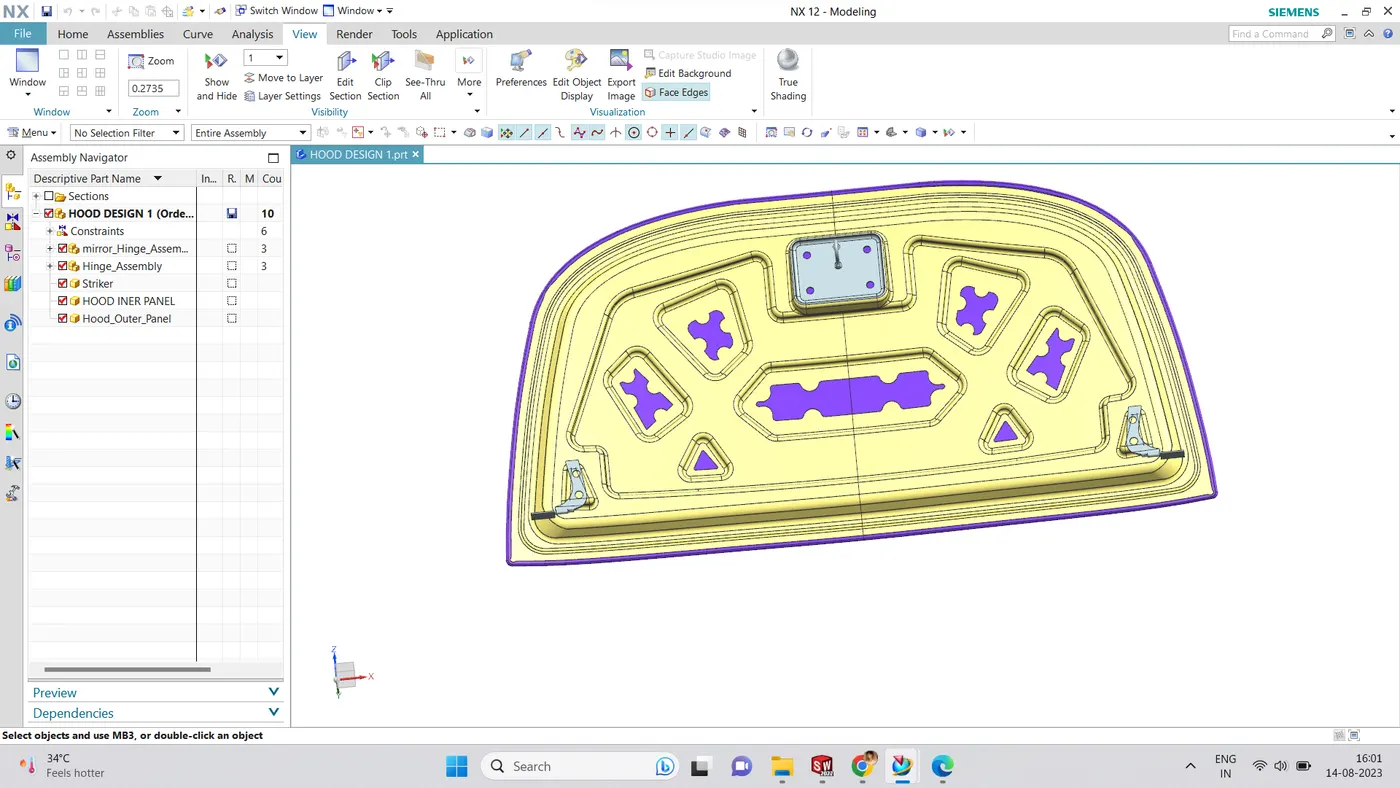
Design outer panel with the hem, develop the Inner Panel, develop all the necessary Reinforcements, Mirror and position the Hinge & Striker, provide Mastic Data, and provide the required Emboss definition.
ABOUT HOOD
Hood is an important component of the front portion of the car which is used for many purposes. It is made aerodynamic in shape to reduce air drag. Generally, it is used to cover car engines, radiators, and many other components, the design must meet pedestrian's requirements and design should be satisfying serviceability and also design should be made in a way that when an accident occurs the energy absorption should no reach to passengers.
DESIGN DATA
- Outer Panel Thickness = 0.75mm
- Inner Panel Thickness = 0.75mm
- Reinforcement Thickness = 1.5mm
MASTER SKETCH:
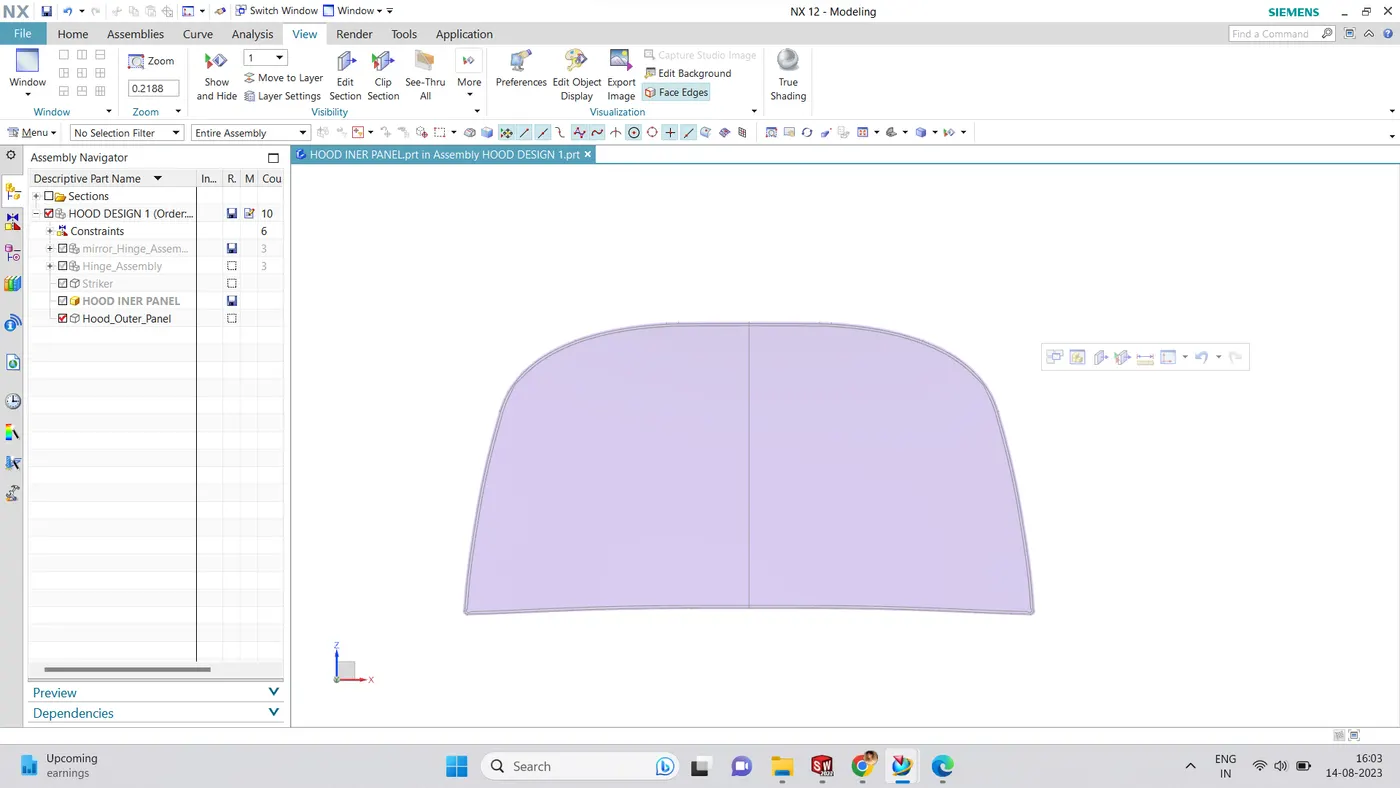
OUTER PANEL:
HEMMING
Hemming is a technology used in the automotive industry to join inner and outer closure panels together (hoods, doors, tailgates, etc.). It is the process of bending/folding the flange of the outer panel over the inner one. The accuracy of the operation significantly affects the appearance of the car’s outer surfaces and is, therefore, a critical factor in the final quality of a finished vehicle.
TYPES OF HEMMING
- Press hemming
- Tabletop hemming
- Robot (roller hemming)
CORNER RELIEF
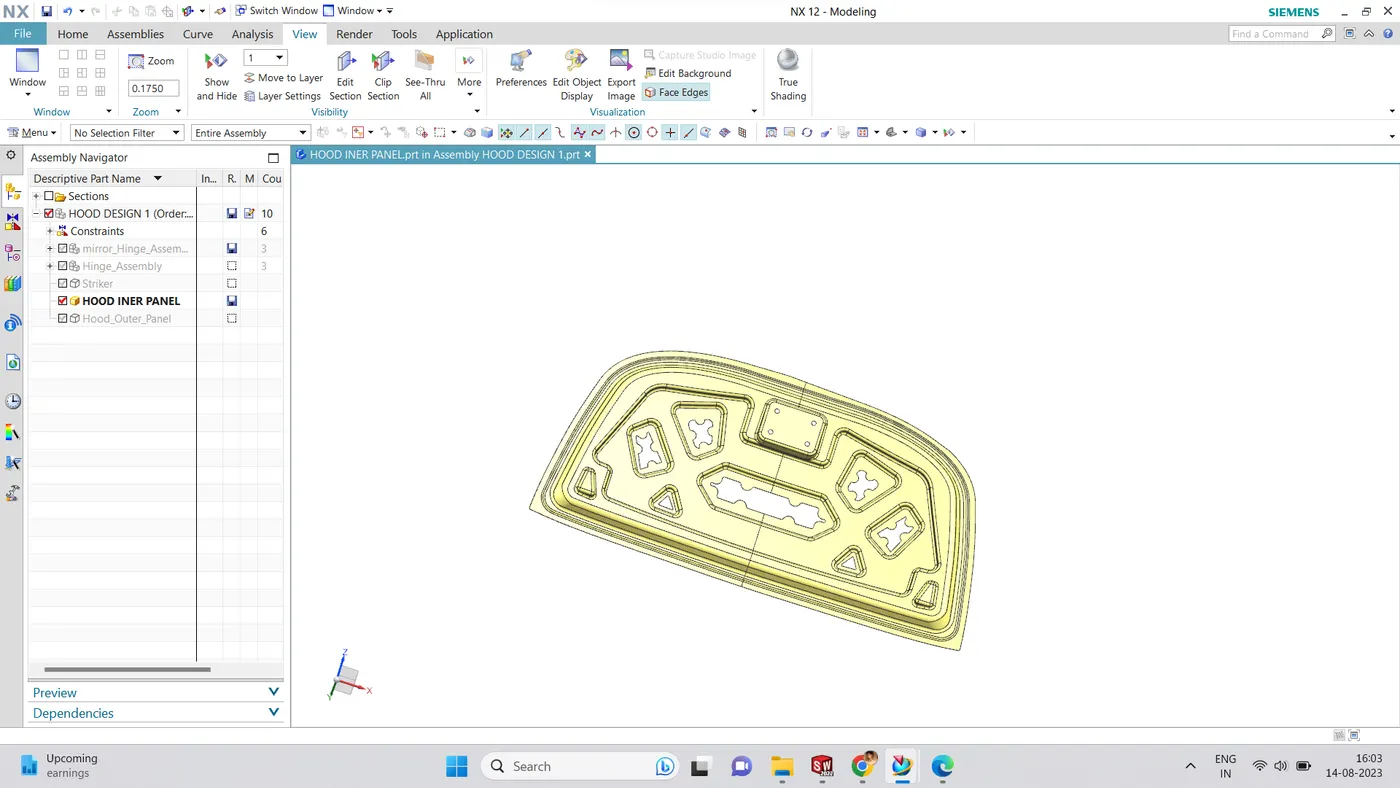
INNER PANEL:
The inner panel was designed by provided master section details using tool emboss.
EMBOSSING
Sheet metal embossing is a stamping process for producing raised or sunken designs or relief in sheet metal. Metal is drawn through the male and female roller dies, producing a pattern or design on the metal sheet.
MASTIC DATA
A sealant is a substance used to block the passage of fluids through the surface or joints or openings in materials. Mastic sealants are elastic compound that behaves like the rubber. It is placed between the outer and inner panels. Initially is it in paste form, but after the hot furnace bath, it gets hardened thus joining the outer and inner panel. Mastic sealant can absorb shocks from both inner and outer panels thus reducing NVH.
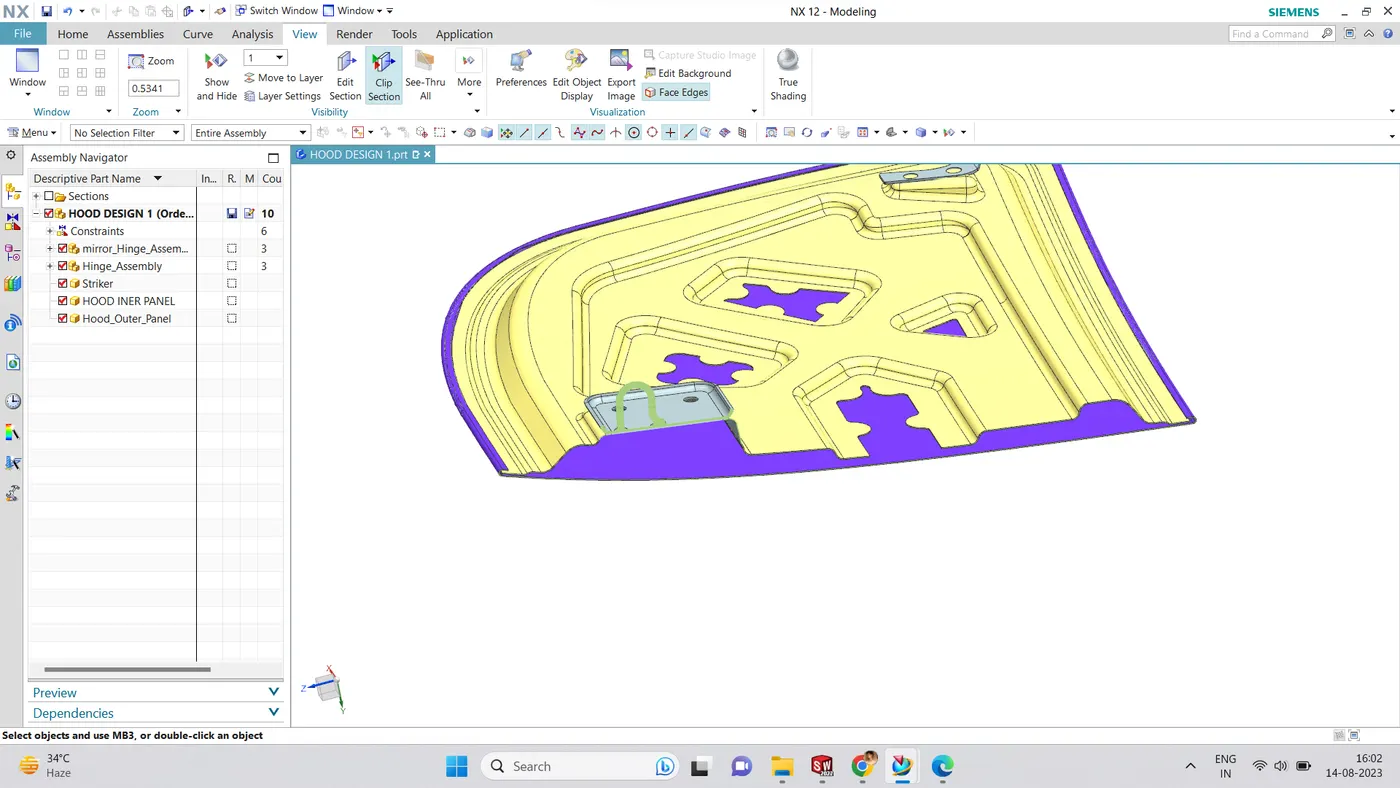
POSITION OF HINGE AND STRIKER
It provides the opening and closing of the hood. This is done with the help of latch and striker. for perfect closing and opening of hood striker and latch should be at perpendicular to each other. To find the placement of latch draw a circle taking radius from the middle of the hinge axis and striker. then Draw the tangent line from the circle to find a position of a latch.
CONCLUSION:
Creating a hood panel with given dimensions and provide hemming data.