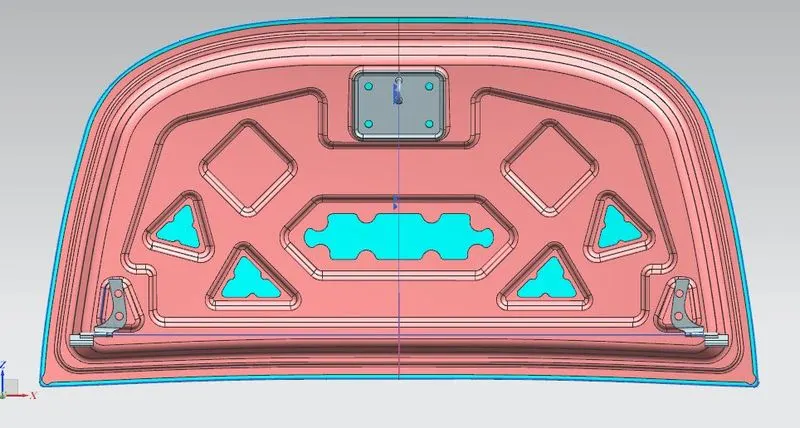
Hood design-Week 2
Design of Hood
AIM To create and assemble the hood inner panel and outer panel and their reinforcements by following the design rules and master section. SOFTWARE USEDSIEMENS NX CAD 12 OBJECTIVES Design Hood outer panel, inner panel and the necessary reinforcements by following the Master section mentioned with the design parameter …
AIM
To create and assemble the hood inner panel and outer panel and their reinforcements by following the design rules and master section.
SOFTWARE USED
SIEMENS NX CAD 12
OBJECTIVES
Design Hood outer panel, inner panel and the necessary reinforcements by following the Master section mentioned with the design parameter and a detailed report about the Hood Design which includes a detailed explanation about hood and its components, Latch trajectory, Mastic data, Emboss definitions, manufacturing process like deep drawing and hemming, and all the parameters followed in the design.
HOOD
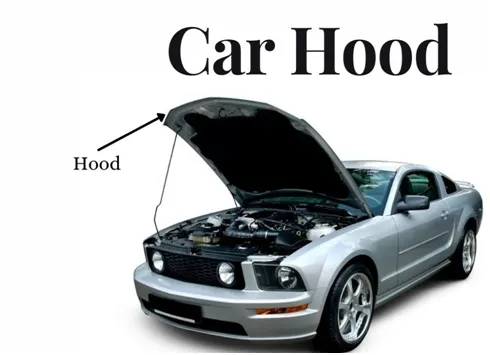
The car’s hood consists of an inner and an outer panel. The inner panel provides strength, while the outer panel is just a metal cover. The underside of the hood is often covered with a sound-absorbing material.
The hood or bonnet is the hinged cover over the engine of motor vehicles that allows access to the engine compartment for maintenance and repair.a hood may be held down by a concealed latch.. A hood may sometimes contain a hood ornament, hood scoop, and/or wiper jets. Hood are typically made out of steel or aluminum, although aftermarket manufacturers may manufacture hoods out of fiberglass, carbon fiber, or dry carbon.
SAFETY REQUIREMENTS
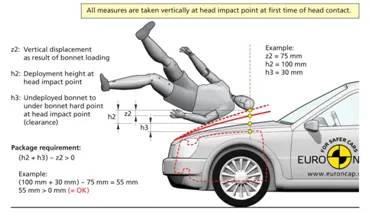
Safety is the most important criteria in automobile designs which concentrates on both pedestrian and occupant safety. The pedestrians are the most vulnerable road users and are at high risk of traffic accidents. The major reason for the fatality of the pedestrian in traffic accident is due to the head injury resulting from the hard impact of the head against the stiffer hood or the ground. This leads to the necessity of new inner hood panel which is less stiffer and pedestrian friendly. The head impact analysis on the present hood of the car was done to study the response of the adult head form at two different locations. Structural and modal analysis for the same present hood assembly was done to observe the local and global stiffness. In order to reduce the head injury of the pedestrian the local stiffness over the area of head impact has to be reduced thus the new design of hood inner panel was focused on that and the structural and modal analysis was done for the new design. The design with lesser local stiffness and similar global stiffness compared to the existing hood was finalized. The head impact analysis for the new design of hood inner panel was performed. The HIC values of the adult head form for two different locations are found to be 706 and 948 which meets the safety limitations of the adult head acceleration during impact as proposed by EEVC WG17 and Euro NCAP regulations. Thus the new design of the hood is pedestrian friendly, considerably maintaining the overall global stiffness of the hood.
PEDESTRAIN SAFETY
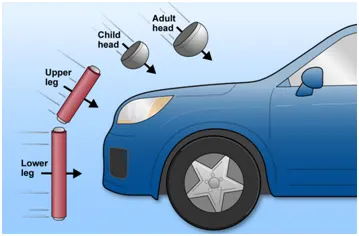
crash mitigation tests that measure the potential for head and leg injuries resulting from pedestrian-motor vehicle crashes have been in place for many years in Europe and Japan. Euro NCAP began head and leg testing in 1997 and Japan began pedestrian head protection testing in 2003 and pedestrian leg protection testing in 2011. In general, these tests launch projectiles designed to simulate a person’s legs or head into various locations on a vehicle’s hood and bumper to assess the effectiveness in limiting pedestrian injury
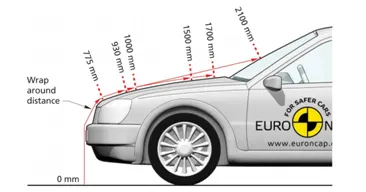
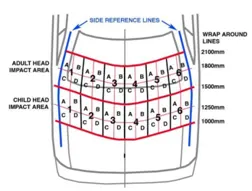
WRAP AROUND DISTANCE
The headform test area is defined as the outer structure that includes the upper surface of all outer structures. It includes, but is not limited to, the bonnet, wings, windscreen scuttle, wiper arms/spindles, windscreen frame, A-pillars and roof. It is bounded by the geometric trace of the 1000mm wrap around line in the front, the Bonnet Side Reference Lines and the 2100mm wrap around distance (WAD)
COMPONENTS USED IN HOOD
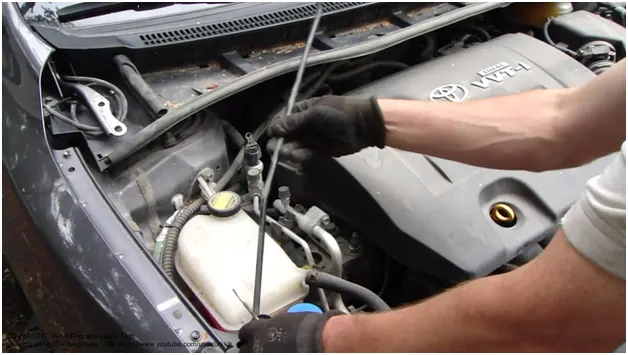
SUPPORT ROD
The support rod is usually inside the engine compartment, when we open the hood and keep it in open condition, one end of the support rod attaches to the hood and supports it. this support rod has to be fixed manually onto the hood. The design of the support rod is not linear but it should have some bends to increase the rigidity and strength of the rod. the support rod should be mounted such that it does not collide with other parts, also the support rod should be mounted on the opposite side of the battery to avoid disturbance while removing the battery from car
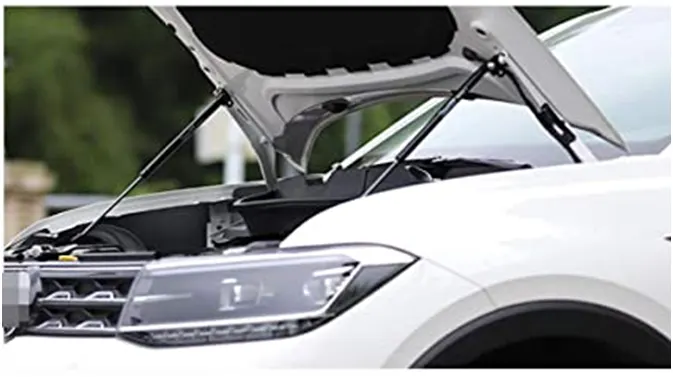
GAS STAY
A gas stay is used to open the hood. it uses compressed gas to open the bonnet automatically.gas stays for the front hood are mainly used in high end performance cars where the bonnet weight is high.
LATCH TRAJECTORY
This is the part of the hood that has a trajectory or hook type design used to lock or unlock from the vehicle engine compartment.
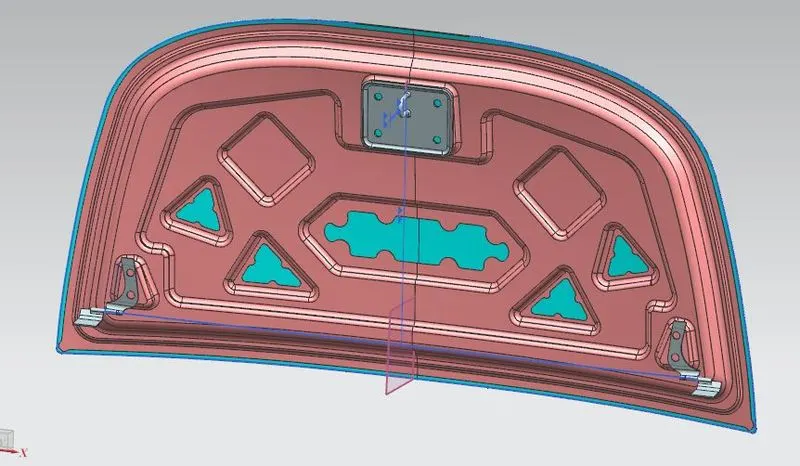
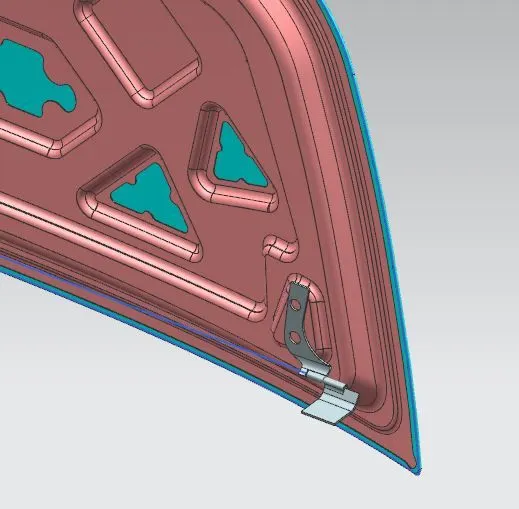
HINGE ASSEMBLY
This hinge was placed on the hood to give rollover action to tilt up or tilt down the hood.
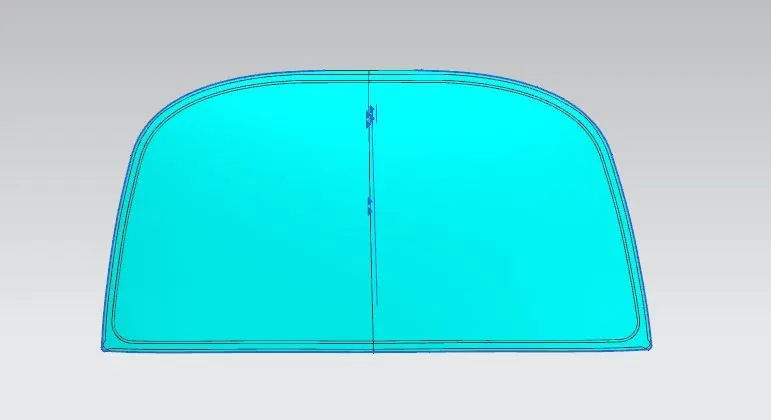
HOODOUTER PANEL
The outer panel is actually called the skin of the vehicle which is designed by the styling team to get a good look for a vehicle by covering the inner panel and engine parts of the car. This part should not be welded to the inner panel but using the sealant and mastic points makes contact between the inner and outer panel which acts as a bond between both and makes the hood stiff.
HOOD INNERPANEL
The main part of the hood which gives support to the outer panel of the car and with its embossing shapes dissipates the force in different directions when the vehicle takes crashes to not to injure the men in the car