Hood design-Week 2
CAR HOOD DESIGN
AIM: To design the Hood or Bonet of the front driving car by using the master section and standard procedure which is used in the OEM Manufacturer's .
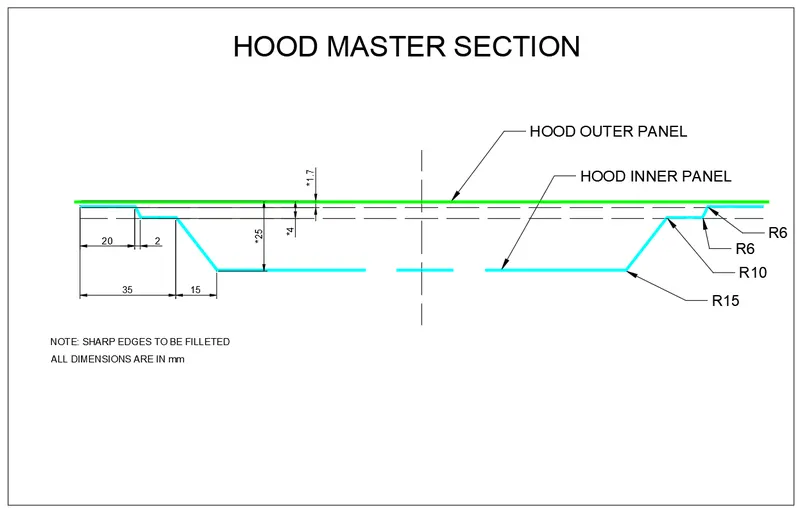
GIVEN MASTER SECTION:
HOOD or BONET:
- Hood is the component which is placed over the engine compartment . The design of the hood is not only to enhance the look of the car , it also improves the aerodynamics of the car and the proper design which ensure the pedestrain safety .
- For Serviceability and maintanence of the car , hood is used to access the components like , engine , radiator , battery , etc. ,
- Over the period of time , designers has continously improving the hood design inorder to minimize the injuries of the pedestrain when he / she hits the hood while accident occurs . So it depends upon the material , design and structure of the hood .
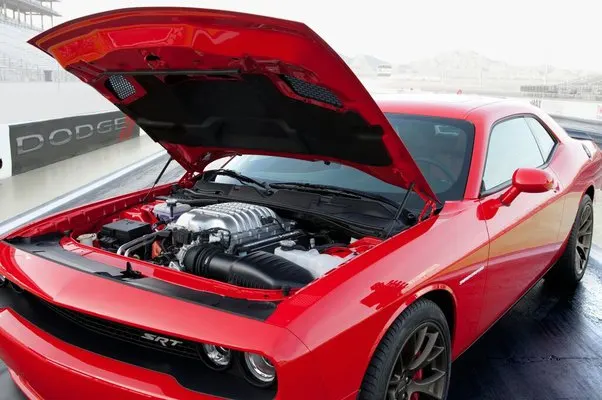
Car Hood has the following components:
- Outer Panel
- Inner Panel
- Striker and Hinge asm Reinforcement
- Hood Support
- Mastic's
Hood has designed by the process of using the following Sheet Metal Operations :
- Hemming
- Embossing
- Deep Drawing
- Piercing
Components of Hood
1. Outer Panel
2. Inner Panel
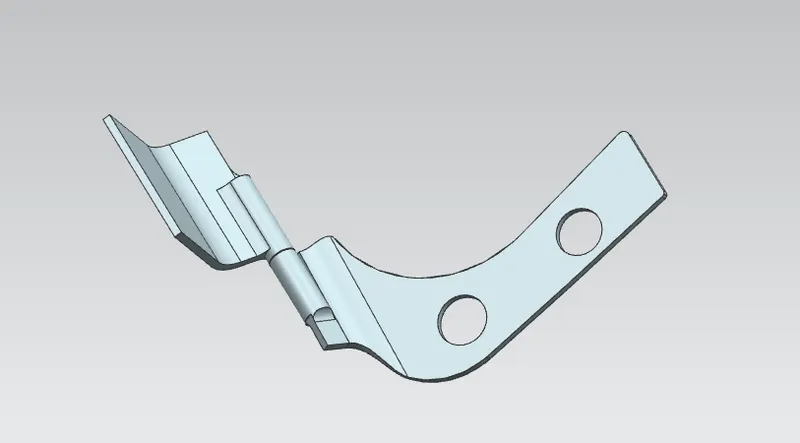
3. Hinge
4. Latch
5. Reinforcement
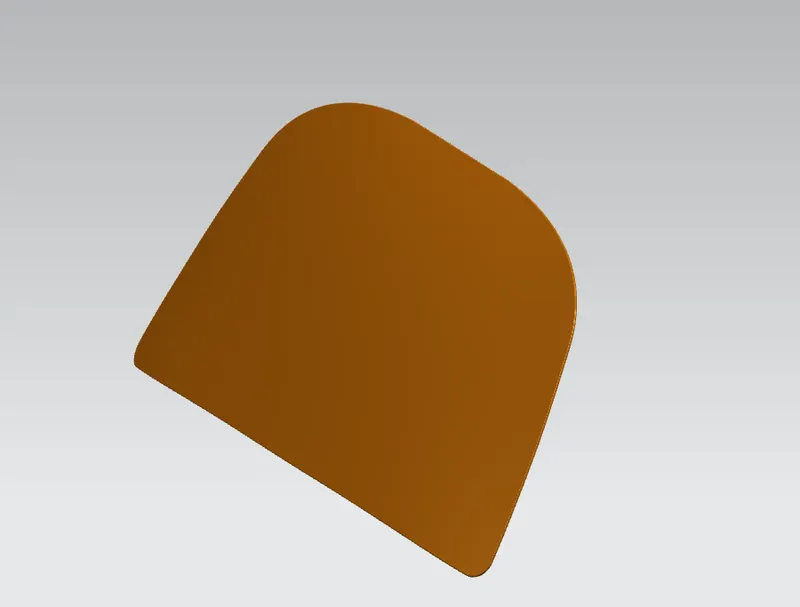
Outer Panel - A car hood panel is one of the most important components of the BIW (body in white), it is considered the closure sheet-metal component. The outer panel has the aesthetic look to it but on its own is very weak and not capable of handling force during impact. Most automobile hood outer panels are made of traditional steel plates, and their quality does not meet the needs of lightweight development. For this reason, it is necessary to obtain lightweight effects through the application of automotive aluminium sheets. The most widely used car aluminium alloys in the market are deformed aluminium alloys of 6111, 6016, and 5182. The production process of the outer panel of the hood mainly includes blanking, deep drawing, trimming, turnup, and side turnup. Among them, deep drawing is a key process to ensure the quality of parts.
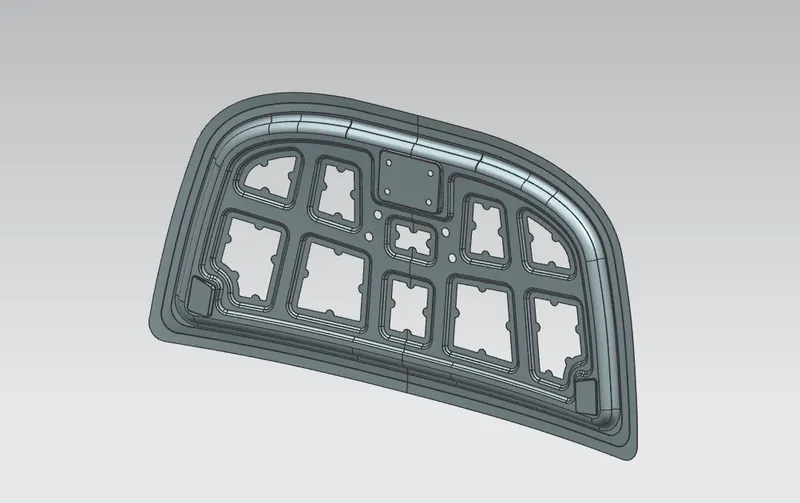
Inner Panel – The inner panel of the hood is not visible to the customer, but this is the engineering feature of the outer panel. The hood panel is required to have a high initial reaction force against the impact exerted on the hood to enhance the energy absorption capacity. The hood is further required to minimize a reduction of a reaction force by deformation in a collision. A hood inner panel according includes an inner panel main body forming part of a hood of a vehicle, a front bead provided on the inner panel main body and extending along a vehicle width direction, and a rear bead provided on the inner panel main body, located on a rear side of the front bead and extending along the vehicle width direction. The front bead includes a centre portion in the vehicle width direction that is curved toward the front of the vehicle and located in front of each end portion in the vehicle width direction, and the rear bead includes a centre portion in the vehicle width direction that is curved toward the back of the vehicle and located behind each end the portion in the vehicle width direction.
Hinge - A hinge is a machine element that connects two bodies allowing angular movement about a fixed axis of rotation, all the while preventing translations and rotations on the remaining two axes. A hinge can be considered as a journal bearing with only one degree of freedom where a shaft is rotating in a hole. Hinges only allow one rotation, either yawing (the most common), pitching, or rolling. Hinges are a jointed and flexible device that is attached to any swinging part. Hinges are mechanical bearings that are used to connect two swinging objects or points and give them the freedom to move relative to each other. Hinges have limited movement, allowing the joint to move only at one angle and restricting the other movements of swinging parts.
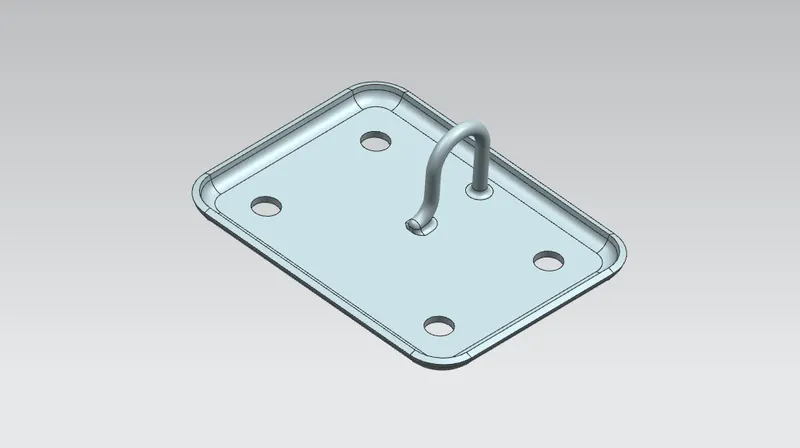
Latch - Latchesare mechanical components that allow the temporary joining of parts that are moving relative to each other. They are actuated to release the coupling and allow the two parts to separate. Latches are mostly seen on doors and enclosure openings. They are also used in devices such as seat belts, clamps, straps, and objects with retractable parts. Different designs feature various methods of actuation, holding style, and mounting. The hood latch is extremely simple. When the hood is closed, the latch slides over what is called a catch, and spring covers the latch to keep it snug. When we pull the knob inside the car to open the hood, the hood latch cable opens the latch, allowing it to bypass the catch and open.
Reinforcements :-
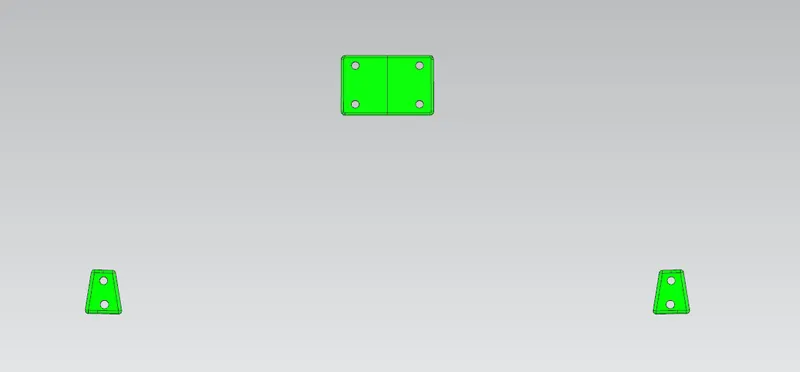
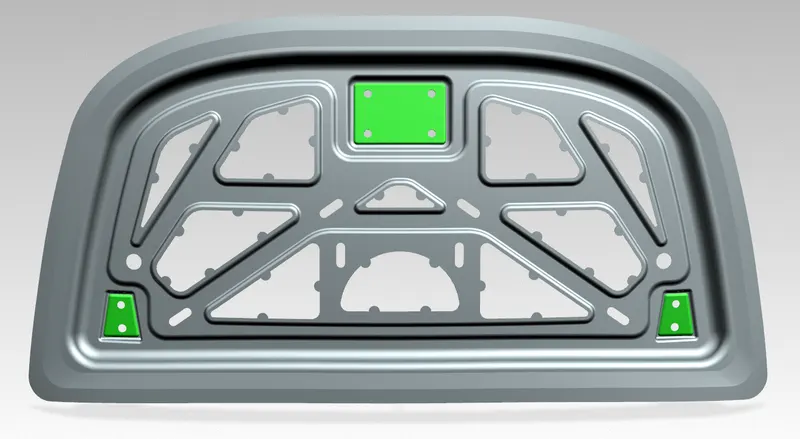
Reinforcement are provided mainly in hinge and latch region. When hinge and latch assemblies are attached to inner panel, strength of that area reduces locally so we add some additional material to increase the strength of the area locally. Thickness of reinforcement material is provided according to the design requirements. In this project, 1.5mm thickness has been given to both latch and hinge reinforcement.
Latch Trajectory :-
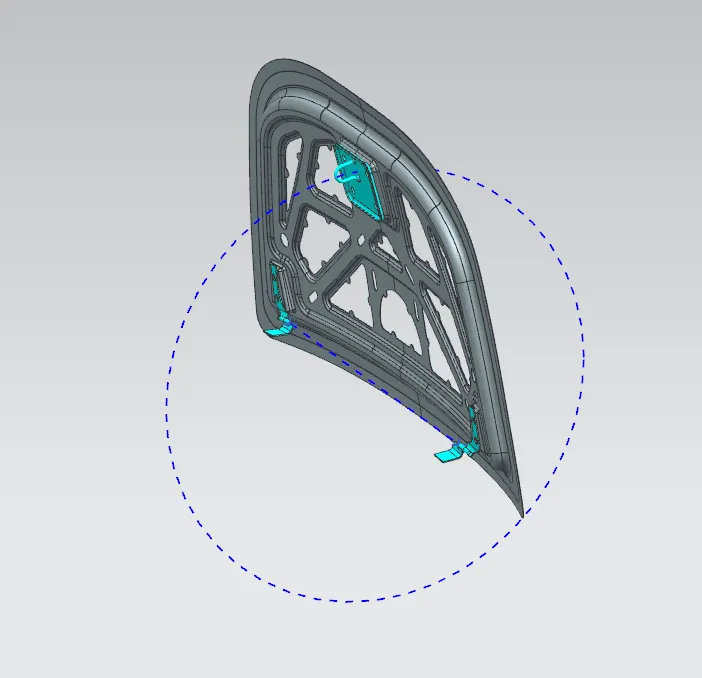
Circle is drawn from the hinge axis center so we can finalize the position of latch striker. For proper mating, the tip of the striker should be tangential to the latch trajectory. the position of latch striker follows the path of this circle.
Emboss definitions :-
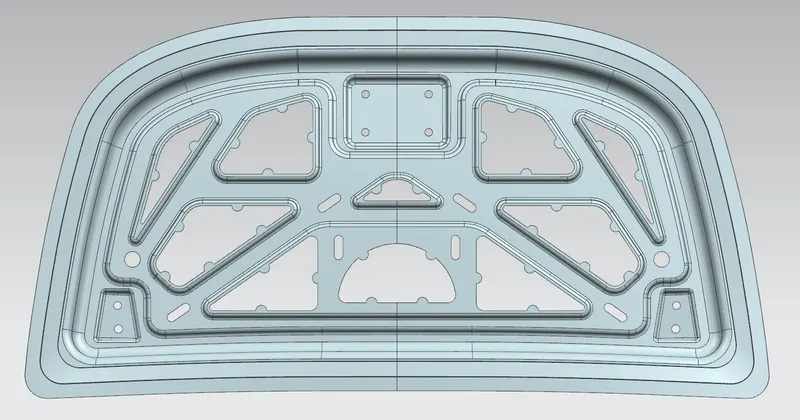
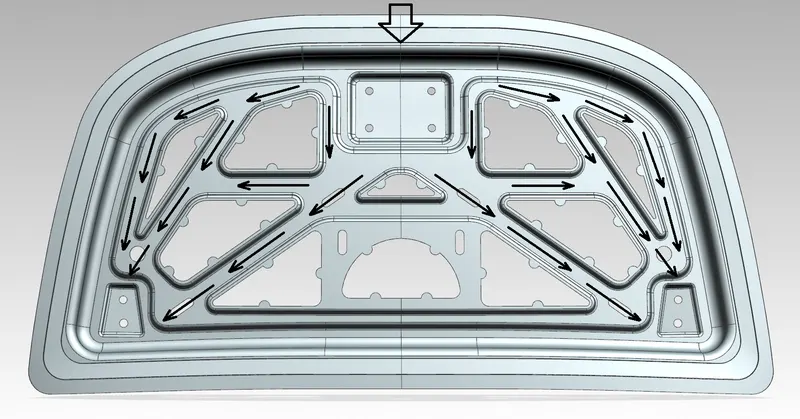
Embosses are provided to increase the strength of inner panel. Shape of embosses also determines the direction of collision force distribution. the shape of the embosses should be designed in such a way that, the collision forces should be directed towards outward side of the car (towards hinge side).
Force distribution :-
Mastic data :-
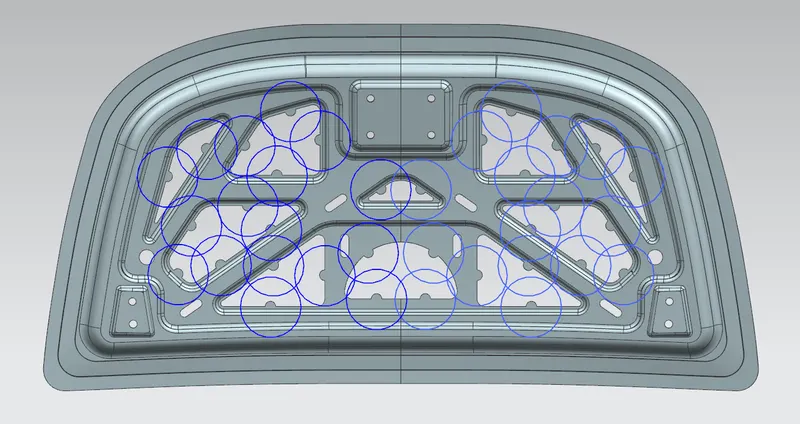
Mastic sealants used between the outer and inner panel. mastic sealants are the rubber like elasic compound which connects the outer and inner panels of car hood at specified points. Mastic sealants are used in the region between the inner and outer panel because other joining process like welding or riveting are not good for car asthetic design. It also helps in improving NVH (Noise, vibration, and harshness) characteristics.
Mastic salant points are effective around a circular region of 80mm diameter.
Manufacturing Aspects
The most important design consideration of any component is manufacturing aspect. In sheet metal, the component is manufactured by press tool dies. The Press tool is stamping which includes cutting operations like shearing, piercing etc. and forming operations like bending, Deep drawing, hemming etc. The main focus of manufacturing aspect is to manufacture hood assembly with minimum operation sequence and process time.
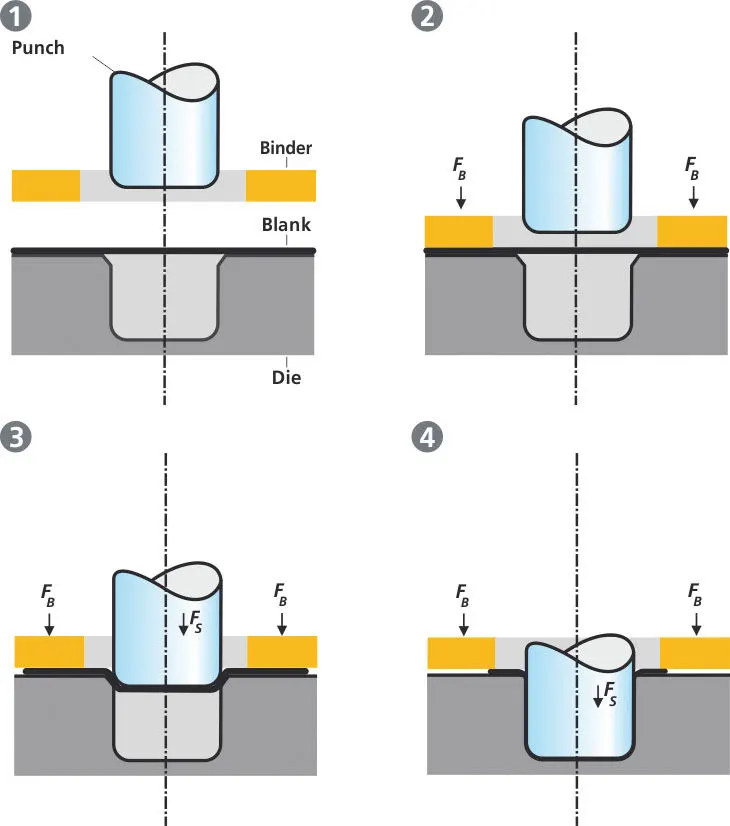
Deep drawing :-
The manufacturing of deep, cuplike products from thin sheet metal is known as deep drawing. The process involves a punch with a round comer and a die with a large radius. The punch-die clearance is slightly larger than the thickness of the sheet metal to be deep drawn.
As the load applied through the punch, the sheet metal is forced to flow radially and sink into the die cavity to form a cup. The process is best suitable for complex shaped problems.
The deep drawing process is a forming process which occurs under a combination of tensile and compressive conditions. A flat sheet metal blank is formed into a hollow body open on one side or a hollow body is formed into a hollow body with a smaller cross-section.
Deep drawing creates a seamless effect on metal, allowing for the creation of a smooth, curved edge. Deep drawn metal parts are created using a single metal blank, not a repeated course of metal blanks as is typically the case with traditional metal stamping.
Deep drawing is one of the most widely used processes in sheet metal forming. Apart from its use in many other sectors, it is applied in the automotive industry for the manufacturing of car body parts.
When drawing complex car body parts in practice, there is usually a combination of stretch and deep drawing involved. It is necessary that the sheet metal is stretched as well as possible without reaching the material’s limits (e.g. splits, wrinkles).
Piercing :-
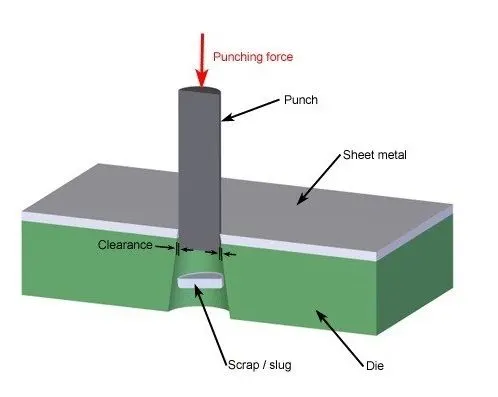
Piercing is a shearing process in which raw metal is pierced with a machining tool, resulting in the creation of a circular or other shaped hole.
Hemming :-
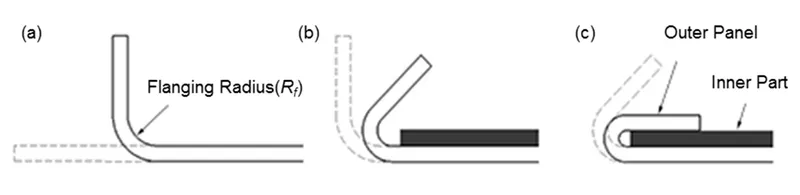
Hemming is a sheet metal forming process in which sheets are joined by bending it usually to 180°. Automotive body panels and automotive parts..
This assembly method is widely used in the final stages of production of automobile hoods, doors, or other closures for aesthetic purposes.
It is a metalworking process that involves rolling the edge of sheet metal over and onto itself, essentially creating an area of two layers. During this process, the edge of sheet metal is folded over. The two newly formed layers then lie flush with each other.
The typical three-step bending process of the hemming operation comprising of the flanging, pre-hemming, and final hemming process.
Roll hemming :-
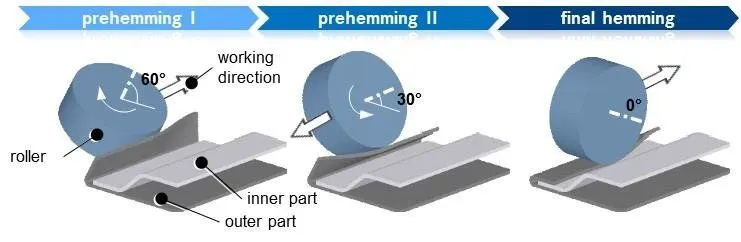
Roll hemming is carried out incrementally with a hemming roller. An industrial robot guides the hemming roller and forms the flange. Roll hemming operation can also be divided into several pre-hemming and final hemming process steps. Roll hemming is very flexible to use and tool costs are significantly lower as compared to those of conventional die hemming. However, the cycle times are much higher since the hemming is realized using a hemming roller which follows a defined path.
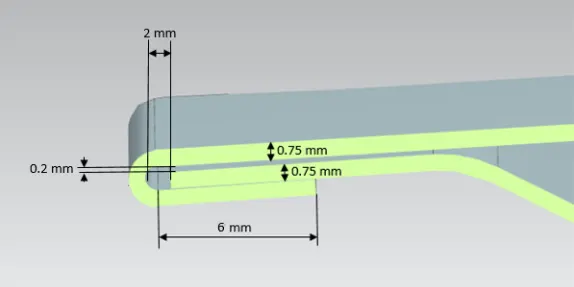
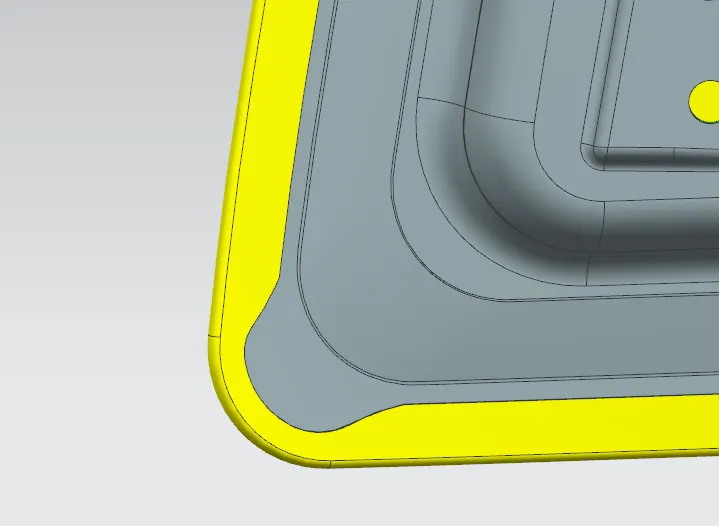
Corner relief :-
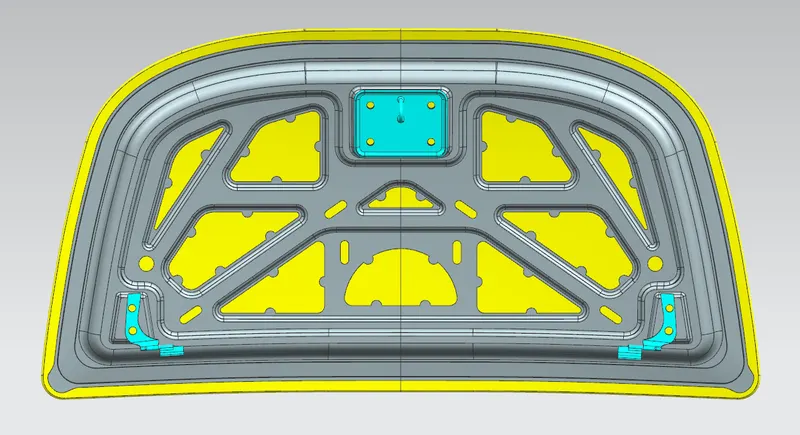
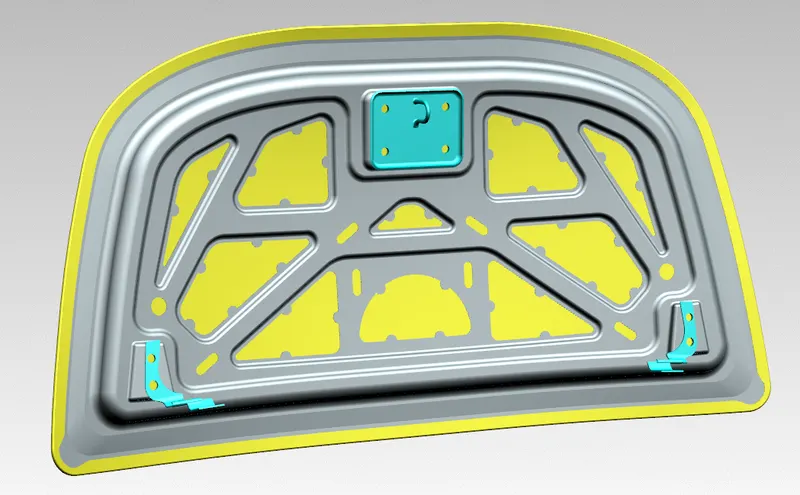
Final assembly :-
CONCLUSION:
Hood assembly is completed as per the givien parameters using NX cad software