Hood design-Week 2
HOOD DESIGN
Here we are going to understand and design the concept of the front-mounted engine’s hood according to the standards. The hood or bonnet is the hinged cover over the engine of motor vehicles that allows access to the engine compartment, or trunk for maintenance and repair.
Materials
Hoods are typically made of the same material as the rest of the bodywork. This may include steel, aluminium, fibreglass, or carbon fibre.
Pedestrian -Vehicle Collision
- India, however, ranks 1 in the number of road accident deaths across the 199 countries reported in the World Road Statistics, 2018 followed by China and the US. As per the WHO Global Report on Road Safety 2018, India accounts for almost 11% of the accident-related deaths in the World.
- Road transport remains the most favoured mode of transport for both freight and passenger movement in India. The fast-growing population, exceptional rate of motorization coupled with the ever-growing urbanization has made people vulnerable to frequent road accidents resulting in fatalities, injuries/disabilities.
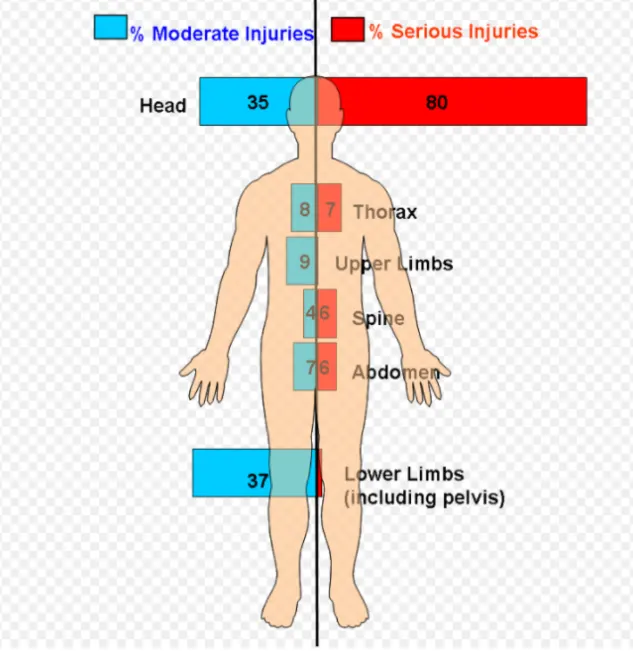
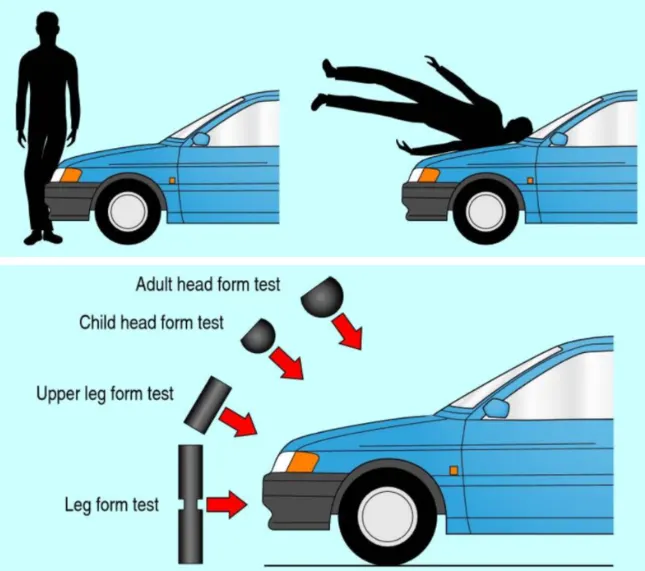
the sequence of injuries and events in pedestrian collision images are mentioned below
Hood Thickness Information
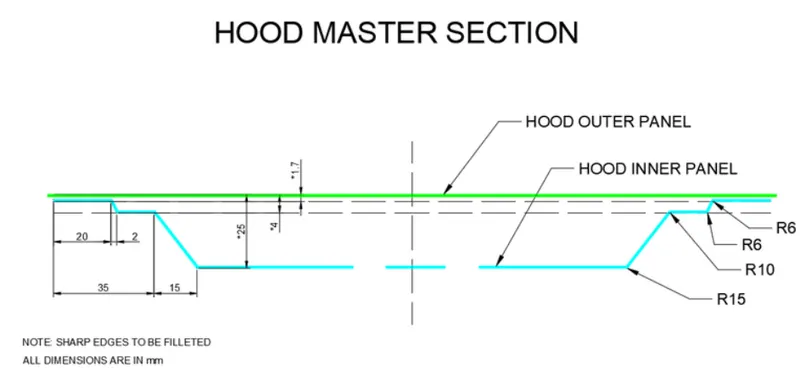
- Outer Panel Thickness = 0.75mm
- Inner Panel Thickness = 0.75mm
- Reinforcement Thickness = 1.5mm
Design of hood
Inner panel design
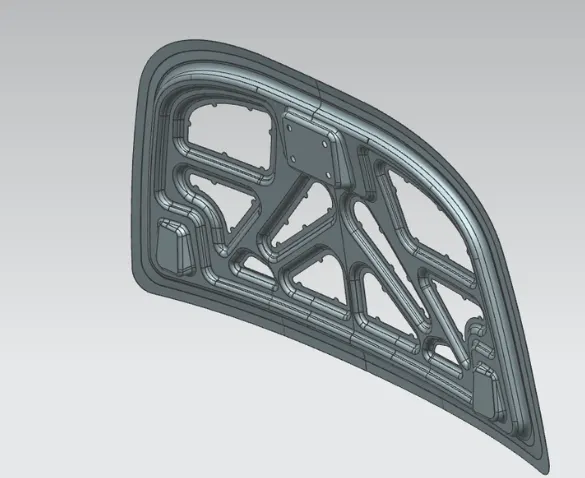
- The hood inner panel is required to have a high initial reaction force against the impact exerted on the hood to enhance the energy absorption capacity. The hood is further required to minimize a reduction of a reaction force by deformation in a collision.
- It is an object of the present invention to provide a hood inner panel capable of reduction of a reaction force of the hood inner panel even if a level of deformation of a hood of a vehicle increases, and ensuring a sufficient energy absorption capacity.
- In the inner panel only we can research and implement the safety of pedestrians and as well as the driver. in this panel only we can attach the reinforcement, embossed, mastic points, etc.
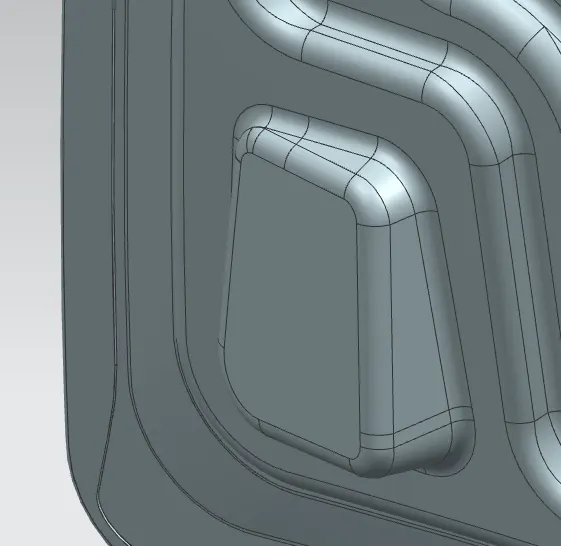
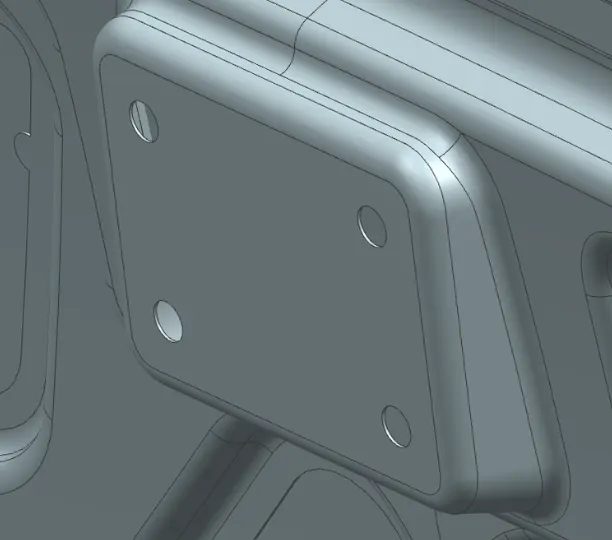
Embossing in sheet metals
- The metal sheet embossing operation is commonly accomplished with a combination of heat and pressure on the sheet metal, depending on what type of embossing is required. Theoretically, with any of these procedures, the metal thickness is changed in its composition.
- A metal sheet is drawn through the male and female roller dies, producing a pattern or design on the metal sheet. Depending on the roller dies used, different patterns can be produced on the metal sheet. The pressure and a combination of heat actually "irons" while raising the level of the image higher than the substrate to make it smooth. The term "impressing" refers to an image lowered into the surface of a material, in distinction to an image raised out of the surface of a material.
Deep Drawing
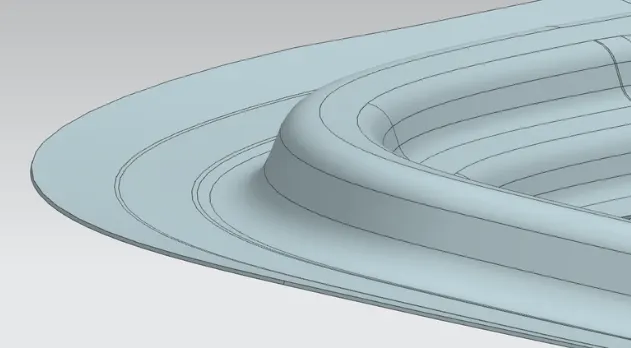
- A deep drawing of sheet metal is performed with a punch and die. The punch is the desired shape of the base of the part, once drawn. The die cavity matches the punch and is a little wider to allow for its passage, as well as clearance. For many calculations, the sheet metal thickness is assumed to remain constant. However, there are changes in thickness in certain areas, due to the forces involved.
Hemming in sheet metals
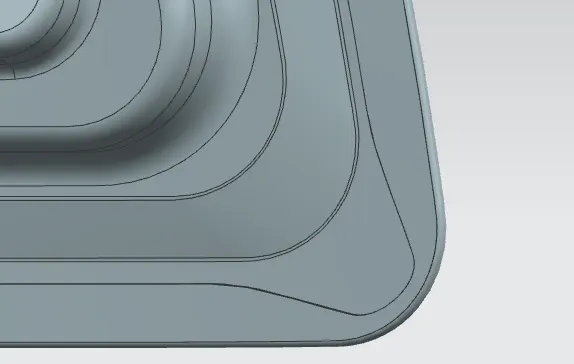
- Hemming is a sheet metal forming process in which sheets are joined by bending it usually to 180°. Automotive body panels and automotive parts such as deck-lids, trunk-lids, doors, hoods, and tailgates are formed by hemming processes.
While doing the hemming process, A relief angle is formed as a product of hem when attaining at the corner of the sheet metals.
Mastic data
A mastic sealant data is used to fix or combine the hood outer panel and hood inner panel.
- They can provide thermal and acoustical insulation, and may serve as fire barriers.
- A sealant has three basic functions: It fills a gap between two or more substrates; it forms a barrier through the physical properties of the sealant itself and by adhesion to the substrate; and, it maintains sealing properties for the expected lifetime, service conditions, and environments. The sealant performs these functions by way of correct formulation to achieve specific application and performance properties.
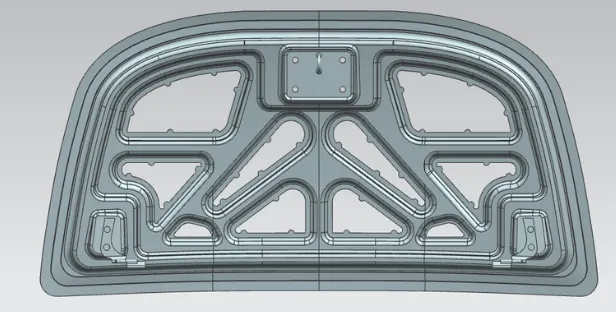
Hood Components
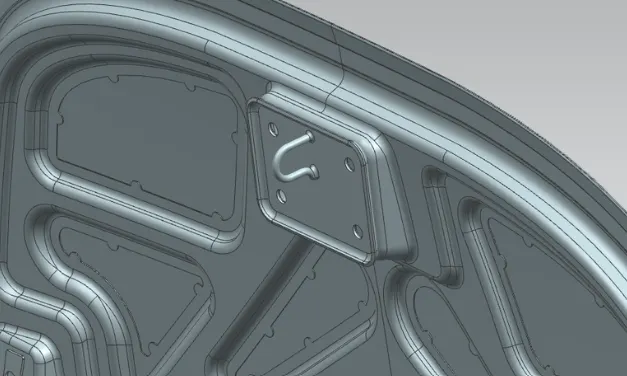
- Latch
A hood latch is a very simple component. It's basically the fastener that keeps your hood closed shut. This latch ensures that your hood is securely connected to your vehicle and that it doesn't pop open unexpectedly
When tension is applied to the cable from the hood release handle, it pivots the secondary latch, which pulls away from a retaining seat located under the hood. By design, the secondary latch then releases the hood a few inches before a safety latch takes over.
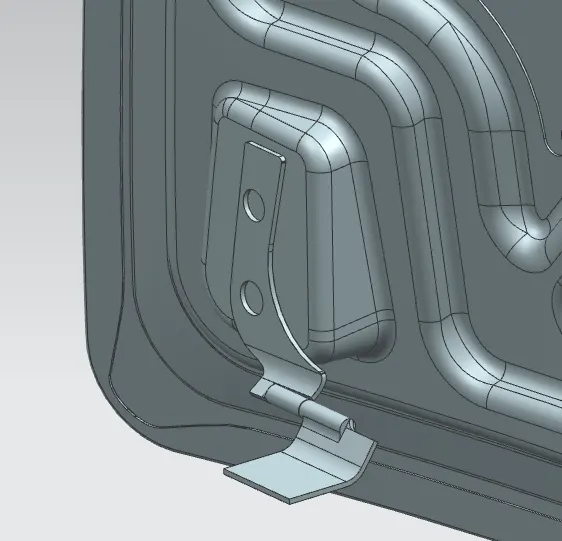
Hinge
A hinge is a component that fixes the hood to the fenders of the car. The latch must be fixed perpendicular to the hinge axis so that the hood opens or closes properly.
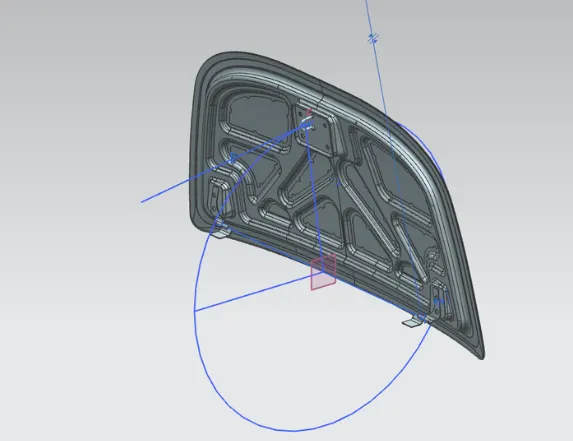
latch trajectory
when opening or closing the hood. The latch must be aligned to the fixing or striker point. for that, the latch trajectory must be perpendicular to the hinge axis.
Hood design
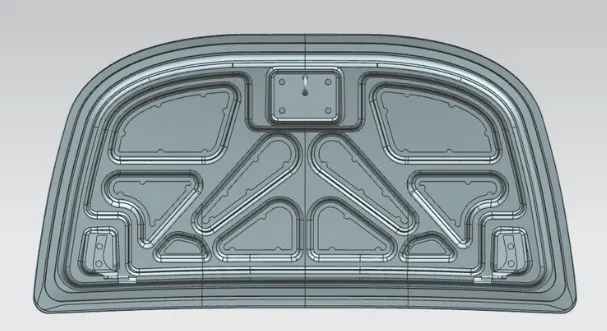
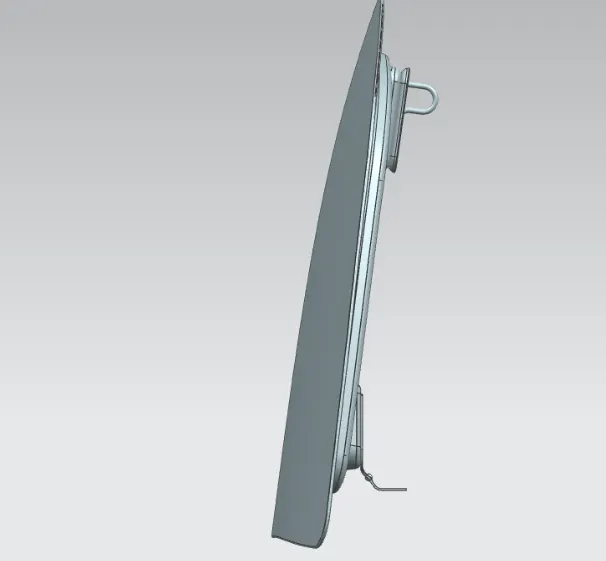
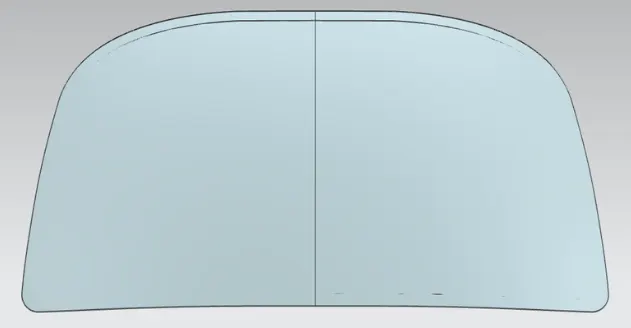
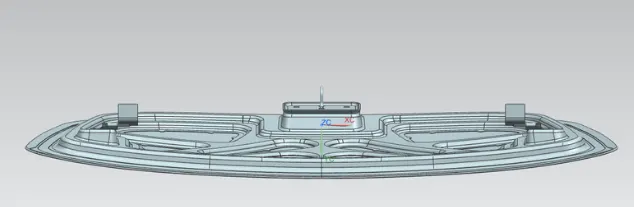
Conclusion
Therefore, we have designed a hood that falls under the rules and regulations of the manufacturer's standards.