Hood design-Week 2
OBJECTIVES:-
- Designing and modeling the hood concerning its parameters and requirements.
INTRODUCTION:-
- Hood is an automobile component and it is called the bonnet in british countries.
- It is assembled in a tapered position to the windscreen of the car it has enclosed around the engine compartment.
- A hood is meant to protect the vehicle's performance parts like the engine or battery. T
- hey also provide easy access to car repair and maintenance.
- The hood is made up of aluminum materials.
- They serve a great deal of purpose in protecting the passengers inside the car and pedestrians in event of an accident.
HOOD COMPONENTS:-
- Hood outer panel
- Hood inner panel
- Latch and striker
- Reinforcements
OUTER PANEL:-
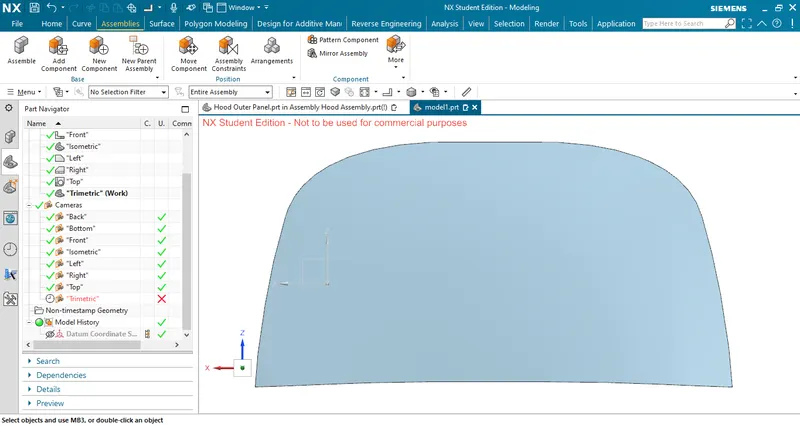
- The outer panel has an aesthetic look to it but on its own is very weak and not capable of handling force during impact.
- It is installed over the inner panel and made up of aluminum alloy.
- Aluminium alloy has excellent corrosion resistance and it possesses high strength and excellent stretch forming and lightweight characteristics.
INNER PANEL:-
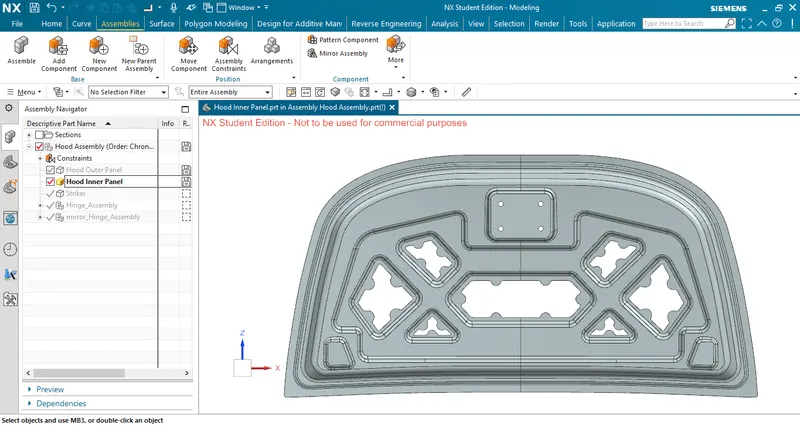
- The inner panel is mounted under the outer panel.
- It has been designed and modeled with overlapping flange connected.
- The mess is created under the manufacturing process of sheet metal stamping dies.
- The purpose of the hood inner panel is providing to improve rigidity, durability, and pedestrian protecting performance by compressing a composite structure.
- The inner hood panel also protects the engine compartments during the collision.
- Generally the hood inner panel has a multi-cone structure.
HINGE:-
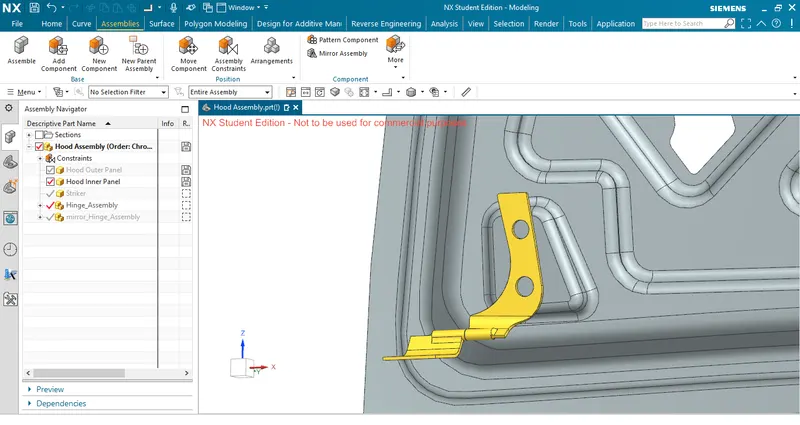
- The working system of the hood is completely based on its hinges.
- The hinge mechanism is provided that allows a lawn and garden tractor hood to be pivoted between closed and open positions.
- The construction of hinges to allow easy separation or connection of parts at the hinge axis in a radial direction requiring a specific angular position the pin having a non- circular cross-section
- The hinges are properly aligned on a single reference axis path.
To assemble the hinges, two constraints are used.
- Touch constraint
- Parallel constraint.
STRIKER:-
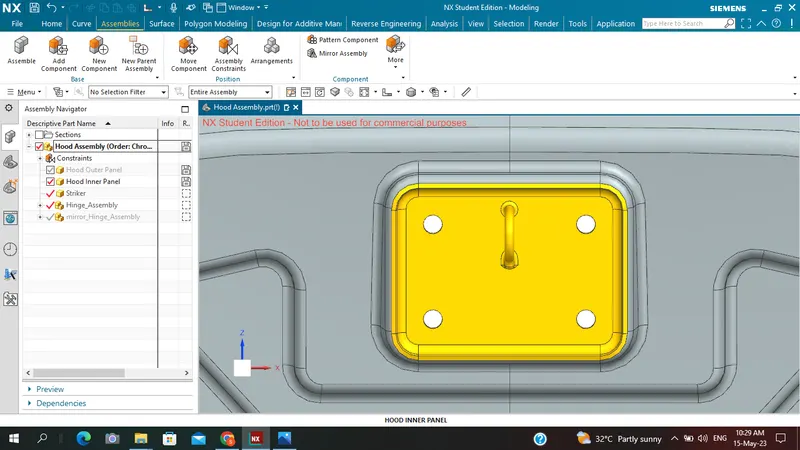
- A vehicle hood latch and release mechanism are latched when the hood striker engages the latch portion of the mechanism as the hood is moved to its closed position.
- The mechanism is actuated to release the hood striker by pushing action on the cable.
- When the latching mode of the hood latching and releasing mechanism latches the hood striker holds the hood closed.
REINFORCEMENTS:-
- The striker reinforcements material that can enhance strength and rigidity in the vicinity of the striker and secure pedestrian protection performance.
- The reinforcement is included for the less thickness of material where the deformation occurs at the time of the collision to protect pedestrians.
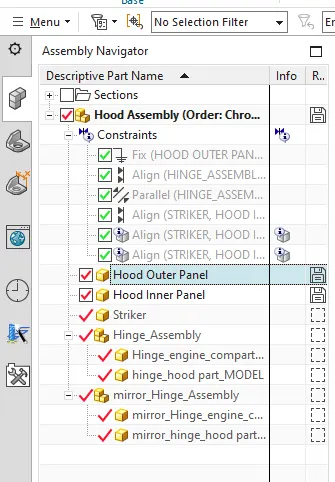
ASSEMBLY TREE OF HOOD:-
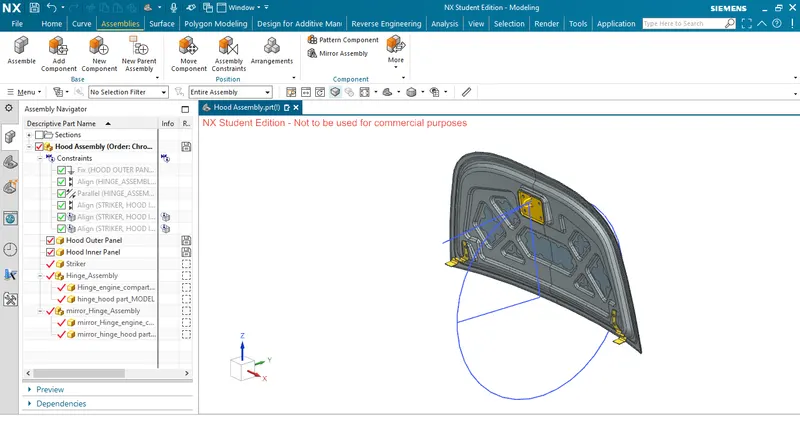
LATCH TRAJECTORY MOTION:-
- The significance of the trajectory concept is open and close the hood along the curved path to its motion concerning gravity.
- The circle is sketched at the center section of the hood using the datum plane and the line is drawn tangent to the circle.
- A perpendicular line is drawn at the center of the striker using the datum plane.
- By using the align constraint, coincident the tangent line and perpendicular line of striker.
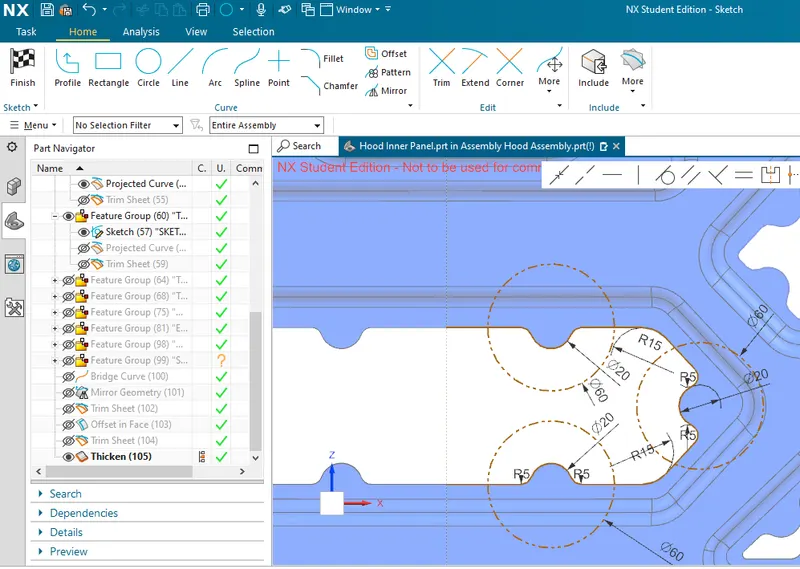
MASTIC DATA:-
- The mastic sealants are in the form of paste.
- The mastic sealants either join one surface to another or adheres to nearly any material.
- The mastic sealants are applied in between the outer panel and inner panel to join with each other.
- The mastic data are applied on the hood and it solidified fills the gap of 5mm between the outer panel and inner panel.
- Hood commonly possess large surface area and hemming can only be provided through its boundary.
- Mastic sealants are elastic compound that behave like rubber.
- It is applied between the inner and outer panels at specified spots.
- Each spot of mastic sealants has its effect around a circular region from 50-80mm diameter.
- Thus, the mastic points are arranged in such a way that it covers the areas away from the hemming which are more vulnerable to vibrate.
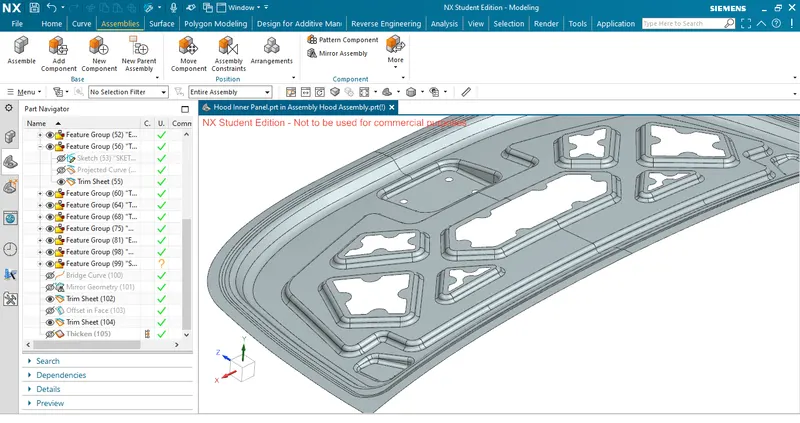
EMBOSS:-
- This command enables modifying the sheet body by adding faces of a solid body.
- The target sheet body intersects with tool bodies when pressed.
- The shape of the tool bodies is to be transferred onto the sheet body.
- It increased the metal panels and stiffness and rigidity.
- Increase the surface area for heat transfer or acoustic applications and improve the traction.
MASTER SECTION:-
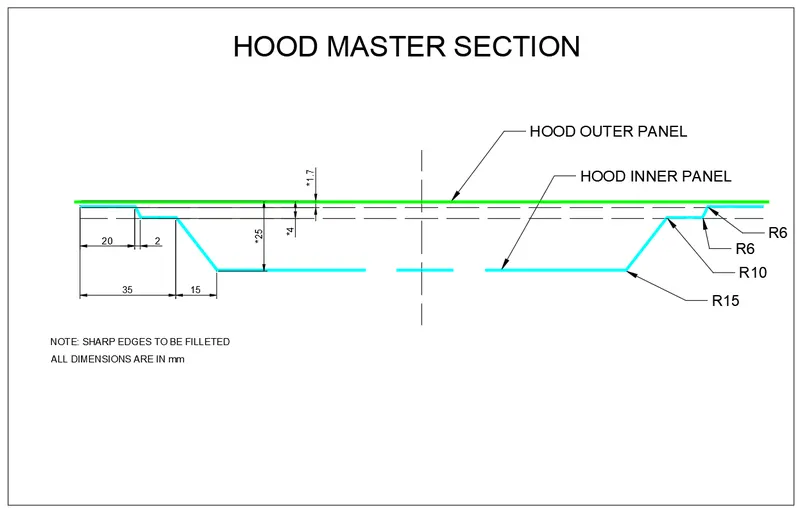
HEMMING PROCESS:-
- Hemming is a technology used to join inner and outer closure panels together.
- It is the process of bending/folding the flange of the outer panel over the inner panel.
- Hemming is performed to achieve a better final geometry in the vehicle part.
- Allow safe handling of the part.
- Add resistance and rigidity to the part.
- We are using the roller hemming operation for the hood to get the desired final shape of the product of the sheet.
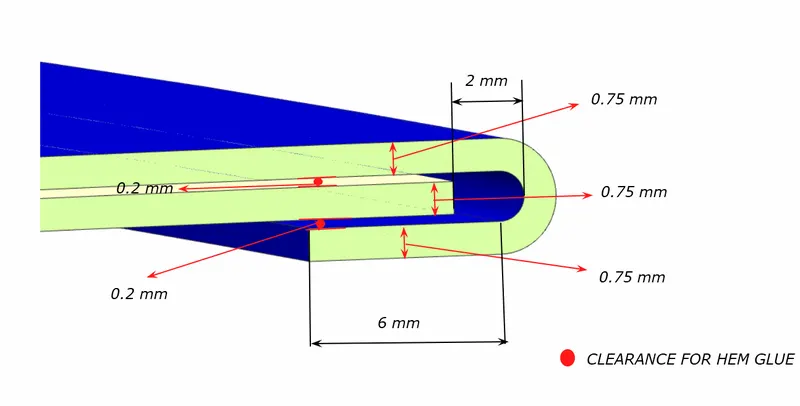
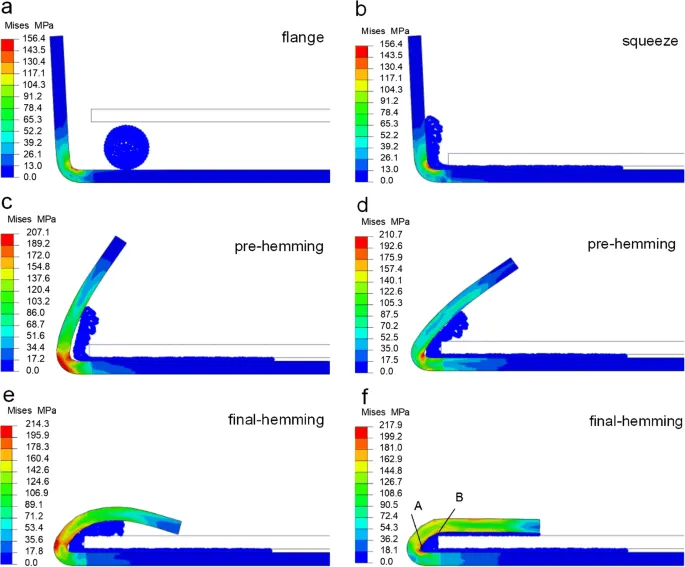
- Numerical quantification of model and experiment of external
- To prevent the formation of buckling during hemming make the corner relief at the sharp corners.
PEDESTRIAN SAFETY:-
- The term pedestrian generally refers to a person walking, running, skating, skateboarding, and other similar devices.
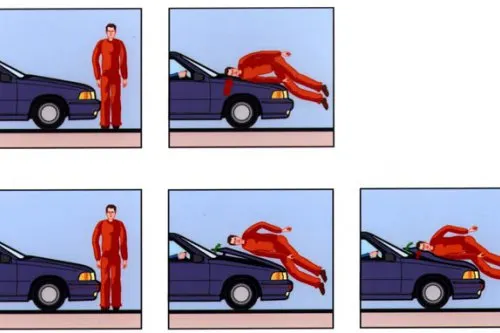
Kinematics of pedestrians in an impact
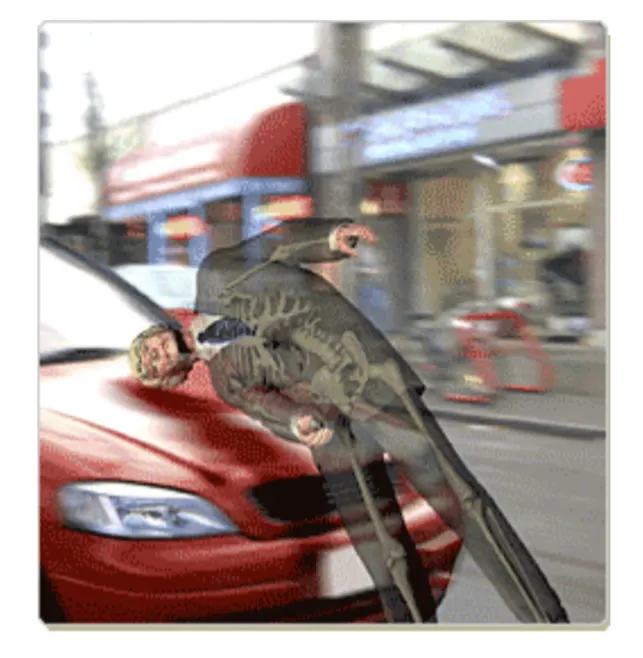
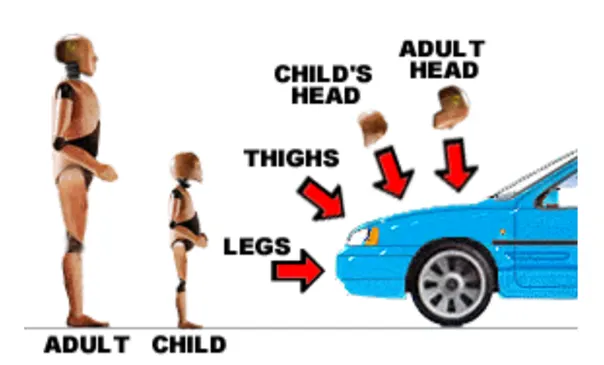
- It describes when a passenger car collides with an adult pedestrian standing erect.
- The contact between the leading edge of the hood and the upper legs/pelvis of the pedestrian.
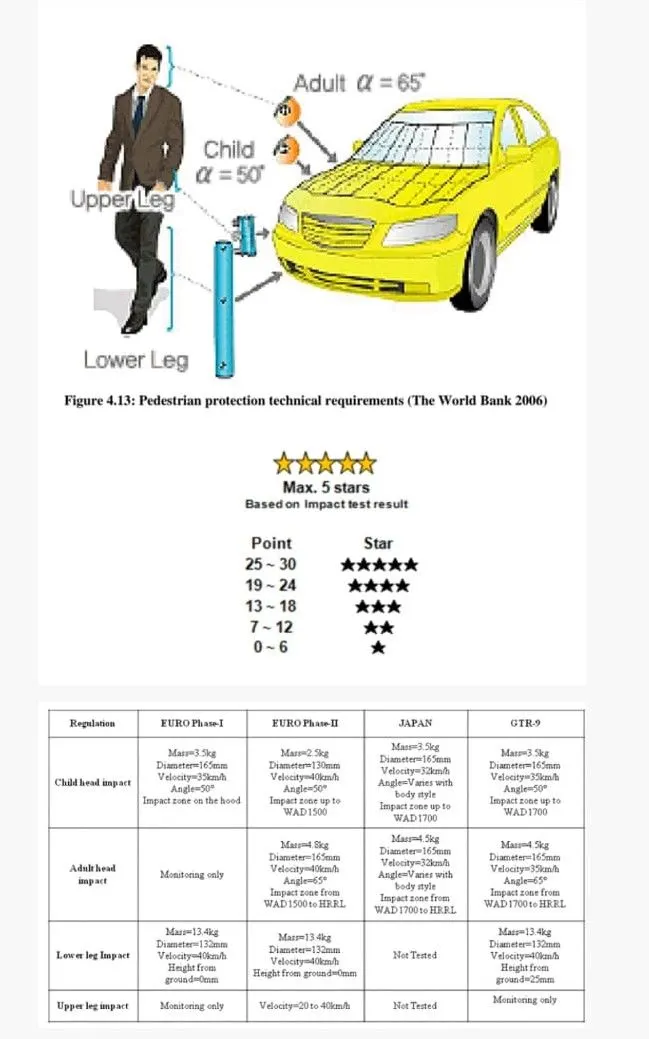
Adult and child head impact
- The impact area for the child's head is between 1000WAD- 1700WAD.
- The adult head impact area is between the 1700WAD-2100WAD. The impact area does not include the windscreen.
Virtual crash simulation
Requiring factors of the virtual crash test
- Creating the three-dimensional geometric models of all the required components to replicate structure as accurately as possible.
- Converting the geometric models into FE models.
- Implement the mass properties and representative materials properties.
- Constraining the components together.
- Post-processing to analyze the crash results.
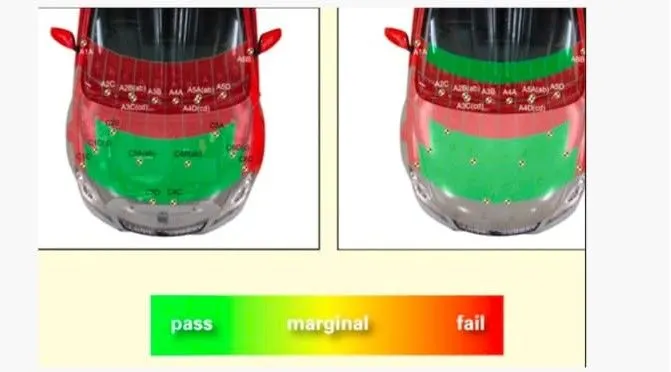
Contour plot of hood displacement using hyper view
Conclusion:-
Designed and modeled the hood panel using Siemens NX CAD as per the design parameters.