Hood design-Week 2
CAR HOOD DESIGN
OBJECTIVE : The aim is to design components of the hood/bonnet of a car and assemble them together.
INTRODUCTION : This project will make you understand about the hood of a car, explain some sheet metal operations that are commonly used in designing and take you to the step by step procedure of designing hood components like its inner panel, outer panel, reinforcements and setting the trajectory of striker.
HOOD : The hood (North American English) or bonnet (Commonwealth English) is the hinged cover over the engine of motor vehicles. Hoods can open to allow access to the engine compartment, or trunk on rear-engine and some mid-engine vehicles for maintenance and repair.
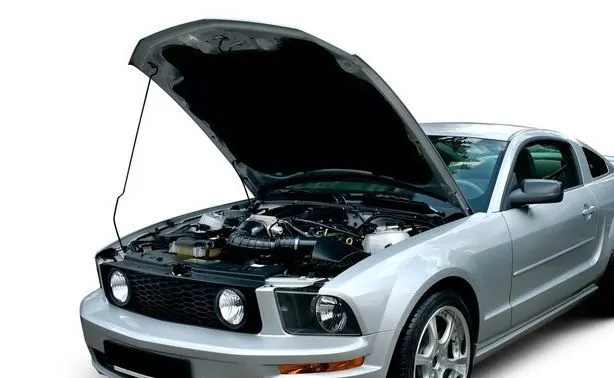
On front-engined cars, the hood may be hinged at either the front or the rear edge, or in earlier models, it may be split into two sections, one each side, each hinged along the centre line. Hoods are typically made out of the same material as the rest of the body work. This may include steel, aluminium, fiberglass or carbon fiber. However, some aftermarket companies produce replacements for steel hoods in fiberglass or carbon fiber to make the vehicle lighter.
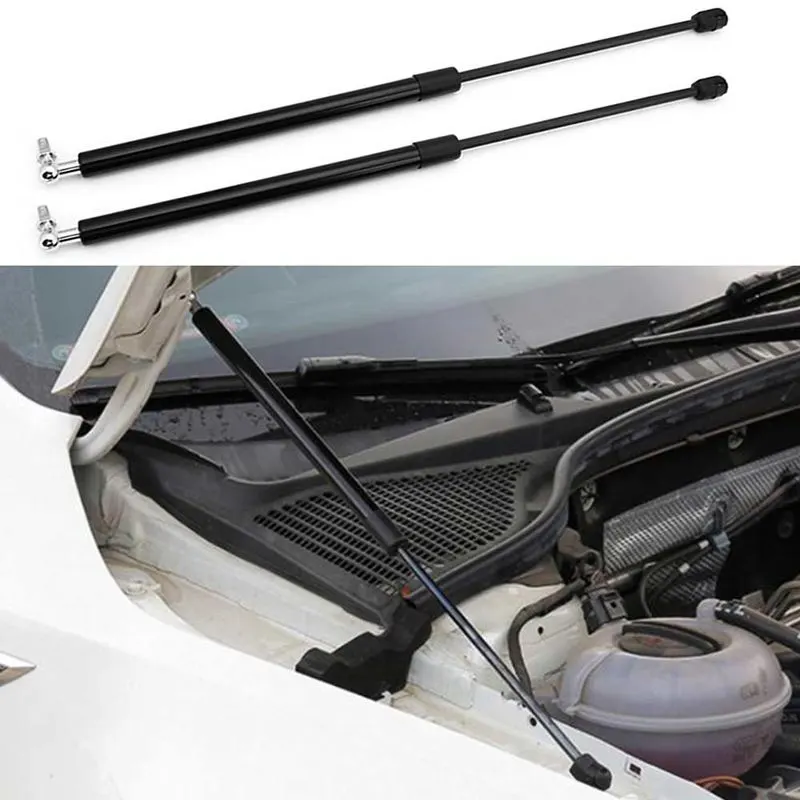
Hood is typically supported by rods or some fixtures, so that it stays at a position and a person can lean onto it hassle free and work. These includes
Gas Stay : This is used to open the car hood by just providing little lift force. A small effort is all it needs and other work is done by gas pressure. It is normlly found in high-end cars where the mass of hood is more than normal.
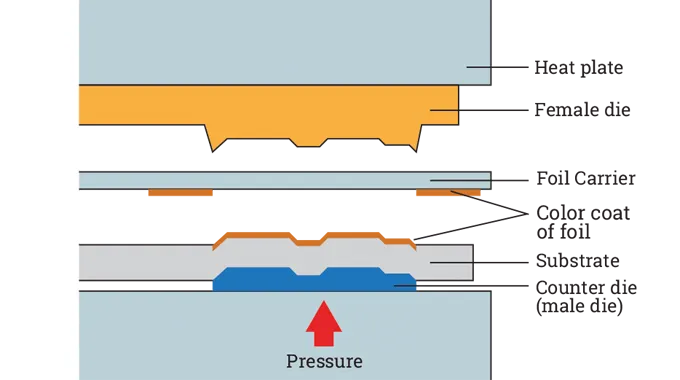
Embossing : Sheet metal embossing is a stamping process for producing raised or sunken designs or relief in sheet metal. This process can be made by means of matched male and female roller dies, or by passing sheet or a strip of metal between rolls of the desired pattern.
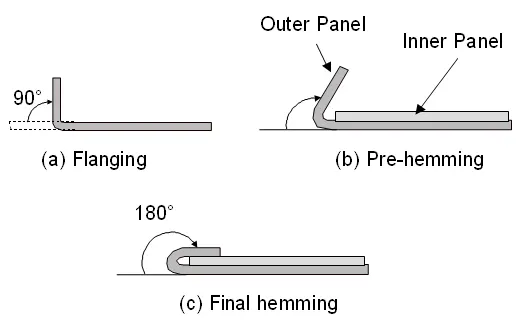
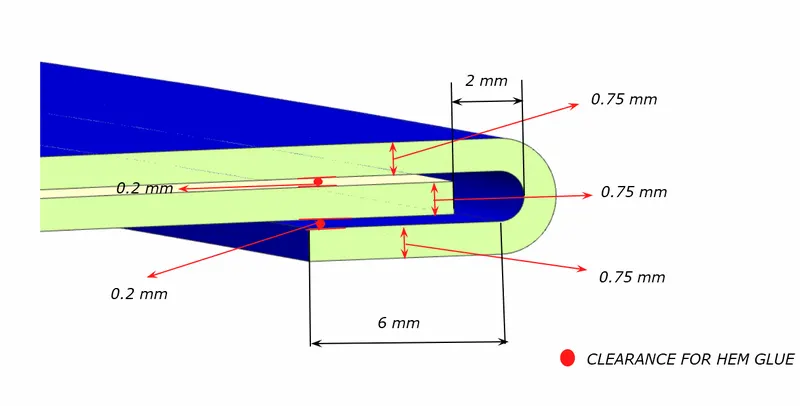
Hemming : Hemming is a forming operation in which the edges of the sheet are folded or folded over another part in order to achieve a tight fit. Normally hemming operations are used to connect parts together, to improve the appearance of a part and to reinforce part edges.
Design
Master section :
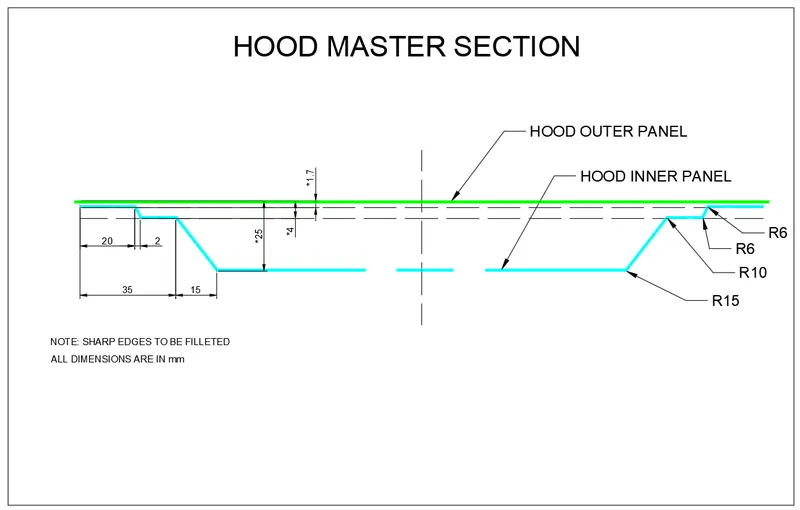
Hood Thickness Information
*Outer Panel Thickness = 0.75mm
*Inner Panel Thickness = 0.75mm
*Reinforcement Thickness = 1.5mm
Parts of a Hood/Bonnet :
- Hood Outer Panel
- Hood Inner Panel
- Hinge Assembly
- Latch & Striker
HOOD OUTER PANEL :
We get the outer panel skin surface from style department with proper aesthetic look, gap etc. The shape of the Outer panel is made aerodynamic in order to minimize the air effect. Shape of Outer panel is reffered as a base to design a inner panel.
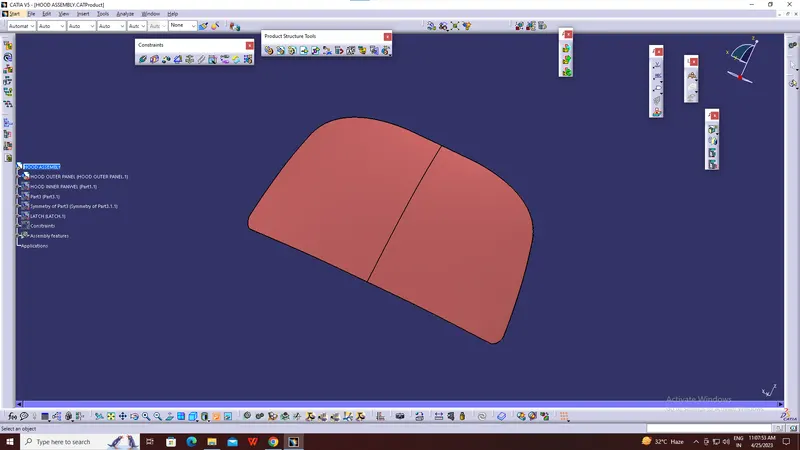
Thicknees of outer panel is 0.75mm
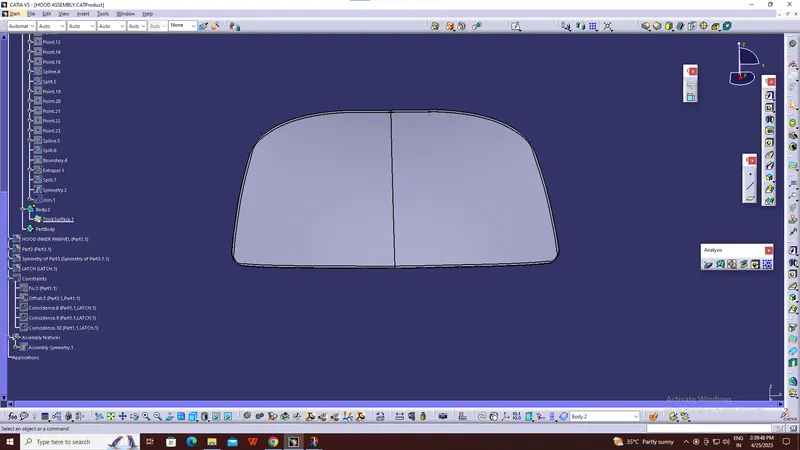
HOOD INNER PANEL
Hood Inner panel is main functional part in hood design. It gives structural support and strength to the outer panel of Hood. The outer and inner panels of the Hood are typically attached together using a hemming operation at the edge.
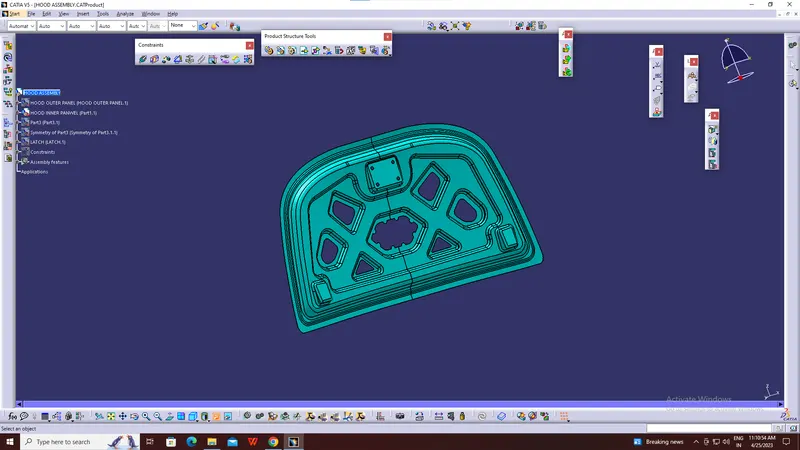
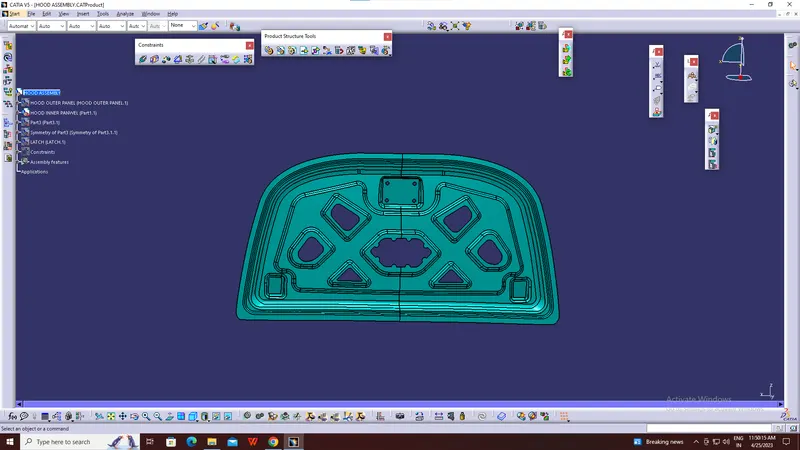
Thicknees of inner panel 0.75mm
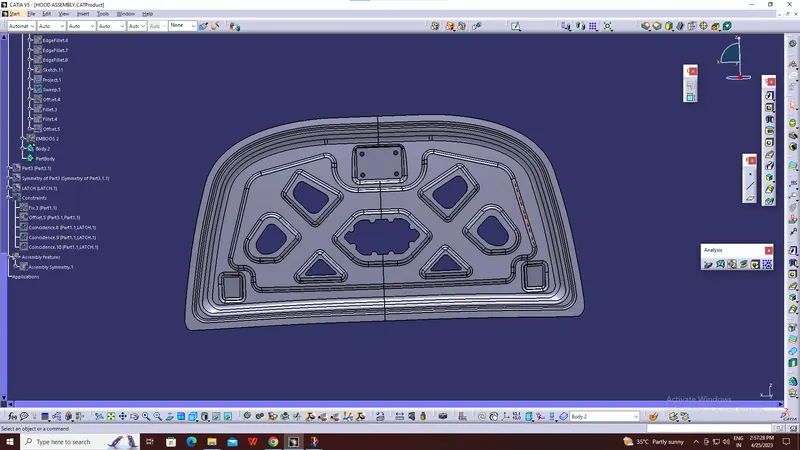
TOOL DIRECTION :
t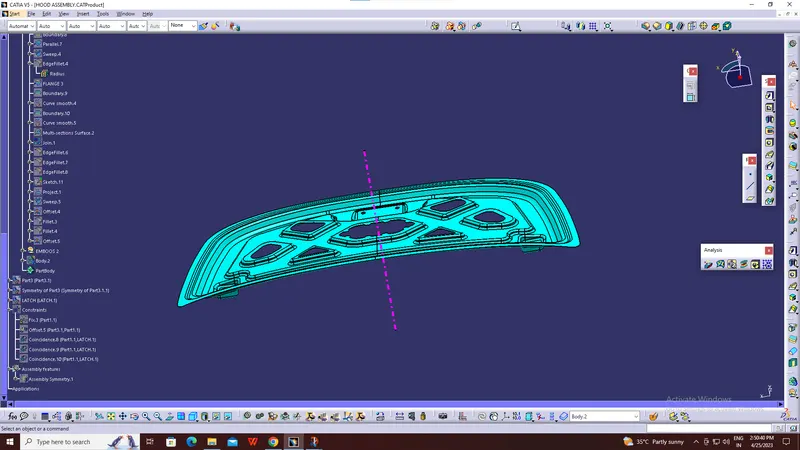
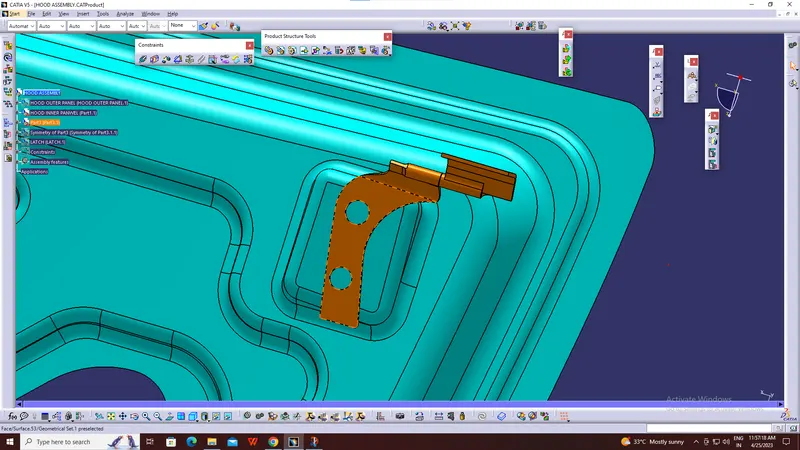
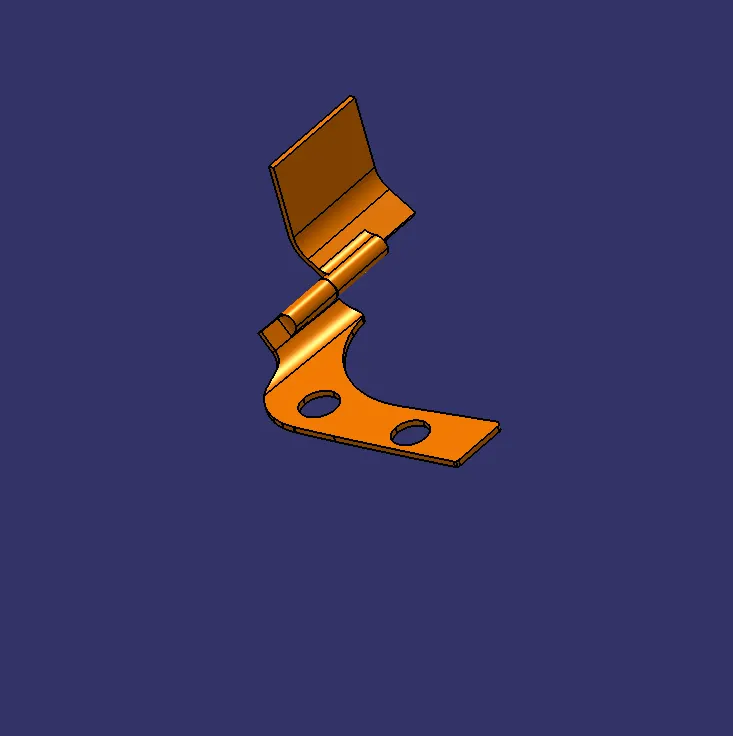
Hinge Assembly :
The hinges are used to guide and hold the hood when open & close. Hinge assembly consists of two parts one is connected to the hood inner panel and second is connected to the vehicle body.
Latch & striker :
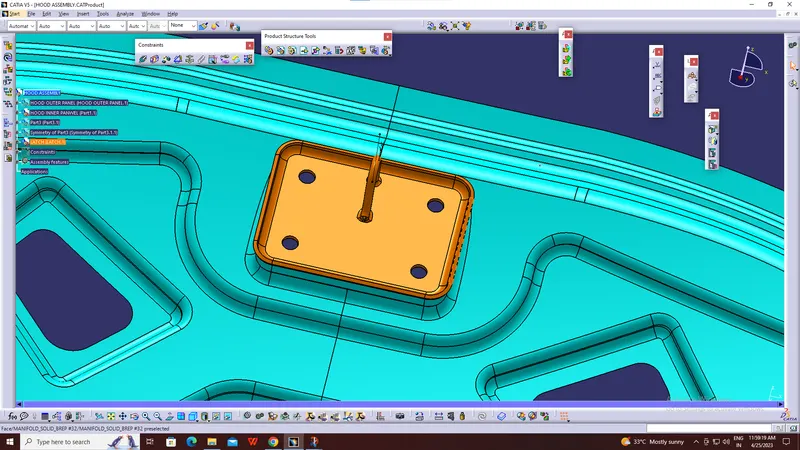
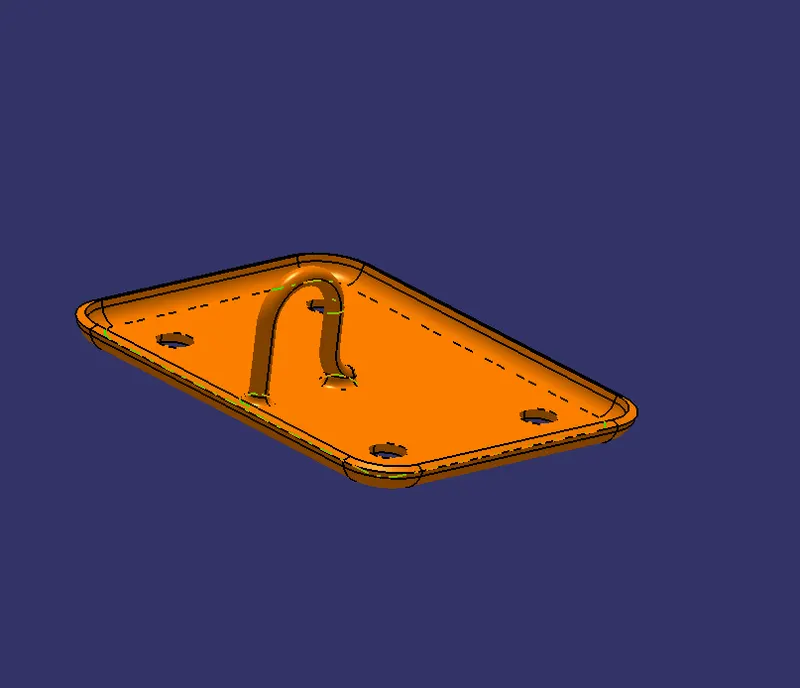
This system is the attachment of hood assembly and vehicle body. The hood latch system must be able to catch the striker of the hood upon closing and instantaneously, as well as automatically, lock. Once in the locked state, it must remain locked and only unlock upon the operator’s control.
Latch Trajectory :
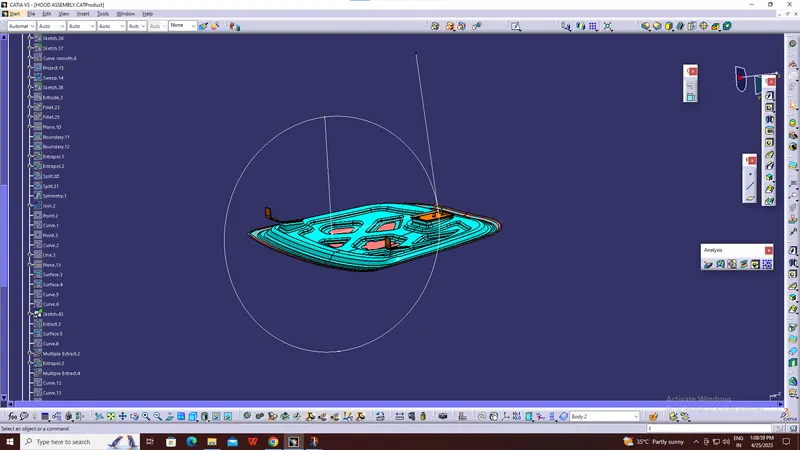
Circle is drawn from the hinge axis center so we can finalize the position of latch striker. For proper mating, the tip of the striker should be tangential to the latch trajectory. the position of latch striker follows the path of this circle.
Emboss definitions :
Embosses are provided to increase the strength of inner panel. Shape of embosses also determines the direction of collision force distribution. the shape of the embosses should be designed in such a way that, the collision forces should be directed towards outward side of the car (towards hinge side).
Mastic data :
Mastic sealants used between the outer and inner panel. mastic sealants are the rubber like elasic compound which connects the outer and inner panels of car hood at specified points. Mastic sealants are used in the region between the inner and outer panel because other joining process like welding or riveting are not good for car asthetic design. It also helps in improving NVH (Noise, vibration, and harshness) characteristics.
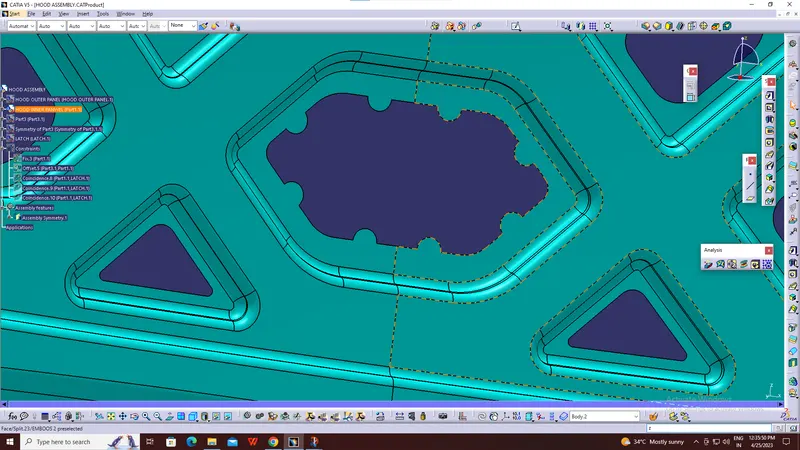
Reinforcements :-
Reinforcement are provided mainly in hinge and latch region. When hinge and latch assemblies are attached to inner panel, strength of that area reduces locally so we add some additional material to increase the strength of the area locally.
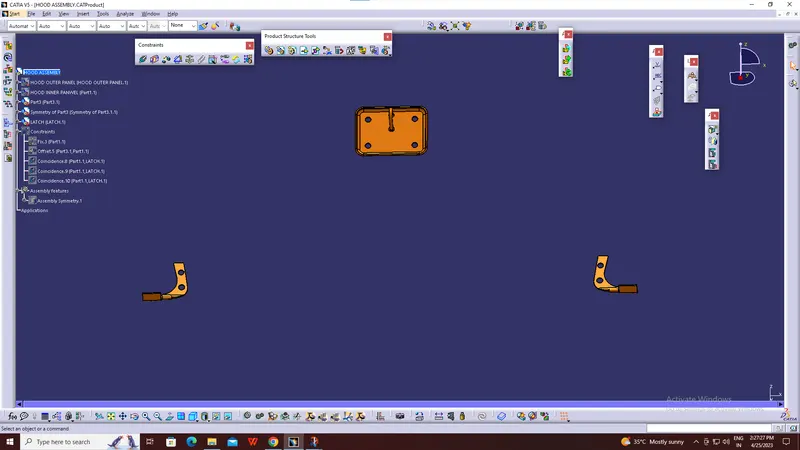
Roll hemming :
Roll hemming is carried out incrementally with a hemming roller. An industrial robot guides the hemming roller and forms the flange. Roll hemming operation can also be divided into several pre-hemming and final hemming process steps. Roll hemming is very flexible to use and tool costs are significantly lower as compared to those of conventional die hemming. However, the cycle times are much higher since the hemming is realized using a hemming roller which follows a defined path.
and
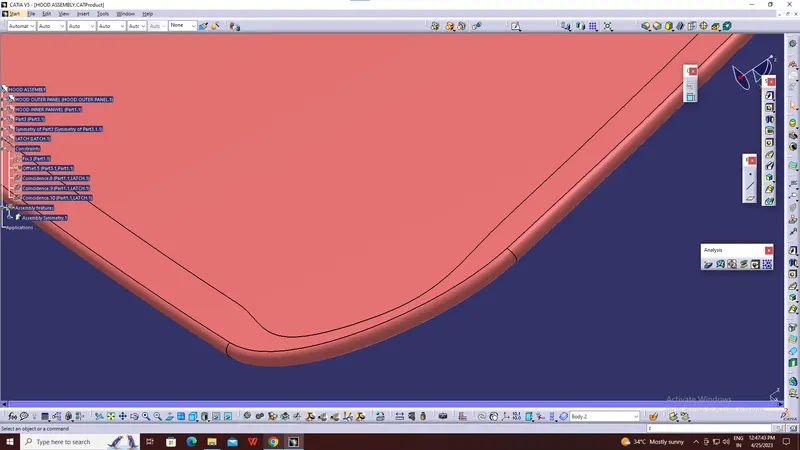
Corner relief :
Final assembly :
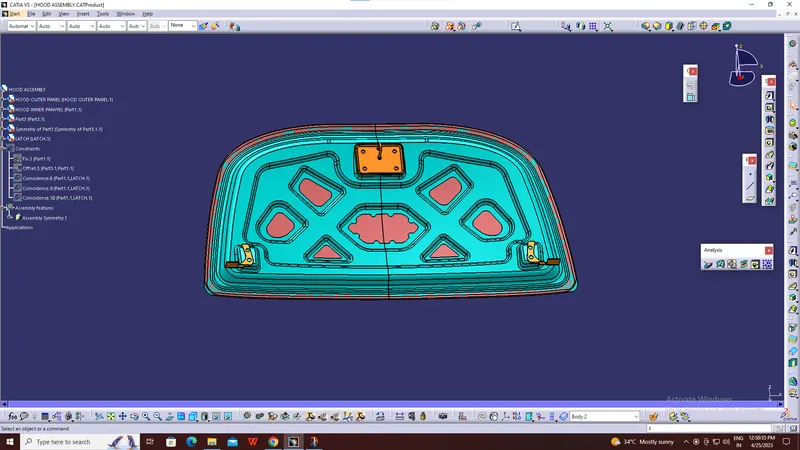
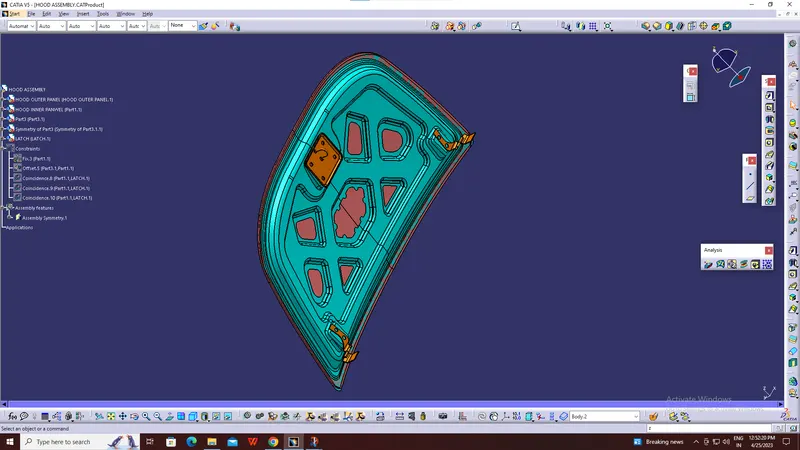
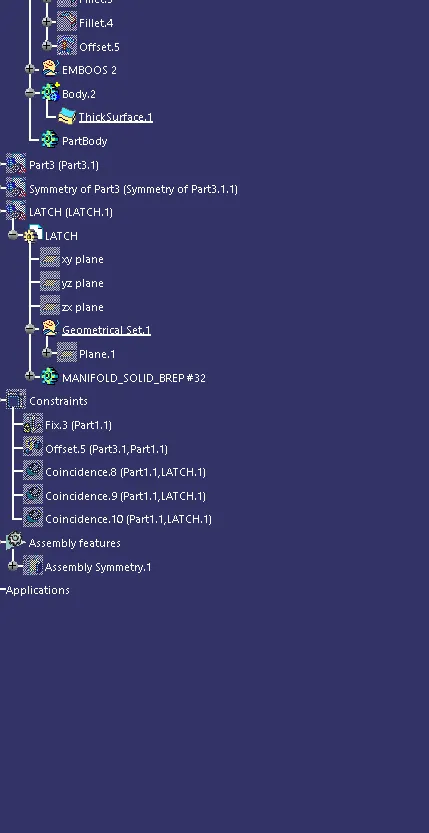
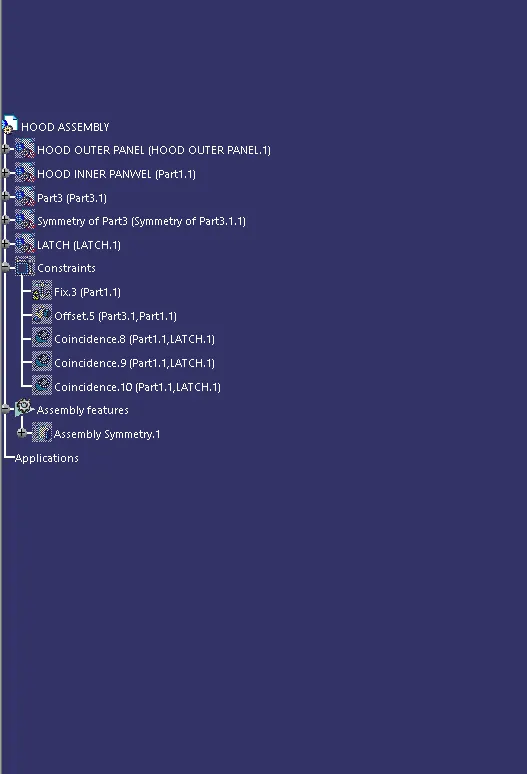
TREE STRUCTURE:
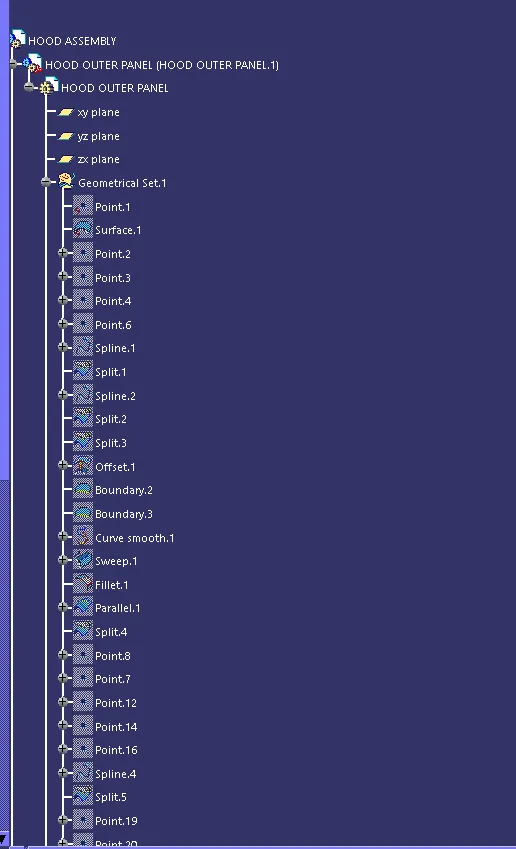
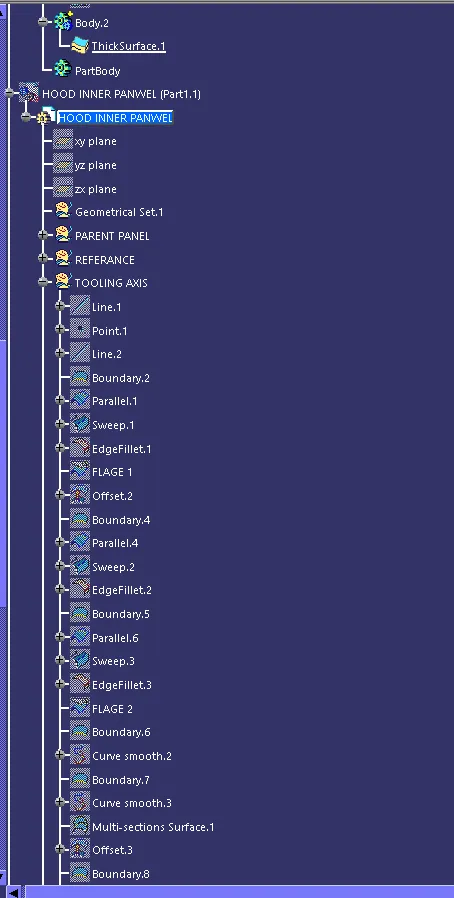
CONCLUSION:
In this challenge Hood is created successfully in Top-Down Assembly approach with Hood Outer Panel, Hood Inner panel, Hinge Assembly amd Striker with the given sketch and all the design considerations.