Hood design-Week 2
Hood Design
The Hood or the Bonnet of a car is considered as the frontal BIW enclosure component. Bonnets are designed to reduce air resistance as the air flows around the car. The design of the bonnet is vital since it affects the aerodynamic flow around the car. Apart from this, bonnets are also designed to meet several other requirements. They serve a great deal of purpose in protecting the passengers inside the car and the pedestrians in the event of an accident. It also acts as the engine cover.
The hood or the Bonnet consists of the following parts.
- Hood outer panel
- Hood inner panel
- Latch and Striker re-enforcement
- Hinge re-enforcement
- Gas stay re-enforcement
The hood or the bonnet is commonly manufactured using Stainless steel of various grades. For vehicles that weigh less, the bonnet is made up of aluminium. The Stainless steel bonnet uses a technique called deep drawing to manufacture the component. The Aluminum bonnet employs a procedure called as casting.
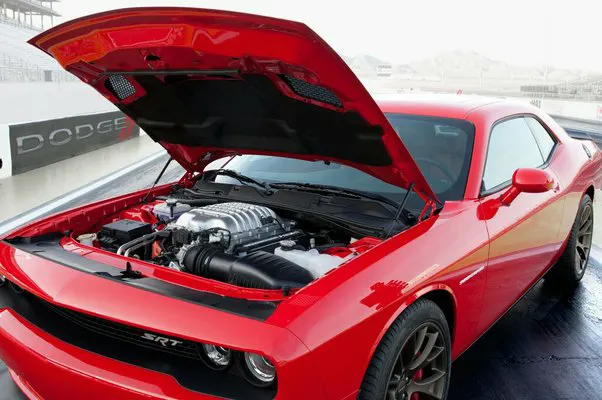
Function of Hood
- Covers the engine of an automobile
- Easy to open for basic maintanance in engine compartment.
- Safety for pedestrians
- Transfer load to hinges after crash
- Aesthetic look
- Stability at vibration
- Aerodynamic shape
- Noise absorbed from engine
TYPES OF HOOD SUPPORT
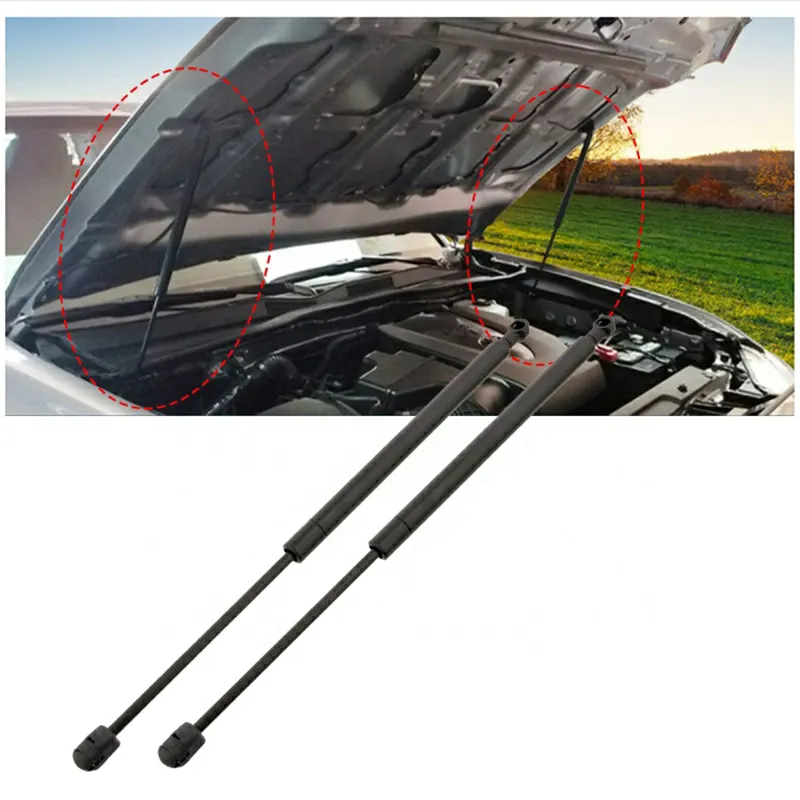
- Gas stay
These are used to lift the car hood. Its purpose to just give the lifting force to the hood, then it automatically opens the car hood by means of gas pressure. This is used where the car bonnet size is heavy to lift. Spring stays are designed to be used on upward lifting doors, once you have opened the door slightly the spring will push the door to the fully open position. Struts contain nitrogen gas under pressure and some oil to damp movement and to lubricate the seals.
Advantage:
There is no power requirements and support reduce human effort
Disadvantage:
Costly
- Support Rod
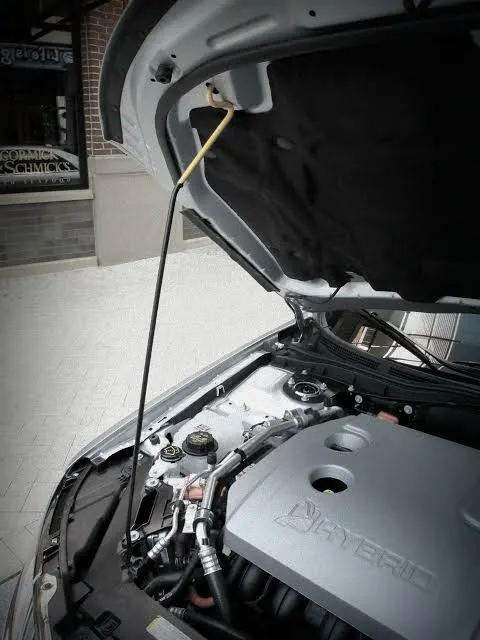
This is widely used in many cars as the rate is cheap. In this type we have to lift the hood by ourselves and place the support rod in the space provided either in the hood or engine component. This is mostly used for where the car bonnet weight is small. Support Rod can be mounted with grommet side on the engine compartment of body and rod locking hole on hood or vice versa. Grommet and the clip of the rod are standard parts. Support rod is used to increase the support force, automatic buffering, stable and reliable, strong load-bearing capacity, safe use, not easy to fall, avoid hot hands, support the engine more easily, and balance the force without shaking.
Advantage:
Cost effective and simple
Disadvantage:
1) when striking with automotive body panel,to leave scares which are very likely to cause rust
2)The metal rod is often too hot to be gripped by hand when one attempt to keep engine hood open for inspecting the engine room immediately after vehicle has been stop.
- Pedestrian safety
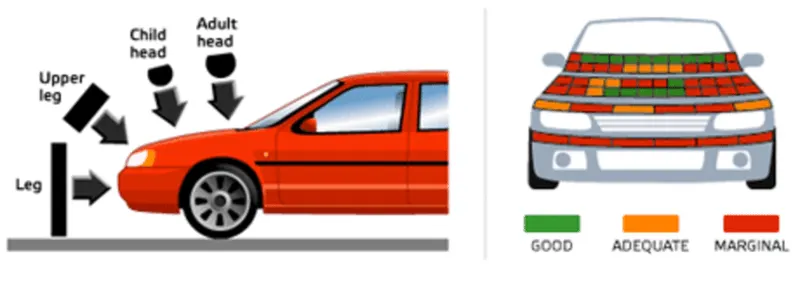
While designing the hood, it is vital to consider the safety of pedestrians as when your car hits the pedestrian during a crash, it is very important to study the areas over the hood where different body parts of pedestrians are going to hit. we should also take into account the average height of adults and children while designing our hood. So, whenever a new car is been launched, all these safety parameters are checked by taking a crash test and studying the data obtained from it to make changes accordingly to follow pedestrian safety.
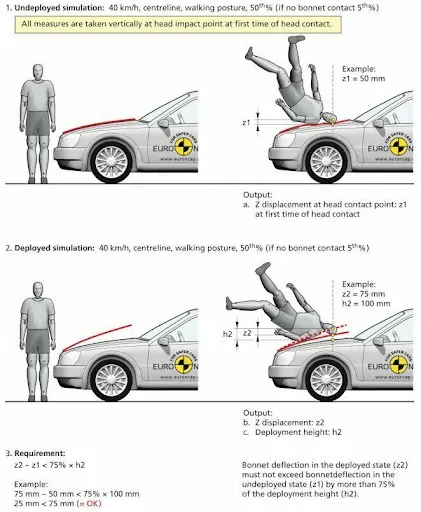
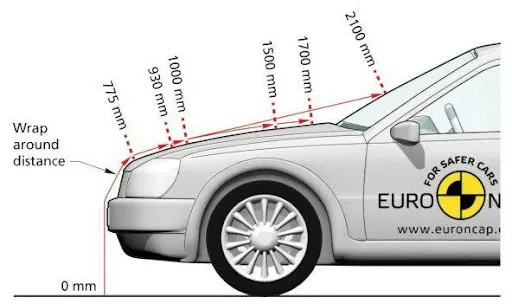
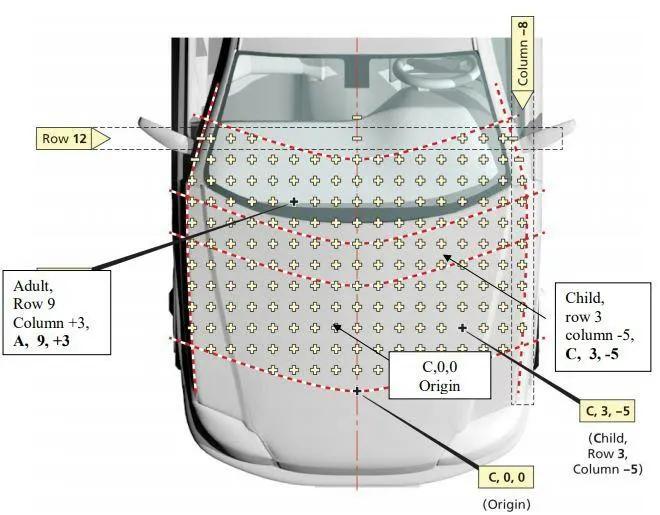
Components of Hood
1.Hood Outer Panel
A car hood panel is one of the most important components of the BIW (body in white), it is considered as the closure sheet-metal component. A hood panel consists of two panels that are hemmed together to form the automotive hood assembly.The inner panel of the hood is not visible to the customer but this is the engineering feature of the outer panel. The outer panel has the aesthetic look to it but on its own is very weak and not capable of handling force during impact.Most automobile hood outer panels are made of traditional steel plates, and their quality does not meet the needs of lightweight development. For this reason, it is necessary to obtain lightweight effects through the application of the automotive aluminum sheets. The production process of the outer panel of the hood mainly includes blanking, deep drawing, trimming, turnup, and side turnup. Among them, deep drawing is a key process to ensure the quality of parts.
2.Hood Inner Panel
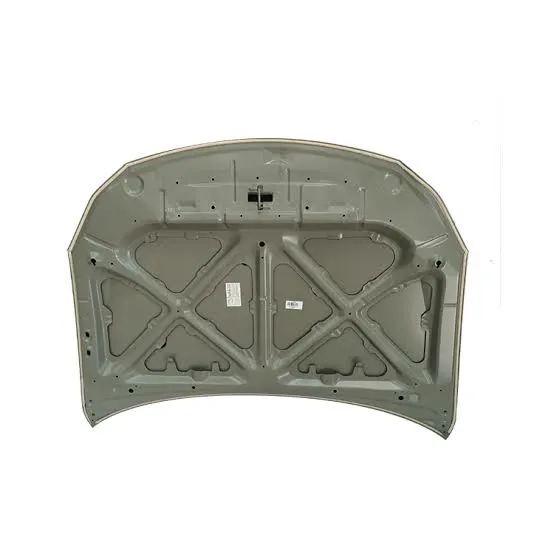
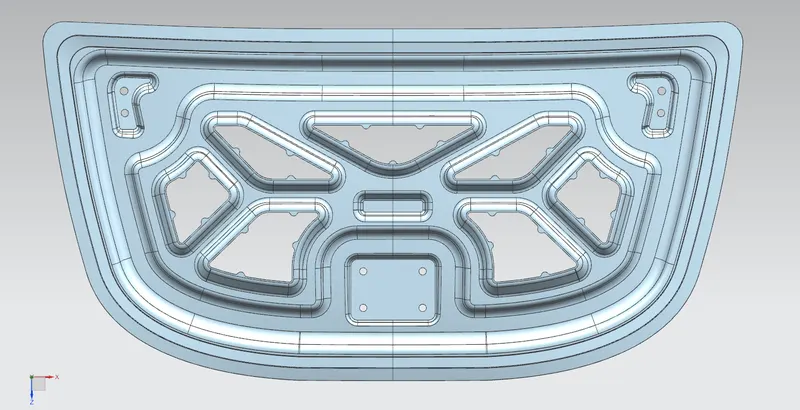
This part is enclosed in the outer panel it forms an integral part of the hood and provides rigidity to the hood, it is the part on which hinges, striker are to be fixed to make our hood fully functional it also consists of embossed sections for proper force distribution and mastic sealant points are also located on this part with reinforcement for hinge & striker. To reduce the weight of our hood some material is removed from the hood inner panel as shown below.
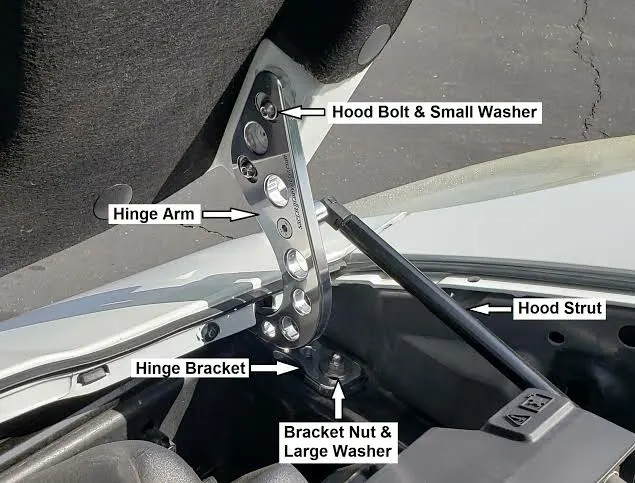
3.Hinge
It is an important part of our hood because by use of this part only we are able to open and closed our hood whenever required with ease as well as makes contact between the engine block to the hood. It also controls the lifting of the bonnet mitigates the consequences of a collision between a pedestrian and a vehicle.
4.Striker/Latch
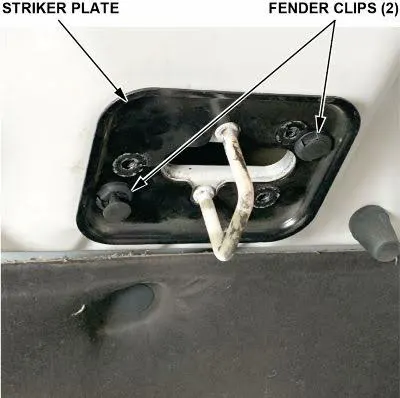
It is a part that helps in locking the hood with the striker which is located on the inner panel of the hood to decide the position of our striker, the trajectory method is used with the help of this method we can easily locate our striker. It plays a major role in opening and closing hood for maintenance of car engine and gives a tight locking position not to create undisturbed noises when the vehicle is running
- Mastic Data:
We know that the hood comprises two main parts: a hood inner panel and a hood outer panel. The hood inner panel is enclosed below the outer panel and thereby provides rigidity to the hood. When these parts are assembled to form a hood a small gap remains between these two parts as they are both metal parts this may lead to noise and vibrations when the vehicle is in running condition which is undesirable to avoid this mastic sealant is filled between this small gap.Mastic sealant is a paste-like material that is applied on a surface and is hardened by heating.
Manufacturing Processes Involved in Hood Design
1.Embossing (Manufacturing)
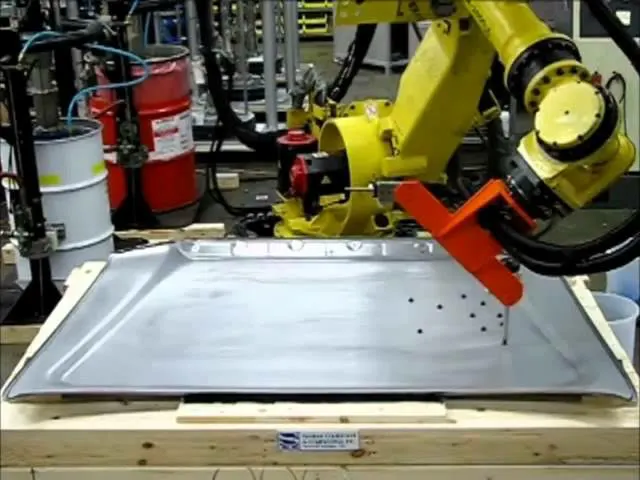
Sheet metal embossing is a stamping process for producing raised or sunken designs or relief in sheet metal. This process can be made by means of matched male and female roller dies, or by-passing sheet or a strip of metal between rolls of the desired pattern. It is often combined with Foil Stamping to create a shiny, 3D effect
2.Deep Drawing
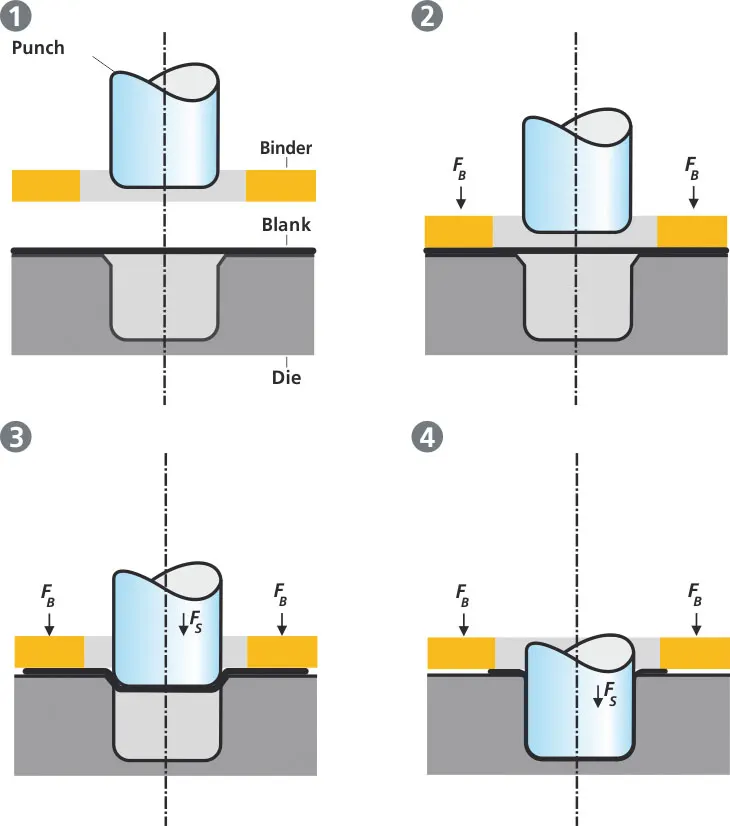
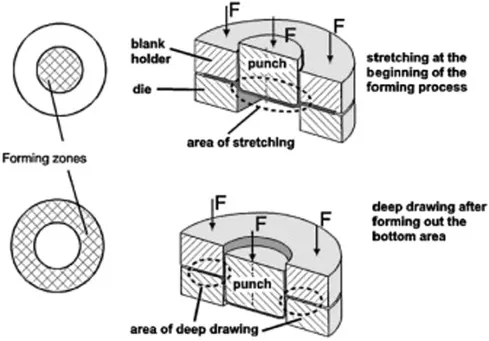
Deep drawing is a sheet metal forming process in which a sheet metal blank is radially drawn into a forming die by the mechanical action of a punch. It is thus a shape transformation process with material retention. The process is considered "deep" drawing when the depth of the drawn part exceeds its diameter. This is achieved by redrawing the part through a series of dies. The flange region (sheet metal in the die shoulder area) experiences a radial drawing stress and a tangential compressive stress due to the material retention property. These compressive stresses (hoop stresses) result in flange wrinkles (wrinkles of the first order). Wrinkles can be prevented by using a blank holder, the function of which is to facilitate controlled.
3.Hemming Process
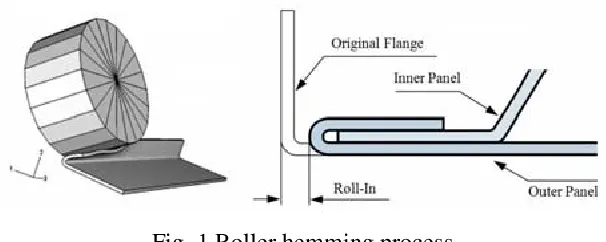
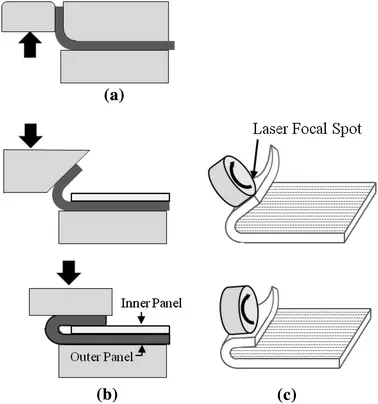
Sheet metal is metal, in sheets. It’s thinner than plate metal (.25 in and thicker) but thicker than foil (.006 in and thinner). It’s most commonly available in steel and aluminium, in various gauges (thicknesses). It’s available with various coatings for corrosion resistance or surface finish. Sheet metal is made by taking a large cast ingot and rolling it into a long ribbon of the desired thickness. This long, flat piece of metal is then rolled into a coil and sent directly or cut into sheets before being sent to a machine shop.
Manufacturingring Requirements:
While designing the inner panel hood that will be manufactured using the deep drawing process, there are some minimum requirements that we need to fulfil:
- Minimum fillet radius = 3mm+Thickness
- No sharp corners inside the component
- No curvatures lesser than 5mm
- Small embosses should not exceed the maximum depth of 6mm (staying on the safe side)
- Mounting areas and welding areas need to be flat
- Provide appropriate corner relief on the area of curvature.