Hood design-Week 2
Aim :- To design a Hood outer panel, inner panel and the necessary reinforcements by the given Master section and design parameters.
Theory :-
Hood is a main component of front portion of a car. It is an opening body panel that covers the engine in front engine vehicle. It consist of an outer panel and inner panel. The inner panel provides the strength while the outer panel functions as the metal cover. It is an access panel to the engine compartment to enable maintenance of power train, drive belts, battery, fluid levels and lamp units.
Hood designing and consideration with respect to safety and features:
The hood of a car is considered the frontal BIW enclosure component. Hood or bonnets are designed in such a way (Aerodynamically) that they can reduce air resistance as the air flows around the car.
Apart from this, hoods are also designed to meet several other requirements like a captive area for water storage if wiper and other features beneath it.
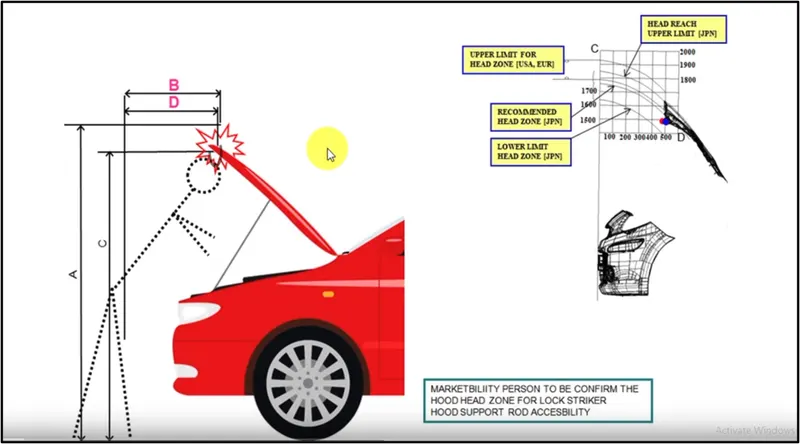
With respect to the safety of humans, they serve a great deal of purpose in protecting the passengers inside the car & the pedestrians in the event of an accident. It also acts as the cover for the engine. Illustration of hood sheet metal shape and angle used in design for safety purpose shown below-
Following parts are used in hood assembly for this report,
1. Hood outer panel
2. Hood inner panel
3. Hinge assembly
4. Striker assembly
Hood Support :
- There are two types of hoods are used in the automobile industry , they are
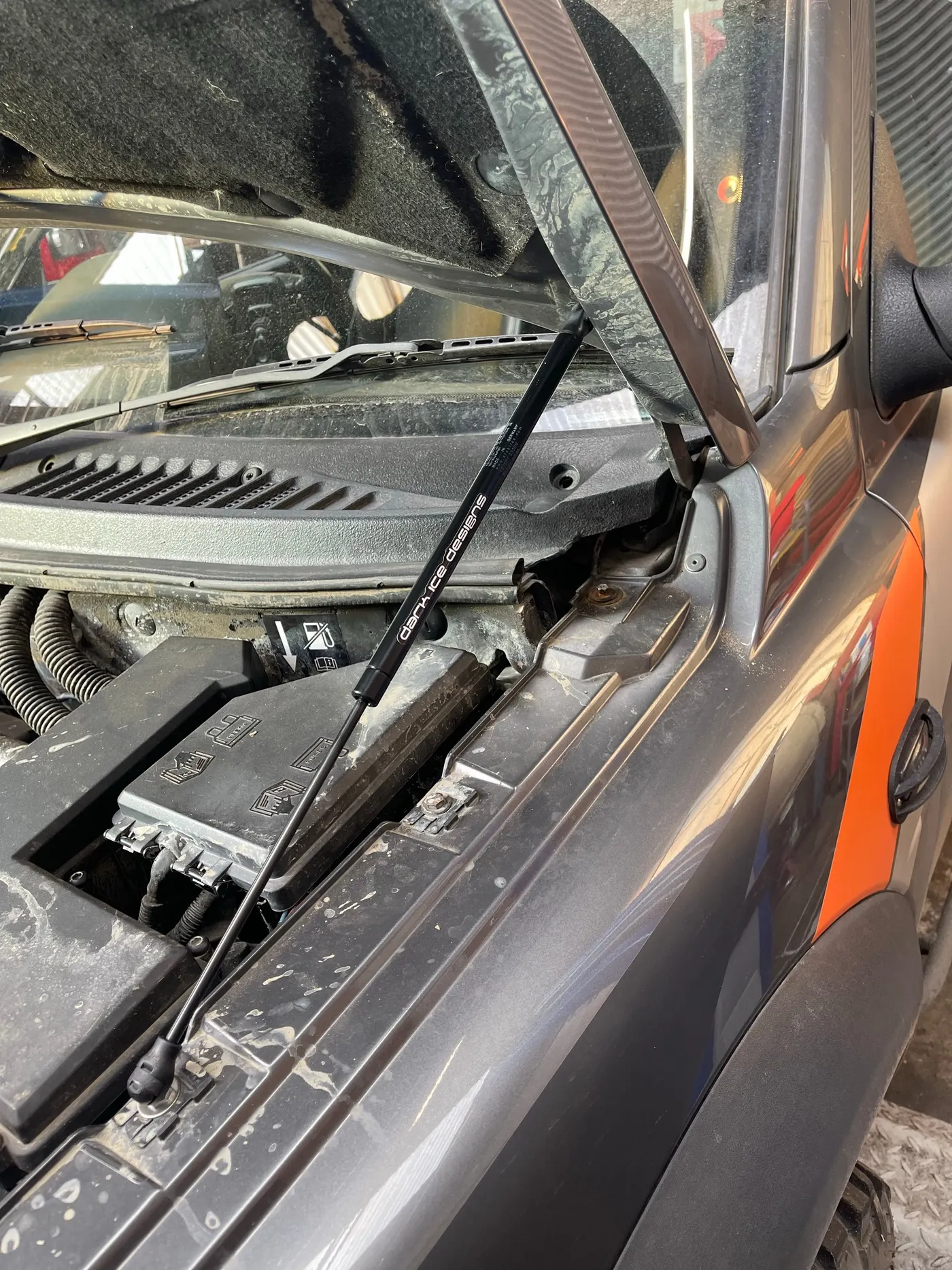
- Support Rod - Most of the car manufacturers are used this only because of simpler and cheaper when compare to the gas stay . In this method we have to lift the hood by our own strength and fix the free end of the support rod to the provision which is given in the engine compartment or hood . It is suitable for the light weight and quite smaller hoods .
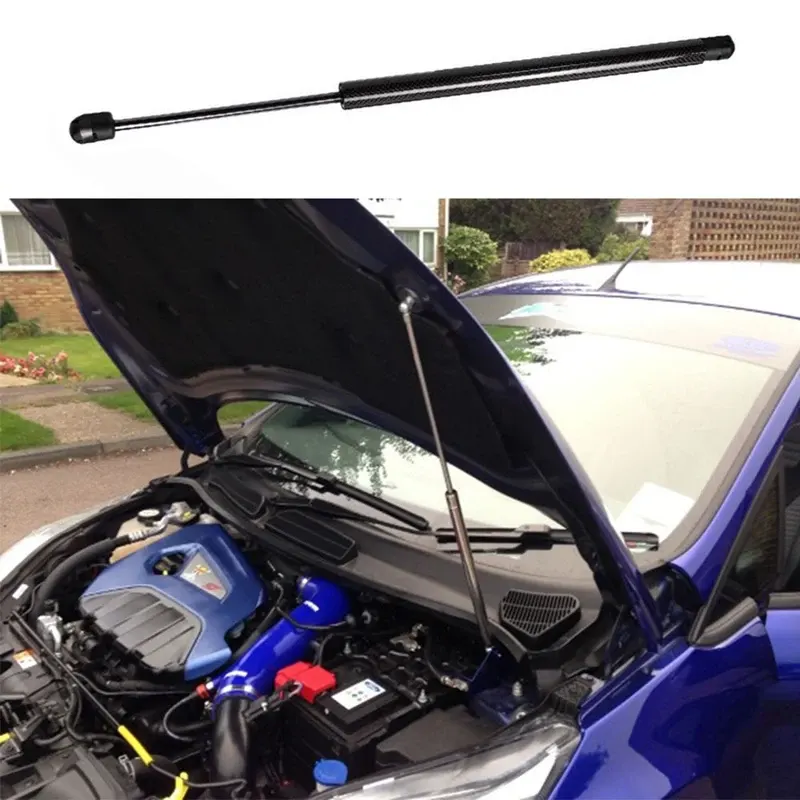
- Gas Stay - In this method , once we lift little bit the hood , then the gas stay can completly lift the hood entirely . It can be done by the gas spring which is in inside the gas stay . If the hood which is more heavier and longer , then this gas stay is pretty much makes easier the lifting process .
Mastic's :
- Mastics are the kind of sealant which is used to combine the outer panel of the hood to the inner panel of the hood by applying between them . When in applying condition it is in the form of liquid substance with high viscosity like paste , then it is placed in worm condition , it turn into rubber like solid state . So that it can be the damping resistance and reduces the noises and all .
Master section-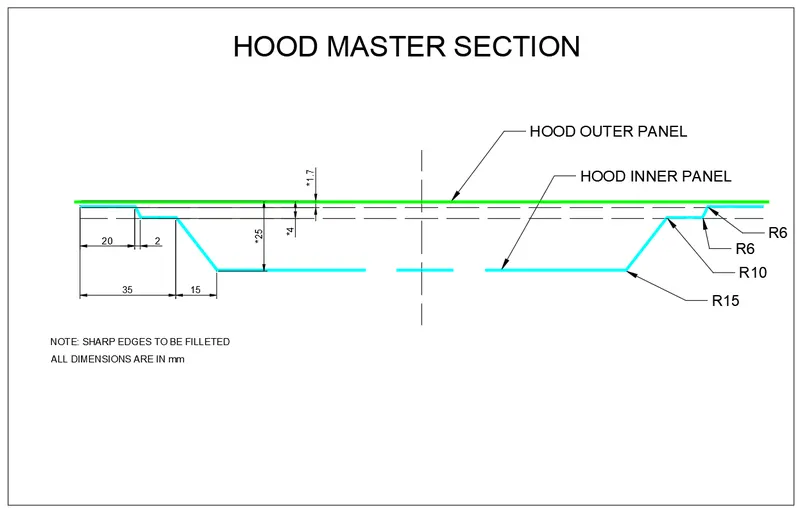
Outer panel
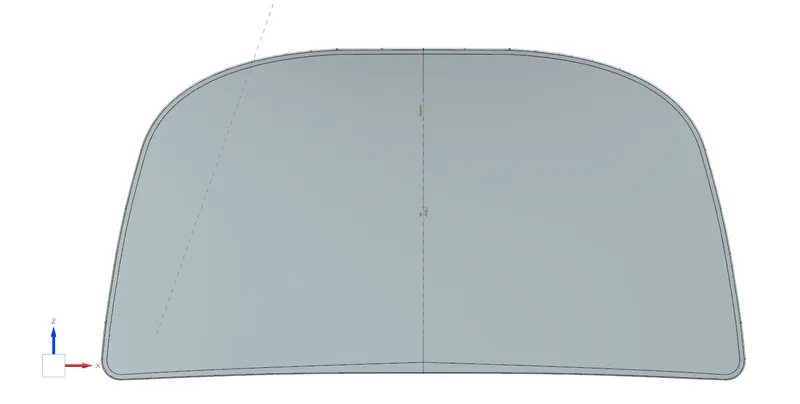
- We can also call it as cover of inner panel. It is the part, which gives luxurious look to the hood or bonnet. Outer & inner panel can not join by any welding process like spot welding or rivet, which spoil the outer look of a car. The outer panel is generally extracted model from the prototype design.
Inner panel
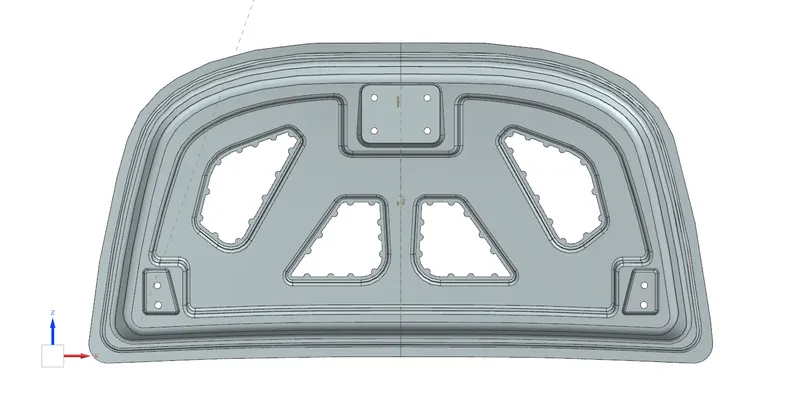
- Hood inner panel for a vehicle is provided to improve rigidity, durability, and pedestrian protecting performance by comprising a composite structure in which a multi-cone structure and a frame structure are individually arranged on the front and the rear.
Hinge Assembly
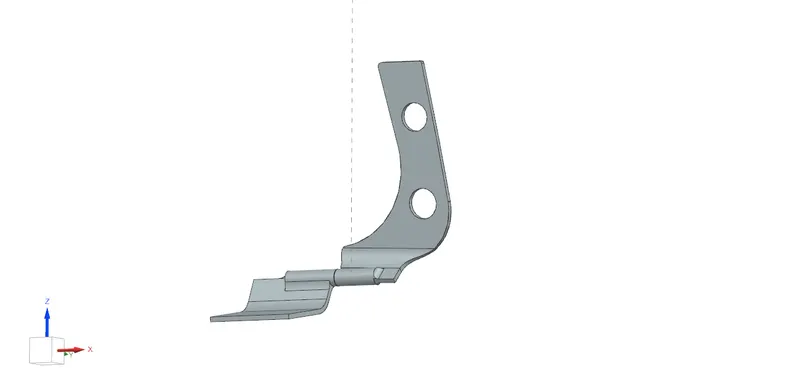
- Hinge is a component that fixes the hood to the fenders of the car. The latch must be fixed perpendicular to the hinge axis so that the hood opens or closes properly.
Striker Assembly
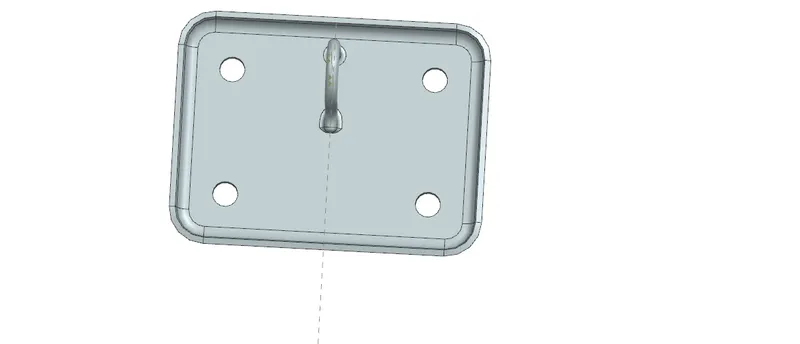
- Striker is a componet that is used for locking and unlocking hood (bonnet) of a vehicle.
Sheet Metal Operations :
1. Hemming :
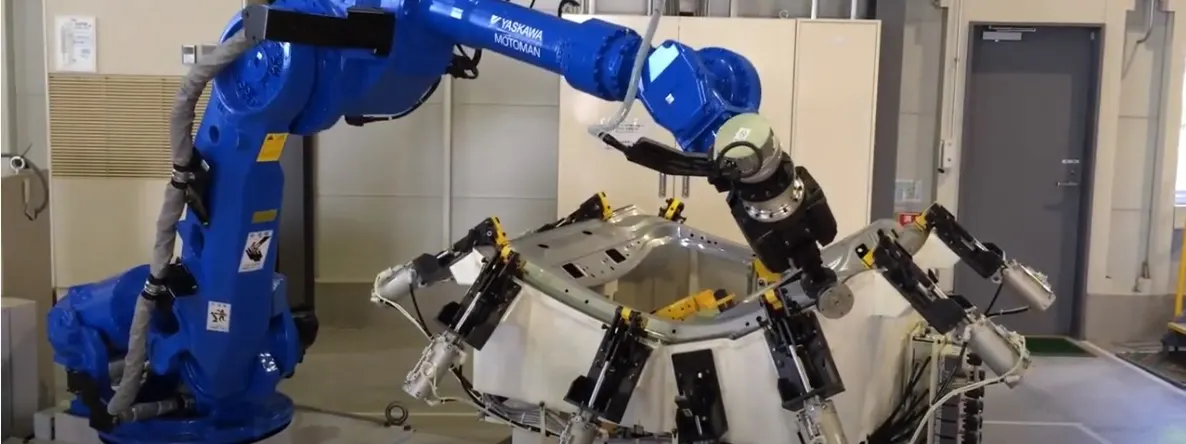
- Hemming is used to fit the parts together . It can be done by the edges of one part is to be folded over the other part to fix within it . This operation is done by using the roller .
- Hoods , Doors , Boot lids of the automobile components are made by the hemming operation .
- There are two types of hemming process are there ,
- Conventional die hemming - In this method the hemming process is done by using the hemming die to fold the sheet metal edge by the entire length . entire lend
- Roll Hemming - In this method Rollers are used to done the process and at the same time two or more rollers are fold the sheet metal from the different location of the sheet metal edge to achieve the hemming which is close to accurate . Most of the automobile manufacturer are following the Roll hemming method due to its easier method when compare to the conventional die hemming .
- In Hood , the outer panel is subjected to the hemming operation which means that the outer panel edges is folded and roll it back to the underneath of the inner panel . The corner of the outer panel edge has to be trimmed , Because while hemming process the roller transfer pressure to the outer panel edge to fold it and roll it back , so that it may cause the problem that the sheet metal may break .
CONVENTIONAL DIE HEMMING:-
ROLL HEMMING:-
2 Deep Drawing :
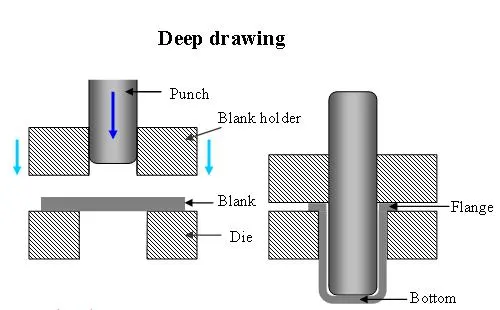
- Deep Drawing is the sheet metal forming process . It is quite similar as punching process .
- Deep Drawing - The required sheet metal is to be clamped and the die with the required shape has to be kept below the sheet metal , then the sheet metal blank is drawn into that forming die by the pressure applied by the punch .
3. Embossing :
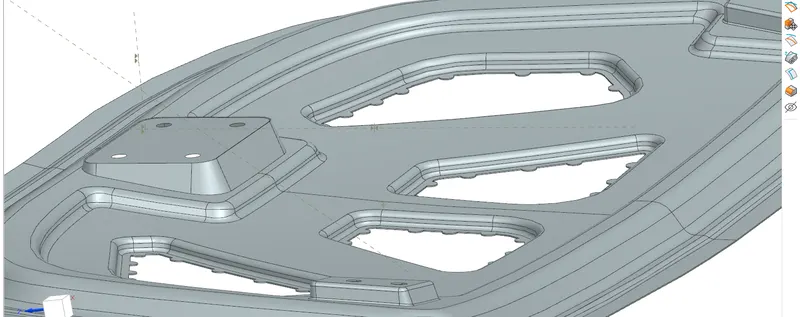
- Emboosing is kind of stamping process . It is the process of appliying the pressure to the flat sheet metal by the forming tool to create the projection on that sheet metal wherever required .
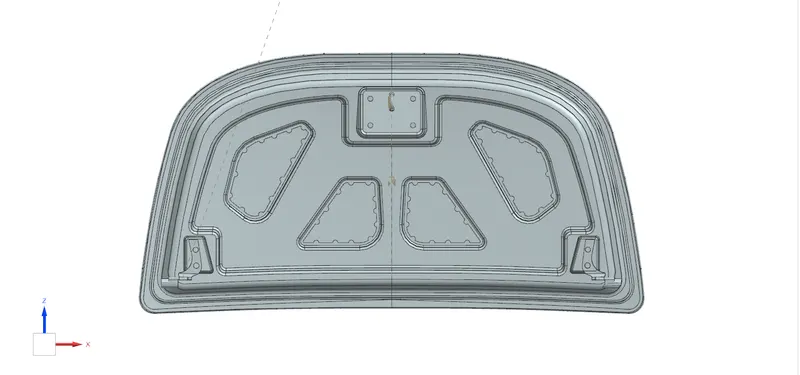
- In Hood design , the inner panel of the hood has more embosses to improving the strengthening of the panel . Based on the design structure , the embosses are created or we can say projected on the inner panel sheet metal .
4. Piercing :
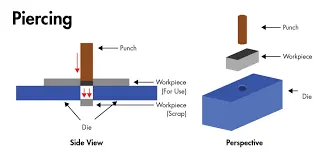
- Piercing is the kind of shearing process in which the unwanted material with a particular shapes are removed from the sheet metal by using the blanking punch and dies .
Position of Striker and Hinge Assembly
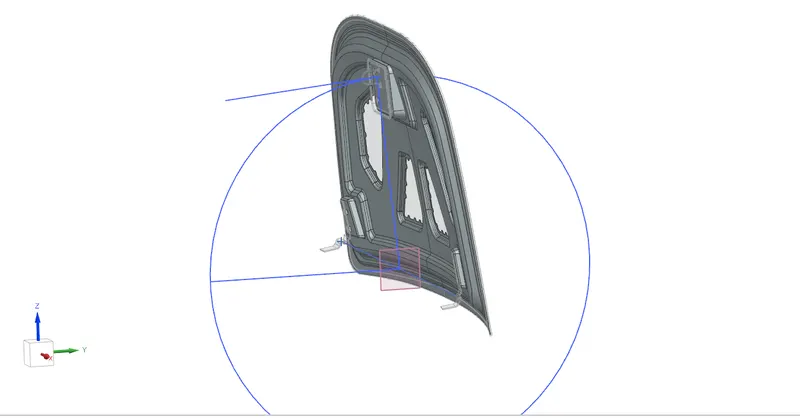
- The attachment of striker to the inner panel of the hood is done by following the certain steps .
- For that Initially the the hinge is roughly attached / assembled to the each outwards end of the inner panel throught the hinge W THAT reinforcement . Then a line is created along the axis of the two hinges .
- A circle is created at the midpoint of that line and another line is Steven created tangent to this circle and then the ref line has created within ge the circle with particular angle . After that based on the required striker on the pic position the circle diameter and the linge angle has been changed . Also an another line has been created parallel to the striker hook from the striking point of the striker .
- Then the assemble the both lines and striker to the inner panel through striker reinforcement using the assembly constraints.
Final Assembly:-
Conclusion:-
The designing of the hood is completed as per required dimensions and keeping safety measurements as required by the manufacturer