Hood design-Week 2
OBJECTIVE
To develop the hood considering the safety, functionality and manufacturability, following the industrial standards.
Hood Design
This project explains the designing, and the concepts for designing front-mounted engine’s hood.
The hood or bonnet is the hinged cover over the engine of motor vehicles that allows access to the engine compartment, or trunk for maintenance and repair. The material used to manufacture hood will include Aluminium, Steel and for perfomance seried cars even carbonfiber parts are included in manufacturing considering its light weight property and its high tensile strength.
Factors affecting hood design :
- Aerodynamics
The design of the hood can greatly affect the aerodynamics of the car, which in turn affects fuel efficiency and performance. Hoods with a low profile and smooth contours can reduce drag and improve airflow, while raised hoods can create a turbulence that negatively impacts the car's performance.
- Styling
The hood is one of the most visible parts of the car, and its design can greatly impact the overall aesthetics of the vehicle. Hood designs can range from sleek and subtle to aggressive and bold.
- Engine placement and size
The location and size of the engine can affect the design of the hood. Cars with larger engines may require a taller hood to accommodate them, while cars with engines located towards the back may have shorter hoods.
- Safety regulations
Hoods must meet safety regulations in order to protect passengers in the event of a collision. The hood latch and hinge design must be able to withstand impact and prevent the hood from flying open during a crash.
- Pedestrian safety
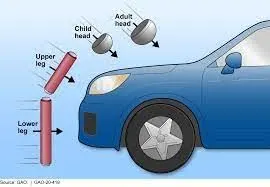
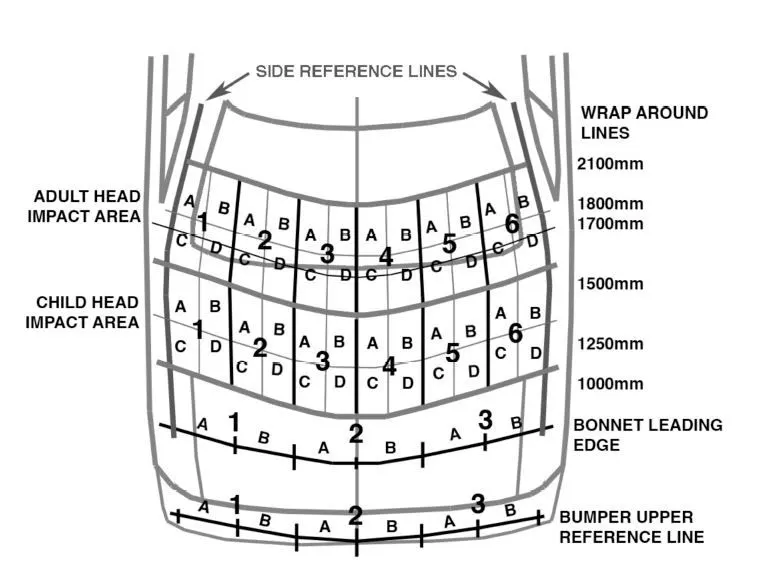
Pedestrian safety is a crucial concern which need to consider while designins a hood. We have proper meashures in this consideration. Ensuring crumple zones that can absorb the force of a collision and reduce the likelihood of severe injury to a pedestrian.
hoods are made of materials that are more flexible or malleable, which can also help to reduce the impact force.
Inorder to reduce the head impact, Thickness of the hood panel is also considered.
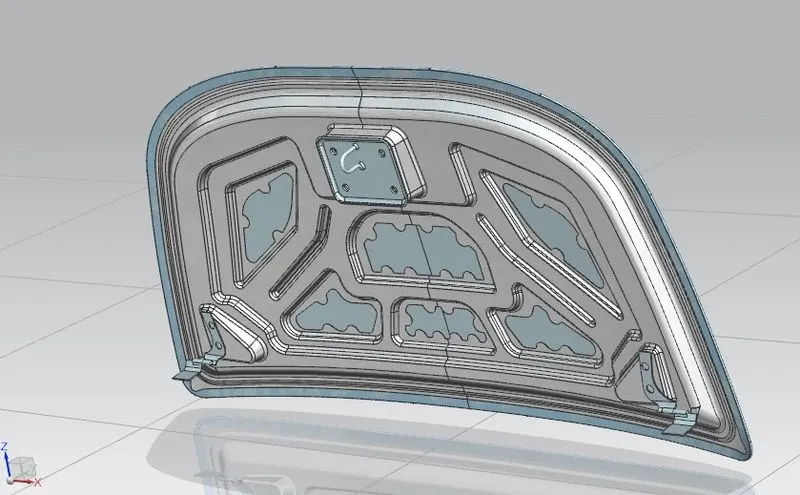
Design of Car Hood using NX CAD Software
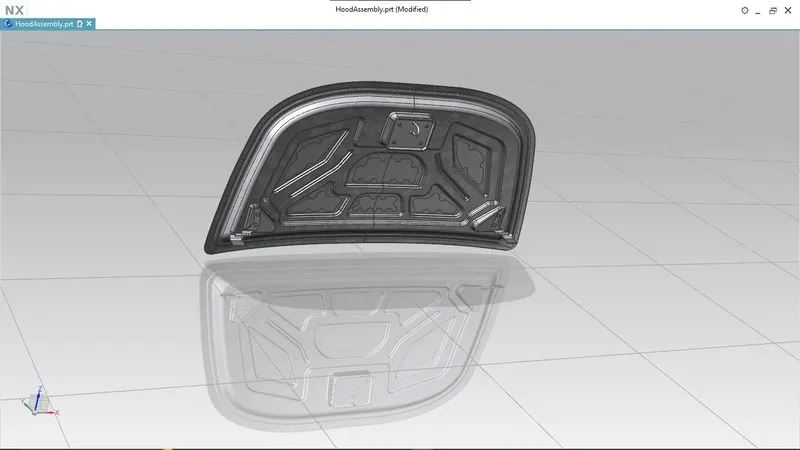
Parts in Hood Assembly:
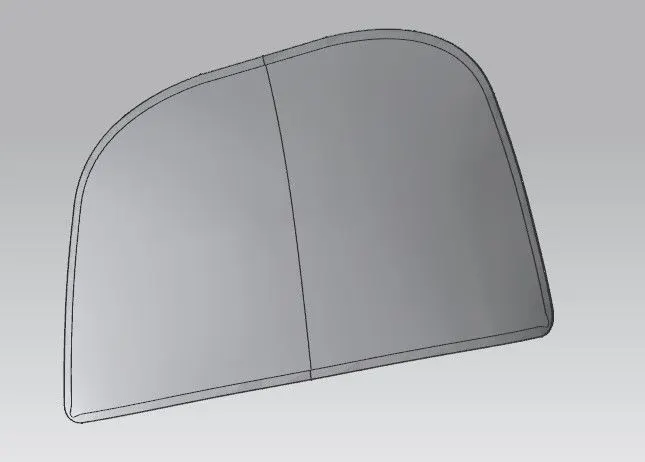
- Hood Outer panel
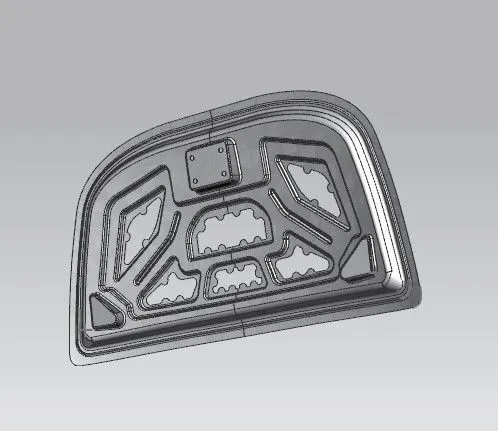
- Hood Inner Panel
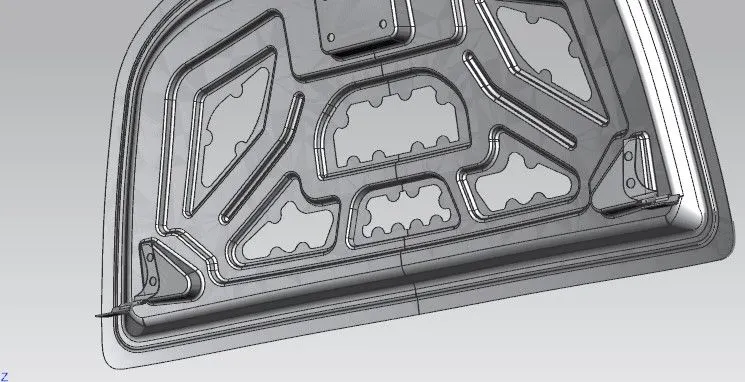
- Hinge Assembly
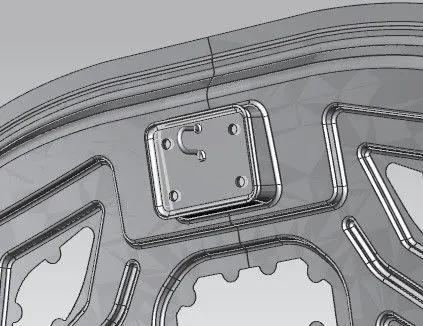
- Striker
Embossing Operation
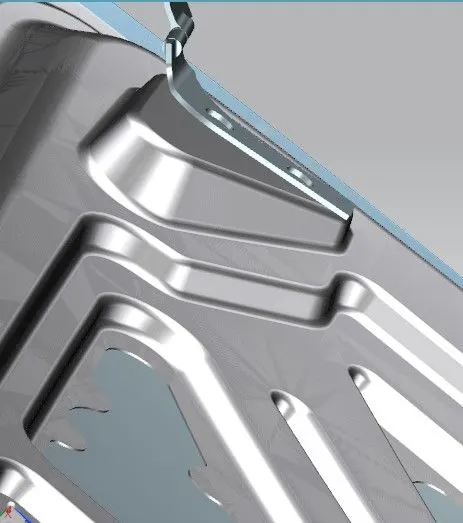
- Embossing enables you to highlight important elements of your printed products, such as letters (company name) and designs (your corporate logo), to make sure they stand out. Embossing can also be combined with foil stamping to help create the effect of a 3d image on printed paper that really shines.
- Embossing operation is commonly accomplished with a combination of heat and pressure on the sheet metal, depending on what type of embossing is required.
Hemming Operation
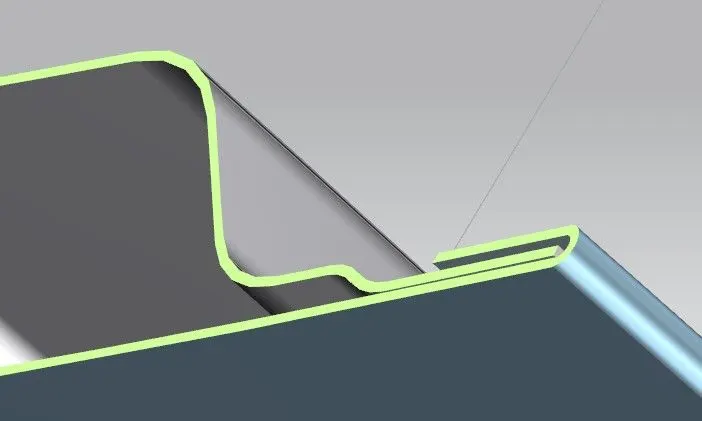
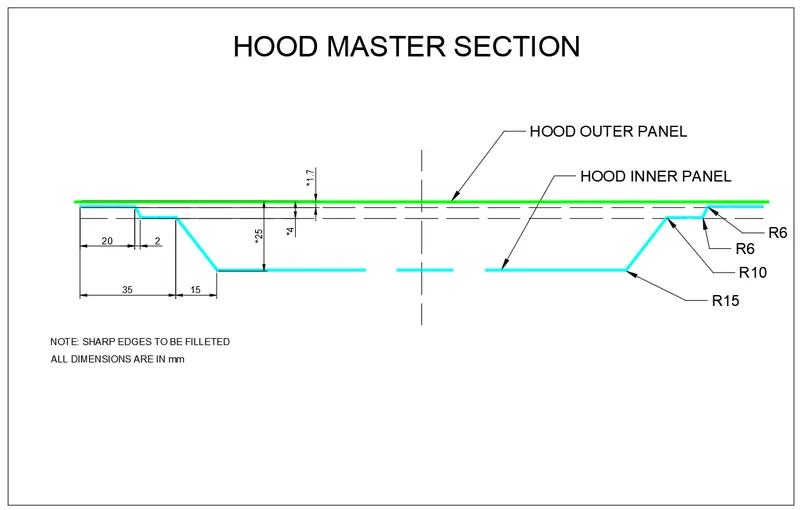
- Hemming is a sheet metal forming process in which sheets are joined by bending. Automotive body panels and automotive parts such as deck-lids, trunk-lids, doors, hoods, and tailgates are formed by hemming processes.
- Roll hemming is carried out incrementally with a hemming roller. An industrial robot guides the hemming roller and forms the flange.
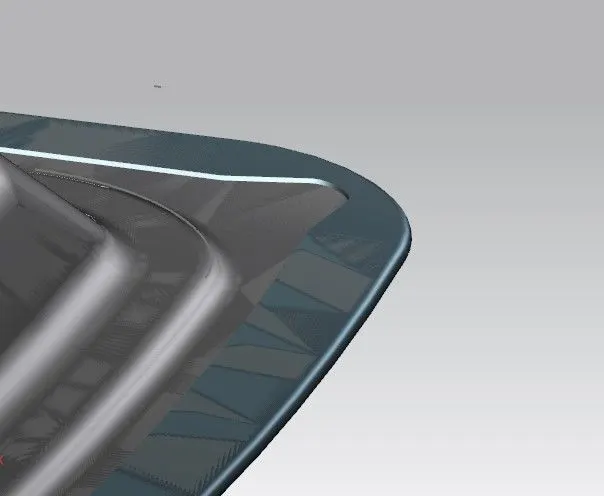 A relief angle is formed as a product of hem when attaining at the corner of the sheet metals.
Latch trajectory motion
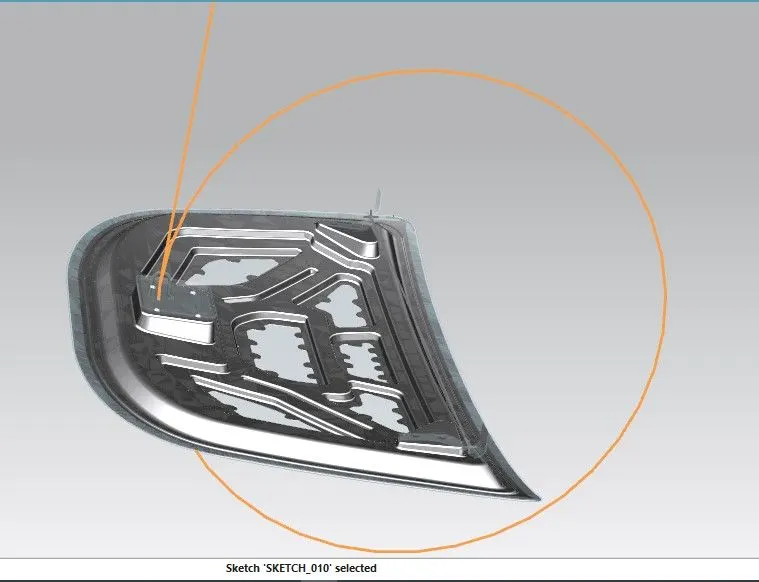
While opening or closing the hood, the latch must be perfectly aligned to the fixing or striker point. For that, the latches trajectory must be perpendicular to the hinge axis.
Impact Force Distribution In Hood design
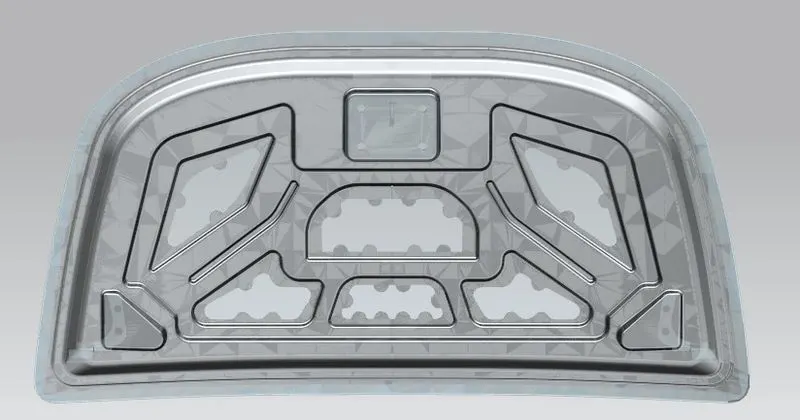
Draft Analysis
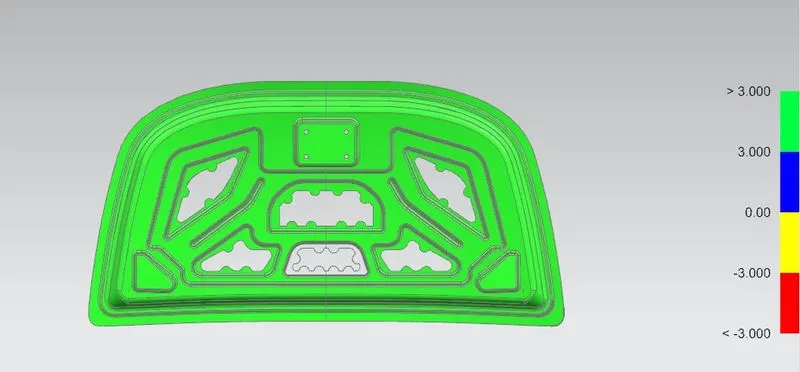
Draft angle = 5 degree
we can see that there are no negative drafts by the inner panel, hence the design is positive and ready to manufactured.
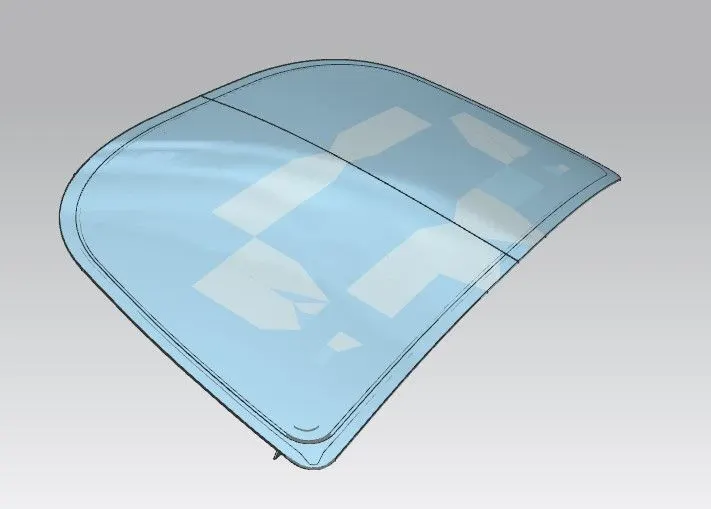
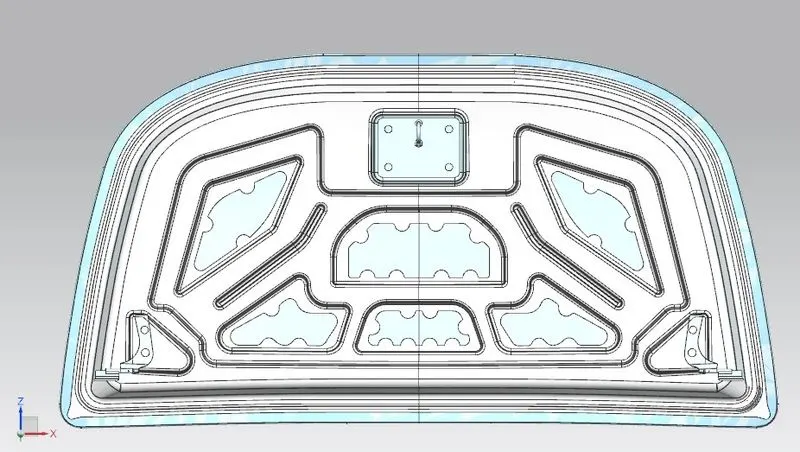
Conclusion
We have designed a hood that falls under the rules and regulations of the manufacturer's standards.