Hood design-Week 2
CAR HOOD DESIGN
Aim :- To design a Hood outer panel, inner panel and the necessary reinforcements by the given Master section and design parameters.
MASTER SECTION
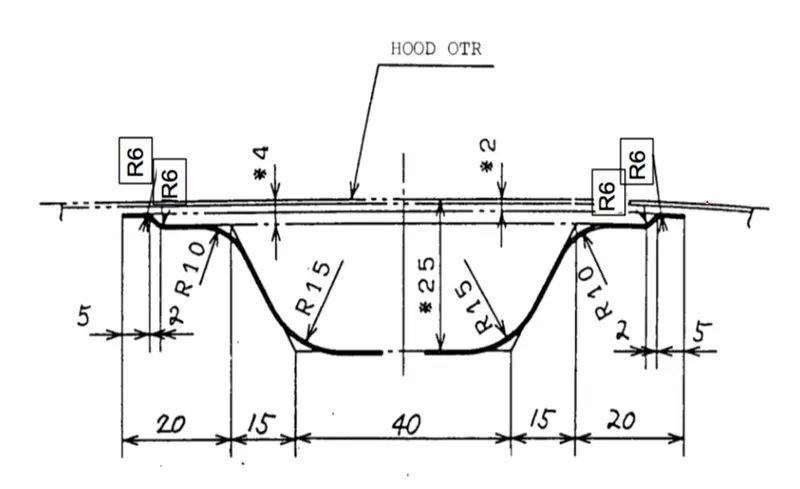
BONNET HOOD
- The hood or bonnet is the hinged cover over the engine of motor vehicles. Hoods can open to allow access to the engine compartment, or trunk on rear-engine and some mid-engine vehicles for maintenance and repair.
- Hood is the component which is placed over the engine compartment . The design of the hood is not only to enhance the look of the car , it also improves the aerodynamics of the car and the proper design which ensure the pedestrain safety .
Car Hood has the following components
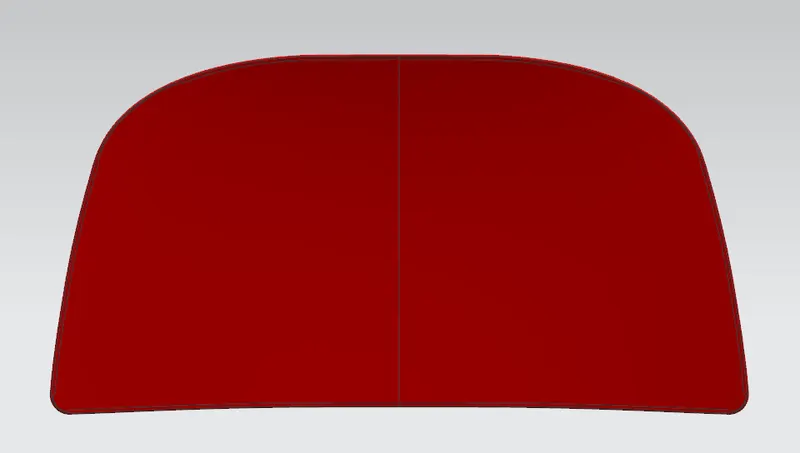
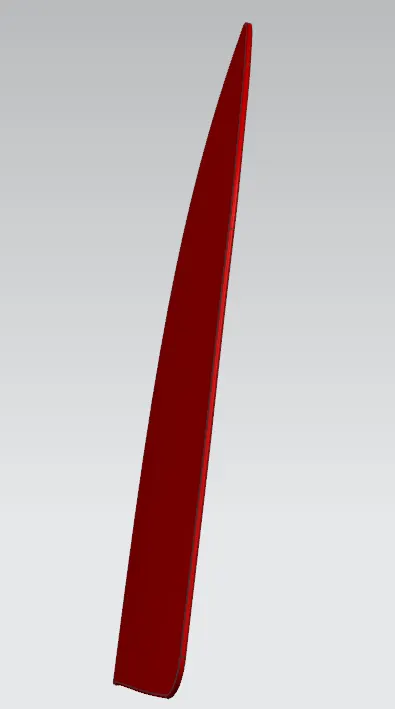
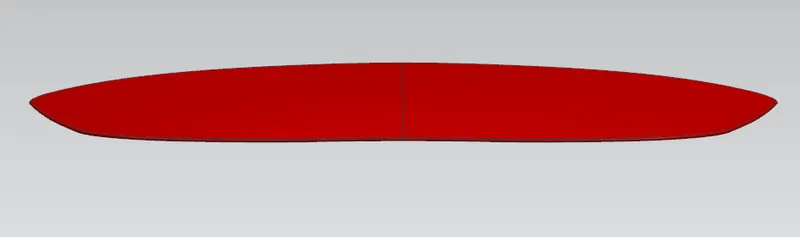
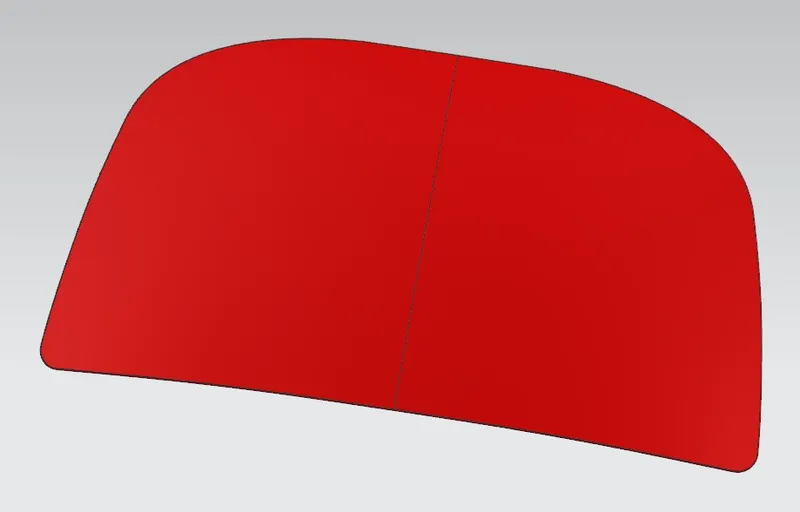
- Outer Panel:- Outer Panel is the part of the hood to makes the car in a very good aesthetic proportion. So that the outer panel is perfectly made insense to achieve the aesthatic requirement . So that , the sheet metal operation result which is visible on the outer panel or it reduces the aesthatic value means , those operations are strictly not to be followed to make the outer panel . That's why the hemming process is used to join the outer panel with the inner panel , instead of using welding methods .By considering the given Outer Panel thickness ( 0.75mm ) and using the outer panel styling surface the outer panel has been made as below.
- Hood inner panel:-
- Inner Panel is the major part that ensures the rigidity of the hood and it is used to diverts the impact to outwards of the hood however possible when the collision occurs . It is can be achieved by the good inner panel design and the emboss direction in the inner panel .
- Lot of design changes and researches are done and being carried out in the inner panel only to achieve the pedestrain safety and the passenger safety to make the standards .
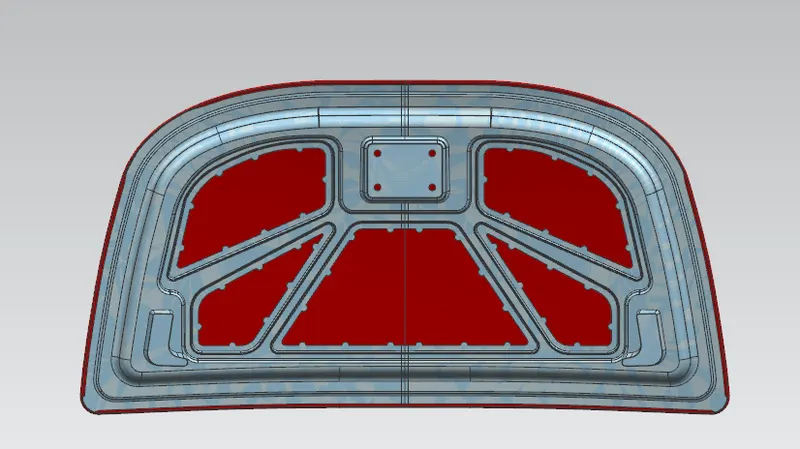
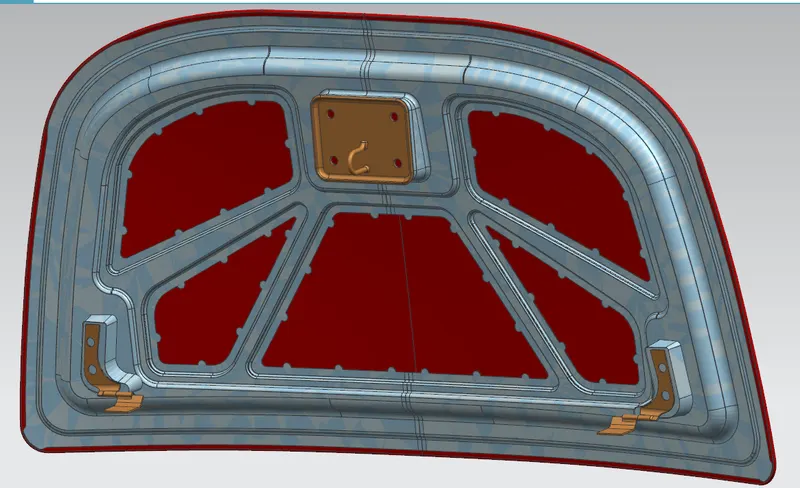
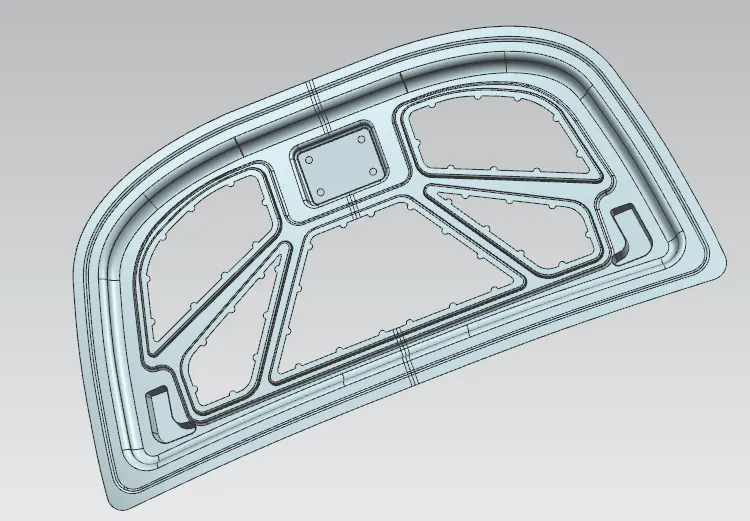
- In this inner panel , the required holes are made to transport the hood from one station to other and fix the hood in fixture by using this hole as budding holes . Also the inner panel has the embosses and mastic points . By considering the given Inner Panel thickness ( 0.75mm ) and offseting the outer panel styling surface with the given offset data , the Inner Panel has been made with the embosses and mastic points as below.
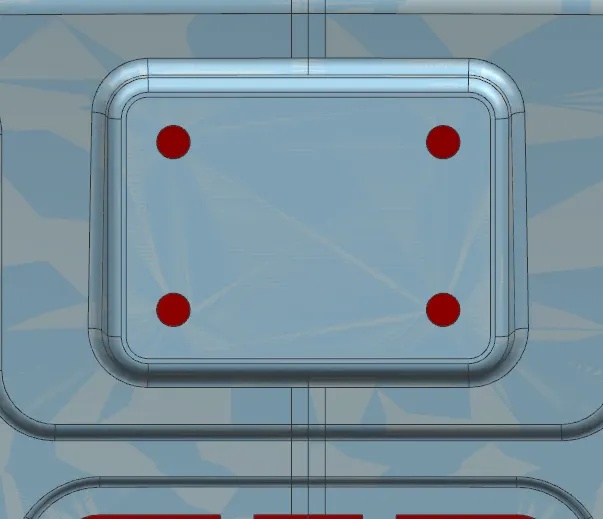
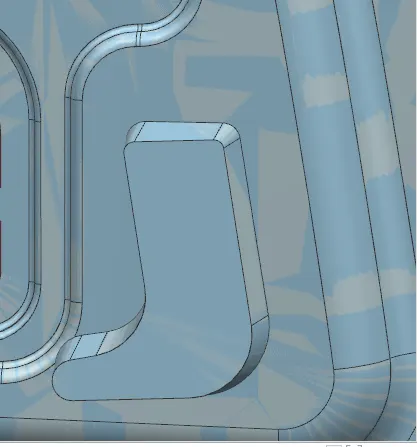
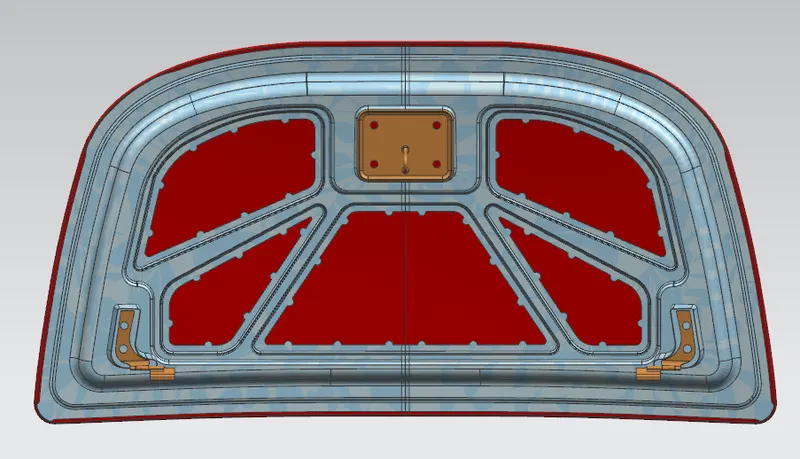
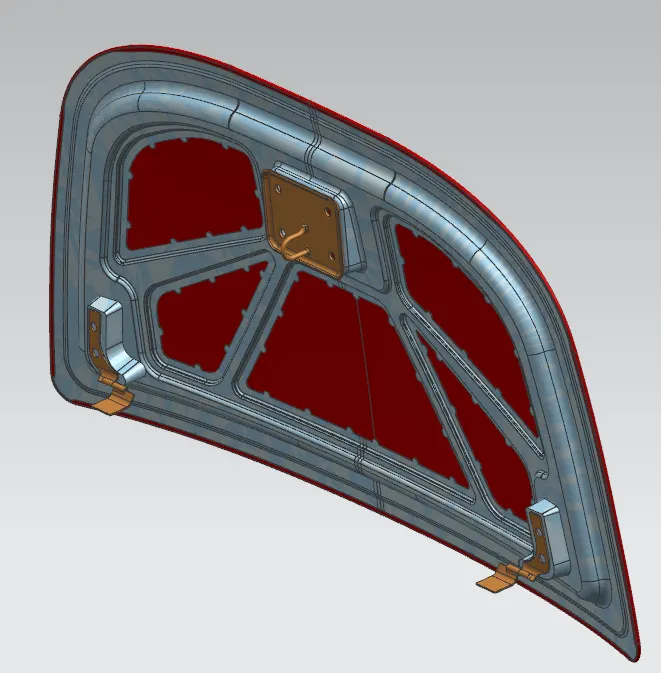
- Reinforcement:- The Striker and Hinges are attached at the lower side of the inner panel. It it can be done by directly then more stress can act at the particular area in the inner panel, it may cause deformation of the inner panel at that particular region. So that the reinforcement comes in and placed between the striker and the hood, hinge and the hood. It can able to reduce to deformation and strengthening the inner panel at that particular region.
- Striker-Latch and Hinge Asm:-
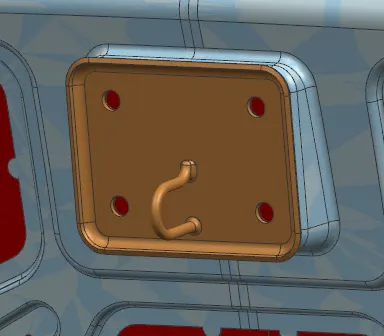
- Striker is the part which is used to hold the hood with the engine compartment by using the latch which it is attached in the engine compartment, when the hood not require to open up. The striket is attached to the bottom of the inner panel and it hits the latch and locked with it, when the hood is dropped down.
- There is lever which is provided inside the cabin to the driver to release the latch pressure. Once it can be done, the hood will opens up in a inch, then we can ableto open the hood.
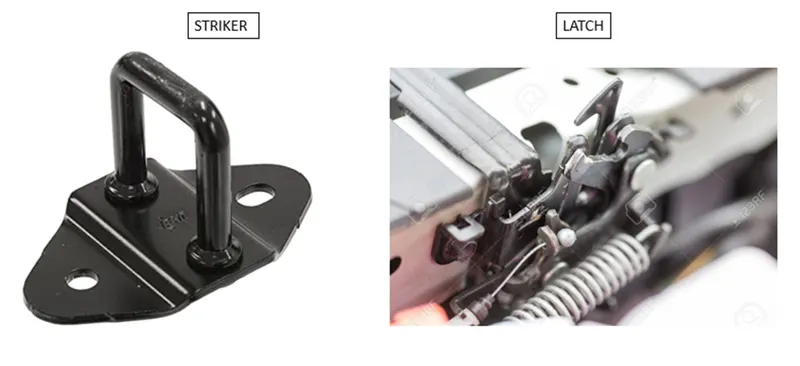
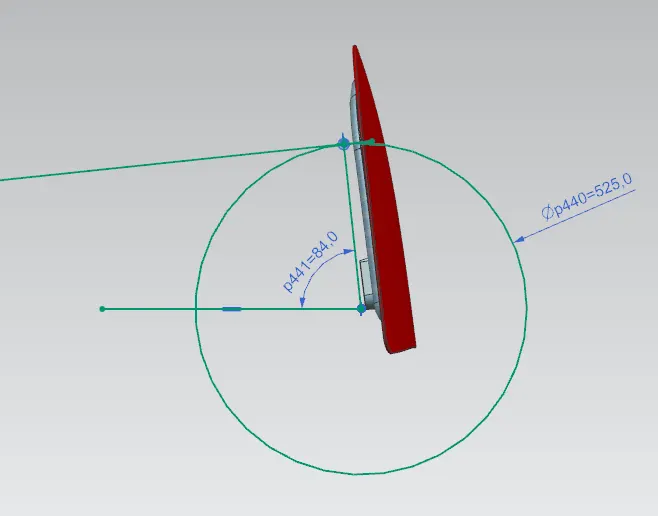
LATCH TRAJECTORY:- The latch trajectory is the path which the striker will follow when the hood is open/closed while pivoting on the hinge axis. The latch trajectory is taken as a circle with the hinge axis as the center of the circle. The striker is placed 90 degree such that it is tangent to the circle.
- Hinge Assembly:-
- It is used to fix the hood to the engine compartment.
- For any component has to be open and close with an axis, then hinge plays a major role. It has two simple parts(one is hood side hinge, another one is engine compartment side hinge) and assembled with the single axis.
- Hinge Assembly is attached at the each Outwards end of the hood and the engine compartment.
The process involved in designing hood as a sheet metaloperations
- Hemming
- Punch cutting or piercing
- Embossing
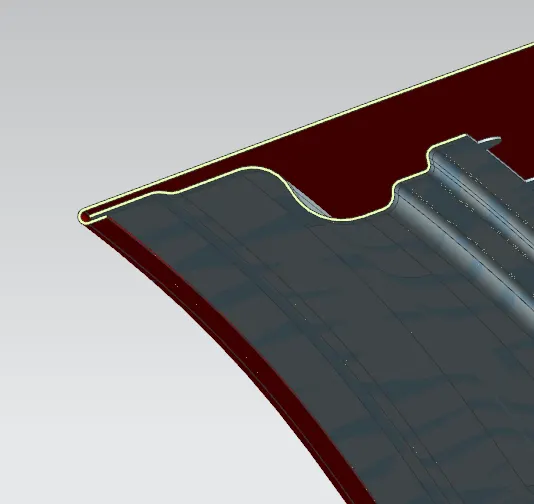
HEMMING:-Hemming is a sheet metal forming process in which sheets are joined by bending it to 180°. Automotive body panels and automotive parts such as deck-lids, trunk-lids, doors, hoods and tailgates are formed by hemming process. In this process, usually a sheet is bent with the help of inner sheet in three different stages.
- Roll hemming is carried out incrementally with a hemming An industrial robot guides the hemming roller & forms the flange.Roll hemming operation can also be divided into several pre-hemming & final hemming process steps.
- Coventional die hemming is suitable for mass producti In die hemming, the flange is folded over the entire length with a hemming tool. Normally the actual hemming is a result of a forming operation in which the flange is formed with a hemming tool after the drawing & trimming operations have been completed.
EMBOSSING:-
- The sheet metal embossing operat ion is commonly accomplished with a combination of heat & pressure on the sheet metal, depending on what type of embossing is required.
- A sheet metal is drawn through the male & female roller dies,producing a pattern or design on the sheet metal. Depending on the roller dies used, different patterns can be produced on the sheet metal.
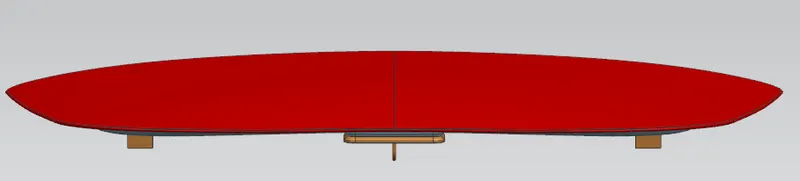
FINAL HOOD ASSEMBILY
CONCLUSION
Finally, the hood design has been completed by considering the criteria, dimensions, procedures and standards. By the process of this design, have learnt about the hood mountings, sheet metal operations like hemming, embossing, deep drawing, piercing, Pedestrain safety.