Hood design-Week 2
Aim :- To design a Hood outer panel, inner panel and the necessary reinforcements by the given Master section and design parameters.
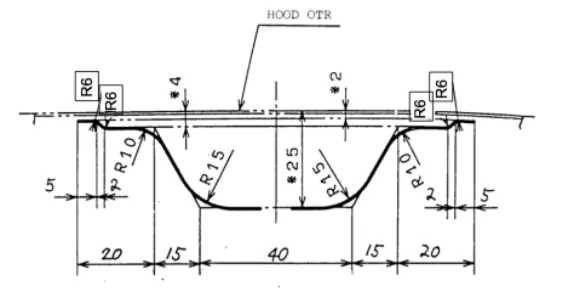
Master Section :- Master section is a predefined sketch which will be adaptable for different situations.
Four main parts of Hood assembly are as follows
- Outer Panel
- Inner Panel
- Latch and striker system
- Hinge system
Hood Thickness Information
- Outer Panel Thickness = 0.75mm
- Inner Panel Thickness = 0.75mm
- Reinforcement Thickness = 1.5m
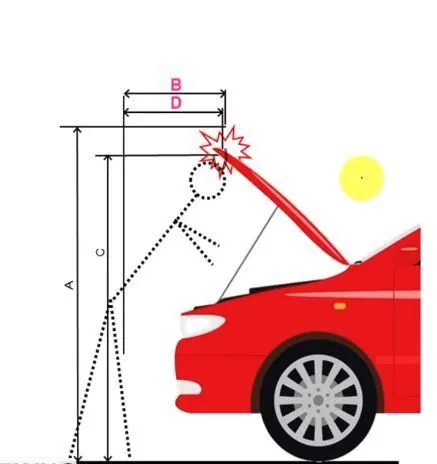
Design considerations :- The human comfort factor for automobile design is first consideration. It is a method to safeguard and protect space for the human user and necessary components that make up the vehicle being designed. All safety regulations are ensured during this process. Ergonomical consideration consist of Hood clearance, Hood Opening angle and location of support rod or gas stay.Hood opening angle is different for different regions or countries. It is decided by the average height of the human in that particular country.
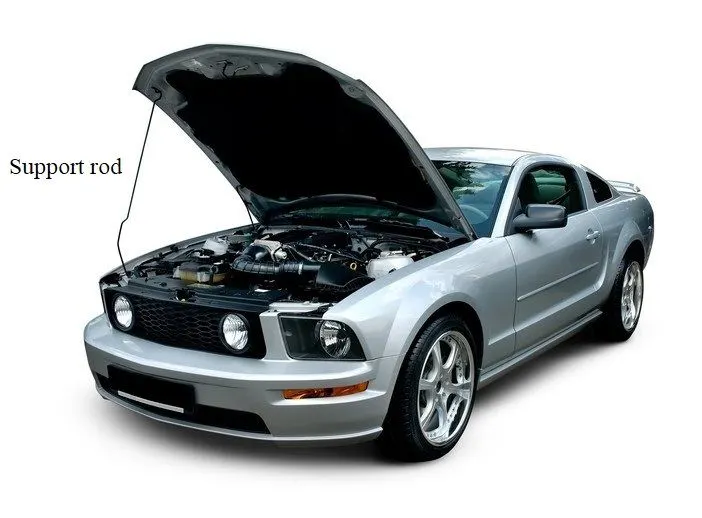
There are two types of hood stay, support rod and Gas stay which holds the position of hood at desired angle.
1. Support rod :- It is a simple metallic rod. It is not usually made linear to increase rigidity of rod but the length from line connecting support rod retaining point with retain point on body side to maximum bending point should be less than 35mm to ensure the strength of support rod. It should have sufficient clearance with other engine components to avoid rattling noise. Gourmets are provided to keep the support rod in rest condition.
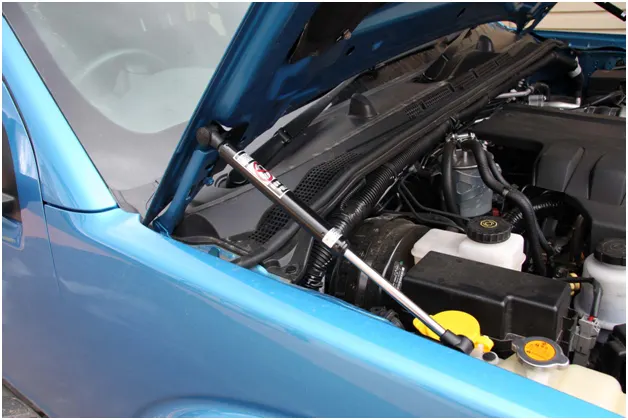
(2) Gas Stay :- It is a device used for supporting the engine hood of a vehicle in its open position by means of an actuator which is activated by gas. In case of gas stay only initial force is required to open the hood then it automatically opens at desired angle with the extension of pneumatic piston in cylinder of gas stay assembly.
Components :-
Hood :- Car hood/bonnet is a hinged cover that rests over the engine in a front-engine car. A latch is provided under the hood in order to prevent accidental opening during driving. Purpose of hood is to provide access to the engine and battery for repair and maintenance. It also protects these parts from direct sunlight and dust.
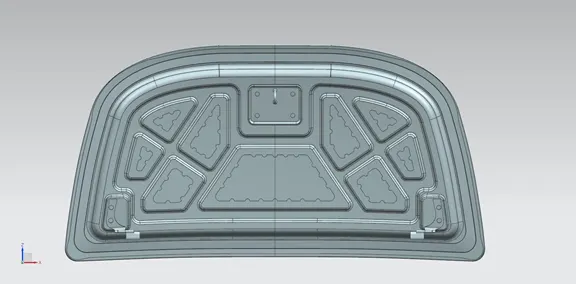
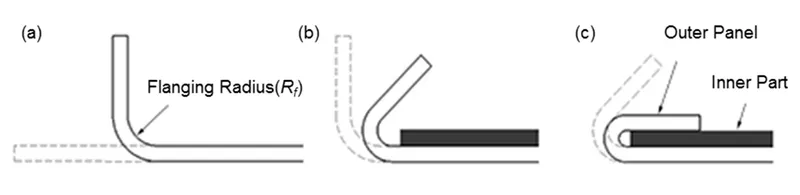
Hood outer panel :- Outer panels are the aesthetic elements of a car. It is the styling team who provides the skin for the outer panel. The shape, position and size of the hood should satisfy the safety norms. So while designing the hood we should give more importance to pedestrian safety. The outer panel is attached to the inner panel by hemming. So, it is necessary to provide required hemming flange and reliefs for the hemming operation. We also provide mastic sealants between outer panel and inner panel to reduce vibration.
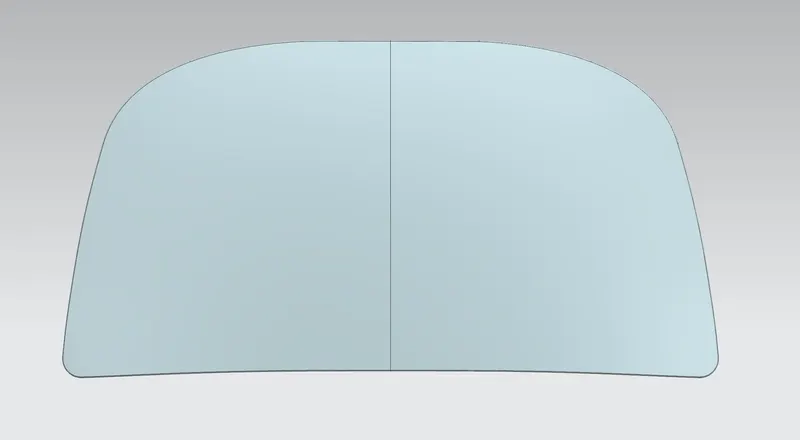
Hood inner Panel :- Hood Inner panel is main functional part in hood design. It gives structural support and strength to the outer panel of Hood. The outer and inner panels of the Hood are typically attached together using a hemming operation at the edges.
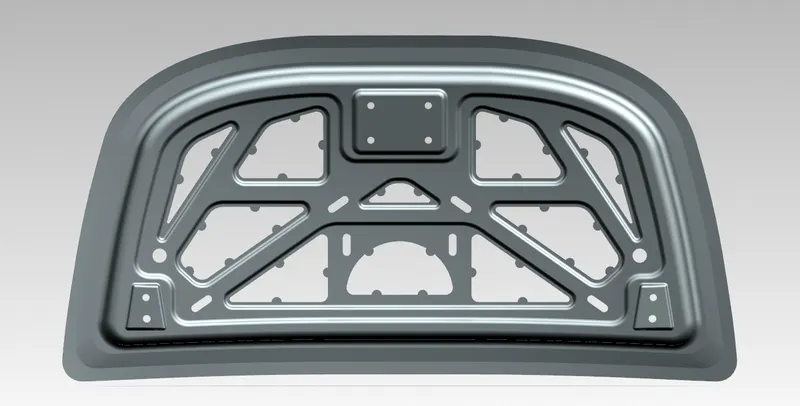
Latch and striker :- Latch and striker mechanism is provided to lock the hood, in order to prevent accidental opening of the hood during driving. The latch is present on the engine compartment while the striker is attached to inner part of hood.
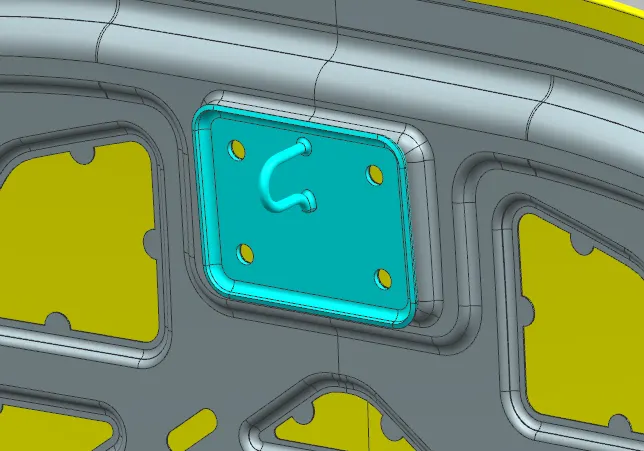
Hinge System :- The hinges are used to guide and hold the hood when open & close. Hinge assembly consists of two parts one is connected to the hood inner panel and second is connected to the vehicle body.
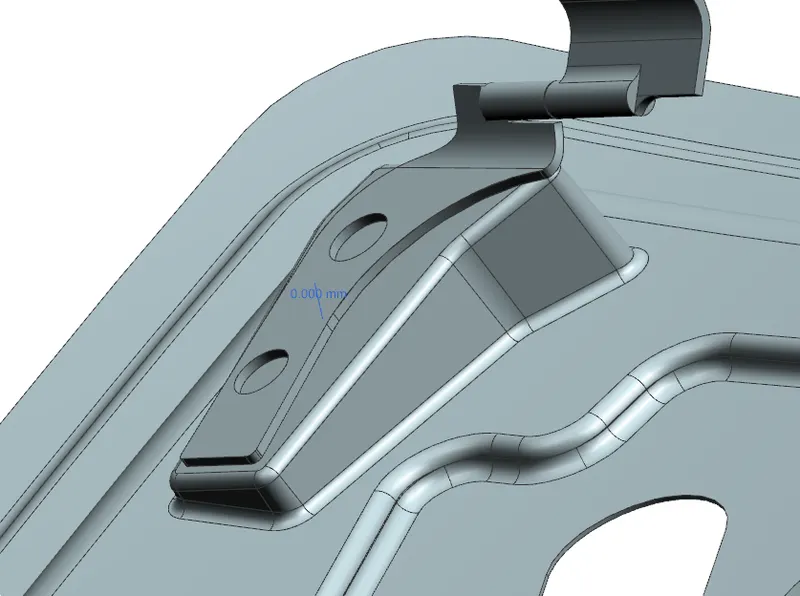
Reinforcement :- Reinforcement are provided mainly in hinge and latch region. When hinge and latch assemblies are attached to inner panel, strength of that area reduces locally so we add some additional material to increase the strength of the area locally. Thickness of reinforcement material is provided according to the design requirements. In this project, 1.5mm thickness has been given to both latch and hinge reinforcement.
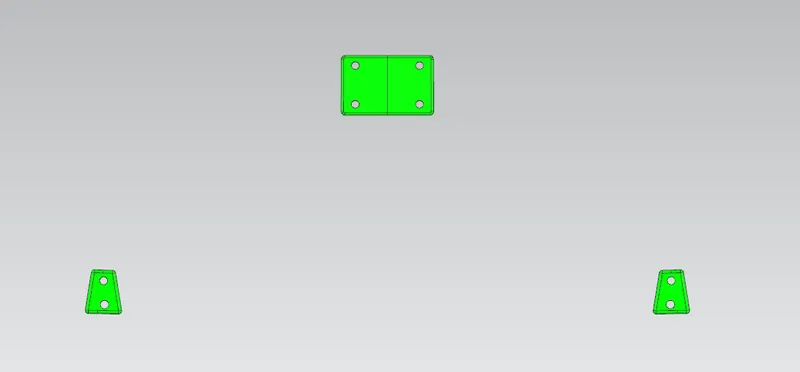
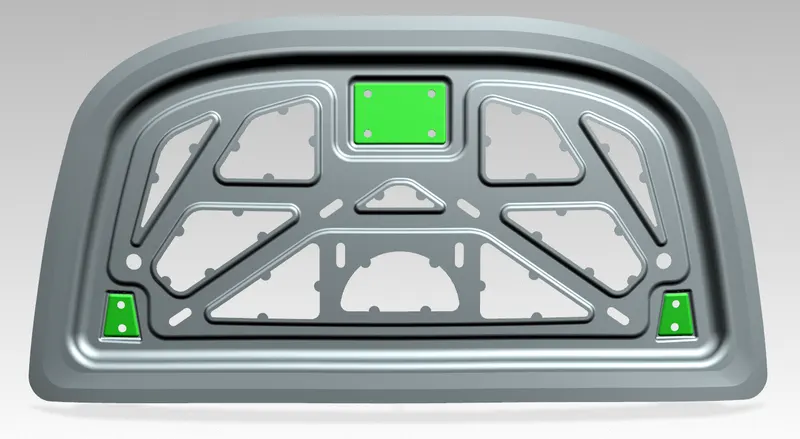
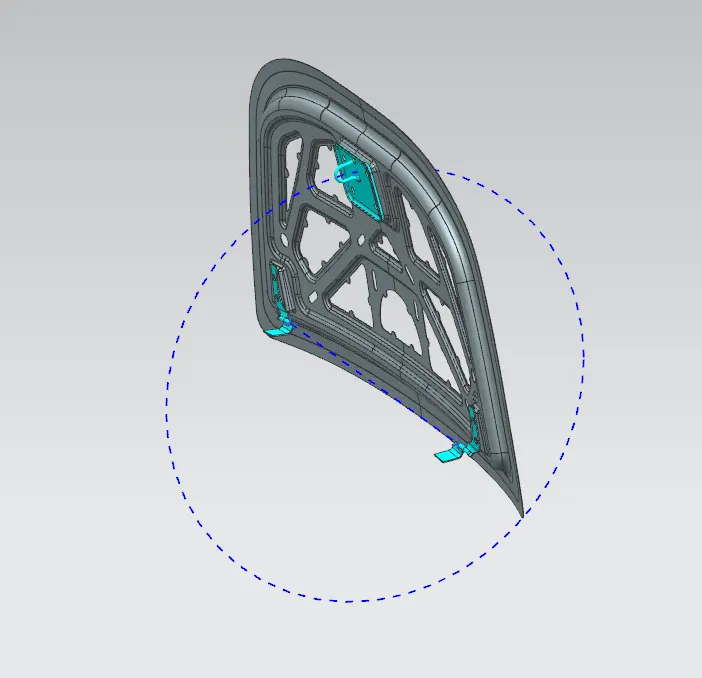
Latch trajectory :- Circle is drawn from the hinge axis center so we can finalize the position of latch striker. For proper mating, the tip of the striker should be tangential to the latch trajectory. the position of latch striker follows the path of this circle.
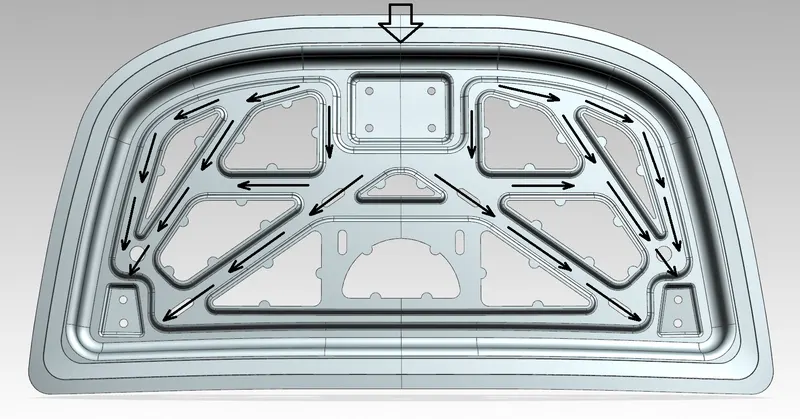
Emboss Definition :- Embosses are provided to increase the strength of inner panel. Shape of embosses also determines the direction of collision force distribution and the collision forces should be directed towards outward side of the car (towards hinge side).
Hemming :- Hemming is a forming operation in which the edges of the sheet are folded or folded over another part to achieve a tight fit. Normally hemming operations are used to connect two different sheets.
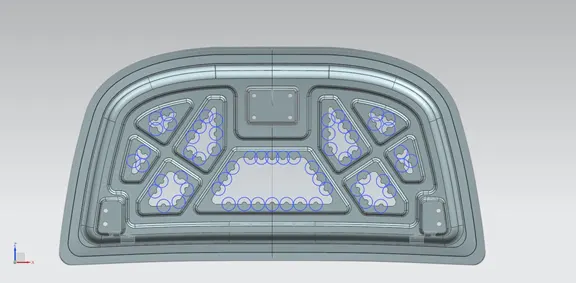
Mastic sealant:- Mastic sealant helps to locally improve strength of the hood. It is generally a hard rubber part, which is introduced as a paste in between inner and outer panel of the hood, which will get hardened inside the furnace. Every mastic sealant point will have a tendency to improve the local strength in around 80 mm diameter. Considering this, the mastic points are positioned such that most of the hood region is covered.
Conclusion:- In this challenge I learned to design the hood inner panel, outer panel with the help of master sketch and the styling surface, and also learnt the assembly of Hood inner panel, outer panel, and the reinforcements like latch and hinge assembly.