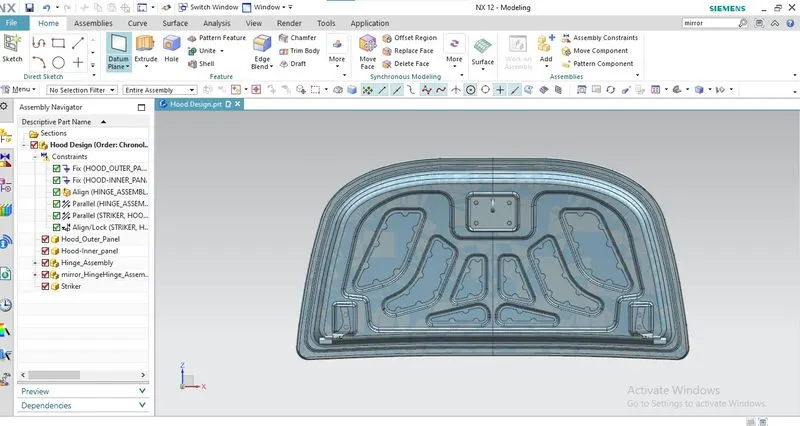
Hood design-Week 2
Design Of Hood
Aim
Design Hood Outer Panel, Inner Panel and the necessary reinforcements by following the Master Section
Software: NX CAD
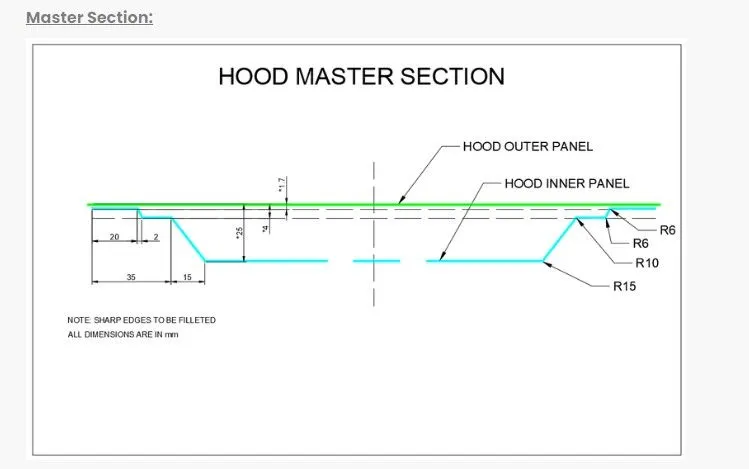
Master section
Master section is already provided by marketability team
Methodology
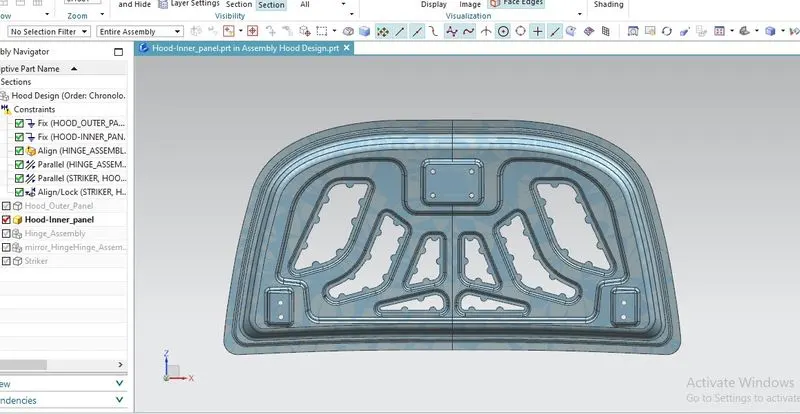
- Creating hood inner panel
Inner panel is the part that gives strength and rigidity to the outer panel. The master section represents the initial emboss shape and size. Then we provide the emboss for the latch and hinge elements after fixing the location.
- Creating outer panel
Outer panels are the aesthetic elements of a car. It is the styling team who provides the skin for the outer panel. The shape, position and size of the hood should satisfy the safety norms. So while designing the hood we should give more importance to pedestrian safety. The outer panel is attached to the inner panel by hemming. So, it is necessary to provide required hemming flange and reliefs for the hemming operation. We also provide mastic sealants between outer panel and inner panel to reduce vibration.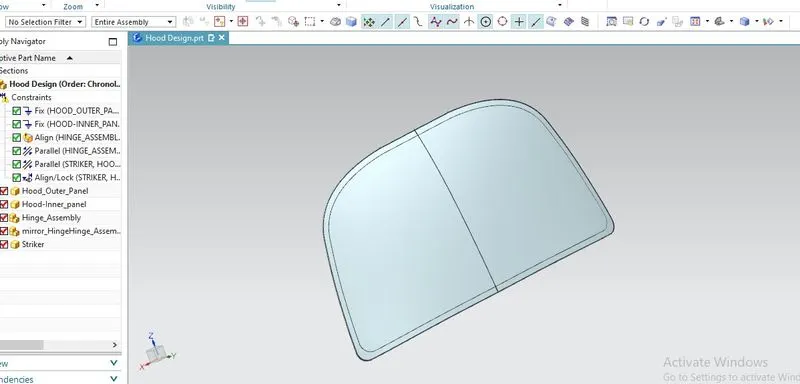
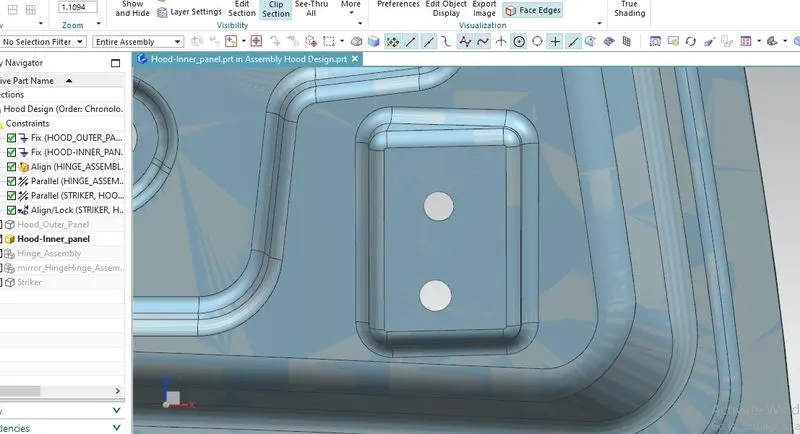
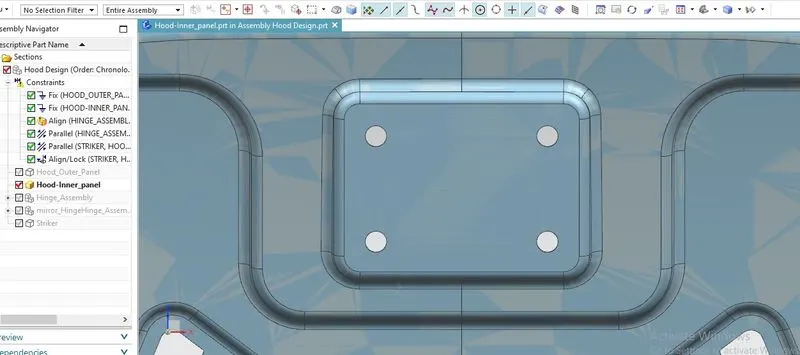
- Creating Hinge and Latch Emboss
Embosses are the projections made on sheet metal using deep drawing techniques. the operation is carried out the mostly for the purpose of stiffening flat surface and design in the inner panel. the major function of embossing is to dissipate the force acting on the hood during the collision of the car toward the hinges as early as possible. this helps to reduce the impact of the force on the passenger sitting inside.
- Mastic Sealants
The Mastic sealant or mastic points is a elastic compound that behaves like a rubber. it is applied between Hood's outer panel and inner panel. it have an influence area of about 80mm
- Latch Trajectory
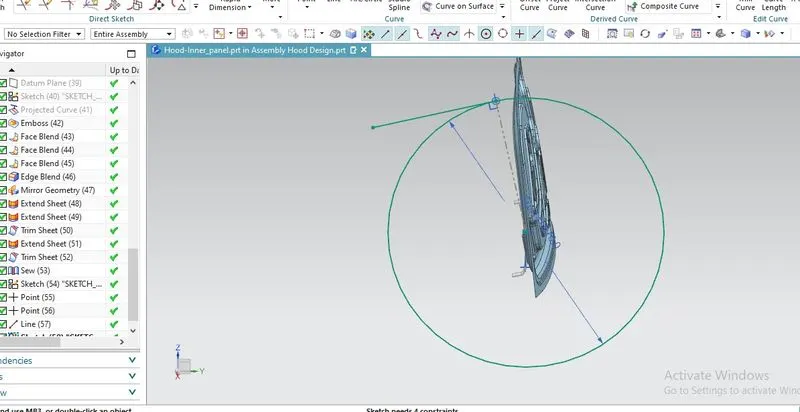
Latch trajectory is given by the circle drawn from the hinge axis point. Hinge axis point is the centre point of the hinge axis. First, we can fix either the latch or the hinge. If we have fixed the hinge position then we should plot the Trajectory circle for the latch. For proper mating condition the striker axis through the tip of the striker should be tangential to the latch trajectory.
- Hemming
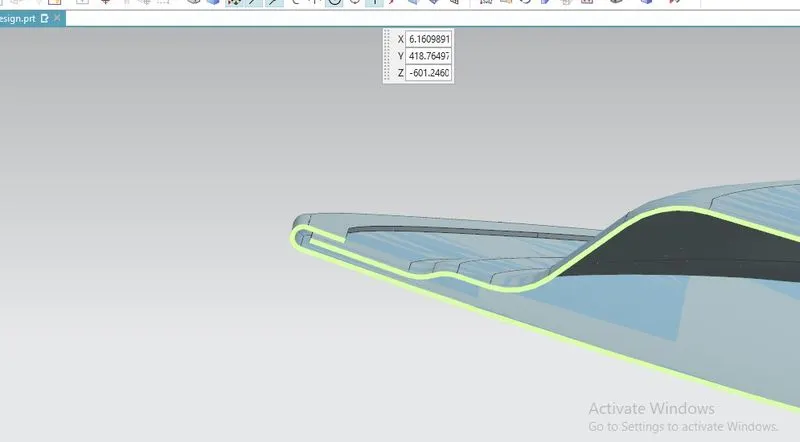
Hemming is a forming operation in which the edges of the sheet are folded or folded over another part in order to achieve a tight fit. Normally hemming operations are used to connect parts together
Final Assembly