Hood design-Week 2
What is Hood?
- The car’s hood consists of an inner and an outer panel. The inner panel provides strength, while the outer panel is just a metal cover. The underside of the hood is often covered with a sound-absorbing material.
- Hood are typically made out of steel or aluminum, although aftermarket manufacturers may manufacture hoods out of fiberglass, carbon fiber, or dry carbon.
- The hood or bonnet is the hinged cover over the engine of motor vehicles that allows access to the engine compartment for maintenance and repair. On passenger cars, a hood may be held down by a concealed latch.
- Some high performance cars have ‘hood scoops’ which channel outside air directly to the air filter, which gives improved performance and efficiency.
- It is hinged thin sheet which covers and protects the main parts of car like engine. Its main function is to direct access to the engine, bettry and other crucial parts of the cars for repair and maintenance and to protect these parts from direct sunlight and dust. It also gives good looks and help to design car aerodynamically stable.
- Regulations have come into effect in recent years that place a limit on the severity of pedestrian head injury when struck by a motor vehicle. This is leading to more advanced hood designs.
- The hood release is a small lever, which is usually mounted under the dash. It is connected to the hood latch by a cable. The hood latch has a safety feature, which requires a second latch to be released before the hood will open. This is to prevent accidental opening while driving.
Pedestrian -Vehicle Collision
- India, however, ranks 1 in the number of road accident deaths across the 199 countries reported in the World Road Statistics, 2018 followed by China and the US. As per the WHO Global Report on Road Safety 2018, India accounts for almost 11% of the accident-related deaths in the World.
- Road transport remains the most favored mode of transport for both freight and passenger movement in India. The fast-growing population, exceptional rate of motorization coupled with the ever-growing urbanization has made people vulnerable to frequent road accidents resulting in fatalities, injuries/disabilities.
- the sequence of injuries and events in a pedestrian collision images are mentioned below.
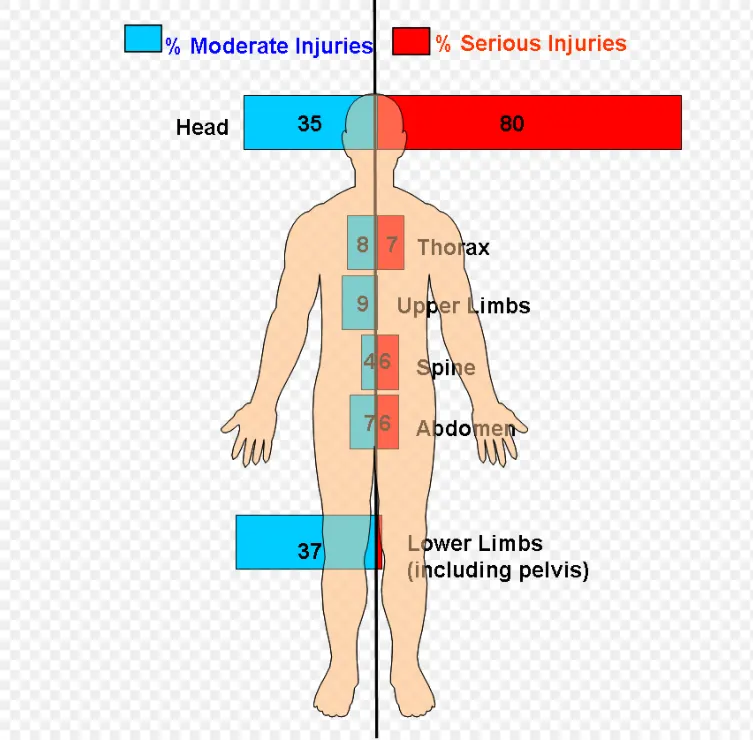
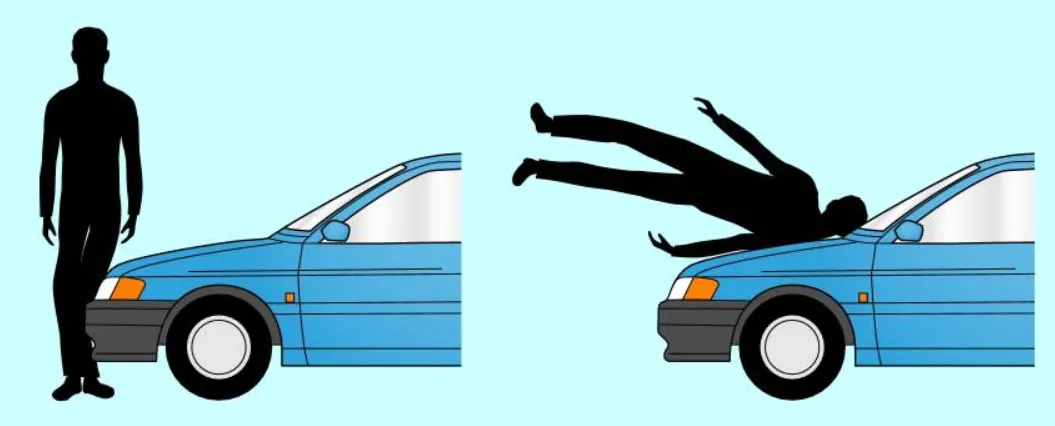
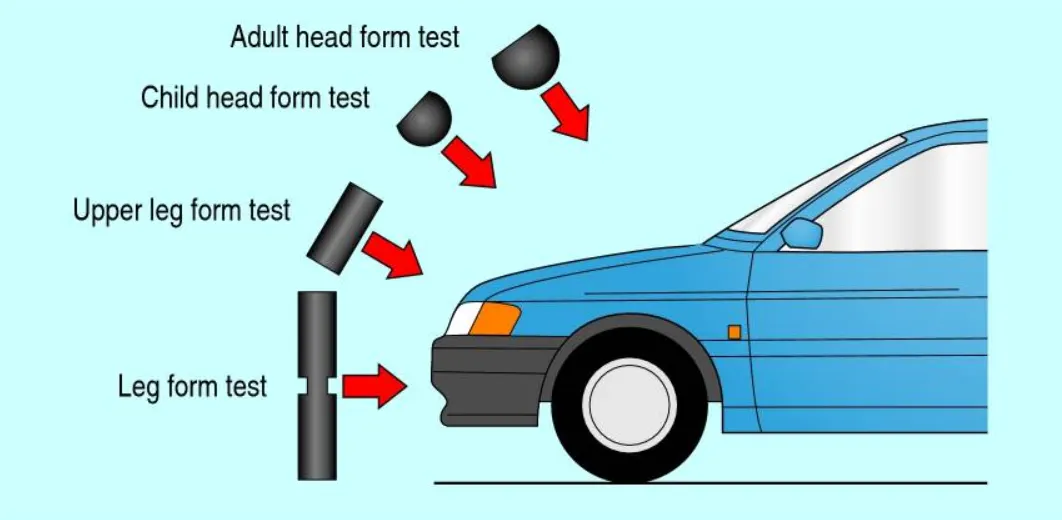
DATA:
Inner hood has been designed by following the master data:-
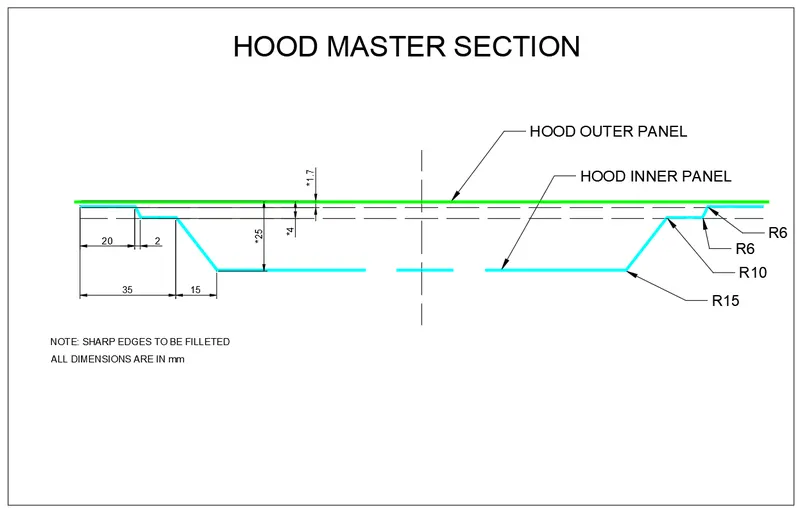
Hood Thickness Information
- Outer Panel Thickness = 0.75mm
- Inner Panel Thickness = 0.75mm
- Reinforcement Thickness = 1.5mm
The process involved in designing hood as a sheet metal operation is
- Blanking
- hemming
- Punch cutting or piercing
- Deep drawing
- Embossing
DESIGN:-
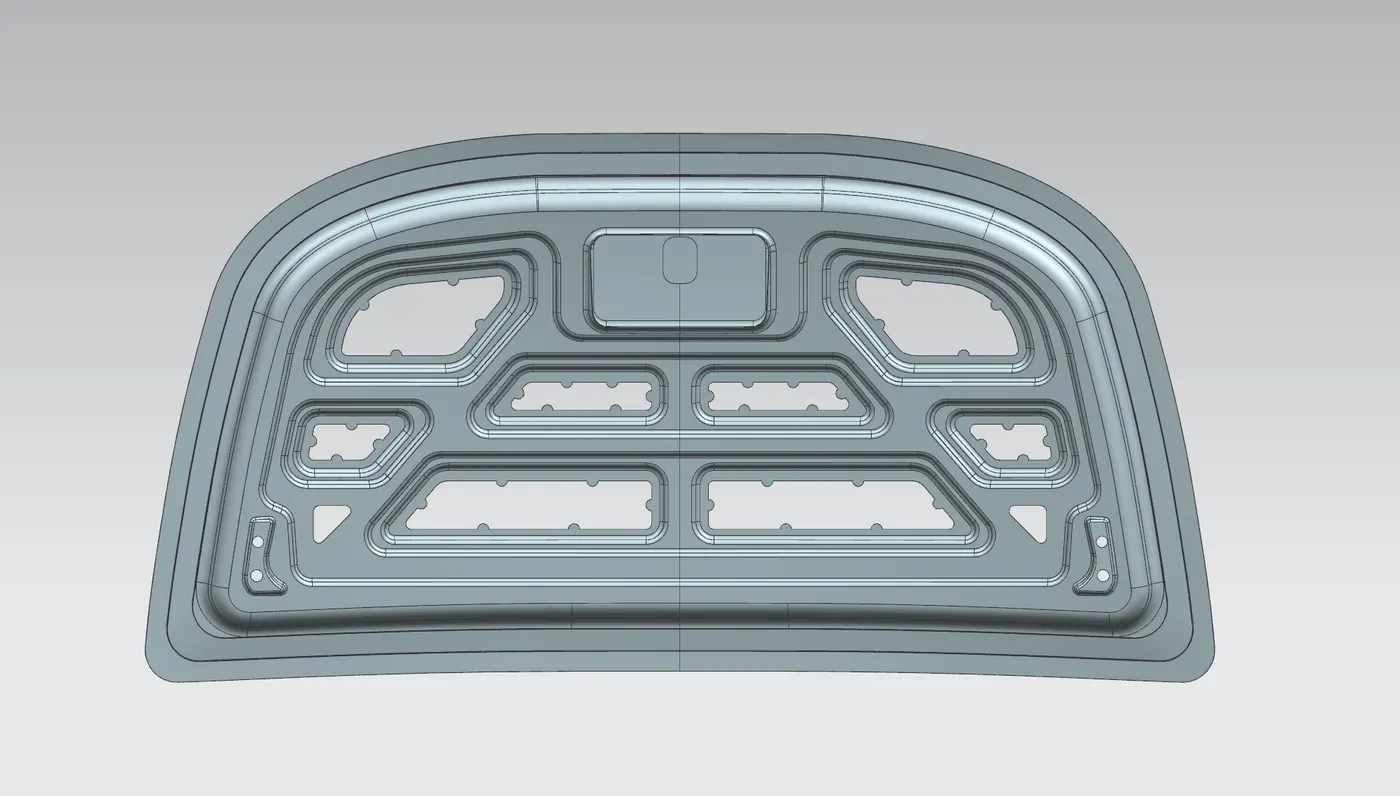
Inner panel:
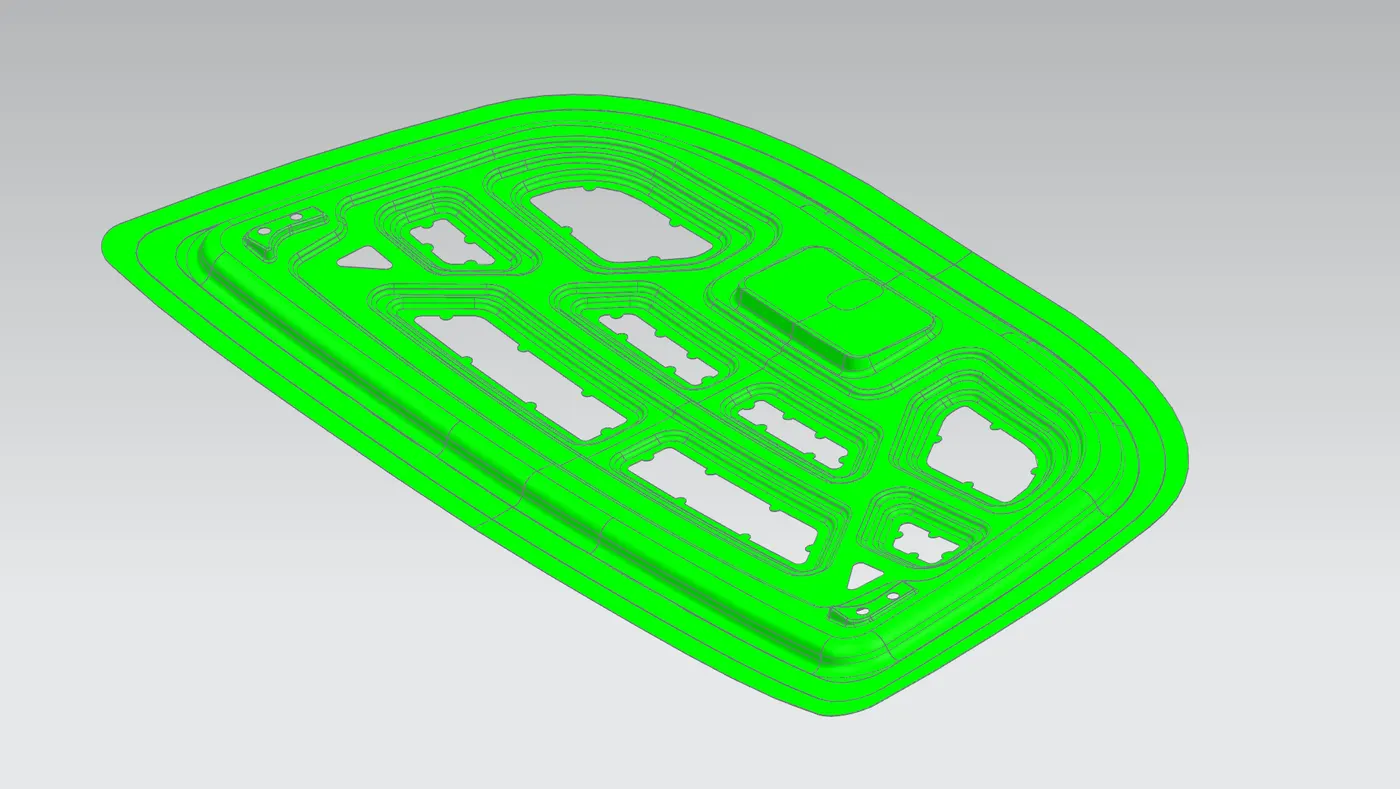
The inner panel supports the outer panel. it consists of embosses & holes. Embosses provide stiffness as well as it dissipates energy towards reinforcement.
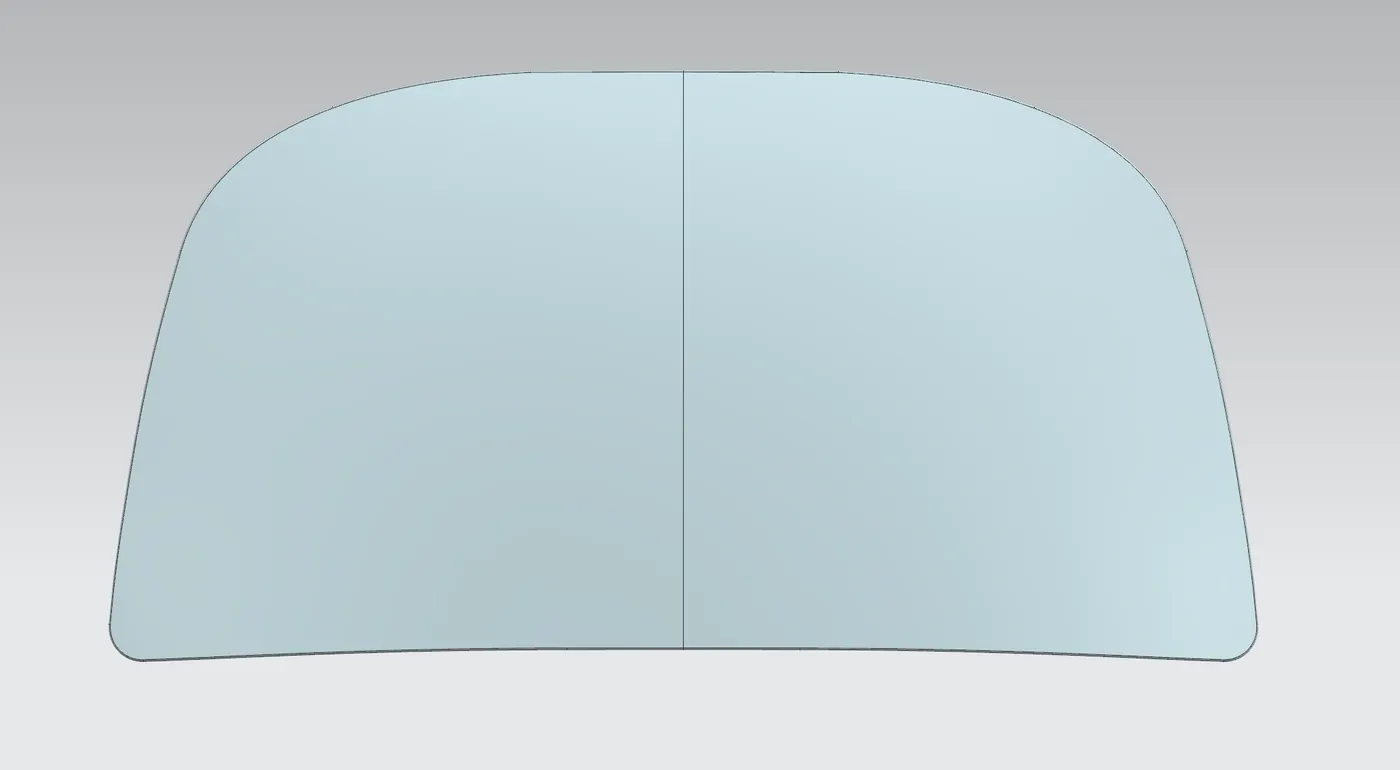
Outer panel:-
Outer panel is nothing but a outside cover for engine and its a used to make a car looks good.
- Embossing in sheet metals
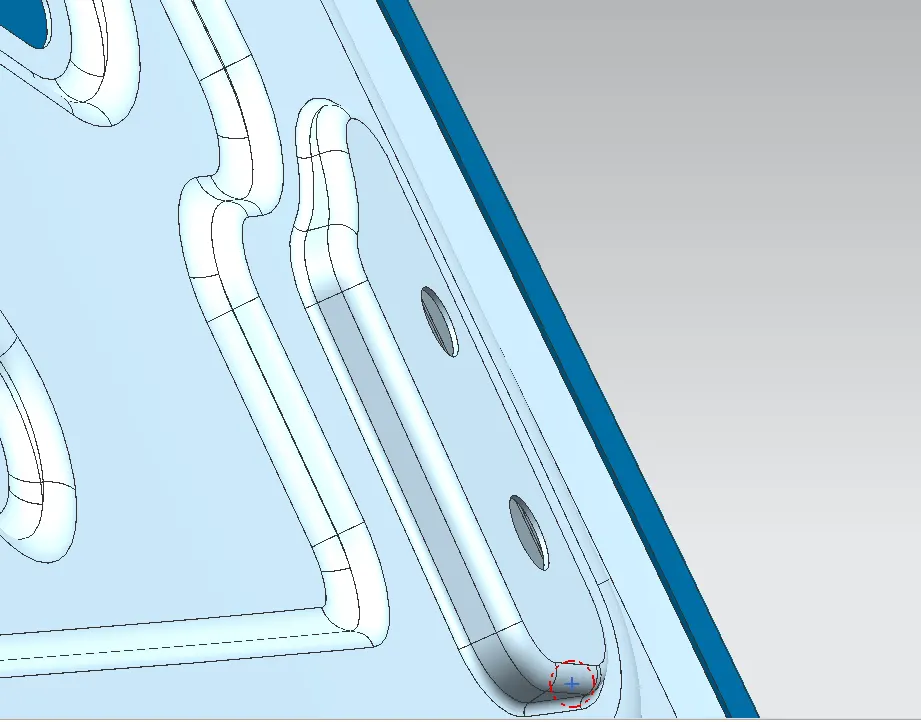
- The metal sheet embossing operation is commonly accomplished with a combination of heat and pressure on the sheet metal, depending on what type of embossing is required. Theoretically, with any of these procedures, the metal thickness is changed in its composition.
- A metal sheet is drawn through the male and female roller dies, producing a pattern or design on the metal sheet. Depending on the roller dies used, different patterns can be produced on the metal sheet. The pressure and a combination of heat actually "irons" while raising the level of the image higher than the substrate to make it smooth. The term "impressing" refers to an image lowered into the surface of a material, in distinction to an image raised out of the surface of a material.
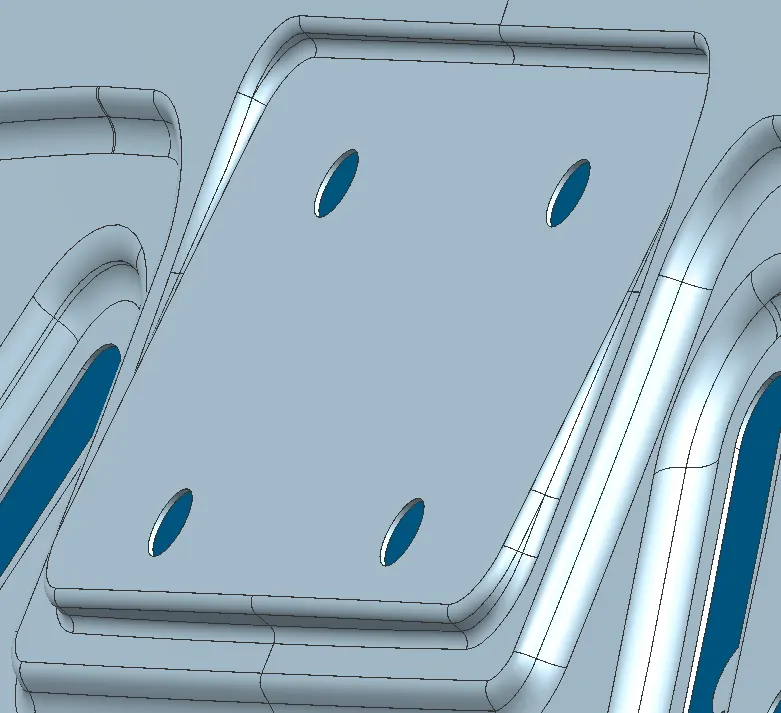
- Hemming in sheet metals
- Hemming is a sheet metal forming process in which sheets are joined by bending it usually to 180°. Automotive body panels and automotive parts such as deck-lids, trunk-lids, doors, hoods, and tailgates are formed by hemming processes.
-
Conventional die hemming is suitable for mass production. In die hemming, the flange is folded over the entire length with a hemming tool. Normally the actual hemming is a result of a forming operation in which the flange is formed with a hemming tool after the drawing and trimming operations have been completed
- Roll hemming is carried out incrementally with a hemming roller. An industrial robot guides the hemming roller and forms the flange. Roll hemming operation can also be divided into several pre-hemming and final hemming process steps.
- If weld or bolts were used to join the hood panels then the design and the aerodynamic features would get damaged so hemming is more significant to use.
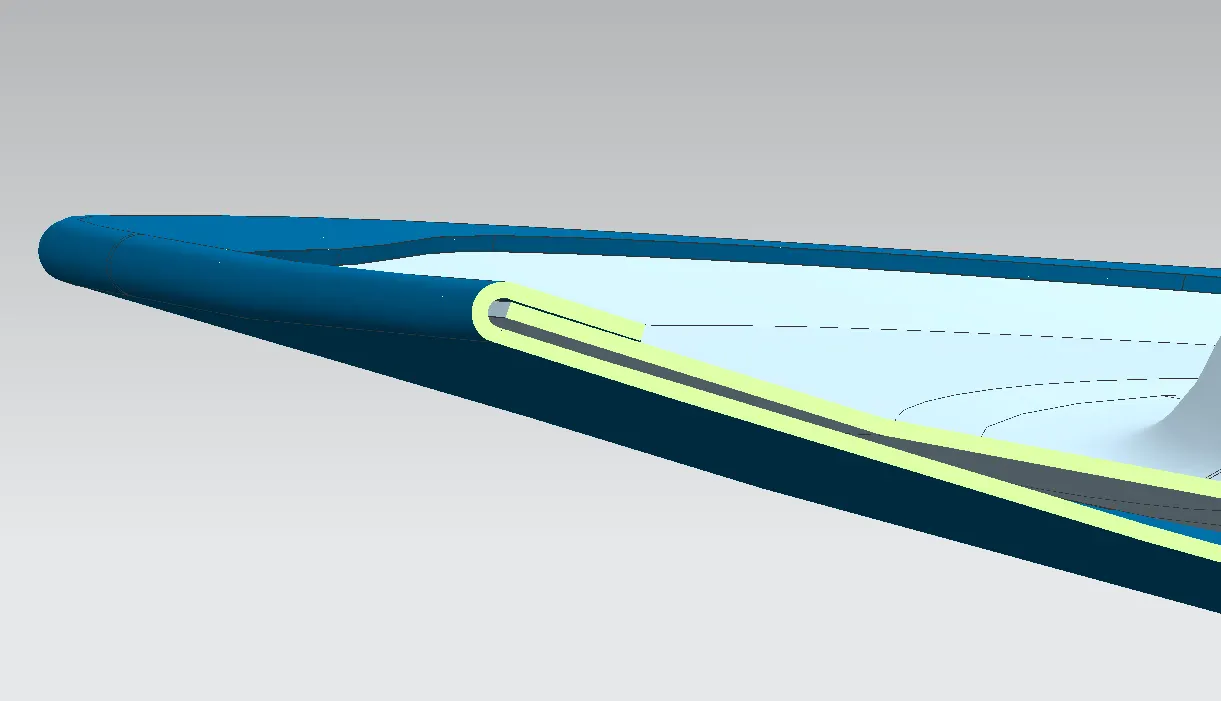
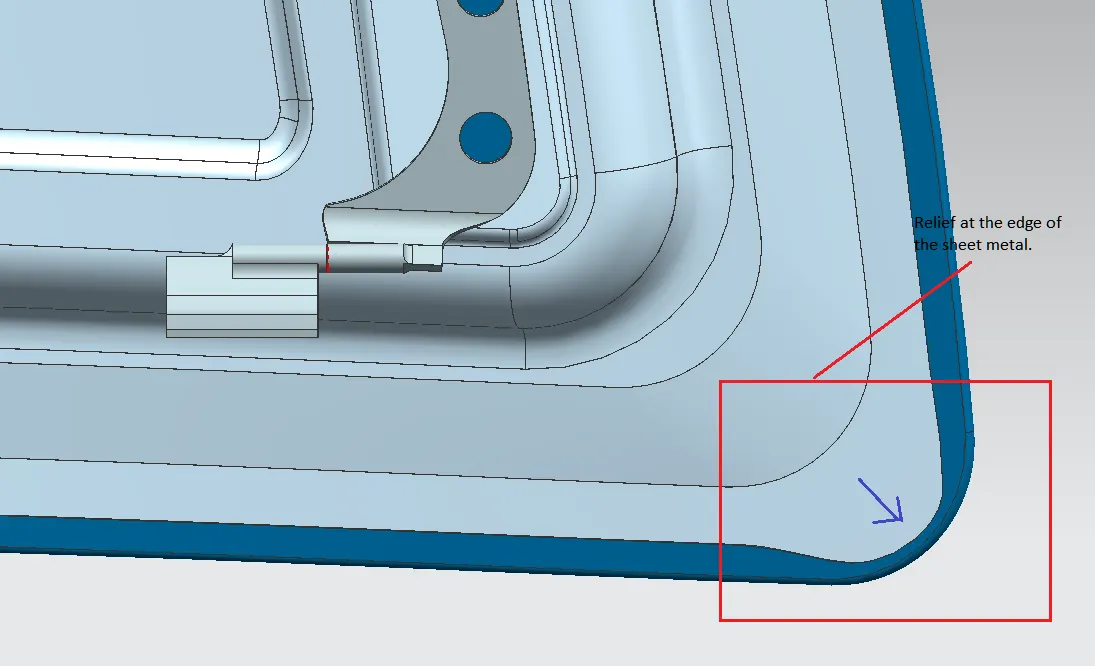
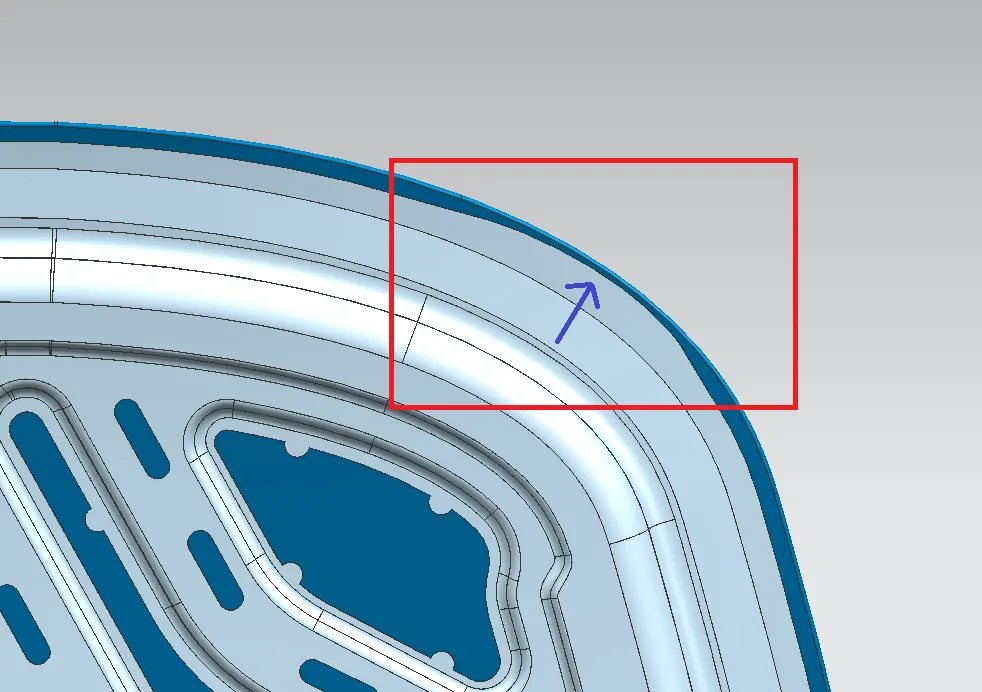
While doing the hemming process, A relief angle is formed as a product of hem when attaining at the corner of the sheet metals.
- Mastic data
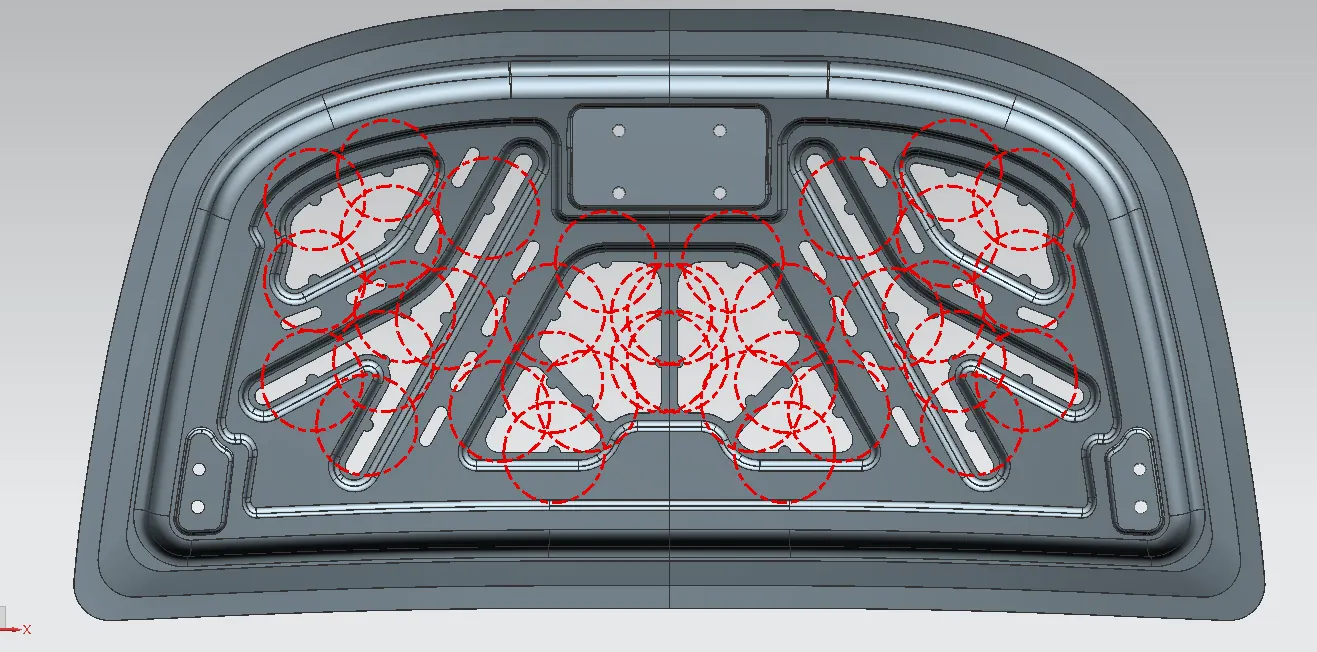
A mastic sealant data is used to fix or combine the hood outer panel and hood inner panel.
- They can provide thermal and acoustical insulation, and may serve as fire barriers. They may have electrical properties, as well. Sealants can also be used for simple smoothing or filling. They are often called upon to perform several of these functions at once.
- A sealant has three basic functions: It fills a gap between two or more substrates; it forms a barrier through the physical properties of the sealant itself and by adhesion to the substrate; and, it maintains sealing properties for the expected lifetime, service conditions, and environments. The sealant performs these functions by way of correct formulation to achieve specific application and performance properties.
LATCH & STRIKER:-
Latch & striker is used for locking the hood with the car. it's usually placed on the space provided on the inner panel.
HINGE:-
Hinges are used to connect the hood & cowl panel of an automobile. it enable the opening & closing operation of the hood. the hinge should be made strong enough to to handle the weight of the hood and also to handle the force action on it during the collision.
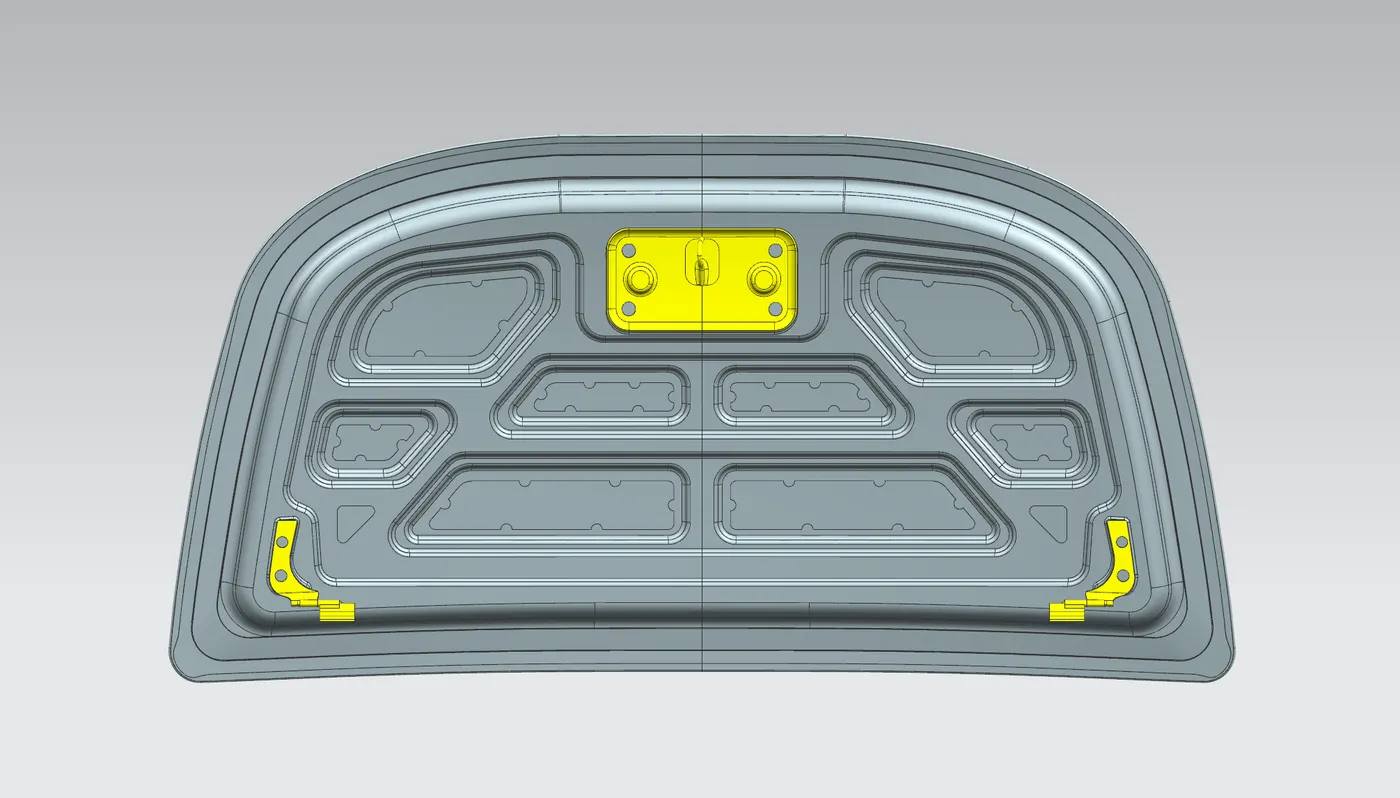
Position of Hinge & Striker:-
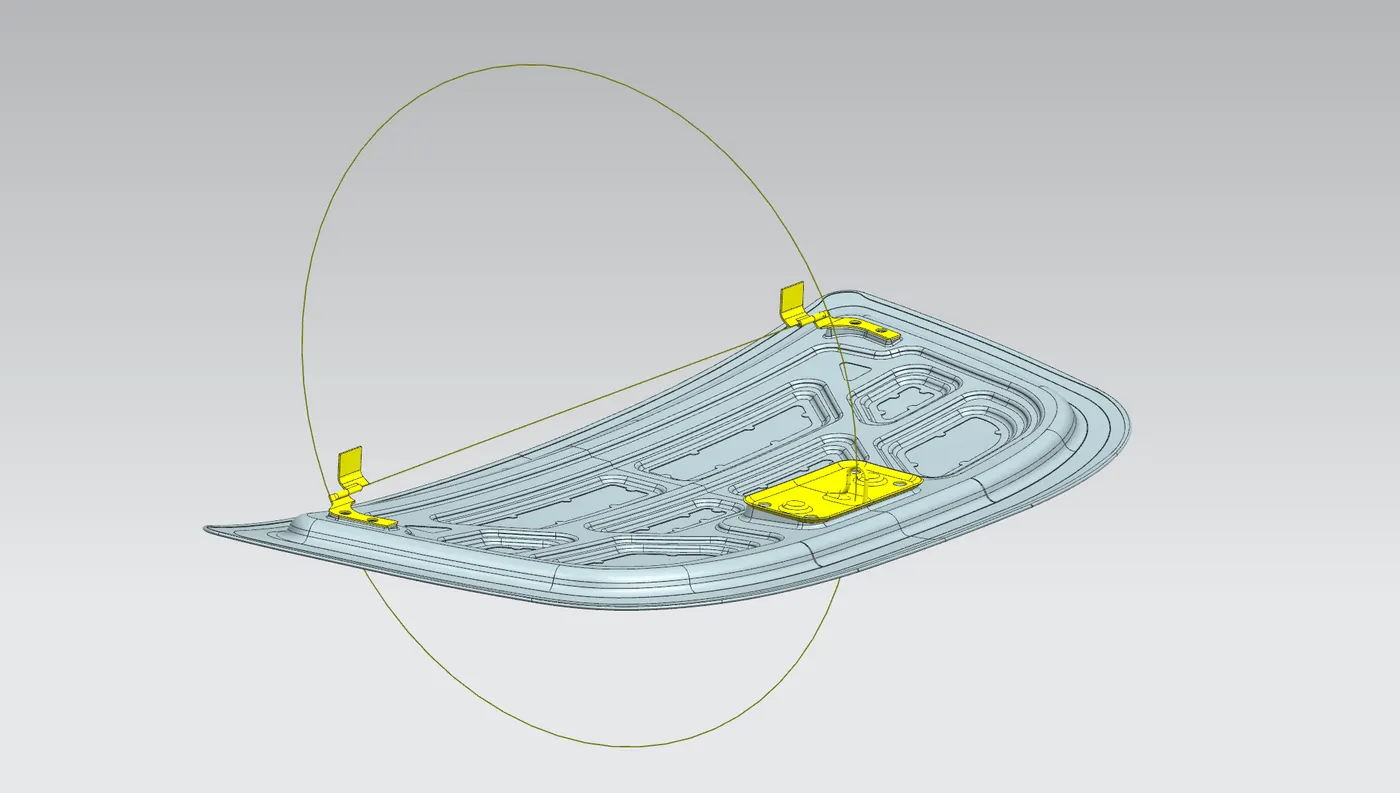
The hinges should be usually placed on both sides of the hood in such a way that the strike fits exactly into the hole provided.
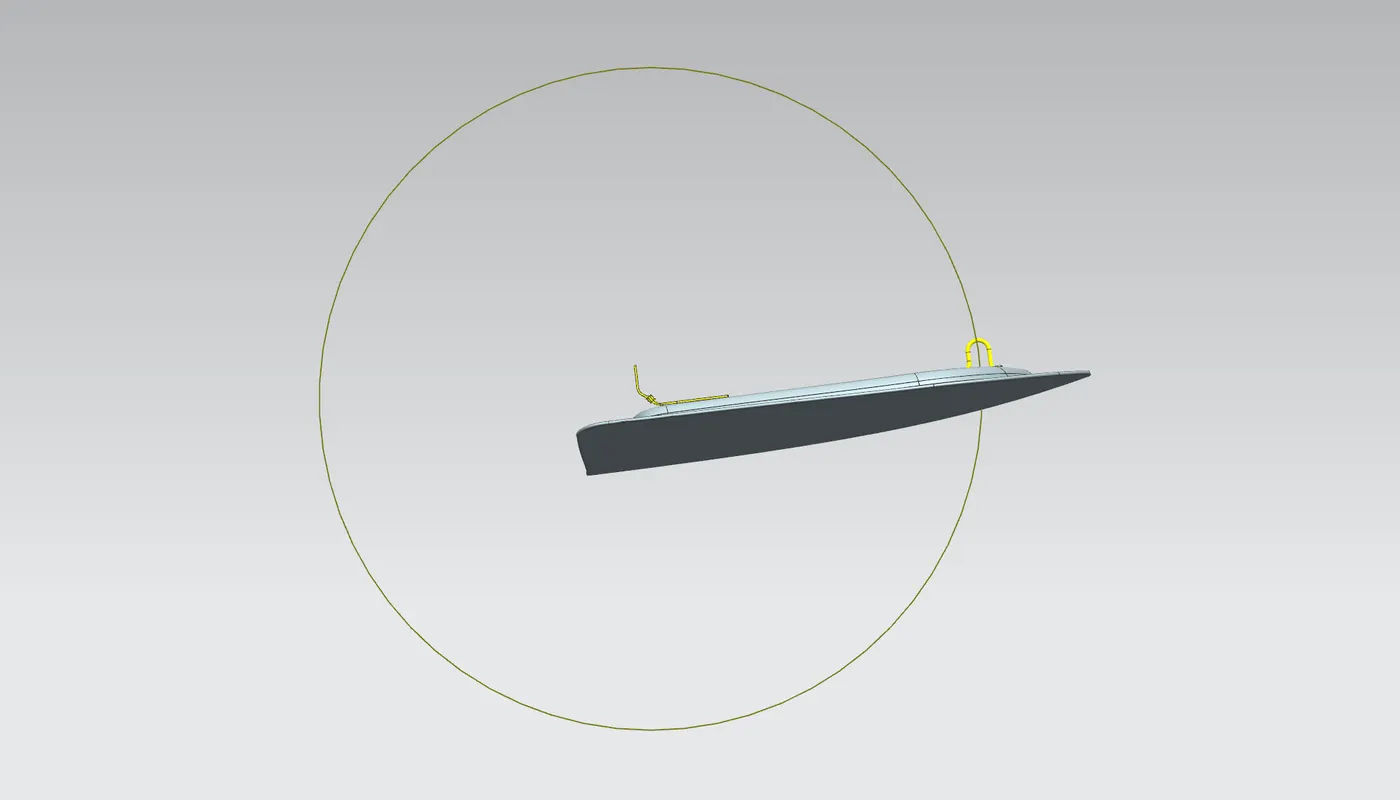
To ensure this the followning conditions are follow:-
1. Both the hinges should be on the same axis.
2. The centre of the striker's circular trajectory should be always perpendicular to the hinge axis.
DRAFT ANALYSIS:-
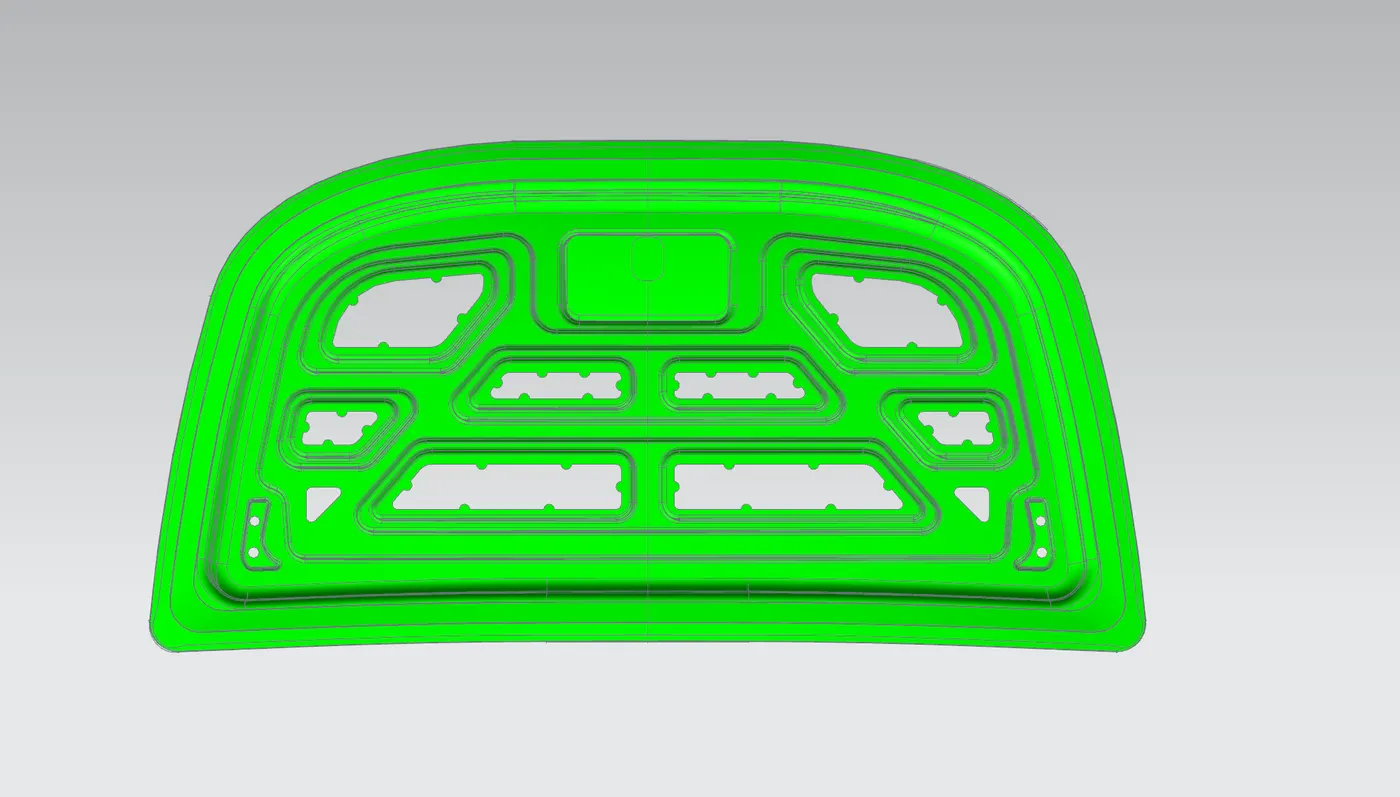
Once the design was ready, the inner panel of the hood was anaylzed for manufacturability. here draft analysis shows that all parts are clearing when core is removed from cavity.
CONCLUSION:-
ALL the parts of the hood are designed based on the required conditions & given dimensions. With the completion of hood design & analyzing for successful manufacturability. we can conclude that the hood can be utilized for the vehicle.
Therefore, we have designed a hood that falls under the rules and regulations of the manufacturer's standards.