Hood design-Week 2
DESIGN OF HOOD PANEL FROM THE GIVEN STYLING SURFACE
Introduction:
A car hood panel is one of the most important components of the BIW (body in white), it is considered as the closure sheet-metal component. A hood panel consists of two panels that are hemmed together to form the automotive hood assembly. The inner panel of the hood is not visible to the customer but this is the engineering feature of the outer panel. The outer panel has the aesthetic look to it but on its own is very weak and not capable of handling force during impact. This puts the passenger’s life in danger, so we need to design the inner panel so as to provide strength to the outer panel.
Components of Hood
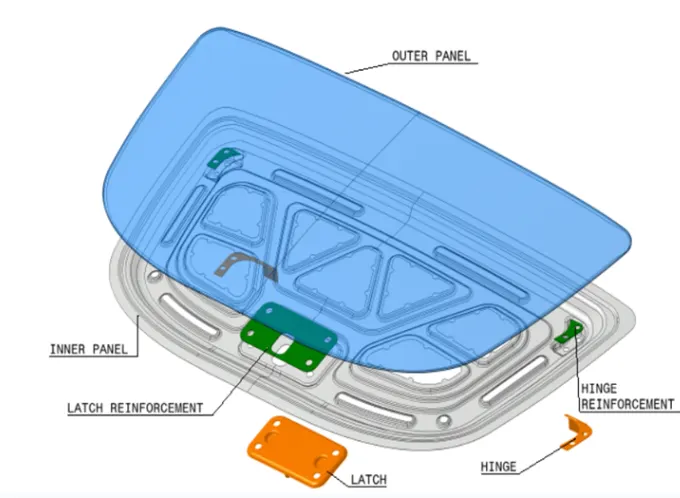
- Hood Outer Panel
- Hood Inner Panel
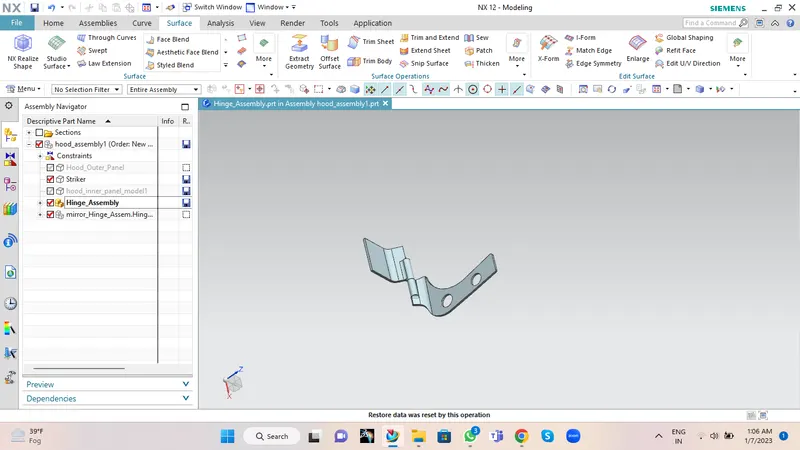
- Hinges
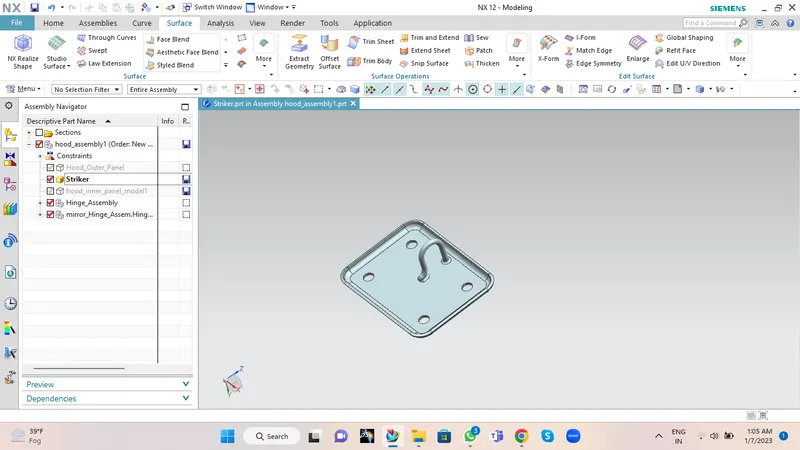
- Latch Striker
- Gas Stay / Support Rod
Given :
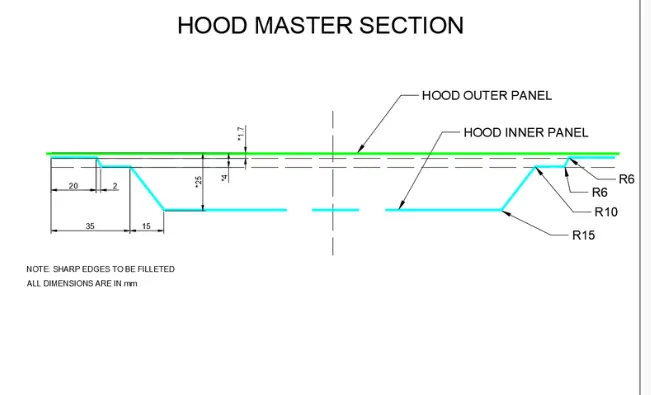
- Master-section of the hood panel.
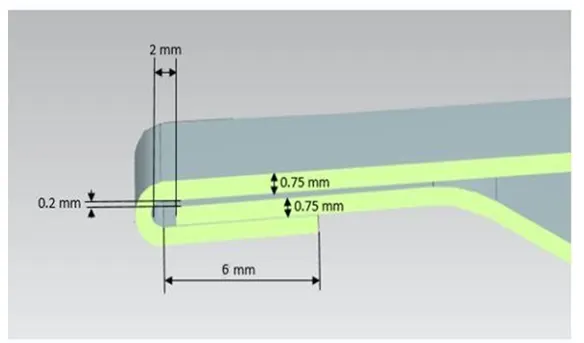
- Hood Hem data
- The thickness of the inner panel, outer panel, and reinforcements
- Styling surface
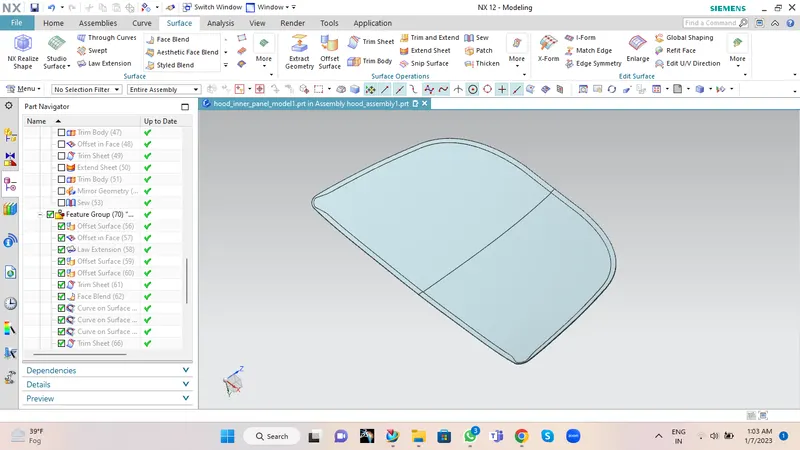
HOOD INNER AND OUTER PANEL SURFACE
HAMMING SURFACE
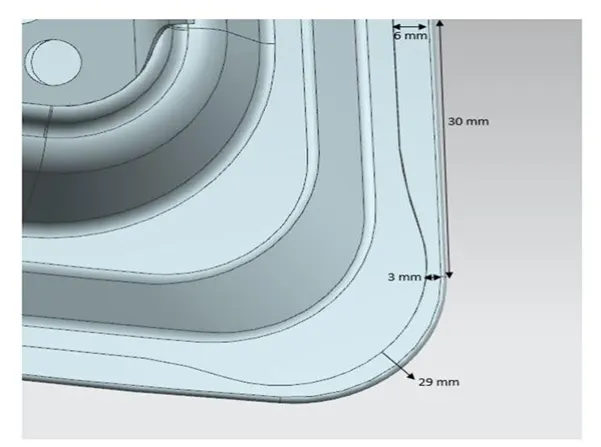
GIVEN SURFACE
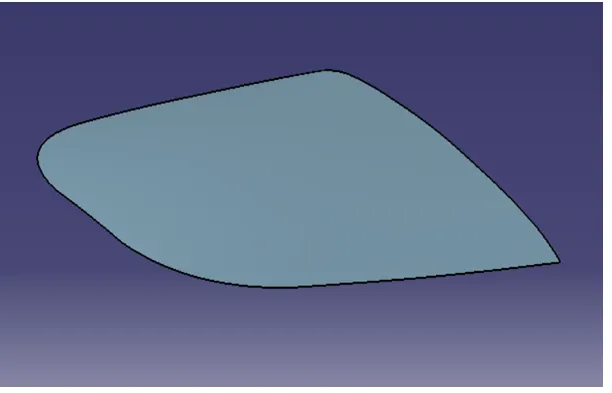
DESIGN METHODOLOGY
- Design of inner panel:
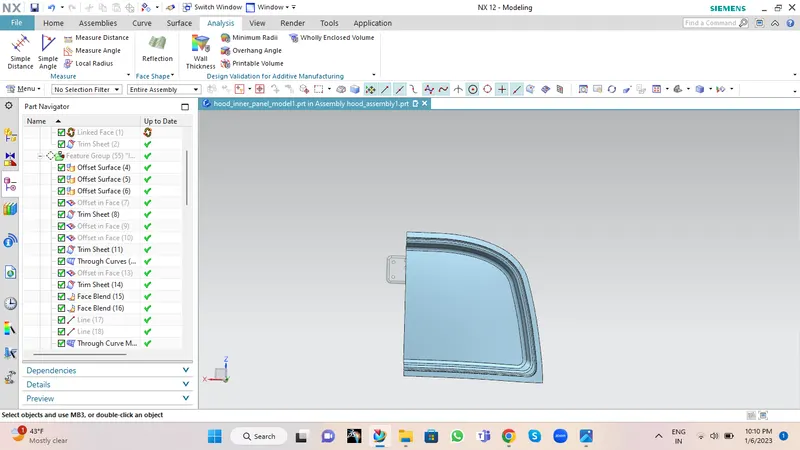
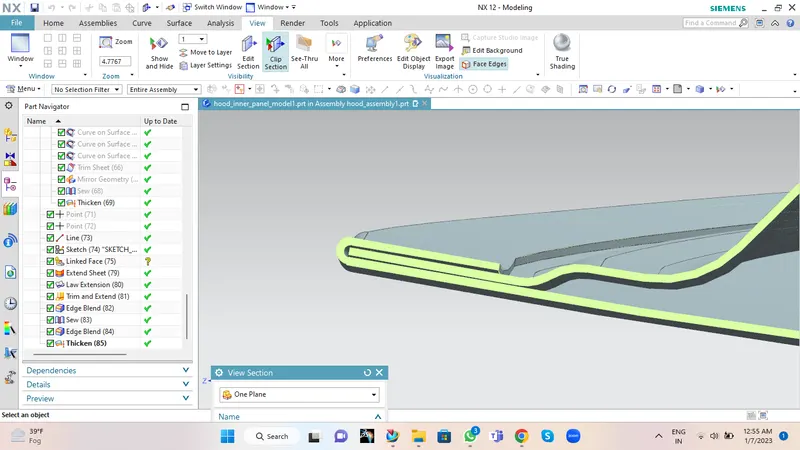
To design the inner panel we need to offset the given styling surface and break any link with the given surface. This will act as a reference surface for the inner panel. Before proceeding further we need to follow certain design guidelines in design.
- Firstly give the offset of a given styling surface of 1.7mm.
- second give the offset of a given styling surface 4mm.
- In the last give the offset of 25mm.
- Now trim the surface and give the face Band.
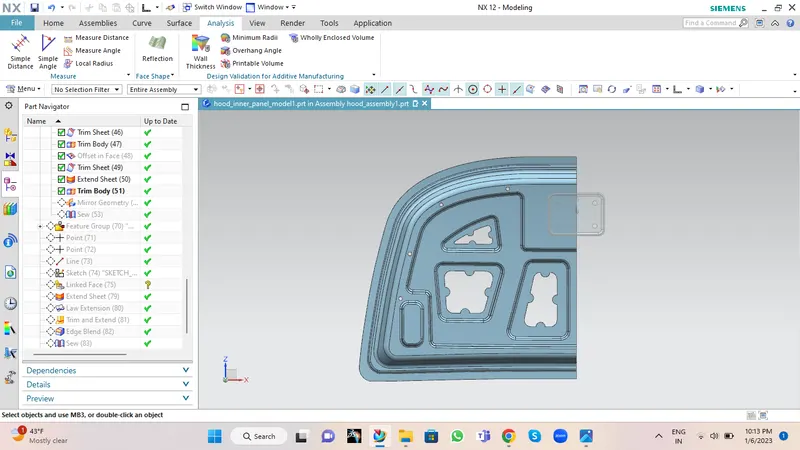
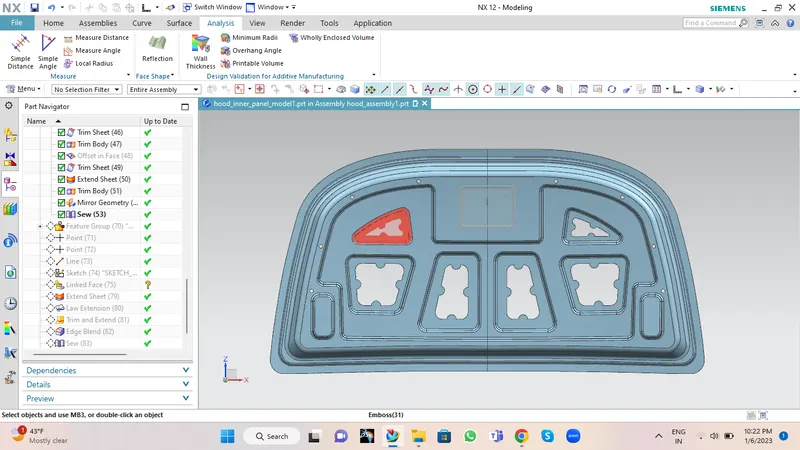
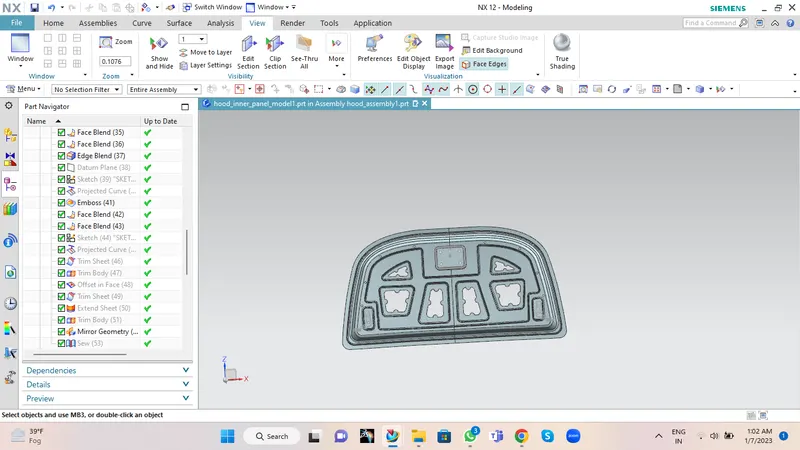
- Embosses on the inner panel
The embosses on the inner panel are designed to distribute the impact forces on the outside which protects the passenger during a crash. These embosses are designed in a particular shape (Y or V shape). The shape mostly depends on the output from the CAE team.
Euro NCAP standards followed:
We design the hood panel for the safety of the passengers inside the cars but at the same time, we have to protect the pedestrian walking on the road. This is what improves the standard and quality of the car. Whenever the car hits a pedestrian it should cause minimum damage to the pedestrian. For this, we have to remove material from the inner panel at specific portions.
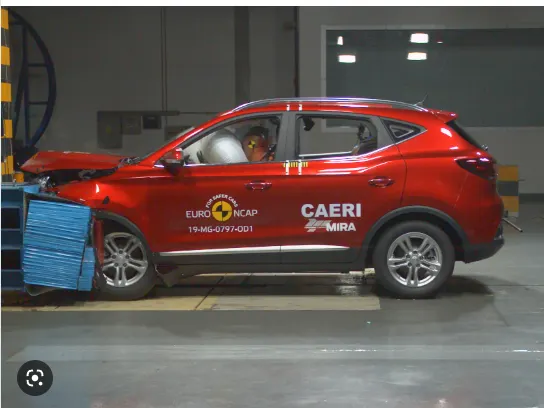
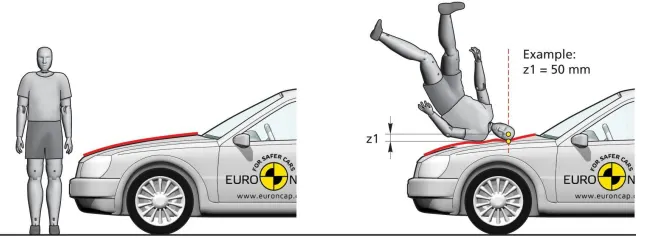
We design the embosses on the inner-panel to reduce the material from the areas which lie on the Adult Head Impact Zone and Child Heat Impact Zone. By removing the material from these areas, we intend to weaken it, anything that hits the bonnet on these positions will experience minimum impact possible. This improves the safety of the pedestrian in an unfortunate event.
Mastic Points:
Mastic points are areas where the inner hood panel is joined with the outer panel them using a mastic glue. This mastic glue keeps the inner panel stuck to the outer panel and 1 mastic cover around and around 50-80mm diameter.
INNER PANEL DESIGN
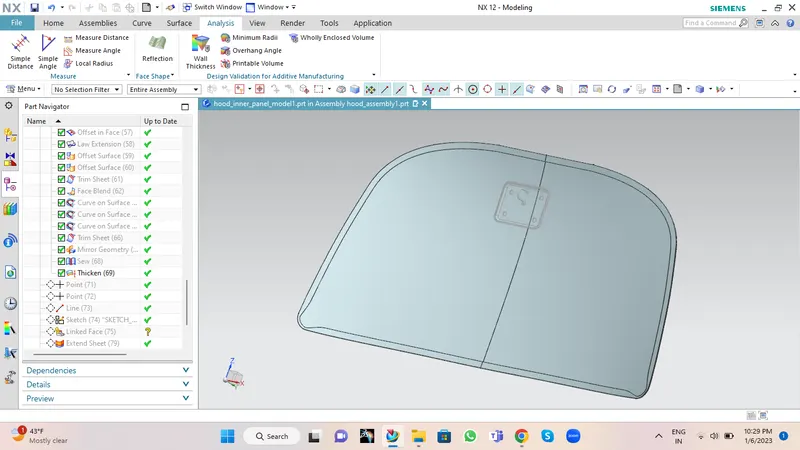
OUTER PANEL
HINGE AND STICKER ASSEM.
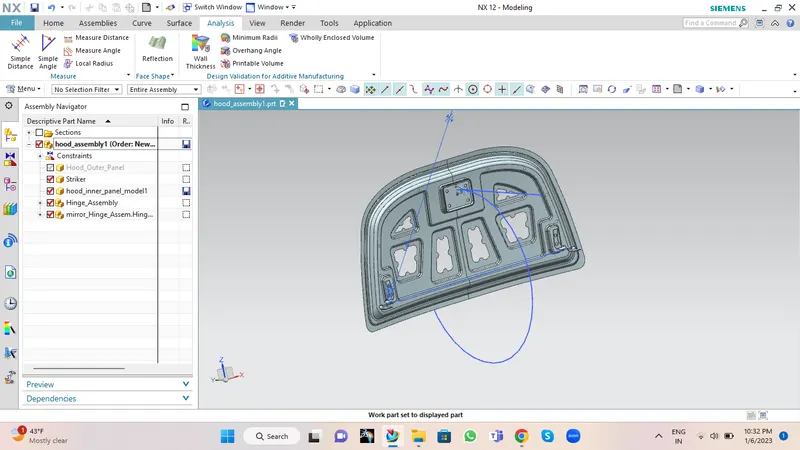
HEM FOR OUTER PANEL
The inner panel and outer panel are joined using mastic which is applied on the hem of the outer panel and edge of the inner panel.
LATCH AND STRIKER POSITION CHECK
Checking the position of the latch and striker assembly:
To check we need to create an axis from the hinge assembly. Tentatively we have to position the hinges and extract the axis. On the axis, a point is placed at the center of the axis and a circle is drawn taking the point as the center. To check for the correct position of the hinge it has to be tangent to the circle. This study is conducted to check the location for the latch and striker mechanism to make the hood manufacturable.
DESIGN OF REINFORCEMENTS FOR THE HOOD PANEL
At certain positions in the hood panel, we need to provide more strength to the inner panel as these areas are prone to loading and unloading. The two main positions which tend to be under stress a lot are
- The latch and striker joining area
- The hinge joining area
The latch is attached to the inner panel and this adds more weight to the inner panel at one particular point. This region is under stress whenever we close the hood with force to lock the latch into the striker. We need to provide reinforcement is this region to handle all the loading cases.
The hinge joining area is again a functional area of the hood panel. This means that we need to provide reinforcements there in order to strengthen the component and make the functioning smooth.
Part Of Hood Assem.
INNER PANEL
Outer Panel
Sticker
Hinge