Hood design-Week 2
HOOD DESIGN using NX
The report contains hood design related information as follows:-
1. Introduction to hood
2,Purpose of hood design
3. Impact observation
4. Data
5. Part Navigator
6. Design
7. Analysis
8. Conclusion
Introduction to Hood
- The car’s hood consists of an inner and an outer panel. The inner panel provides strength, while the outer panel is just a metal cover. The underside of the hood is often covered with a sound-absorbing material.
- Hood are typically made out of steel or aluminum, although aftermarket manufacturers may manufacture hoods out of fiberglass, carbon fiber, or dry carbon.
- The hood or bonnet is the hinged cover over the engine of motor vehicles that allows access to the engine compartment for maintenance and repair. On passenger cars, a hood may be held down by a concealed latch.
- Some high performance cars have ‘hood scoops’ which channel outside air directly to the air filter, which gives improved performance and efficiency.
- It is hinged thin sheet which covers and protects the main parts of car like engine. Its main function is to direct access to the engine, bettry and other crucial parts of the cars for repair and maintenance and to protect these parts from direct sunlight and dust. It also gives good looks and help to design car aerodynamically stable.
- Regulations have come into effect in recent years that place a limit on the severity of pedestrian head injury when struck by a motor vehicle. This is leading to more advanced hood designs.
- The hood release is a small lever, which is usually mounted under the dash. It is connected to the hood latch by a cable. The hood latch has a safety feature, which requires a second latch to be released before the hood will open. This is to prevent accidental opening while driving.
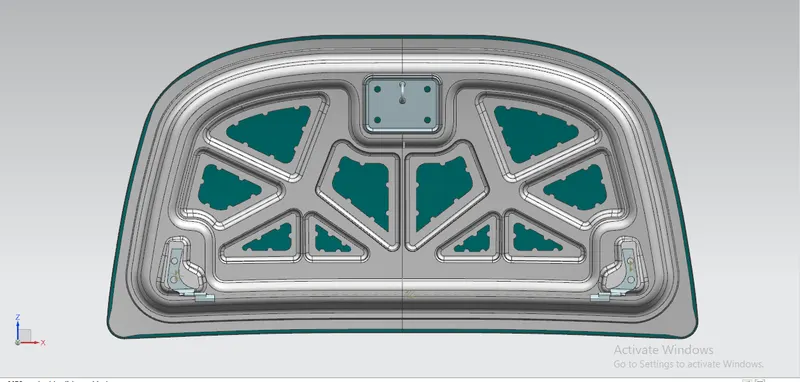
Purpose of Hood Design:
- Save and safety of purposes inside the car.
- Cover all engine parts and radiators.
- Reduce the Air effect due to design aerodynamic shape.
- provide access to the engine for repair and maintenance.
- reduces engine noise, providing you with a quieter drive.
- It can also help keep the paint underhood last longer.
Observation of Adults, Childs, and lower Impact on Car Hood Body:
- The 1st and most important safety requirement to be considered while designing the Bonnet is the Pedestrian Safety from a frontal collision.
- The European New Car Assessment Program (Euro NCAP) is a European car safety performance assessment program which has developed test specifications and rating systems for assessing pedestrian injuries during impacts with the front of vehicles Such tests include a series of tests using impactors designed to mimic a collision at a speed of 40 km/h. They describe a situation in which a pedestrian is situated laterally and a car first hits one of his legs. Tests are conducted on the leg, upper leg, and most importantly, the head, as head trauma is most commonly responsible for casualties.
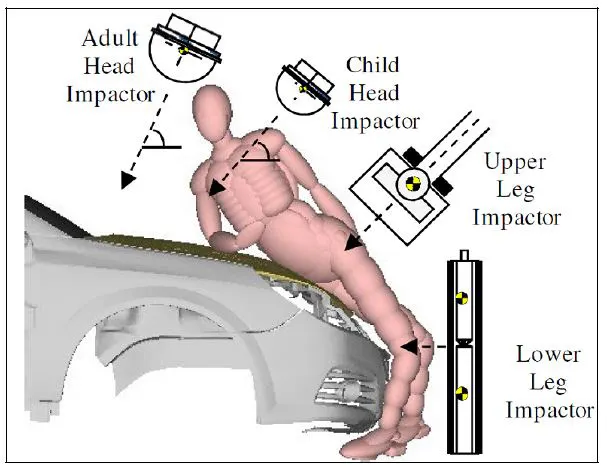
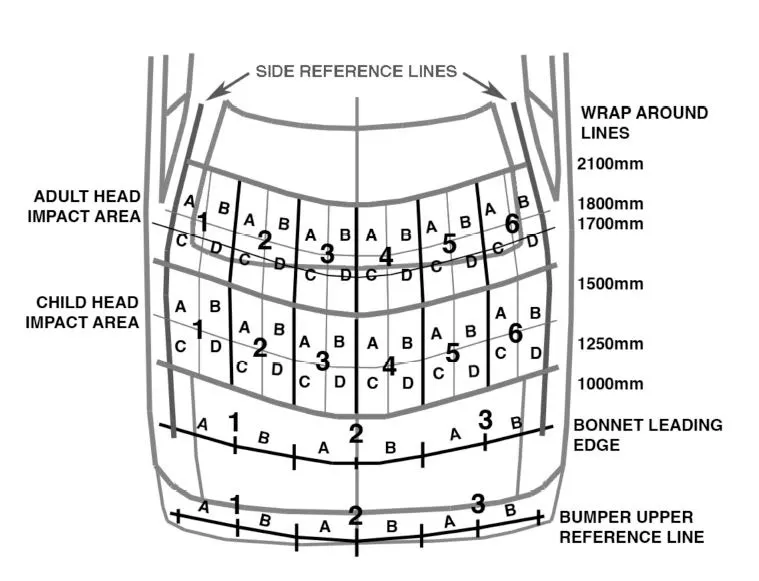
- Thus to avoid severe injuries to the head, the high impact area for adults and children is subjected to less thickness. Also, no reinforcement should be provided in that area as, during the head collision, the hood will absorb the head impact energy leading to the collapse of the hood and thus protecting the severe head injury.
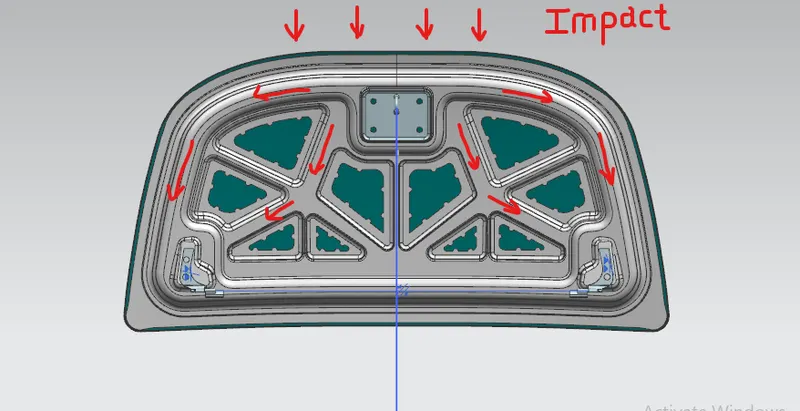
- Another important criterion for the hood design is the protection of the occupants inside the car during the front collision. The design of the hood should be in such a way that during the collision, the force should travel in the upward direction through the embosses and directed towards the body of the car. Thus protecting the occupants inside.
Objective
Design hood outer panel, inner panel and reinforcements with the given outer hood skin, master section and design parameters.
DATA:
Inner hood has been designed by following the master data:-
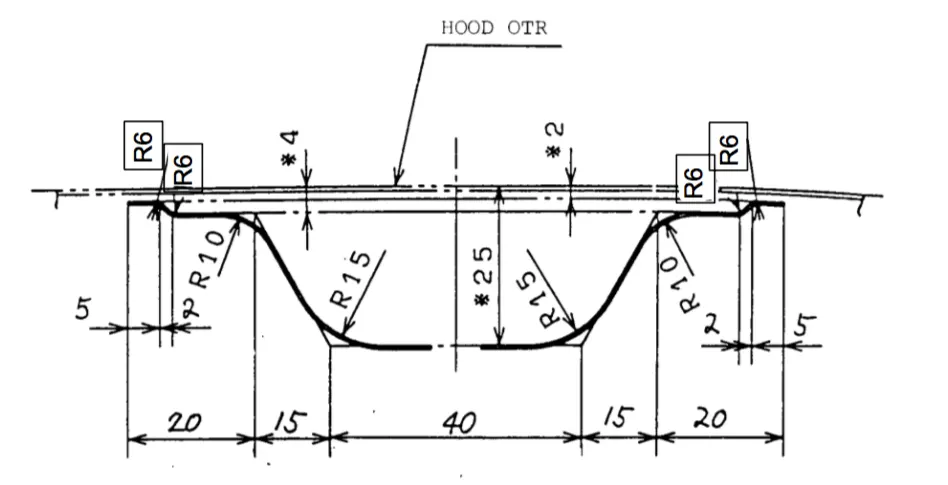
Manufacturing requirment data-
- No sharp corners inside the panel.
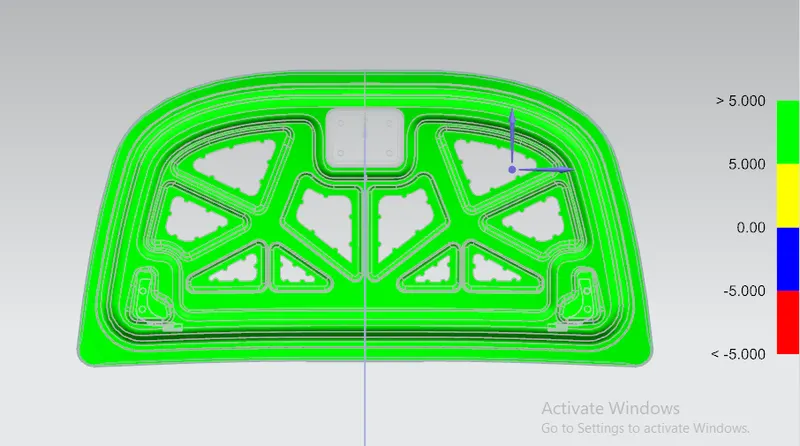
- No negative draft.
- Provide appropriate corner relief on the area of curvature.
- Outer Panel Thickness = 0.75mm.
- Inner Panel Thickness = 0.75mm.
- Reinforcement Thickness = 1.5mm.
- Minimum Filet Radius = 0.3mm+thickness(Example,thickness of outer/inner panel),0.3+0.75=3.75mm.
DESIGN:-
Inner panel:
Inner panel is the part that gives strength and rigidity to the outer panel. The master section represents the initial emboss shape and size. Then we provide the emboss for the latch and hinge elements after fixing the location.
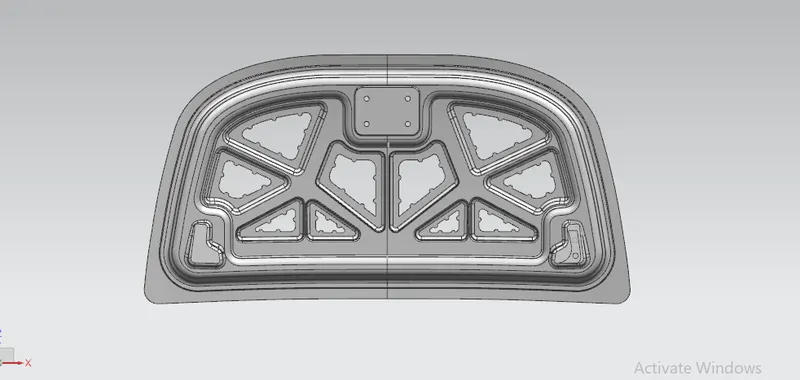
Part Navigators:
Sketch.
Extrude.
Offset.
Law of Extension.
Time Sheet.
Face Blend.
Edge Blend.
Mirror geometry.
Extract Body
Extended Sheet.
Sweep.
Outer panel:-
Outer panel is nothing but a outside cover for engine and its a used to make a car apperiance look good.
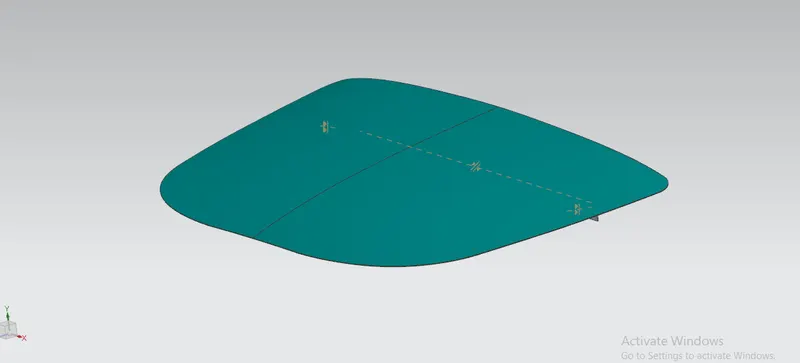
Hemming:-
- The outer panel & Inner panel can't join by any welding process if we did it will leave a spot on the outer panel and it will spoil the look of a car. so, to join inner and outer closure panels together we use the Hemming process.
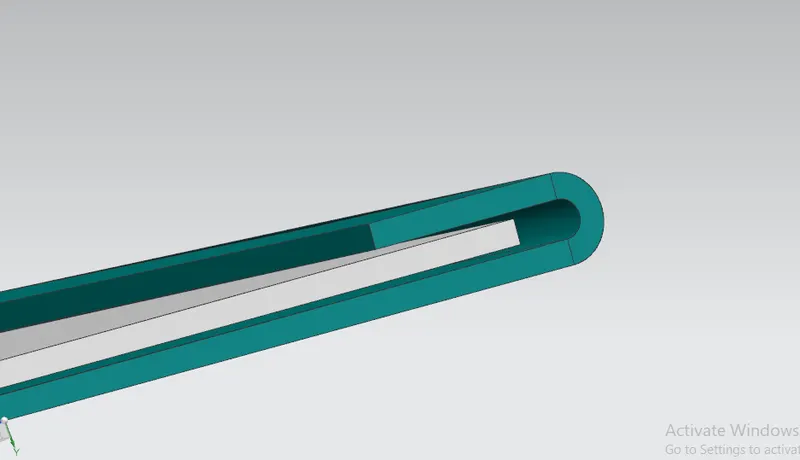
- It is the process of bending/folding the flange of the outer panel over the inner one.
- The flange of the outer panel is bent over the inner panel in progressive steps by means of the roller hemming head.
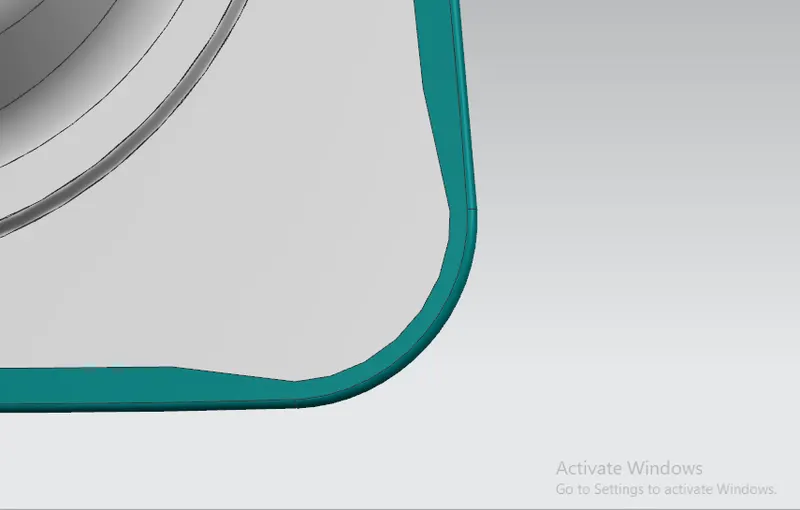
Corner Relief:-
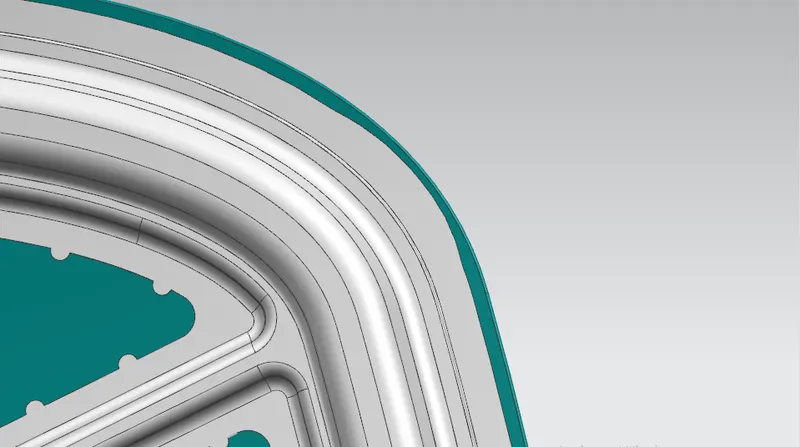
There are many types of Hemming process but in Hoods Roller hemming is used. In this process the roller will be rolling over the edges of the Outer panel to close it with the inner
panel. These roller will be rolling over 2-3 time for perfect closing. so, the certain force is being used by rollers to all the corners but there are some areas where the roller cannot tighten the part properly so thats why we give some relief to the corners.
Mastic sealant:-
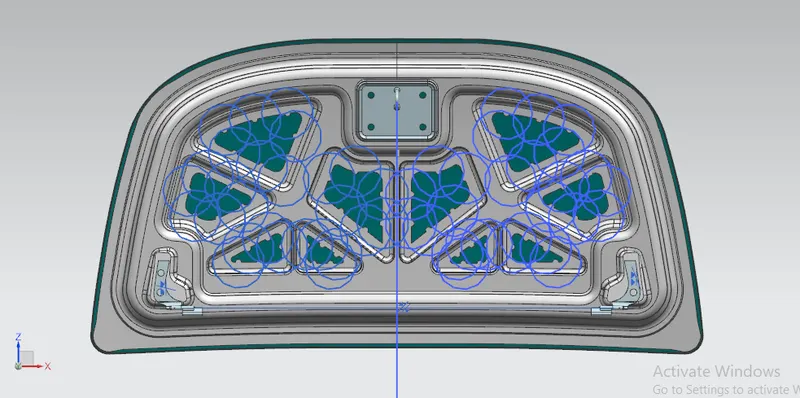
The Mastic sealant or mastic points is a elastic compound that behaves like a rubber. it is applied between Hood's outer panel and inner panel. it have an influence area of about 80mm.
Reinforcements:-
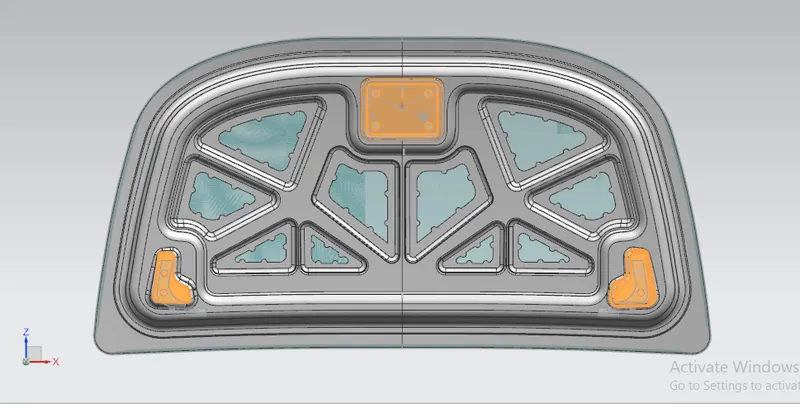
Reinforcements are provided according to the design requirements. Mainly it is provided at the hinge and latch regions to improve the strength locally. Usually thickness of reinforcements will be higher than that of the inner panels and the value varies according to cost and requirement. According to the design requirement here it is given 1.5mm thickness to both hinge and latch reinforcements.
Reinforcements are used to provide more strength to the assembly.
1. Latch & striker
2. Hinge
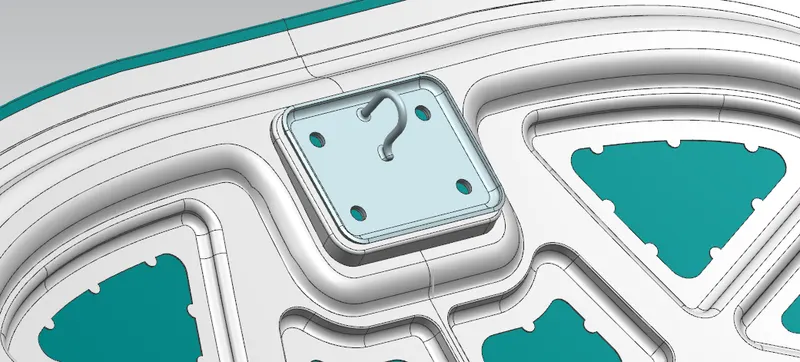
LATCH & STRIKER:-
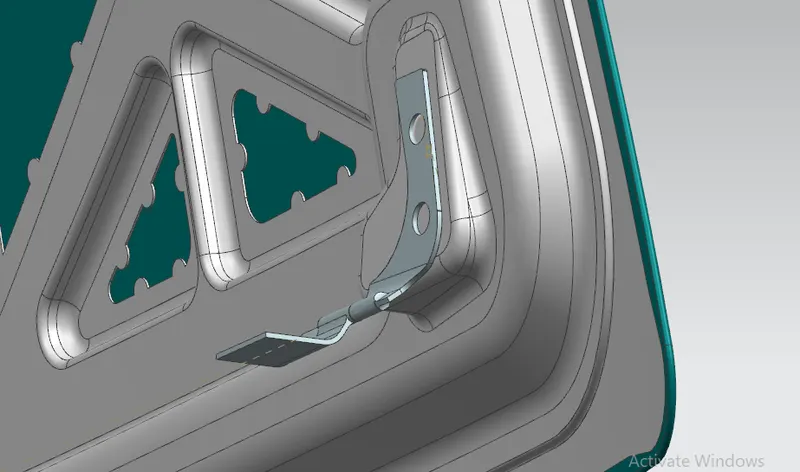
Latch & striker is used for locking the hood with the car. it's usually placed on the space provided on the inner panel.
HINGE:-
Hinges are used to connect the hood & cowl panel of an automobile. it enable the opening & closing operation of the hood. the hinge should be made strong enough to to handle the weight of the hood and also to handle the force action on it during the collision.
Sricker-
Hinge
Latch Trajectory
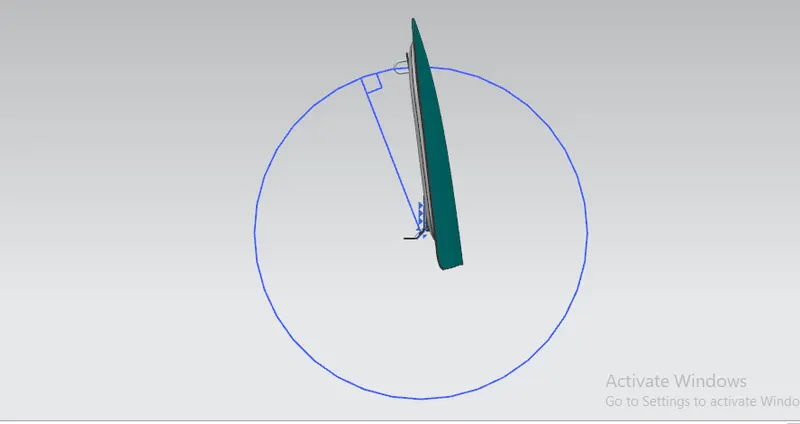
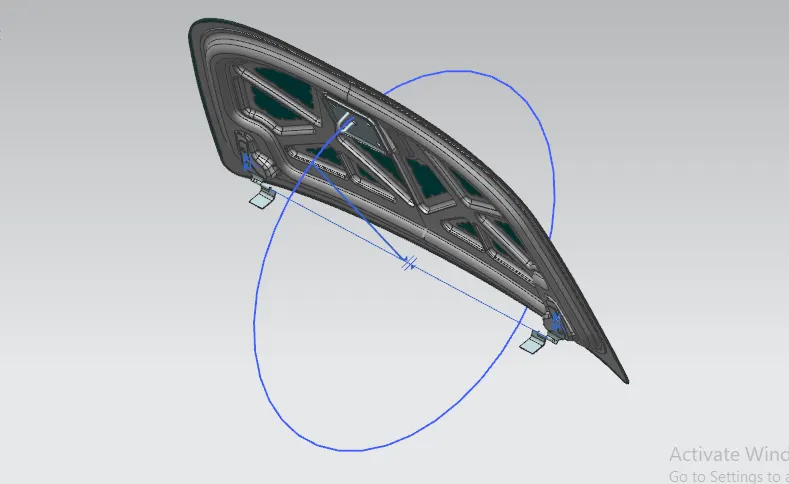
Latch trajectory is given by the circle drawn from the hinge axis point. Hinge axis point is the centre point of the hinge axis. First, we can fix either the latch or the hinge. If we have fixed the hinge position then we should plot the Trajectory circle for the latch. For proper mating condition the striker axis through the tip of the striker should be tangential to the latch trajectory.
Emboss definitions
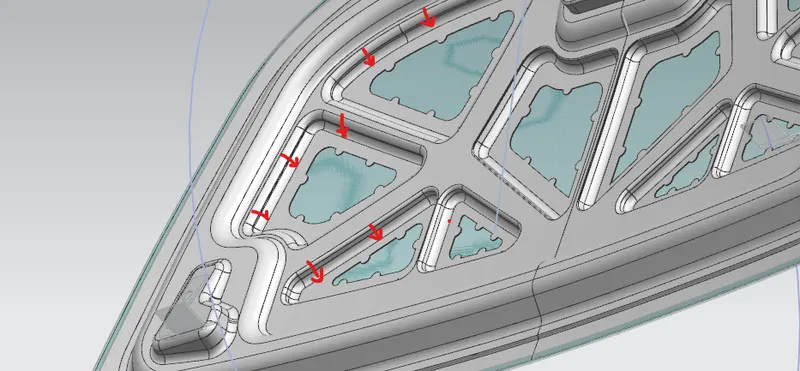
Throughout the inner panel we provide different embosses. We can increase the stiffness of the inner panel through these embosses. The shape and size of the embosses also determines the direction of the force distribution resulted from frontal collision. The force should be always distributed away from the passengers. Here in the figure the embosses are designed in such a way that the force is directed to either sides of the car.
SHOCK FLOW:-
Embosses were designed to dissipates the force outdie the structure and toward the hinges.
Mastic Data
Hood commonly possess large surface area and hemming can only be provided through its boundary. We cannot use other joining techniques like welding, riveting etc because they leave marks on the outer panel which spoil its aesthetic appearance. So, mastic sealants are used to stick the inner surfaces of outer panel and inner panel. Mastic sealants are elastic compound that behave like rubber. It is applied between the inner and outer panels at specified spots. Each spot of mastic sealants has its effect around a circular region of 80mm diameter. Thus, the mastic points are arranged in such a way that it covers the areas away from the hemming which are more vulnerable to vibrate.
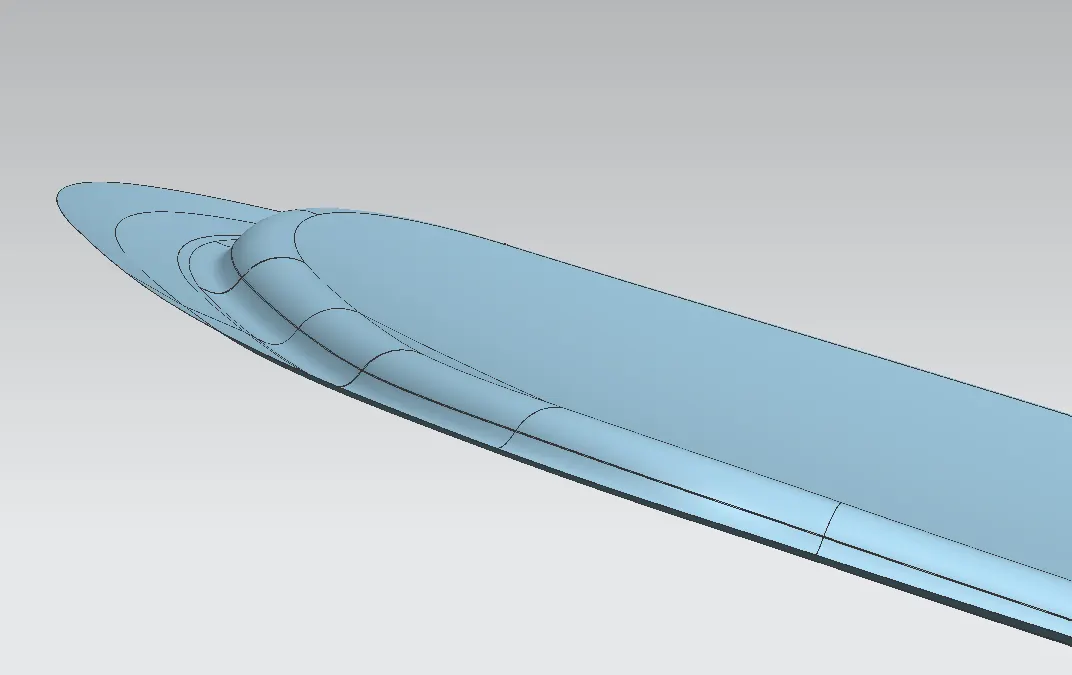
Deep Drawing
Deep drawing is one of the most widely used processes in sheet metal forming. Apart from its use in many other sectors, it is applied in the automotive industry for the manufacturing of car body parts. The deep drawing process is a forming process which occurs under a combination of tensile and compressive conditions.
Sheet metal blank is radially drawn into a forming die by the mechanical action of a punch. It is thus a shape transformation process with material retention. The process is considered "deep" drawing when the depth of the drawn part exceeds its diameter. This is achieved by redrawing the part through a series of dies. The flange region (sheet metal in the die shoulder area) experiences a radial drawing stress and a tangential compressive stress due to the material retention property. These compressive stresses (hoop stresses) result in flange wrinkles. Wrinkles can be prevented by using a blank holder, the function of which is to facilitate controlled material flow into the die radius.
DRAFT ANALYSIS:-
Draft analysis is carried out to see that the panel can be drawn or not. It also helps to find the negative draft present in the component which can cause difficulty in manufacturability.
CONCLUSION:-
Therefore, we have designed a hood that falls under the rules and regulations of the manufacturer's standards.