Hood design-Week 2
HOOD ASSEMBLY DESIGN
The Structure of Hood Panel
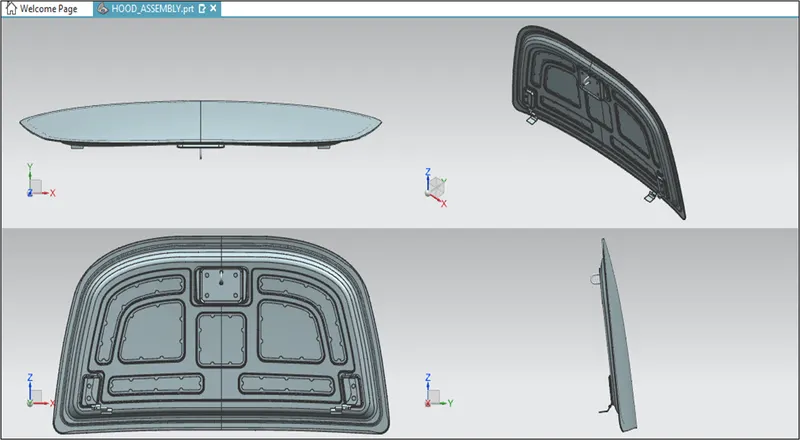
A car hood panel is one of the most important components of the BIW (body in white), it is considered as the closure sheet-metal component. A hood panel consists of two panels that are hemmed together to form the automotive hood assembly.
The inner panel of the hood is not visible to the customer, but this is the engineering feature of the outer panel. The outer panel has the aesthetic look to it but on its own is very weak and not capable of handling force during impact.
Hood Panel
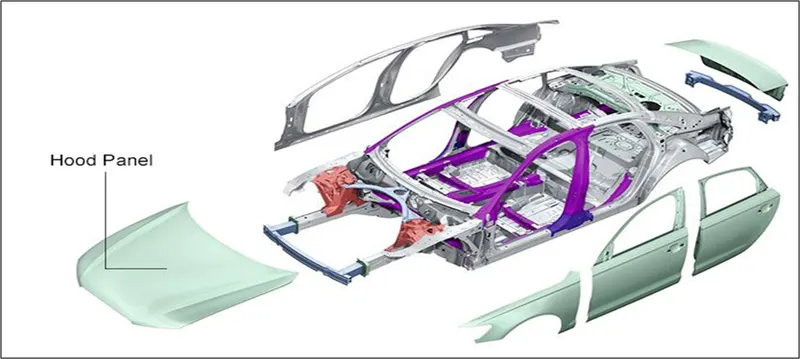
Components of Hood Panel
Outer & Inner panel –
A vehicle hood panel is formed by bonding an outer panel and an inner panel to each other.
Thus, the lateral rigidity of the vehicle hood is increased, allowing the thickness of an outer panel or the inner panel to be decreased to achieve a weight reduction.
Hem Flange –
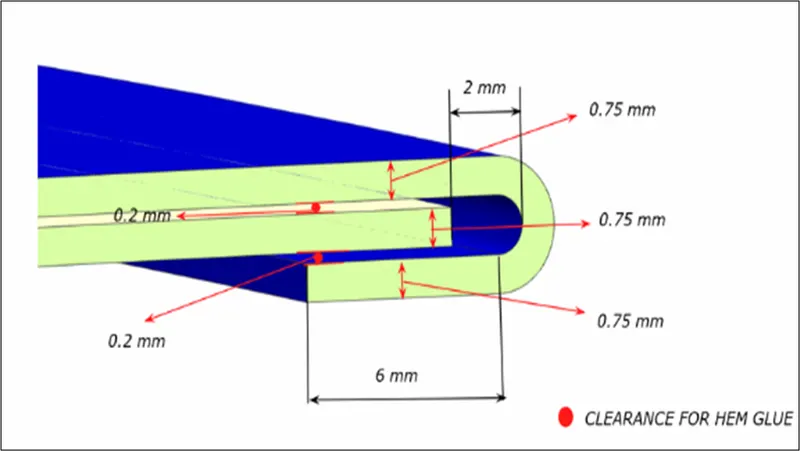
The hem flange is a mechanical joint design used for joining inner and outer panels.
Latches –
Latches are mechanical components that allow the temporary joining of moving parts relative to each other. They are actuated to release the coupling and allow the two parts to separate. They are mostly seen on doors and enclosures. They are used in devices such as seat belts, clamps, straps, and objects with retractable parts.
Mastic Data –
Pointing mastic is a pre-mixed, cold-applied, polymeric, single-component sealing compound. It was specifically designed to seal all exterior, vertical, and horizontal terminations. It can be used on all patches and overlaps in detail areas. It provides excellent adhesive and bonding strengths. These uses include sealing terminations for vertical or horizontal vapor proofing or waterproofing membranes.
Embossing –
Sheet metal embossing is a stamping process for producing raised or sunken designs or relief in sheet metal. This process can be made by means of matched male and female roller dies, or by passing sheet or a strip of metal between rolls of the desired pattern.
The metal sheet embossing operation is commonly accomplished with a combination of heat and pressure on the sheet metal, depending on what type of embossing is required.
Deep Drawing –
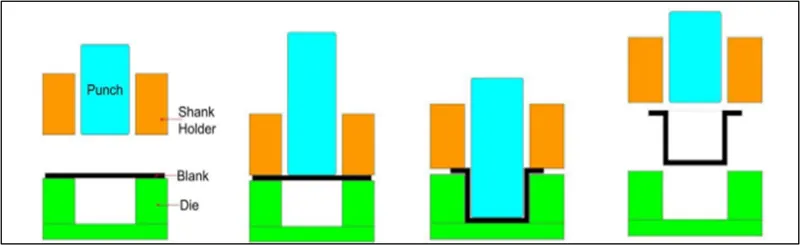
Deep drawing is a sheet metal forming process used industrially to produce cup-shaped, box-shaped, and other complex-curved hollow-shaped sheet parts.
Compressive and tensile forces are used in the deep drawing operation to convert a flat sheet metal blank into a hollow body.
Hemming –
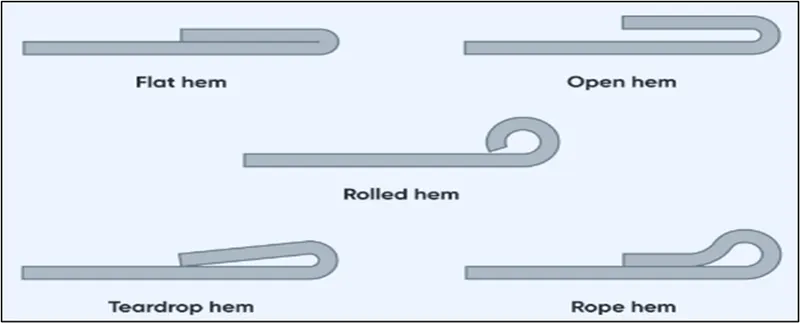
Hemming is a sheet metal forming process in which sheets are joined by bending it usually to 180°. Hemming is a forming operation in which the edges of the sheet are folded or folded over another part in order to achieve a tight fit. Normally hemming operations are used to connect parts together, to improve the appearance of a part and to reinforce part edges. The edge of one part may also be folded onto another part to create a joint.
Skin Data –
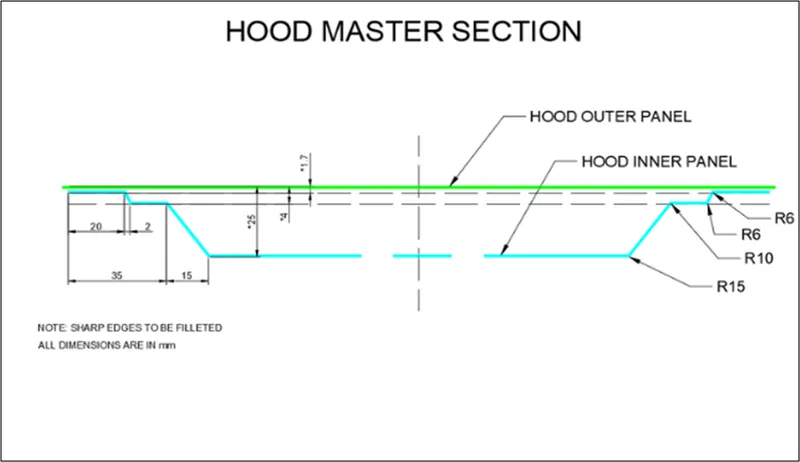
Master Section –
Hemming Data –
Relief Rear Section –
Relief Front Section –
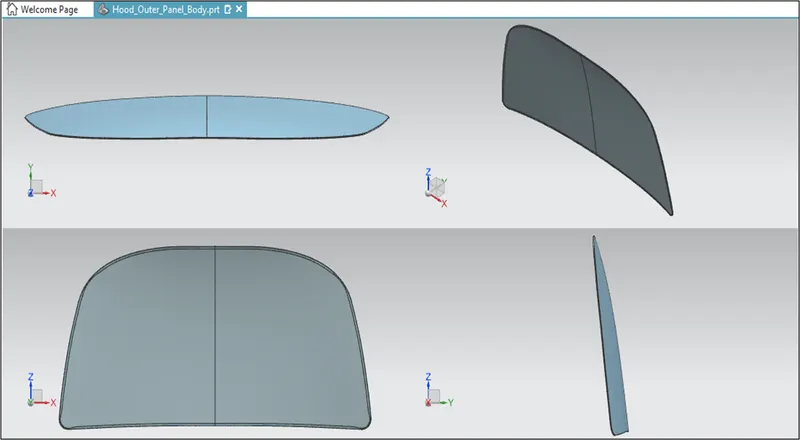
Outer Panel Body –
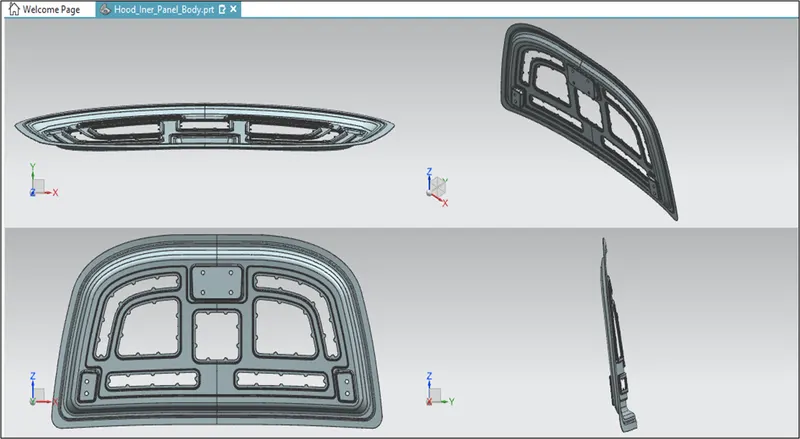
Inner Panel Body –
Hood Assembly –
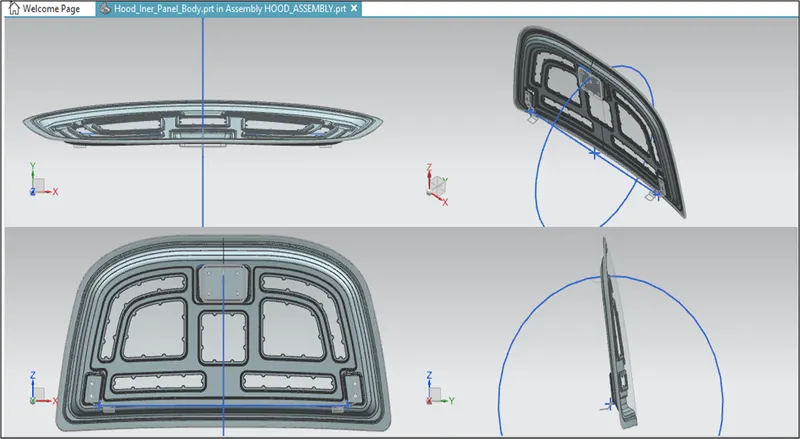
Latch Trajectory –
=====================================