Hood design-Week 2
CARHOOD DESIGN:
AIM:
To design the car hood and understand the mechanism behind the design of hood, then development and safety feature as per design consideration.
The following task is performed:
: Design Outer panel with Hem
: Develop the Inner Panel
: Develop all the Necessary Reinforcements
: Provide Mastic Data
: Provide required Embosses.
Master Sketch:
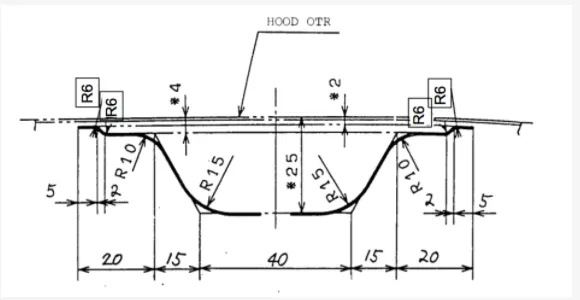
Data to be used:
Hood Thickness: Inner panel and Outer panel =0.75mm
Reinforcement Thickness =1.7mm
HOOD
INTRODUCTION:
A car hood, also referred to as a bonnet in some other countries, is the hinged cover that rests over the engine of a front-engine vehicle. Its purpose is to provide access to the engine for repair and maintenance. A concealed latch is typically used to hold down the hood. On vehicles with an aftermarket hood and on race cars, hood pins may be used to hold down the car hood. Hoods sometimes also contain a hood scoop, wiper jets, power bulge, and/or hood ornament. Car hoods are typically constructed from steel and sometimes from aluminium. Aftermarket car hoods may be constructed from various other materials, including carbon fibre, fiberglass, or dry carbon.
TYPES OF HOOD SUPPORT:
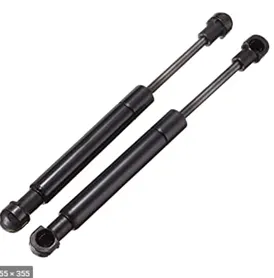
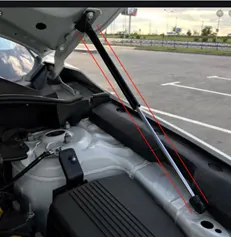
1. Gas Stay
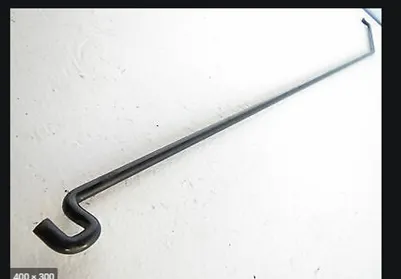
2. Support Rod
1. Gas Stay:
Spring stays are designed to be used on upward lifting doors, once you have opened the door slightly the spring will push the door to the fully open position. Euro fit stock various size springs depending on the door size requirements. This is mostly used where the car bonnet is heavy.
2.SUPPORT ROD:
This is widely used in many cars, because this is very easy and cheap. In this type we have to lift the hood by ourselves and place the support rod in the space provided either in the hood or engine component. This is mostly used for where the car bonnet weight is small.
Inner Panel:
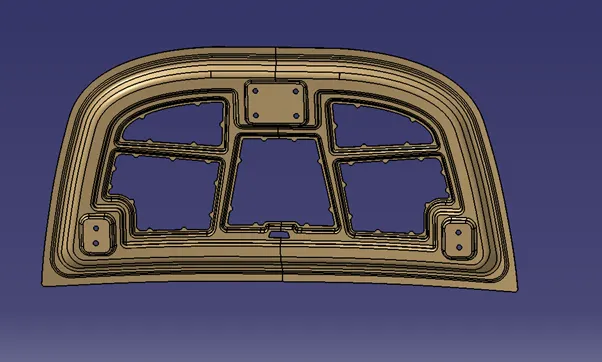
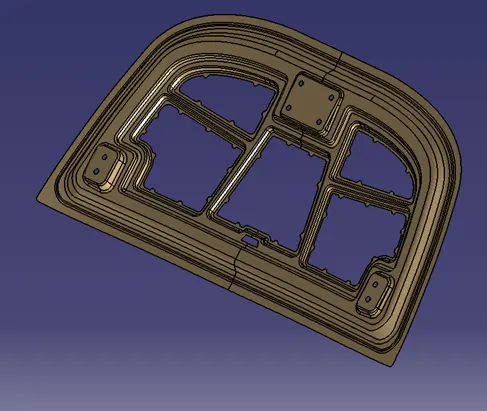
Inner panel supports outer panel. It consists of different embosses and holes at different places. Embosses provide stiffness as well as dissipate energy towards hinge while collision is happened. Inner panel is offset of the given styling A surface and its thickness is 0.75mm.
OUTER PANEL:
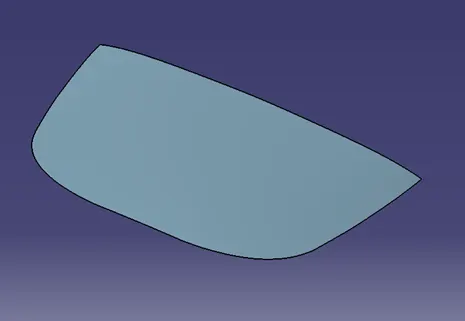
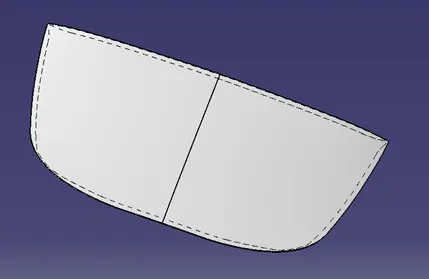
Outer panel is nothing but outer skin of inner panel. Also called as cover of inner panel. It is part which gives aesthetic look to hood. The outer panel is generally extracted model from the prototype design. Thickness of outer panel is 0.75mm.
EBOSSES:
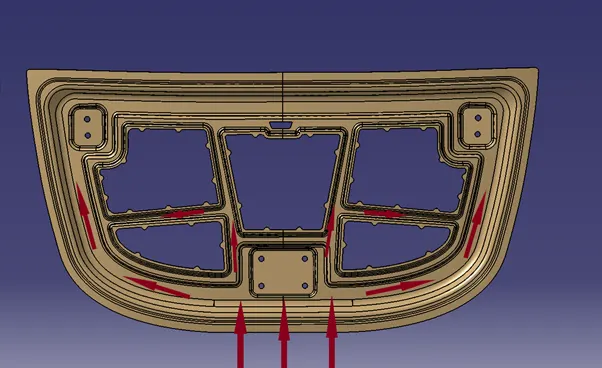
The geometry is created based on the master section. After performing the initial stages of design, we will provide Embosses to strengthen the hood. When the force impacts the hood from the front, it travels in an upward direction. The embosses is designed in such a way that they divert the force away from the passengers into the hinges as shown in the above picture. Embosses are made based on master section given.
MASTIC SEALENT:
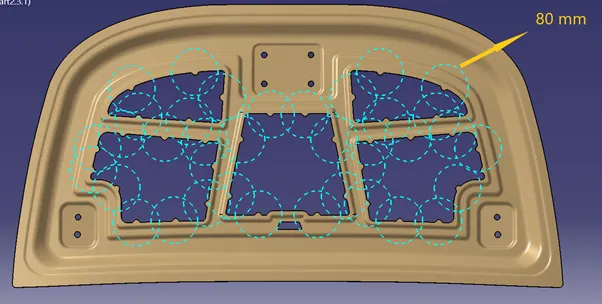
The Mastic point is an Elastic compound which behaves like rubber, The mastic points are defined on the hood inner panel, they help the hood outer panel to come back original shape after it gets deform, Mastic points helps to join both inner and outer panel and avoids Noise, Vibrations and Hardness while engine is in ON mode.
HEMMING:
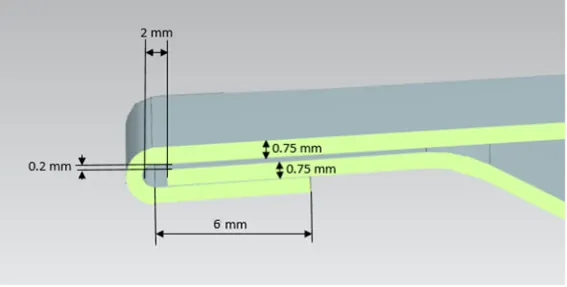
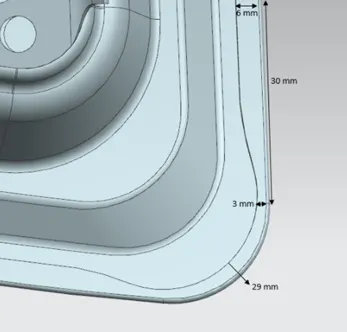
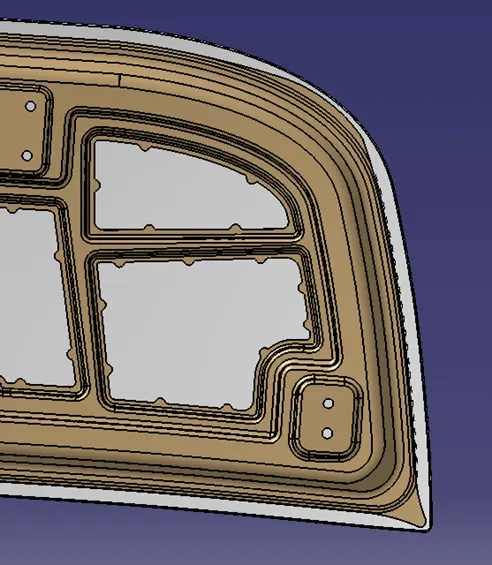
Hemming is the process of joining both outer and inner panel together. The hemming process roles and wraps the hood outer panel around the inner panel and holds it tightly together. Following are the dimensions which followed for hemming.
POSITION OF HING AND STRIKER:
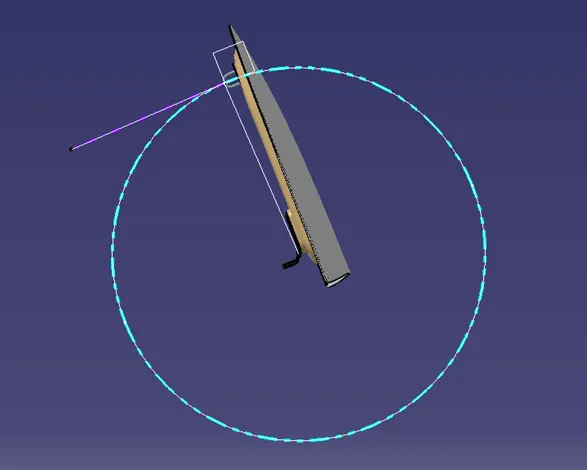
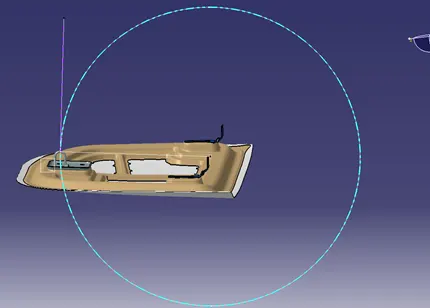
This is done with the help of latch and striker. To position the latch and striker effectively, we draw hinge axis. Now using the hinge axis as the centre, we draw a circle to the position where we needed the latch to be placed. Then we draw a line which is tangent to circle at the point and place the latch in that region.
BUILDING RE-ENFORCEMENTS:
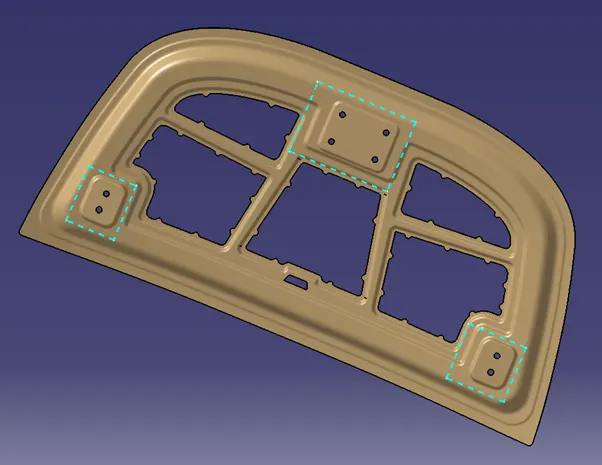
After development of the entire inner panel for the hood, we need to develop some additional necessary re-enforcements. The Latch Striker and Hinges will need a re-enforcement that needs to be developed.
SLOT:
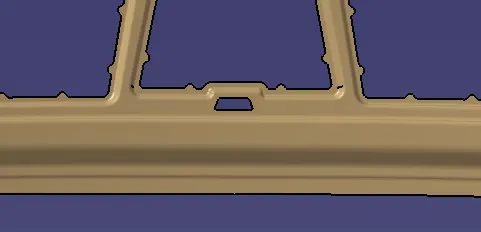
Slot is made for passage of pipes of wiper spray.
ASSEMBLED VIEW:
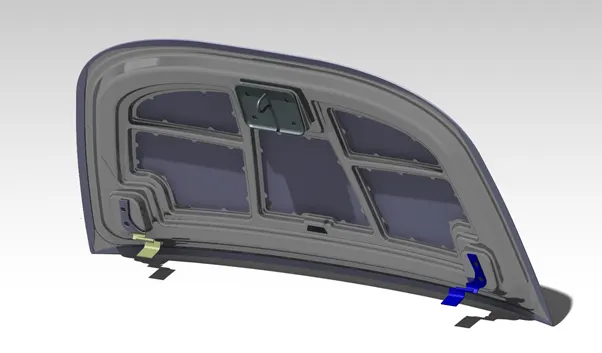
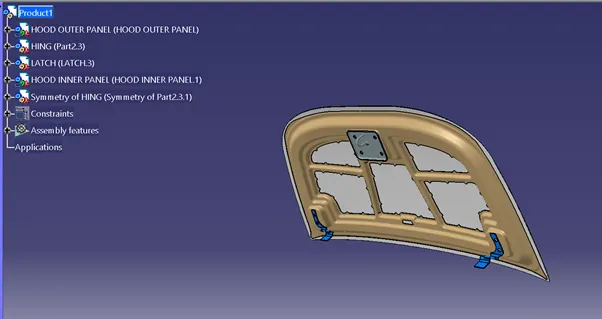
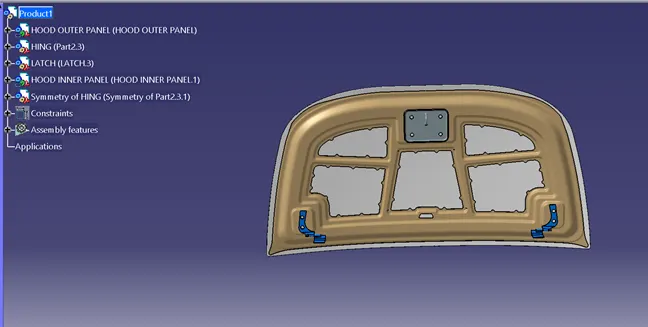
CONCLUSION:
All parts of hood are designed based on the required conditions and given values and assembled together to complete the hood design.