Flow over an airfoil
Airfoil:
An airfoil is a device which gets a useful reaction from air moving over its surface. When an airfoil is moved through the air, it is capable of producing lift. Wings, horizontal tail surfaces, vertical tails surfaces, and propellers are all examples of airfoils.An airfoil is a device which gets a useful reaction from air moving over its surface. When an airfoil is moved through the air, it is capable of producing lift. Wings, horizontal tail surfaces, vertical tails surfaces, and propellers are all examples of airfoils.
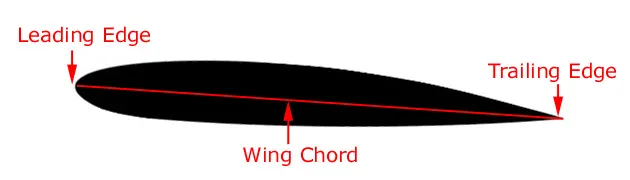
Generally the wing of small aircraft will look like the cross-section of the figure above. The forward part of an airfoil is rounded and is called the leading edge. The aft part is narrow and tapered and is called the trailing edge. A reference line often used in discussing airfoils is the chord, an imaginary straight line joining the extremities of the leading and trailing edges.
PROCEDURE:
1.The geometry was created using the coordinates provided along with the challenge.
2. After creating the geometry, the sketch was closed and extruded to get the design ready.
3.this was set up in flow simulation to achieve our objective.
4. inlet is 5-10 times of chord length
5. outlet is 10-15 times of chord length
6. mesh of the airfoil was refined at the edges and size was appropriately adjusted.
7. Cut plots were introduced.
Velocity=500 ms-1
AOA- 0 degree
DRAG=152.38N
LIFT=1.94N
From the velocity & Pressure cut plot, Air stream of velocity 500 m/s flows over the airfoil, it is split into two equal streams.
AOA-2 degree
DRAG=175.15N
LIFT=638.371N
AOA=4 degrees
DRAG=238.064N
LIFT=1307.17N
AOA=6 deg
DRAG=357.587N
LIFT=2.1KN
AOA=8 deg
DRAG=508.85N
LIFT=2.63KN
AOA=10 degrees
OBSERVATIONS:
As the angle of attack increases the value of lift increases and drag too. But this is possible upto a critical AOA only. This is because flow of air separates from the wings,forming turbulent eddies.