Parametric study of ball valve with varying openings.
AIM:
Parametric study of ball valve with varying openings.
BALL VALVE:
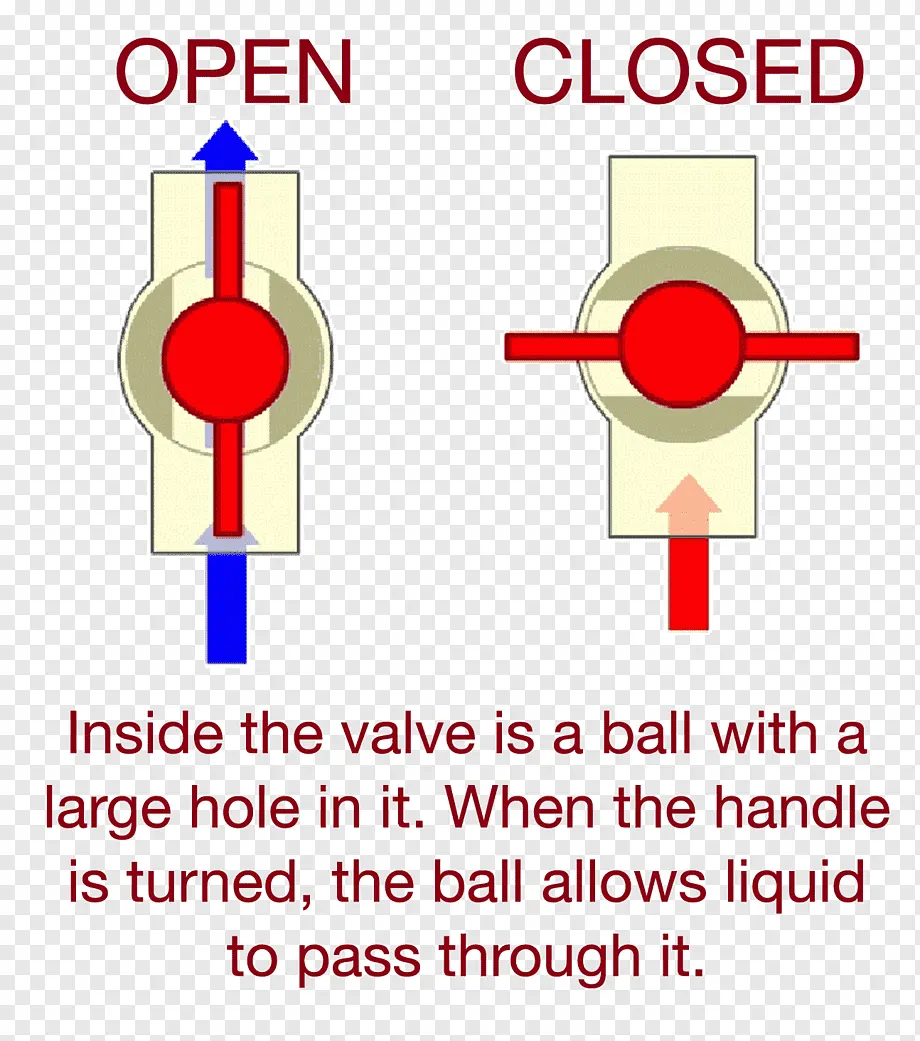
A ball valve is a shut-off valve that controls the flow of a liquid or gas by means of a rotary ball having a bore. By rotating the ball a quarter-turn (90 degrees) around its axis, the medium can flow through or is blocked. They are characterized by a long service life and provide a reliable sealing over the life span, even when the valve is not in use for a long time. As a result, they are more popular as a shut-off valve then, for example, the gate valve. Moreover, they are more resistant to contaminated media than most other types of valves. In special versions, ball valves are also used as a control valve. This application is less common due to the relatively limited accuracy of controlling the flow rate in comparison with other types of control valves. However, the ball valve also offers some advantages here. For example, the valve still ensures a reliable sealing, even in the case of dirty media.
GEOMETRIC MODEL OF GATE VALVE:
BOUNDARY CONDITIONS :
Inlet boundary condition: Total Pressure = 506625 Pa
Outlet boundary condition: Total Pressure = 101325 Pa
Flow Trigectories:
Flow factor:- The flow factor is the flow coefficient in metric units. It is defined as the flow rate in cubic meters per hour of water at a temperature of 16deg C with a pressure drop of 1 bar. It is given by the formula,
Where Kv - flow factor
Q - volume flow rate ( m3/hr )
SG - specific gravity of the fluid ( for water = 1 )
dP - Pressure drop ( bar )=4.053 bar
so Kv=Q*(0.49)
Flow coefficient:- The flow coefficient of a device is a relative measure of its efficiency at allowing fluid flow. The flow coefficient is the volume (in gallons) of water at 60deg F that will flow per minute through a valve with a pressure drop of 1psi across the valve. It is given by the formula,
Where Cv - flow coefficient
Q - volume flow rate ( gallons per minute)
SG - specific gravity of the fluid ( for water = 1 )
dP - pressure drop ( Psi )
Design Points:
Design point 01:
Angle of opening =90.
Pressure plot:
Velocity Plot:
Flow Trigectories:
Design point 02:
Angle of opening =77.1.
Pressure plot:
Velocity Plot:
Flow Trigectories:
Design point 03:
Angle of opening =64.2
Pressure plot:
Velocity Plot:
Flow Trigectories:
Design point 03:
Angle of opening =64.2
Pressure plot:
Velocity Plot:
Flow Trigectories:
Design point 04:
Angle of opening =51.4
Pressure plot:
Velocity Plot:
Flow Trigectories:
Design point 05:
Angle of opening =38.5
Pressure plot:
Velocity Plot:
Flow Trigectories:
Design point 06:
Angle of opening =27.5
Pressure plot:
Velocity Plot:
Flow Trigectories:
Design point 07:
Angle of opening =12.7
Pressure plot:
Velocity Plot:
Flow Trigectories:
Design point 08:
Angle of opening =0
Pressure plot:
Velocity Plot:
Flow Trigectories:
Comparison:
| Design Point | Design Point 1 | Design Point 2 | Design Point 3 | Design Point 4 | Design Point 5 | Design Point 6 | Design Point 7 | Design Point 8 |
| Volume Flow Rate 1 [m^3/s] | 0.066058385 | 0.060322262 | 0.045110217 | 0.031048626 | 0.017716106 | 0.008373788 | 0.002371071 | -9.40E-47 |
| Angle of opening [deegrees] | 90 | 77.1 | 64.2 | 51.4 | 38.5 | 25.7 | 12.8 | 0 |
|
Flow Factor (Kv) |
Conclusion :
- It is observed from contours obtained from the simulation that the mass flow rate increases and pressure drops as the gate disc of the valve are opened more.
- From the above table, it is observed that the flow coefficient and flow factor increases as the pressure drop across the valve is lowered and the pressure drop decreases as the mass flow rate increases across the valve.
- If the valve is going to be opened most of the time, then a valve with a higher flow coefficient must be selected with lower head loss and to save energy. If the valve is going to be regulated most of the time, then a valve with a lower range of flow coefficients must be considered