Fender Design Challenge
DESIGN OF FRONT FENDER
FENDER:
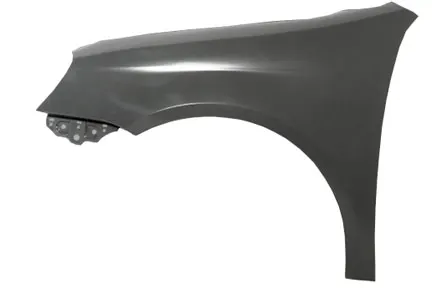
The fender is the car body part that frames the wheel. Its purpose is to prevent sand, dirt, rocks, and other roads spray from being thrown into the air by the rotating tire and close the engine component. When a vehicle is moving, tires pick up stones and others and hurl them in all directions. Fenders are basically present to prevent any injuries to pedestrians and contain the motion of these particles. A pair of front and rear fenders can be found on each side of a vehicle.
Fender is the US English term for the part of an automobile (vehicle body) that frames a wheel well (the fender underside).
Aside from keeping your vehicle clean, car fenders protect vital components from minor collisions. They also help define the car's overall style and design. They provide classy contours that give your car a classy, edgy look, especially when your vehicle is viewed from the side. They also help improve your car's aerodynamics, so your car is not only cleaner but also faster.
Curved steel was predominantly used in the fabrication of fender panels when they were first introduced in the late 1800s. Today, automakers use non-ferrous sheet metals and other materials to avoid corrosion damage caused by exposure to water and the elements. You can find modern car fenders made from steel, aluminum, thermoplastic, and fiberglass.

Types of car fenders:
- Full Bumper type
- Half Bumper type
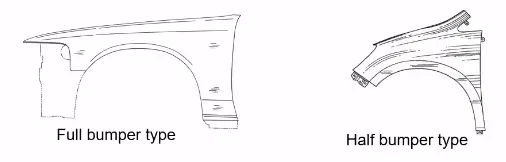
Either a single full bumper type or two half bumper type fenders can be produced from a single blank. Half bumper type is widely used because of less wastage of material, which in turn reflects the car's overall price.
Fenders based on location:
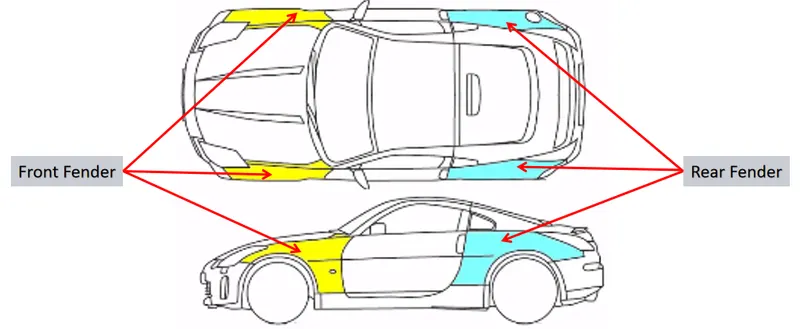
- Front Fenders or Front Quarter Panels:
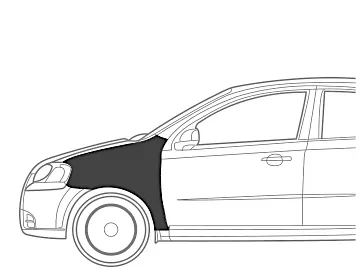
Front fender panels are located on the sides of each front wheel. These panels typically cover the sides of the headlights to the hinge of the driver and passenger doors on the A-pillar. A car front fender runs vertically from the hood to the wheel well.
- Rear Fenders or Rear Quarter Panels:
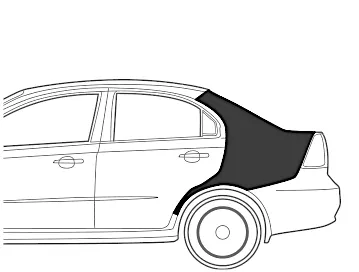
Rear fender panels are located on the sides of each rear wheel. They extend from the edge of the rear doors on the C-pillar all the way towards the edge of the taillights. Rear fenders also usually feature a fuel hole with a gas cap. These features can be found on either the driver or passenger rear panels, depending on the year and model of the vehicle.
Mountings:
1) Bumper
2) Drip
3) A pillar
4) Sill
5) cowl
Given data for Fender Designing:
Drip Area
The area at which the fender gets attached to the engine housing through fasteners. It is the major mounting for the fender. Mountings at the drip area are designed leaving a clearance of 200mm from the back of the fender for the cowl setup. And clearance of 150mm from the front of the fender for a headlamp housing unit.
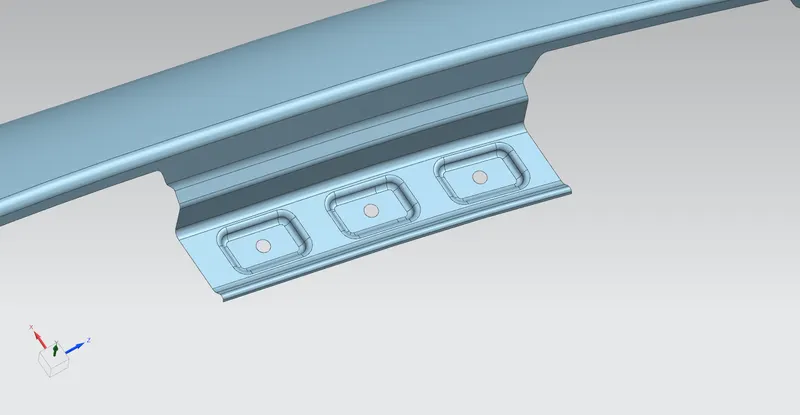
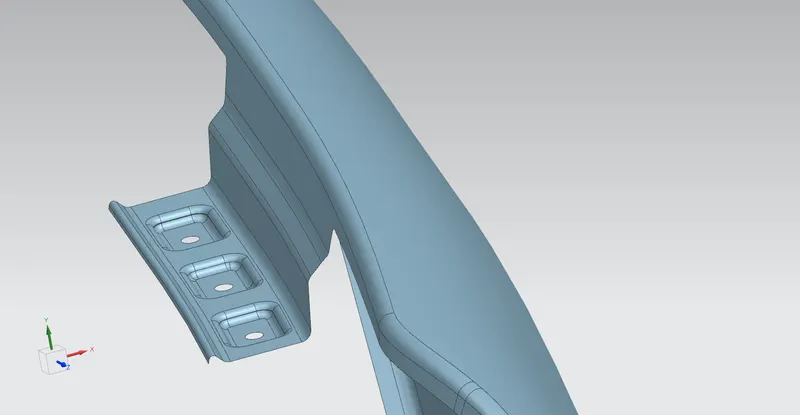
A-Pillar Mounting Area
This Mounting region is located near the cowl of the vehicle where the fender is fastened with the bottom edge of the windshield. This mounting is covered with the side rear-view mirror.
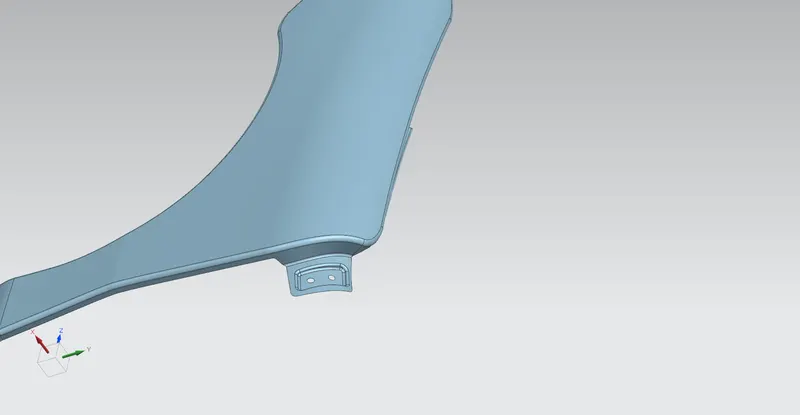
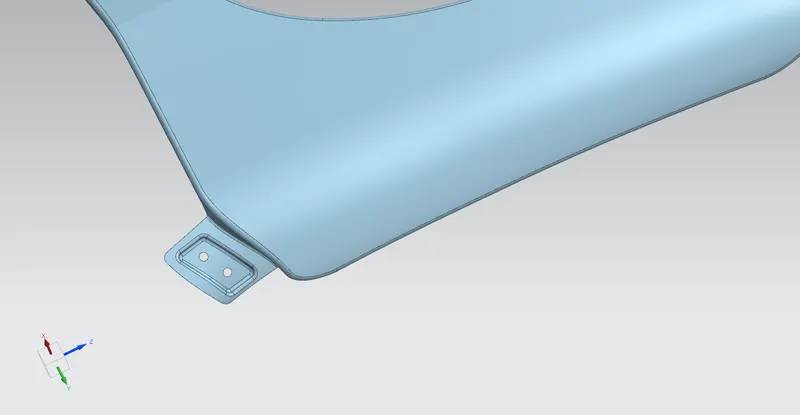
Sill Mounting Area
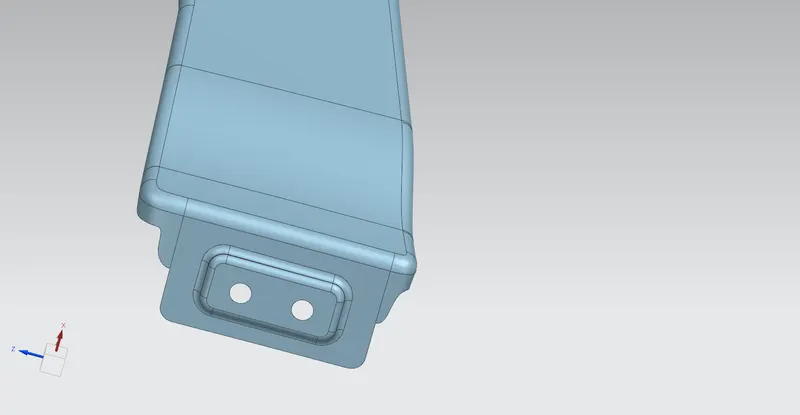
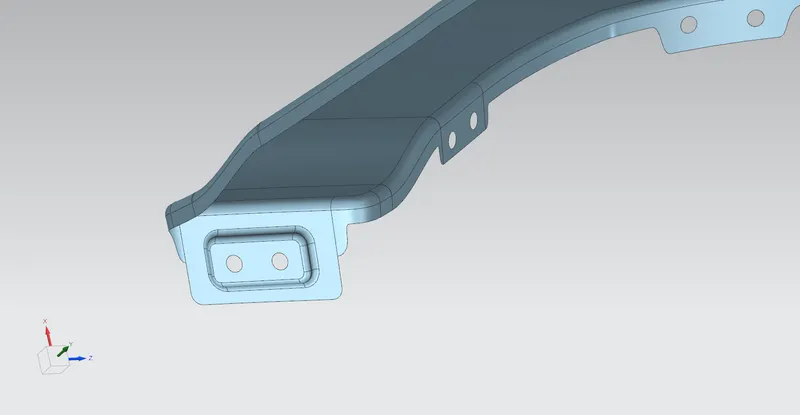
The area at which the bottom of the fender gets connected to the floor near the bottom edge of the door. The Embossed sill mounting of the fender is attached with the fasteners.
Bumper Mounting Area
The bumper mounting region is located beneath the bumper. The fender gets attached before the installation of the bumper. After fixing the fender with fasteners the bumper will cover the bumper mounting.
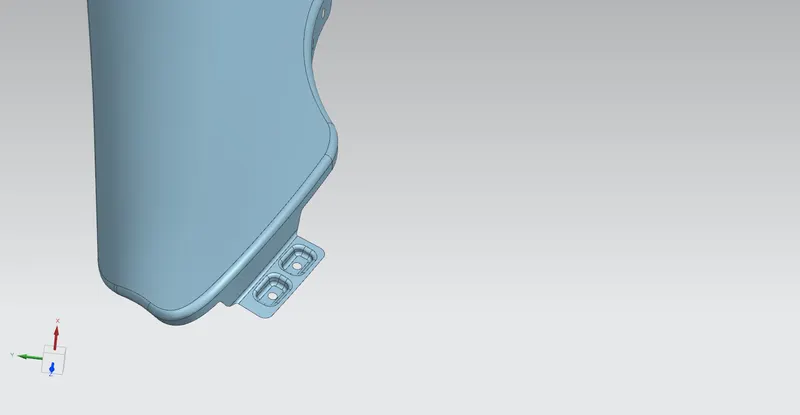
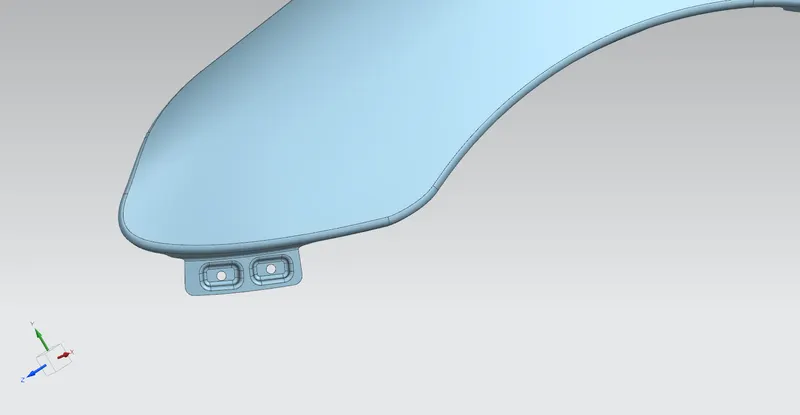
Baffle Mounting Area
In this region, the baffle gets installed to the fender with the help of clips which holds the baffle with the fender along the wheel arch.
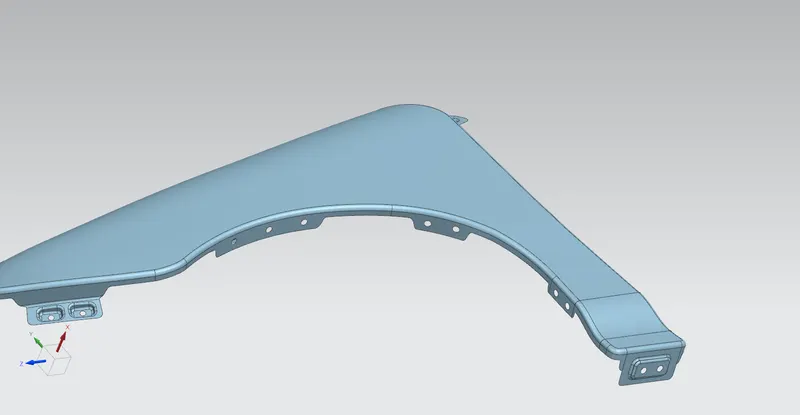
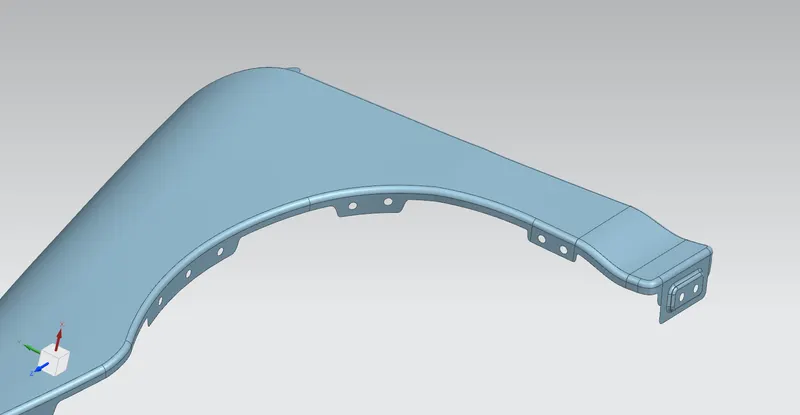
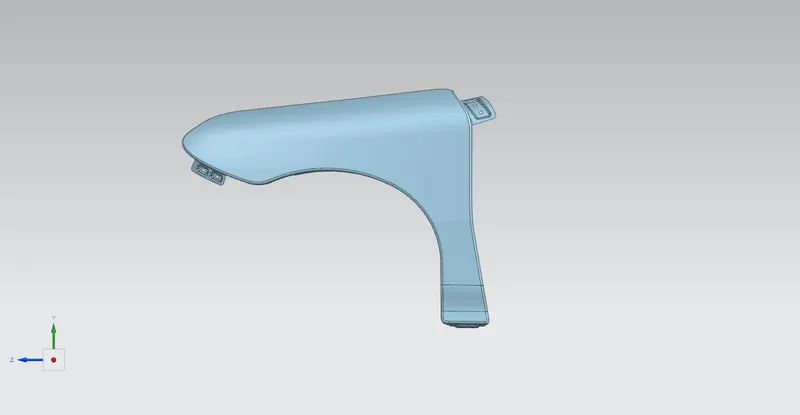
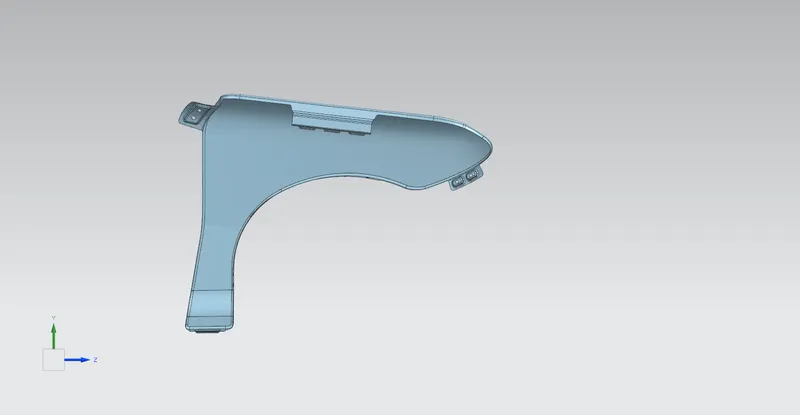
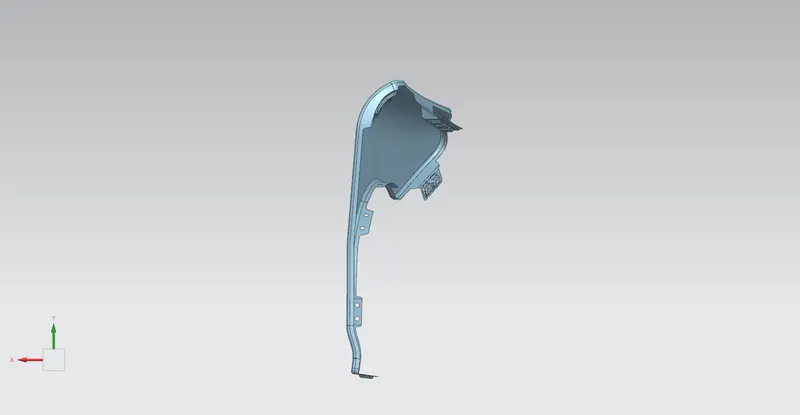
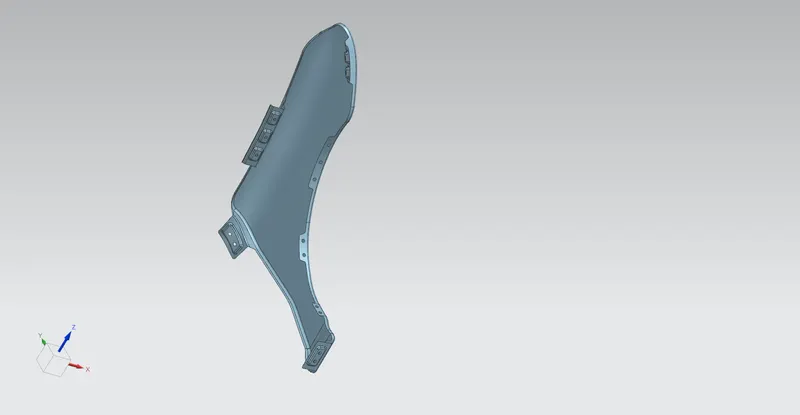
FINAL MODEL