Fender Design Challenge
FENDER DESIGN
AIM
Our main aim is to design the fender along with the mounting regions, Drip area, A-pillar mount area, Sill mount area, body mount area, cowl mount area.
Theory
It is a part fixed above the wheel. Its primary function is to protect the engine compartment and the pedestrians from the chippings shoot out from the running wheels.
Two types of fender are theere:
- Full bumper type
- Half bumper type
Nowadays half bumper type is used, This is mainly to reduce the weight of the component and also for cost effectiveness.
The weight can be reduced because when we use half bumper type the metal used will be considerably low as compared to full fender type and hemce plastic of bumper a]occupies more space, hence reducing weight.
The cost of production can also be reduced as a single sheet is used to make a fender if we make a full bumper type there will be a lot of wastage of material, But if we make the sheet a little big we can make two fenders from a single sheet. So Half bumper type fenders also help in cost reduction.
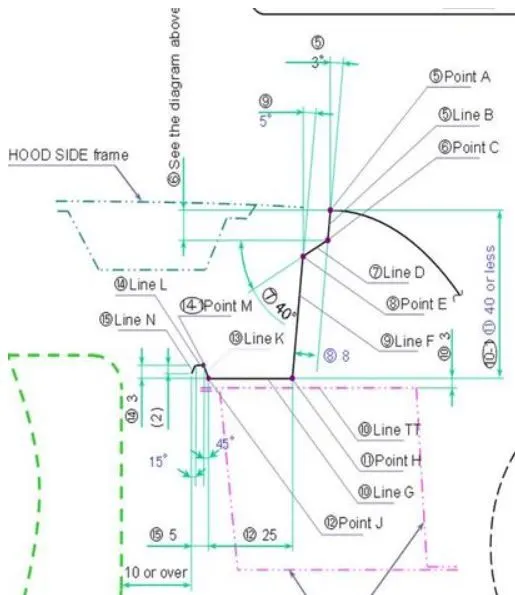
Master Section
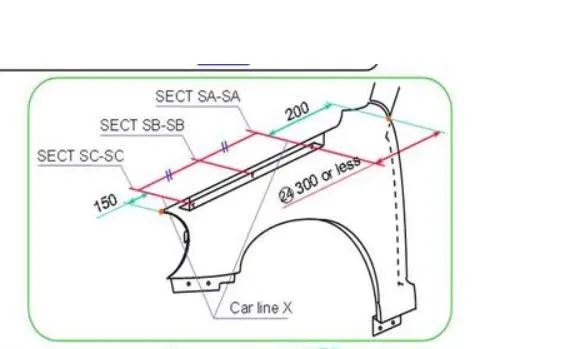
The most important section while designing a fender is the drip area, i.e., the fender area which is in contact with the engiine compartment. We have to follow the values which is given below to design the drip area.
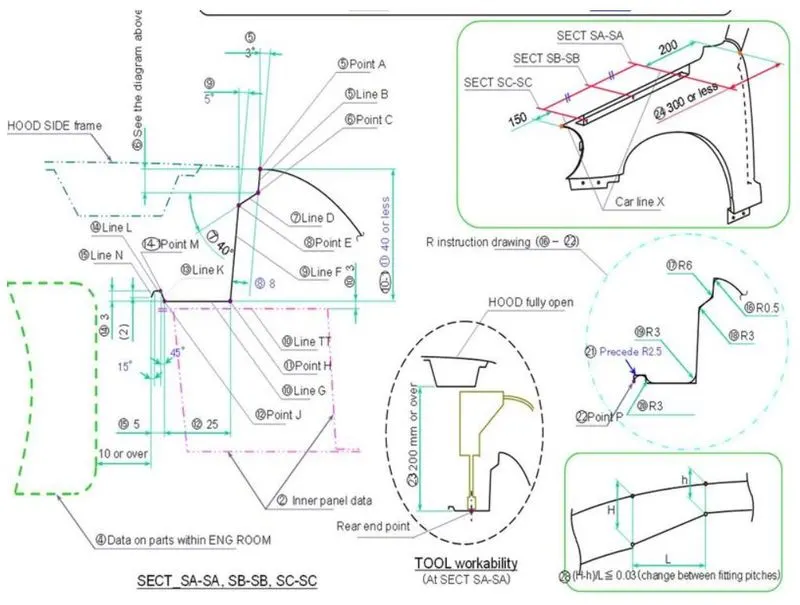
Procedure
We have to follow the below steps to design the mountings.
- We have to use the command offset curve on surface to make curves which is at a distance of 5 mm from the top of surface. This is used to create the mountings.
A-Pillar Mounting
- In order to make the mounting fo the A-pillar we have to make curve on surfaces as shown in the below image
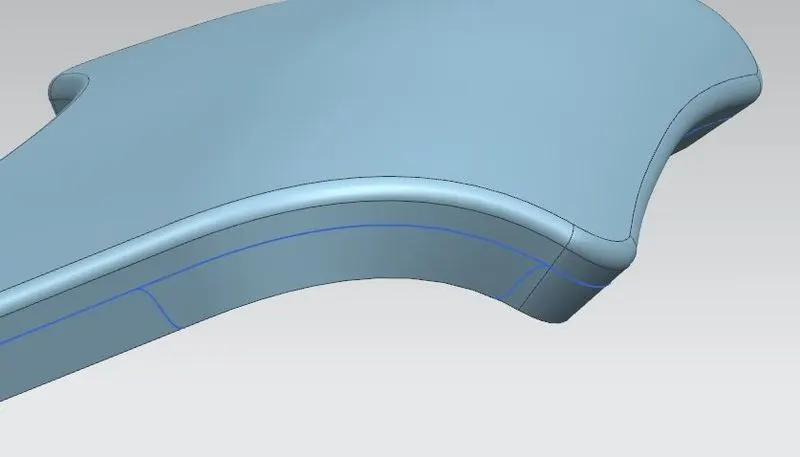
- After making this curve we have to trim the sheet like the image shown below.
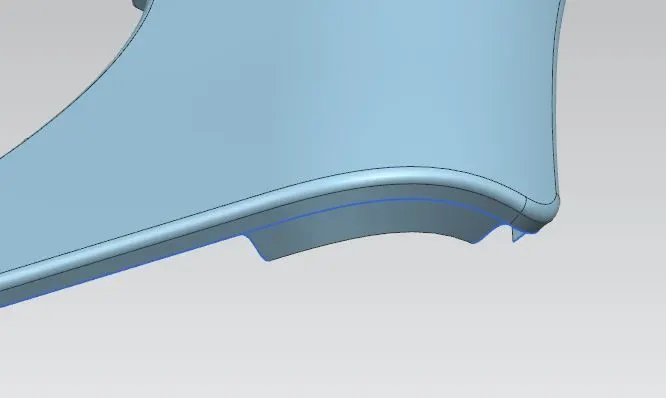
- After this create law extension on bottom edge at a suitable length, we can strim the excess part.
- After making the law extension we have to make sketches and project it on the law extension to make embosses.
- Inorder to make the emboss we have to make seperate datum planes by selection three points on the projected curve. We have make emboss on that plane to make the bottom of the emboss flat.We also have to make holes on the embosses for fasteners. These embosses are made to connect the fender to the A-pillar using suitable fasteners.
- We also have to blend the two faces together to obtain a continuous flow.
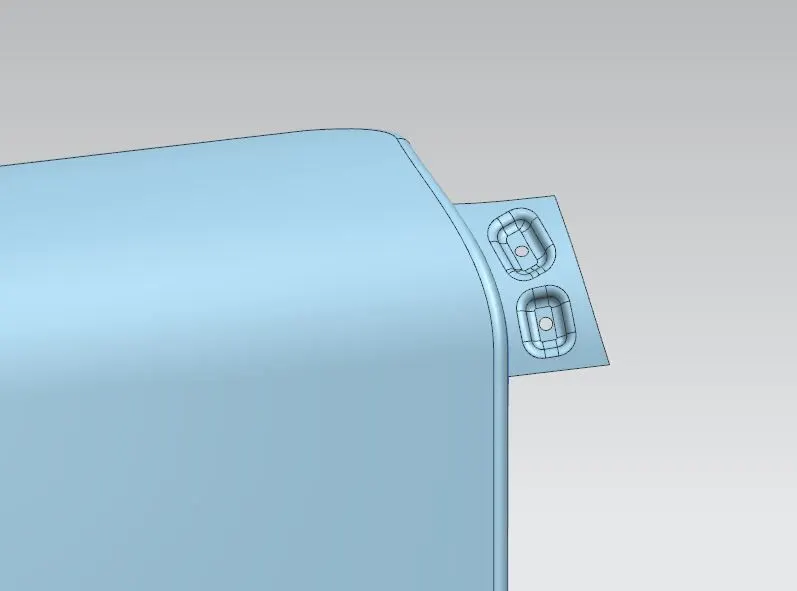
Drip Area Mounting
- Inorder to make the drip area first of all we have to cofirm the distancesfrom both the ends with the data from master section.
- We can find this by using datum plane and intersection curves. The datum planes must be at a particular distanc from both the ends of the fender like shown in the image below.
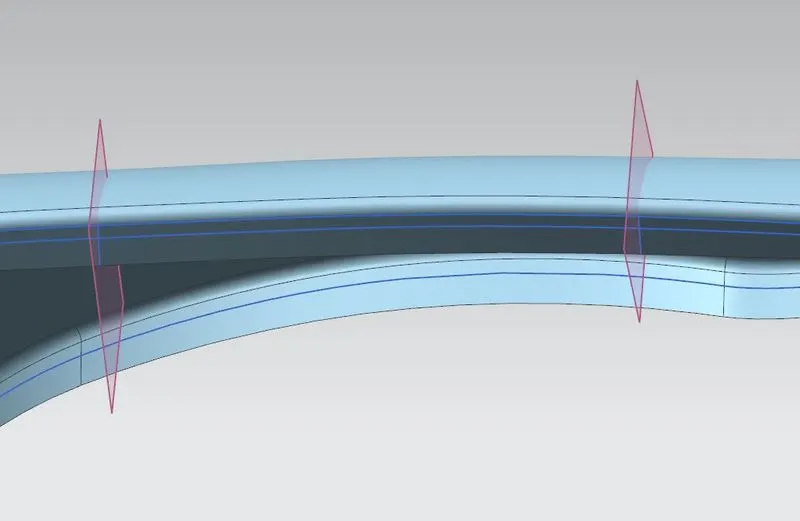
- After finding the intersection points we have to make curves for the drip area and trim the sheet.
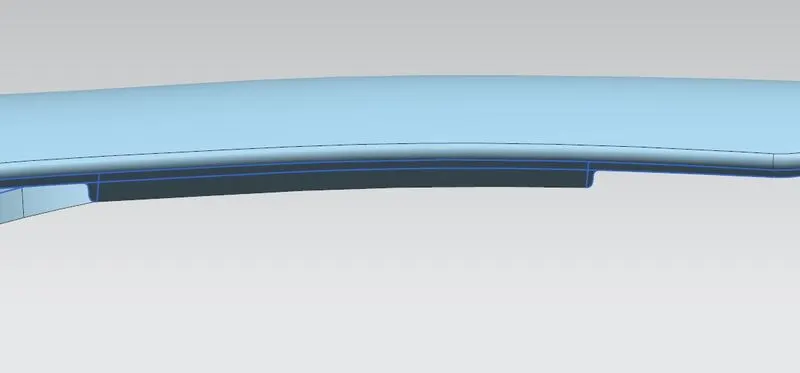
- After that we have to make the law extension and design the drip area according to the master section.
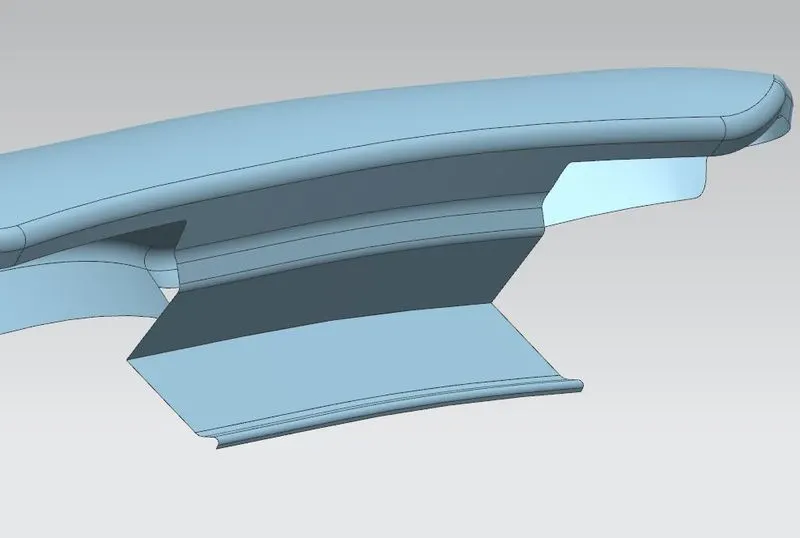
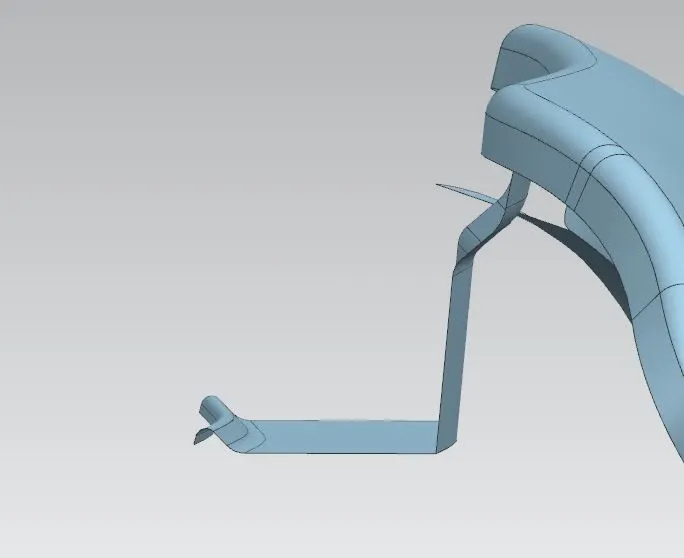
- We have to make embosses on the flat surface with the help of a datum plane on the surface to make the bottom face of the emboss flat.
- After making emboss we also have to make holes for fasteners.
- We have to make ribs to improve its strength.
- After that we have bend the faces together.
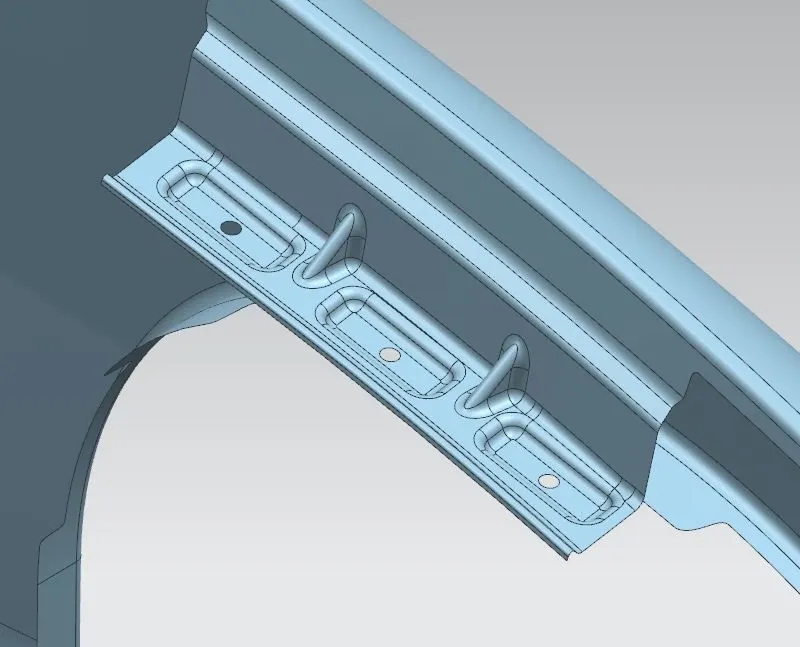
Bumper Mounting
- For making bumper mounting we have to make curves on the area where fender is going to be in contact with the bumper and trim it according to the curves.
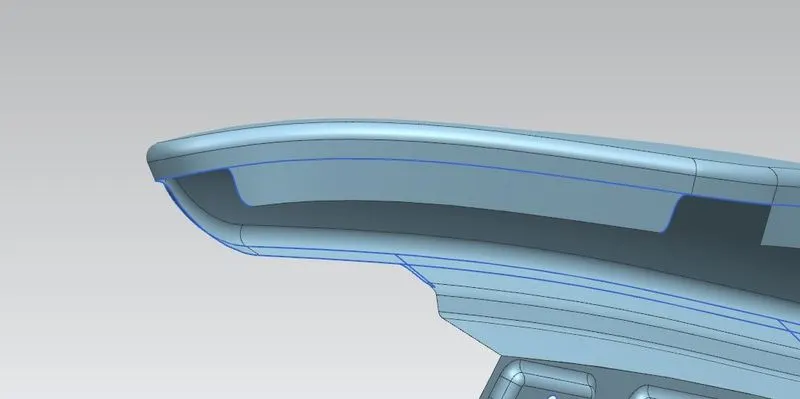
- After this we have to make surface using law extension.
- After making this law extension we have to make embosses with sketches drawn on the datum plane created on the surface created from law extension.
- We also have to make edge blends on the edges of embosses and face blend between the two faces.
- After that we have to make holes in the emboss for fasteners.
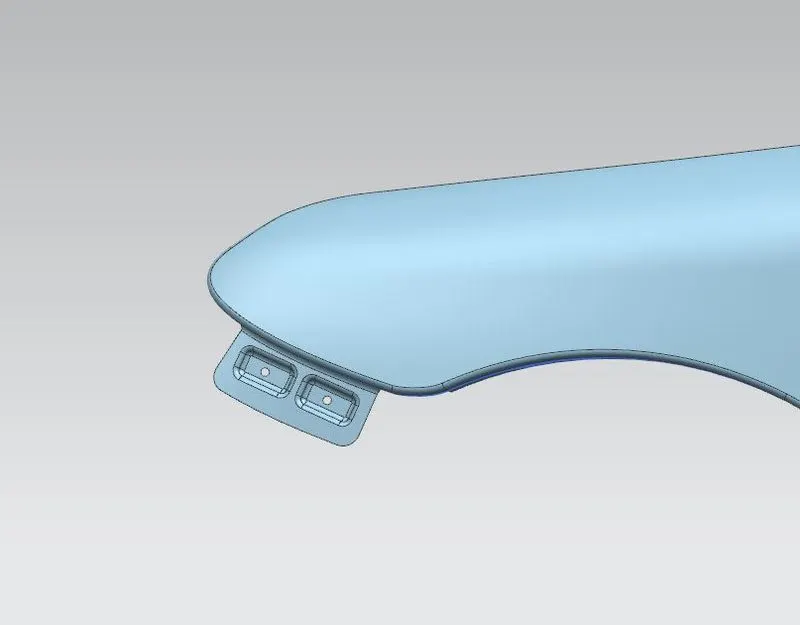
Sill Mounting
- For making sill mounting we have to trim the flange with the help of curve on surfaces.
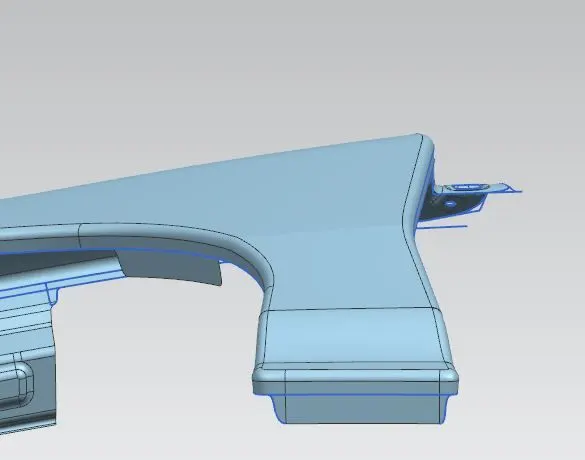
- After that we have to make the law extension and make emboss on that along with holes for fasteners.
- After making emboss we have to make edge blends on the edge of the emboss and face blend between the main surface and law extension surface.
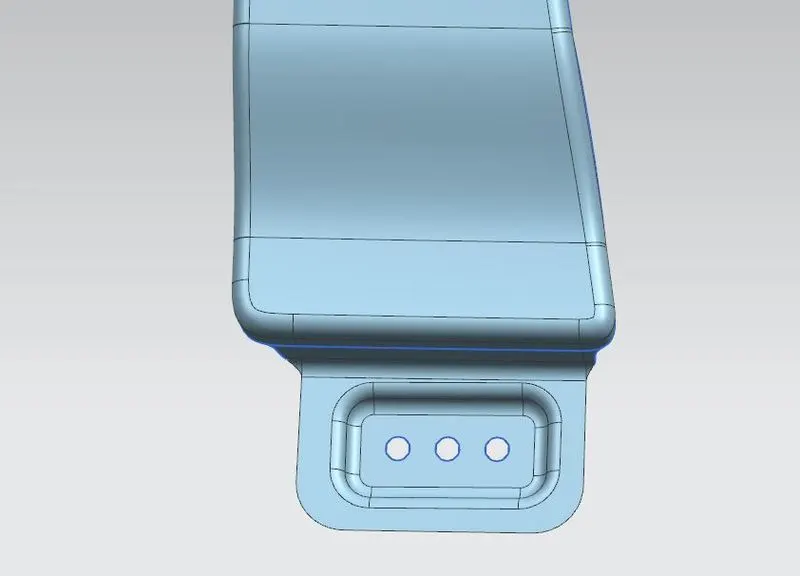
Baffle Mounting
Baffle mountings doesnot require any extensions or anything as baffles are placed on the fender itself so we only need holes for fixing baffles with fender using clips.
- But we have to reduce the material so we need to cut out some portions.
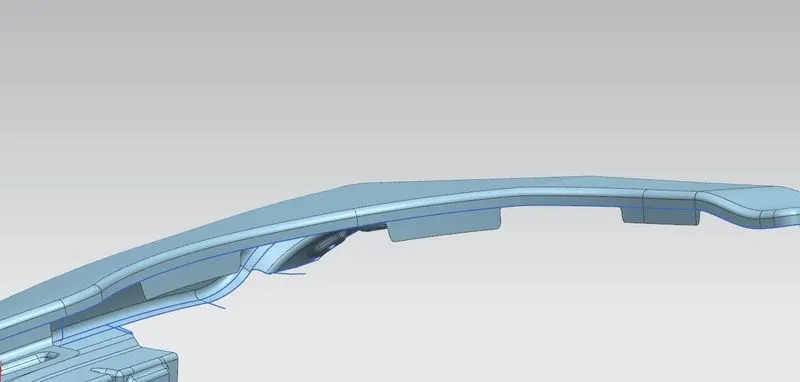
- Then we have to make holes for clips.
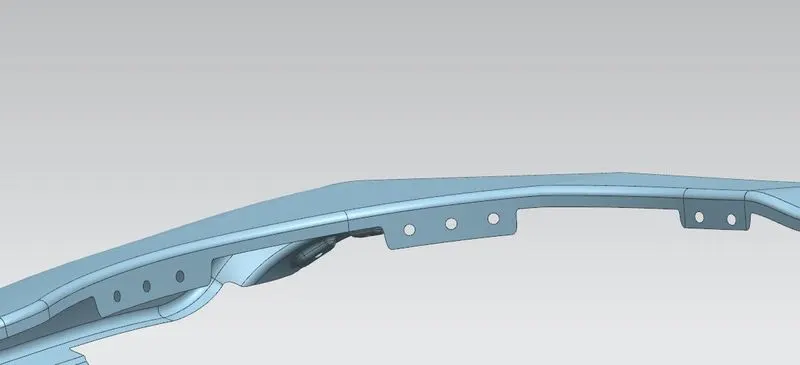
After making all the mountings we have to thicken the sheet with a value of 0.75mm.
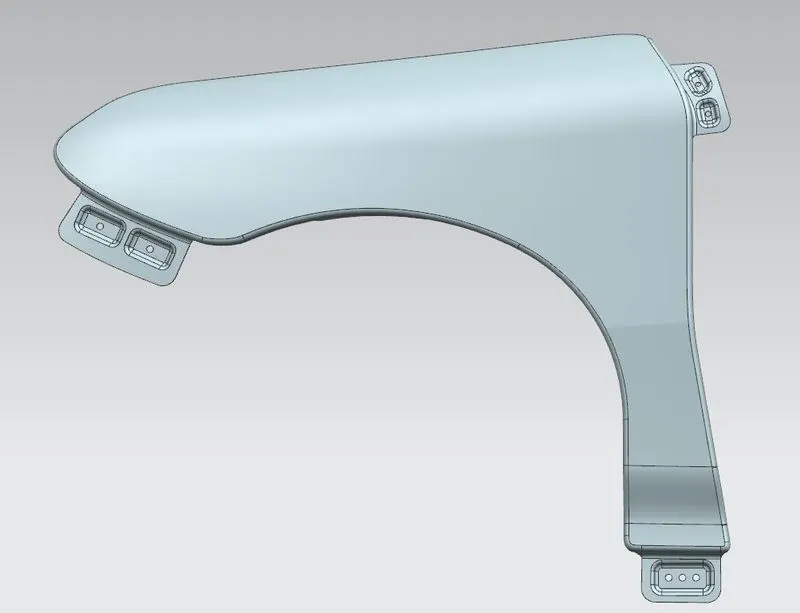
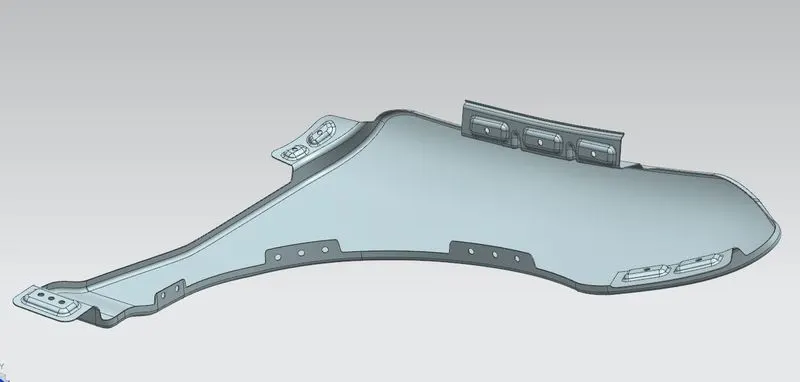
Conclusion
All the mountings are designed and the final model is thickened.