Fender Design
Fender Design
1. Introduction:
A fender is a critical component of an automobile that frames the wheel well, preventing sand, mud, rocks, and liquids from being thrown into the air by the rotating tires. The design of a fender is crucial for aerodynamics, aesthetics, and compliance with safety and manufacturing standards.
2. Design Objectives The primary objectives in designing a fender include:
- Ensuring compliance with industry safety and regulatory standards.
- Optimizing weight while maintaining strength and durability.
- Achieving a balance between manufacturability and aesthetics.
- Providing sufficient clearance for tire movement and suspension travel.
3. Design Considerations
- Material Selection: Common materials include steel, aluminum, and thermoplastics, chosen based on factors like cost, weight, and corrosion resistance.
- Manufacturing Process: Stamping, hydroforming, and plastic injection molding are commonly used.
- Aerodynamic Performance: The shape of the fender impacts vehicle drag and fuel efficiency.
- Mounting and Assembly: Attachment points should align with BIW (Body-in-White) design principles.
- Regulatory Compliance: Must adhere to pedestrian safety and impact resistance norms.
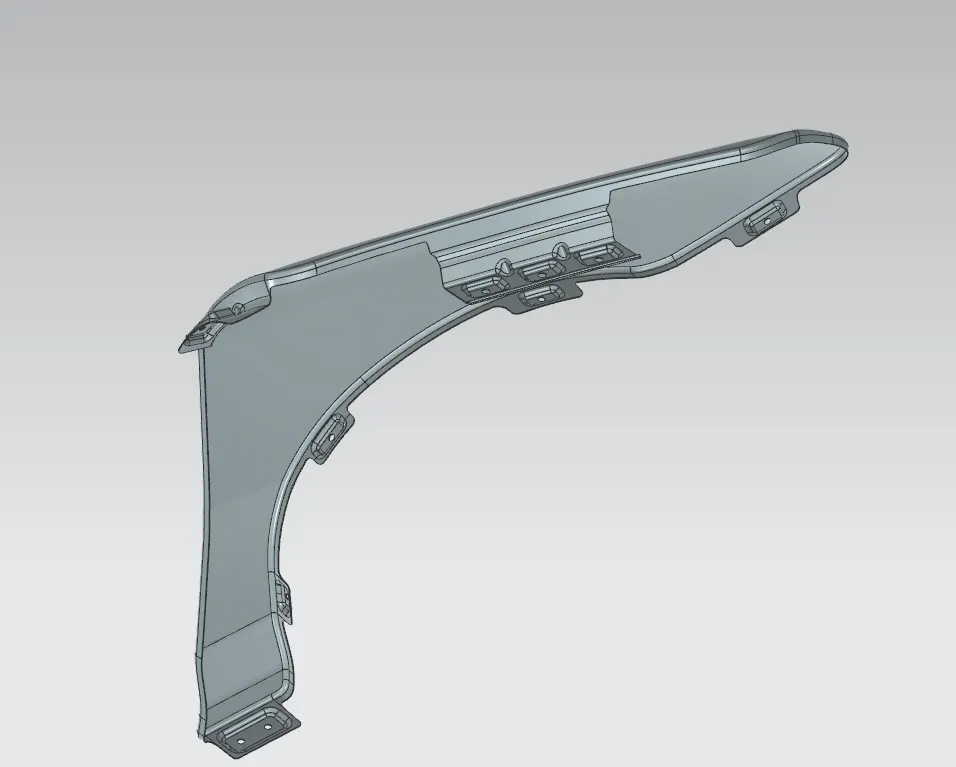
4. CAD Model Development
5. Manufacturing Feasibility
- Draft Angle: Applied for ease of stamping/molding.
- Springback Compensation: Considered for high-strength materials.