Fender Design
Modelling of various mounting points on the fender.
Objective
To design various mounting points on the fender, according to the design parameters.
Introduction
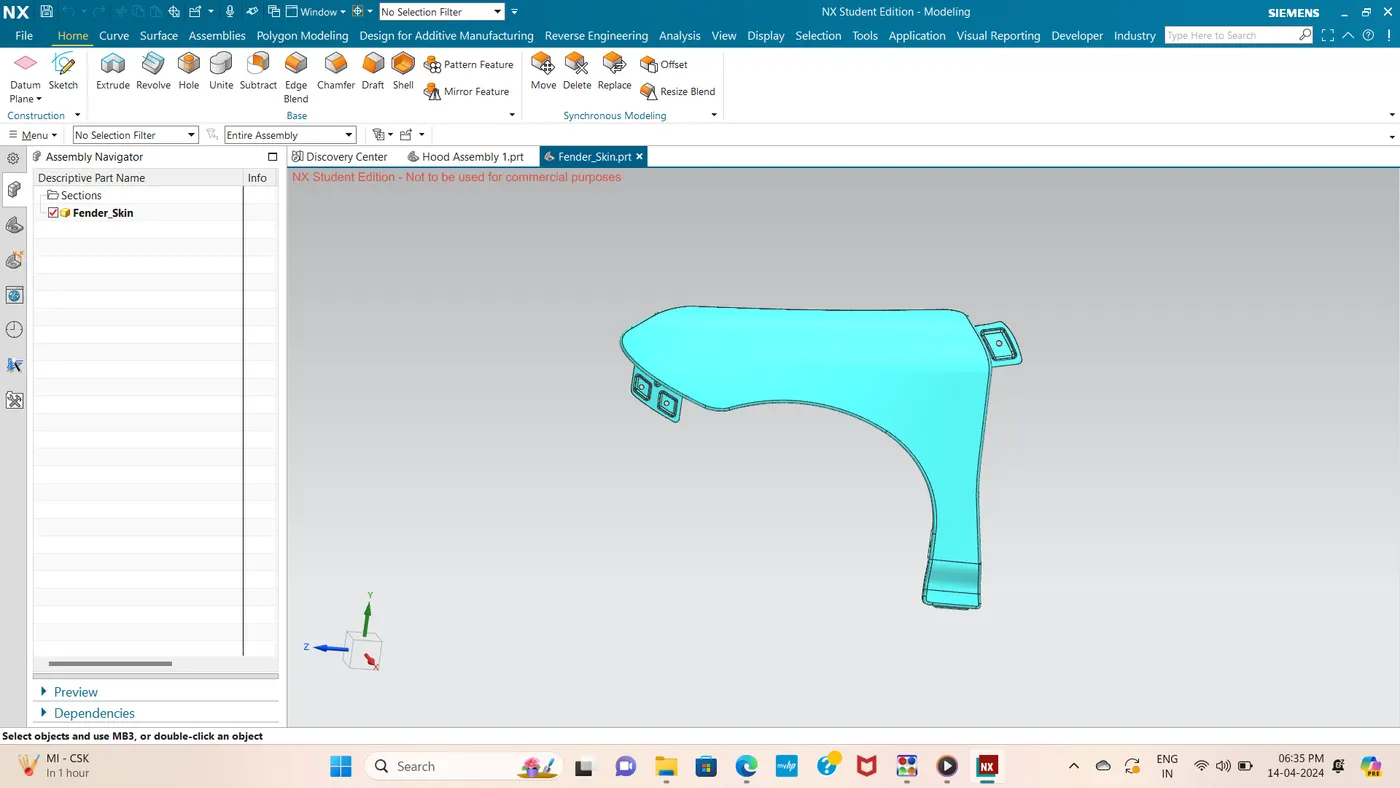
Fender
Fender's purpose is to prevent rocks, mud, sand, liquids from being thrown into the air or on to the pedestrians by a rotating wheel. Fender is made aerodynamic in shape to reduce the air drag.
There are two types of of fenders
1. Full Bumper Type.
2. Half Bumper Type.
Full Bumper type
This type of fender is used in olden days, it is no more in use due to its heavyweight of the structure and consumes more raw material in manufacturing.
Half Bumper Type
Half Bumper Type fenders are widely used now, due to its mini size and the scrap or wastage is less compared to the full bumper type.
Manufacturing process
The manufacturing of the fender majorly involves these operations.
1.Embossing
2.Bending
3.Cutting and Blanking
Embossing
Embossing is a metal forming process for producing raised or sunken designs or relief in sheet material using matched male and female roller dies, theoretically with no change in metal thickness, or by passing sheet or a strip of metal between rolls of the desired pattern.
Bending
Metal bending is a process by which metal can be deformed when applying force to the subject, which causes it to bend at an angle and form the anticipated shape, which often results in it being in a ‘V’ or a ‘U’ shape. This is done through the application of force on a workpiece. The force on the work piece can be mechanical, pneumatic or hydraulic.
Cutting and Blanking
Cutting processes are those in which a piece of sheet metal is separated by applying a great enough shearing force to cause the material to fail.
Blanking is a steel manufacturing process in which a flat, geometric shape is created by feeding a coil of sheet metal into a press and die. In this process, the blank is punched out from the large metal sheet.
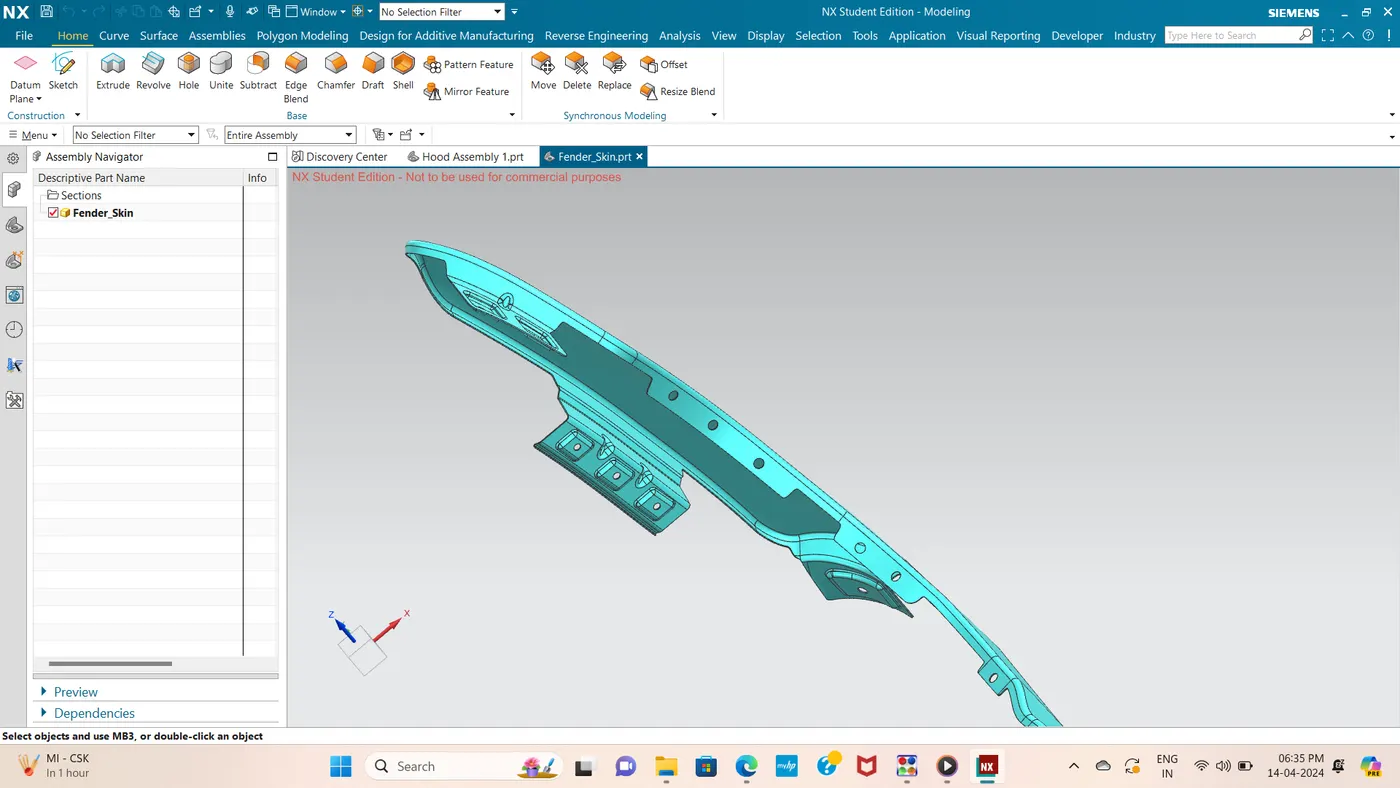
Fender is mounted basically on 5 important regions. They are
1. Drip Area
2. A-Pillar Mounting Area
3. Sill Mounting Area
4. Bumper Mounting Area
5. Baffle Mounting Area