Fender Design
AIM : From the given CLASS A SURFACE of the FENDER we have to made changes in the design and develop the model with some extra features that are :
Mounting Area
- Bumper
- Drip
- A Pillar
- Sill
- Baffel
Fender:
Fender is a part of the vehicle that frames the wheel . The primary purpose of the fender is to prevent sand , mud , rock etc from being thrown away into the air by rotating tire and harm pedestrians.
Fender can be of two types , full bumper type and half bumper type . Nowadays half bumper type fender is typically used . the cost of sheet metal blank is reduced as we can produce two half bumper type fender in single blank . This also leads to reduction of scrap.
Bumper
The bumper mounting area is used to fix the plastic bumper to the fender with the help of the fasteners
Drip
- It is the important mounting uni of the fender . it is connected with the engine compartment, therefore a lot of design constraints are to be followed while designing the fender
- While designing the drip area we have to initially leave 200-300 mm for the cowl top
- For placing the headlamp we have to leave at least 150 mm at the front while designing the fender
- The cowl top part consists of a wiper motor and its instruments
Sill
The sill is the panel directly below the bottom of the door supporting the floor and may be used to combine the floor and the body. The bottom end of the fender is mounted on the sill body for reinforcement of the fender panel , thus the sill mounting position is designed with holes and emboss. M5 fasteners are used to fix the fenders on the sill body.
BAFFLE MOUNTINGS
Baffle mounting or mudguard are clip-fit types of mounting on the inner side of the fender arch over the Tyre. it protects the car engine compartment and pedestrians from causing injuries from chip-out debris on the road when the car is in motion. they are mounted on the fender using a special type of locking clips which are made up of plastics.
A-PILLER AREA
The A-pillar is the structural pillar that combines the body with the roof . this makes the sides of the windshield rest . front fenders are fastened to the A-pillar to form a robust structure.
Manufacturing process The manufacturing of the fender majorly involves these operations.
L.Embossing
2.Bending
3.Cutting and Blanking
Procedure:
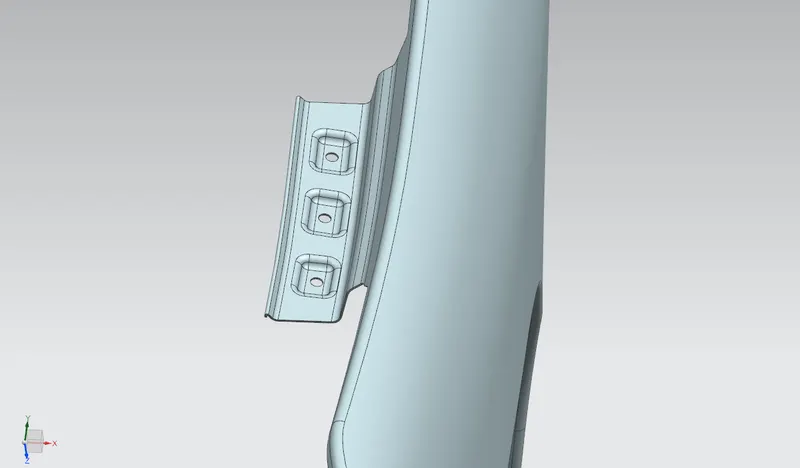
DESIGN OF DRIP AREA MOUNTING :
- It is the important mounting unit of the fender . it is connected with the engine compartment , therefore the lot of design constraints are to be followed while designing the fender
- While designing the drip area we have to initially leave 200-300 mm for cowl top
- For placing the headlamp we have to leave at least 150 mm at the front while designing the fender
- Cowl top part consists pf wiper motor and its instruments
- Two darts are added on the longer side of the drip area in order to provide the stiffness and adds strength to the part . This helps the fender to not to vibrate and impact the forces outside of the fender during motion of the vehicle.
- Embossing are provided on the mounting to strengthen them during fastening.
DESIGN OF SILL MOUNTING AREA :
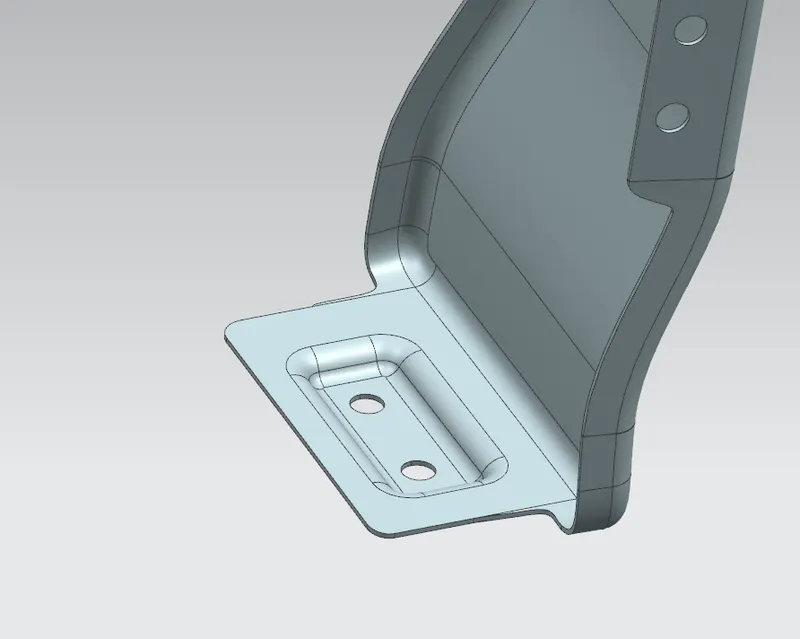
Sill is the panel directly below the bottom of the door supporting the floor and may be used to combine the floor and the body . The bottom end of the fender is mounted on the sill body for reinforcement of the fender panel , thus the sill mounting position is designed with holes and emboss . M5 fasteners are used to fix the fenders on the sill body.
DESIGN OF BUMPER MOUNTING AREA :
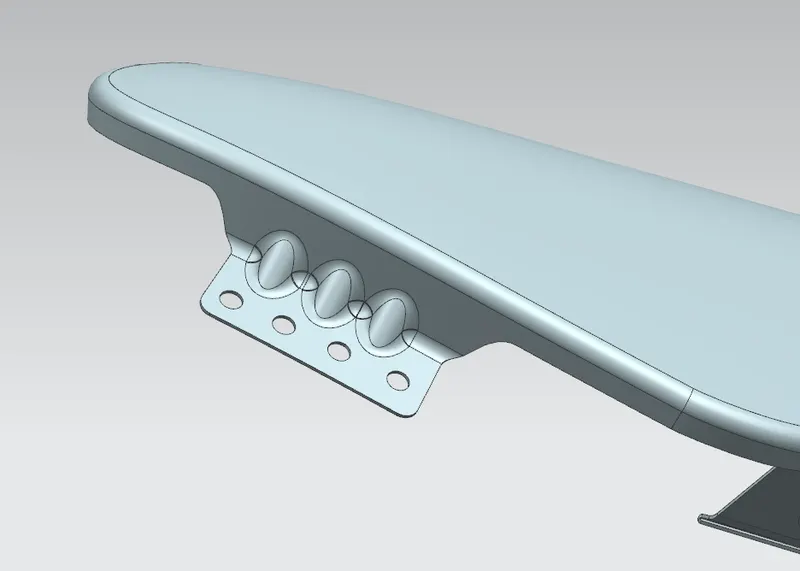
Bumper mounting area is used to fix the plastic bumper to the fender with the help of the fasteners
DESIGN OF A-PILLAR MOUNTING AREA :
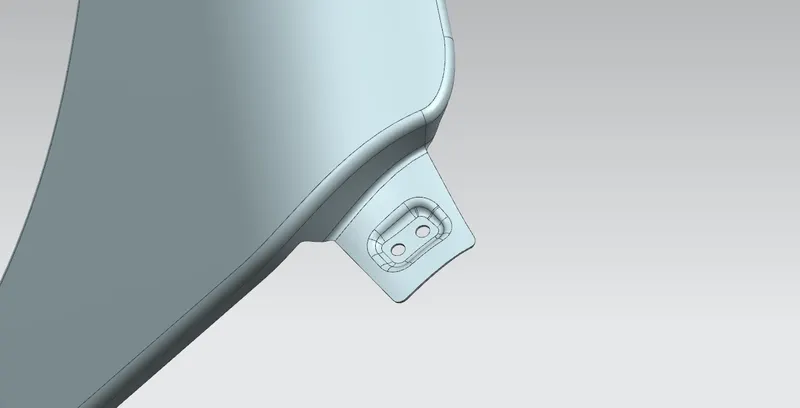
The A -pillar is the structural pillar that combines the body to the roof . this make the sides of the windshield rest . front fenders are fastened to the A -pillar to form a robust structure.
DESIGN OF BAFFLE MOUNTING AREA :
Baffle mounting or mudguard are clip fit type of mounting on the inner side of the fender arch over the Tyre. it protects the car engine compartment and pedestrians from causing injuries from chip out debris on the road when the car is in motion . they are mounted on the fender using a special type of locking clips which are made up of plastics .
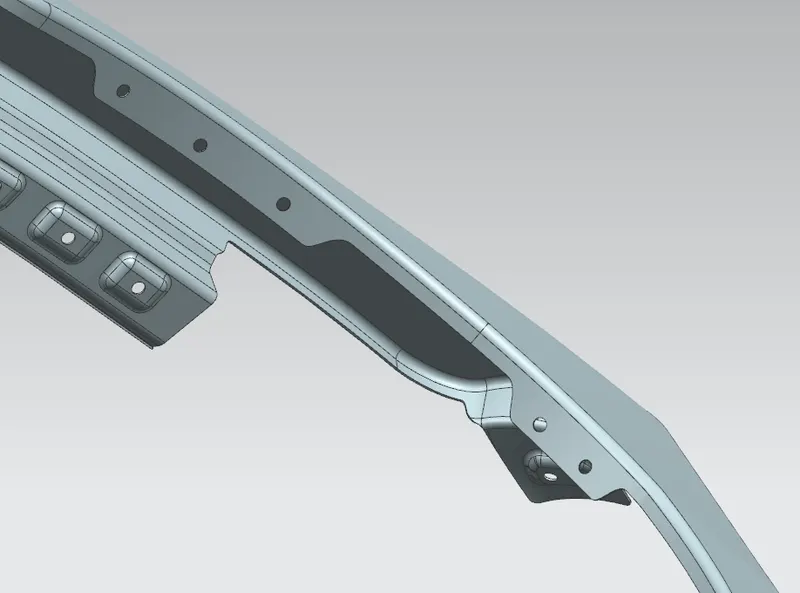
APPLYING OF THICKNESS TO THE SURFACE .
The thickness of 0.75 mm inward on the final sewed surface of the fender to the sheet metal parameters
DIFFERENT VIEWS OF FENDER :.
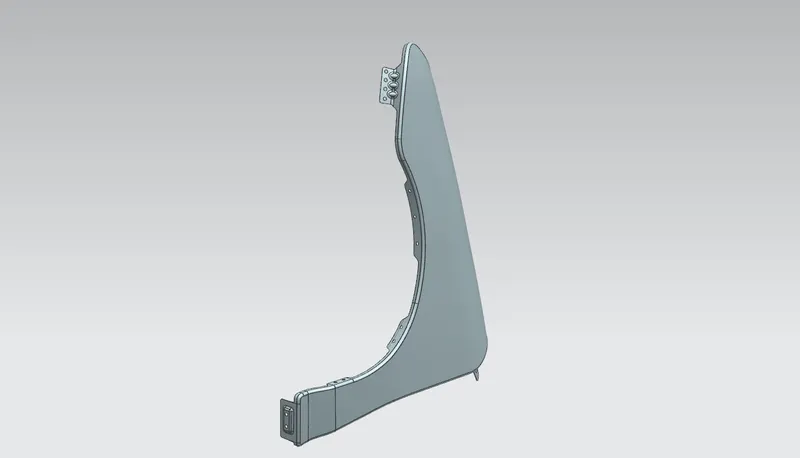
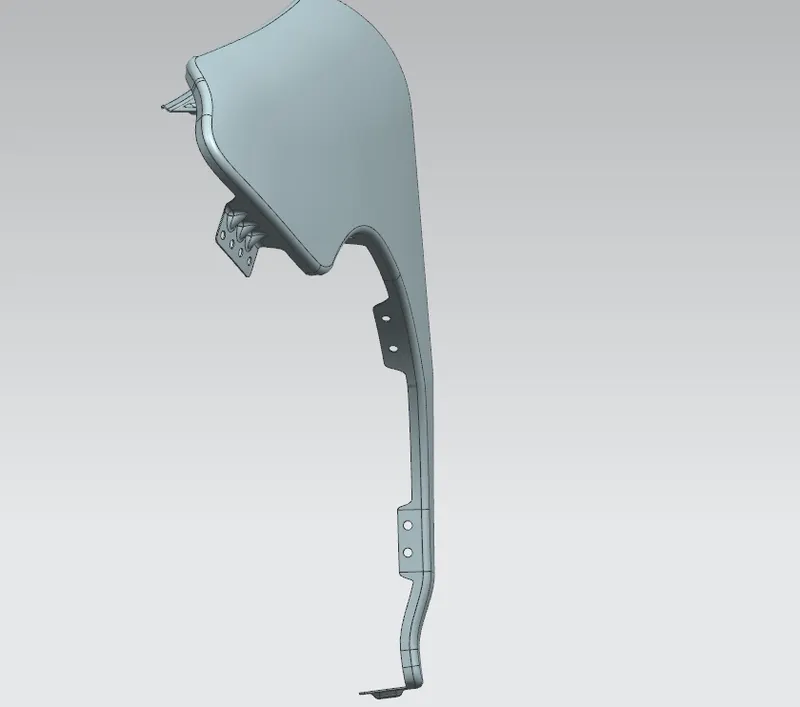
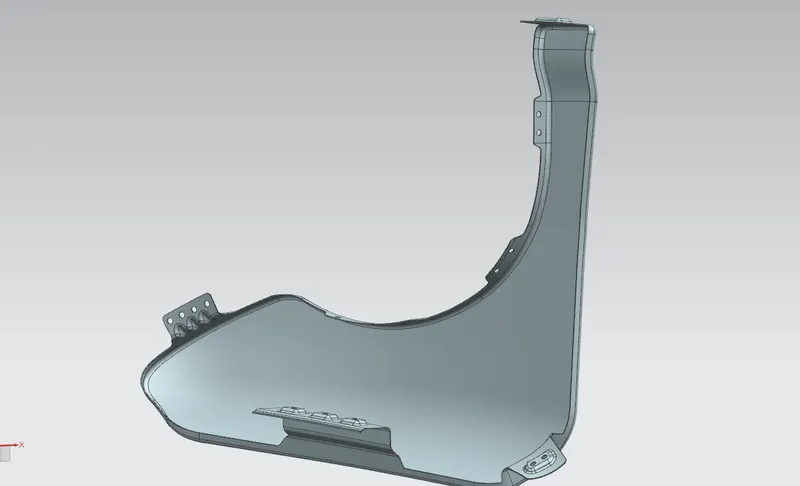
CONCLUSION : Thus, all mounting areas for the fender designed from skin data and master section is done by following all design rules.