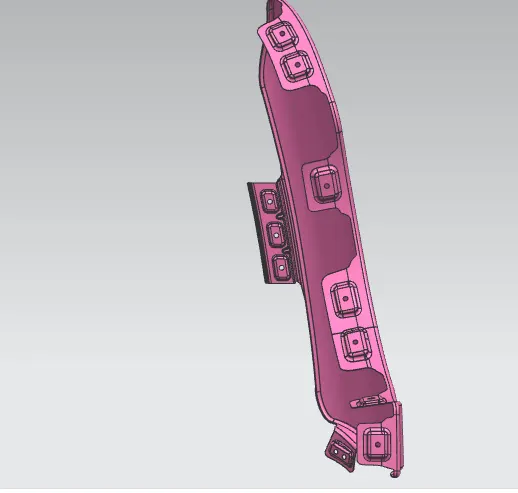
Fender Design
Fender,
A fender is the part of a car that protects and frames its wheels and keeps mud from splashing it. Most modern vehicles have fenders on their front wheels. When you get into a minor car accident, you can call it a "fender bender," and it's possible that your fenders did get slightly dented.
Its primary purpose is to prevent sand, mud, rocks, liquids, and other road spray from being thrown into the air by the rotating tire. Fenders are typically rigid and can be damaged by contact with the road surface.
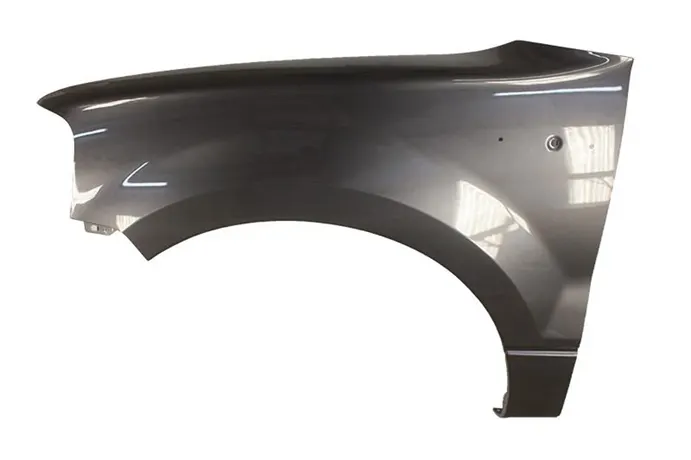
Design of a fender,
Shape and Contour:
Fenders can have various shapes and contours, depending on the car's design language. They often follow the natural curve of the wheel and tire, creating a smooth and flowing transition from the body of the vehicle. The modern-C shaped neck by Fender is described as a 'flat oval', and the C neck profile is the most common guitar neck shape available due to its comfort and suitability across genres. C-shapes tend to be much shallower than U and V-shaped necks, with a broader shoulder on the U and a steeper angle on the V.
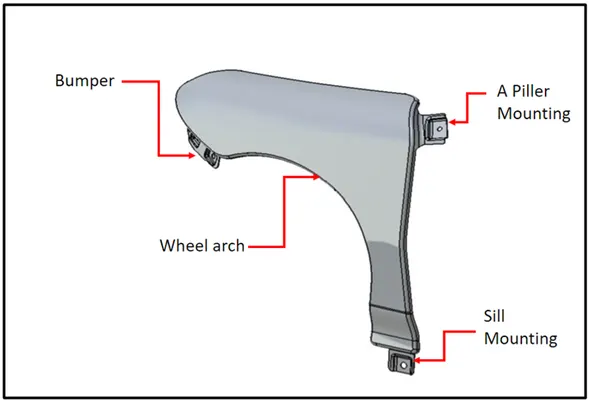
Wheel Arch,
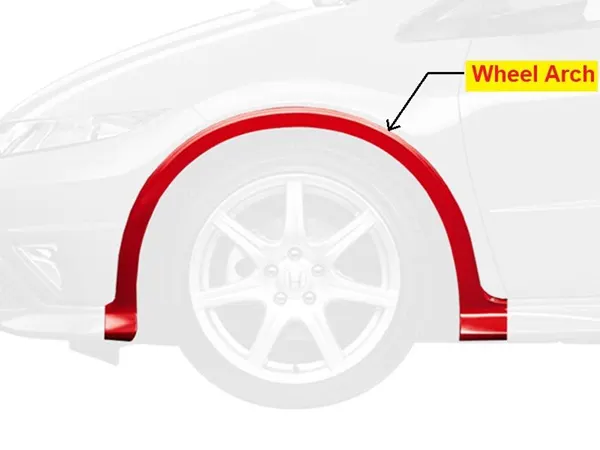
A car wheel arch, also known as a fender or wheel well, is the curved or flared section of the vehicle body that surrounds and covers the wheels. It is typically located above each wheel and serves several important functions. The wheel arch protects the wheels and tires from debris, such as rocks, dirt, and water, that can be kicked up by the rotating tires. By providing a shield around the wheels, it helps prevent these materials from impacting the body of the vehicle or causing damage to other components.
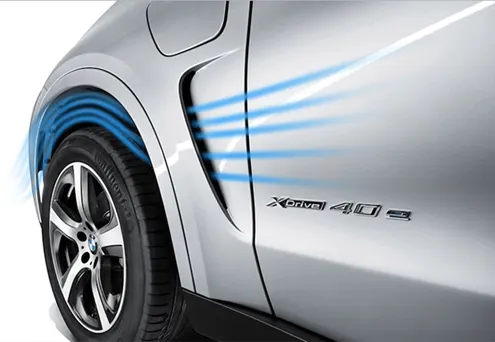
The wheel arch plays a role in aerodynamics. Its design helps to channel airflow around the rotating wheels, reducing drag and improving the vehicle's overall efficiency. Some wheel arches may feature aerodynamic enhancements, such as integrated spoilers or airflow management features, to further optimize the vehicle's aerodynamics.
Fender Material;
Fenders are commonly made from steel, aluminum, or plastic composites. Each material has its own benefits, such as steel being durable, aluminum being lightweight, and plastics offering design flexibility.
Fender flares;
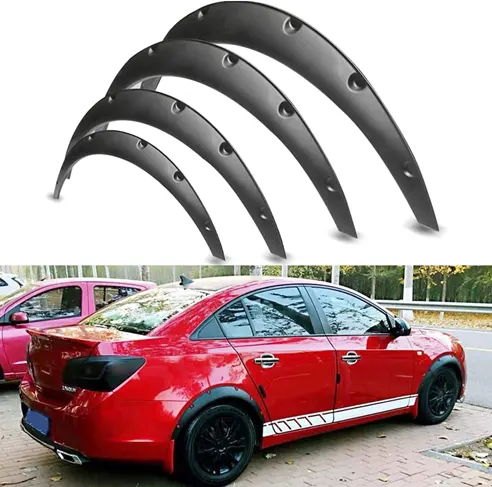
An extension of the Fender that provides additional coverage for heavily offset or oversized wheels and tires. Fender Flares will keep a truck or SUV in compliance with Vehicle Equipment Laws, which lowers the likelihood of Police fines. Fender flares can enhance the muscular and aggressive look of a car, particularly in performance or off-road vehicles.
Aerodynamics,
Modern car fender designs also take aerodynamics into consideration. Smooth and contoured fenders help direct airflow efficiently around the wheels, reducing drag and improving fuel efficiency. Some fenders may incorporate aerodynamic features like vents or channels to manage airflow.
Integrated Lighting:
In recent years, car manufacturers have started integrating lighting elements into fenders. LED strips or small light modules may be incorporated into the fender design to serve as turn signals, daytime running lights, or accent lighting.
Paint and Finish:
Fenders are painted to match the overall body color of the vehicle. The paint and finish on fenders need to be durable to withstand environmental factors and resist scratches and chips from road debris.
Fender Mountings,
- Body Mount.
- Drip Mount.
- Bumper Mount.
- Sill Mount.
- A-Pillar Mount.
- Splash Cover Mount.
Manufacturing Process,
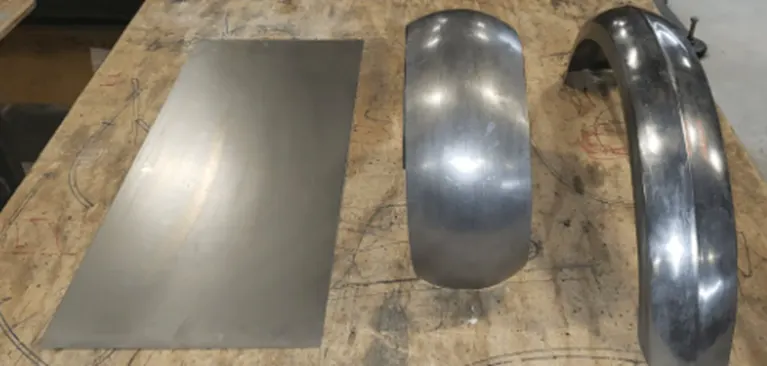
In stamping, a device called a stamping press is used with a series of dies to cut and form metal into various shapes. This is commonly used to make auto parts such as hubcaps and fenders. Extrusion: Extrusion can be used to produce long metal objects, such as rods and tubes.
Automotive fender plastic injection molding is a cost-effective and efficient way to produce automotive fenders. It can reduce production costs and improve the quality of the finished product. Plastic injection is faster, cheaper, and more efficient, meaning it is the future of car manufacturing.
Design cosiderations,
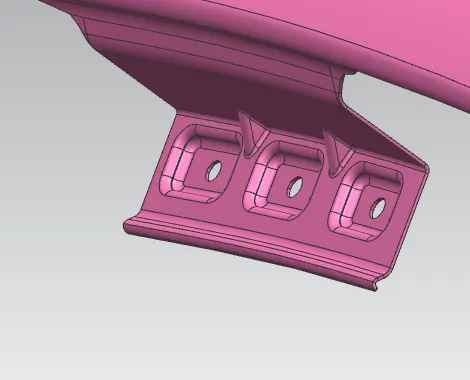
- Fastners fixtures holes provided with embosses for strengthen.
- All law extension surface extension calculated based on the drip area mount and the allowances needed for the blend edge to fender surface edge ( 5 mm to 10 mm followed ).
- For strengthen the extension surface ribs (dart) are used.
- Emboss debths 1.5 mm to 4.5 mm, based on the flat datum plane.
- Fastners fixture holes diameter 5 mm followed.
- Surface thicken value 0.75 mm.
Drip area mount,
Splash or Baffle mount,
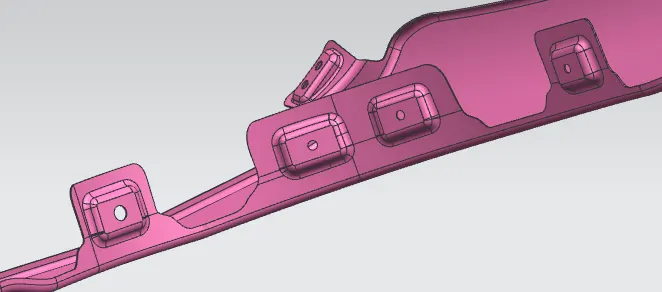
Bumper mount,
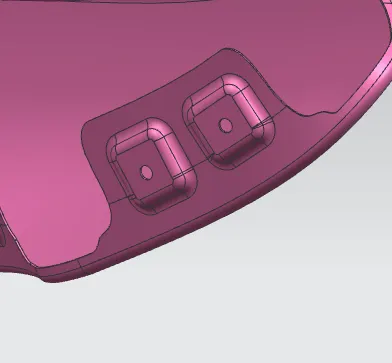
Sill mount,
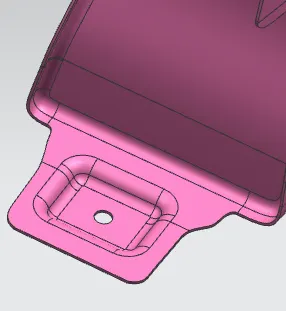
A pillar mount,
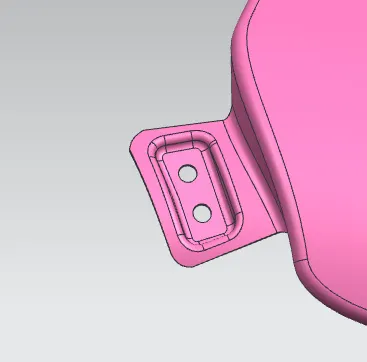
Isometric view,
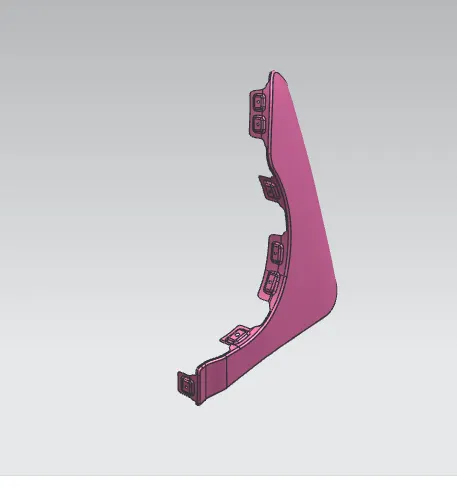
Left side view,
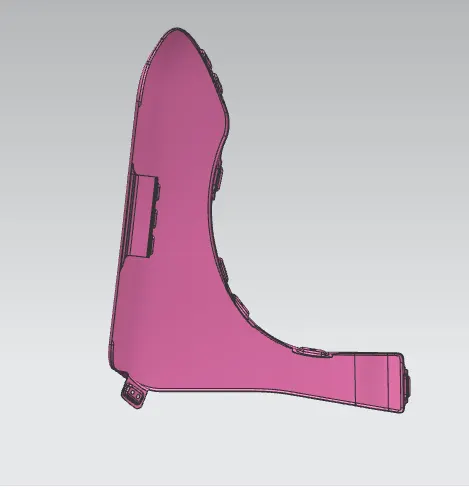
Front view,