Fender Design
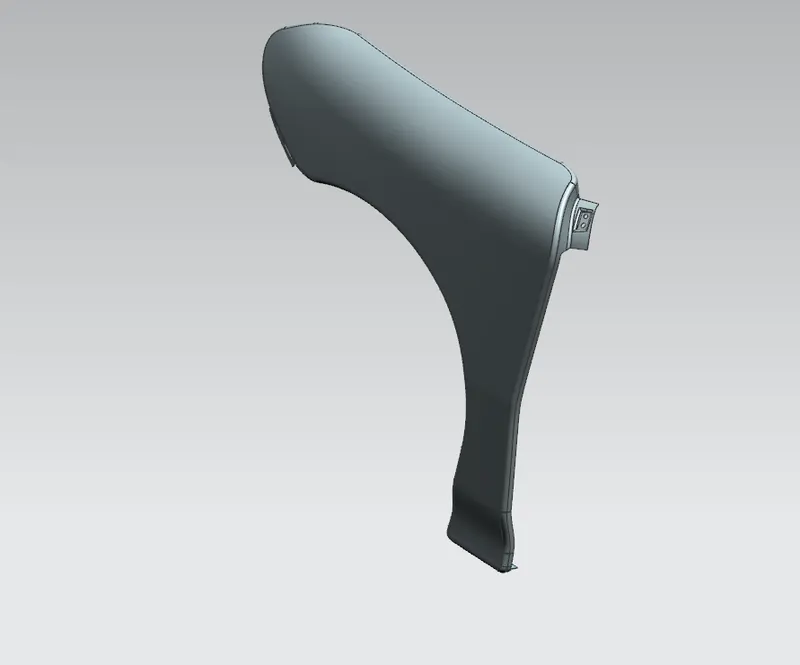
Fender -
A fender is the curved part of the car's body that sits over and houses the wheels.The function of the wheel arch is to protect from mud, and stone and during accidents help pedestrians and consider wrap-around distance for head impact.It is found in the distance from the outermost tyre to the L-shaped brackets in the fender and helps to figure out the range of SRL.
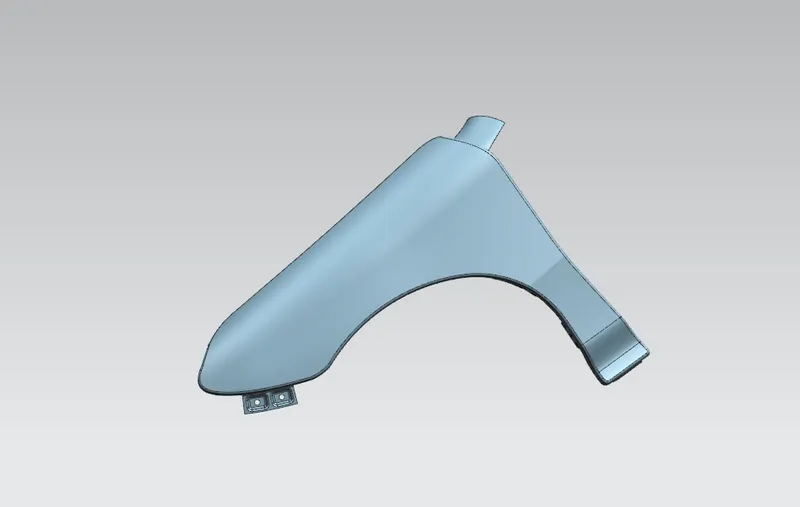
They are two types of fenders
Full Bumper Types: Full bumper fenders, also known as full wheel arch fenders, are designed to extend from the front or rear bumper to cover the entire wheel well. These fenders provide complete coverage and protection for the wheels and are commonly found in most modern vehicles. They are typically larger in size and offer a seamless integration with the bumper, giving a smooth and continuous appearance to the vehicle's body.
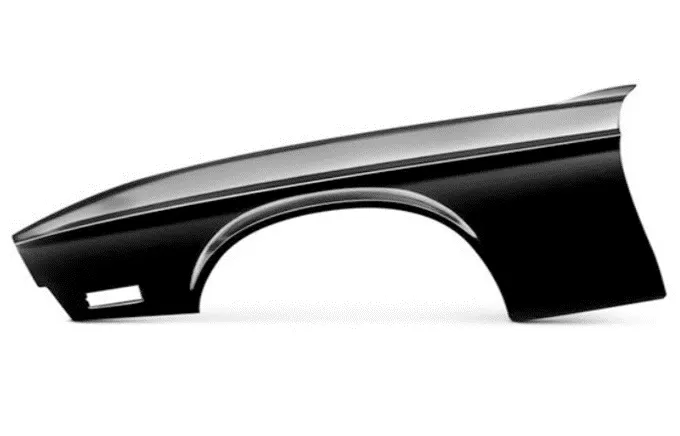 Half Bumper Types: Half bumper fenders, also referred to as quarter panel fenders or half wheel arch fenders, cover only a portion of the wheel well. They extend from the front or rear bumper to approximately the mid-point of the wheel well, leaving a visible gap between the fender and the bumper. Half bumper fenders are often seen in sporty or performance-oriented vehicles where the design emphasizes a more aggressive or aerodynamic look. They can give the vehicle a sleek and compact appearance, especially when combined with other body styling elements.
Design Parameter :
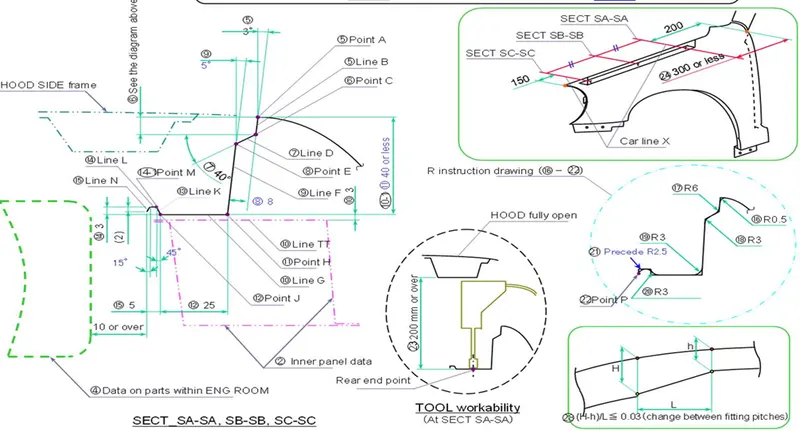
Drip Area:
The drip area uses to mount fender near engine part with at least 10mm and above clearness is necessary. Make sure that give sufficient space cowl mount.
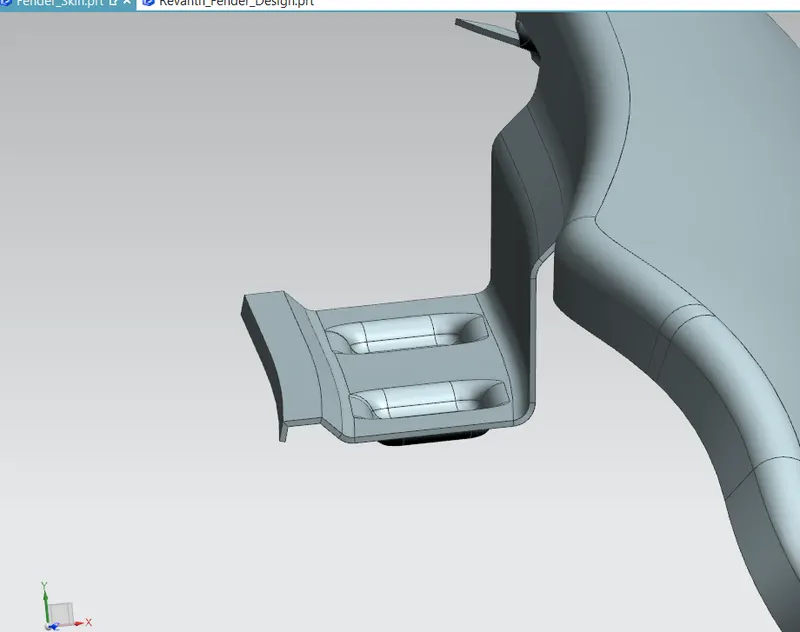
Sill Mount:
The region is mount on sill and it is bottom area of the fender.
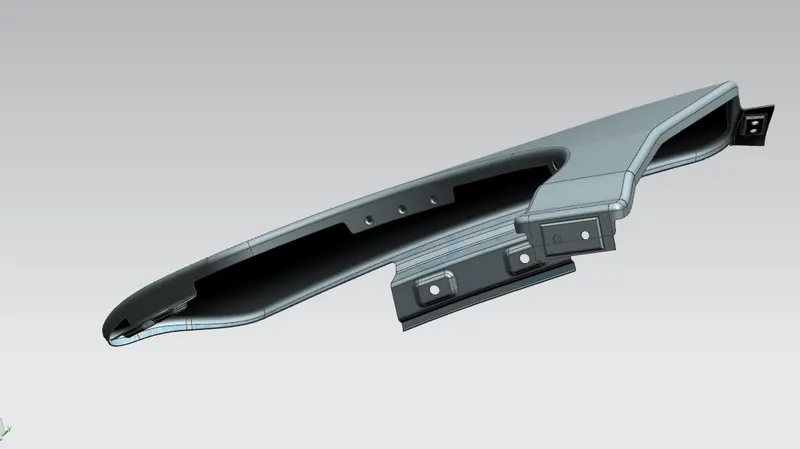
Splash/Baffle Mount:
It is used to prevent engine comportment from stone chips, mug. Mounted on the plastic material.
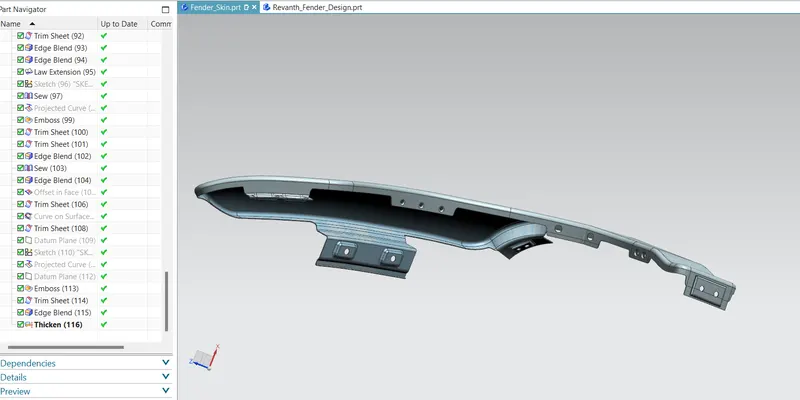
Bumper Mount:
This used to connect fender and bumper of car.
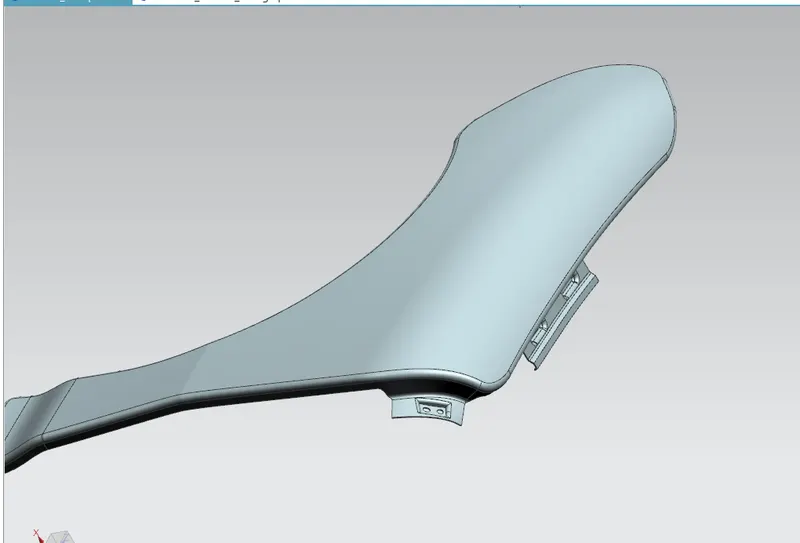
A-Pillar Mount:
This is used to connect A-pillar and fender
Manufacturing process:
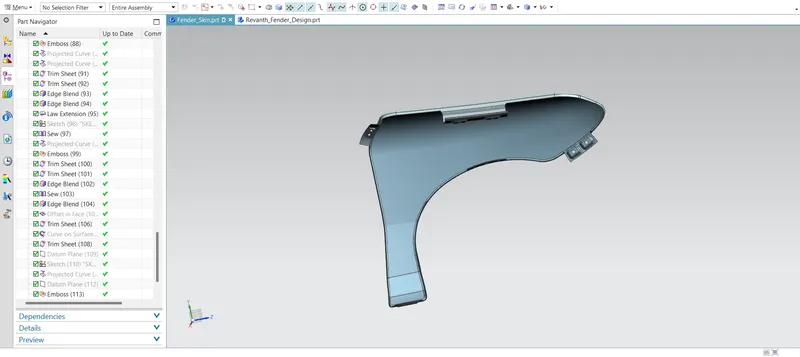
Embossing: Embossing is the process of giving a 3-dimensional look to a material or product. Pressure is applied to the surface of the material and results in an image will project on the surface of the material. ‘Relief’ is another term used to encompass the process of embossing.
Bending: It involves applying for to the sheet metal workpiece to produce a curvature. In generally bending are used to produce simple curvature surface instead of complex. Amount of pressure is important to change the sheet metal surface into the given shape.
Drill: Drilling a hole in sheet metal with a twist drill is a rather straightforward operation. You start off by drilling a small diameter pilot hole, and then drill gradually larger holes until you get to the size you need.
Conclusion:
Fender design is done using NX Siemens software and design has been created under given parameters.