Fender Design
DESIGN OF FENDER AND MOUNTING
Fender:-
- A fender is the part of a car, truck, motorcycle, or other vehicles that frames or covers a wheel well. Its main purpose is to prevent debris, rocks, mud, liquids, sand, and other road debris from getting thrown in the air while the tire rotates.
- The “fender” typically refers to the front panel that covers the front wheels, and the “quarter panel” typically refers to the rear panel that covers the wheel that also includes the roof pillar. The “bumper” is the front and rear ends of a motor vehicle to absorb impact in a minor collision.
- The fender car part is the body kit or body part installed on the left and right sides of the vehicle. Manufacturers usually attach fenders to the wheel arches. There are different reasons why they are a requirement in vehicles. One obvious reason is to improve the aesthetics of the vehicle.
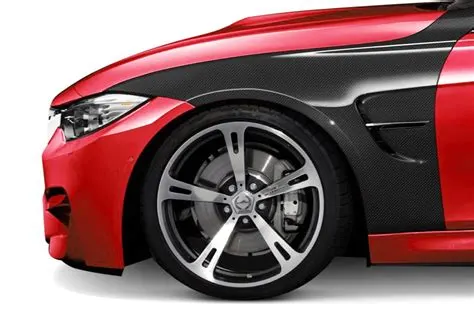
There are two types of of fenders
1. Full Bumper Type:-This type of fender is used in olden days, it is no more in use due to its heavyweight of the structure and consumes more raw material in manufacturing.
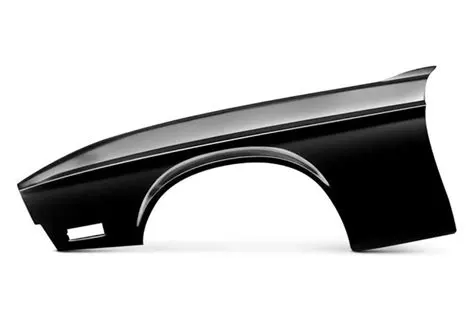
2. Half Bumper Type:-Half Bumper Type fenders are widely used now, due to its mini size and the scrap or wastage is less compared to the full bumper type.
The manufacturing of the fender majorly involves these operations.
1.Embossing:-Embossing is a metalworking operation used to create raised surfaces or lettering in sheet metal. There is theoretically no change in metal thickness during embossing. The process has ability to form ductile metals and produce unlimited patterns, depending on the roll dies.
2.Bending:-Metal bending is a process by which metal can be deformed when applying force to the subject, which causes it to bend at an angle and form the anticipated shape, which often results in it being in a ‘V’ or a ‘U’ shape. This is done through the application of force on a workpiece. The force on the work piece can be mechanical, pneumatic or hydraulic.
3.Cutting and Blanking:-Cutting processes are those in which a piece of sheet metal is separated by applying a great enough shearing force to cause the material to fail.Blanking is a steel manufacturing process in which a flat, geometric shape is created by feeding a coil of sheet metal into a press and die. In this process, the blank is punched out from the large metal sheet.
MOUNTING
1. Drip Area
2. A-Pillar Mounting Area
3. Sill Mounting Area
4. Bumper Mounting Area
5. Baffle Mounting Area
1.drip Area:-The area at which the fender gets attached to the engine housing through fasteners. It is the major mounting for the fender. Mountings at the drip area are designed leaving a clearance of 200mm from the back of the fender for the cowl setup. And clearance of 150mm from the front of the fender for a headlamp housing unit.
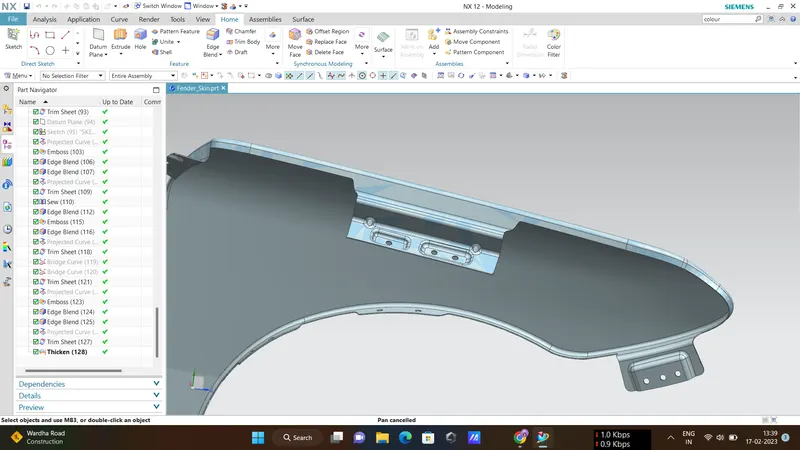
2. A-Pillar Mounting Area:-This Mounting region is located near the cowl of the vehicle where the fender is fastened with the bottom edge of the windshield. This mounting is covered with the side rear-view mirror.
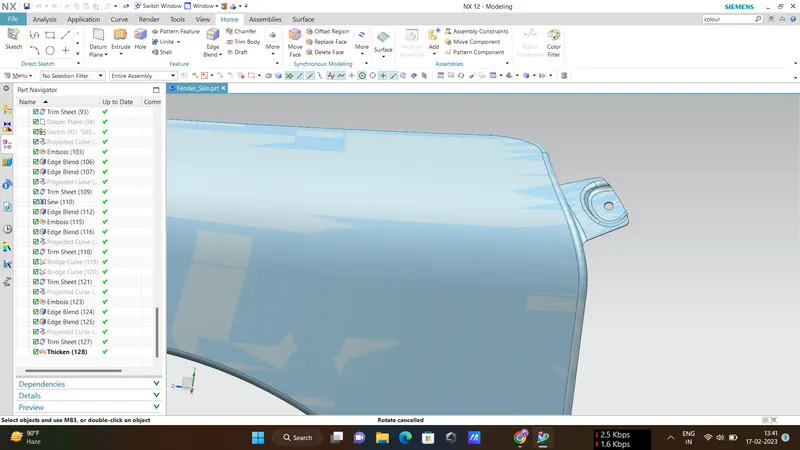
3. Sill Mounting Area:-The area at which the bottom of the fender gets connected to the floor near the bottom edge of the door. The Embossed sill mounting of the fender is attached with the fasteners.
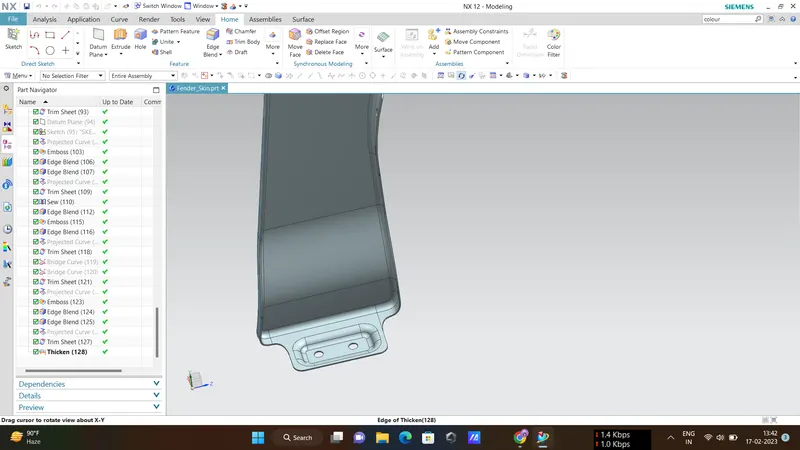
4. Bumper Mounting Area:-The bumper mounting region is located beneath the bumper. The fender gets attached before the installation of the bumper. After fixing the fender with fasteners the bumper will cover the bumper mounting.
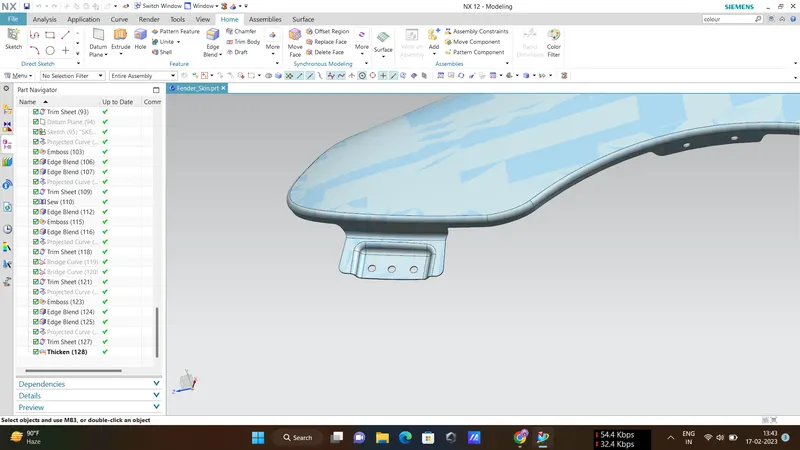
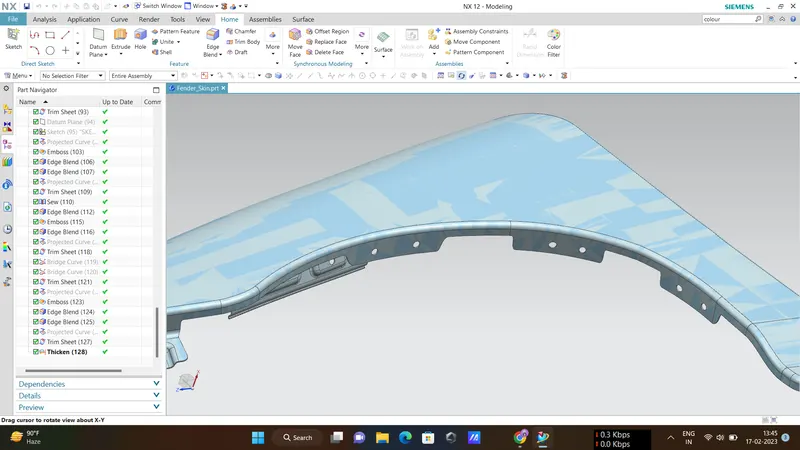
5. Baffle Mounting Area:-In this region, the baffle gets installed to the fender with the help of clips which holds the baffle with the fender along the wheel arch.
CONCLUSION
Thus Front fender is designed with a proper mounting structures by considering all the design parameters.