Exhaust Port Challenge
OBJECTIVE : To perform exhust port simulation and analyse wall heat transfer cofficient at solid wall- fluid interface for given specific value velocity and temperature of fluid.
Importance & Significance of CHT (CONGUGATE HEAT TRANSFER) :
Modes of heat transfer
-
Conduction: diffusion of heat due to temperature gradients. A measure of the amount of conduction for a given gradient is the heat conductivity.
-
Convection: when heat is carried away by moving fluid. The flow can either be caused by external influences, forced convection or by buoyancy forces, natural convection. Convective heat transfer is tightly coupled to the fluid flow solution.
-
Radiation: transfer of energy by electromagnetic waves between surfaces with different temperatures, separated by a medium that is at least partially transparent to the (infrared) radiation. Radiation is especially important at high temperatures, e.g. during combustion processes, but can also have a measurable effect at room temperatures.
- conduction refers to mode of heat transfer in specially in solid in which themal energy of transfer occured due to lattice vibration of molecules and due to energy sharing between moving free electrons whereas in fluid or gases modes of heat transfer occured due to convection in which movement of bulk fluid creates due to density difference .
- The term conjugate heat transfer (CHT) is used to describe processes which involve variations of temperature within solids and fluids, due to thermal interaction between the solids and fluids.
- Conjugate heat transfer corresponds with the combination of heat transfer in solids and heat transfer in fluids. In solids, conduction often dominates whereas in fluids, convection usually dominates.
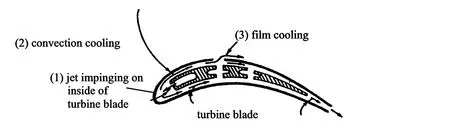
Real world Application of CHT (CONGUGATE HEAT TRANSFER) :
- Efficiently combining heat transfer in fluids and solids is the key to designing effective coolers, heaters, or heat exchangers where both solid and fluid interface comes into picture .
- Forced convection is the most common way to achieve high heat transfer rate. In some applications, the performances are further improved by combining convection with phase change (for example liquid water to vapor phase change).
- Temperature response in time dependent heating/cooling problems, e.g. engine cooling, or how fast does a car heat up in the sun and how is it affected by the shape of the windshield
- Overall heat transfer coefficient, e.g. for a car radiator or exhaust port uses in bike or car
- Temperature distribution (related to thermal stress), e.g. in the walls of a spacecraft.
- To analyse temperature distribution and effective cooling in graphics card used in electronic devices .
PROCEDURE :
- After opening ansys workbench click on ansys fluent in toolbox and drag it into project schematic page as shown below:

Mainly following four parts included.
1). Pre-procesing
2). Meshing.
3). Solving .
4). Post- processing.
1). Pre-procesing :
- open spaceclaim by click on geometry load the exhust port model & remove extra edges by selecting repair

- select preare and after that volume extract from that select edges of inlet from which exhust gas is coming and creates names fluid body .
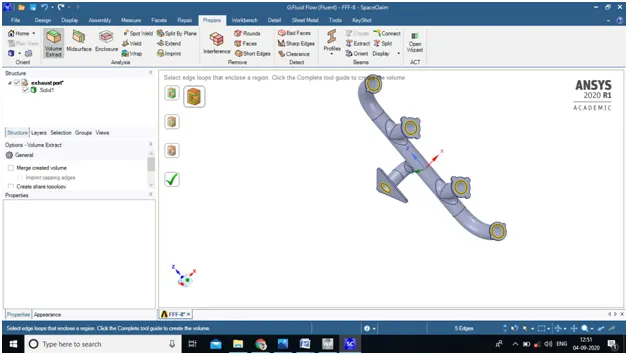
- create individual solid name fluid body name then create one component and copy both of them and delete empty component name

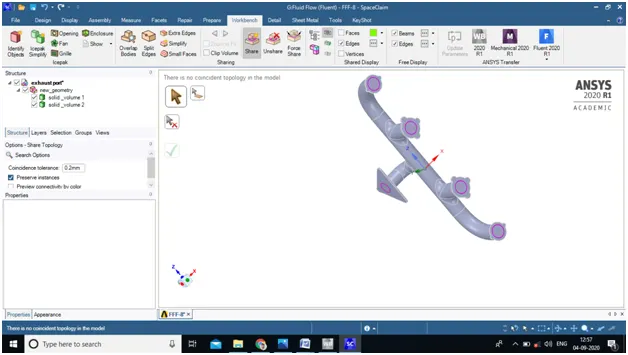
- enable share tropology and click on the workbench and then share prep. Which will show surface to be share between fluid and solid.
2). Meshing :
- create name selection as per requirement & in case of inflation layer give extra name of inflation layer by hide solid part from geometry .
- Change mesh size in outer solid wall by selecting body sizefor different cases.
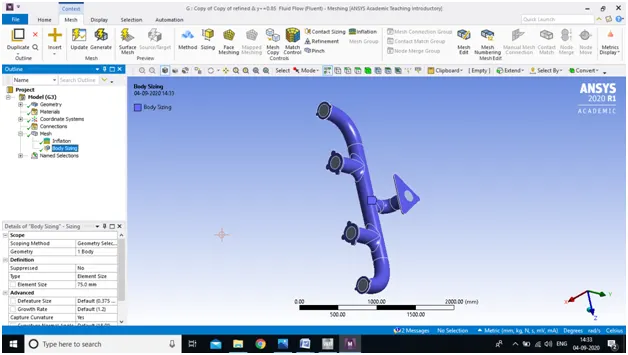
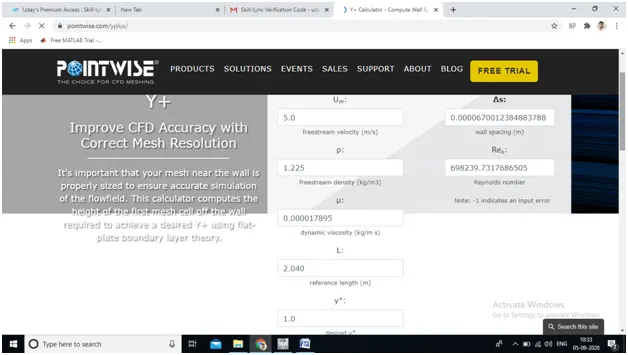
3. Add inflation layer & first cell layer thickness according wall y+ value .
3). Solving :
- Select steady state condition and pressure based solver .
- Enable energy as we are dealing with temperature behavour
- For solid volume use aluminium and for fluid we are using as air.
- Select k-w turbulence model.
- Check match zone condition if theres any mismatch between geometry.
Boundary condition:
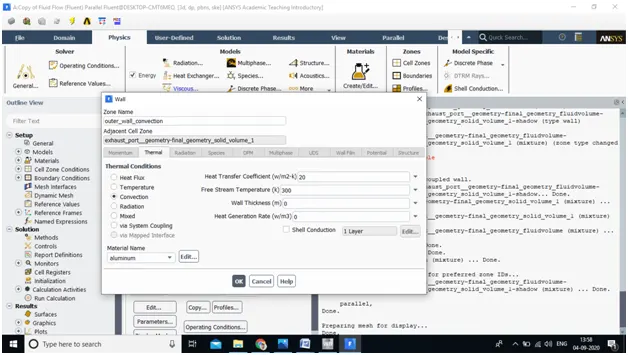
- Inlet air : 5 m/s & Temp = 700 K
- Outlet : zero pressure (guage)
- Outer Wall convection : heat transfer co-efficient = 20 w/m^2 ( Experimental proved).
4). Post-processing :
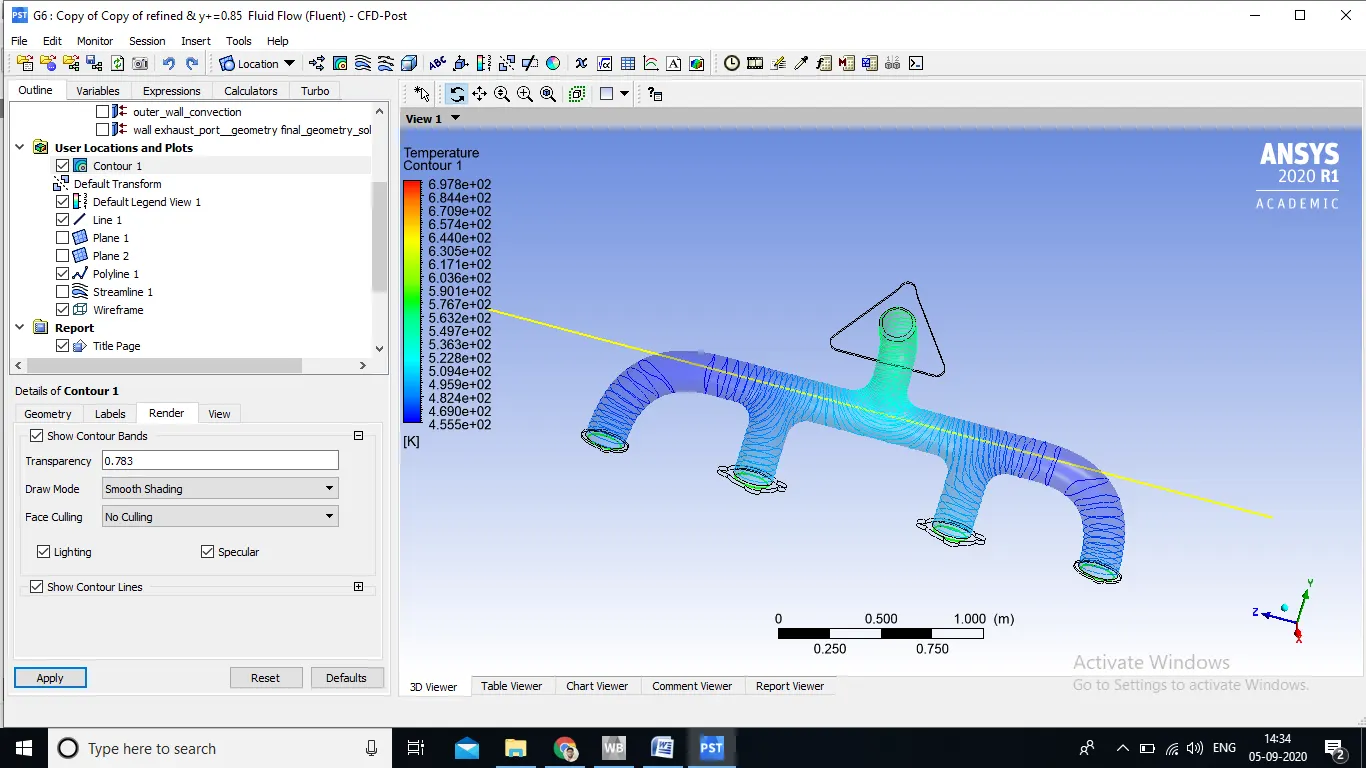
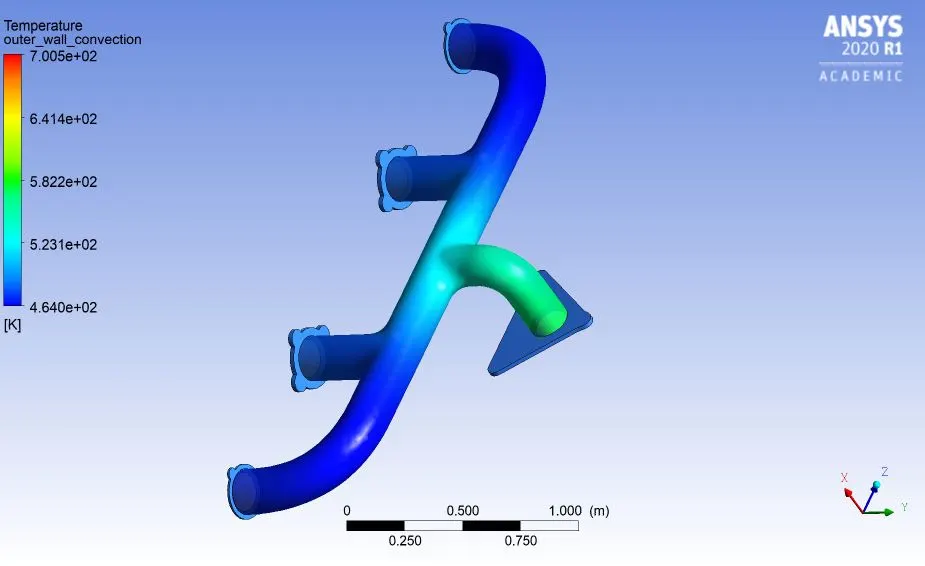
- Create temperature counter at appropriate area
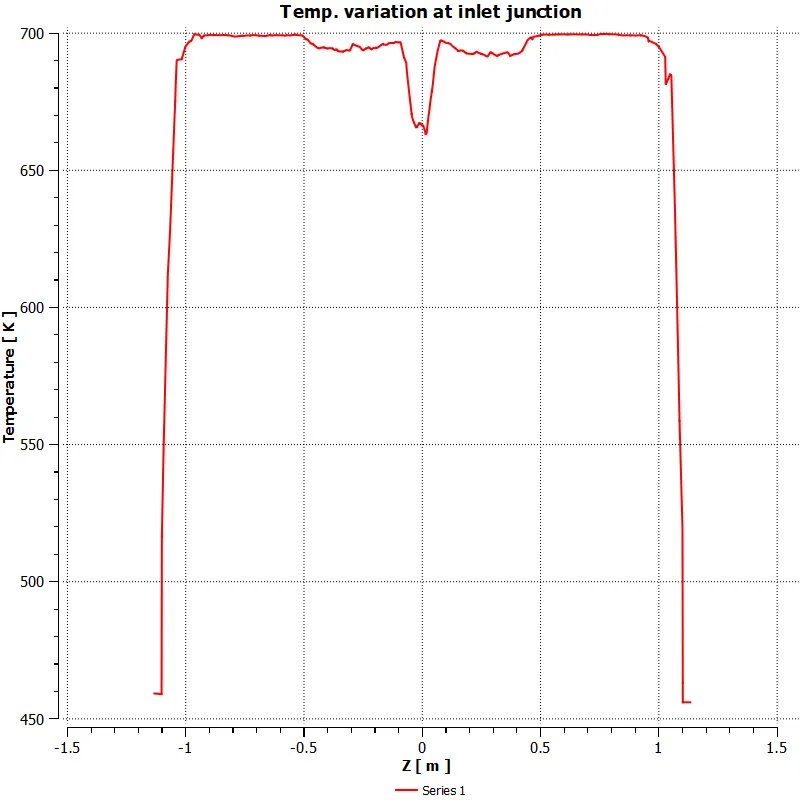
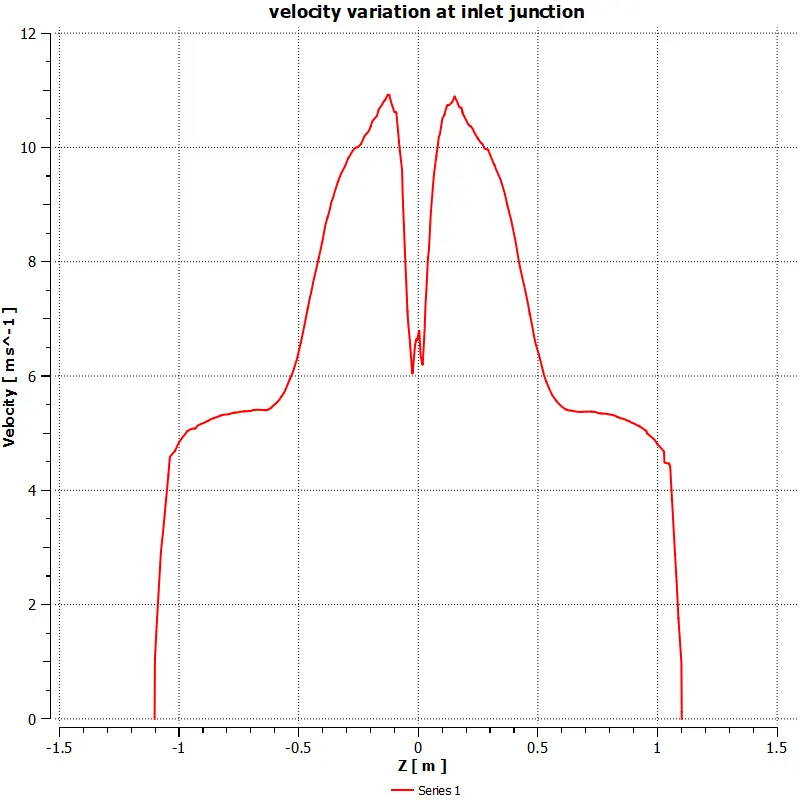
- Create line in order to get perfect picture of temp. variation along geometry
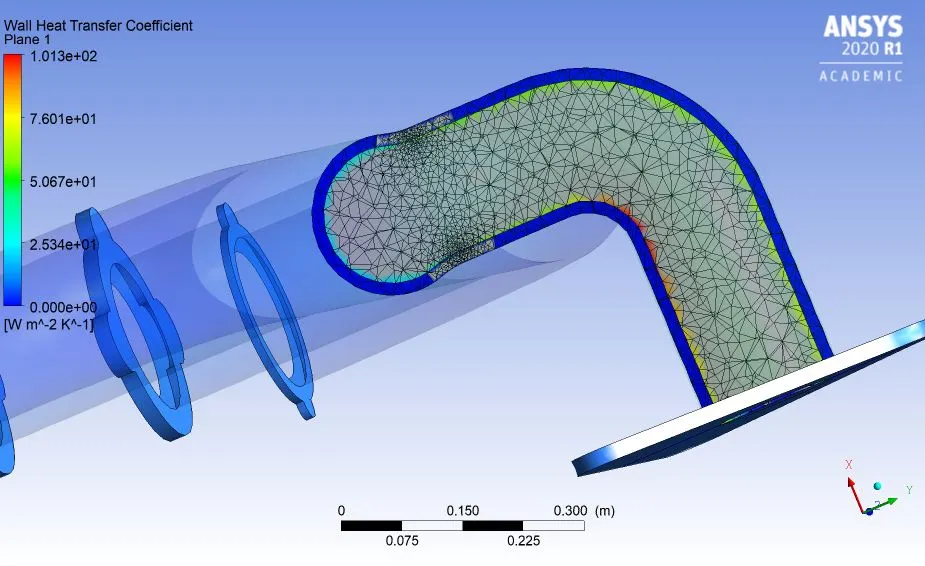
- Create heat transfer coefficient plot at wall surface at outlet.
CASE-1
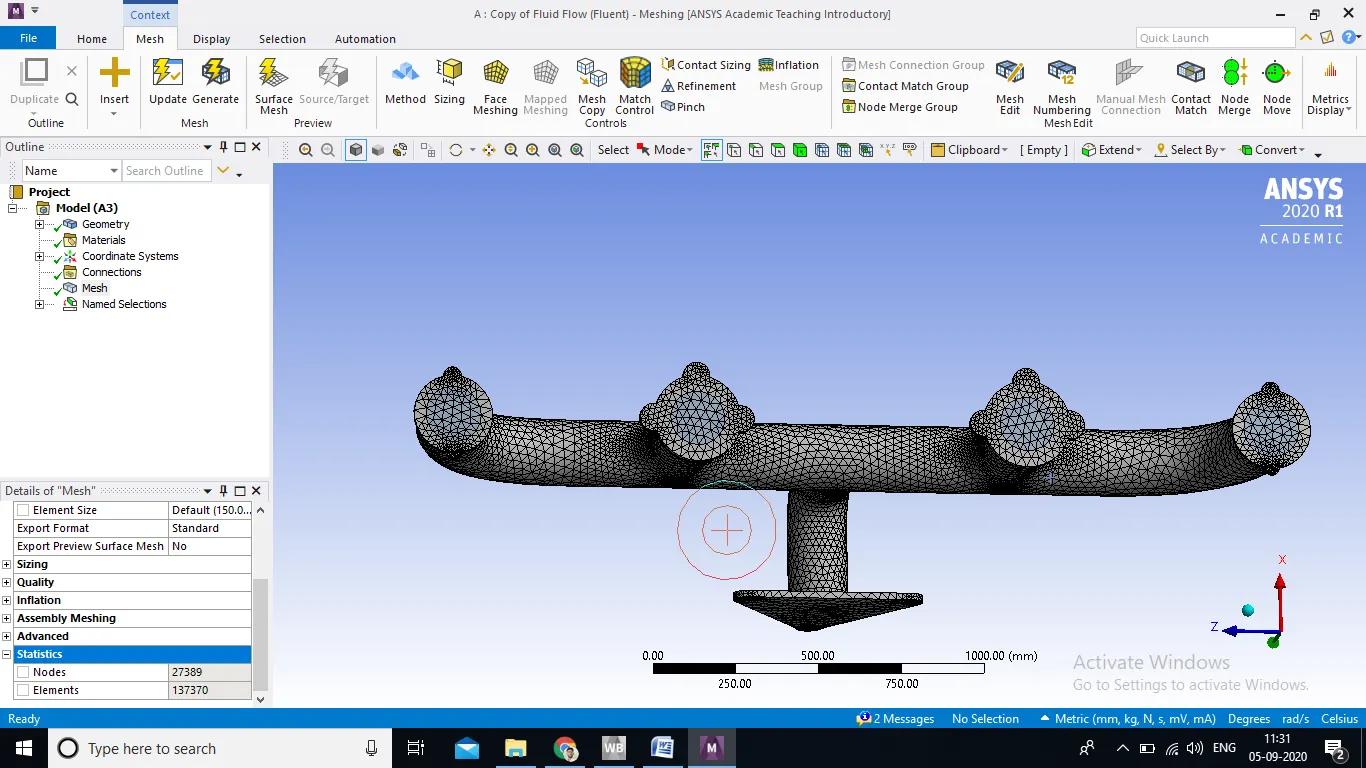
- No. of nodes :27589
- No. of elements : 137370
1). RESIDUAL PLOT
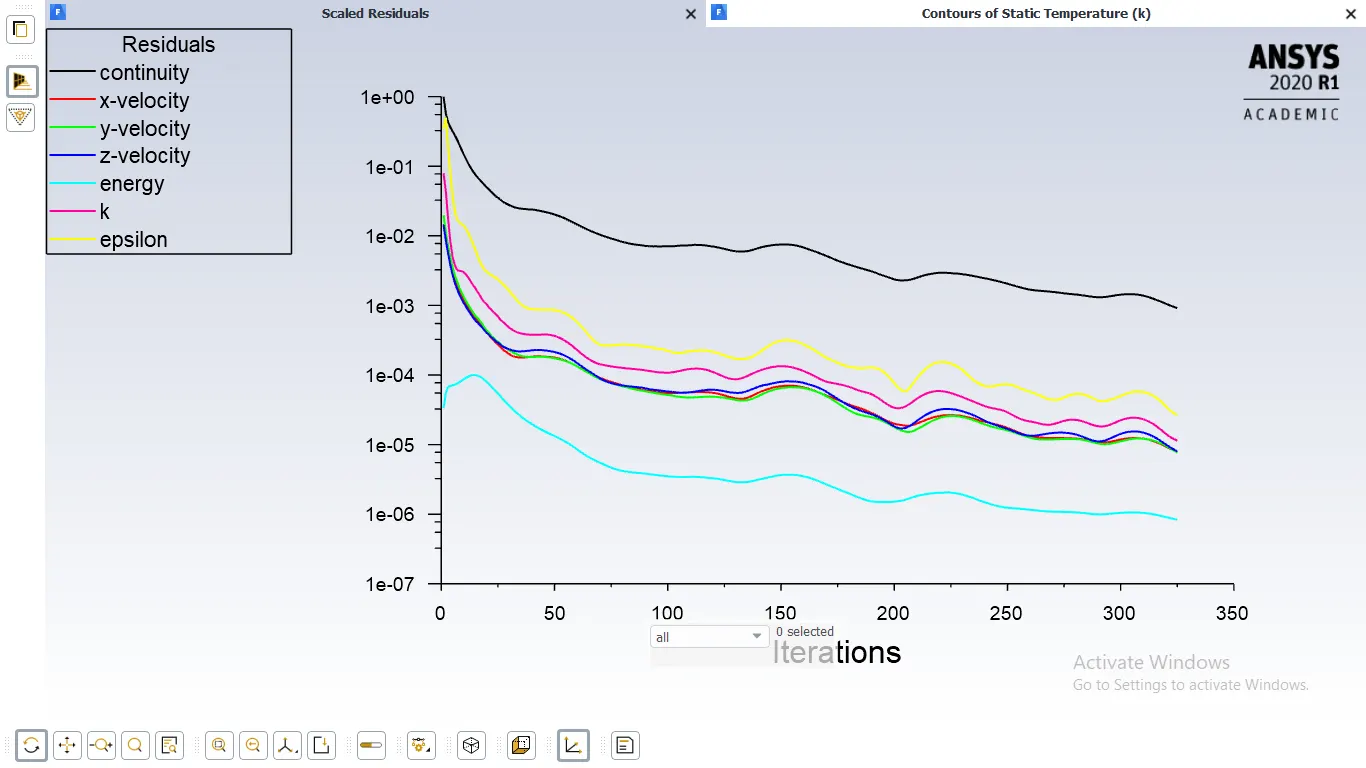
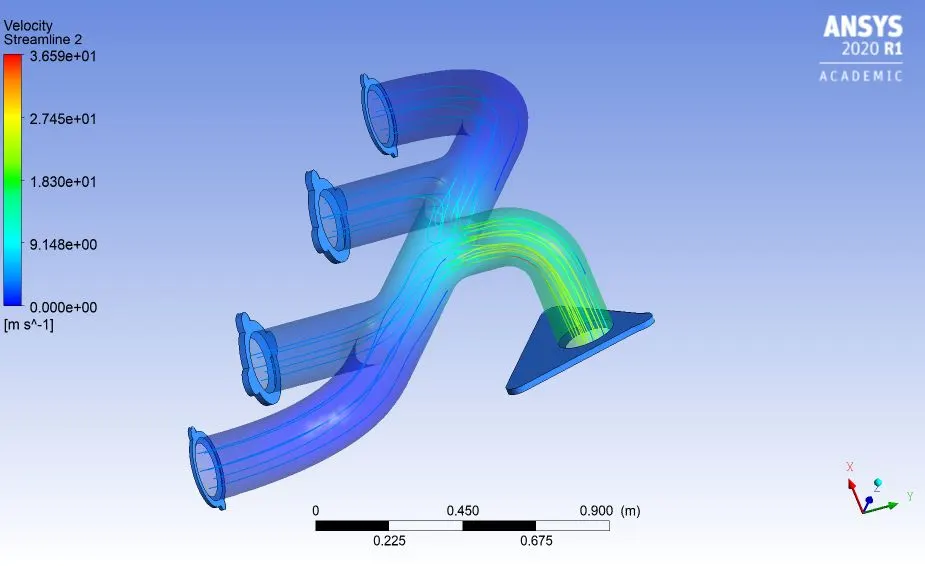
2). TEMP. CONTOUR PLOT & VELOCITY STREAMLINE PLOT
3.) HEAT TRANSFER CO-EFFICIENT PLOT AT WALL
4). VELOCITY & TEMP. VARIATION AT INLET JUNCTION
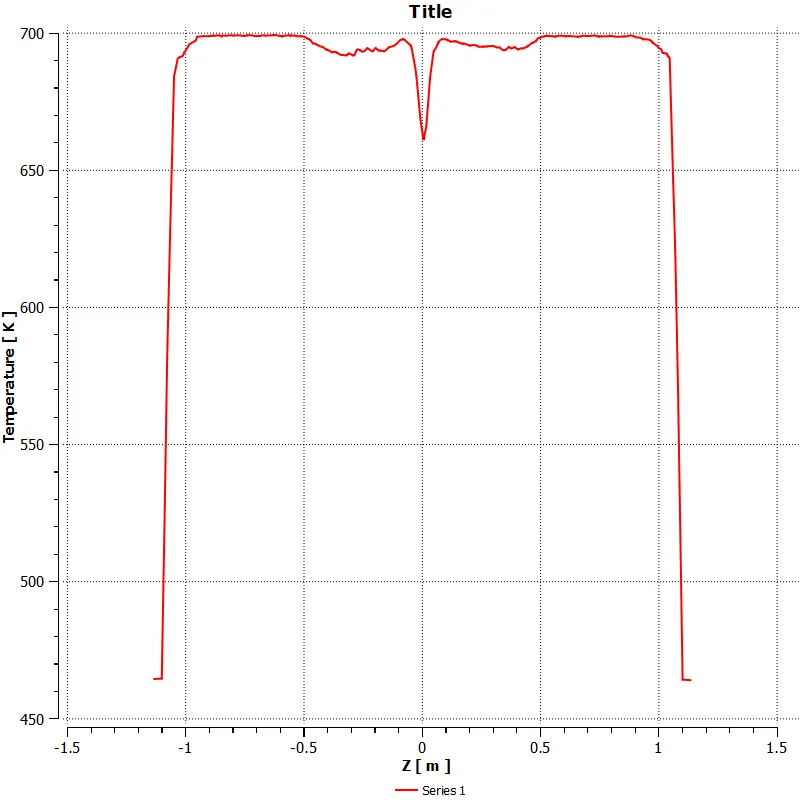
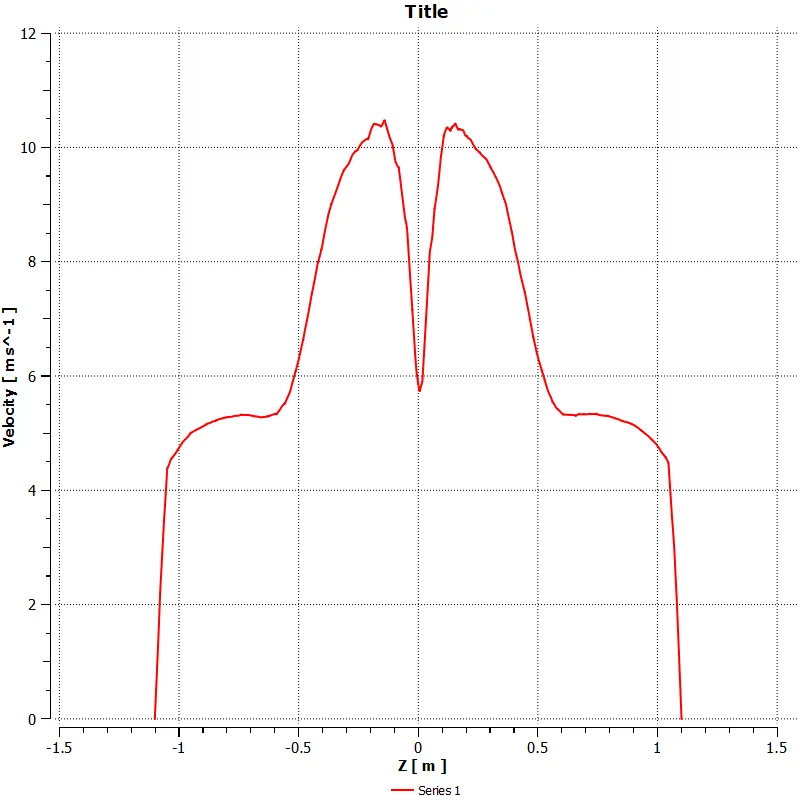
CASE-2
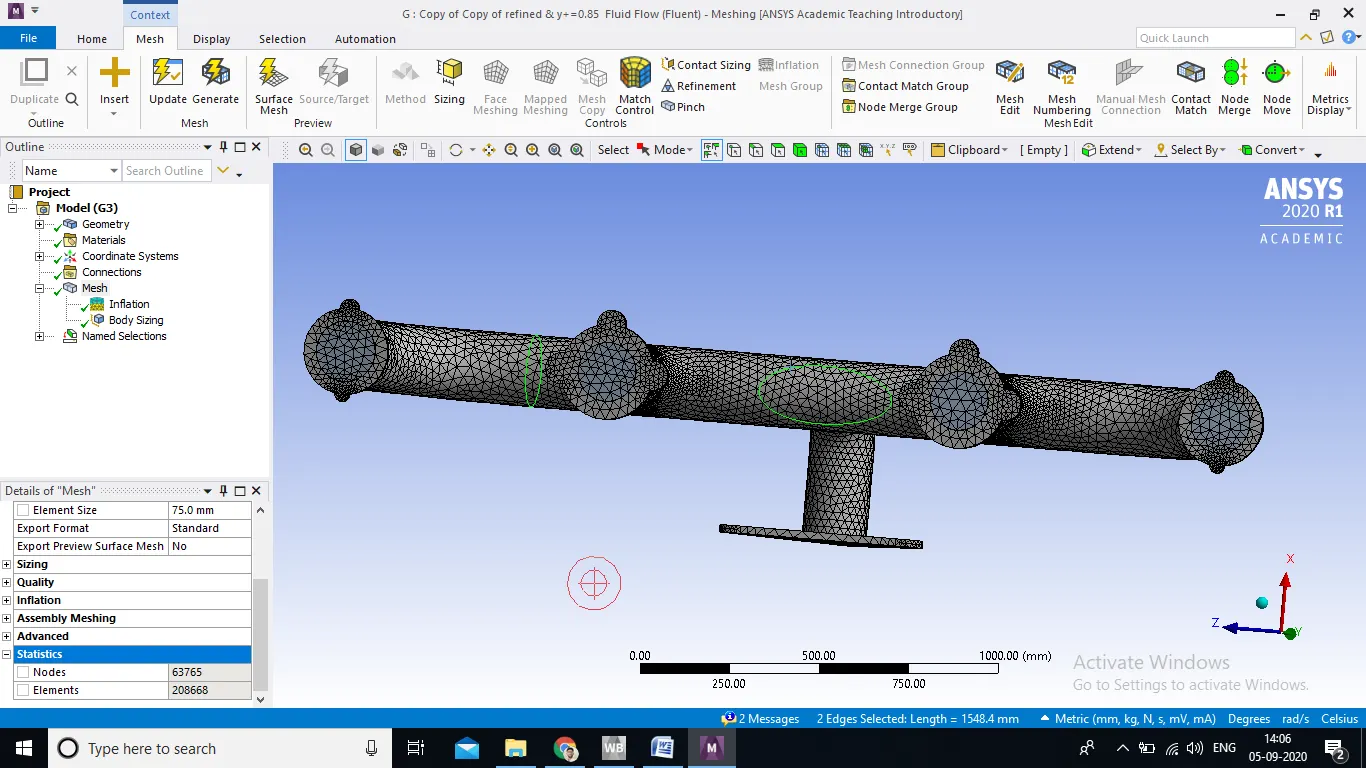
- No. of nodes :63765
- No. of elements : 208668
- first layer thickness : 5.69e-2 mm & no. of inflation layer = 6 ( based on y+ =0.85)
- body sizing : 75 mm
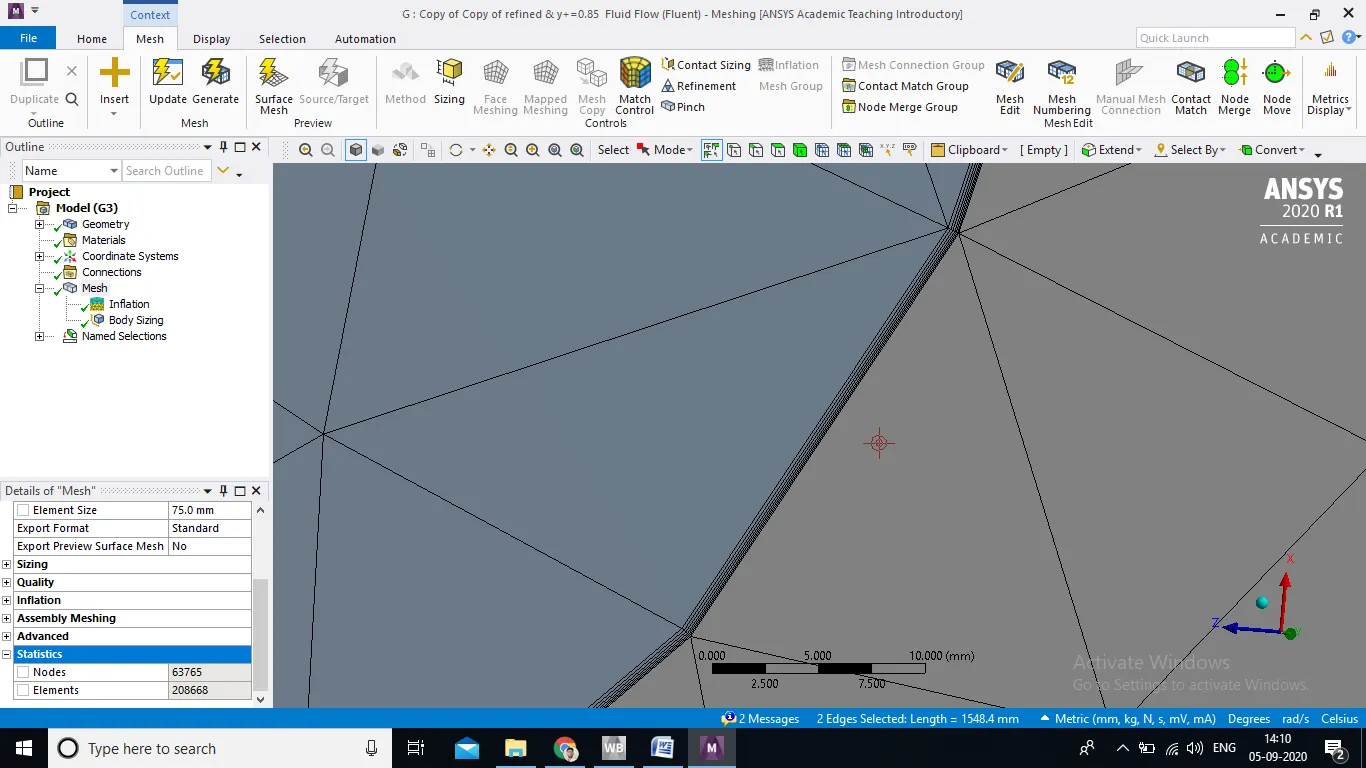
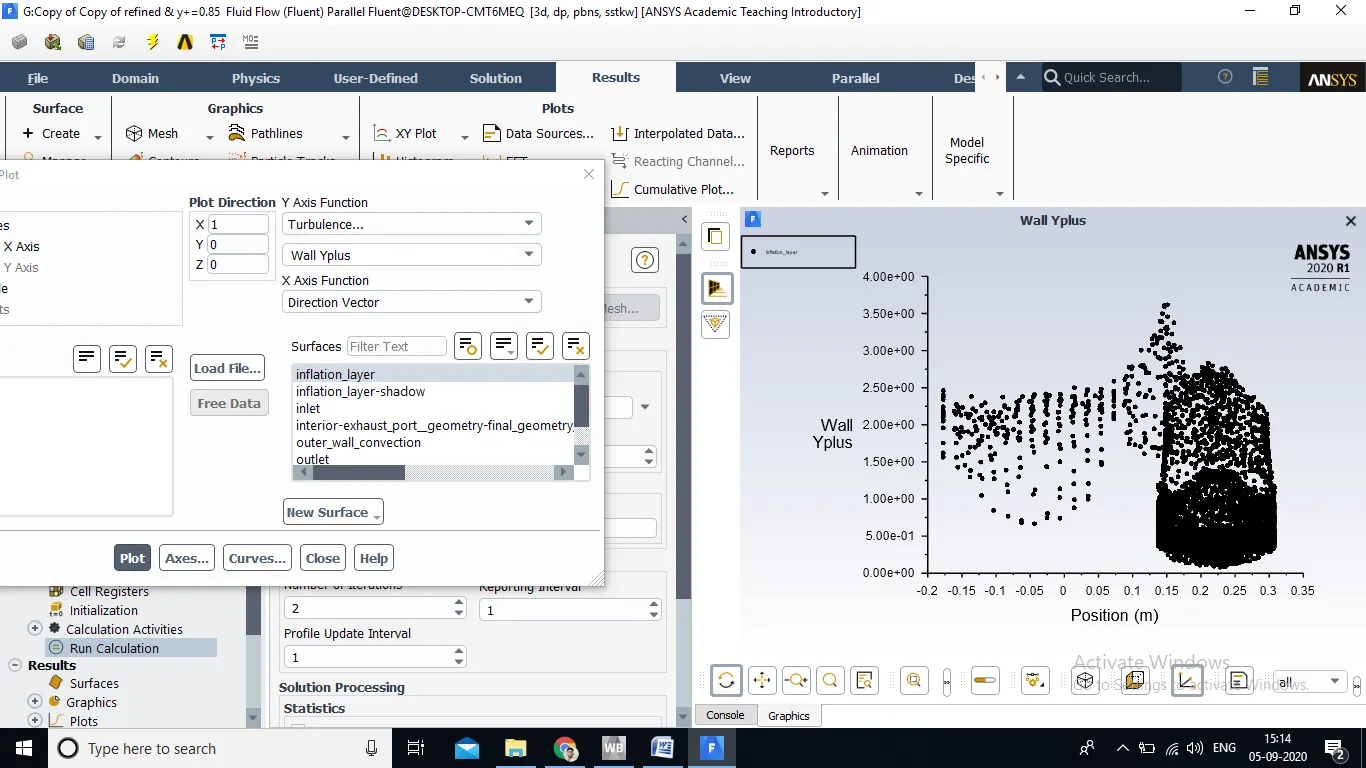
- for wall y+ value=0.85 we can be shows that k-w model requires to have of y+ in range of 0-5 in order to get accurate result.
1). RESIDUAL PLOT
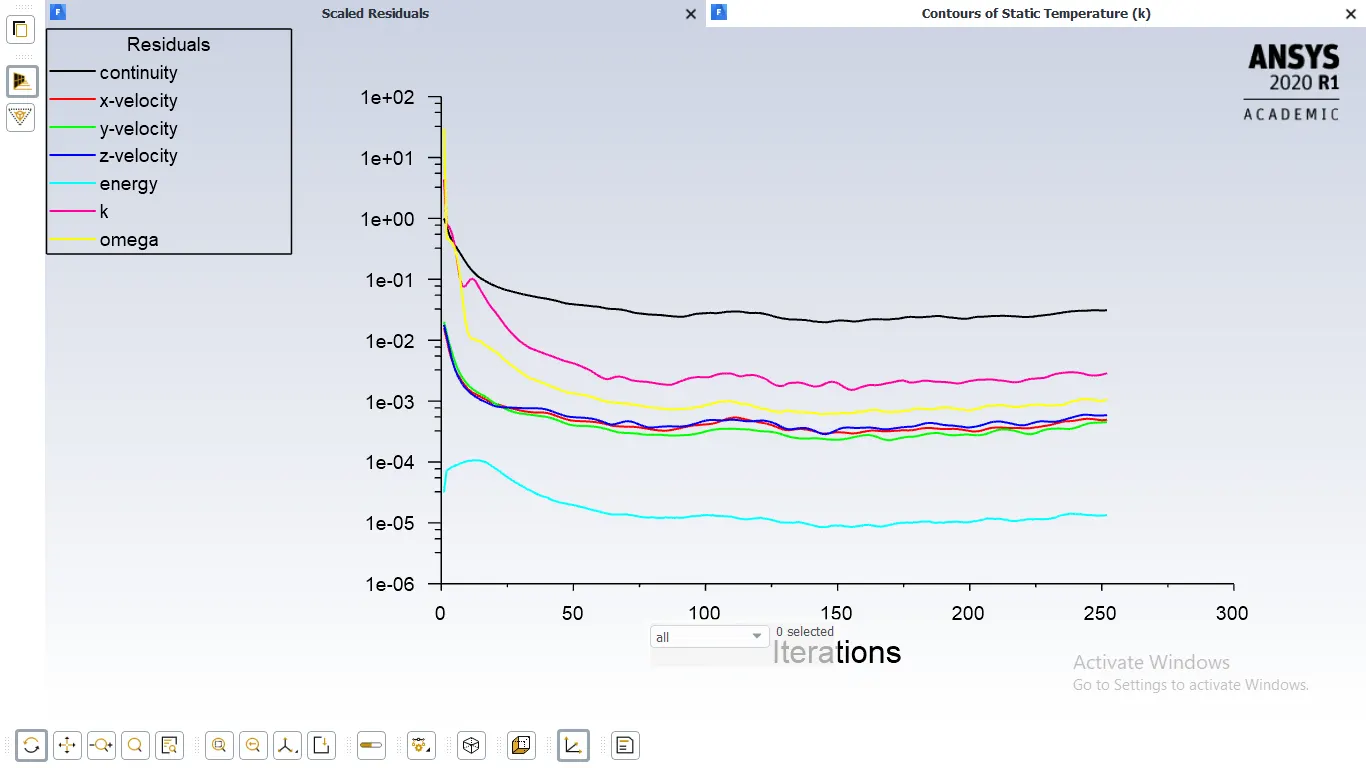
2). TEMP. CONTOUR PLOT & VELOCITY STREAMLINE PLOT
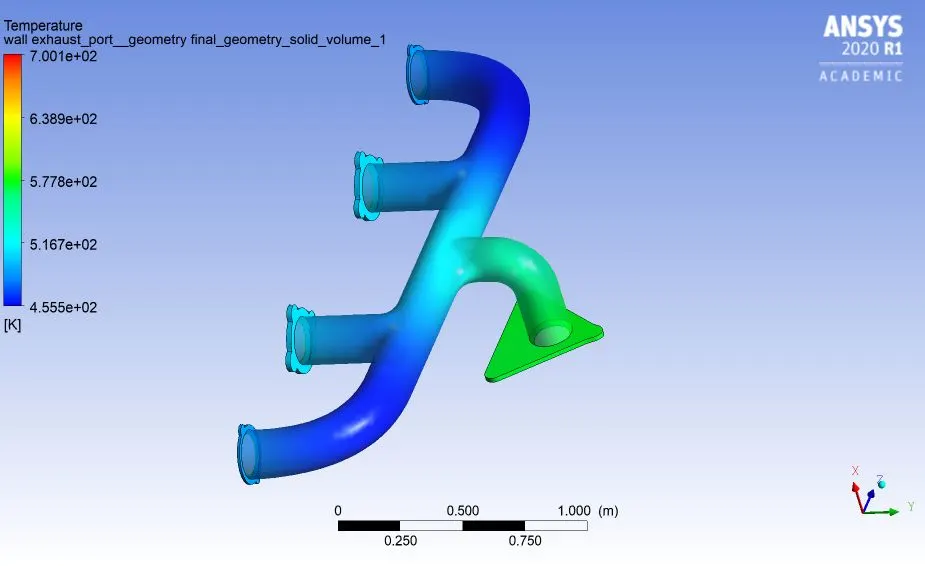
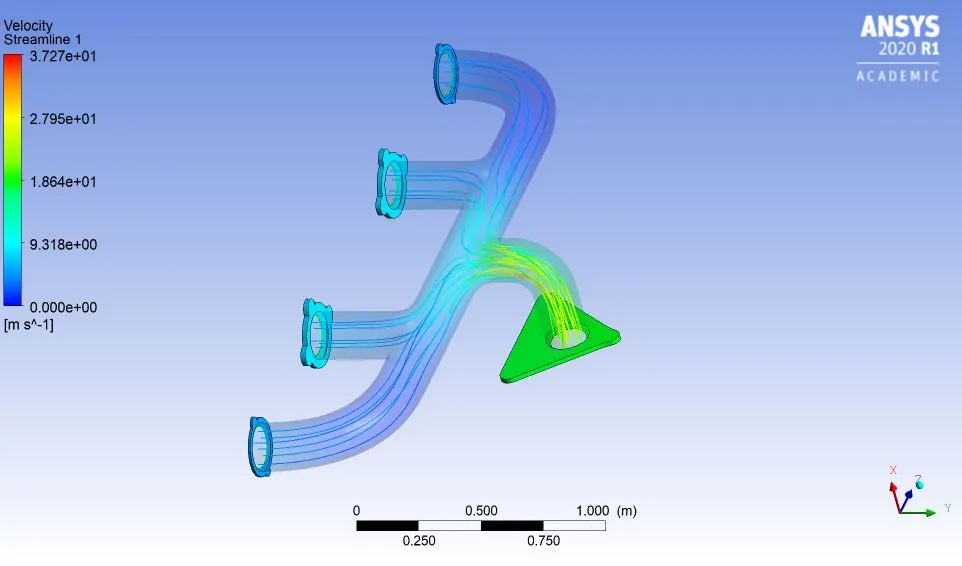
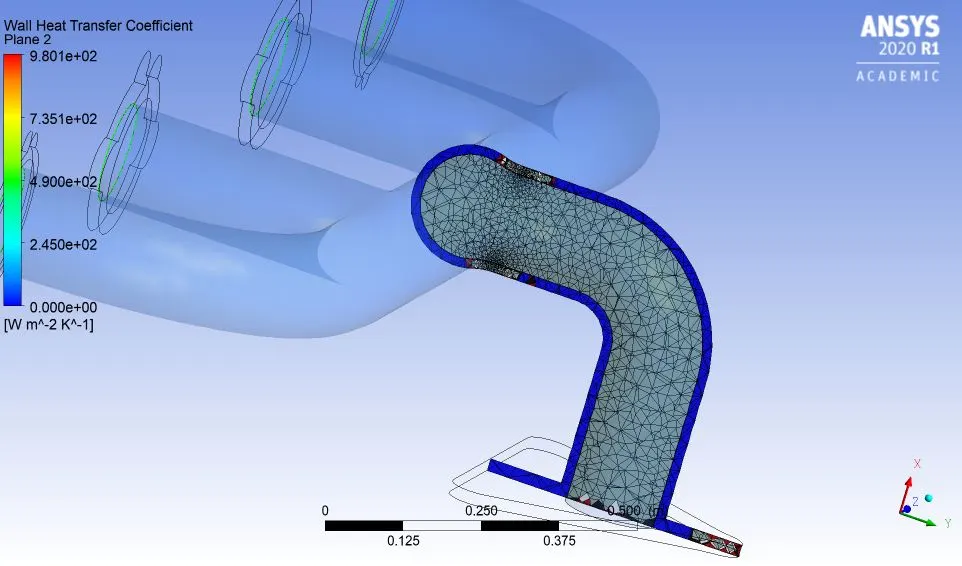
3). HEAT TRANSFER CO-EFFICIENT PLOT AT WALL
4). VELOCITY & TEMP. VARIATION AT INLET JUNCTION
- Reynold no given by ratio of viscous fluid to inertial force.
- Wheres prandtl number is ratio of momentum diffusivity to the themal diffusivity. Since we have here solid fluid interface we need dimensions number which can relate both matter. Hence nusset no. Given by ratio of conduction resistance to convection resistance.
- To find overall nusset from local nusset number is difficult task and again requires lots of parameter ie, local heat transfer, thermal conductivity at that location because it's chnge with temp.One can compare heat transfer co-efficient by calculating it theoretically from nusset number equation.
Normally nusset number is function of reynold number and prandtl number.
-
The larger the Nusselt number, the more effective the convection. A larger Nusselt number corresponds to more effective convection, with turbulent flow typically in the 100–1000 range. For turbulent flow, the Nusselt number is usually a function of the Reynolds number and the Prandtl number.
-
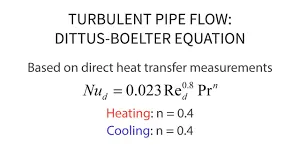
For fully developed (hydrodynamically and thermally) turbulent flow in a smooth circular tube, the local Nusselt number may be obtained from the well-known Dittus-Boelter equation. The Dittus–Boelter equation is easy to solve but is less accurate when there is a large temperature difference across the fluid and is less accurate for rough tubes (many commercial applications), since it is tailored to smooth tubes.
- Dittus-Boelter Equation - Formula
- Mesh size (coarse , fine ) and mesh quality
- choice of Turbulence model
- Wall y+ value hence first layer thickness
- material and its physical properties .
CONCLUSION :
- It can be concluded that while using more refined setup we can get more accurate result and Heat transfer co-efficient , in refined case HTC is approx. 980.1 w/(m^2 *k) and in case of base setup 101.3 w/(m^2 *k) , since simulated value is correct dont need to add inflation layer on solid side too
- one should care while adding up number of inflation layer if more number of layer is there then its leads to poor quality of mesh.
- from velocity stramline plot high velocity observed at outletside portion that is because of high heat transfer coefficient in that curvature portion of outlet because of mass - conservation