Emission characterization on a CAT3410 engine
Objective:
1.To run the simulation for omega and open w piston.
2.To charactererize emmision and compare them between omega and the open-w pistons.
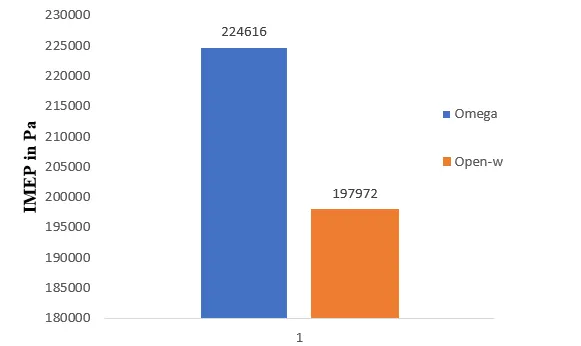
3.Compare the imep and power values graphically.
Introduction:
Caterpiler 3410 is heavy duty diesel engine mainly used for industrial applications.Closed cycle analysis is done to analyze performance parameters.In Closed cycle analysis,valve are remained closed.To perform an anlysis we are making sector of piston by providing sufficient piston angle as it reduced computational time and increases computational efficiency.Sector angle is calculated as follows:
Sector angle = 360/Number of Nozzle
Geometry:
Omega Piston:
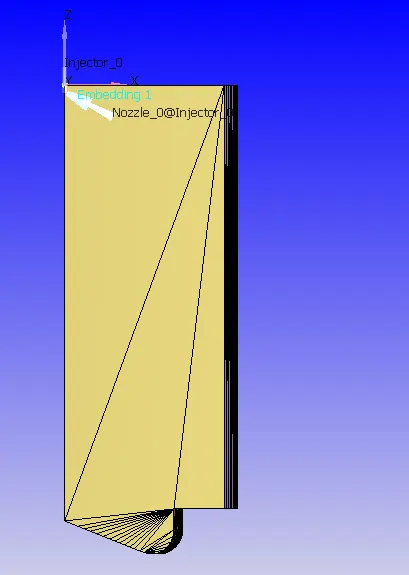
Open-w piston:
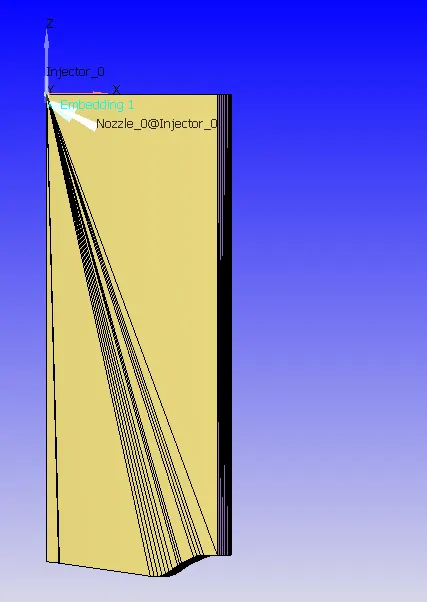
Make engine sector Surface:
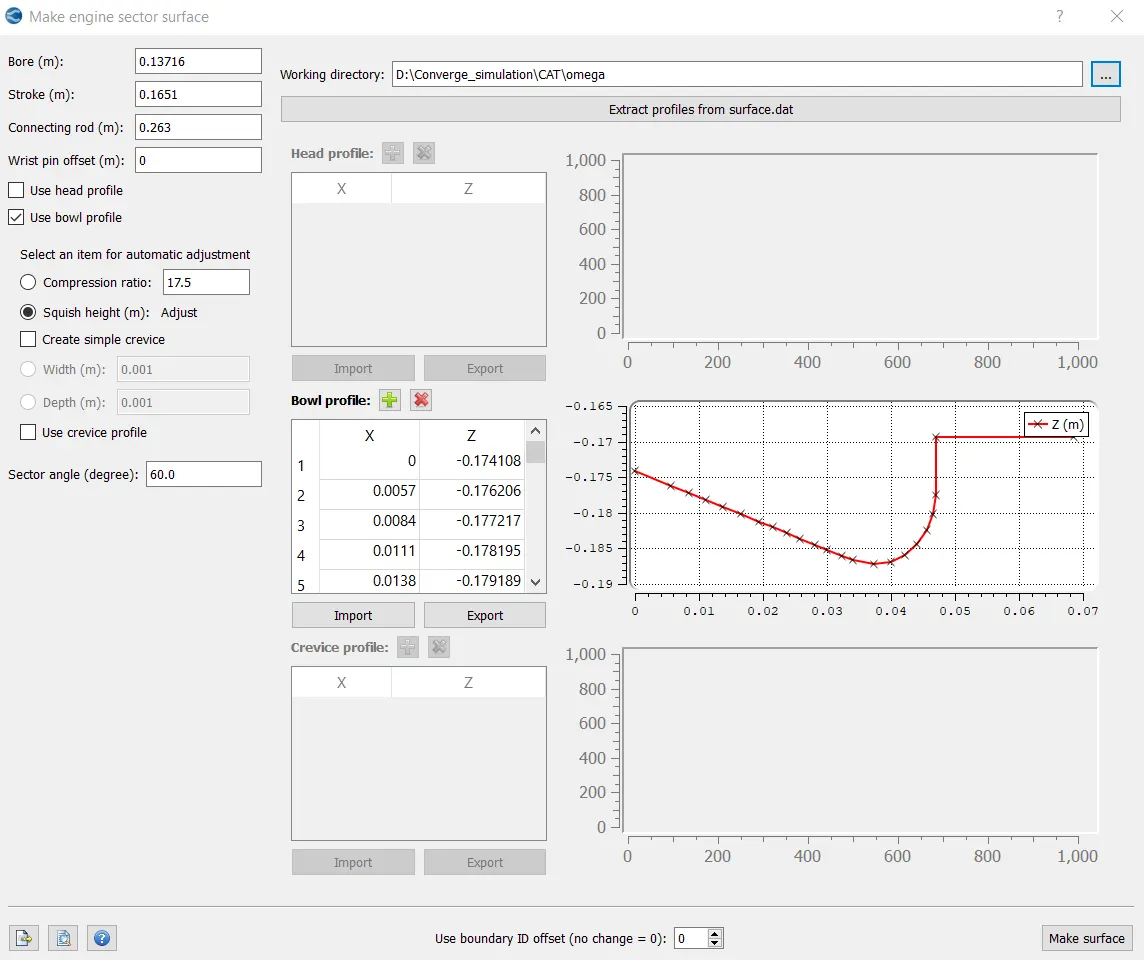
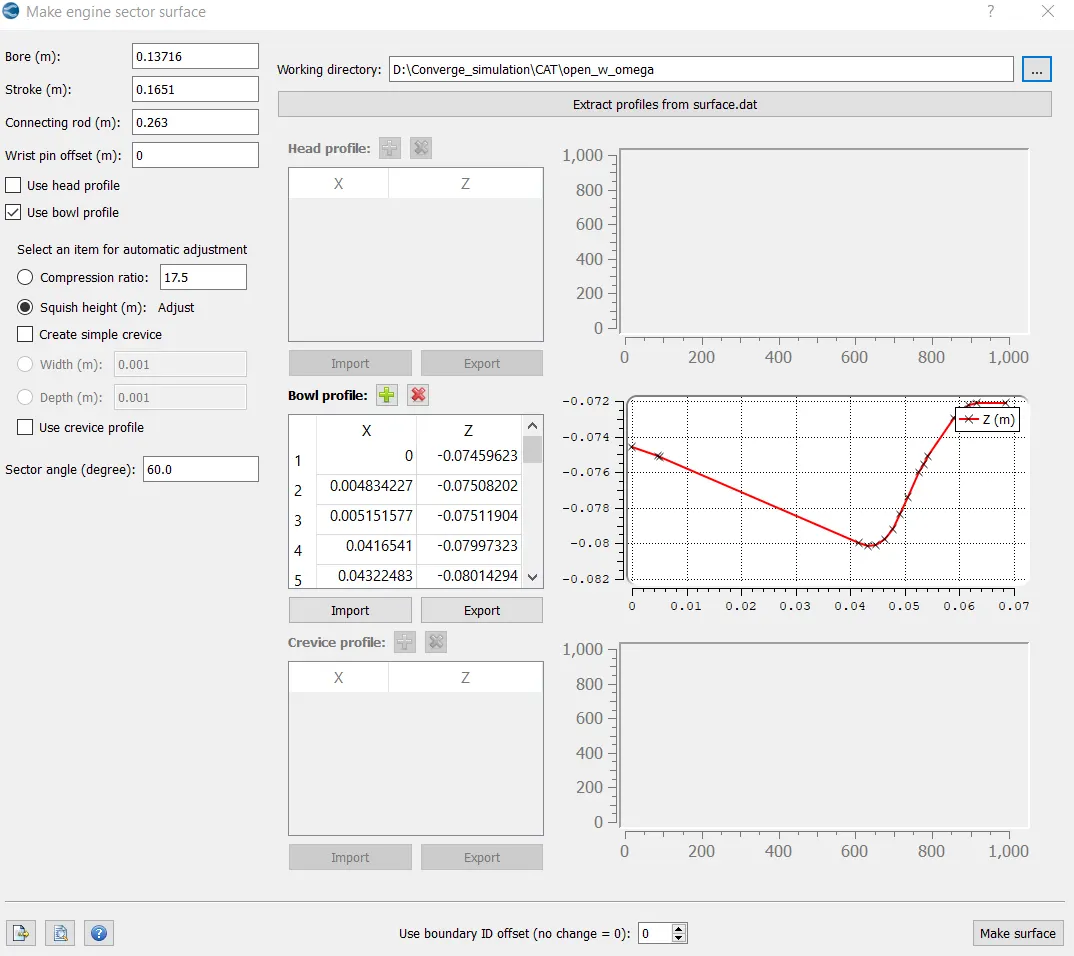
We can extract head,bowl ,forward and reverse profile from the data proveded.by putting appropriate engine parameters we can create the sector surface.
Here we have considered the no. of nozzle are 6.
Sector angle = 360/Number of Nozzle
= 360/60
= 60
Sector angle = 60
Omega Piston:
Open-w Piston:
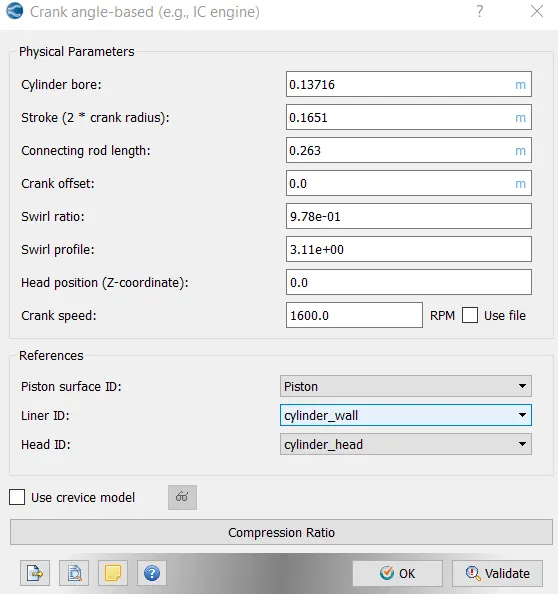
Engine Parameters:
Application type - crank angle based IC engine
Materials:
Gas simulation: Provide therm.dat which contains thermodynamic data for species involved in the combustion.
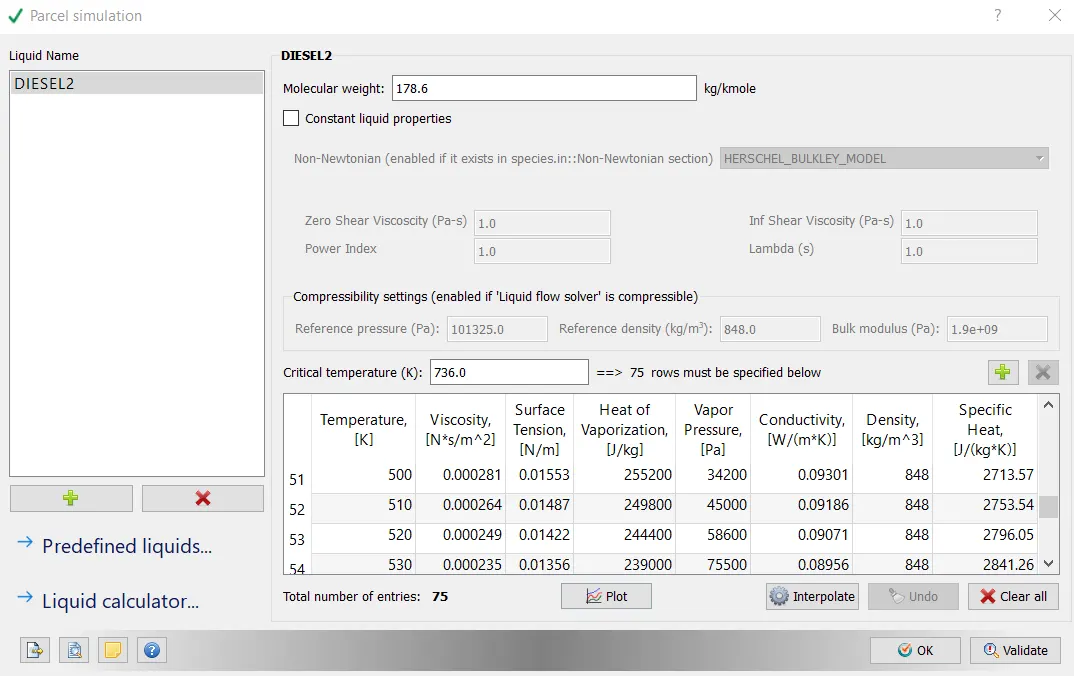
Parcel Simulation:
parcel is the spherical structure that contains fuel droplets.
Select diesel-2 as fuel and its thermodynamic properties will automaticaly gets load.
Species:
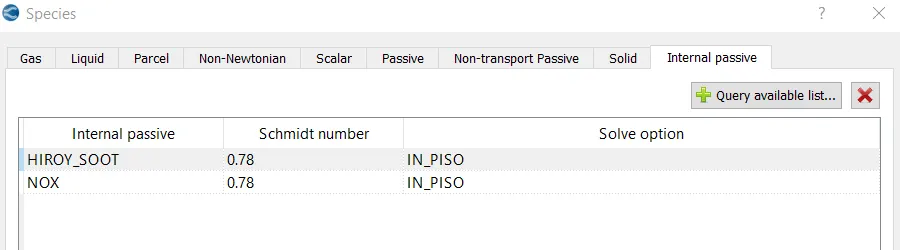
select Diesel2 as parcel and hiroy soot and NOx as passive.
Simulation Parameters:
Run Parameters:
Select transient solver with full hydrodynamic simulation mode.
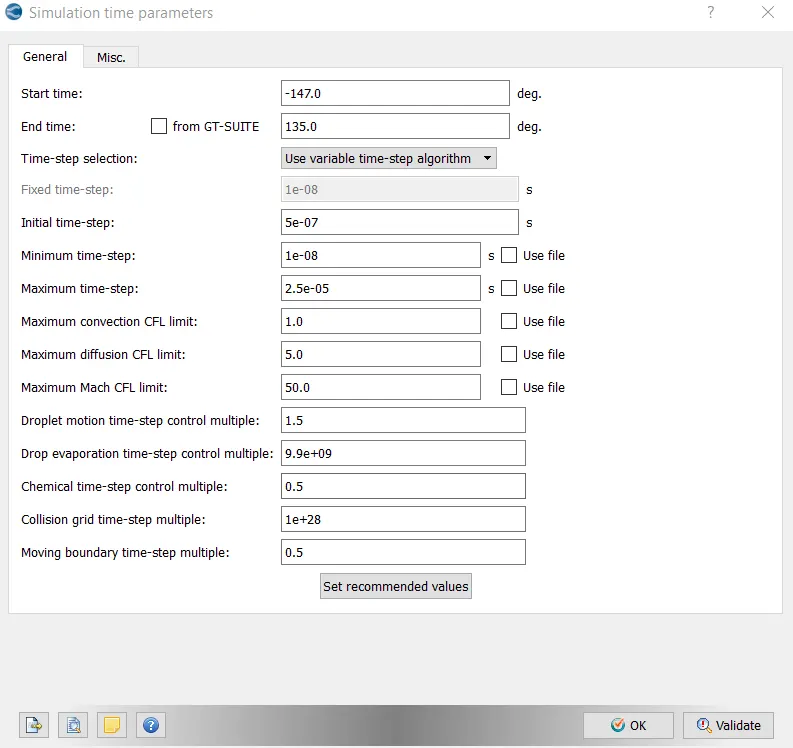
Simulation Time parameters:
start time: -147
end time: 135
Regions and Initialisation:
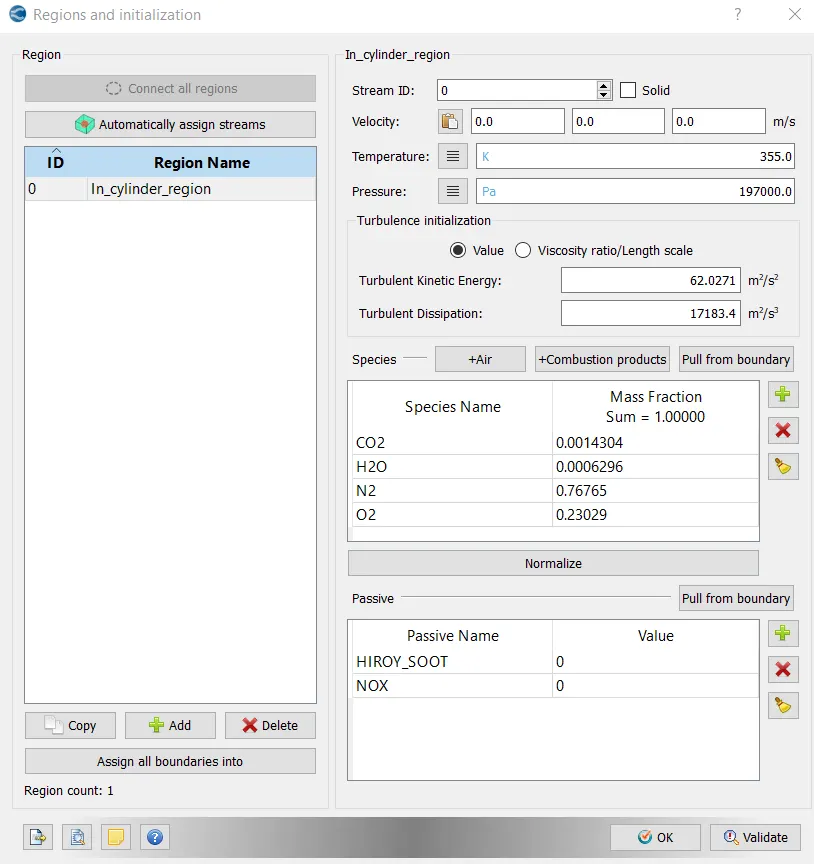
initial Conditions:
Pressure = 19700 Pa
Temperature = 355 K
Boundary Conditions:
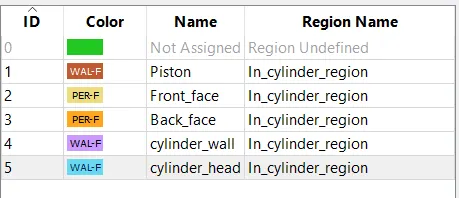
1.Piston:
Boundary type: Wall
Wall motion type: translating
Surface movement: Moving
Temperature: Law of wall 553 K
2.Front Face
Boundary type:Periodic
Periodic type: stationary
periodic shape: Rotational
Angle : 60
matched boundary: back face
3.back Face:
Boundary type:Periodic
Periodic type: Matched Boundary
4.Cylinder wall
Boundary type: Wall
Wall motion type: Stationary
Surface movement: Fixed
Temperature: Law of wall 433 K
5.Cylinder Head
Boundary type: Wall
Wall motion type: Stationary
Surface movement: Fixed
Temperature: Law of wall 523 K
Physical models:
Spray Model:
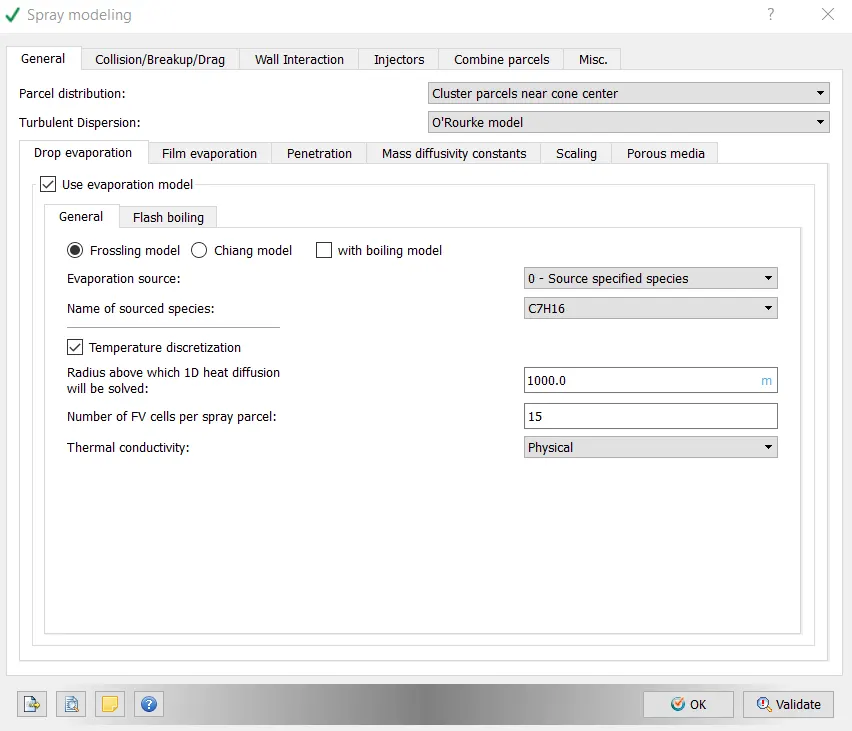
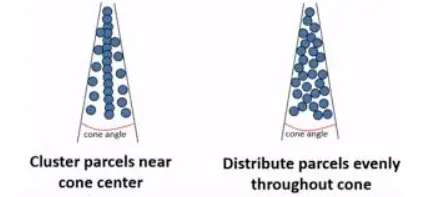
Parcel Distribution:
Temperature Distribution:
Converge divides each drop into no. of finite volumes and solves 1 D heat equation for that finite volume but this process increase computational time.Hence we have entered maximum value of radius to avoid individual temperature calculation and hence uniform temperature distribution is maintained.
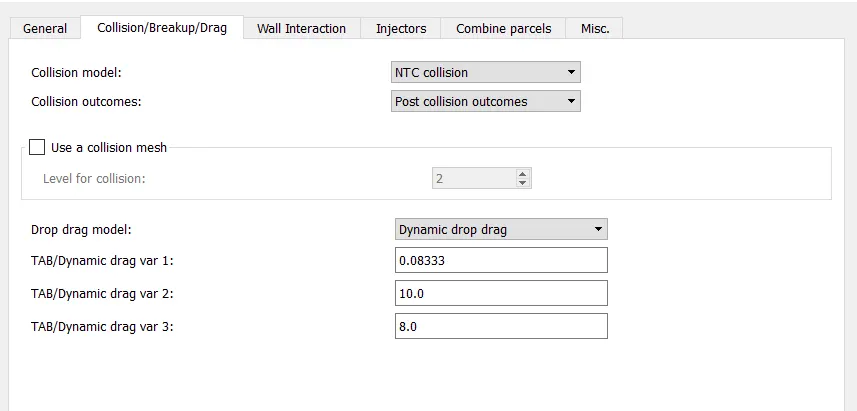
Colision/Breakup/Drag:
NTC model:
The No time Counter (NTC) method involves stochastic (randomly determined) sub-sampling of the parcels within each cell. This sampling potentially results in much faster collision calculations. Unlike O'Rourke's method, which incurs an additional computational cost that increases with the square of the number of parcels, the NTC method has a linear cost.
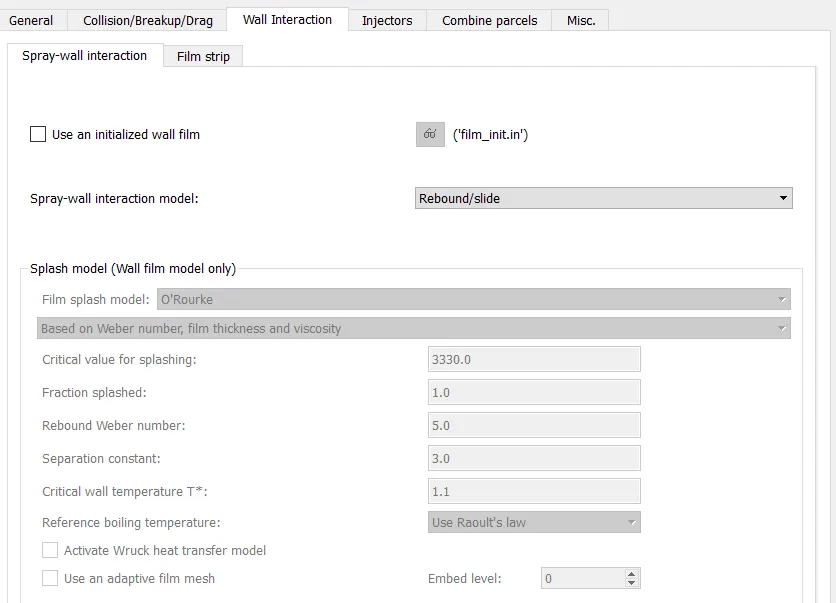
Spray-wall Interaction:
Rebound/slide model:
Converge use the wall impingement model of Naber and Reitz (1988), which was later improved by Gonzalez et al., (1991), to model the interaction of the spray droplets with solid surfaces. This model includes two impingement regimes, rebound and slide, that are based on the Weber number of the incoming drop at impact, If Weber no. is less than 80 (rebound regime), the drop rebounds elastically with a normal velocity
Injectors:
KH-RT spray breakup model:
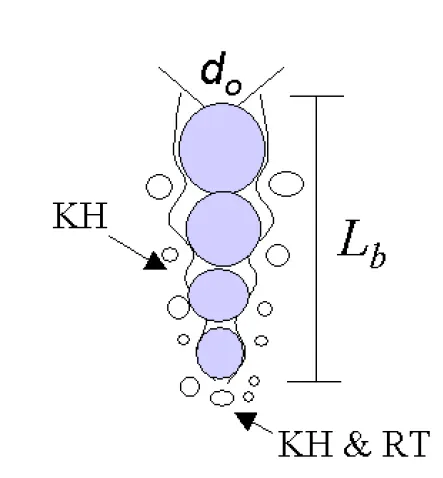
Above figure shows Schematic of the KH-RT spray breakup model. Note that liquid blobs are injected with a diameter equal to that of the injector nozzle. In addition, the KH breakup mechanism is applied to a droplet throughout its lifetime, while the RT mechanism is only initiated once the drop reaches a characteristic
distance, Lb, from the injector.
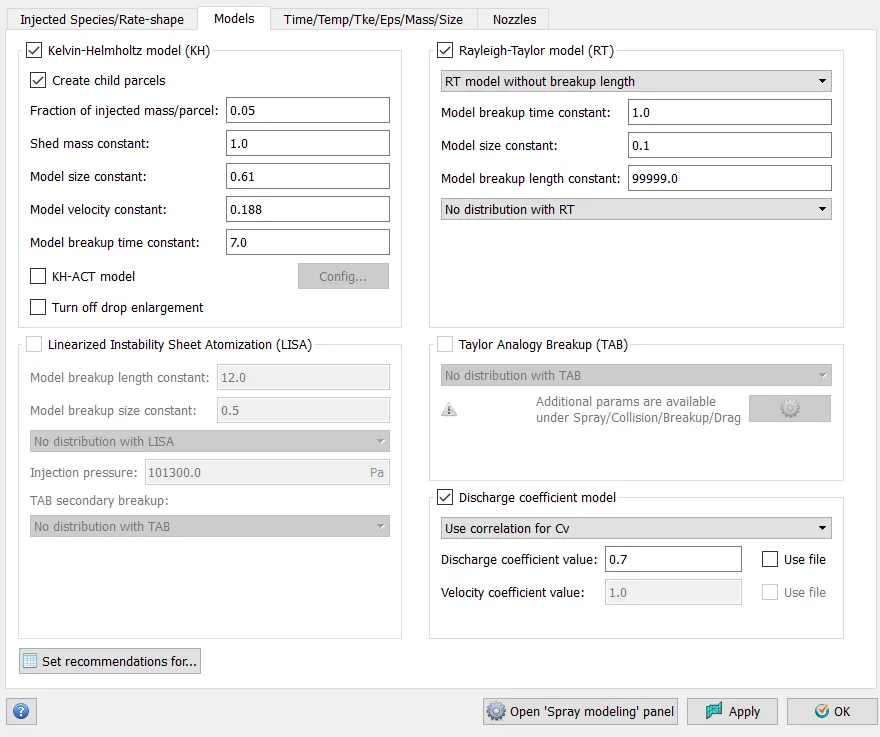
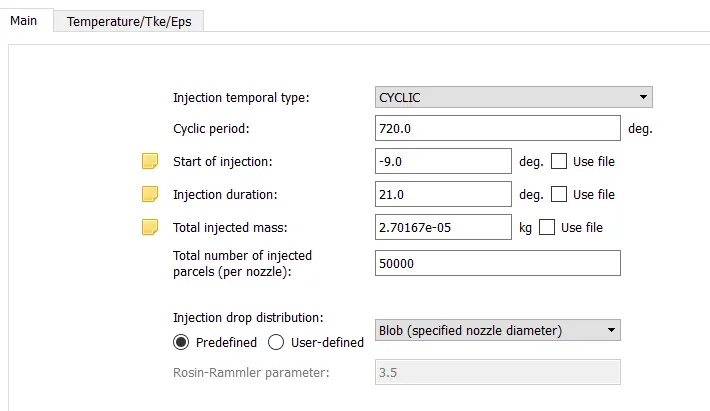
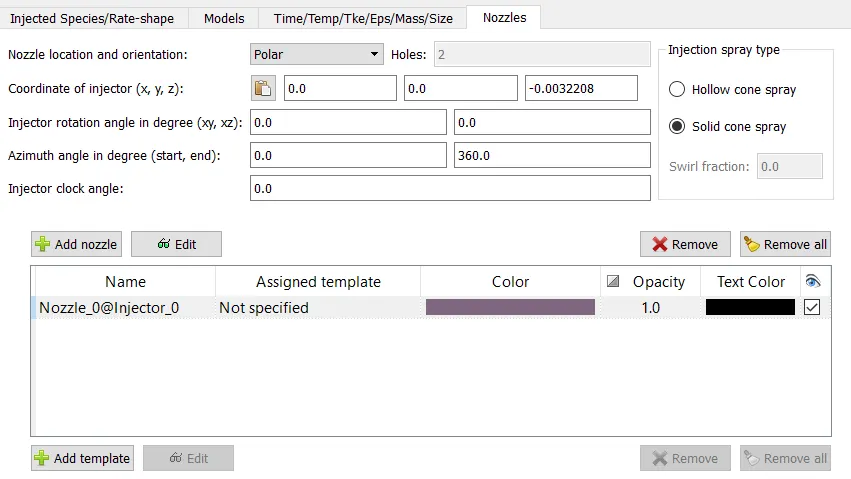
injection of fuel started at -9 degree and continue for duration of 21 degree.Total injected mass is 2.70167e-5 kg
Nozzle details:
Rate shape:
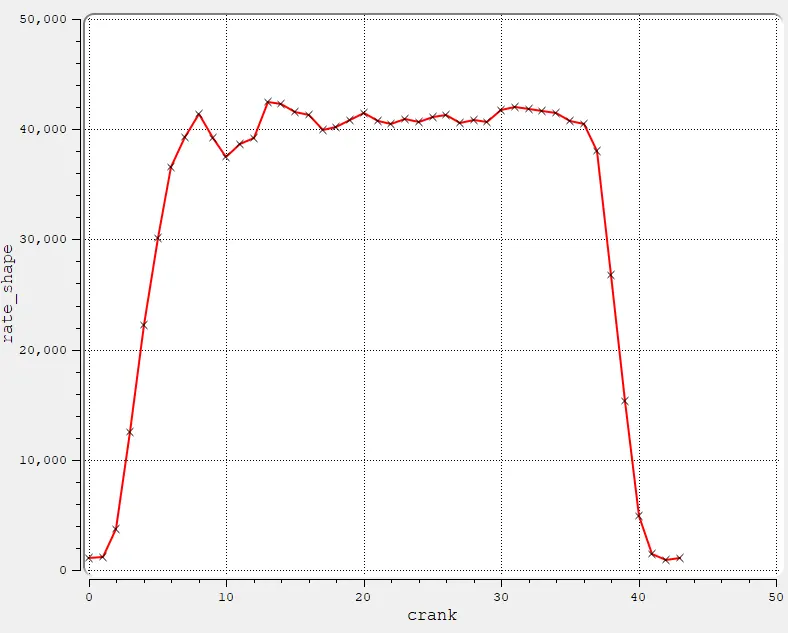
Rate shape is the plot of injected parcel species with respect to the crank angle.
Combustion Modelling:
SAGE:
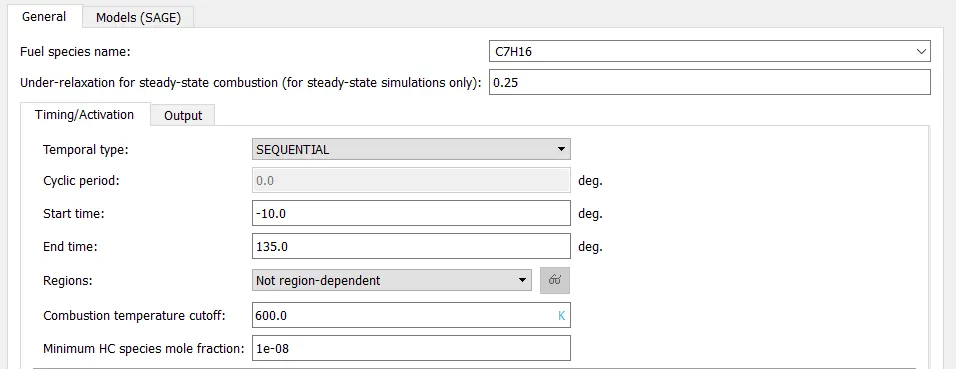
A chemical reaction mechanism is a set of elementary reactions that describe an overall chemical reaction. The combustion of different fuels can be modelled by changing the mechanism. SAGE calculates the reaction rates for each elementary reaction while the CFD solver solves the transport equations.
Emmision Modeling:
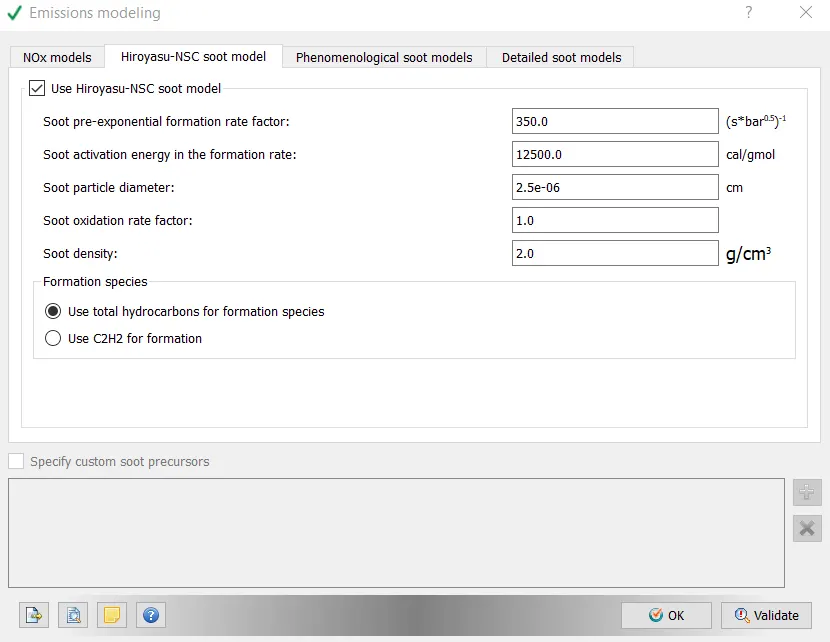
Hiroyasu-soot model is activated to simulate soot oxidation.
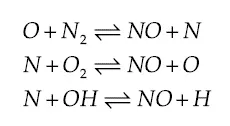
Extended zel'dovich model is activated to model the NOx.This mechanism is given by the following set of reactions:
Grid control:
base grid size: 4 mm in all direction.
AMR:
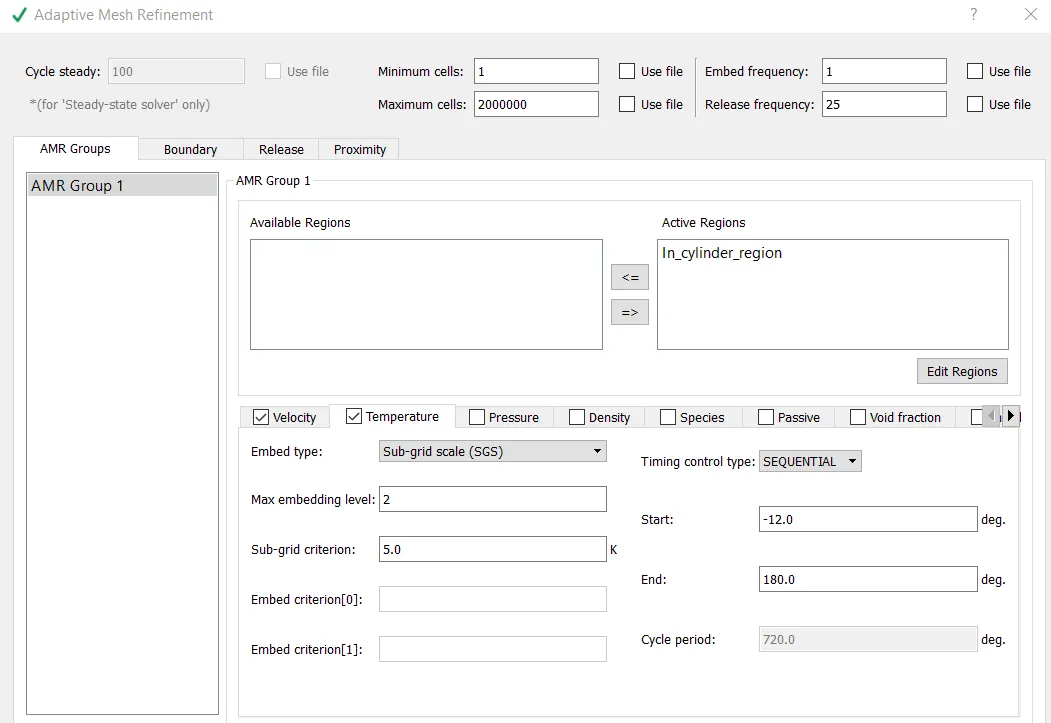
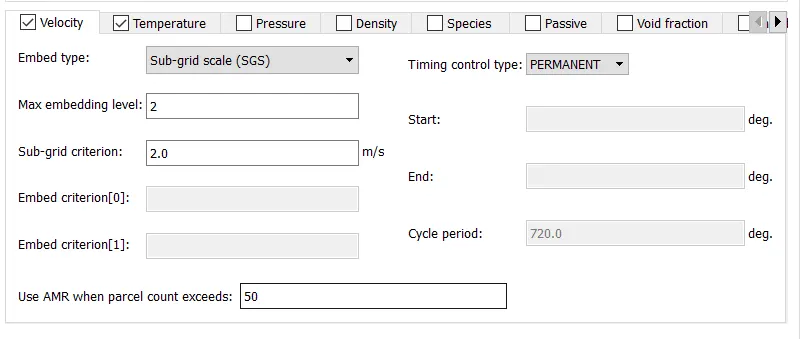
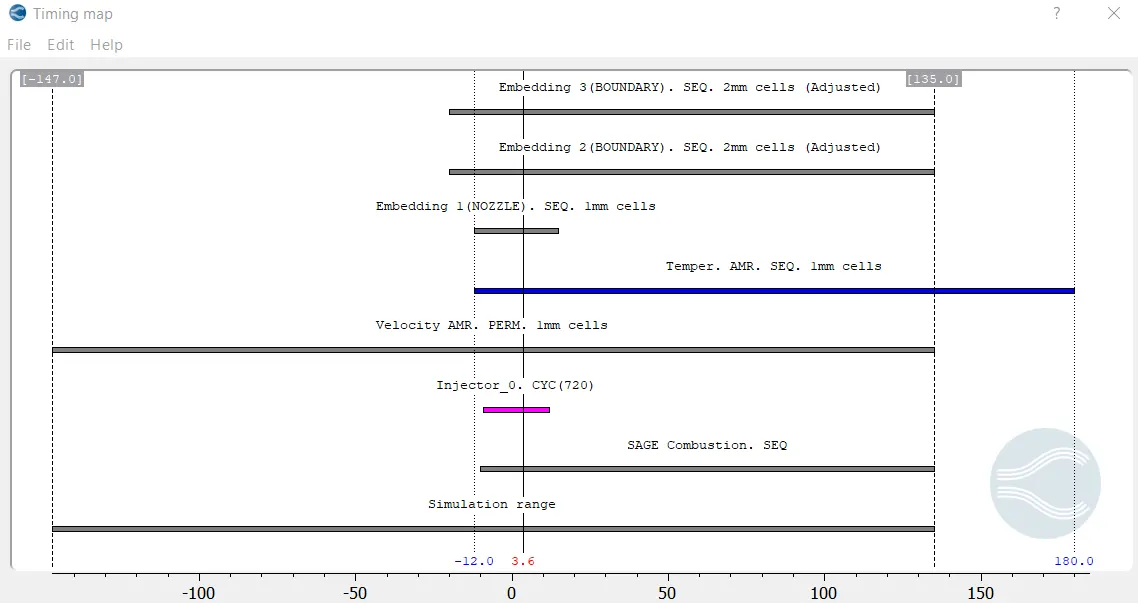
both temperature and velocity AMR are activated to refine the mesh size to 1 mm.
Fixed Embeding:
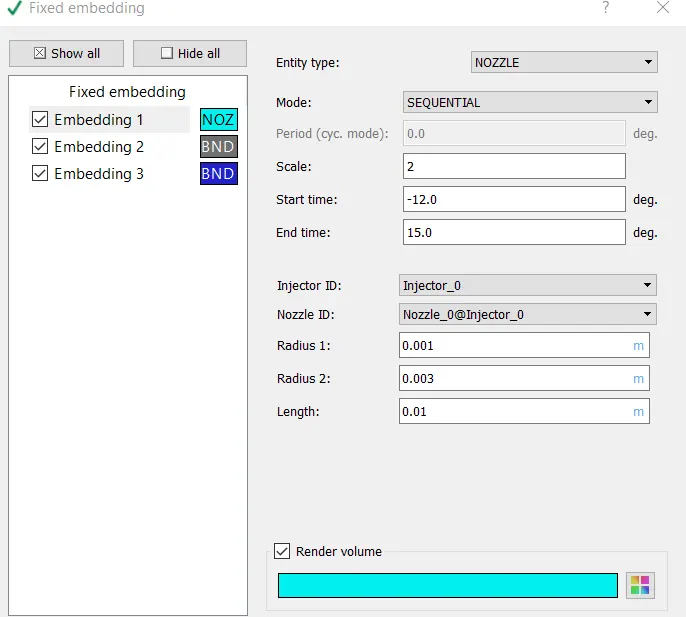
1.Nozzle
mesh refinement is sequential and is activated from -12 to 15 degree.
Mesh refinement = base grid size/2^scale
= 0.004/2^2
= 1mm
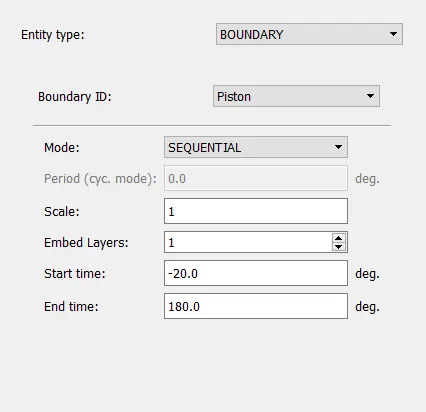
2.Piston
Mesh refinement = base grid size/2^scale
= 0.004/2^1
= 2 mm
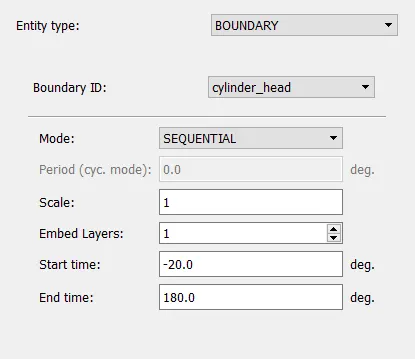
3.Cylinder head
Mesh refinement = base grid size/2^scale
= 0.004/2^1
= 2 mm
Timing Map:
Results:
1.Mesh:
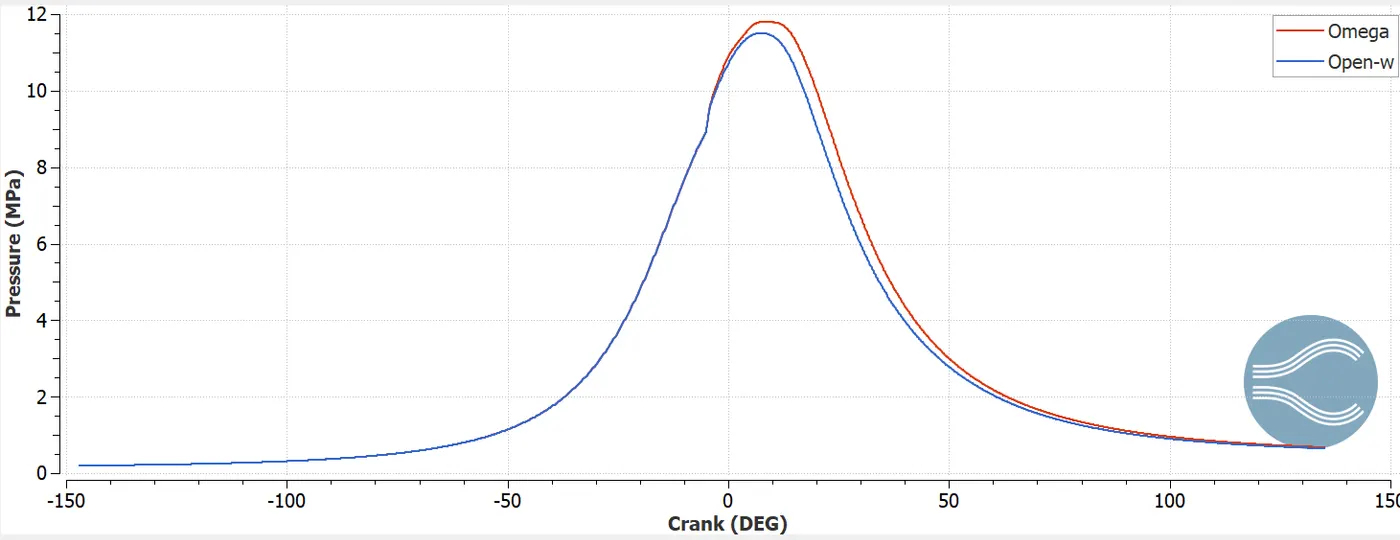
2.Pressure:
Pressure for Open-w piston is 11.5 MPa and for Omega type piston is 11.8 MPa.
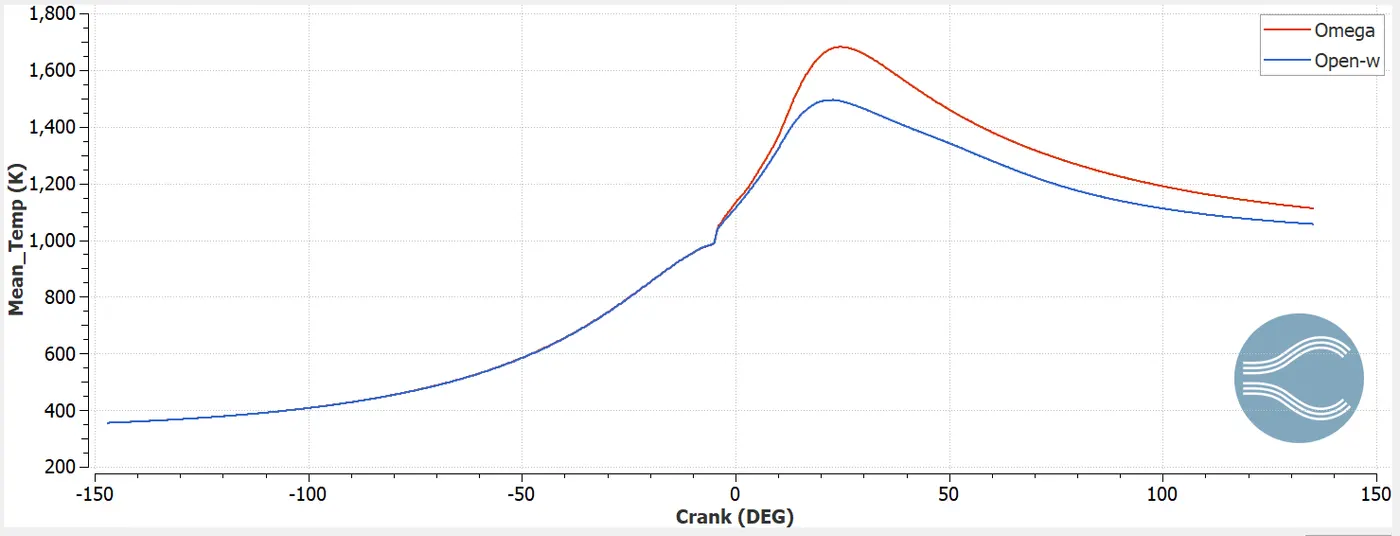
3.Tempearature:
Mean Temperature for Open-w piston is 1510 K and for Omega piston is 1685 K.High temperature indicates that NOx emmision are higher and lower temperature indicates lower combustion of fuel.
4.Velocity:
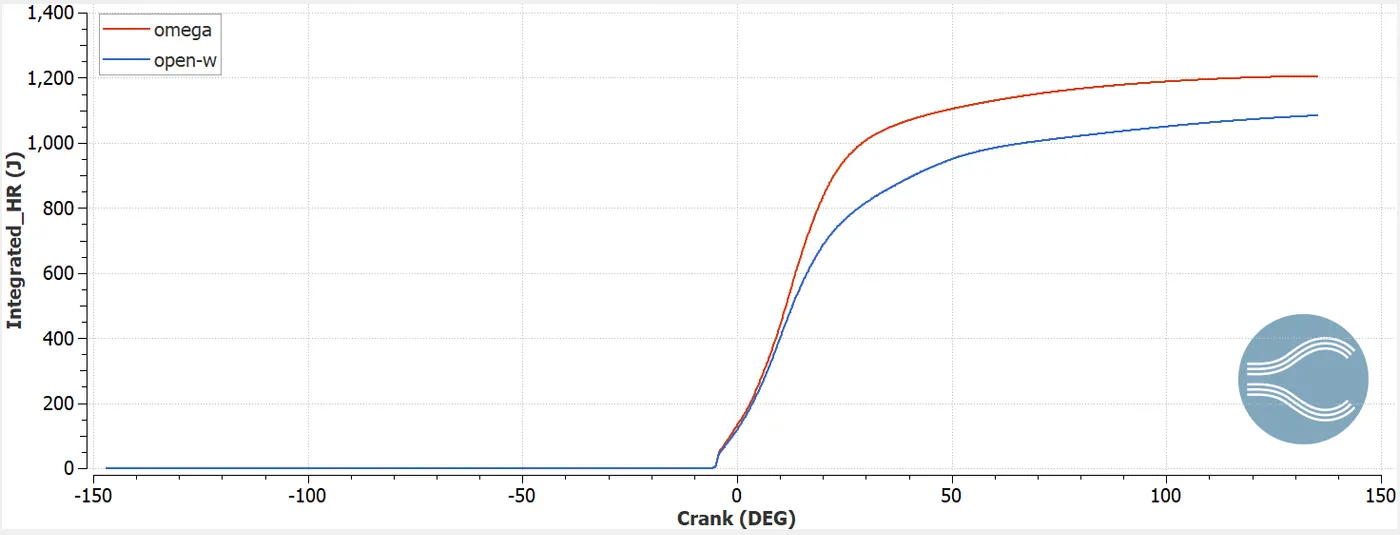
5.Heat Release:
Integrated heat release for open-w pison is 1084.06 J and for omega piston is 1205.45 J.More Heat release means more power we get and hence omega is favourable piston type.
Mass of fuel supplied = 2.70167e-5 kg
Calorific value of C7H16 = 48.06 MJ/kg = 48.06 e+3 kJ/kg
Energy supplied = Mass of fuel supplied* Calorific value
= 2.70167e-5*48.06e+3
= 1.2984 kJ
Omega Piston:
Integrated Heat Release = 1205.45 J =1.20545 KJ
Combustion Efficiency = 1.20545/1.2984 = 0.9284 =92.84%
Open-W Piston:
Integrated Heat Release =1084.06 J =1.08406 KJ
Combustion Efficiency = 1.08406/1.2984 = 0.8349 =83.49 %
Difference in Heat release =1205.45 - 1084.06 = 121.41
Omega piston release 121 J of heat more than Open-w type piston.
Therefor,mass fuel required to to release 121 J Heat = 121.41/48.06e+6 = 2.52 mg
Emmsions:
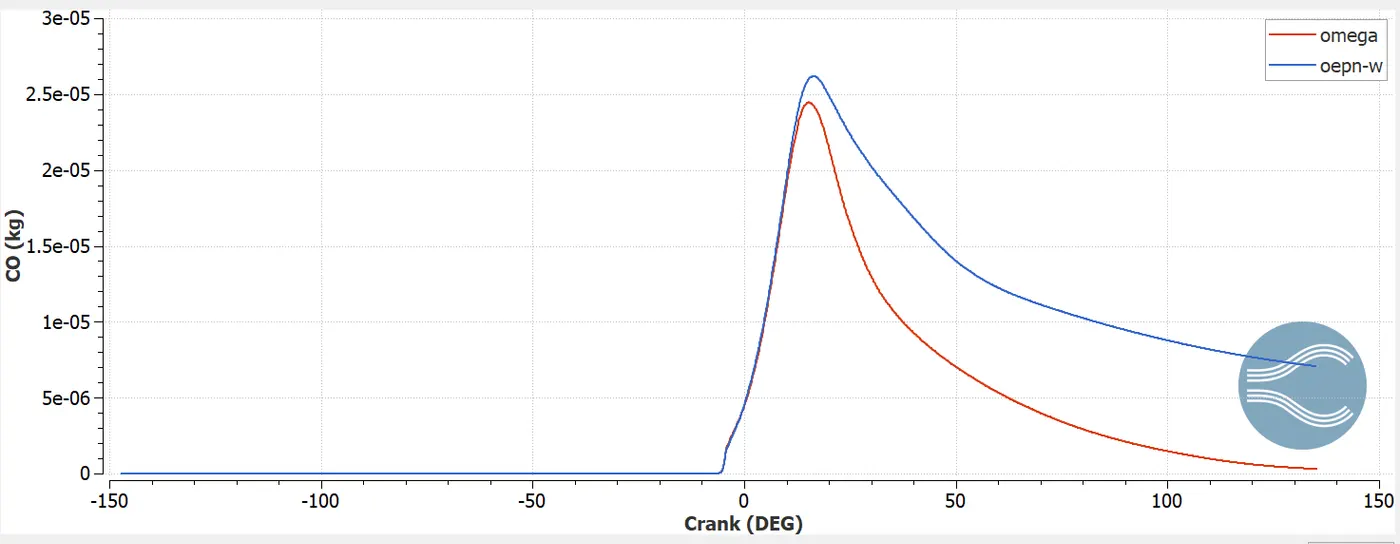
1.CO
Incomplete oxidation of fuel leads to emmision of carbon monoxide.Here from pot we can see that CO emmisions for open-w type piston are higher.
2.CO2
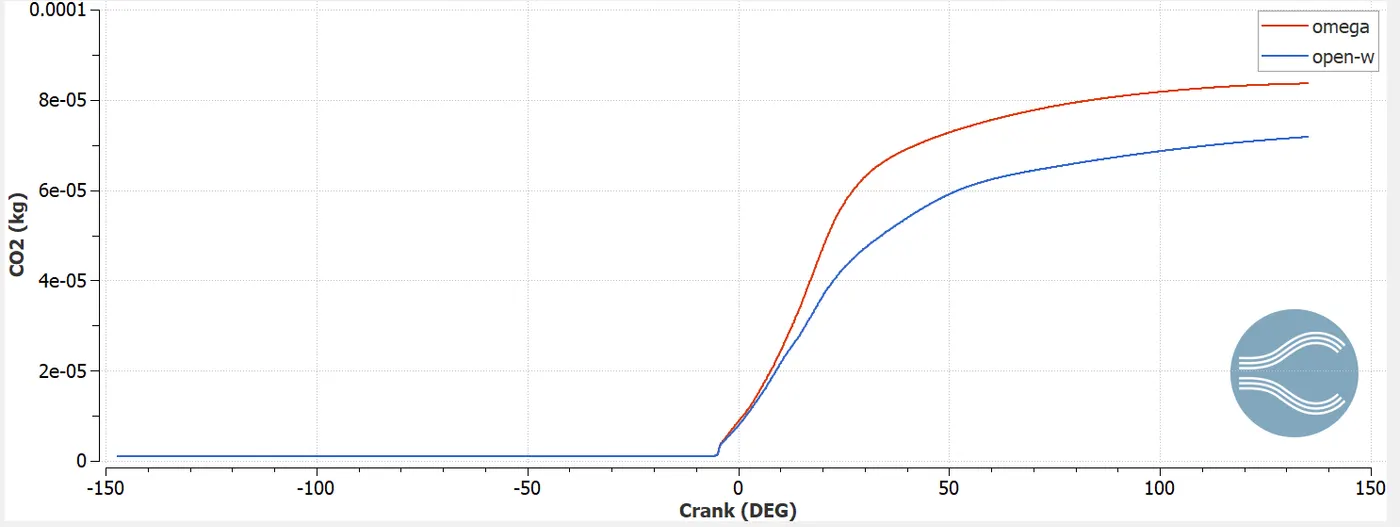
When fuel is completely combusted,we get CO2 as emmision.Lower CO2 emmsions in open-w piston suggest incomplete combustion of fuel.
3.Soot
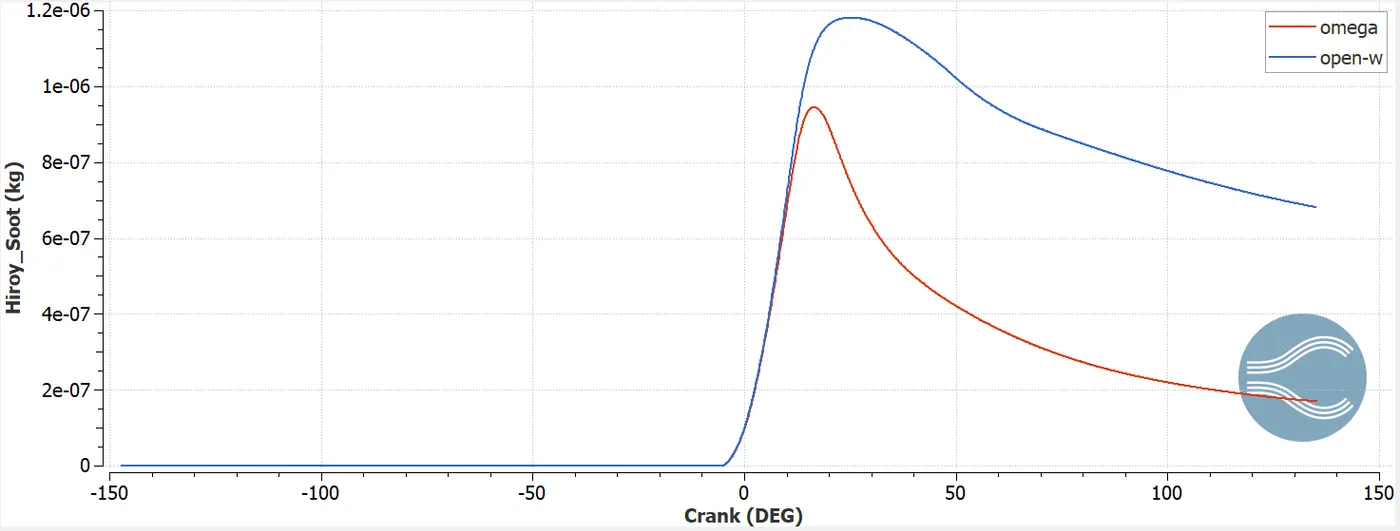
Soot emission is higher in case of open-w type piston.We nned to employ Diesel Particulate filter(DPF) to further decrease ssot emmisions.
4.NOx:
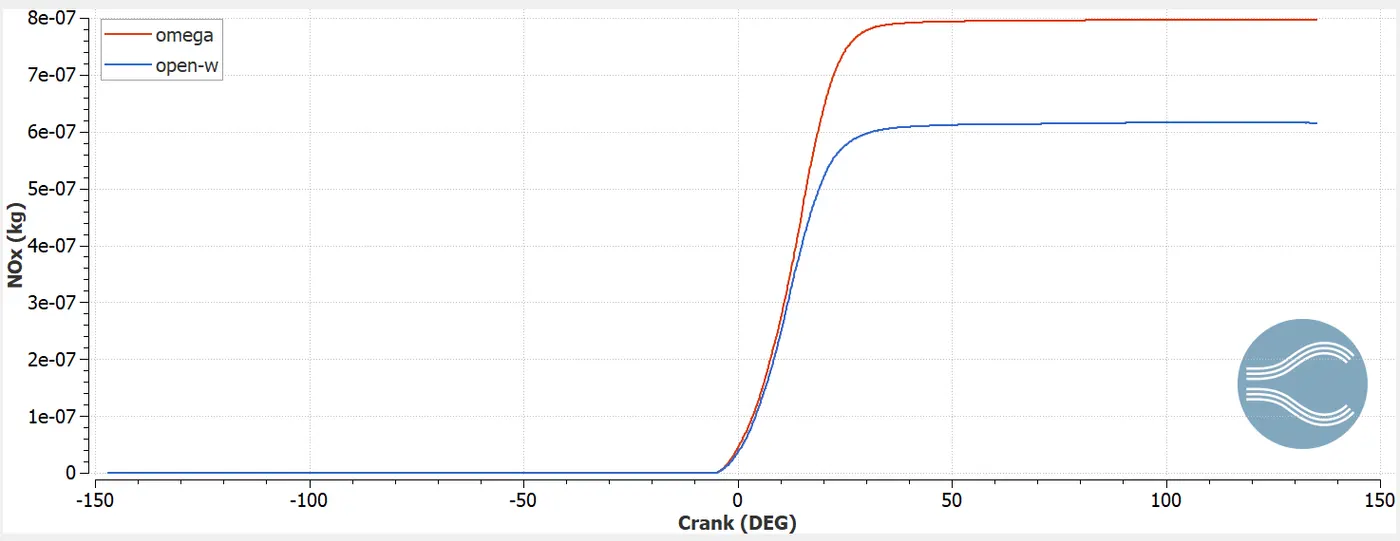
Diesel engine supplied with lean mixture.Means Air supplied is more compare to fuel and air contains oxygen and nitrogen.During combustion,oxygen in utilised to burn the fuel but unutilised nitrogen thrown out of combustion chamber.Due to high temperature in exhaust port nitrogen molecules break down and NOx formed.Due to High temperature NOx emmision are higher in Omega type piston.Selective catalytic Reduction (SCR) technique is adopted to reduce NOx emmisions.
5.Unburnt HydroCarbon:
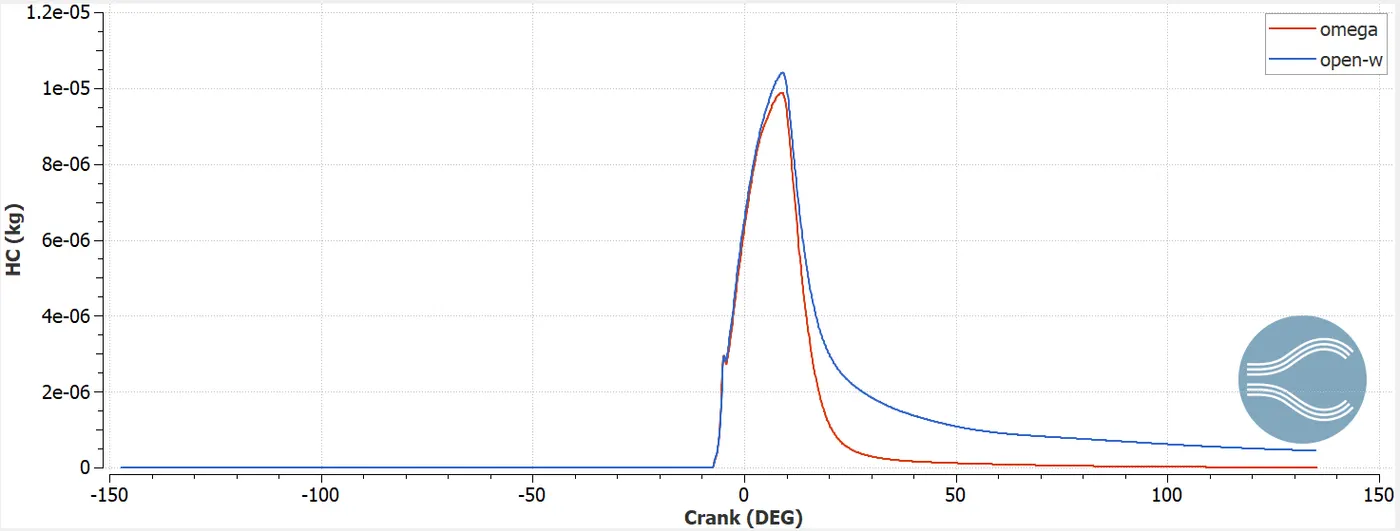
Due to incomplete combustion of fuel Open-w type piston release more unburnt hydrocarbons.
Engine Performance Calculator
Omega Piston

Open-W Piston

IMEP:
Indicated mean effective pressure is constant pressure acts on piston head.It is measure of work output we get for displace volume of engine.It is important parameter for detemining efficiency of an engine.
Power
1.Omega
Duration =270.267 degree
Time per degree = 270.267/9601.2 = 0.0281 S
From engine performance calculator,
Work done = 548.258 N-m/cycle
Work done per second = 548.258/0.0281 = 19510.96 W = 19.51 kW
Power = rate of doing work = Work done per second
Power = 19.51 kW
2.Open-W
Duration =270.25 degree
Time per degree = 270.25/9601.2 = 0.0281 S
From engine performance calculator,
Work done = 483.224 N-m/cycle
Work done per second = 483.224/0.0281 = 17196.58 W = 17.196 kW
Power = rate of doing work = Work done per second
Power = 17.196 kW
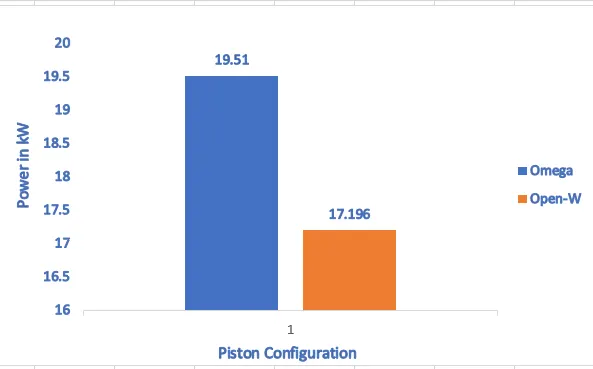
It means Omega type piston produces 11.86 % more power than Open-w type psiton configuration
Torque:
We know that,
Power = 2*π*N*T/60
Where,
N = Speed of engine in RPM
T = Torque in N-m
1.Omega Piston
Power = 2*π*N*T/60
19.51e+3 = 2*π*1600*T/60
T = 116.44 N-m
2.Open-W Piston
Power = 2*π*N*T/60
17.196e+3 = 2*π*1600*T/60
T = 102.63 N-m
Conclusion:
1.Work output for Omega piston configuration is more than open-w type piston.Hence,power and torque produced is also more for Omega type piston.
2.IMEP which is important parameter for efficiency is also higher in case of Omega type piston.
3.Low temperature in open-w type piston is responsible for lower heat release rate means incomplete combstustion leads to highe emissions of CO,soot and unburnt hydrocarbonbut low temperature reduces NOx emission for open-w piston.