Door Arm Rest Week 8 Challenge
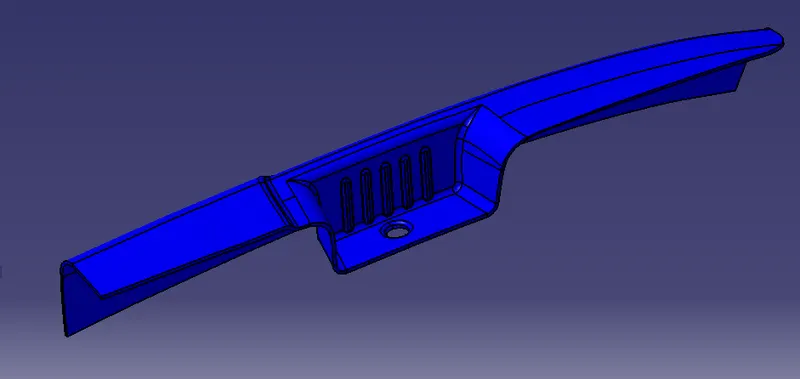
Aim: To create a Door armrest design by creating Class A, B, C surfaces.
Objective: To create a design and perform a draft analysis on it.
Introduction:
- Class A surface: A surface given to the plastic modeller is of aesthetic and outermost surface. The surface made by the designer is known as a Class A surface.
- Class B surface: A surface that is below the Class A surface, at a certain thickness, which contains engineering aspects on it is known as Class B surface.
- Class C surface: A surface that joins the Class A and Class B surface is known as a Class C surface.
Procedure:
- Creating a tooling axis
- Performing draft analysis on Class A surface.
- Creating a Class B surface
- Creating a Class C surface
- Creating a solid model and performing draft analysis.
Difference between Class A and Class B surface:
| Class A | Class B |
| Visible surface | Invisible surface |
| The surface provided by the customer (OEM). | The surface needs to be created w.r.t Class A surface. |
| Curvature continuity is present in surfaces. | Tangent continuity is present in surfaces. |
| Ribs, bosses etc features are not present. | Ribs, bosses, etc are present. |
Tooling axis: The axis that covers draft analysis of the component.
Slider axis: The uncovered portion when draft is not covered with the tooling axis is taken care by slider axis.
Side core: When slider direction is given, the side core part is added to core and cavity to cover the draft provided while ejection.
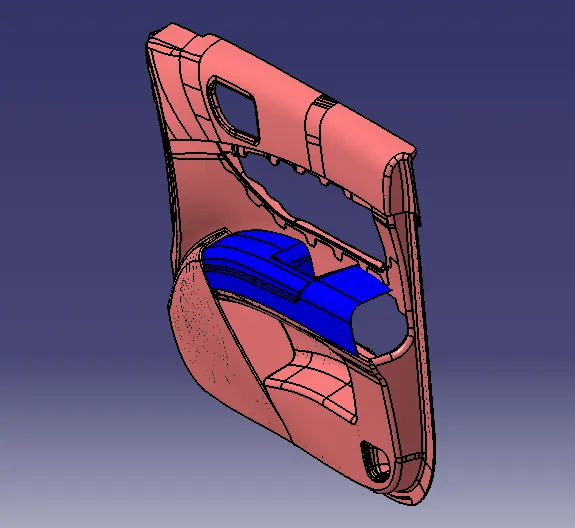
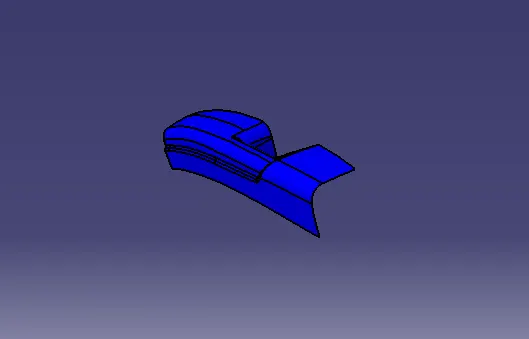
Creation of tooling axis:
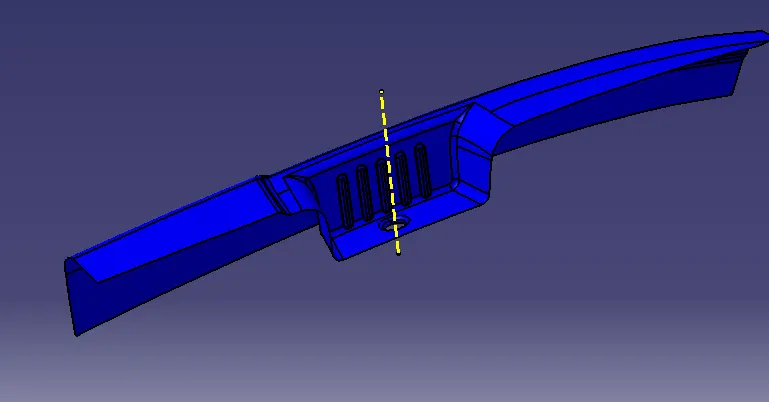
Since the model is a door armrest, which has a bin structure, we can always take the tooling axis direction w.r.t the bottom surface as shown in the figure.
First, we need to check in all directions for the tooling axis for the core and cavity direction.
The draft angle needs to check for all surfaces so that no interference occurs while ejecting the core and cavity.
First, extract the hole and fill it with the surface and create a point on that surface. With help of a point creates a line in the perpendicular direction of the surface.
Draft analysis:
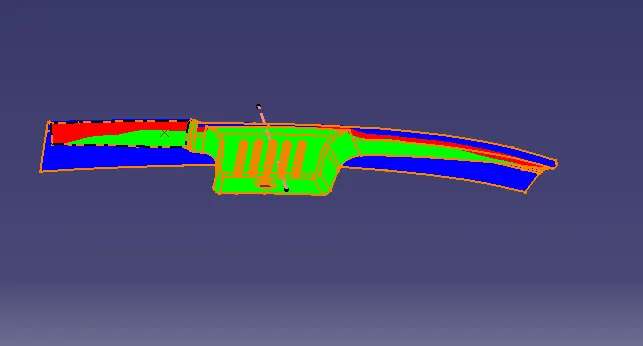
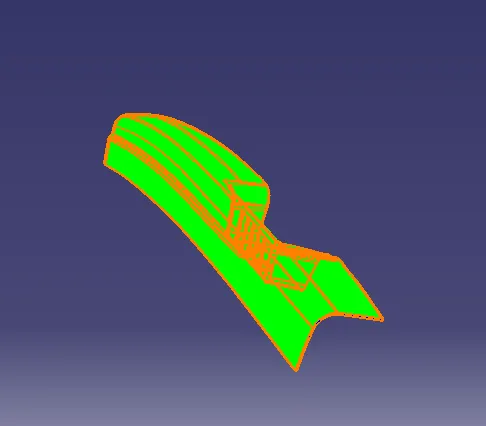
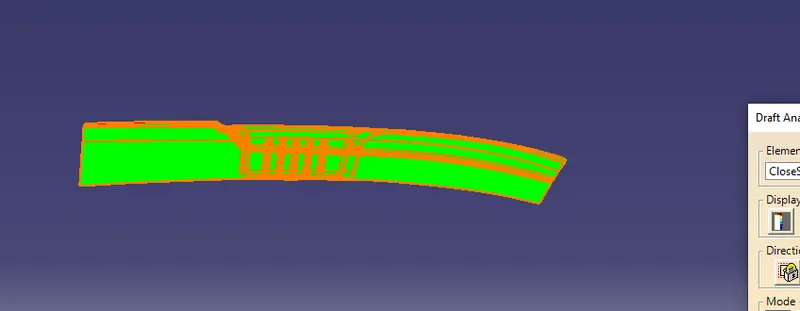
Now, perform draft analysis on the component by placing the compass in the tooling direction.
We can observe there are areas that show red in colour. This represents interference may occur while ejecting the component from the core and cavity.
We can observe that some areas are green, blue and red in colour. These things need to be taken care of.
The solution for this is the creation of a slider direction tool.
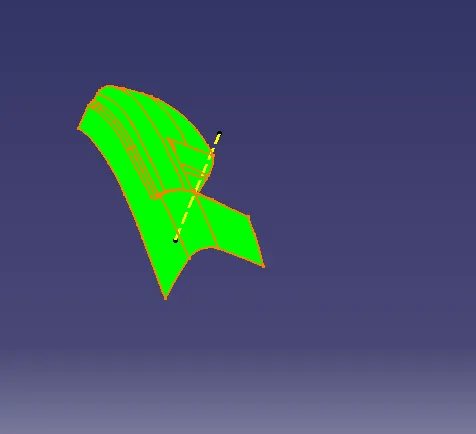
Creation of Class B surface:
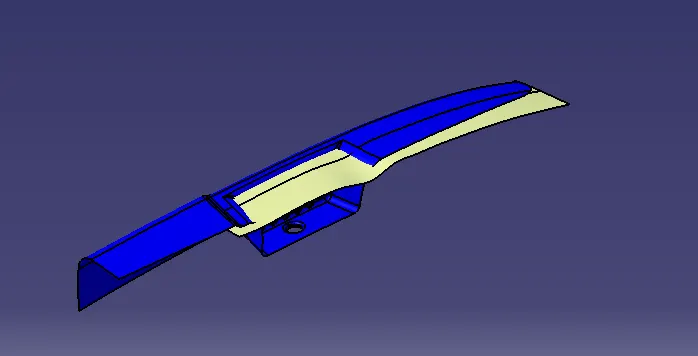
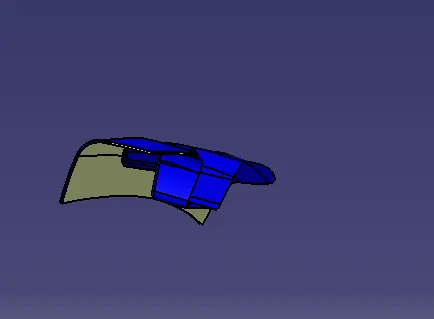
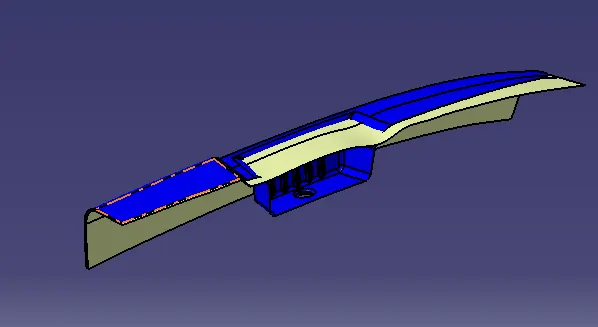
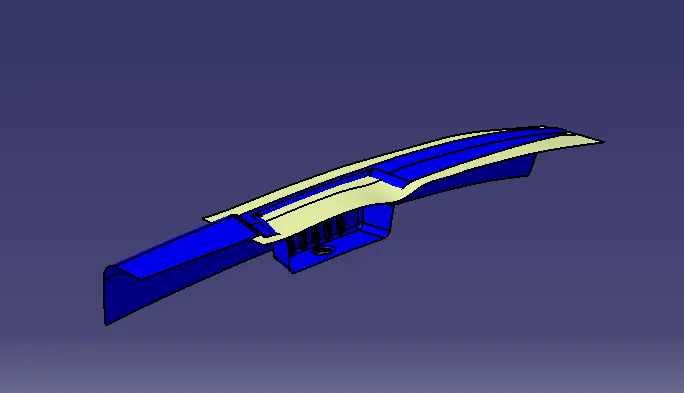
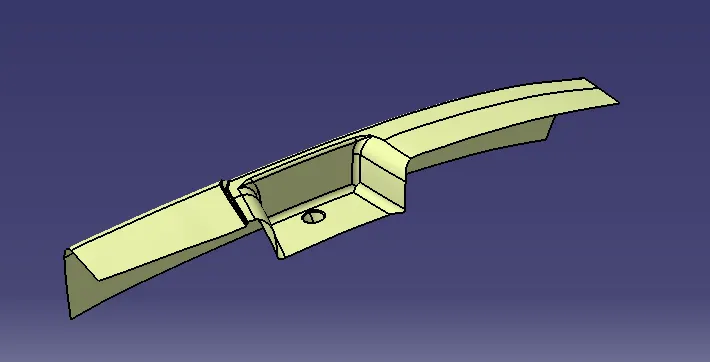
The below images represent the creation of the Class B surface.
First extracting the walls and Untrim the surfaces. The surfaces need to extrapolate and trimmed together.
The trimmed surface need to be offset with a 2.5 mm length. This is done because the thickness of the component is 2.5 mm.
This procedure is followed for all remaining surfaces and joined together to get a Class B surface.
Combining Class A, B, C surfaces:
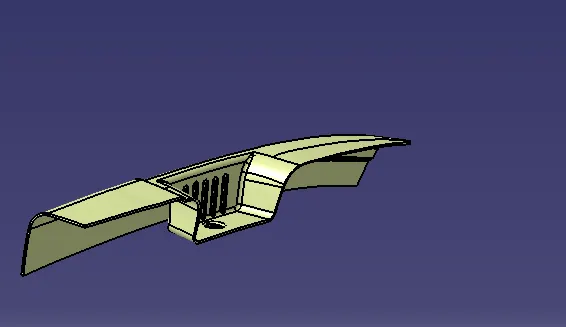
Creation of Class C surface:
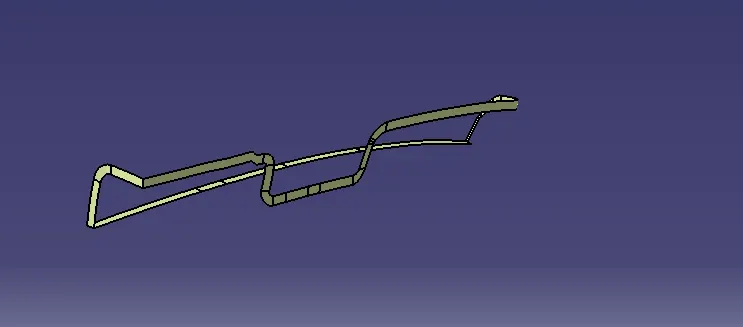
We can observe that the tooling axis is perpendicular to the joining of Class A and B surfaces. This cannot be drafted w.r.t tooling axis. To join the Class A and B surface, the surface can be swept w.r.t the surface for an angle of 90 degrees. There are only some areas that are perpendicular to the direction of the tooling axis. The other edges where draft angle needs to be given to avoid the interference between the component and core.
After this joined together by trimming the surfaces and converting them into a solid.
Draft analysis on the solid model:
We can observe that there are some areas that occur interference.
Conclusion:
Creation of Class B and C surfaces are done w.r.t given Class A. Draft analysis on a component failure due to the interference occurred at some areas.