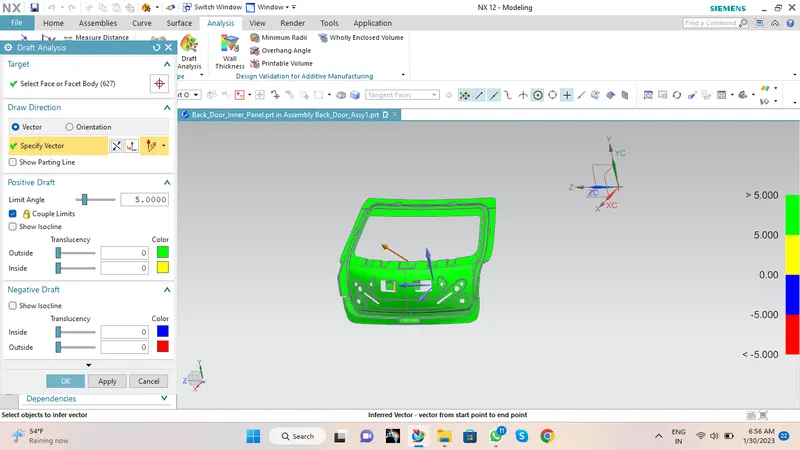
Design of backdoor
AIM:
For Designing the outer upper and outer lower panel and inner panel with the necessary reinforcements by the following the Master section with the design parameter which is given by the class A surface team.
INTRODUCTION:
In a car Maximum there is 4 door is a hinged part which is used for entry and exit of the vehicles passenger.But there are 1 more door which is known as Back doors. Back Door are one of the type doors in the vehicle which are located next to the passenger seat which provide's the access to the luggage compartment. Know days most of the cars have these back doors which are operated with the help of gas stay which in turn reduces the effort of the passenger required to lift open and close the door. Some luxury cars have powered backdoor which in turn is driven by an electric motor. This kind of system is also called a powered trunk lid system. Hatchback or station wagons are sold as 3 door or 5 door models. In this case, the rear hatch is classified as door this is because it enters the passenger compartment. The naming is mainly used in Europe countries. In case of the safety we should consider the back door designed should meet the safety requirement for the rear collision prospective.

Types of the back door
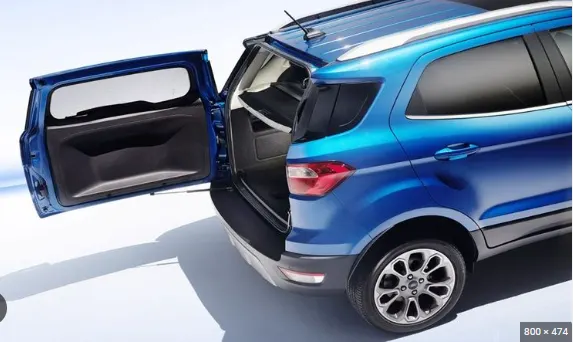
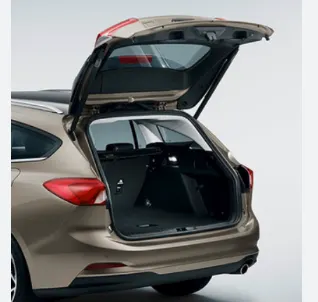
- Top-Mounted : This type of back doors is mostly used in a station wagon, pickup truck and also some of the sport utility vehicles. Today’s modern cars are mostly use top-mounted tailgating systems which are both powered and also gas stay supported easy to open and close. These top mounted tailgates provide greater rear visibility accordingly we compared to side-mounted or bar doors which have center pillars in it.

- Side Mounted Doors : As the name signifies side-mounted doors are the one of the back door which is used in the van type MPVs, SUVs, pickup truck vehicles like thar etc.. These side-mounted doors or barn doors are a lot easier compared to top-mounted doors. These doors are generally smaller in size and can be easily fited , assemble and also we can say accessed.
Types of mechanisms for Rear Door:
Gas stays:
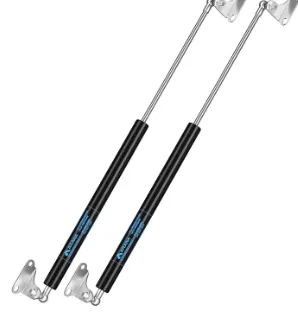
Gas stay types backdoor/liftgate/tailgate is an ideal and most commonly used method in tailgate mechanism from lower segment car to luxury car segment. The ideal components of tailgate consist of a hinge, door, gas stay and some rubber beadings for sealing of door. we use this mechanisms is car for reduse the effort of passenger for lifting the door open and closed.
Components to create:
- Outer Upper Panel.
- Outer Lower Panel.
- Inner Panel.
- Gas Stay Reinforcement LH.
- Gas Stay Reinforcement RH.
- Hinge Reinforcement LH.
- Hinge Reinforcement RH.
- Striker Reinforcement.
- Wiper Reinforcement.
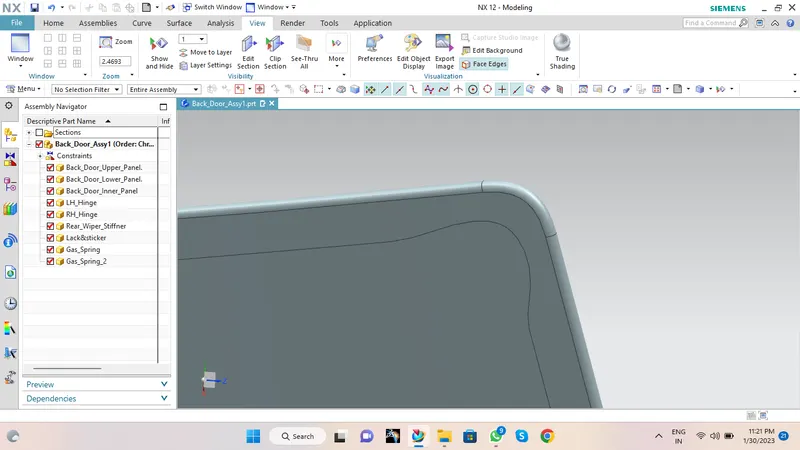
1. Checking the Geometry
- Firstly when we go with the Model we have Class A surface.
- So We have to check the Surface is ok or not so we should have to work on the surface first.
- For check that we use geomactry command and use face chain option and select tangent curve.
- And if whole body is selected is singel time so we get that the surface is ok and we should work on that.
- This is the one of the way.
- But When we check we got thatthere are so many sharp corners and also that give surface is not proper tangent.
- So we improved that surface first. and make that tangent Surface with no Sharp Corner.
- Now the surface is redy work.
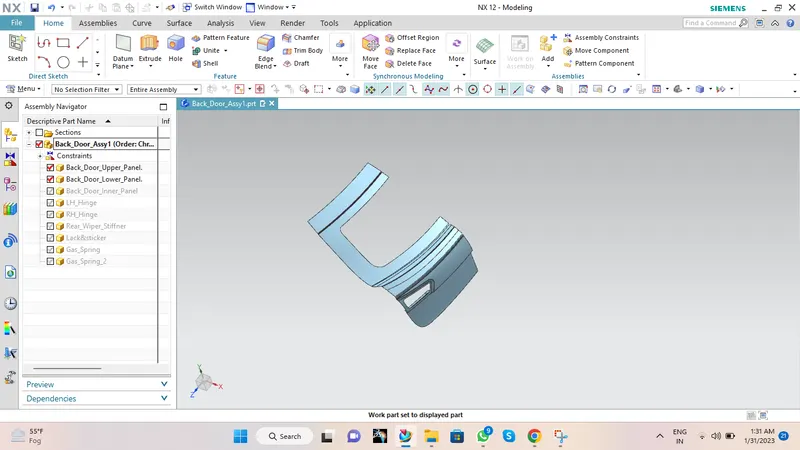
2.Tooling axis creation:
- Draw a line from left and right extremities almost parallel to the path of the surface along the unsymmetrical axis.
- Using the Derived lines tool, create a bisecting line as shown below:
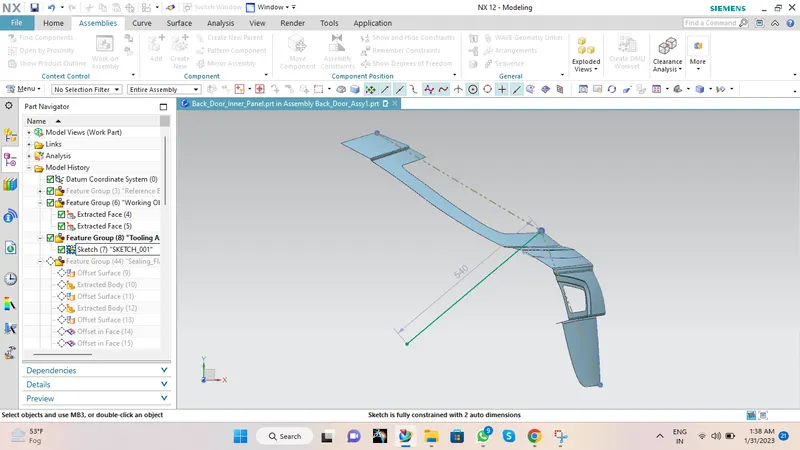
3. Creating Inner panel
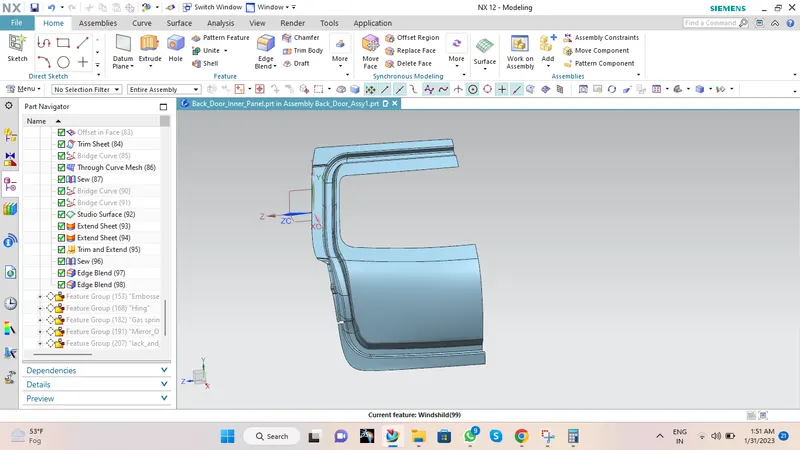
- First offset the surface to a distance of 1.7mm in improve Class A Surface.
- Now the sealing flange for the inner panel has to be created of offset Surface.
- The seaing flange created by cutting from the surface is shown below.
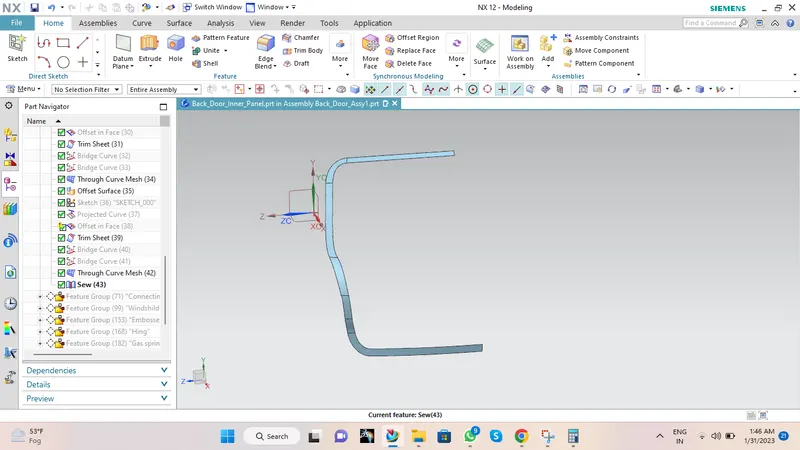
- In between, the tangent tensioning (Shape control) can be adjusted by modifying the surface using the Bridge curve tool.
- This flange should depth of 30 mm from the surface.
- Now connect the flange with the surface using law extension with reference to the tooling axis and proper draft given.
- Fillets has to be applied at each steps value should be minimum 3.75mm and check whether the surface is getting thickened or not.
- The next step is to create the other side which has to be connected with the sealing flange.
- Similarly connect the lower side of the surface by creating a surface and sew it all together.
- A mastic sealent is used on the surface to connect the inner and outer panel with a gap of 5mm.
- So offset the outer surface 5mm downwards and create a plate from the inner panel.
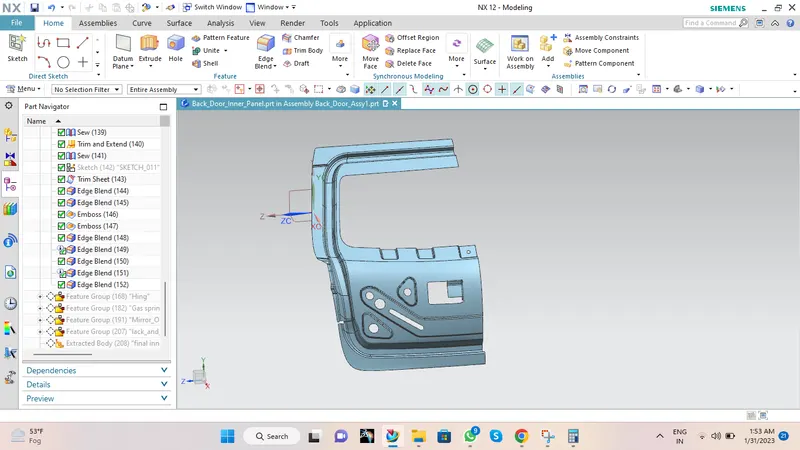
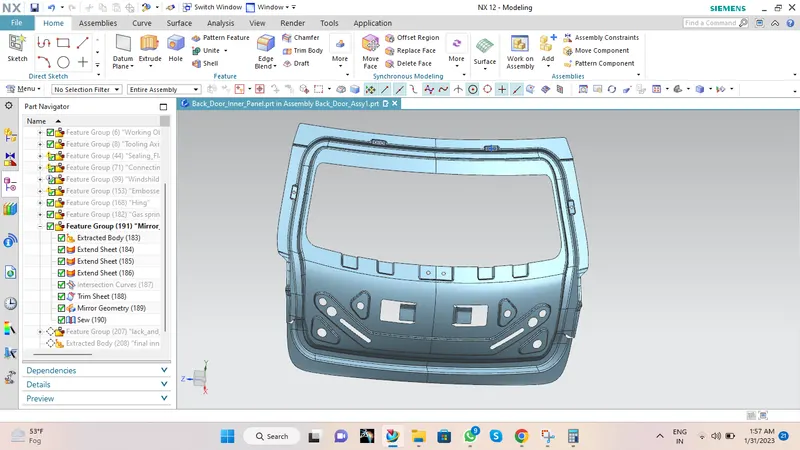
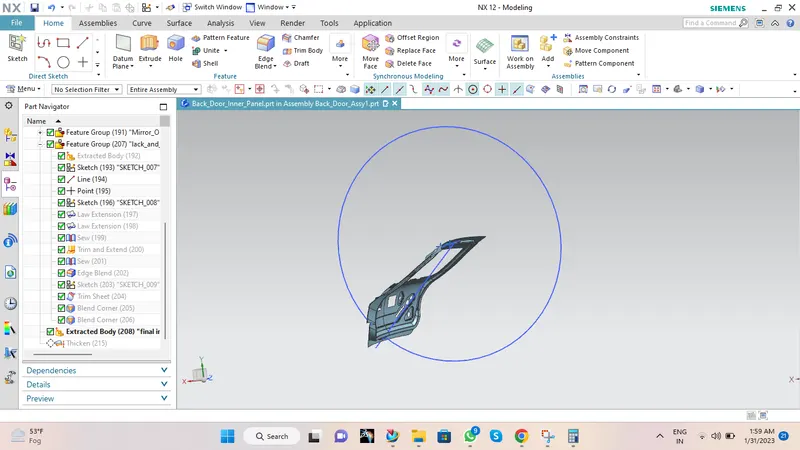
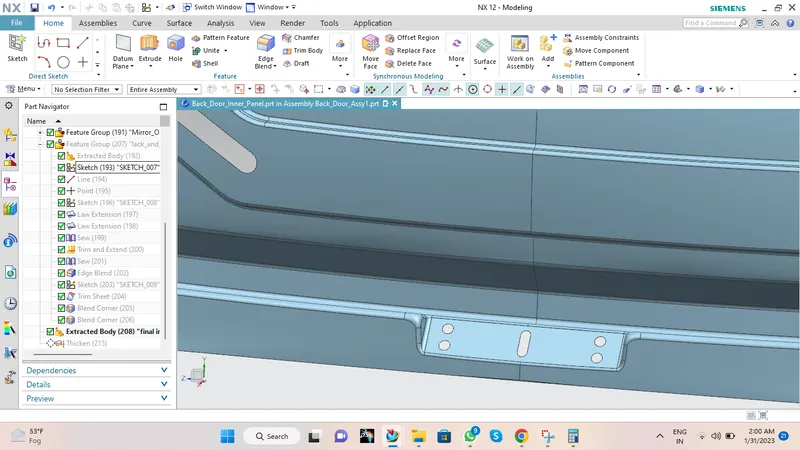
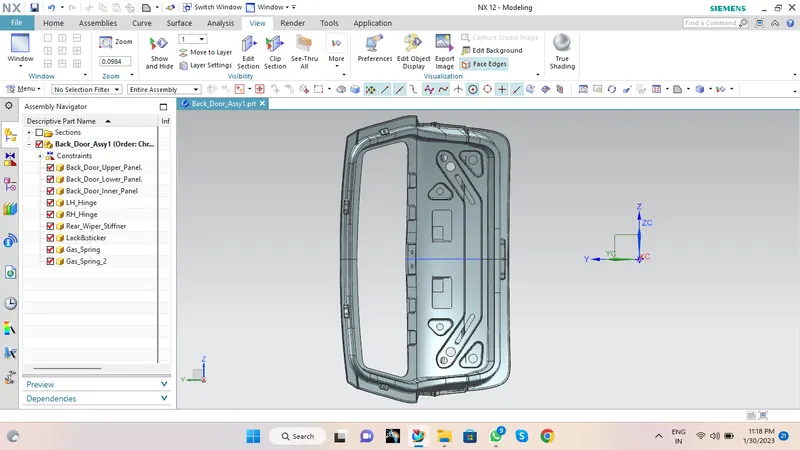
- Give proper embosses and cut-outs in the surface of the inner panel which is shown below:
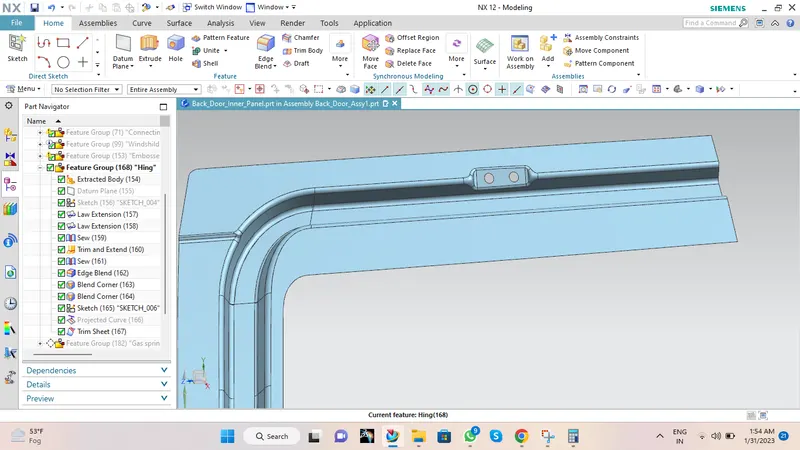
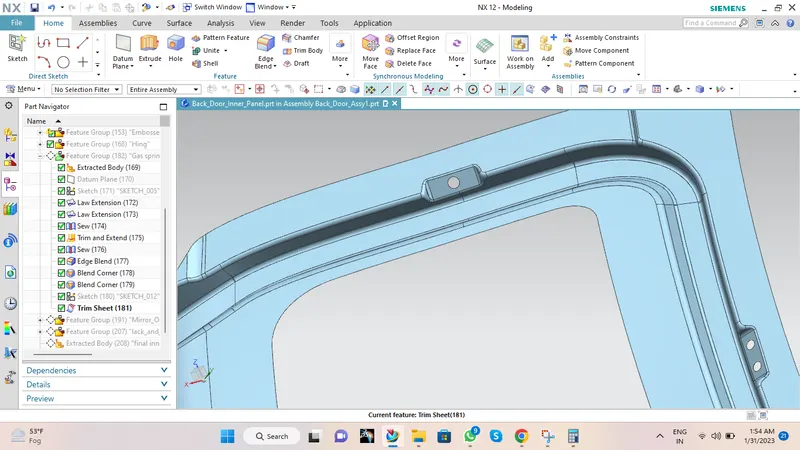
- Now, embosses has to be created for the Hinge, Gas stay, Latch & striker as well as the wiper motor areas.
- The above latch emboss can be created with the help of drawing trajectory for opening/closing w.r.t the hinge axis.
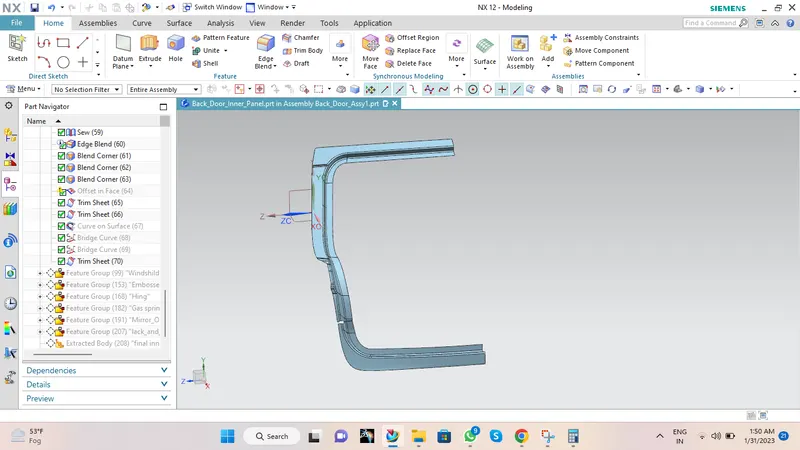
4.CREATING REINFORCEMENTS:
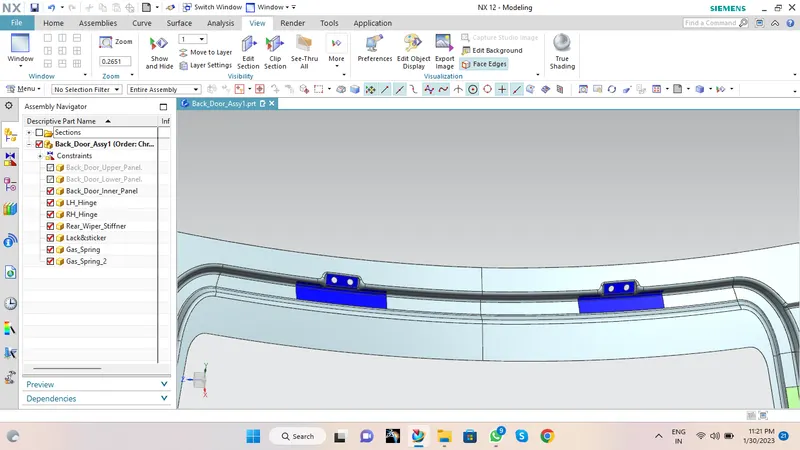
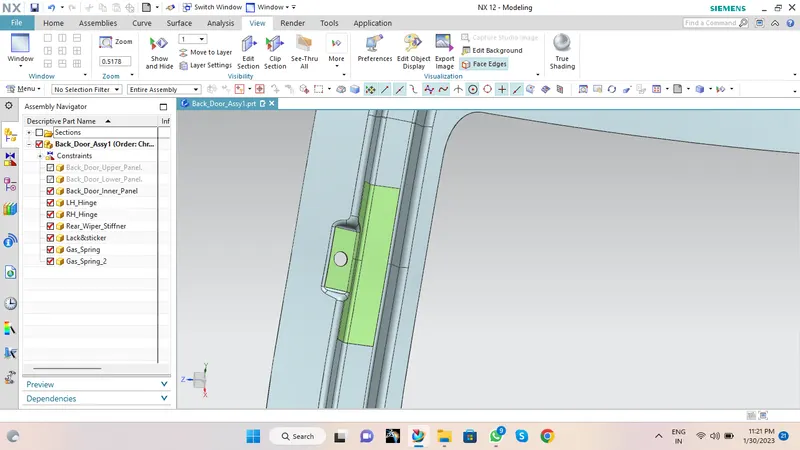
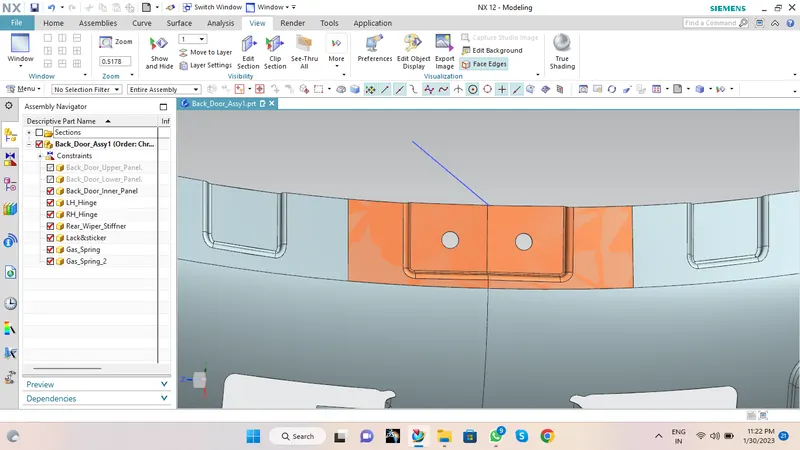
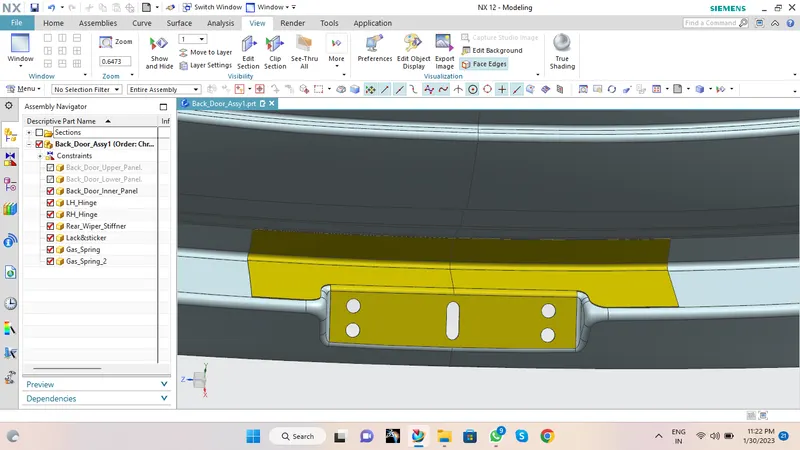
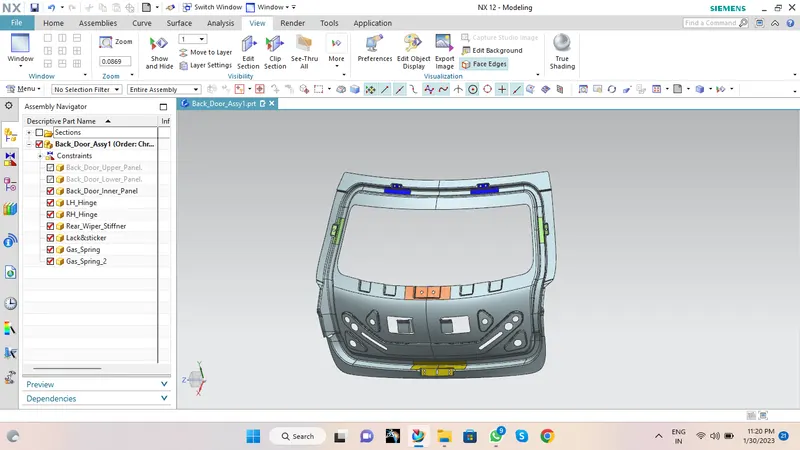
- The reinforcements can be directly offseted from the inner panel surface using the Wave geometry linker and trim it accordingly
- All reinforcements are shown below:
5. Heming Surface
- For making of heming surface firstly we offset the Surface Thichness of the Sheet + 0.2 clearence+ thicknees of the Inner Panel+0.2mm Clearence+ thickness of the haming Surface (0.75+0.2+0.75+0.2+0.75).
- then Hide the Linked Surface.
- And select the offset on Curve commend and offset it 8mm and trim it.
- then unhide the Link Surface and make a briged curve on Linked and Trime Surface.
- And Go with the swep Commend.
- Just like we should make a haming Surface and in the last sew the all of them.
- Just like that make a hamming Surface of lower surface also.
6. Draft Anal.