Design of backdoor
INTRODUCTION OF TAIL GATE
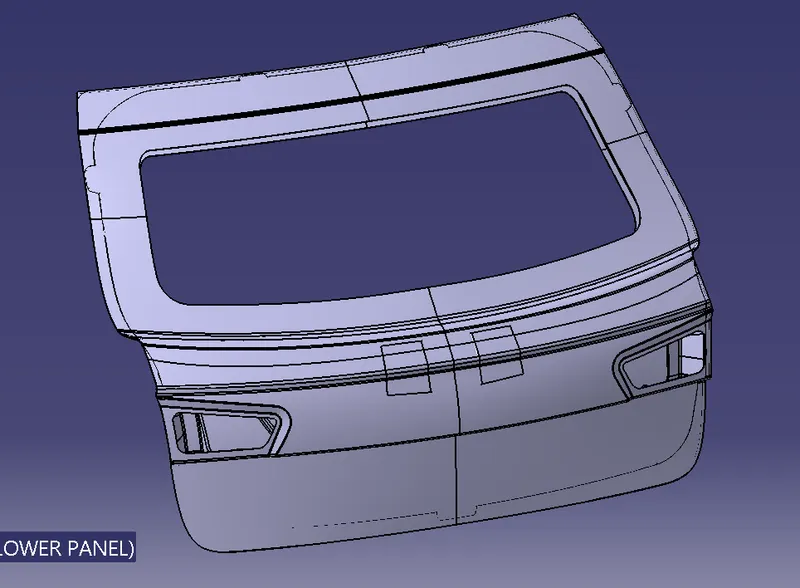
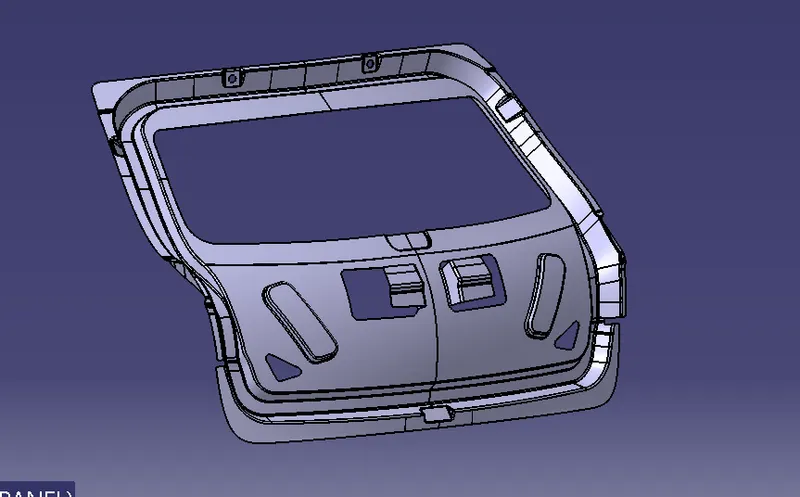
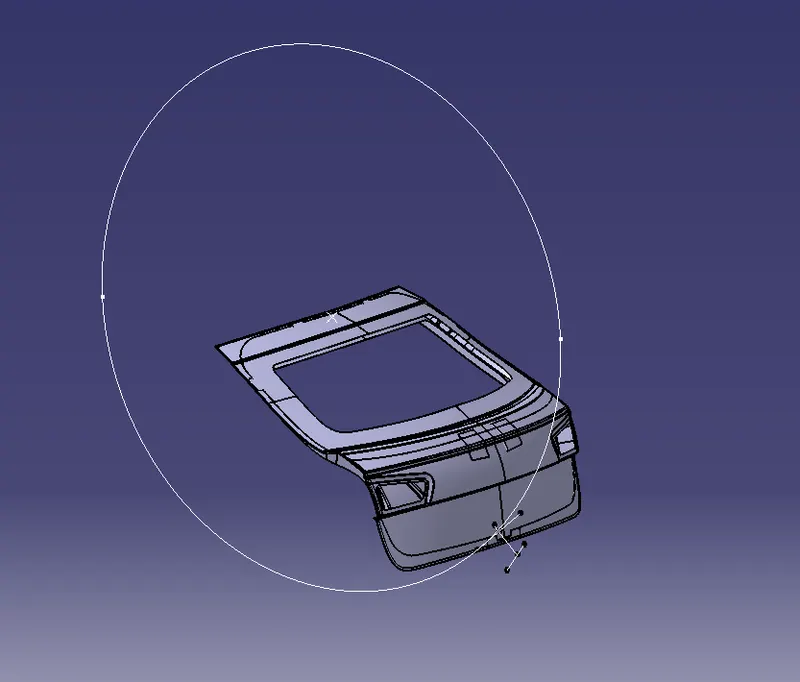
Tailgate is the closing door of the luggage compartment. It provides the aesthetic outer appearance to the vehicle as well as wind flow aerodynamic surface. Tailgate is a single stamped or split outer panel. It integrates with the inner reinforcement panel. To avoid air rushing noise as well metal rubbing noise, protected with the sealer application process. Outer edges hemmed by Robot hemming process with 3 pass hemming to ensure sealer fill rate uniformly as well clinch tightness rigidly. in such a way easy to open at the same time, it should not pass external environmental noise inside the passenger compartment and should not lead to any water leak. High closing effort leads to improper locking. Gas Stay is used to easily access opening and closing.
DESIGN CONSIDERATIONS
Functional requirement - Hinge and gas stay are Functional Requirements are the functional requirement of a back door.
Rear visibility criteria- It should be proper visibility from front side .
Requirement of sealing and its function- In order to prevent water from entering the cabin we are introducing a sealing area where the sealing flange is provided on the inner panel and rubber mounting area is provided on the body side.
Joining technique- To join inner and outer panels the Hemming process is used and to join outer upper and lower panels laser brazing welding is used.
- Hemming
- Spot welding
- Mastics
- Laser brazing welding
Gap and flushness requirement- Mastic Seals: Mastic Seals place b/w Inner and outer panel to reduce noise, vibration, and harshness. Every Mastic will have an effect of 80mm Dia. The inner and outer panel gap is 4 to 5mm. 0.2mm gap is required for the Hemming and that gap will be filled by sealed past.
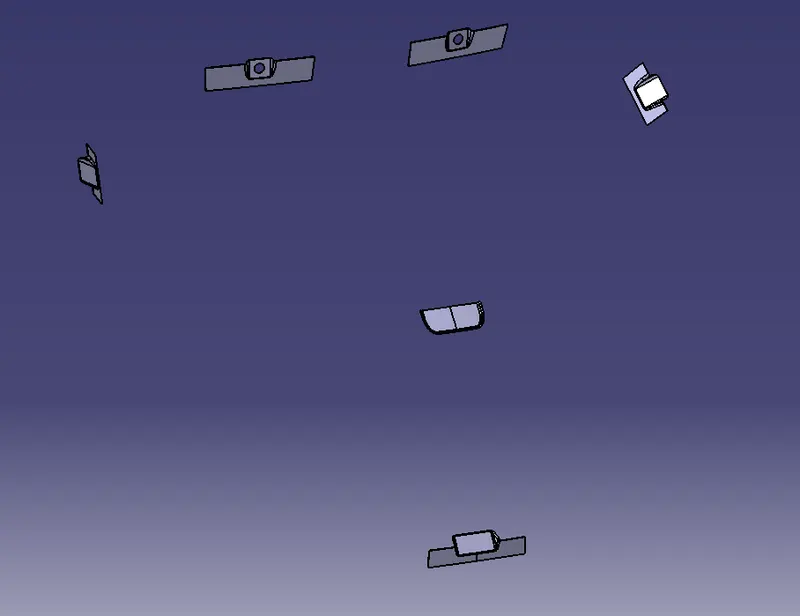
Adding reinforcement and stiffener pad- reinforcements are added were and all the weight is added. On the inner panel, we have Hinges and striker, which are attached to the inner panel so due to this attachment the strength of the inner panel is going weak. In order to strengthen the inner panel reinforcements will play a very important role. A stiffener pad is a sponge-like material place b/w Inner and outer panel to reduce vibrations.
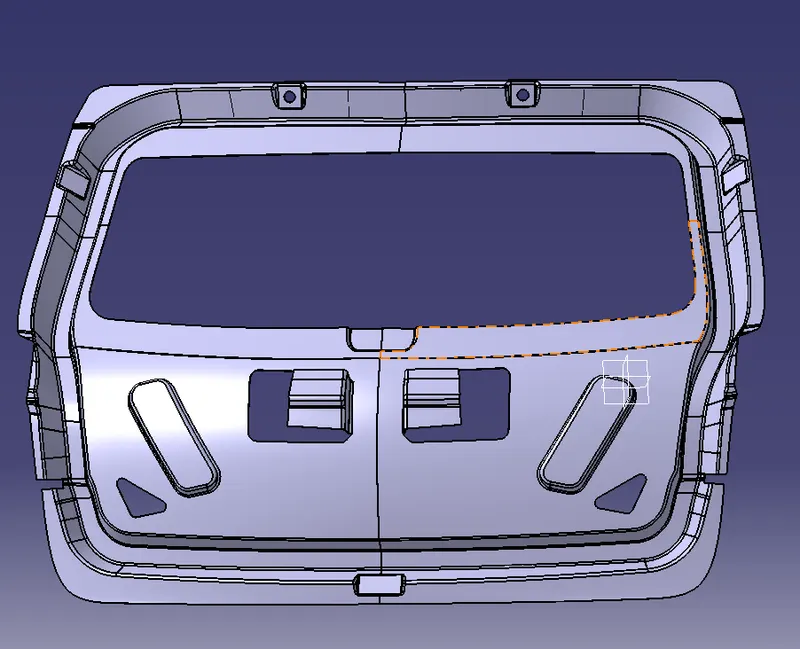
Emboss- Embosses are provided in the inner panel of the hood assembly. This helps in the weight reduction of the hood and also dissipates the force during the collision. Force dissipate is shown in the figure.
Main part of the back door-
- Outer upper panel
- Outer lower panel
- Inner panel
- Gas stay reinforcement left and right
- Hinge reinforcement left and right
- Striker reinforcement
- Wiper reinforcement