Design of backdoor
Objective:- To devlop the Car Back Door by Using given styling surface method by Automotive Sheet Metal Design.
Introduction:
Design the Back Door is also called as the Tail Gate. A Car Back Door which is Consists of Inner Panel, Outer Panel. Basically the Car parts are made of Steel or aluminium based on the budget of the Car. Using Aluminium Improve the Strength Where We Can avoid Reinforcement. Aluminium parts are casted and we can vary the thickness of the part, because of the avoid or reduce the number of parts as compared to steel. Steel Parts are stamped, We Can not Vary the thickness of the part because of more number of parts are avoid which can increase the Weight of Parts. So, now a days most of the Car Manufacturing are trying to Use aluminium instead of Steel and they reduce the number of Parts and Weight of the Car drastically.
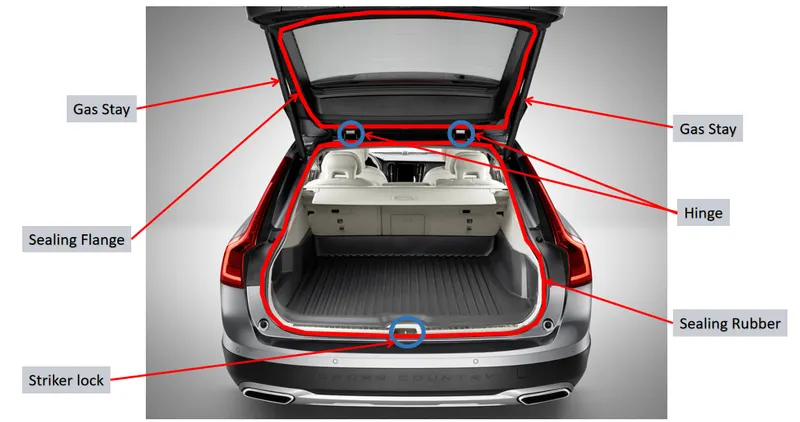
Components of the Back Door-:
1. Outer Panel Upper
2. Outer Panel Lower
3. Inner Panel
4. Striker Reinforcement
5. Gas Stay Reinforcement
6. Wiper Motor Reinforcement.
Design Consideration for a Back Door :-
1. Rear visibility
2. Boot Space and accesibility
3. Fil and Clearance
4. Support Structure like Hinge and Gas Stay
5. Mount For Wiper Motor, Tail lamps and other Wiring loops.
Input:
To Create Innel first of all, need to Improve the class-A because given class -A has some gaps and patches, for that using Some tools like bridge curve, through Curve Mesh and Sew.
Improved Class-A:
The Entier Outer Panel is Divided into Upper and Lower Portion for Easy Designing.
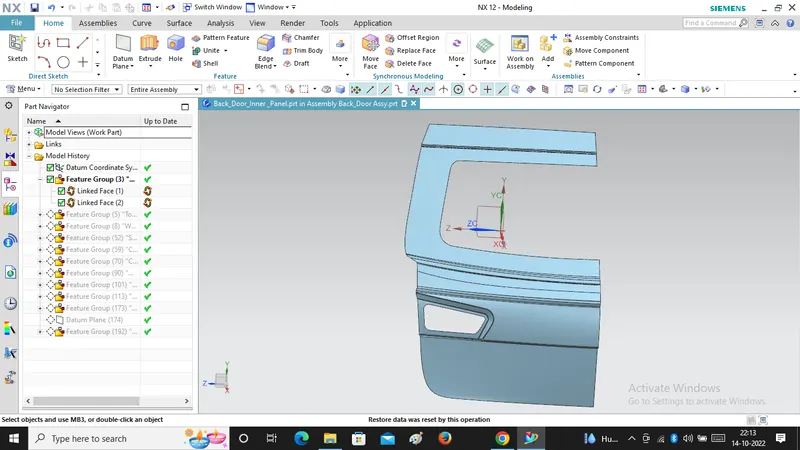
Inner Panel:
Inner Panel Provide Strength to Outer Panel, and also help in Mounting motors, Light and Other Components.
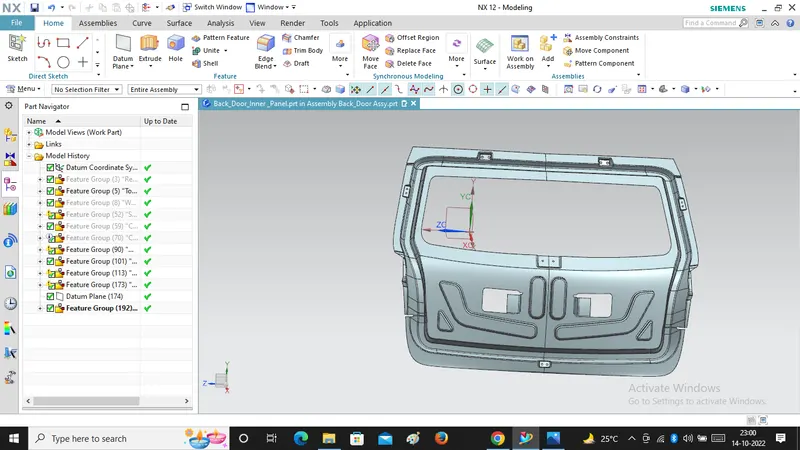
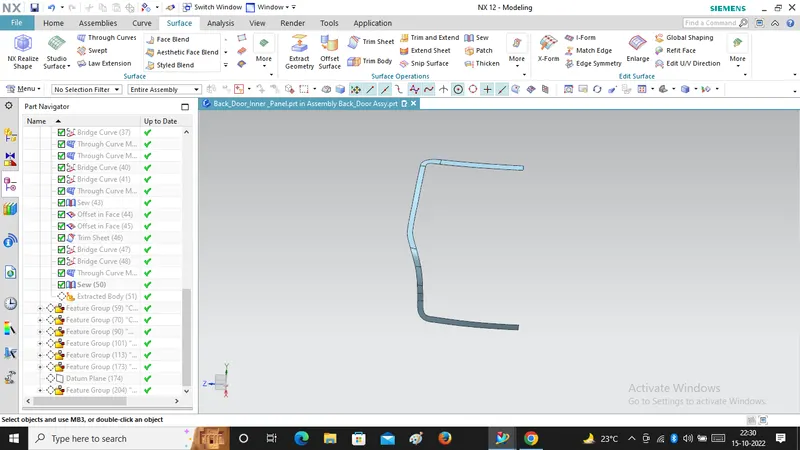
Sealing Flange:
This is the Portion where the Sealant is placed so that it can prevent the entry of water inside the Car.
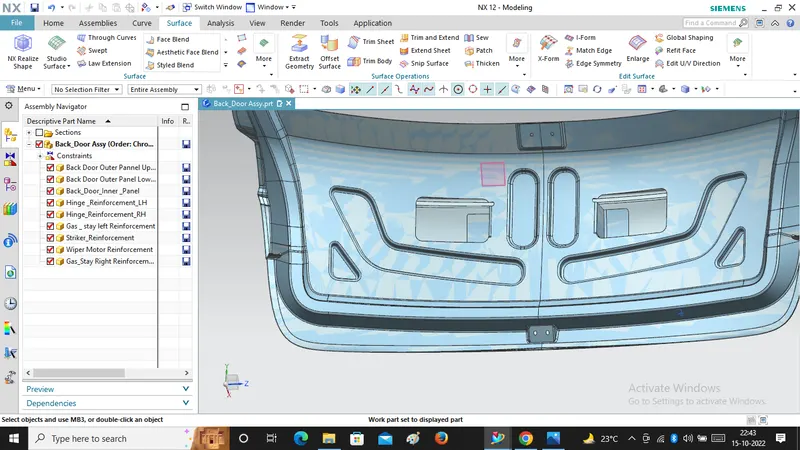
Embosses:
Sheet metal embossing is a stamping process for producing raised or relief in sheet metal. This Process can be made by means of matched male and female roller dies or by passing sheet or strip of metal because rolls of the desired patterns. Embossing is done by pressing a sheet of proper into female die, that has a design attached into it. This is usually done with a male counter part underneath the paper so that the two and the design is transfered to the papers.
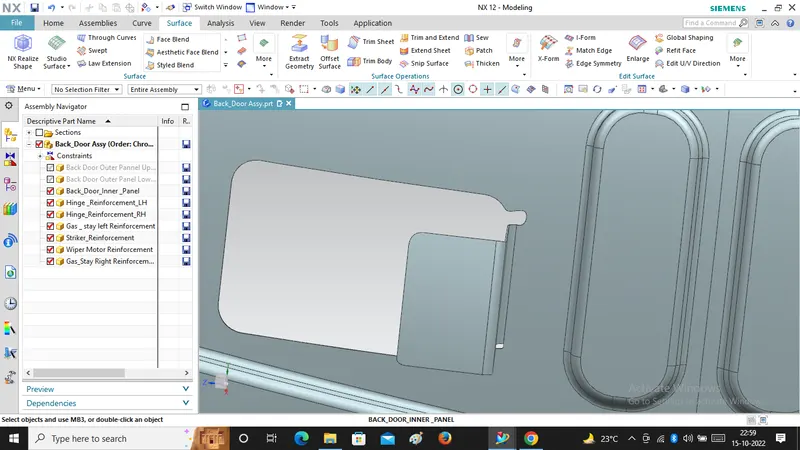
Mastic and Spot Welding:
A flange position can be seen on the Inner Panel, this helps in keeping the inner and outer panel together by applying the mastic sealent.
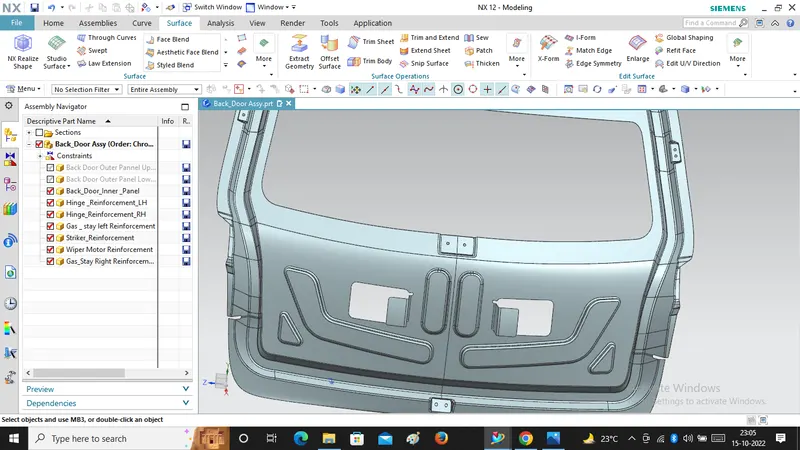
Force Distribution:
Where the car hit at rear end, the force which acted should be react outside. The Embosses which is helps to move the force to outer end.
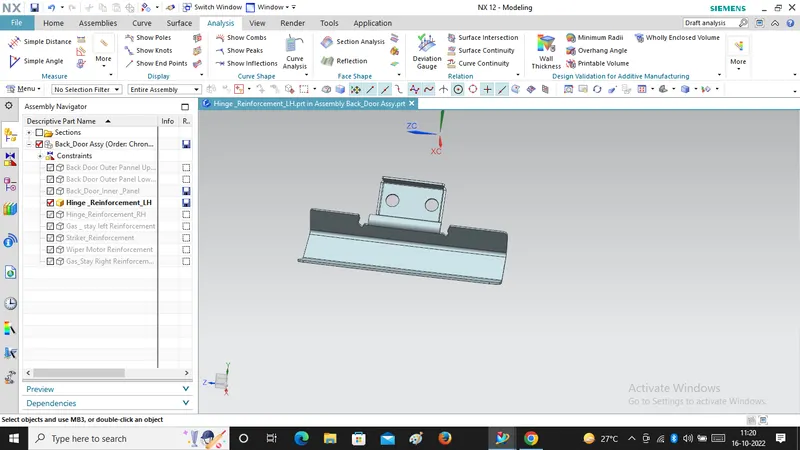
Hinge Reinforcement:
Hinges are essential , that allows door to pivot on one edges as open as they open and close. They are found on virtually all doors, it is a mechanical bearing that connect two solid object typically allowing only a limited angle of rotation between them.
Gas Stay Reinforcement:
It is used to lift up the tail gate.
There are two types of Gas stay Reinforcement:
1. Manual System 2. Power lift system
. Manual System:
This mechanism is most used in the Indian Cars and it is operated by his own hand.
. Power System:
It works on the basis of Sensor.
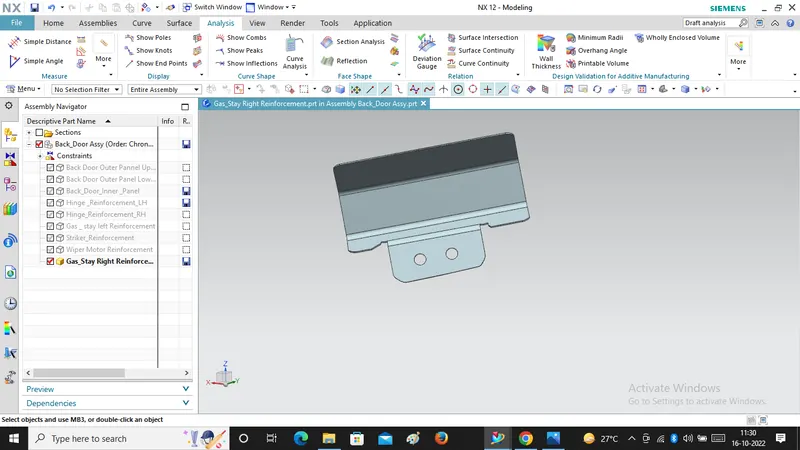
Striker Reinforcement:
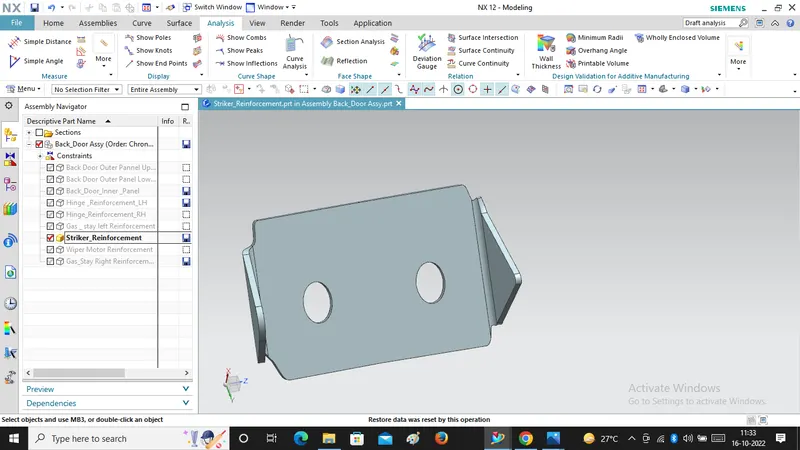
Latch Placement:
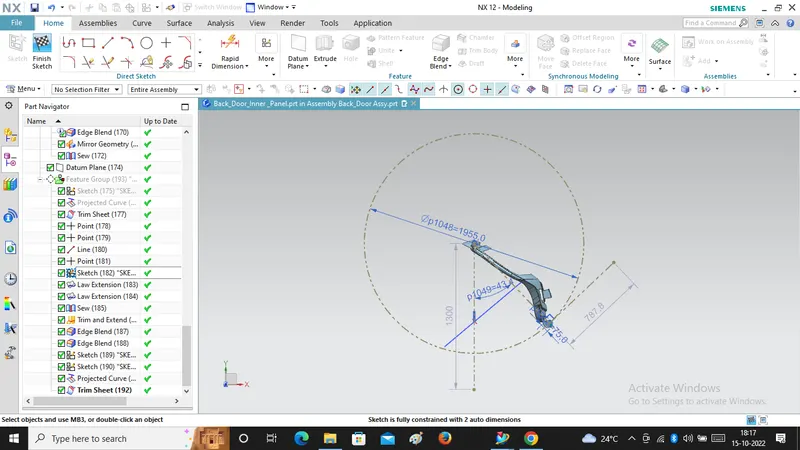
Using the axis of the hinge a circle is drawn at the middle of the back door and the latch is placed perpendicular to the circle.
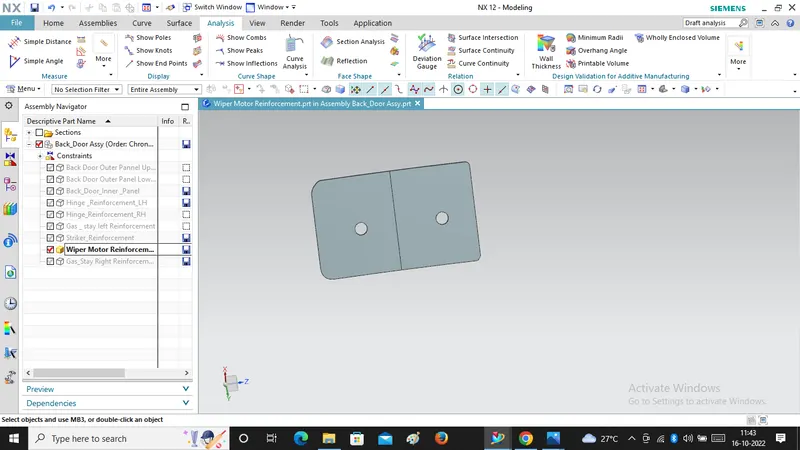
Wiper Motor Reinforcement:
It is a small electric motor which is mounted in the rear tail gate. It is used to clean rear wind Shield for clear visibility.
Hemming:
Hemming is a forming operation in which the edges of sheet are folded over another part in order to achieve a light fit. Normally hemming operation are used to connect parts together, to improve the apperance of a part and to reinforce part edges. Hemming is used in assembly as a secondary operation after deep drawing, trimming and flanging operation to join two sheet metal parts ( outer and inner ) together.
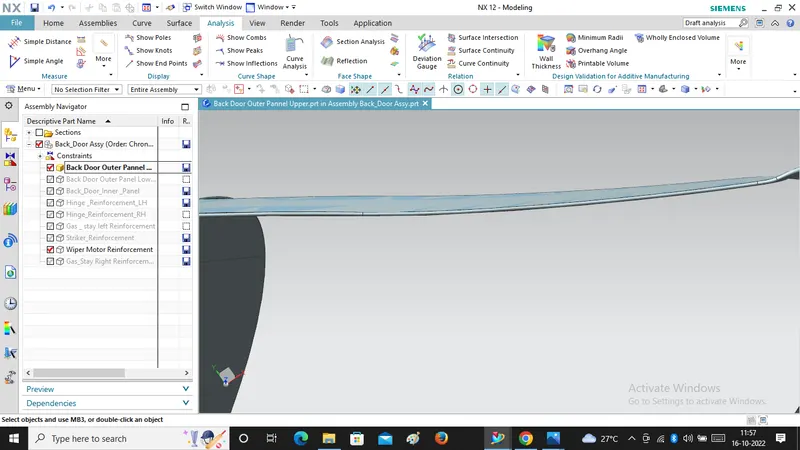
The accuracy of the Hemming operation is very important since it affects the apperances of the surface and surface quality.
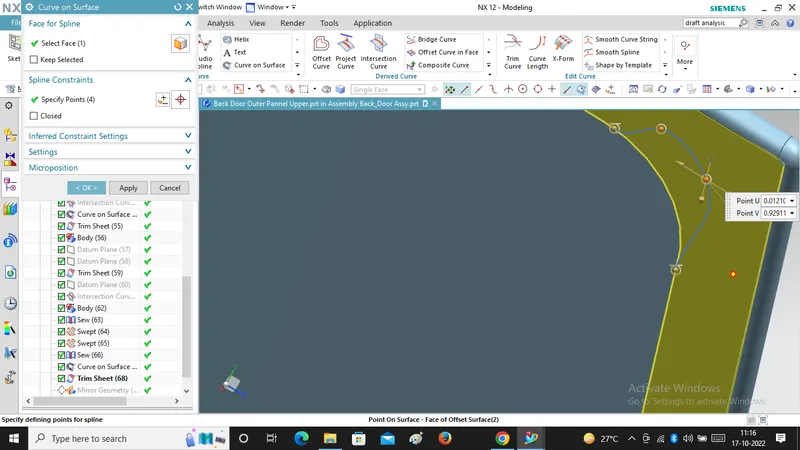
Corner Relief:
Relief helps to control sheet metal material behaviour and to prevent unwanted deformation during unbend Operation. So, I give corner relief on sharp edges.
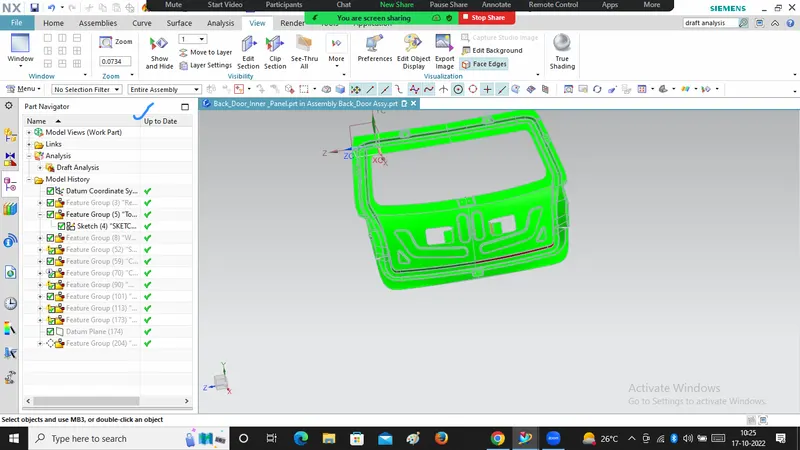
Draft Analysis:
It is done on 7 degree Draft Angle.
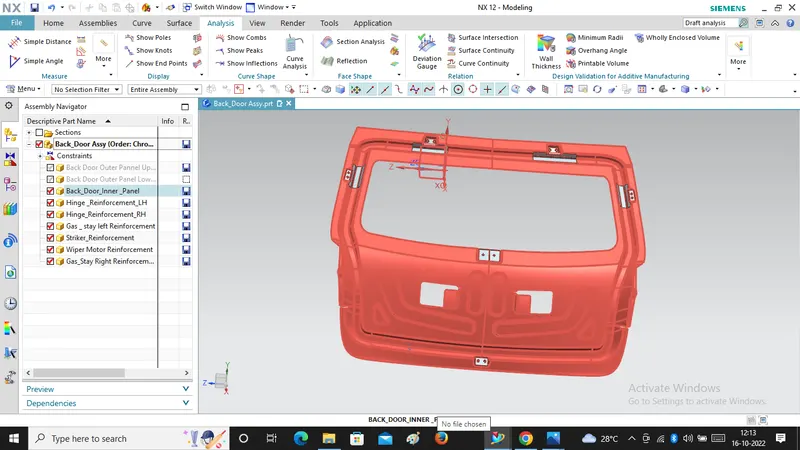
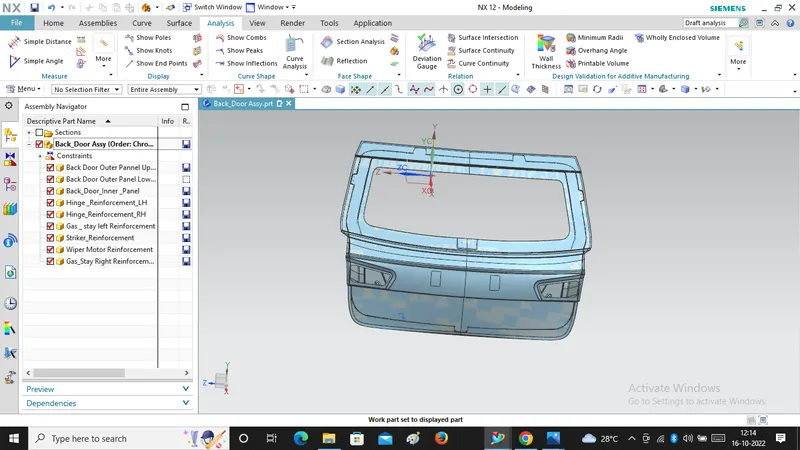
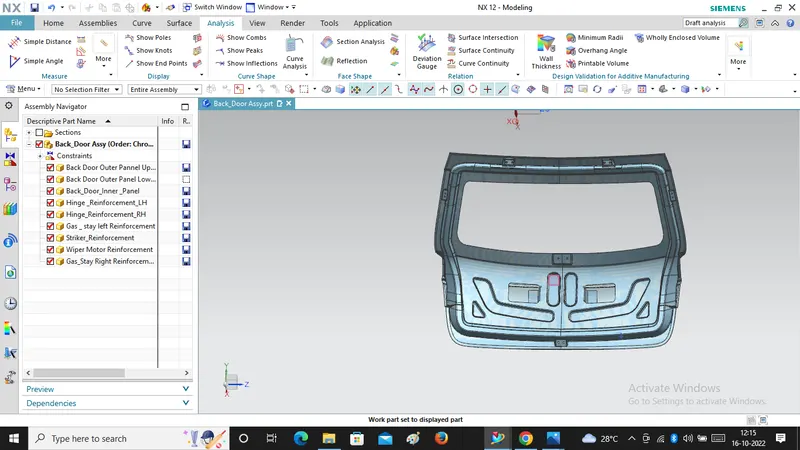
Final Assembly Of Back Door:
Conclusion:
The design of Back Door is completed with the Engineering Standard and all the Reinforcement.